Why Did My Cake Sink in the Middle? Easy Fix That Works
Nothing hurts more than pulling a golden cake from the oven, only to watch cake sinking in the middle as it cools. The good news is that a sunken center has clear causes, and each one has a simple fix you can use.
Most cakes sink for one of a handful of reasons. Too much leavening, a cool oven, or a batter mixed too long can each collapse the middle. Small measuring slips add up fast, and peeking soon makes the problem worse.
This guide walks through each cause one by one, with a fix you can use right away. You do not need special tools or fancy ingredients. If your brownies turn out cakey, this guide on fixing cakey brownies covers the same fixes for a dense, fudgy batch.
Why Cakes Sink
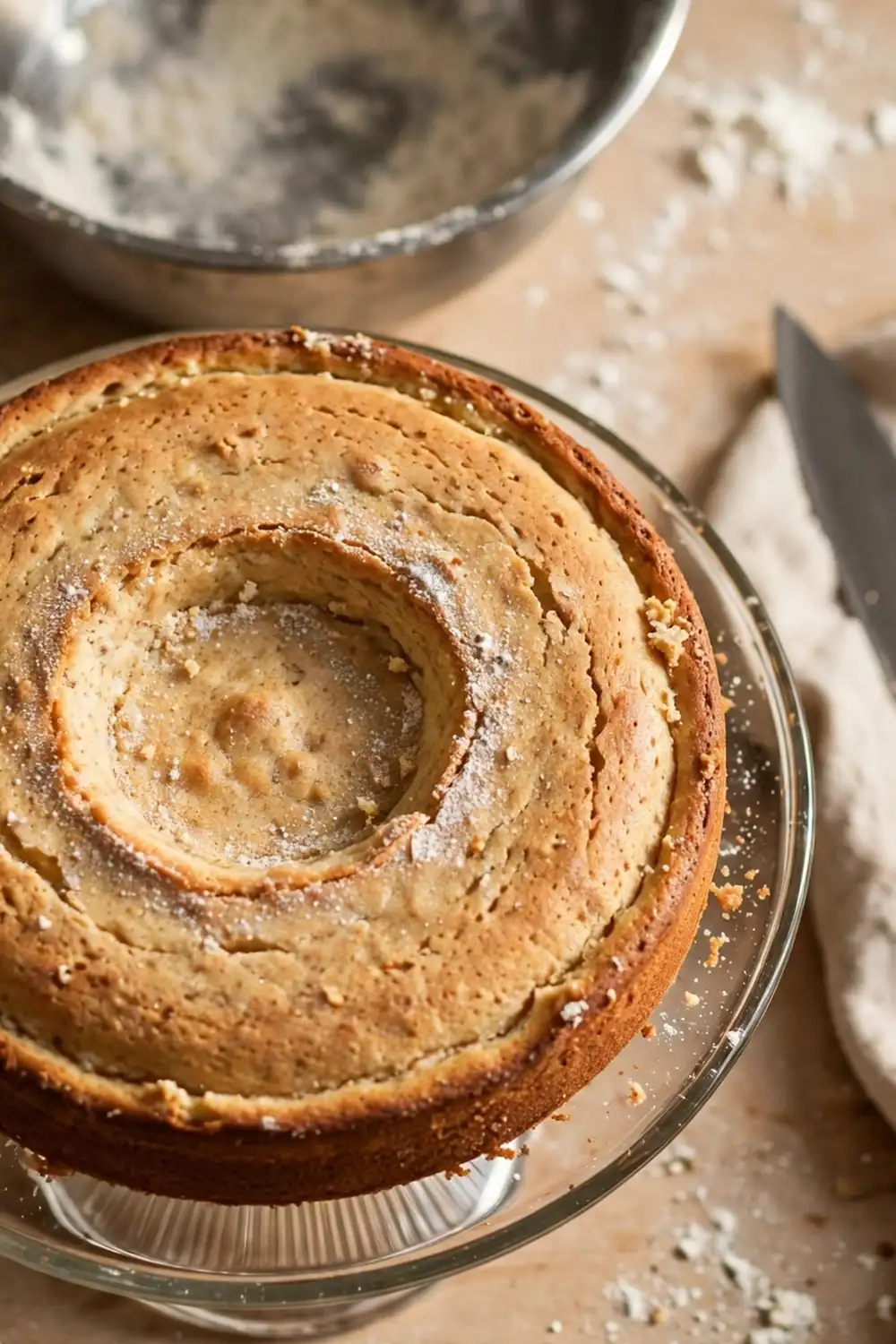
You pulled out a golden cake, yet the center sank as it cooled. The problem is rarely one big mistake. Most of the time, a few small things add up in the batter and the oven, and the middle cannot hold its shape on its own.
Too much leavening, too much sugar, and a cool oven each push the cake toward sinking. When any of those three is off, the crumb rises fast and then collapses. The good news is that each cause has a simple fix for your very next cake.
Measure Flour Right
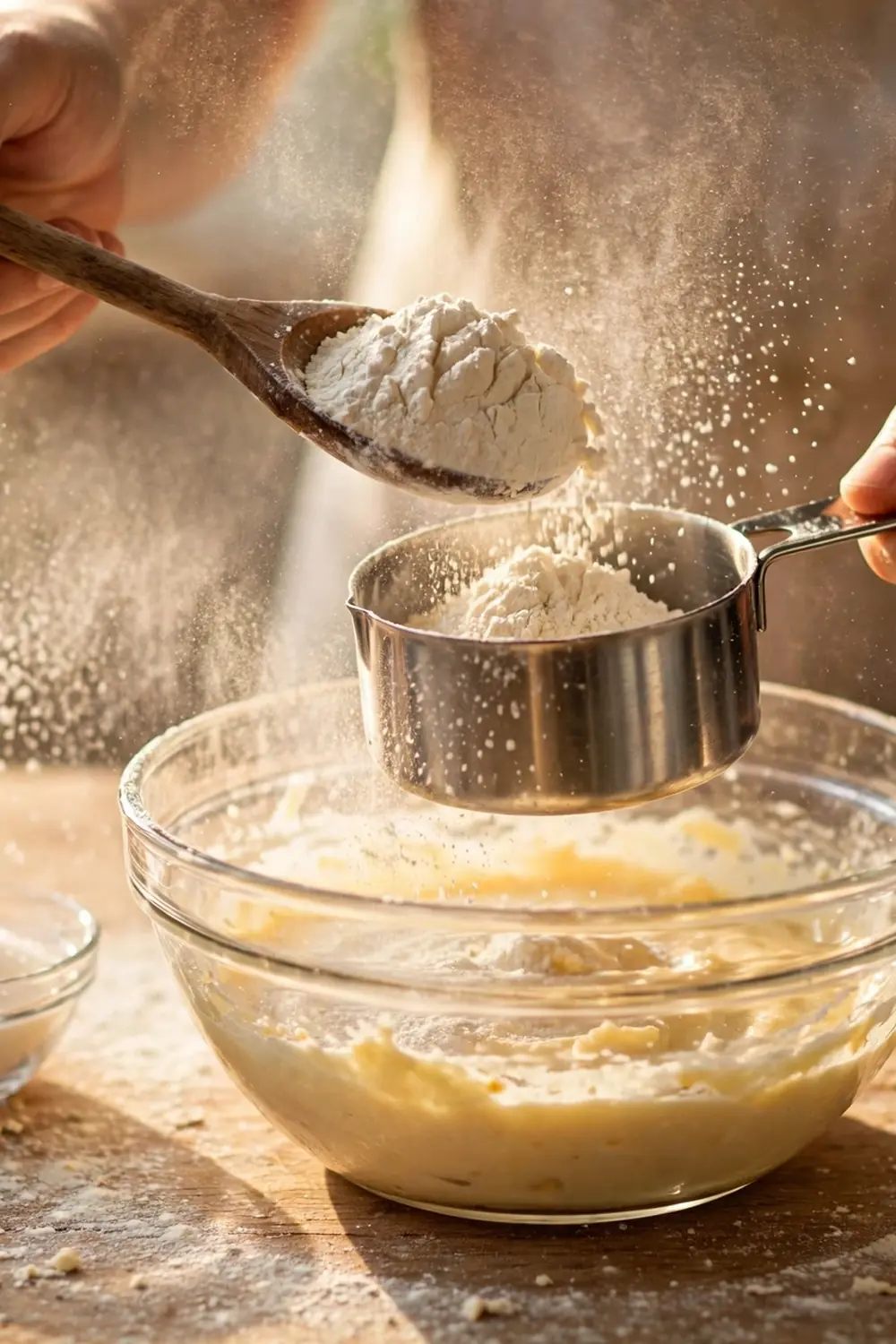
Flour gives cake its structure, so the amount has to be right. Too little flour leaves the center weak, while too much makes the cake dry and tough. Spoon and level the same way for every cup, and the crumb stays firm.
- Spoon flour into the cup lightly instead of scooping from the bag.
- Level the top with the back of a knife, without packing it down.
- Use a kitchen scale when you want the most accurate measure.
- Measure every cup the same way so results stay steady.
Leavening and Sugar
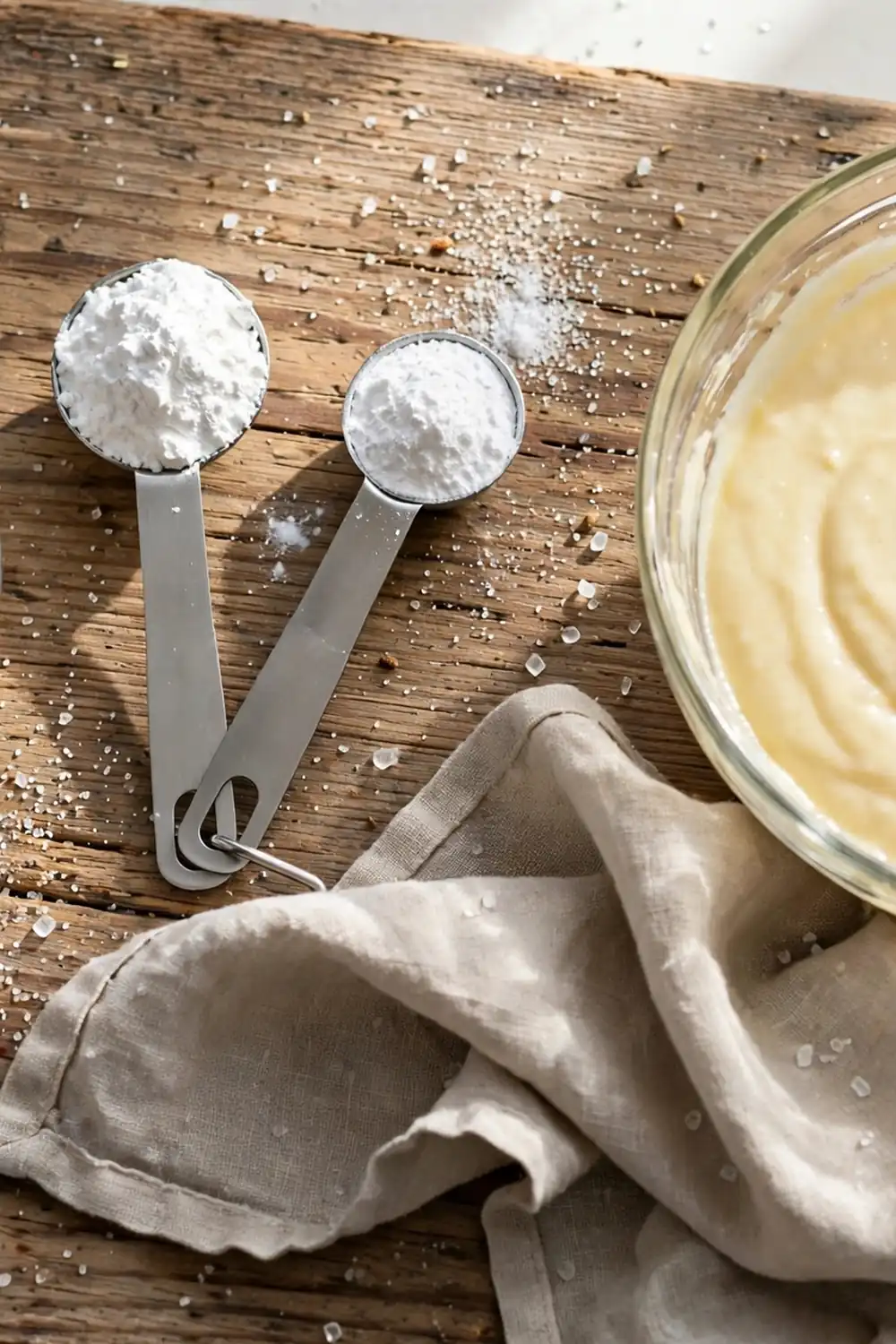
Quick Tip: Follow the recipe amounts exactly and level every spoon. If your cakes keep sinking, cut the baking powder by a quarter teaspoon and test again on the next bake.
Leavening lifts the batter, while sugar feeds the rise, so both need care. Small excesses here cause more sinking than most bakers expect. Fix the balance once, and your cakes will rise slowly, set firmly, and hold their shape on every cake you bake from now on.
Mix Batter Gently
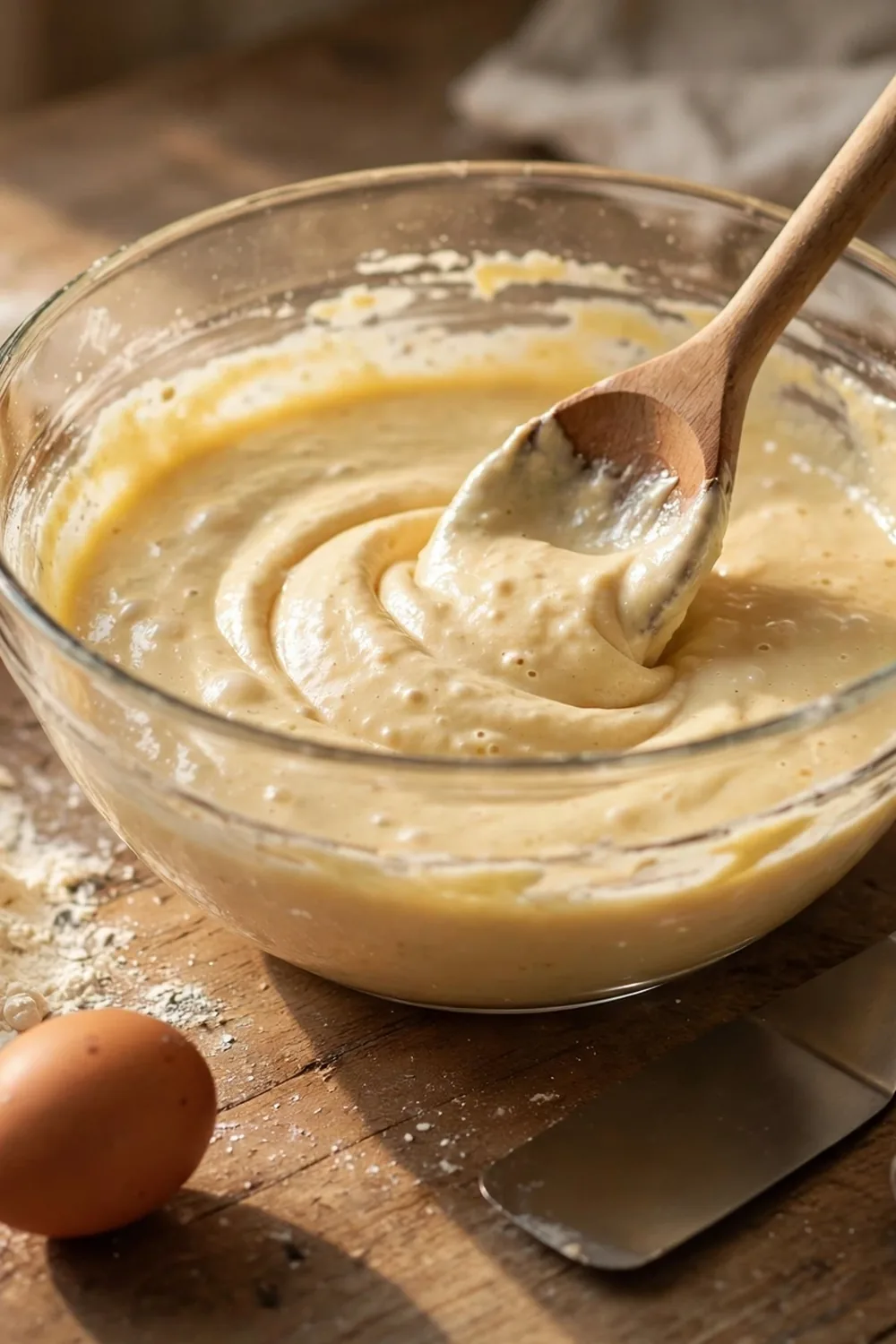
Common Mistake: Most bakers keep mixing long after the flour disappears. Overmixing builds gluten, which tightens the crumb and traps air. The cake rises fast in the oven, then sinks as it cools.
The Fix: Mix only until the flour disappears, then stop and fold in the extras. Use low mixer speed or a wooden spoon, and keep the mixing short. Gentle mixing protects every other fix on this list.
A light batter bakes into a tender crumb that holds its height. Watch for a smooth batter with no dry streaks, then put the spoon down. Short mixing keeps the texture soft, so the cake stays tall after cooling and slices clean on the plate every time.
Pick the Right Pan
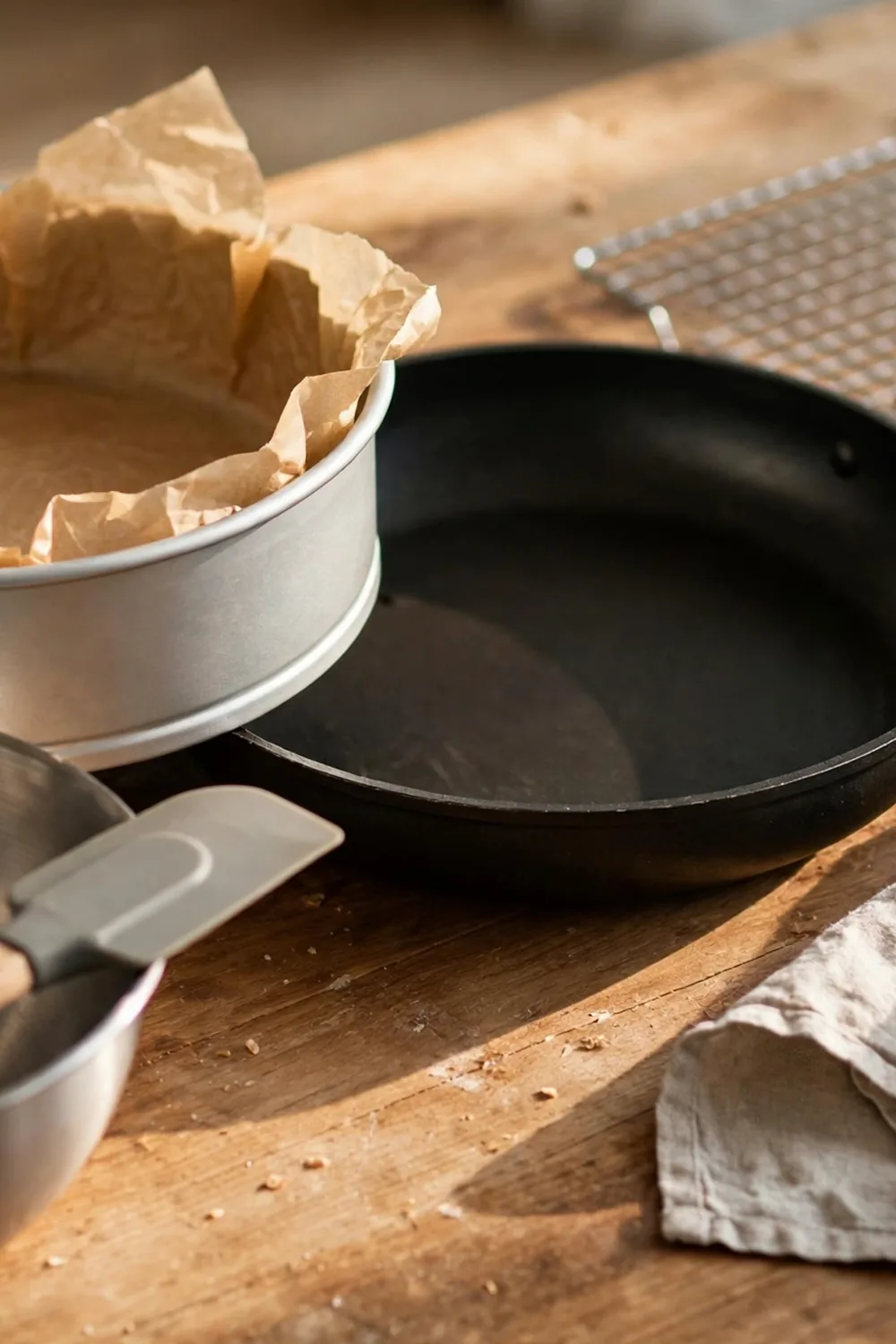
What You Need:
- Light metal pan: It spreads heat evenly so the center bakes through.
- Parchment paper: It lines the bottom and keeps the cake from sticking.
- Shortening or spray: A thin coat greases the pan without pooling.
- Wire rack: It cools the cake evenly after it leaves the oven.
The pan shapes how heat reaches the batter. A light, correctly sized pan bakes the center through without burning the crust. Fill the pan only two thirds full, and place it in the center of the oven for an even rise from edge to center.
Check Oven Heat
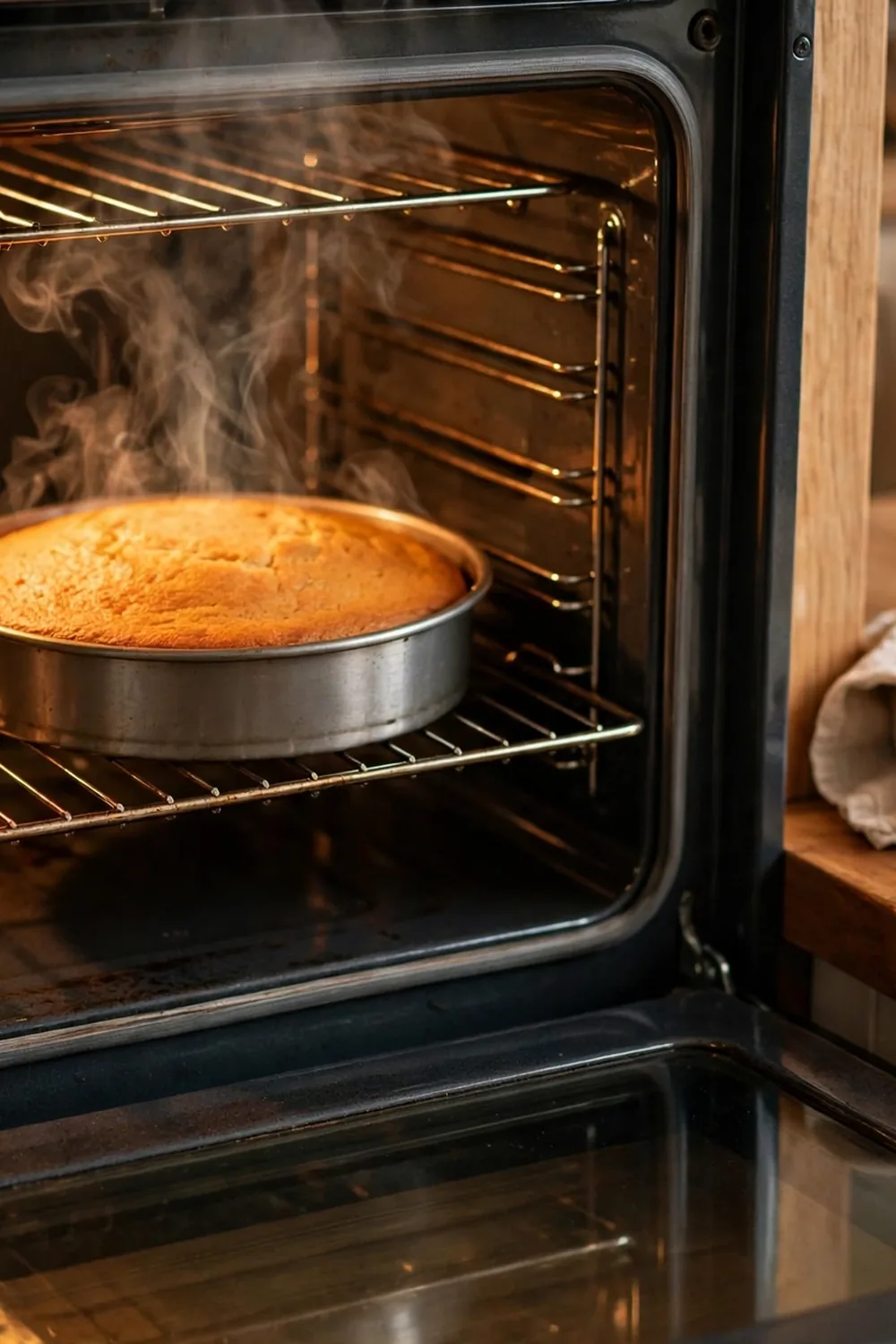
Before: A cool oven lets the cake rise slowly and then fall as it cools. A hot oven browns the crust before the center can set. Without a thermometer, you are guessing at the real heat every time.
After: With a thermometer on the middle rack, you know the exact heat before the cake goes in. The crumb rises at a steady pace and sets all the way through. Every bake turns out the same, with a level top and a firm center.
Most ovens run hotter or cooler than the dial says, so trust the thermometer more than the dial. Hang it from the middle rack and check it before every bake. A true temperature removes the guesswork and keeps every cake honest, so each one rises evenly and holds its shape.
Keep Oven Door Shut
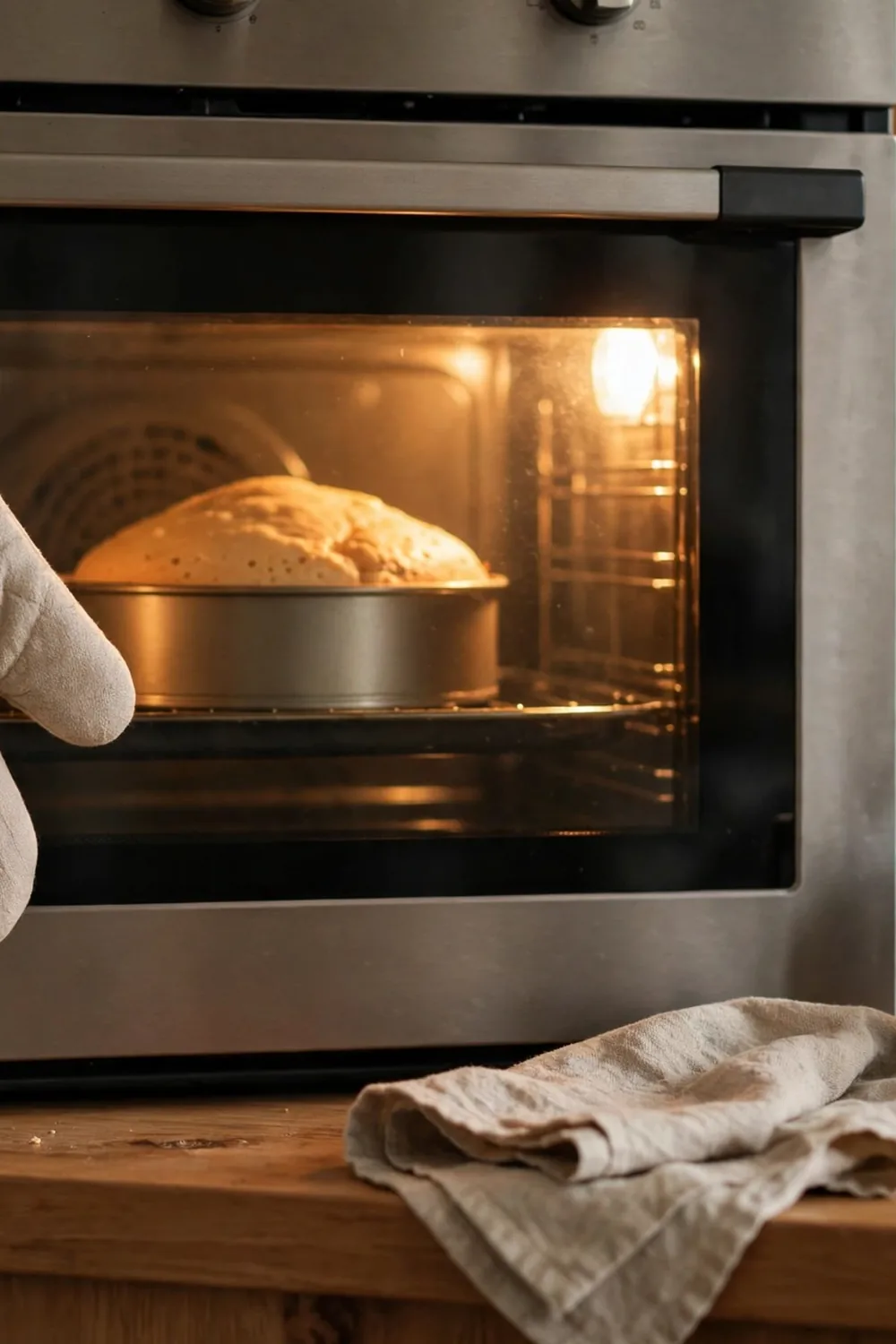
Do This:
- Keep the door shut for the first three quarters of baking.
- Check the cake once near the end, quickly and gently.
- Use the oven light to watch the rise without opening the door.
Avoid This:
- Do not open the door during the first half of baking.
- Do not leave the door open while you check the cake.
- Do not slam the door shut after peeking.
Opening the door lets cold air rush in and drops the oven heat fast. The half-baked center cannot hold its rise, so it sinks as the cake cools. Trust the timer and the oven light, and check the cake only when it is nearly done.
Test for Doneness
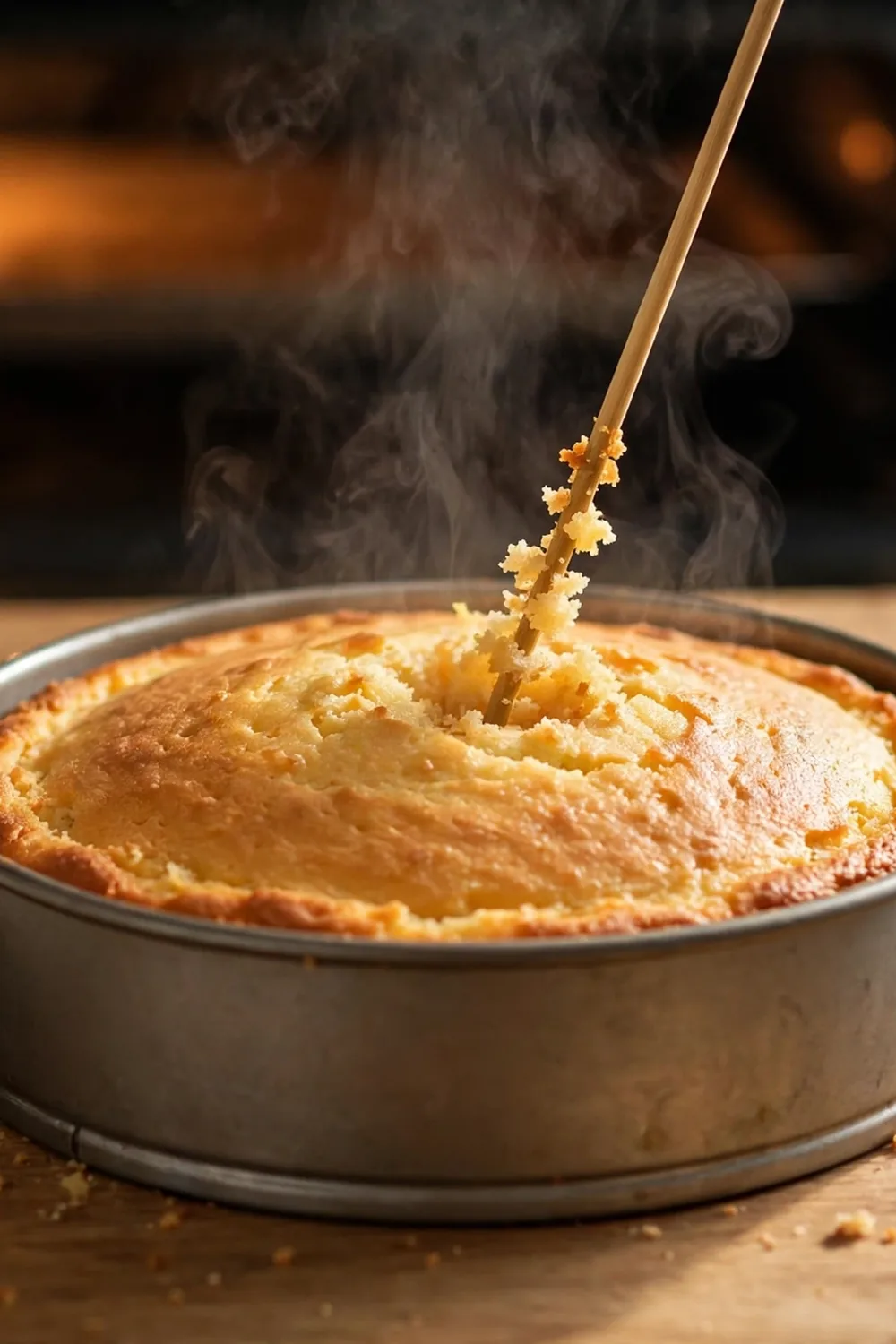
Time to test: 5 minutes before the timer ends
Tool needed: Wooden skewer or toothpick
Done sign: Clean skewer with a few moist crumbs
Rest time: 10 minutes in the pan
A sunken middle usually means the cake needed more time in the oven. The edges can look done while the center is still wet and raw. Test the center before you turn off the oven, and give it five more minutes when the skewer comes out wet.
Cool Cake Properly
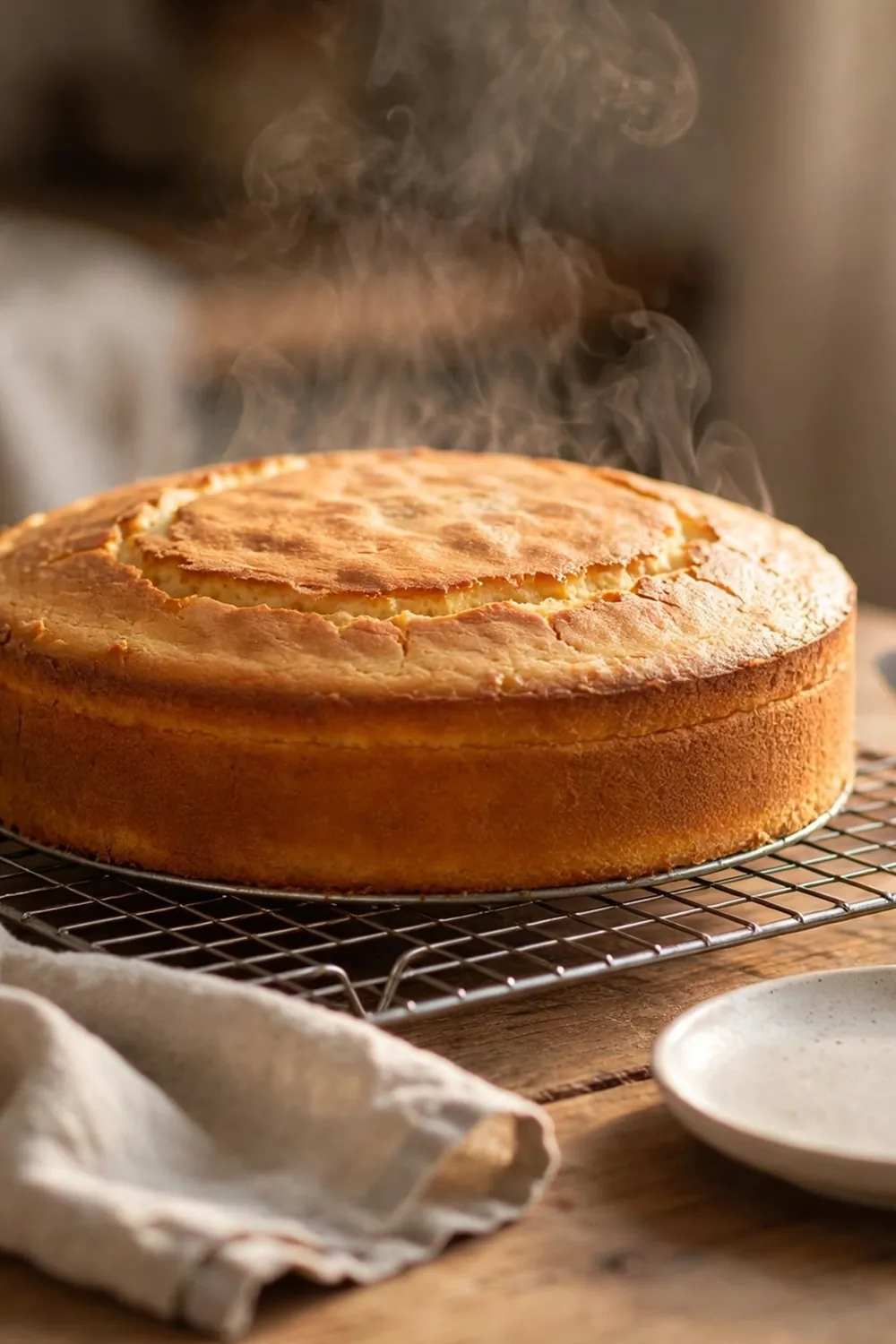
Cutting or moving a hot cake is the fastest way to sink it, even when the bake was perfect. The crumb is still soft, and the structure has not set yet. A sudden jolt or a cold draft can drop the center in seconds flat.
Let the cake cool in the pan for ten minutes, then turn it out onto a wire rack. Wait until the cake feels barely warm before you frost or slice it. Patience here keeps the center high and the crumb tender on every cake you bake.
Common Mistakes
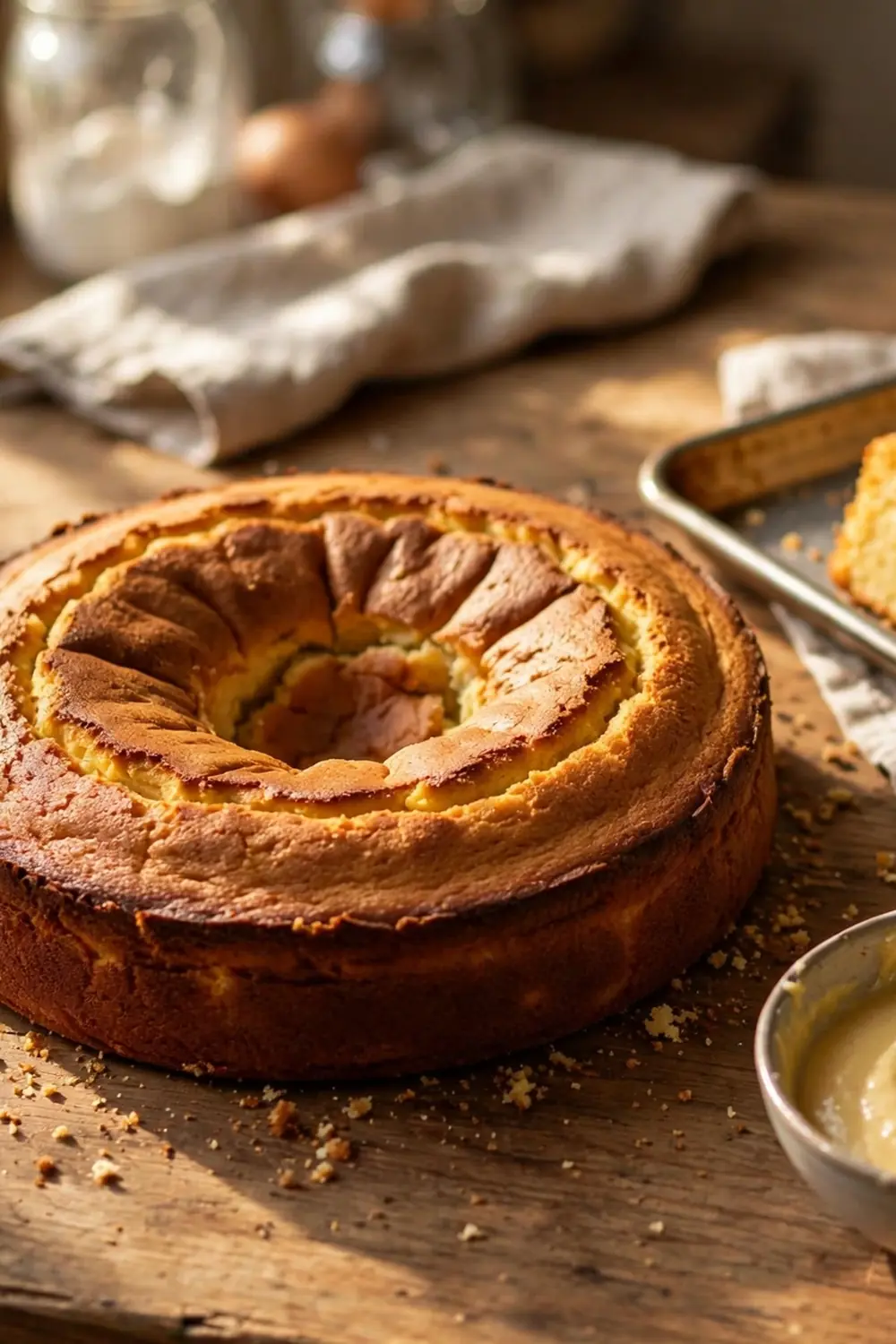
Most sunken cakes come from the same few mistakes, and all of them are easy to fix. Fixing one at a time shows you which change made the difference. Start with the bake time, then the leavening, then the flour, in that order.
- Do not open the oven door during the first half of baking.
- Do not add extra baking powder beyond what the recipe lists.
- Do not overmix the batter after the flour goes in.
- Do not frost or slice the cake while it is still hot.
Perfect Cake Results
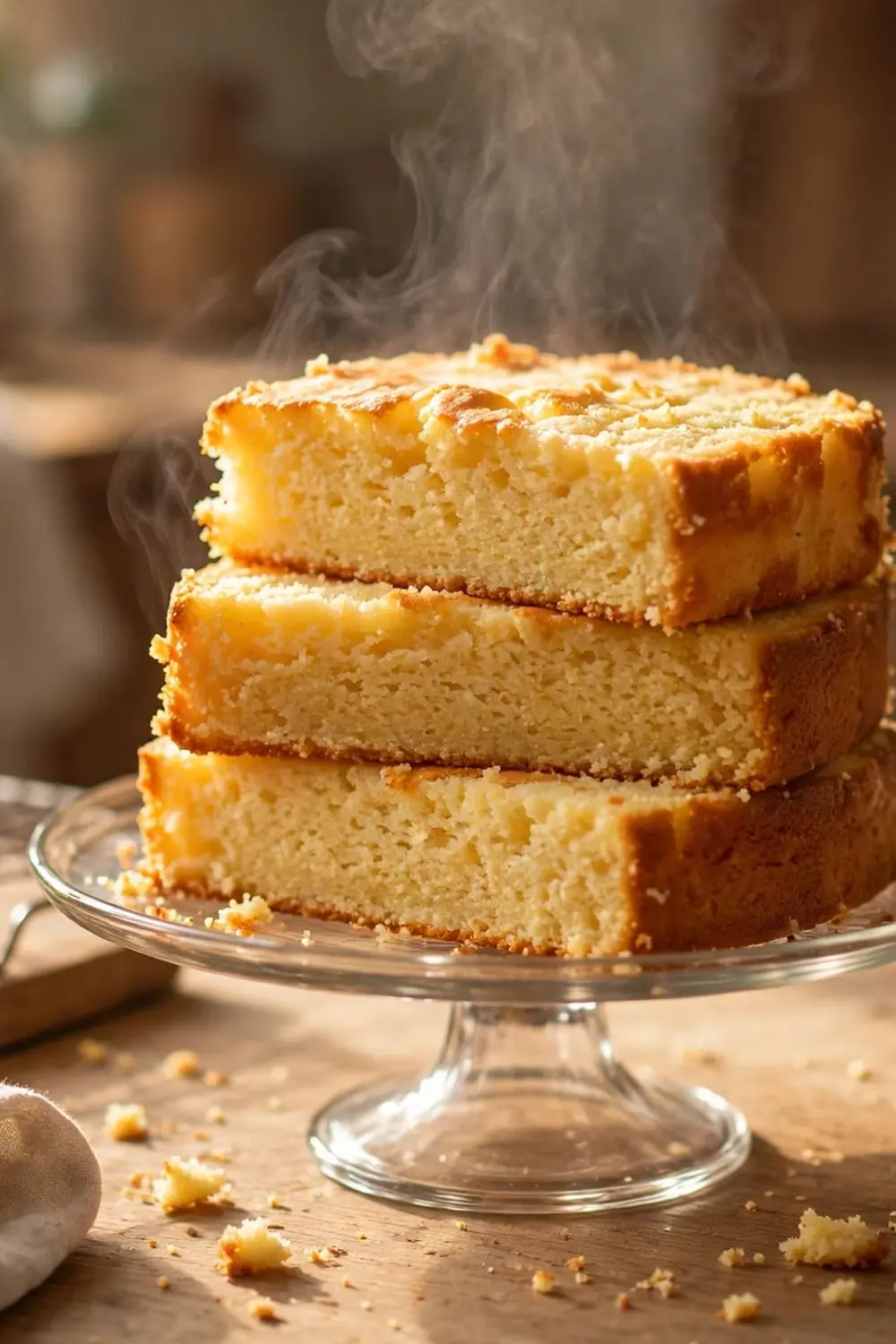
Quick Tip: A done cake springs back when pressed lightly and pulls away slightly from the pan sides. The skewer comes out with a few moist crumbs, never wet batter. Trust these signs more than the color of the crust.
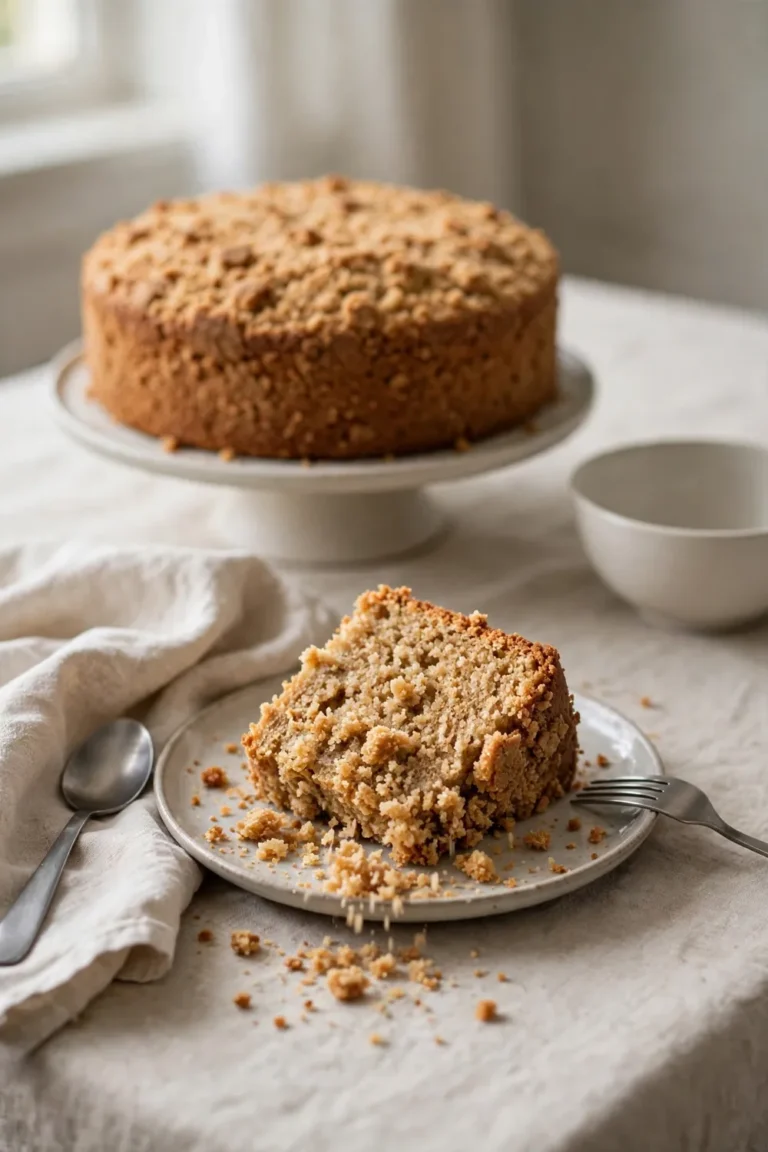
A good cake tells you it worked before you taste it. The top looks level and golden, the center feels firm yet tender, and every slice holds its shape on the plate. That is the finish every fix on this list is working toward every time.
Conclusion
Cake sinking in the middle is not a sign of bad luck in the kitchen. It comes from small, fixable causes, and now you know each one. Measure with care, give your oven a fair chance, and the next cake can surprise you.
Pick one fix from this guide and try it on your next cake. Save this post on Pinterest so the fixes are there when you need them, and share it with anyone whose cakes keep sinking.
I have seen how making this one change can completely shift the result. Bake your next cake with these fixes and enjoy a level, golden slice.