Why Does My Pasta Stick Together After Cooking? Easy Fix Guide
Nothing is more disappointing than draining the pot, only to find pasta sticking together in one clump instead of loose and glossy. The good news is that sticky pasta has clear causes, and each one has a simple fix every single time.
Most pasta sticks for one of a handful of reasons. Too little water, too little stirring, or leaving it sitting can each bond the strands. Small cooking slips add up fast, and the wrong water level makes the problem worse.
This guide walks through each cause one by one, with a fix you can use right away. You do not need special tools or fancy ingredients. Just a few small changes, and your pasta can turn out loose and glossy. If your eggs turn watery too, see our guide on fixing watery scrambled eggs for soft, creamy eggs.
Why Pasta Sticks Together
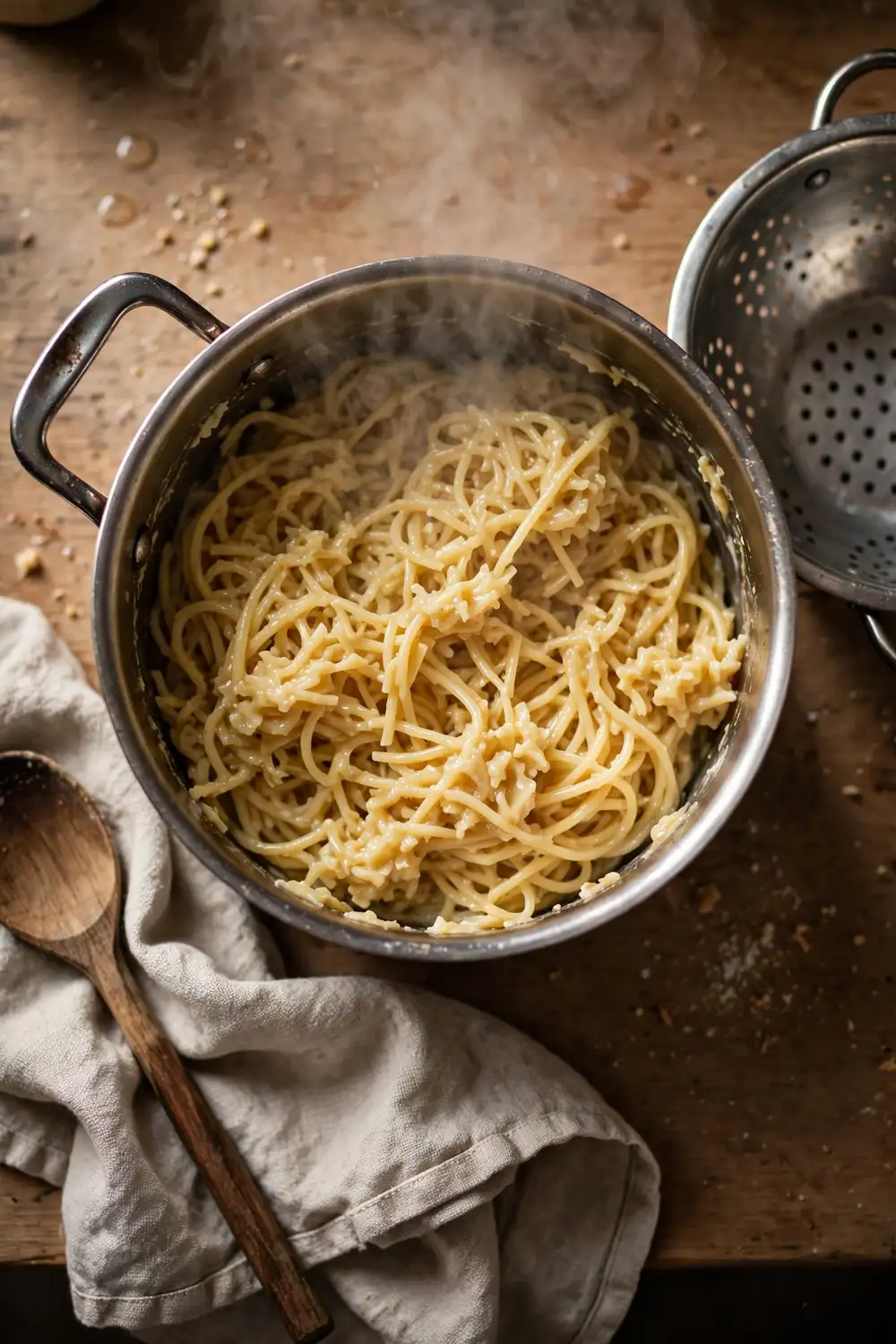
You drain the pasta, turn around for a minute, and the noodles come out in one clump. The flavor is fine, yet the texture spoils the plate. The problem is rarely the recipe, and it starts with how the water is handled.
Too little water, too little salt, and no tossing each push the pasta toward sticking. When any of those three is off, the noodles clump and the pasta sticks together. The good news is that each cause has a simple fix for your very next pot.
Use Plenty of Water
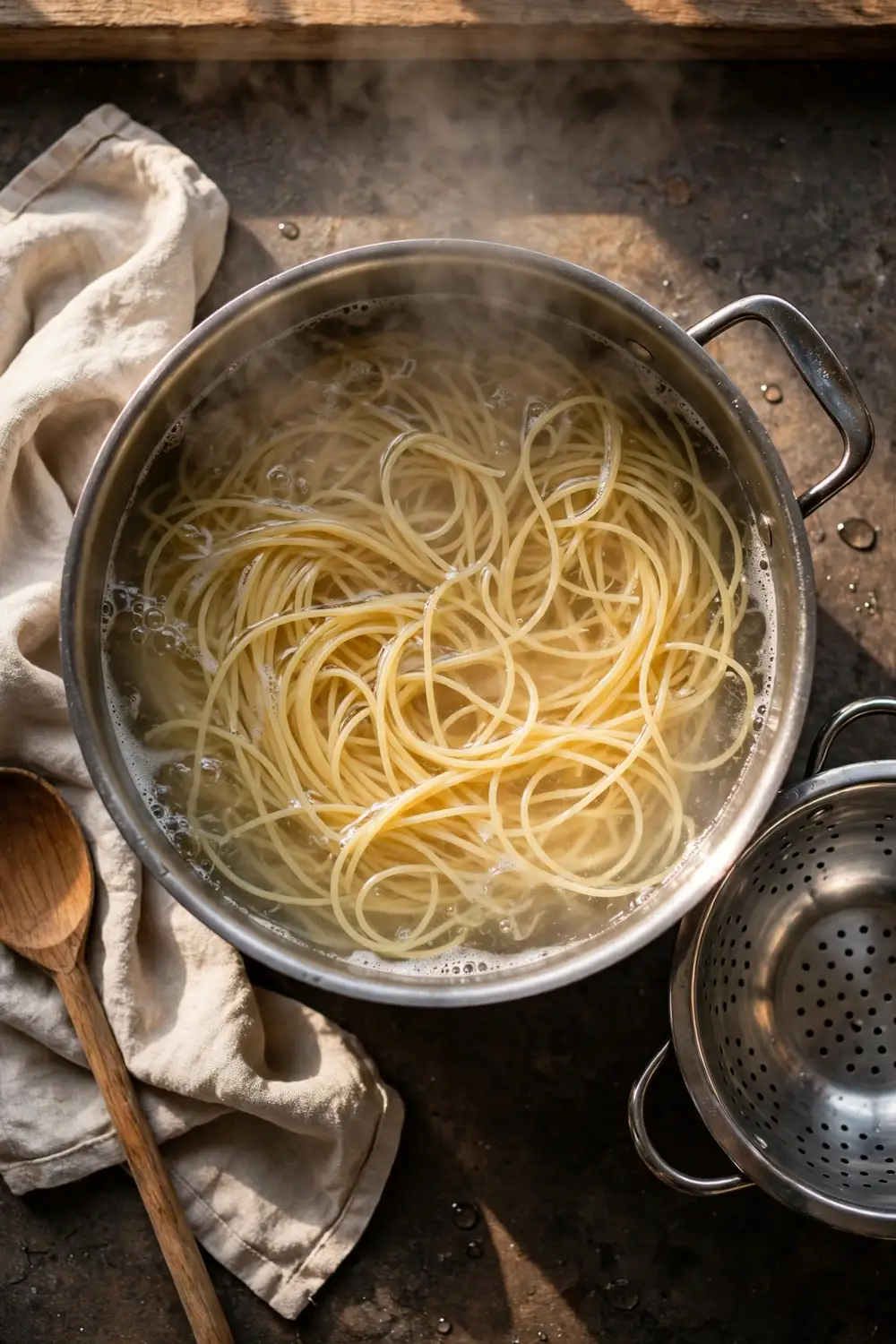
The water you give decides the result more than any other choice, and a crowded pot makes pasta stick. A little water leaves the noodles pressed together. Plenty of water keeps the pasta loose and free every time. Use at least four quarts for one pound.
- Use a large pot with plenty of water.
- Salt the water well before adding pasta.
- Stir the pasta in the first minute.
- Keep the water at a rolling boil.
Stir at the Start
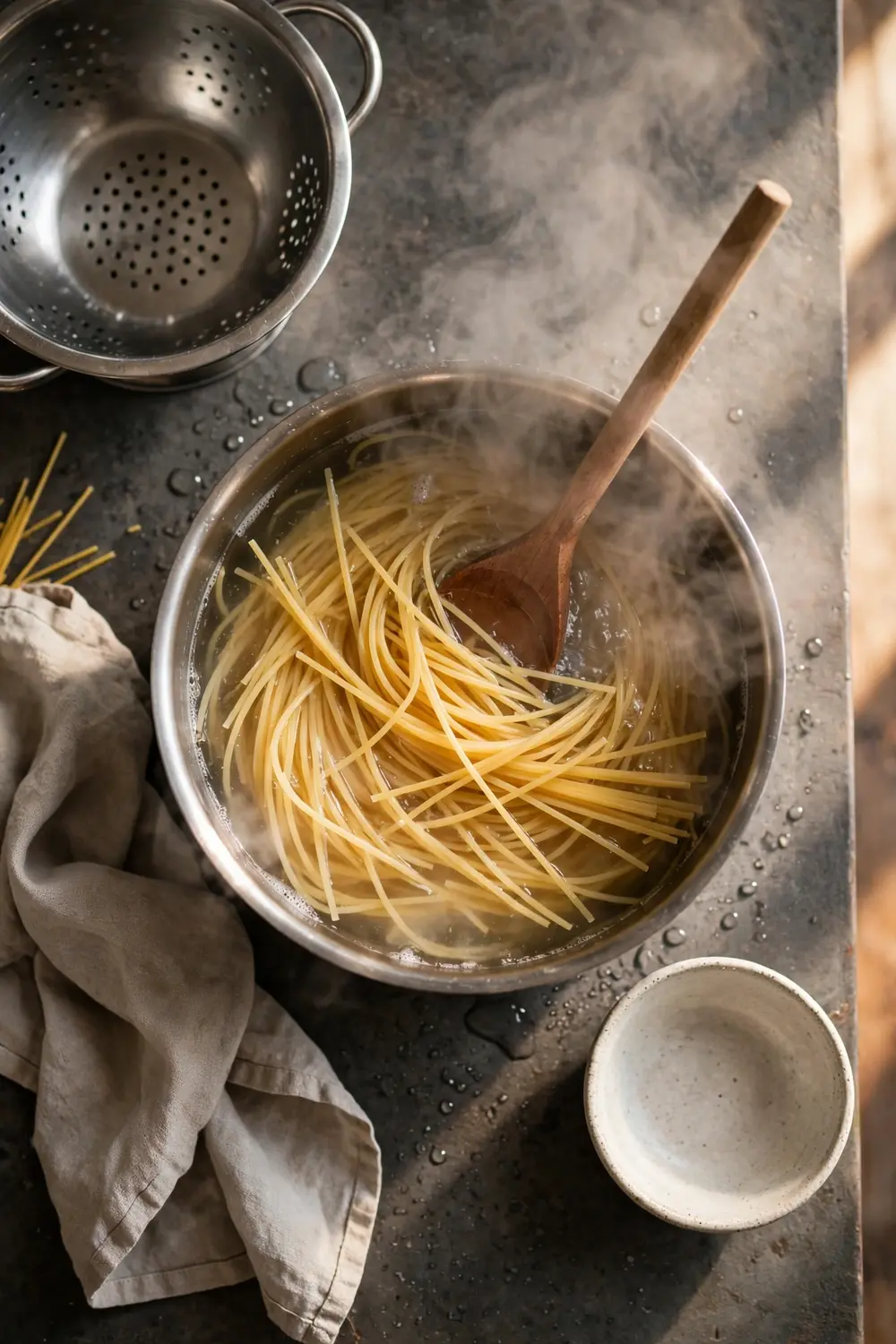
Quick Tip: The first minute of cooking is the easiest way to stop pasta sticking, and it takes no extra time. A quick stir separates the strands before they bond. Stir once, and the pasta stays loose and separate.
Fresh pasta releases starch at once, and the strands stick if they sit still. A good stir in the first minute breaks the strands apart before they bond. Stir once more, and the pasta turns loose and tender every single time you cook it.
Skip the Oil
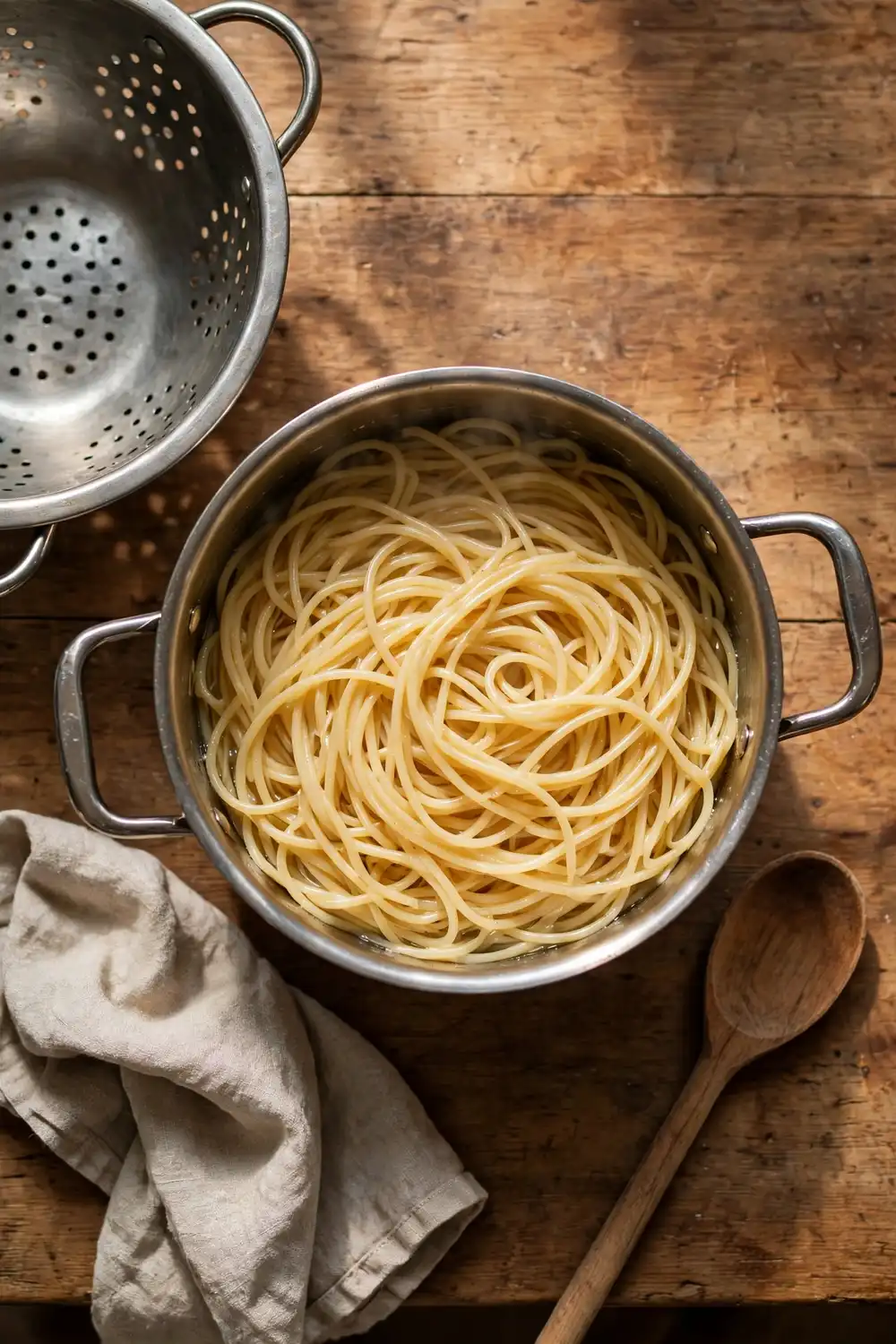
Common Mistake: Many cooks add oil to the pasta water, thinking it will stop sticking, and the oil coats the noodles at once. The sauce slides off, and the pasta still sticks. Pasta needs salt and water, not oil, to stay loose.
The Fix: Skip the oil, and toss the pasta with sauce right after draining. The sauce coats the noodles, and the pasta stays separate. No oil means the sauce clings better every single time you cook pasta.
Oil coats the noodles, so the sauce slides off and the pasta still clumps. A well salted pot of water and a quick toss with sauce do far more. Skip the oil once, and the pasta turns loose and tender every single time you cook it.
Drain and Toss Fast
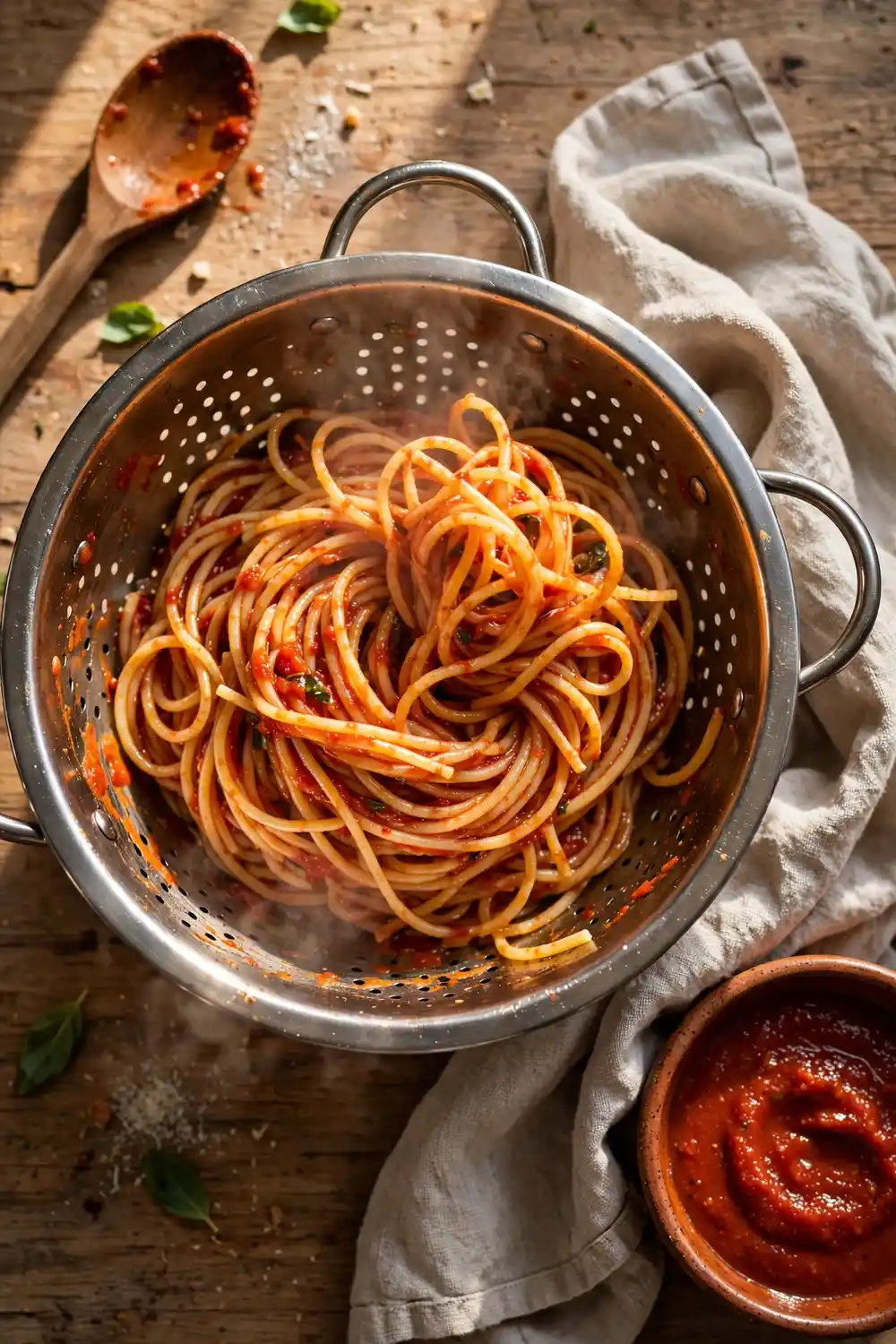
What You Need:
- A large colander, to drain the pasta fast.
- Tongs, to toss the pasta with sauce.
- A warm pan, to hold the sauce ready.
- Patience, to work quickly after draining.
Draining and tossing fast keeps the starch from setting between the strands, and the sauce coats each noodle. The pasta looks glossy for a moment, then stays loose and separate. Tossing fast solves the problem gently every single time you cook pasta.
Sauce Saves the Pasta
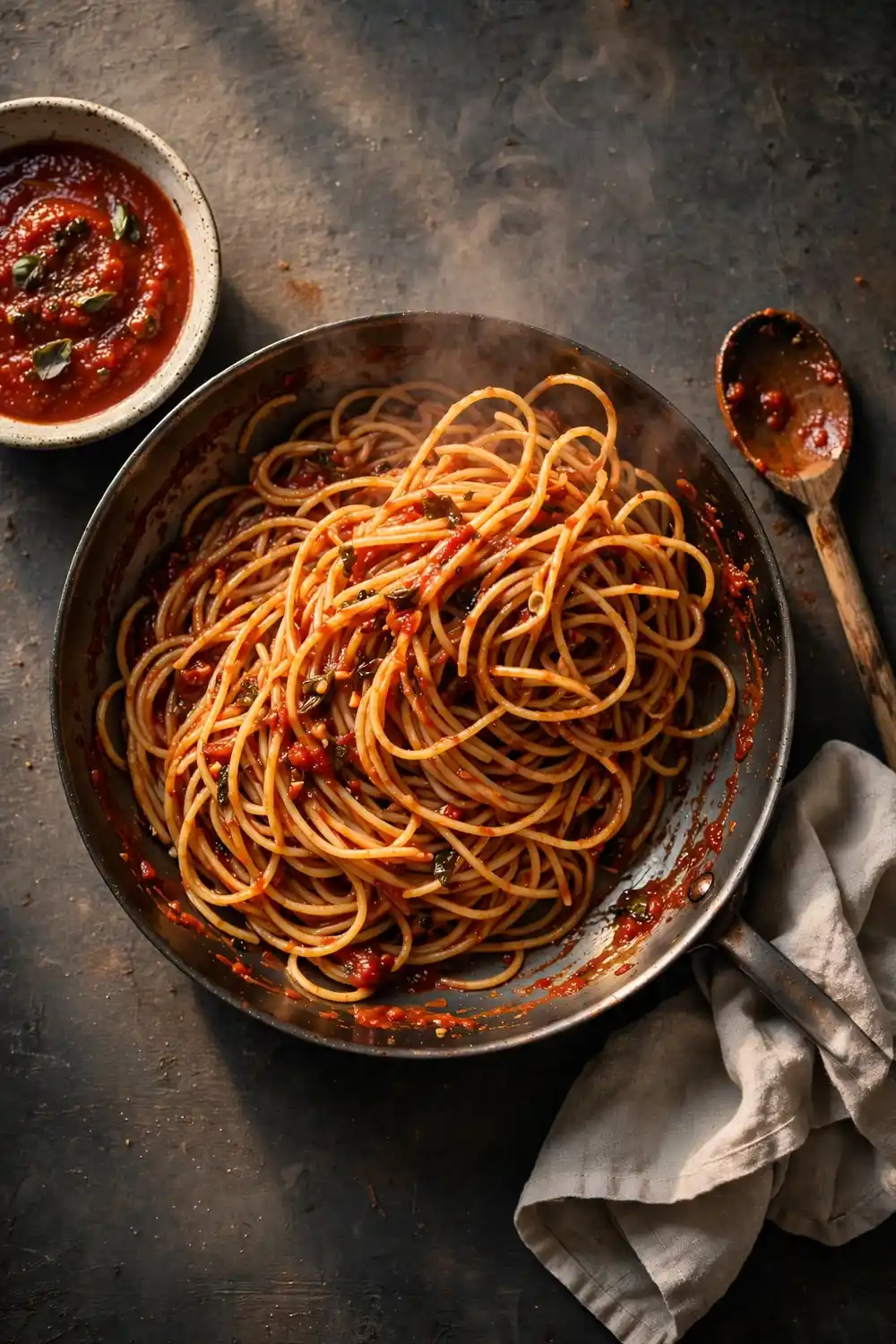
Before: Plain pasta left in the colander turns into a sticky lump within minutes. The strands bond together, and the pasta feels heavy and clumped. The flavor is good, but the texture spoils the dish.
After: Pasta tossed with sauce stays loose and glossy. The sauce coats each strand, and the pasta feels light on the tongue. The flavor stays clean, and every serving looks neat.
Toss the pasta with sauce right after draining, and let the sauce coat every strand. The noodles stay separate, so the pasta turns loose and glossy. A quick toss takes a minute, yet the pasta looks far better for the effort every time you serve it.
Fix Sticky Pasta Fast
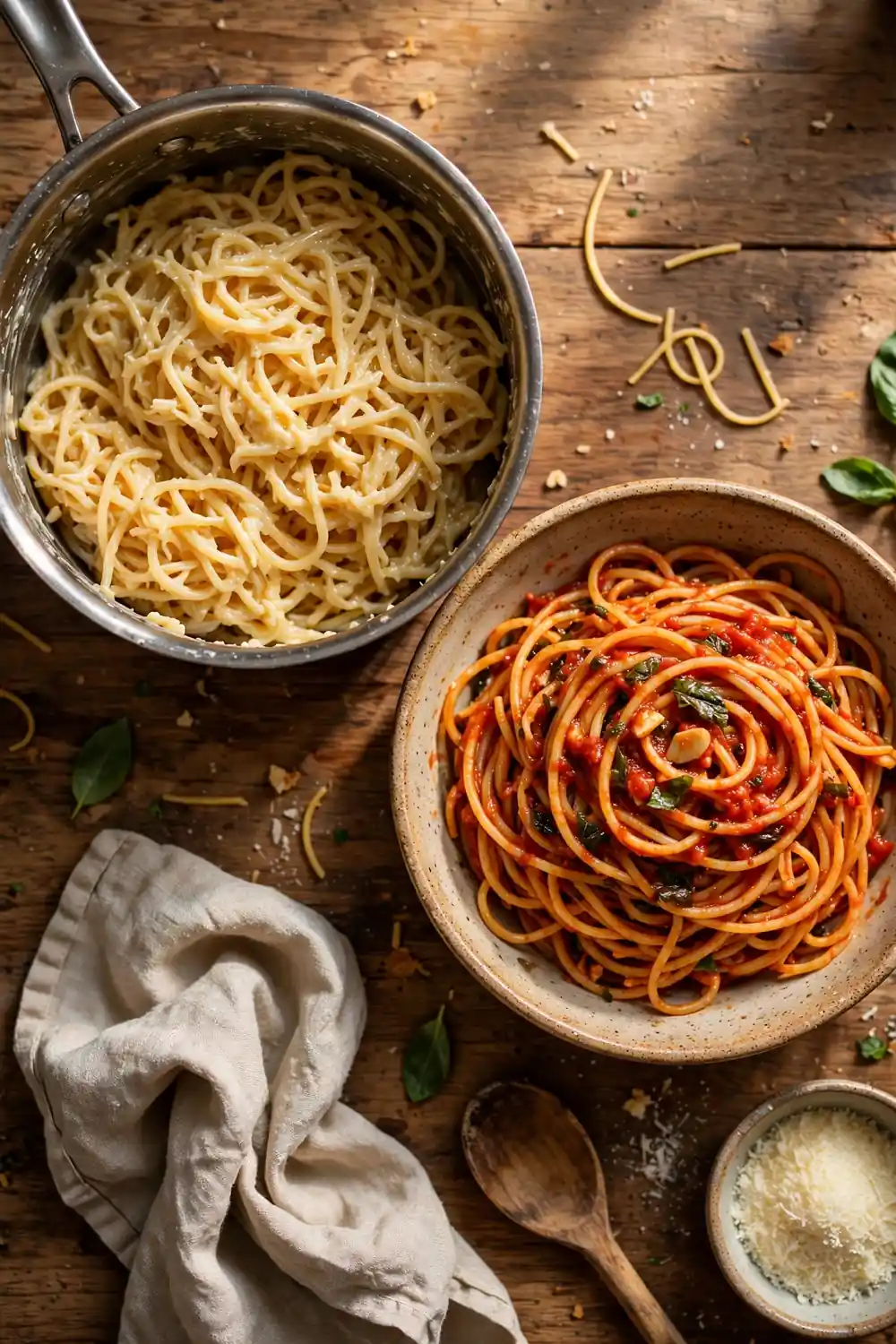
Do This:
- Rinse stuck pasta under hot water.
- Toss the pasta with warm sauce.
- Add a splash of pasta water.
- Serve the pasta at once.
Avoid This:
- Do not add oil to the pasta water.
- Do not leave pasta sitting in the colander.
- Do not serve sticky pasta and hope no one notices.
- Do not rinse pasta with cold water.
Sticky pasta is not ruined, and the flavor is still good inside the pot. Rinse it with hot water, toss it with sauce, and serve it at once. A little care saves dinner, and the pasta tastes great anyway for everyone tonight.
Store Pasta the Right Way
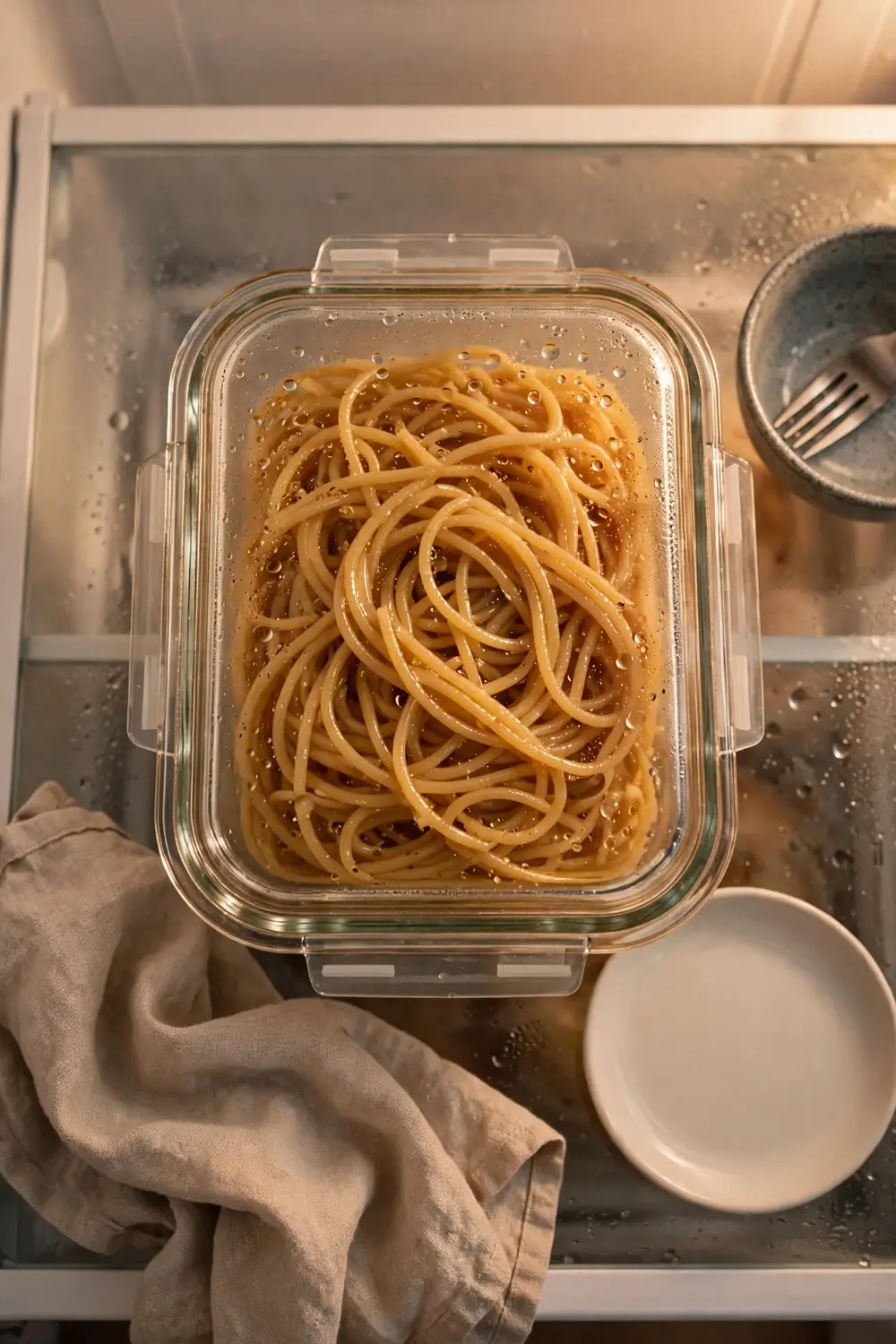
Quick Facts:
- Best Rule: Toss with sauce before you store it
- Fridge Life: Keep leftovers up to four days
- Freezer Life: Freeze pasta up to three months
- Result: Pasta that reheats well and stays loose
Storing plain pasta uncovered in the fridge dries the surface into hard bits, even when the pasta was perfect. The cold pulls moisture from the top, and the texture turns stiff and clumped. Toss it with sauce, seal it tight, and the pasta stays loose for days after you serve it.
Reheat Gently
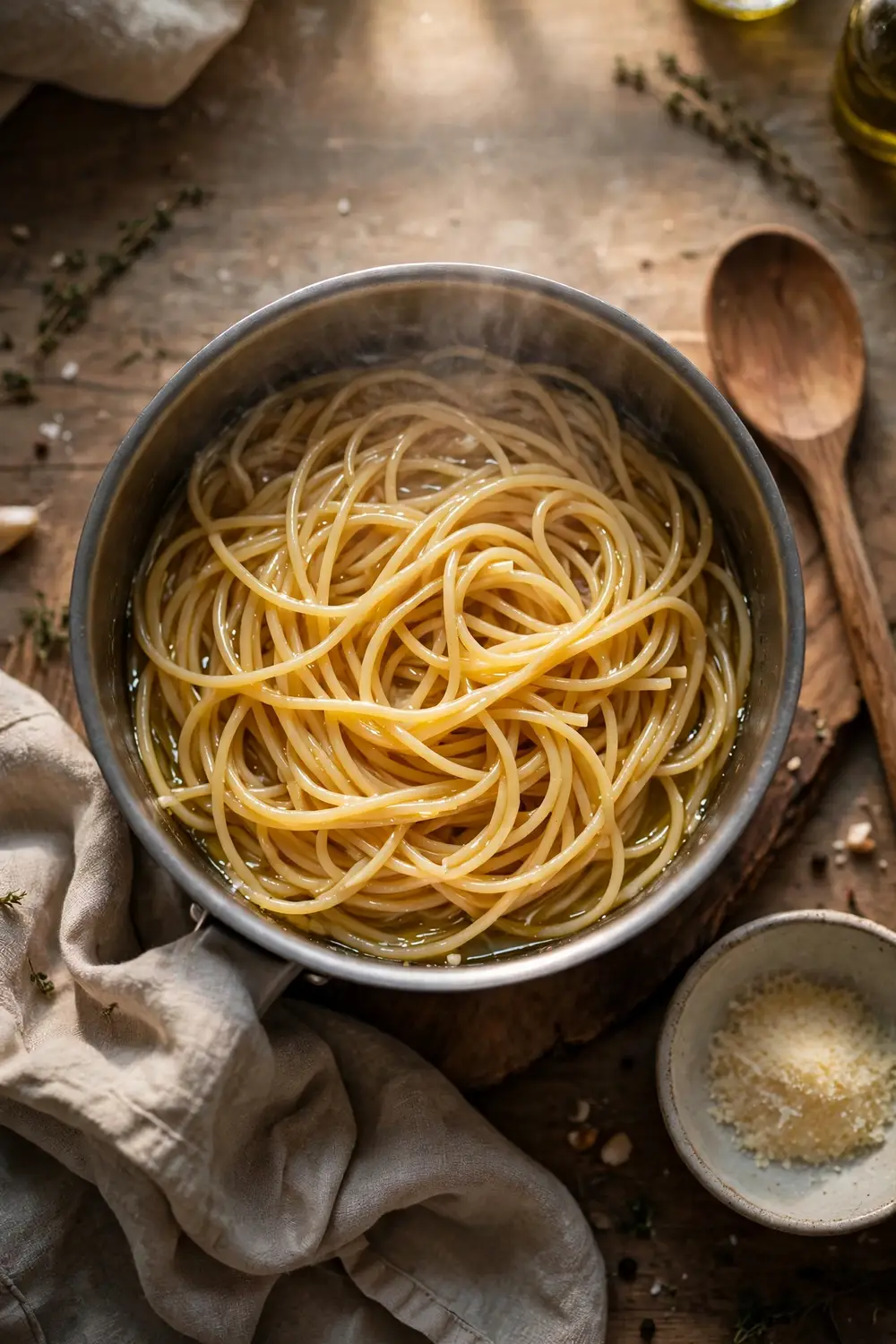
Pasta reheated fast over high heat dries out before it warms through. The strands turn hard, and the pasta clumps in the pan. Gentle reheating solves the problem before it starts warming every time. High heat is the fastest way to ruin good pasta.
Warm the pasta low and slow, stirring often and adding a splash of water if it dries. The heat stays gentle, so nothing clumps. Slow reheating keeps the pasta loose, soft, and easy to serve every time you warm it. Take your time and the pasta will reward you.
Common Mistakes to Avoid
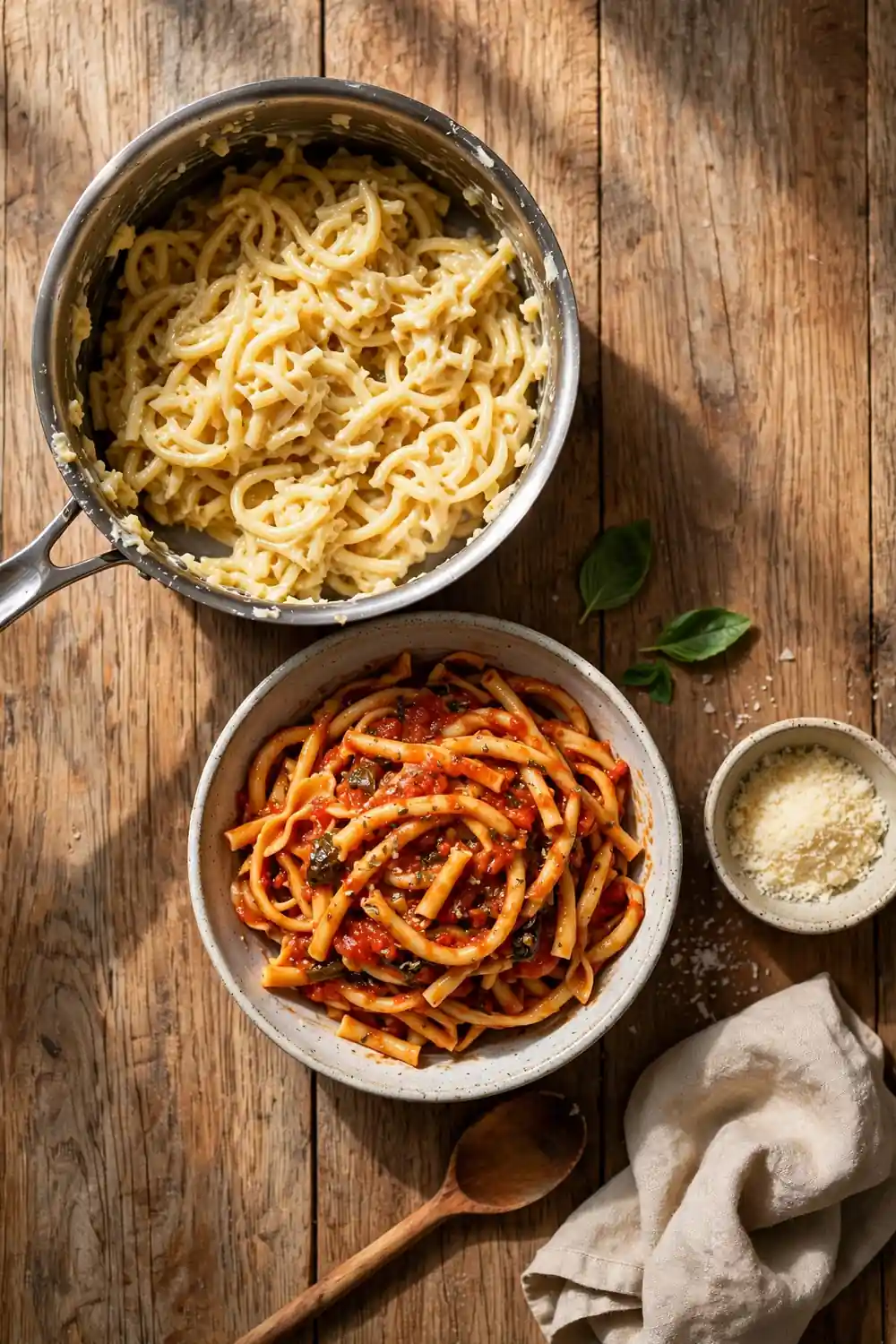
Most sticky pasta comes from the same few mistakes, and all of them are easy to fix. Changing one thing at a time shows you which fix made the difference. Start with the water, then the stirring, then the sauce, in that order.
- Do not crowd the pasta in a small pot.
- Do not skip stirring in the first minute.
- Do not add oil to the pasta water.
- Do not leave pasta sitting after draining.
What Perfect Pasta Looks Like
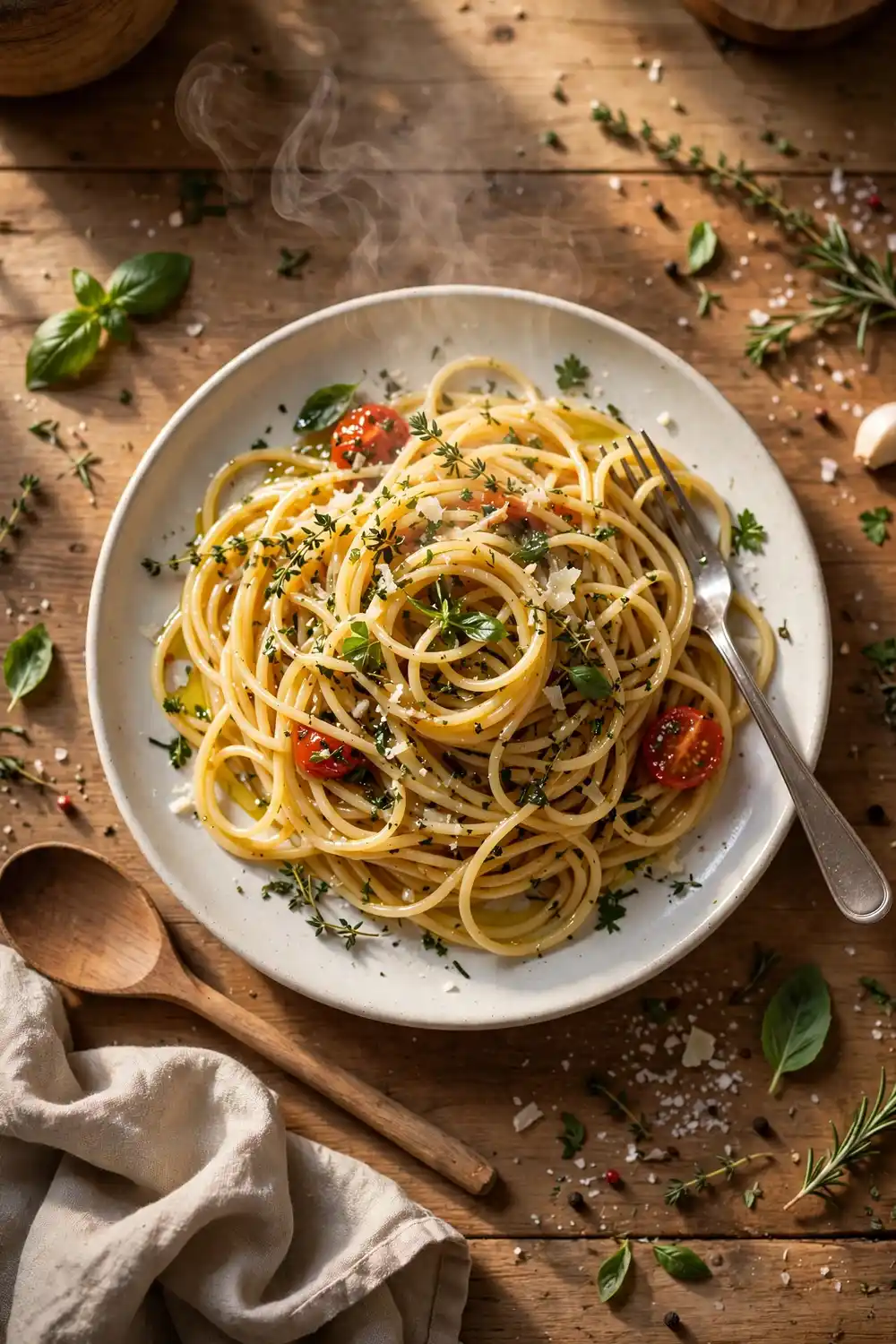
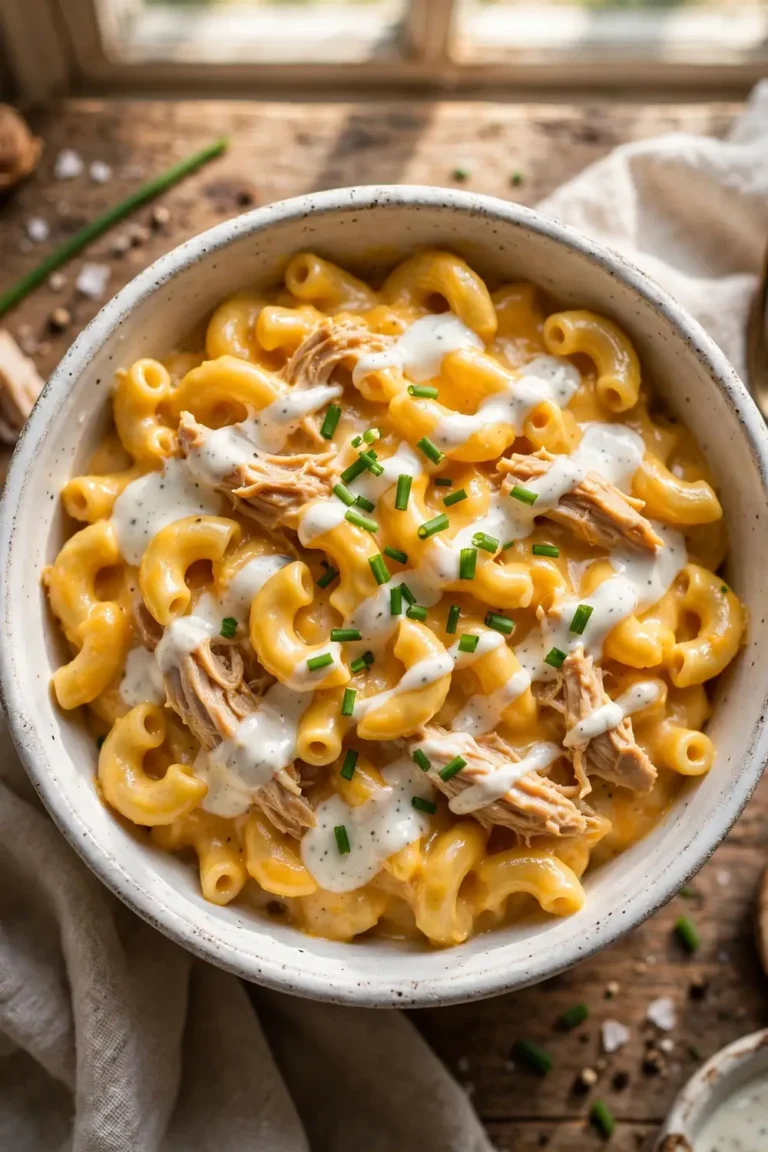
Quick Tip: Perfect pasta looks glossy and loose, with separate strands that shine gently. The pasta feels light, never sticky or clumped. Trust these signs more than the color of the noodles.
Good pasta tells you it worked before you taste it. The pasta looks glossy and loose, the strands stay separate, and every serving sits neat on the plate. That is the finish every fix on this list is working toward for you every single time.
Conclusion
Pasta sticking together is not a sign of bad luck in the kitchen. It comes from small, fixable causes, and now you know each one. Use plenty of water, stir early, and the next pot can surprise you.
Pick one fix from this guide and try it on your next pot. Save this post on Pinterest so the fixes are there when you need them, and share it with anyone whose pasta sticks together.
I’ve seen how making this one change can completely shift the result. Make your next pot with these fixes and enjoy loose, glossy noodles.
One Comment