Why Did My Macarons Crack on Top? Easy Fix Guide
If you pulled a tray of cracked macarons from the oven, you know how frustrating that moment feels. You followed the recipe and piped neat rounds, only to see lines split across the tops.
Shells crack when steam or air inside the batter has no gentle way out. Wet whites, lumpy almond flour, rushed folding, or a hot oven can all push the tops apart.
This guide walks through each cause in order, then gives a fix for your next batch. Age the whites, sift well, fold with care, rest the shells, and bake low and slow. And if a flat starter is your trouble instead, see why sourdough starter not bubbling happens and how to wake it up.
Why Macarons Crack on Top
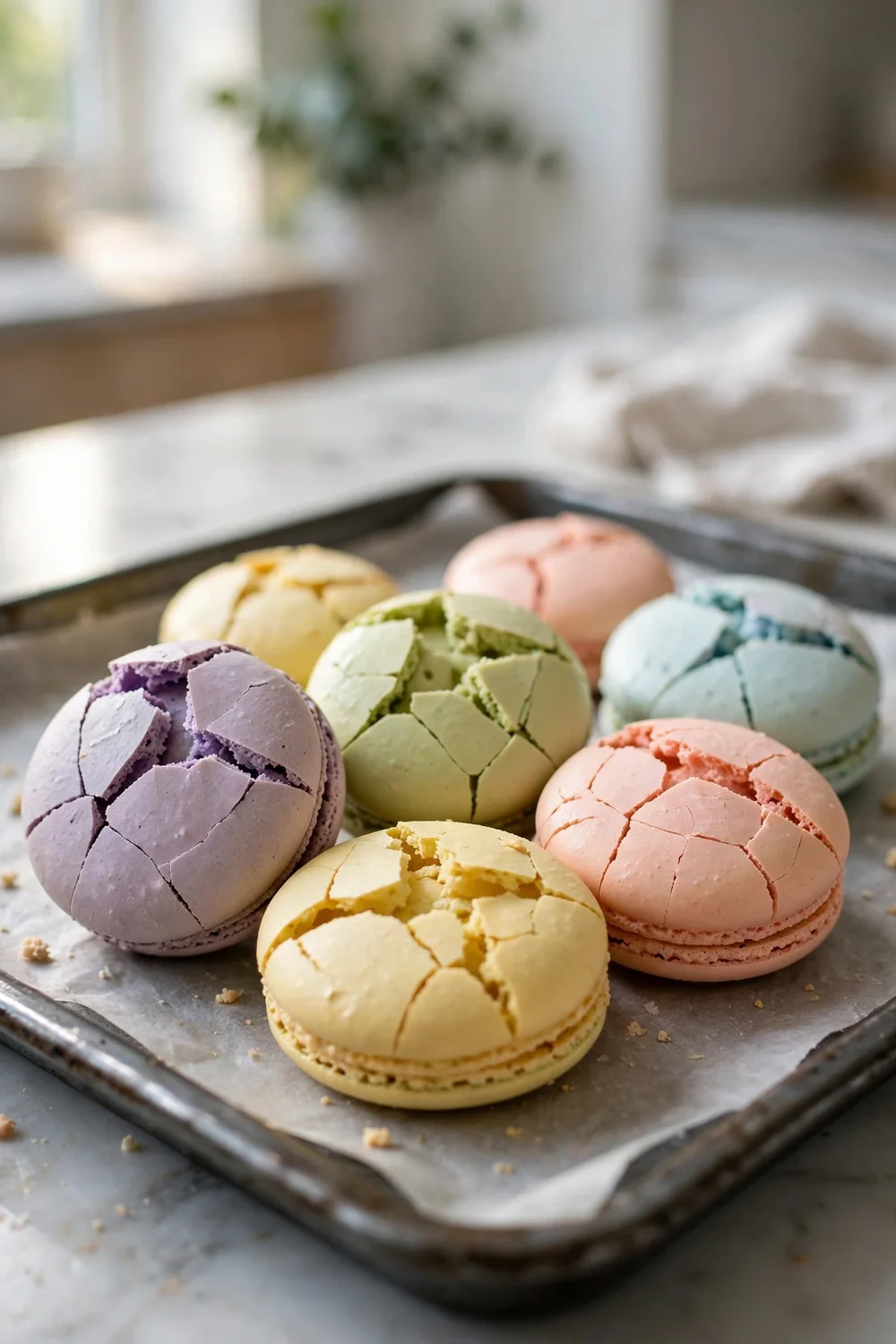
Common Mistake: Most bakers blame the recipe when tops split, but the fault is usually heat, air, or moisture working together. Overmixed batter traps extra air, wet whites add extra water, and a hot oven turns that water to steam in seconds.
The Fix: Fix one cause at a time, starting with folding, resting, and oven heat. Once you see how the three work together, the steps below make clear sense.
A missing rest can cause the same problem, since a soft top tears more easily than a dry skin. Uneven piping adds to the risk, because small shells bake faster than large ones on the same tray. The top sets, so pressure below has to break through.
Age the Egg Whites
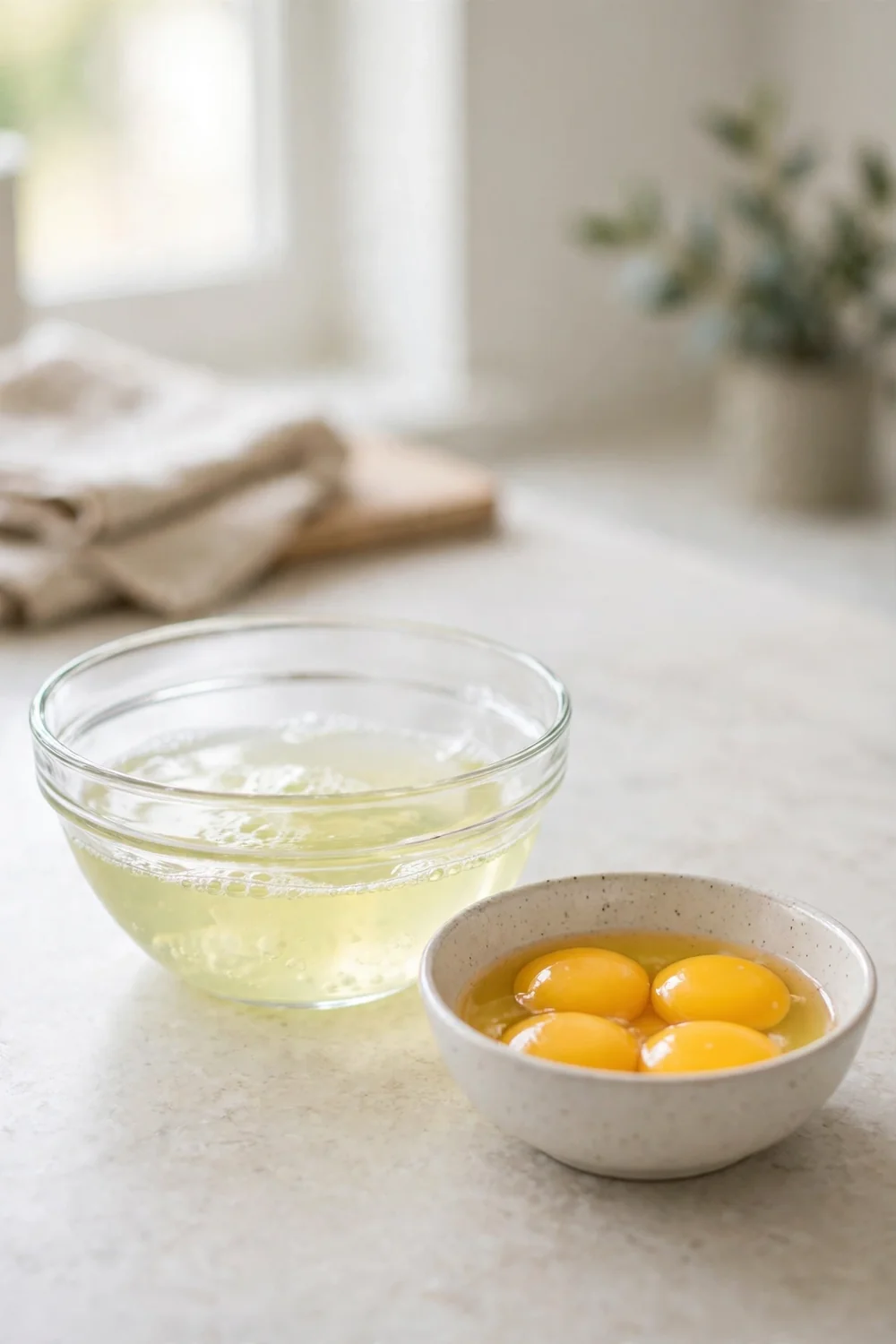
Fresh egg whites hold extra water, and that water turns to steam in a hot oven. Aged whites are slightly thicker and more stable, so they whip into a firm meringue that holds its shape. That steadier base leaves less free water in the batter.
- Separate the eggs one to two days before baking.
- Keep the whites covered in the fridge until baking day.
- Let the whites reach room temperature for thirty minutes before you whip them.
- Use a clean bowl, and check that no yolk slipped in.
Sift the Dry Ingredients

Do This:
- Sift the almond flour and powdered sugar together twice.
- Discard any hard bits left in the sieve.
- Pulse stubborn lumps in a food processor, then sift again.
Avoid This:
- Do not push large chunks through the sieve.
- Do not skip the second sift, since fine lumps hide in the mix.
- Do not fold lumpy dry ingredients into the meringue.
Almond flour clumps easily, and those lumps trap air and bake into weak spots in the shell. Powdered sugar can clump too, which leaves gritty patches that crack as the tops rise. Sifting blends the two into a fine, even mix that folds smoothly into the meringue.
Fold the Batter Right
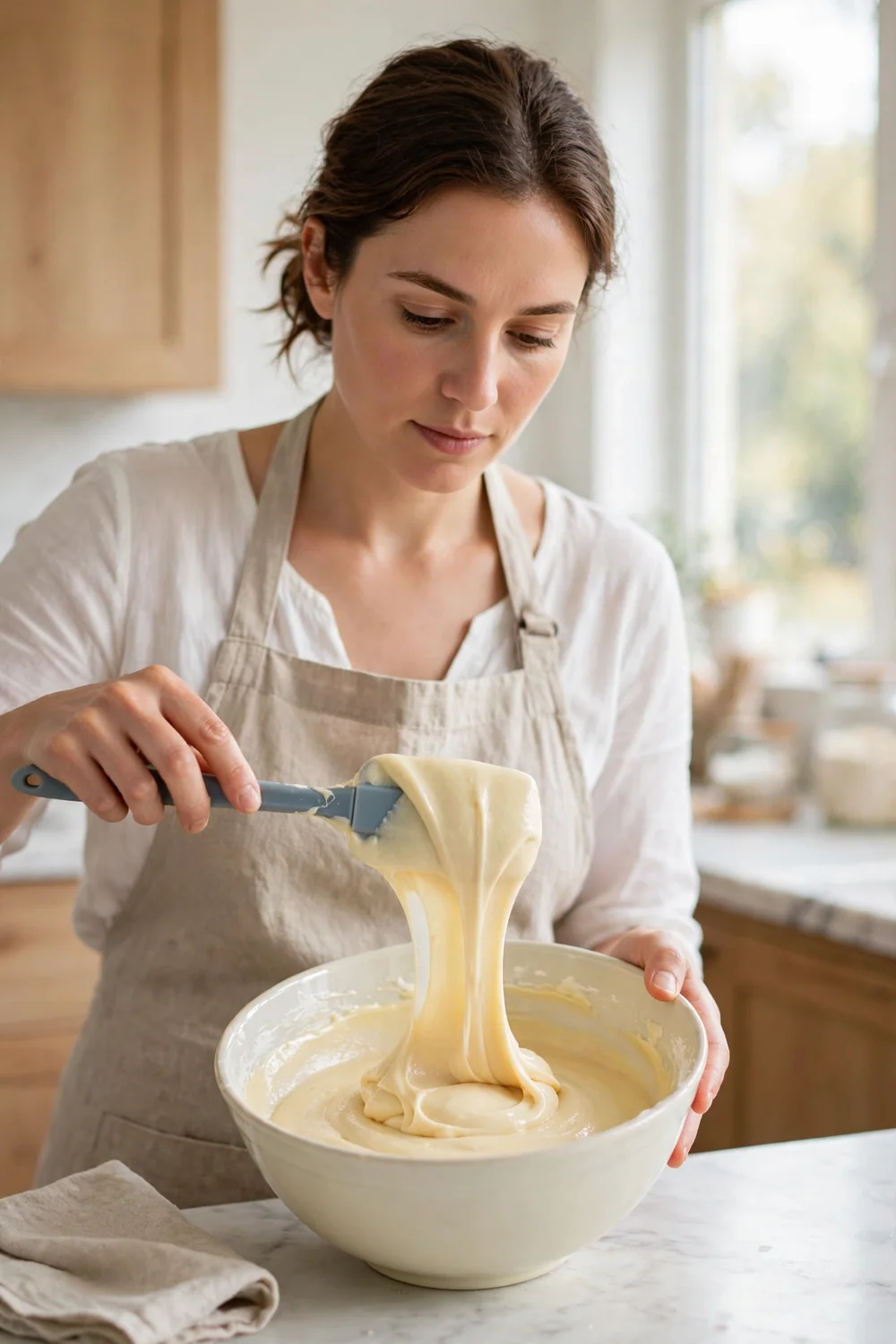
Folding, called macaronage, sets the batter texture that decides whether shells stay smooth. Underfolded batter holds too much air, so the tops puff and split in the oven. Overfolded batter turns thin and spreads flat, which can also weaken the tops. In my experience, watching the ribbon beats counting strokes.
Cut down the center, sweep under the batter, and fold it over, then turn the bowl. Repeat slowly, and test by lifting the spatula to watch the ribbon. Stop when the batter flows like lava and a figure eight holds briefly. Watch the flow, not the count.
Pipe Even Shells
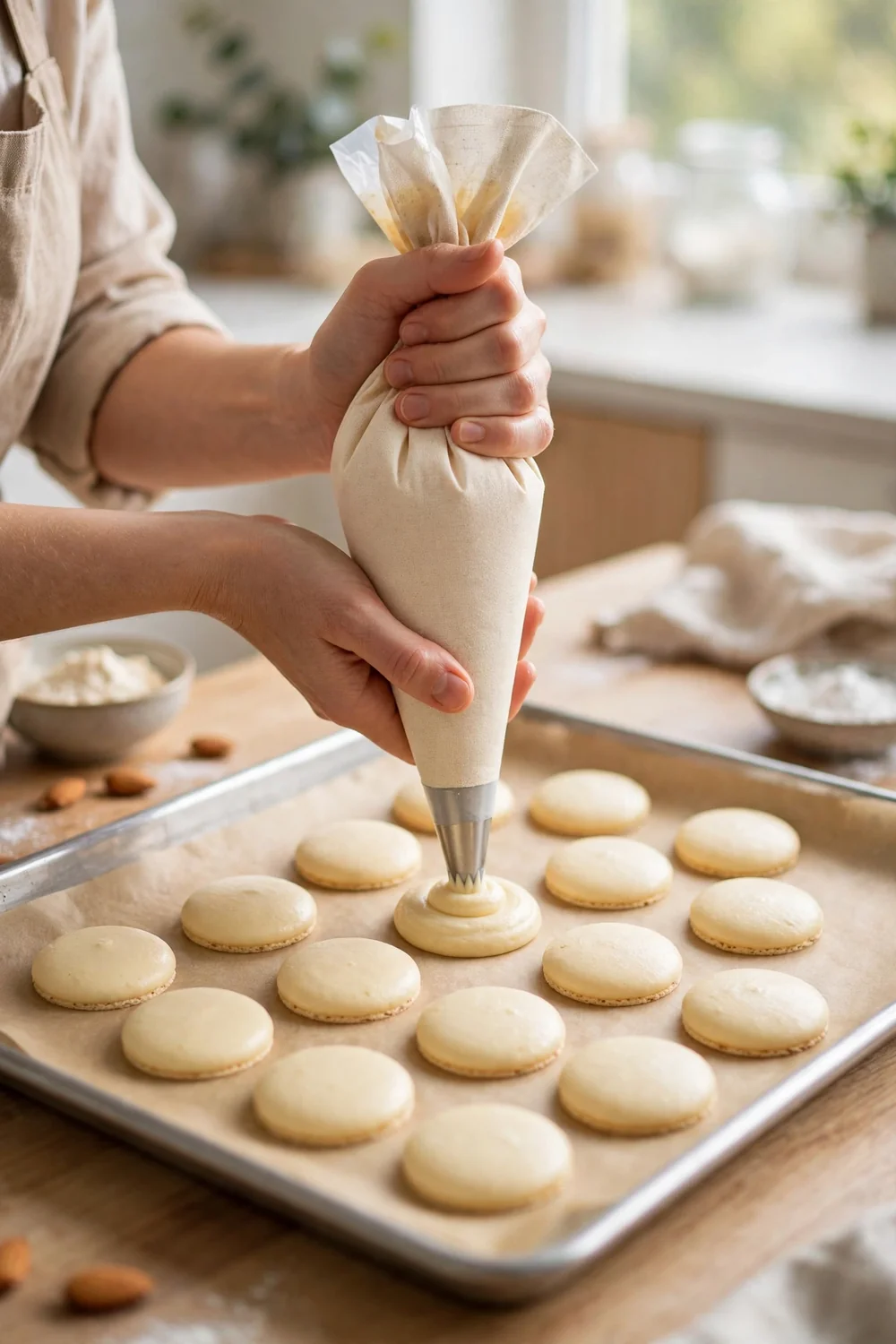
Tool: Piping bag with a round tip
Spacing: Leave room between shells for hot air
Template: Use one for matching sizes
Best For: Trays that bake in one even batch
Even shells bake at the same pace, so no shell dries out while a larger one still rises. Uneven piping leaves small shells overbaked and large shells underbaked on the same tray, and that gap invites cracks. A steady hand and a template keep every round the same size.
Rest the Shells First
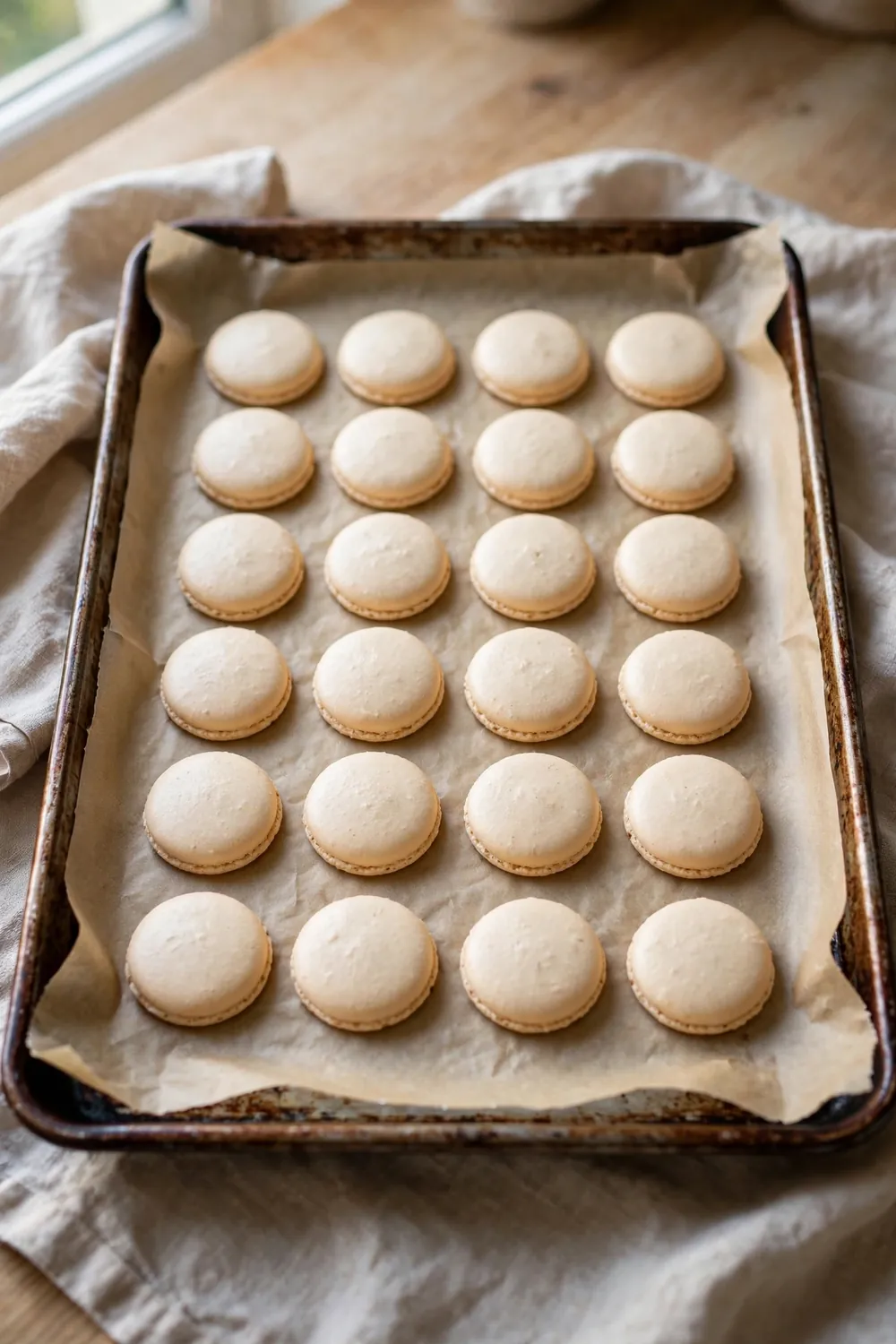
Quick Tip: Let the tray sit for thirty to sixty minutes, until the tops feel dry and matte. Touch one lightly, and if no batter sticks, the tray is ready. On a humid day, rest longer or set the tray near gentle moving air.
Resting lets piped shells form a dry skin that holds the top together in the oven. That skin forces steam to escape from the bottom, where it lifts the shell into feet instead of splitting the dome. Skipping the rest leaves the top soft and weak.
Use the Right Baking Sheet
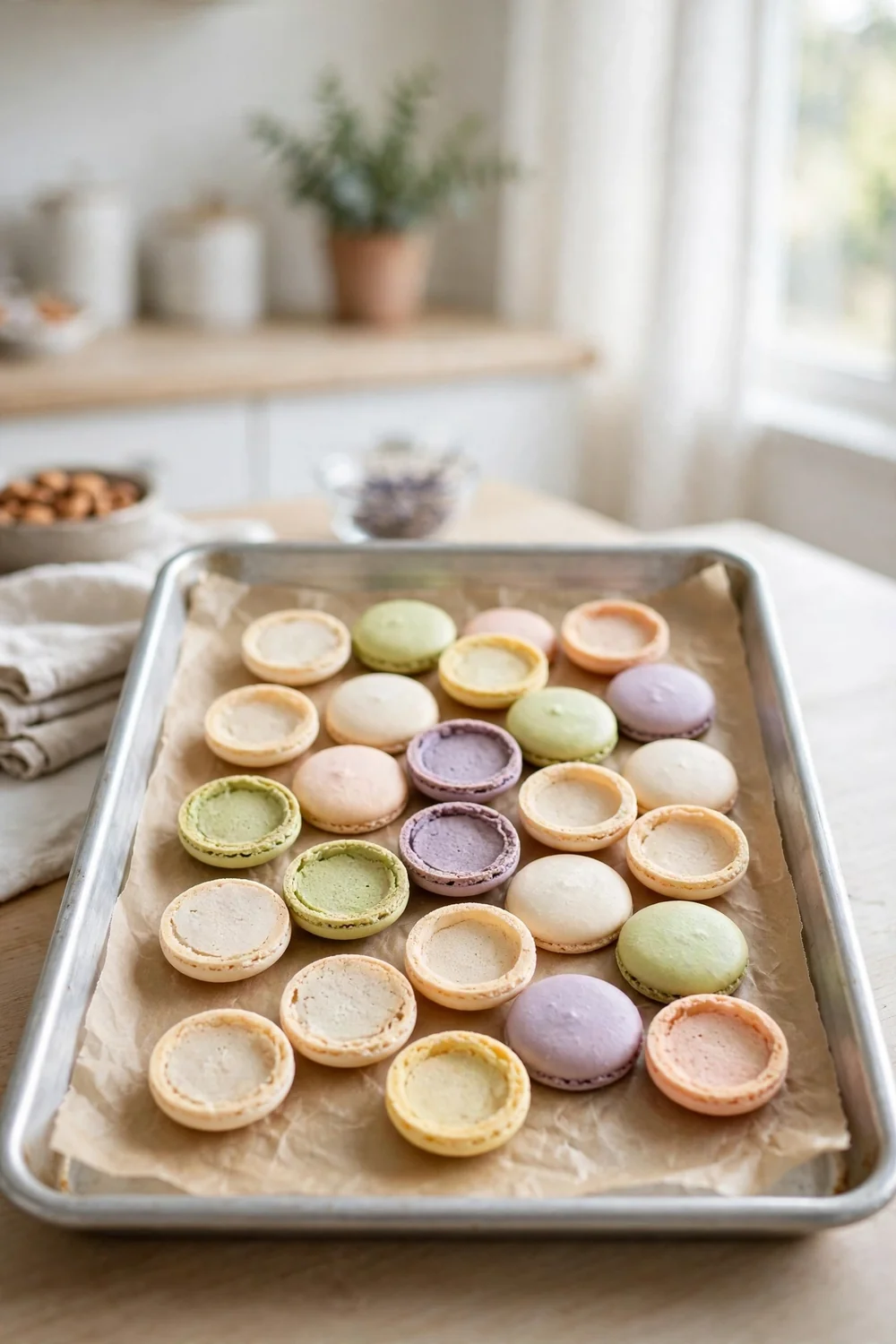
Before: Dark pans absorb heat and bake the bottoms faster than the tops can set, which raises the risk of splits. Insulated or warped trays heat unevenly, so one side bakes faster than the other.
After: A light aluminum sheet gives even heat, so every shell rises and sets at the same pace. Parchment or a silicone mat keeps the bottoms from browning too fast.
Line the sheet with parchment paper or a silicone mat, and skip greasing, since grease spreads the batter and browns the bottoms too fast. Use one tray per bake, and let the sheet cool fully before piping the next batch. A cool, flat sheet keeps the rounds even.
Bake at Low Heat
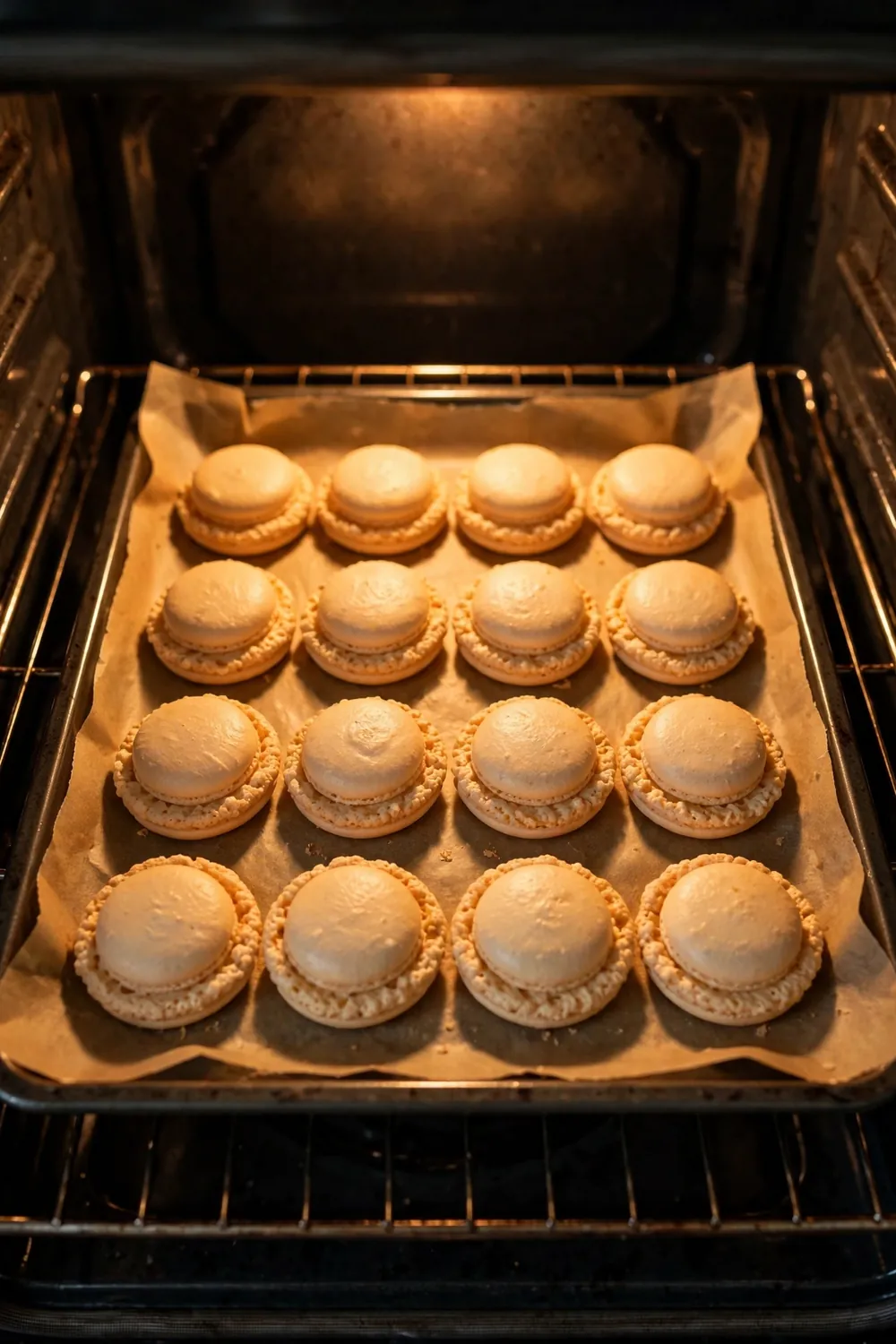
What You Need:
- Oven thermometer: Shows true heat, since most home ovens run hot.
- Center rack: Gives the tray even heat from top and bottom.
- Light aluminum tray: Bakes shells evenly without scorching the bottoms.
- Timer: Keeps the bake on track without opening the door.
A hot oven turns water in the batter to steam too fast, and the pressure splits the tops. Lower heat gives the shells time to rise and set without tearing. Bake at 300 to 325 degrees Fahrenheit, on the center rack, one tray at a time.
Cool Them Slowly
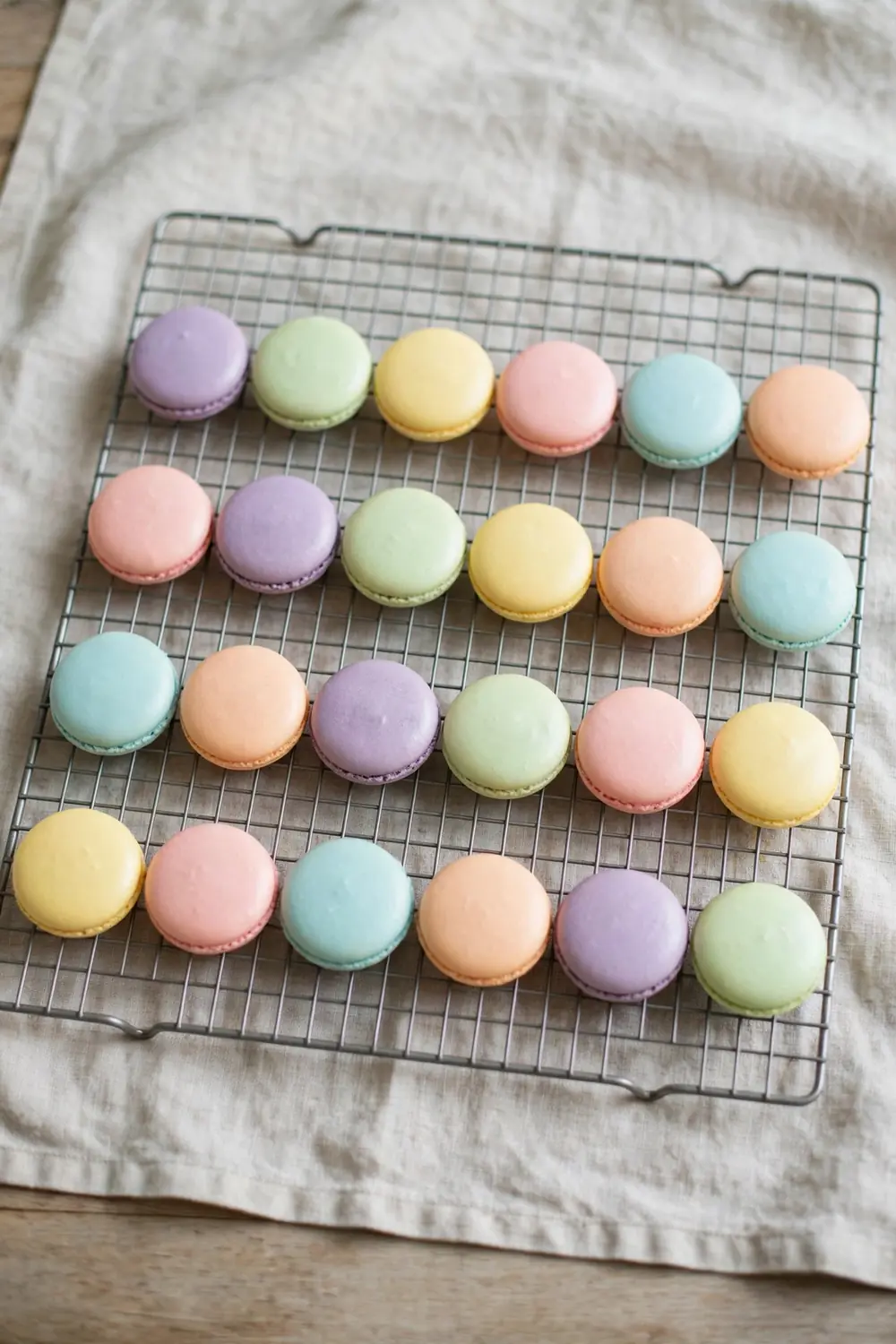
A change in temperature can tighten the tops while the centers still hold steam, and that tension can split a smooth shell. Pulling the tray into cold air or onto a cold counter makes the shock worse. Let the shells cool gently in the pan, so the heat leaves slowly.
Leave the tray on a wire rack for ten to fifteen minutes, until the shells feel set and cool to the touch. Then lift them from the parchment and let them cool on the rack. Do not stack warm shells, since steam softens the tops.
Common Mistakes to Avoid
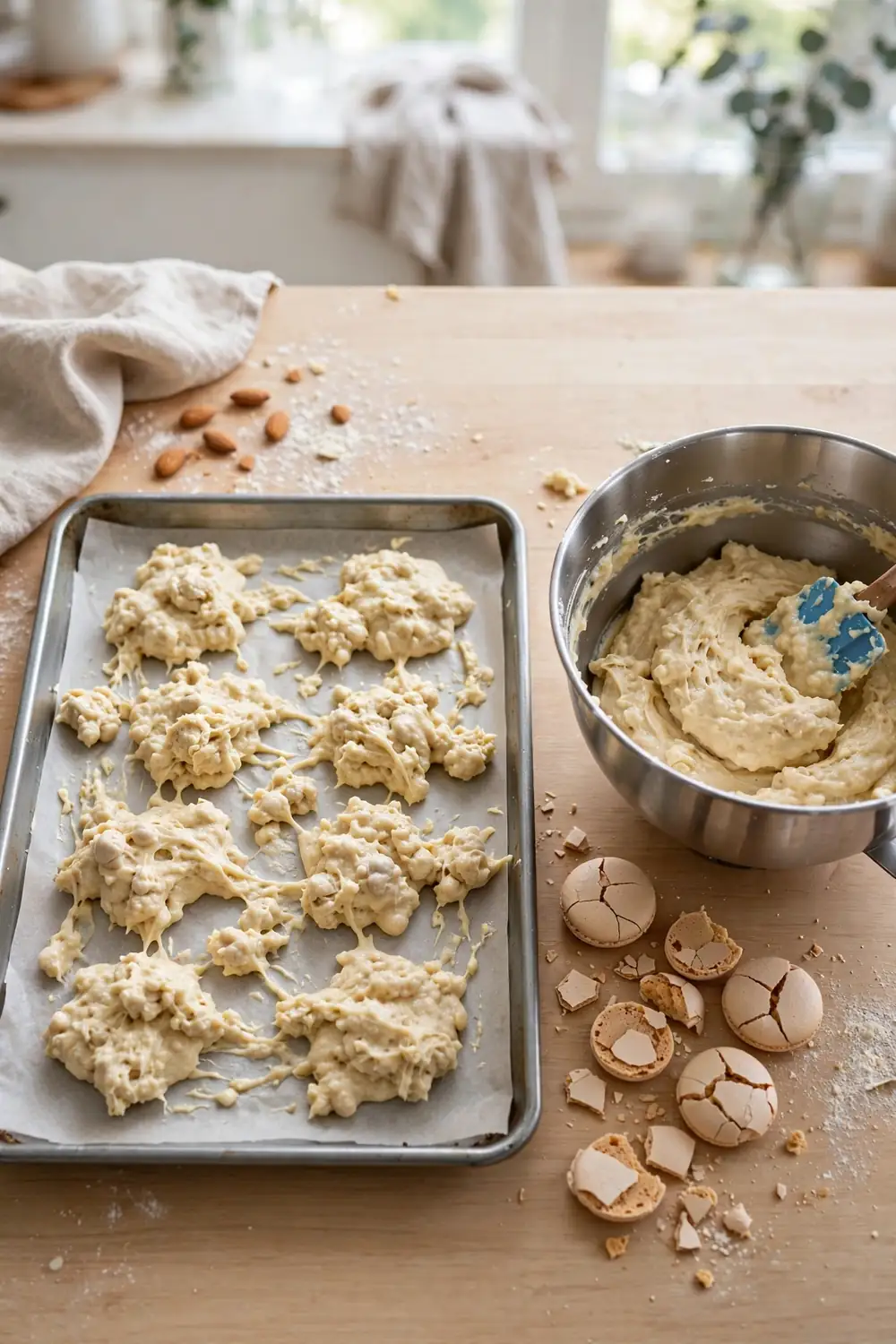
Do This:
- Age the whites, sift the dry mix, and rest the shells fully.
- Fold slowly and watch the ribbon, not the count.
- Bake low on a light tray, one tray at a time.
Avoid This:
- Do not rush the rest, since shells with no skin tear fast.
- Do not fold too fast or too long.
- Do not open the oven door often during the bake.
- Do not pipe uneven sizes on one tray.
One common mistake is rushing the rest, since shells with no skin tear at the first puff of steam. Another is folding too fast or too long, which leaves the batter airy or thin. A third is baking on a dark pan at high heat.
What Smooth Macarons Look Like
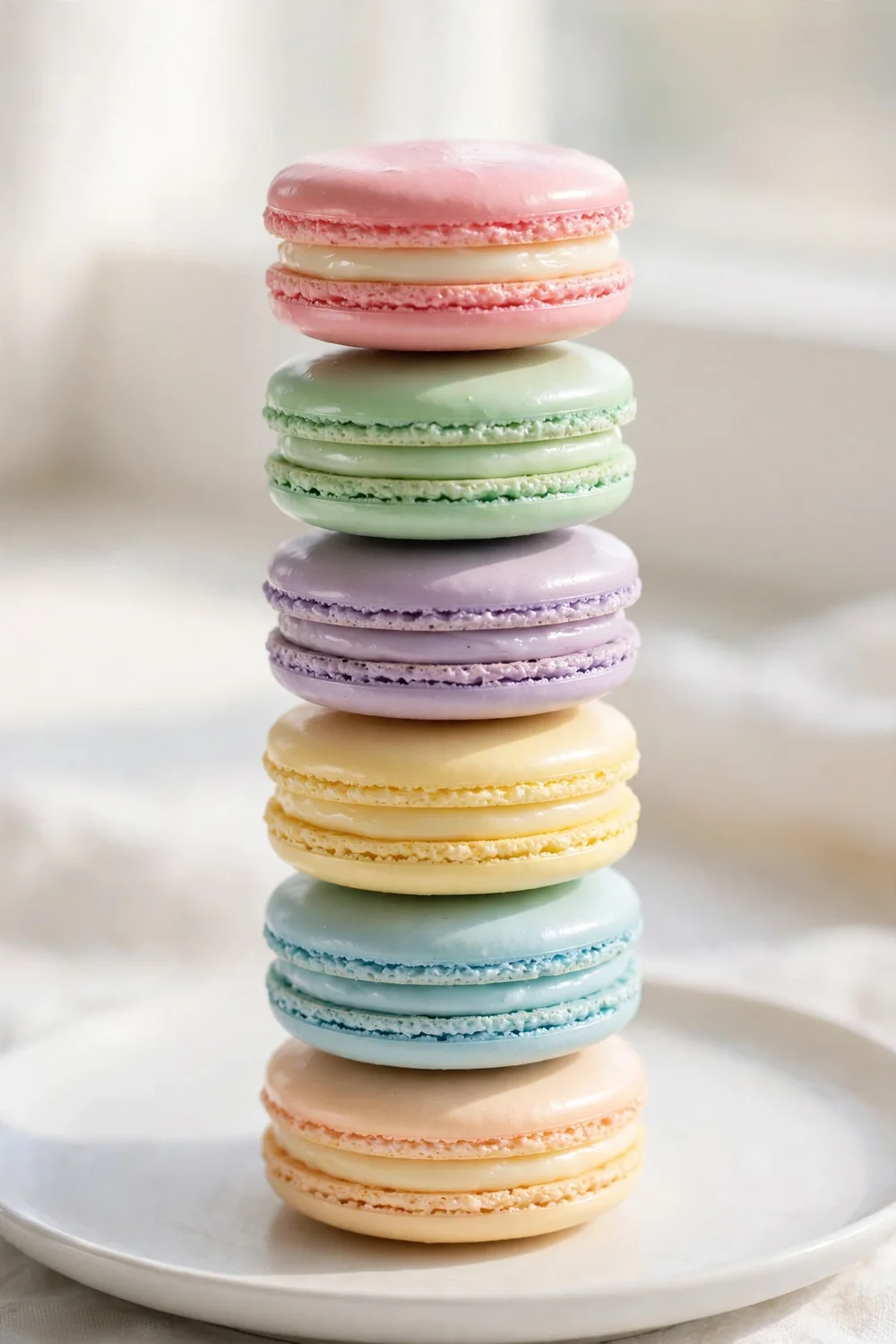
Smooth macarons show a round, even dome with no lines or splits across the top. A neat band of feet rings the base, and the shell feels light but firm when you lift it. The surface looks matte and smooth.
- Press the dome gently, since it should feel set and spring back slightly.
- Check that the feet stay neat and the bite feels tender.
- Fill the cooled shells, then let them mature in the fridge for a day.
Conclusion
Smooth results come when you fix cracked macarons at the source: aged whites, sifted flour, gentle folding, even piping, full resting, low heat, the right sheet, and slow cooling. Each step lowers the pressure inside the shell, so the tops can set without splitting.
Start with the simplest fix first, then add the next one if the tops still split. Small, steady changes protect the flavor while the shells turn smoother. Save this guide on Pinterest for your next batch.
Try the steps on your next batch, and if a dry bake is your trouble instead, read our guide on dry cornbread for a soft, moist result.

2 Comments