Why Is My Brownie Cakey Instead of Fudgy? Easy Fix
If your pan of cakey brownies came out light and dry, you are not alone. Many bakers face the same letdown when they hoped for a dense, fudgy square. The good news is that a cakey crumb has clear causes, and each one has a simple fix.
Most brownies turn cakey for one of a handful of reasons. Too much flour, too many eggs, or a batter beaten too long can each lift the crumb toward cake. Small slips add up fast, and overbaking makes it worse.
This guide walks through each cause with a fix you can use right away. You do not need special tools or fancy ingredients. If your cheesecake cracks too, this guide on fixing cracked cheesecake covers the same fixes for a smooth, creamy top.
Why Brownies Turn Cakey
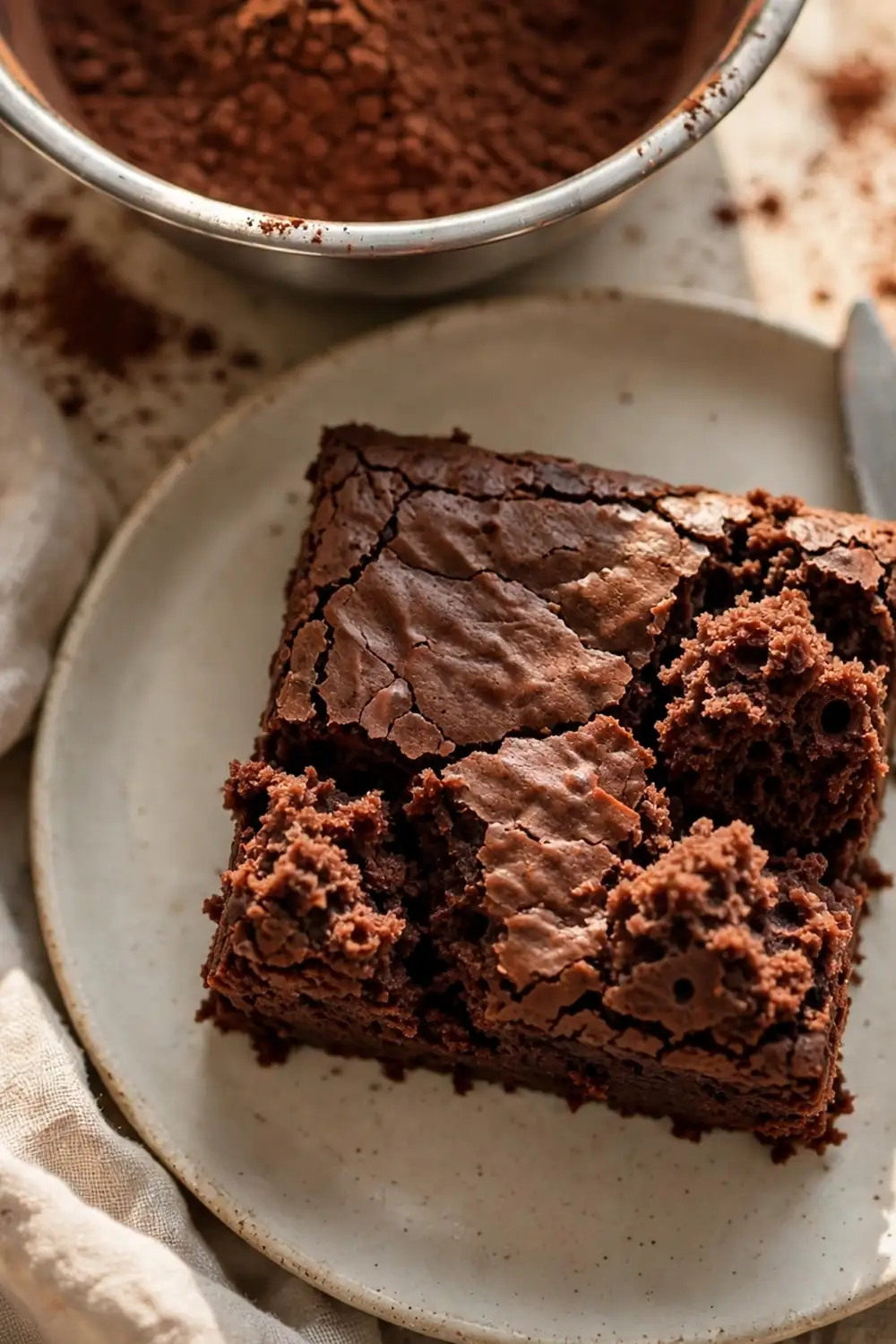
You cut into a batch of brownies, hoping for a dense, fudgy center. Instead, the slice feels light, dry, and more like cake than brownie. The problem is rarely one big mistake, and it starts with the balance of fat, sugar, and flour in the bowl.
Too much flour, too many eggs, and too little butter each push the crumb toward cake. When any of those three is off, the brownie rises like a cake and loses its fudgy bite. The good news is that each cause has a simple fix for your very next batch.
Cut Back the Flour
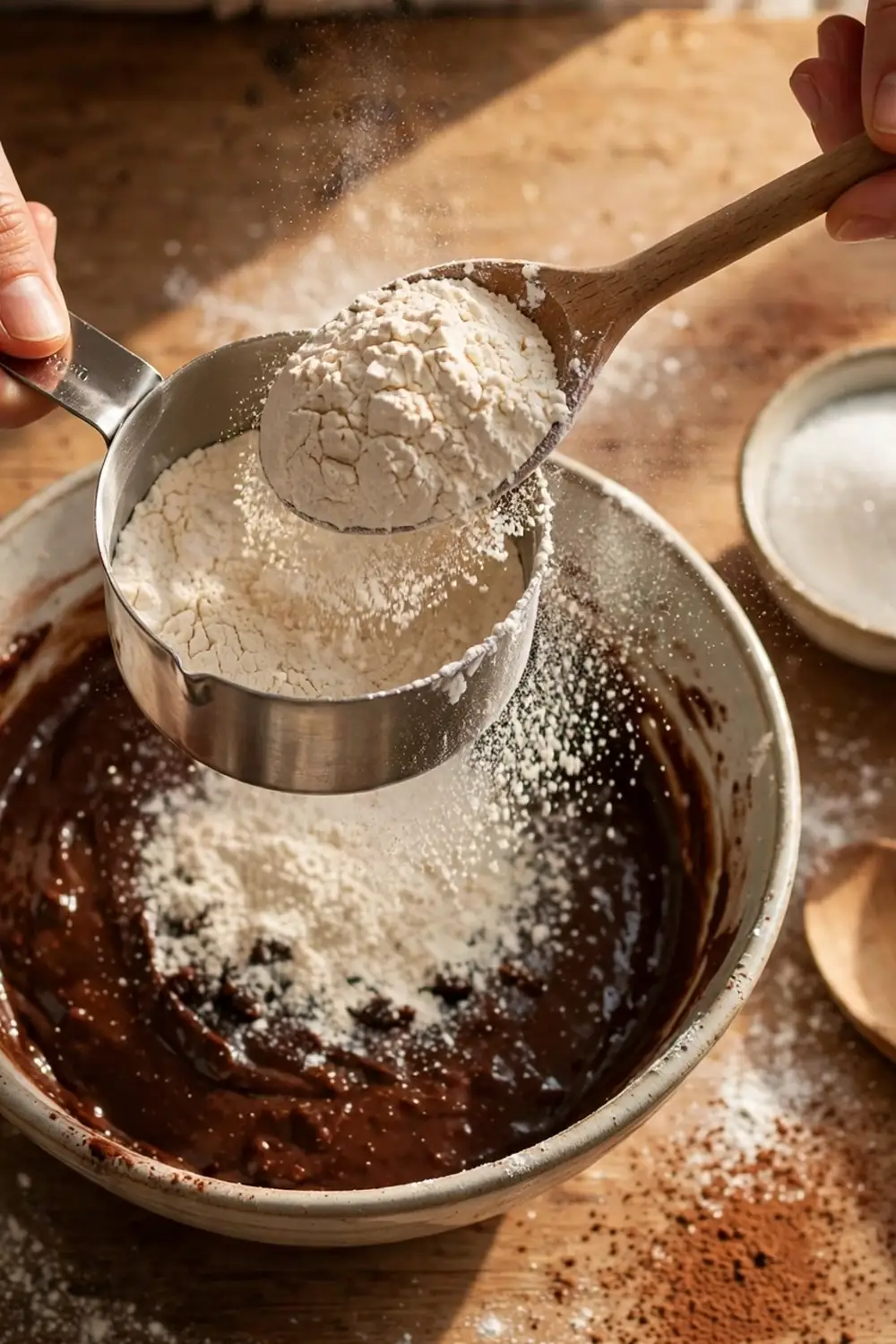
Flour is the biggest reason brownies turn cakey, and it takes very little extra to ruin the texture. Even two extra tablespoons can lift the crumb and dry it out. Measuring lightly and leveling every cup keeps the batter rich and dense.
- Spoon the flour into the cup instead of scooping from the bag.
- Level the top with a knife and never pack the flour down.
- Weigh the flour with a scale if you want the most accurate measure.
- Start with one quarter cup less than the recipe lists and test the result.
Fix the Egg Ratio
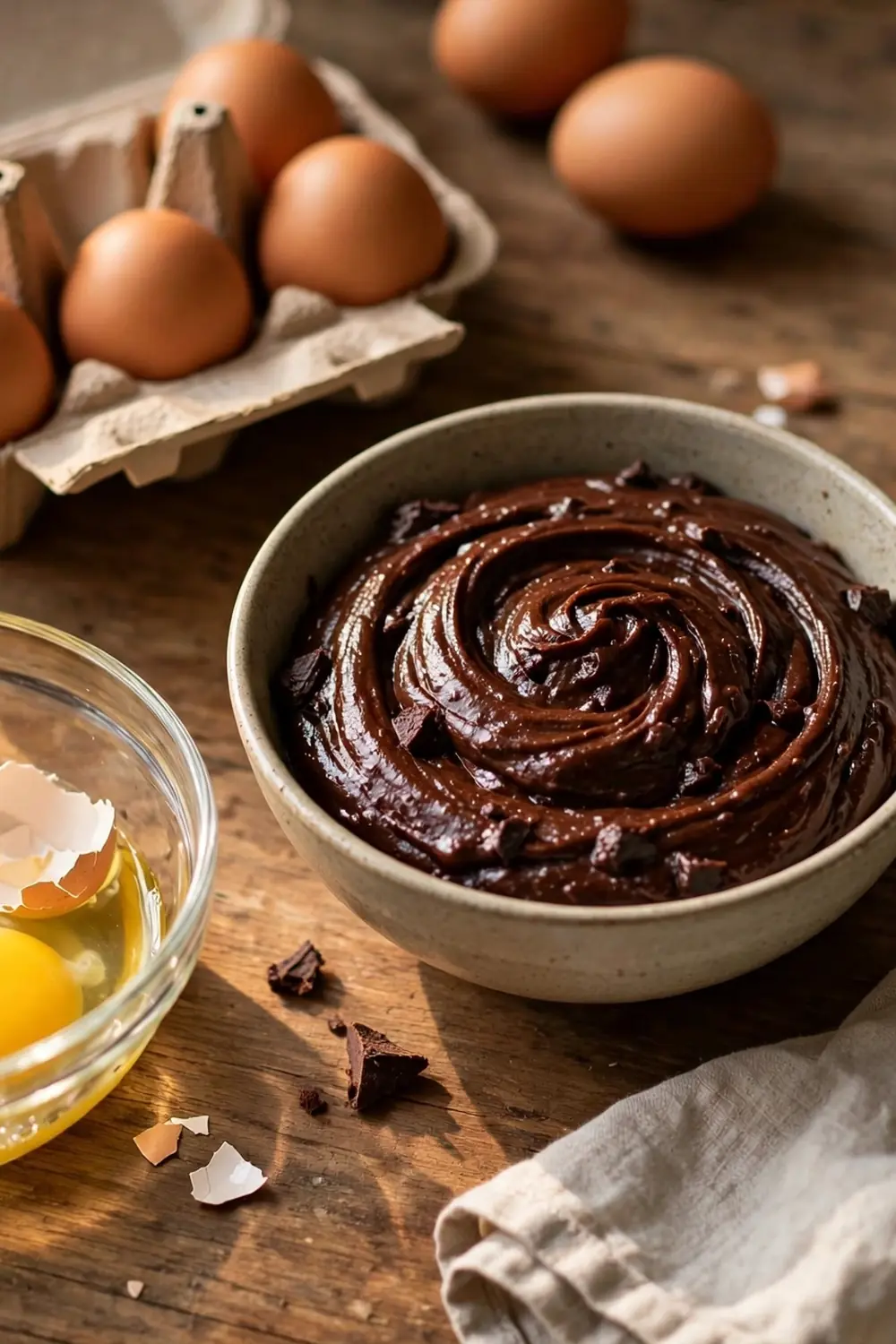
Quick Tip: Follow the recipe egg count exactly, and beat the eggs only until they blend in. One egg too many adds lift, while one extra yolk adds richness without the lift.
Eggs give structure, so the count matters more than most bakers expect. One extra egg lifts the crumb toward cake, while an extra yolk keeps the brownie rich and dense. If your brownies keep coming out cakey, drop one whole egg and add an extra yolk instead.
Use More Butter, Less Air
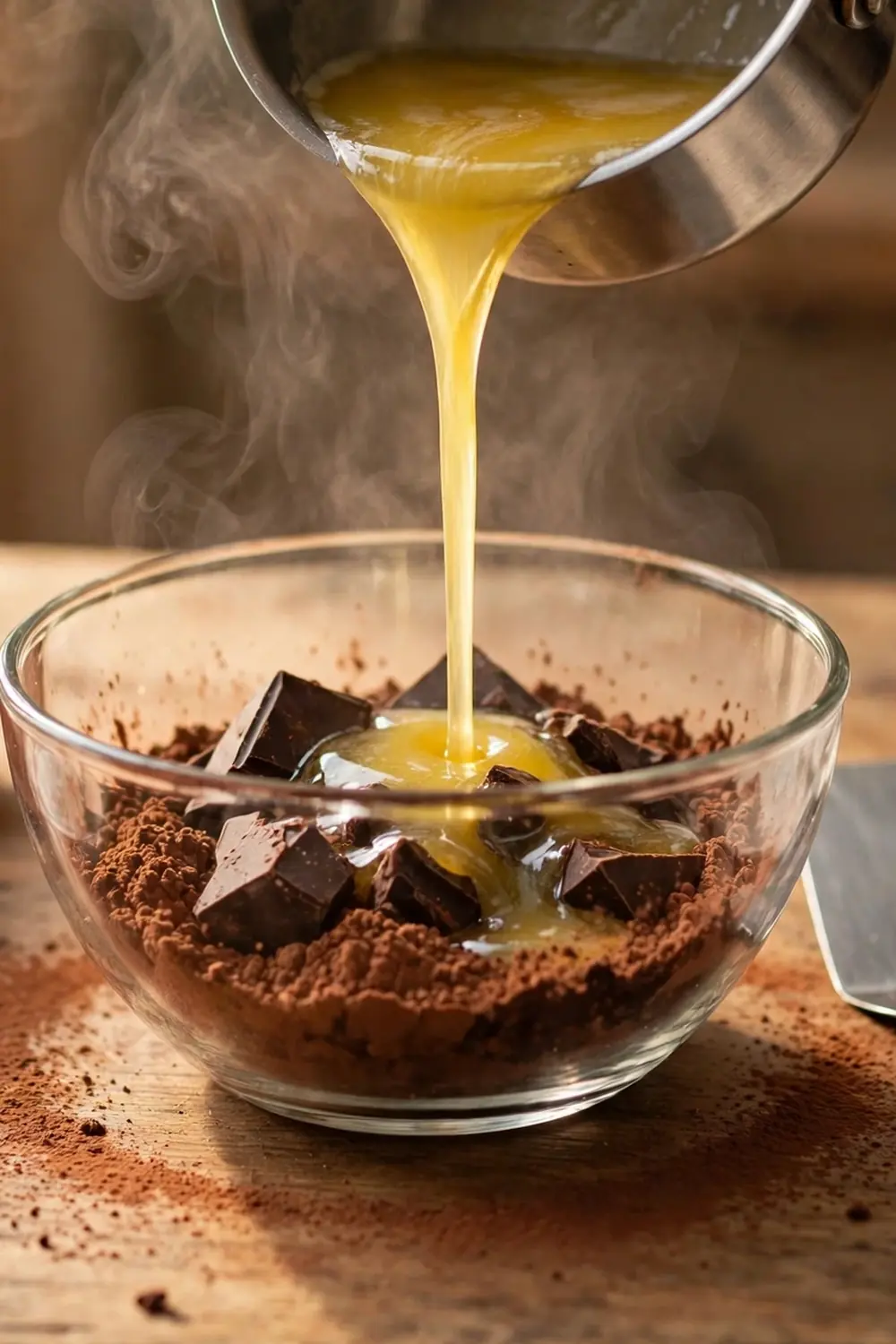
Common Mistake: Many bakers cream softened butter with sugar, the way a cake recipe asks. That step traps air in the batter, and the air lifts the crumb toward cake. The result is a light, fluffy square instead of a dense brownie.
The Fix: Melt the butter gently, let it cool slightly, and stir it straight into the chocolate and sugar. Melted butter adds richness without beating in air, so the crumb stays dense.
Fat coats the flour and keeps the crumb dense instead of fluffy. When the butter is melted, the batter stays heavy and rich, and the brownie sets with a moist, chewy center. Creaming butter and sugar, by contrast, builds air that lifts the crumb toward cake.
Pick the Right Chocolate
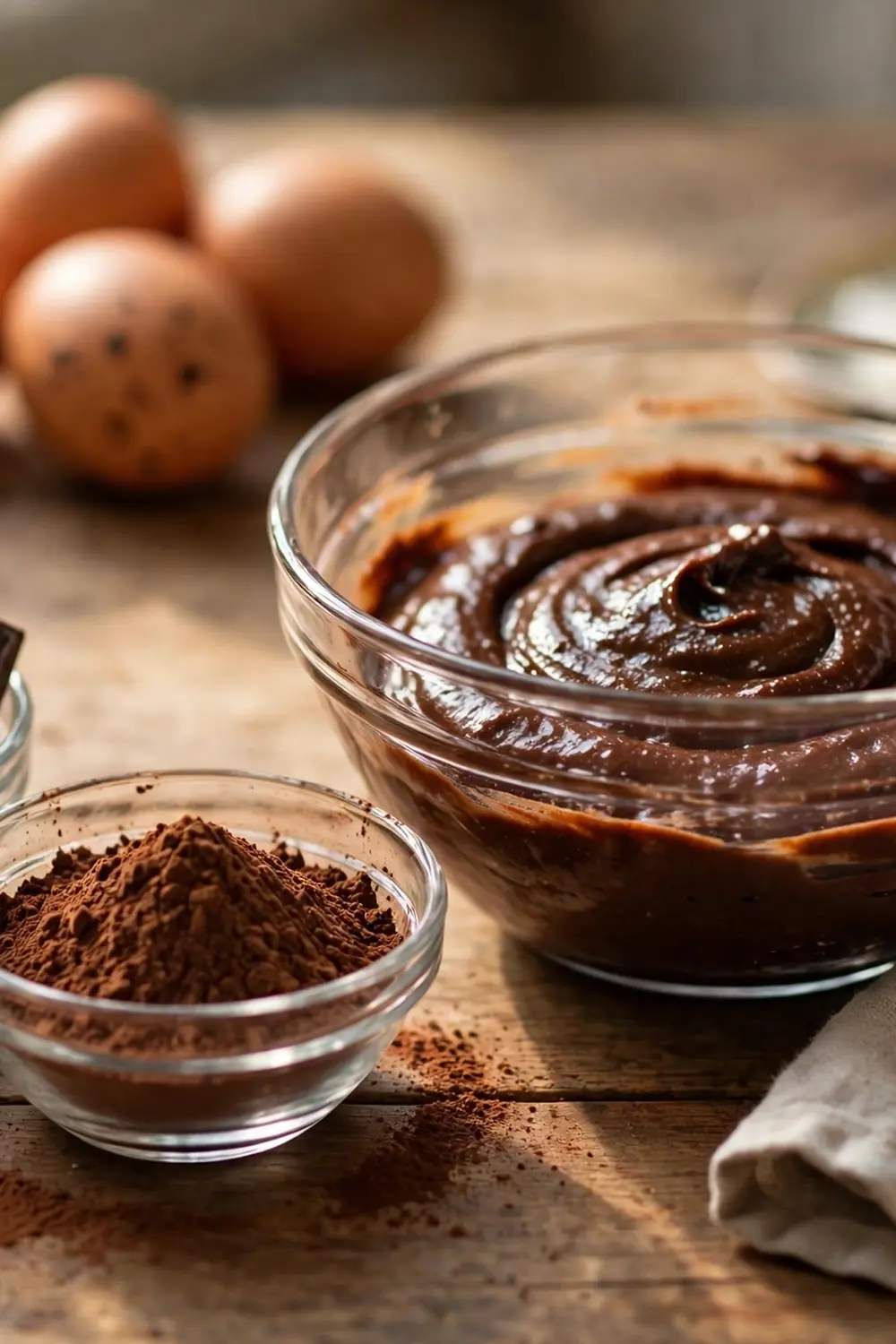
What You Need:
- A bar of dark chocolate, for deep flavor and fudgy texture.
- Unsweetened cocoa powder, for rich color without extra sugar.
- A small saucepan, to melt the chocolate gently over low heat.
- A spatula, to stir the chocolate until smooth and glossy.
Chocolate carries the flavor, so the type matters. Dark chocolate melts into a thick, rich base, while milk chocolate adds sugar and lightness. Pair dark chocolate with cocoa powder, and the brownie stays dense, dark, and fudgy from edge to center on every batch you bake.
Pick the Right Pan
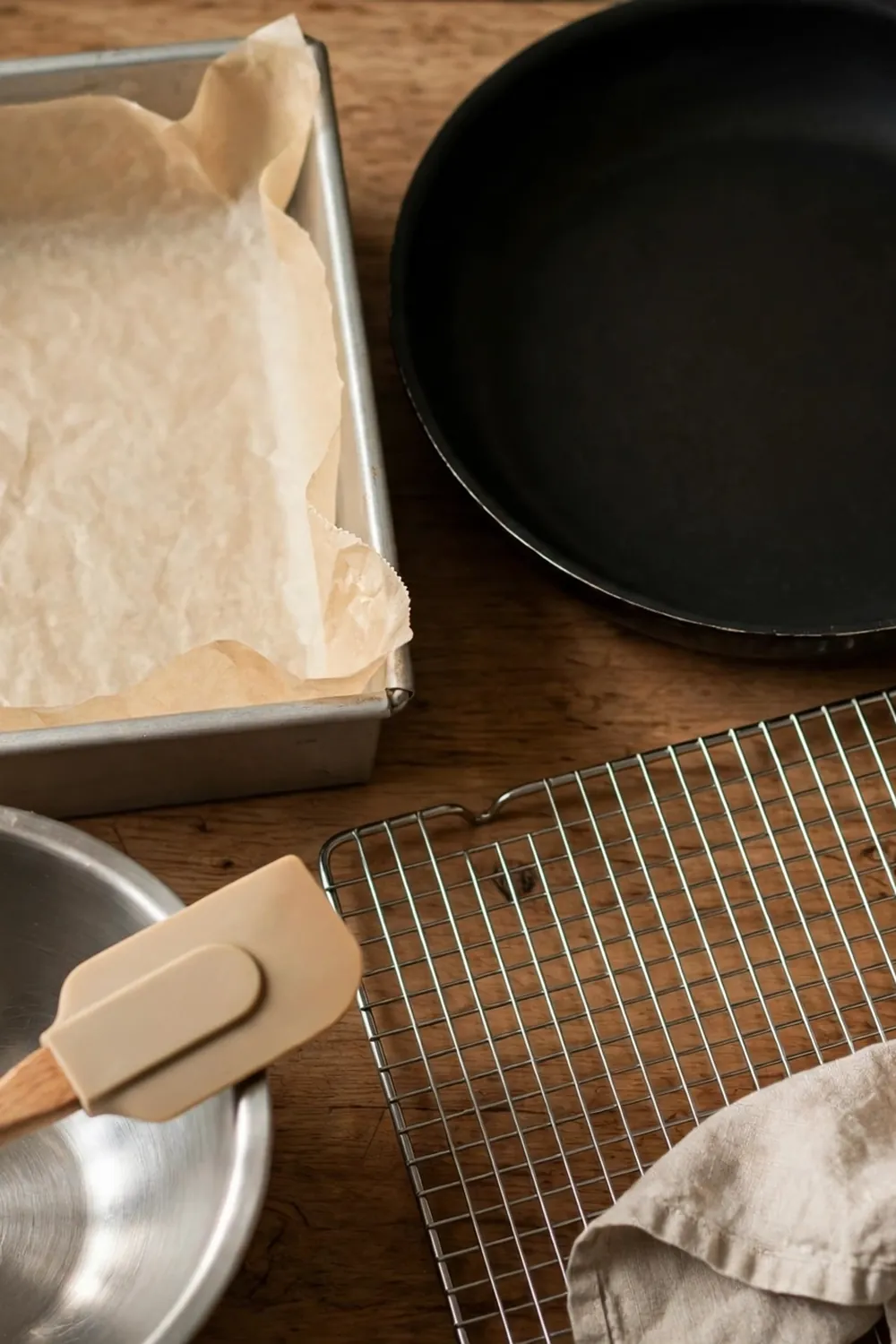
Before: A dark nonstick pan or an oversized pan bakes the edges too fast. The outside dries out while the center is still soft, and the whole batch turns cakey. A pan that is too large also spreads the batter thin, so it bakes like cake.
After: A light metal pan in the right size bakes the batch evenly. The center sets without drying the edges, and each square stays dense and moist. The right pan makes every other fix on this list work better.
The pan shapes how heat reaches the batter. A light, correctly sized pan bakes the center through without drying the edges. Fix the pan once, and every batch after it behaves better, with an even, fudgy texture from edge to center on every batch you bake.
Mix the Batter Gently
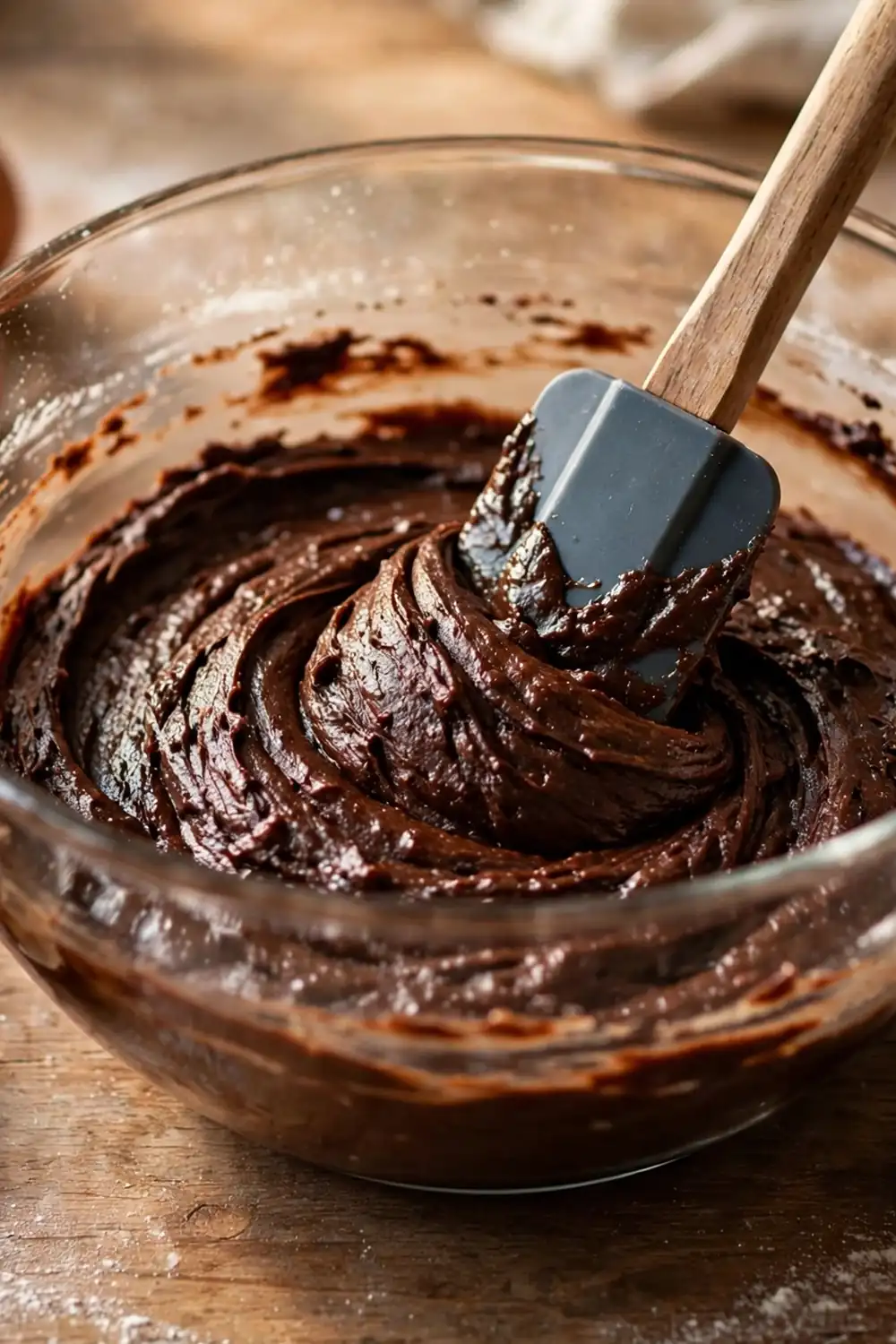
Do This:
- Fold the flour in with a spatula until the white streaks disappear.
- Keep the mixing short and stop as soon as the batter looks even.
- Use a wooden spoon or spatula instead of an electric mixer.
Avoid This:
- Do not beat the batter until it looks light and fluffy.
- Do not mix after the flour is fully blended in.
- Do not use high speed on a stand mixer for brownie batter.
Overmixing builds gluten, which tightens the crumb and traps air. The brownie rises in the oven, then sets with a light, cakey texture. Gentle mixing protects every other fix on this list, so the brownies bake dense and stay dense on every batch you bake.
Stop Overbaking Brownies
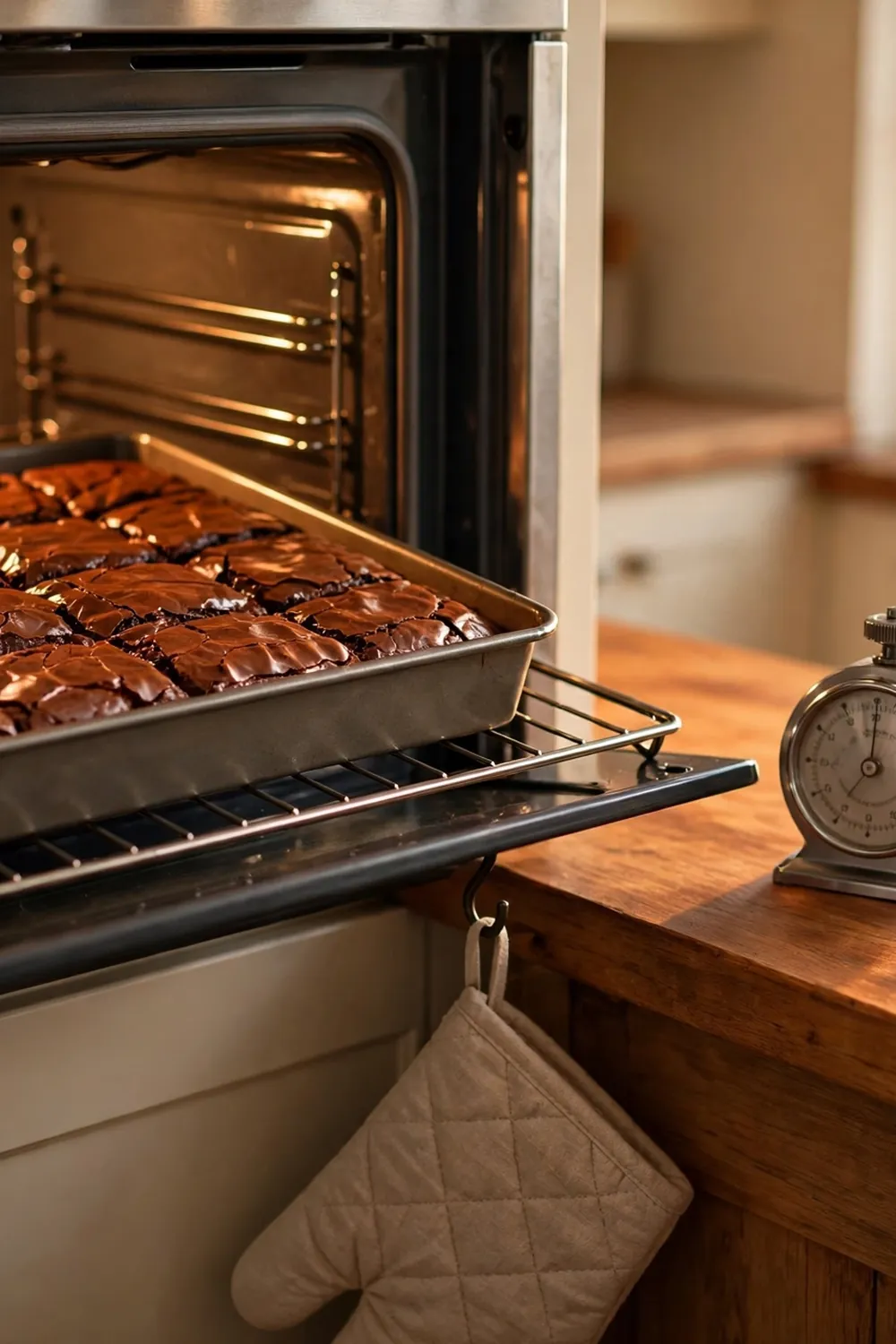
Best Rule: Pull brownies out when the center still looks slightly underdone
Check Time: Test five minutes before the timer ends
Risk: A fully set center keeps baking and turns cakey
Result: Dense, moist brownies with a fudgy middle
An overbaked brownie loses its moisture and bakes up dry and cakey. The center keeps cooking in the hot pan long after the oven turns off. Trust the skewer test and the timer, and pull the pan early for the fudgiest result every time for you.
Cool Brownies the Right Way
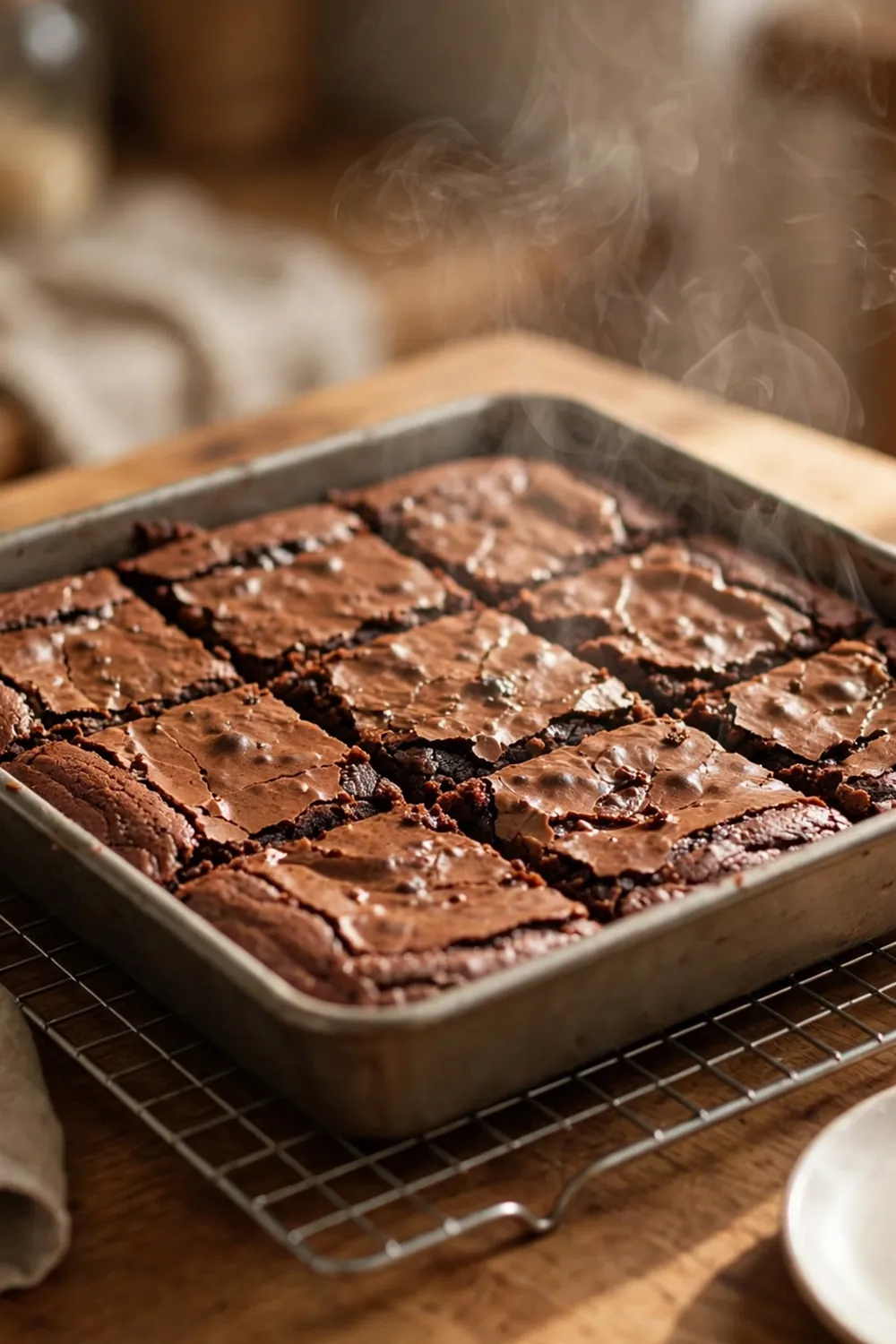
Cutting warm brownies is the fastest way to lose the fudgy texture, even when the bake was perfect. The center is still soft, and the structure has not set yet. A rushed slice crumbles, and the crumb turns dry and cakey as it cools every time.
Let the pan cool on a wire rack for at least thirty minutes, then lift the brownies out with the parchment. Wait until the block feels cool before you cut it. Patience here keeps the center dense, moist, and fudgy on every batch you bake.
Common Mistakes to Avoid
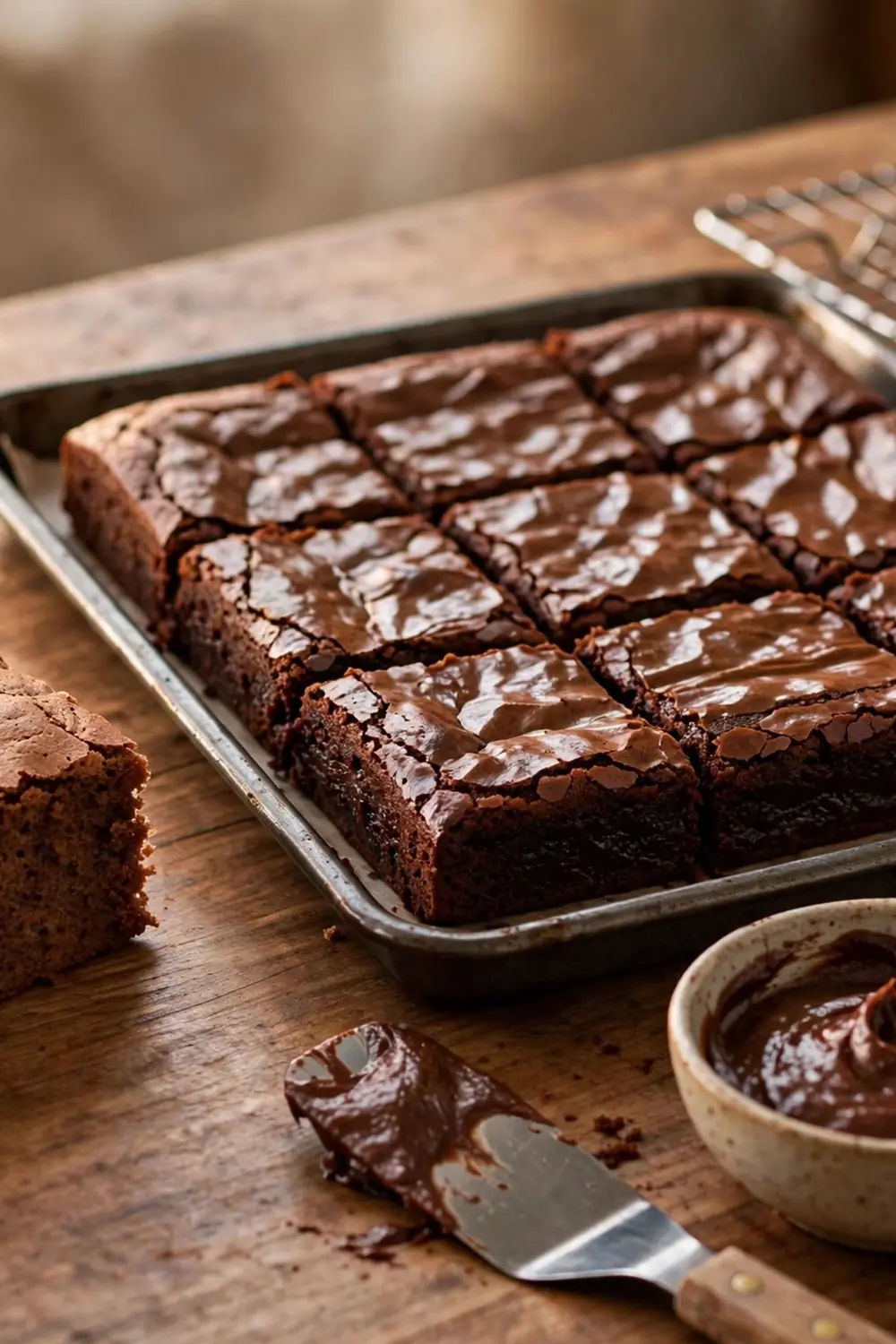
Most cakey batches come from the same few mistakes, and all of them are easy to fix. Changing one thing at a time shows you which fix made the difference. Start with the flour, then the eggs, then the bake time, in that order.
- Do not scoop flour straight from the bag.
- Do not cream the butter and sugar until fluffy.
- Do not beat the eggs until pale and thick.
- Do not bake until the center looks fully set.
What Fudgy Brownies Look Like
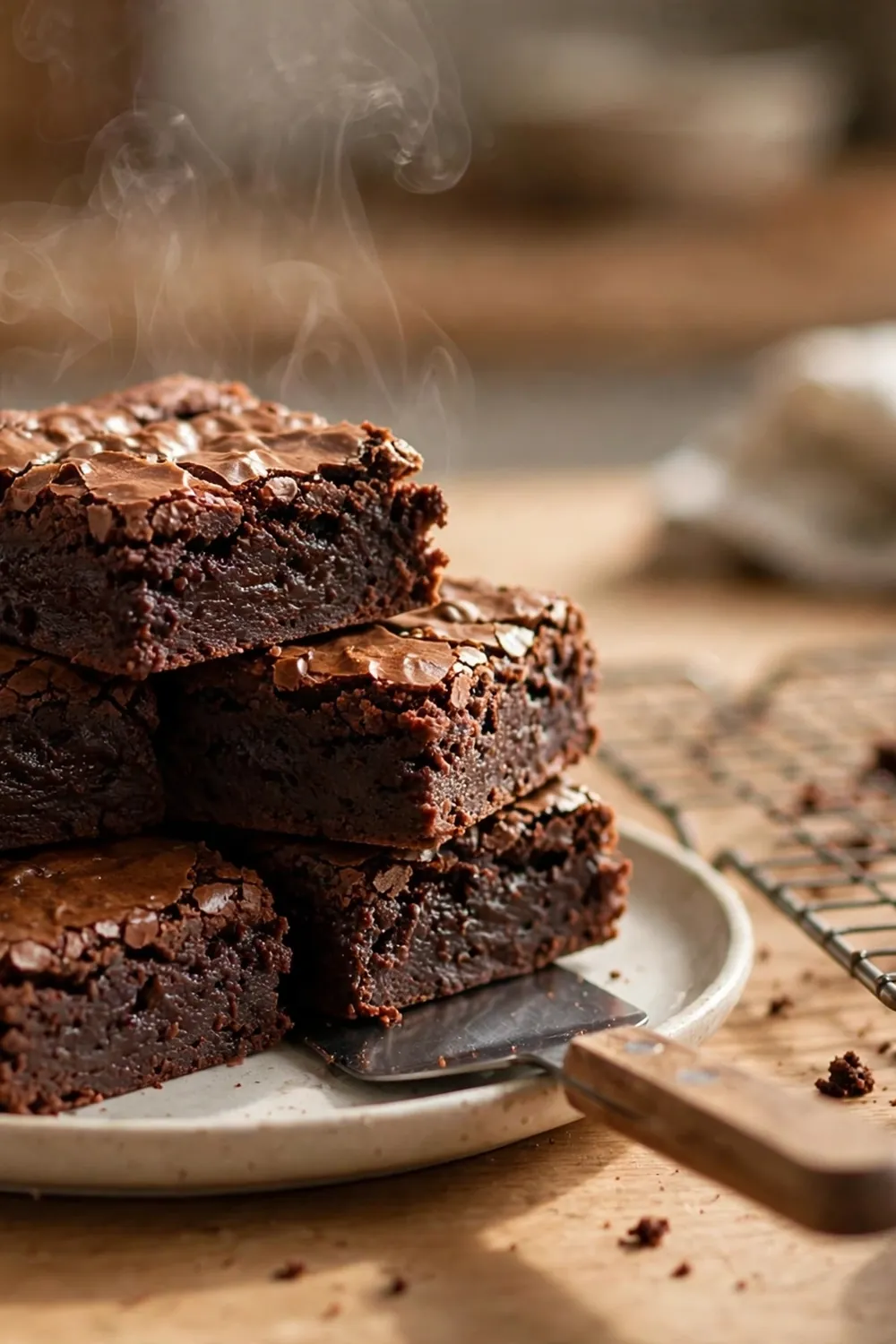
Quick Tip: A fudgy brownie looks slightly underdone in the center when it leaves the oven. The skewer comes out with moist crumbs, never dry. Trust these signs more than the color of the crust.
A good brownie tells you it worked before you taste it. The top looks shiny and slightly cracked, the center feels dense and moist, and every square holds its shape on the plate. That is the finish every fix on this list is working toward every time.
Conclusion
Cakey brownies are not a sign of bad luck in the kitchen. They come from small, fixable causes, and now you know each one. Measure with care, mix gently, and the next batch can surprise you.
Pick one fix from this guide and try it on your next batch. Save this post on Pinterest so the fixes are there when you need them, and share it with anyone whose brownies turn out cakey.
I have seen how making this one change can completely shift the result. Bake your next batch with these fixes and enjoy a dense, fudgy square.