Why Did My Cheesecake Crack on Top? Easy Fix That Works
A cracked cheesecake can feel like a ruined dessert, even when the flavor stays rich and creamy. You follow the recipe, yet a split still opens across the top as the cake cools. The good news is that a cracked top has clear causes, and each one has a simple fix.
Most cracks come from air in the batter, heat that runs too high, or cooling that happens too fast. I have seen a cake that looked fine in the oven split on the counter.
This guide walks through each cause with a fix you can use right away. If your pie crust turns out tough and chewy, see this guide on fixing a tough pie crust for the same kind of simple fixes.
Why Cheesecakes Crack
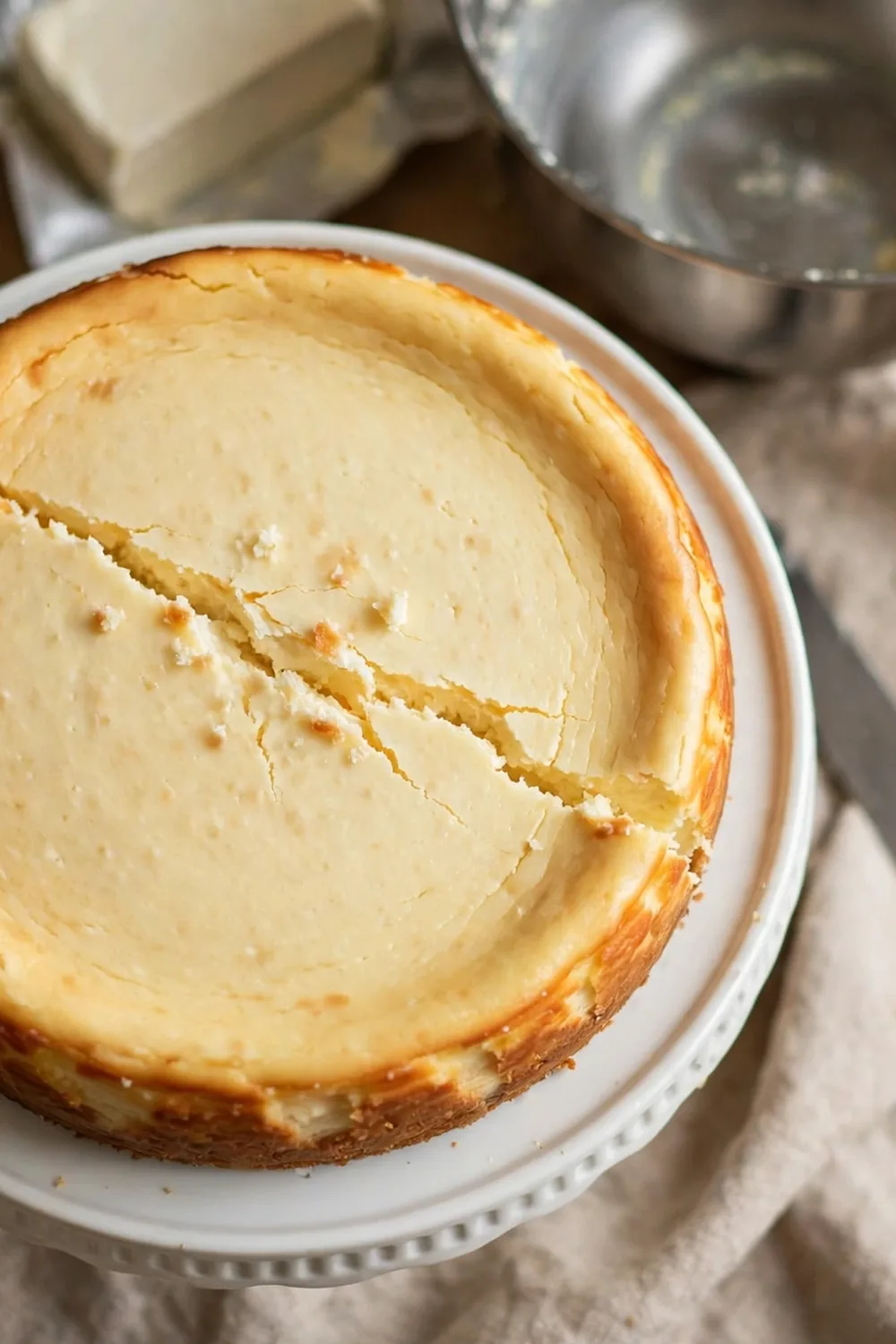
A cheesecake cracks when the filling rises too much, then sinks as it cools. Air trapped in the batter puffs the cake up in the oven, and fast cooling pulls the surface tight. The top cannot stretch, so it splits open along the weakest line.
Heat and cooling matter just as much as mixing. A hot oven sets the edges while the center stays soft, so the surface pulls apart as it settles. Slow baking and slow cooling keep the whole cake calm, and the top stays smooth instead of splitting.
Pick the Right Ingredients
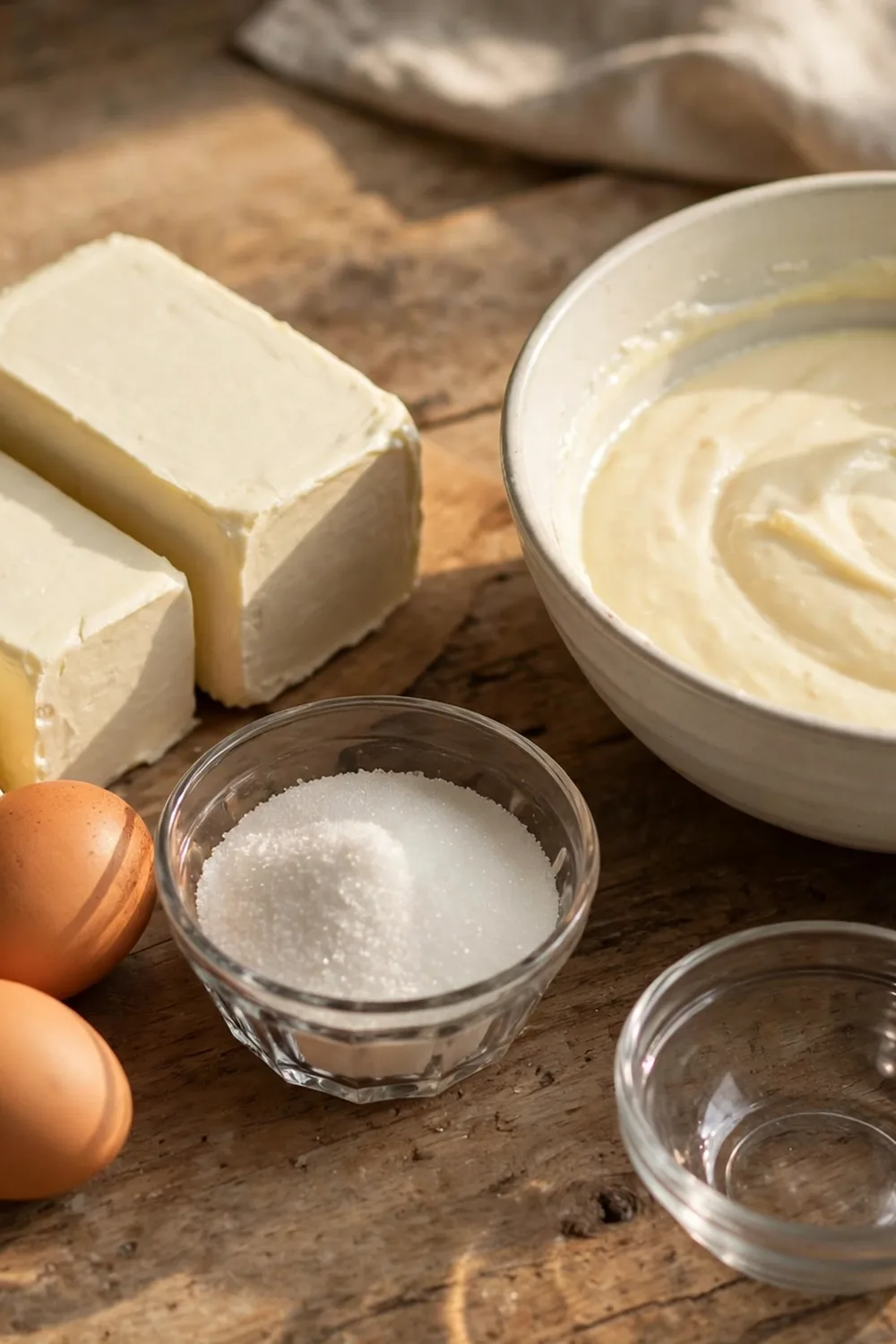
Ingredients set the texture before you ever turn on the oven. Full fat dairy gives a dense filling, while low fat versions turn watery and crack. Room temperature ingredients blend fast, so you mix less and trap less air in the batter.
- Use full fat cream cheese, since it gives a dense filling that holds together.
- Set the cream cheese, eggs, and sour cream on the counter one hour before baking.
- Measure the sugar exactly, and never heap the cup.
- Use pure vanilla extract for flavor without thinning the batter.
Stop Overmixing the Batter
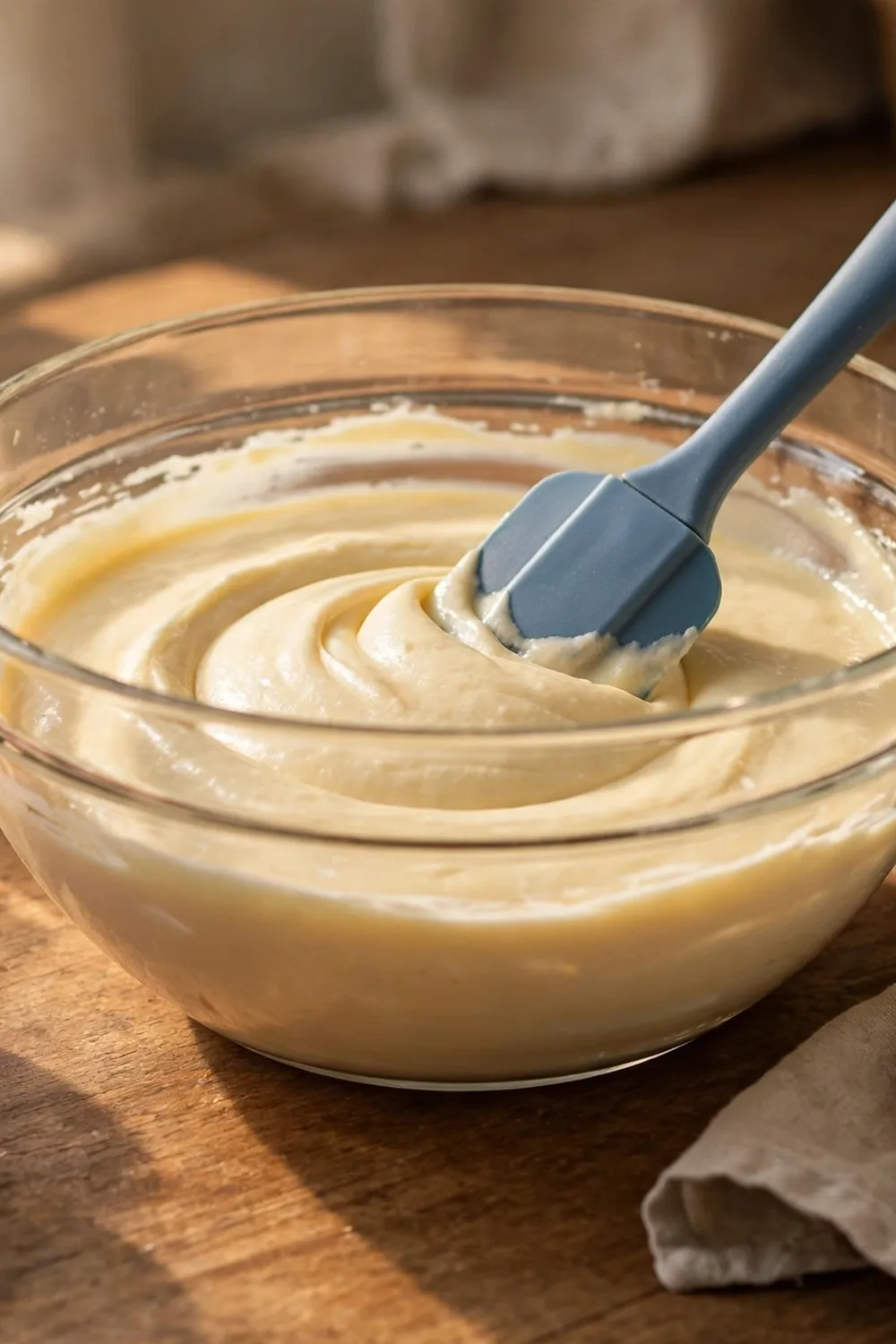
Quick Tip: Beat the cream cheese and sugar until just smooth, then stop. Add the eggs one at a time and mix only until each one blends in. A low mixer speed keeps air out of the batter.
Air is the biggest reason cheesecake tops crack. Beating the batter too long whips in air that puffs the cake up, then lets it fall and split as it cools. Mix gently and briefly, scrape the bowl, and fold the batter by hand at the end to keep it dense and smooth.
Bake Low and Slow
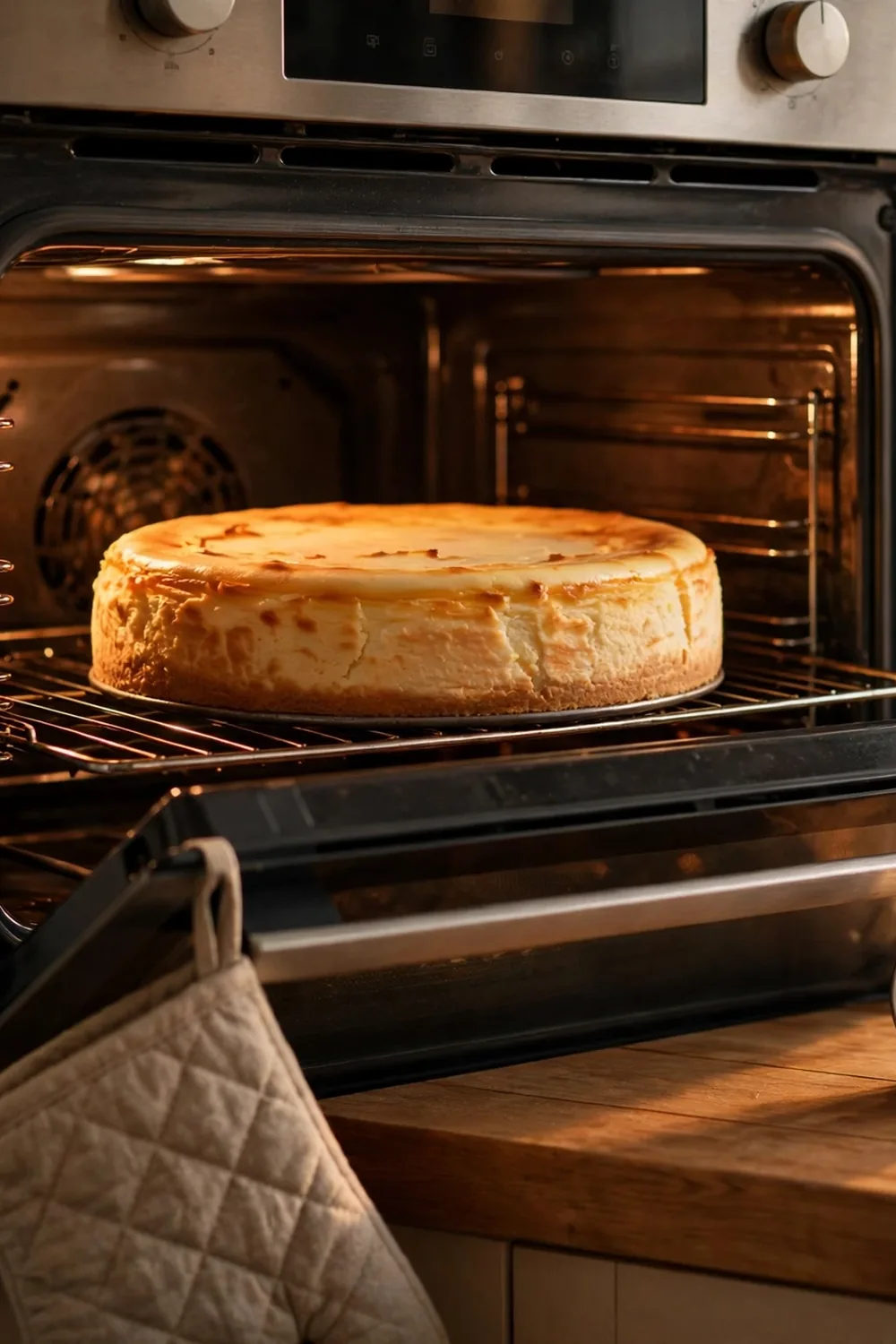
Common Mistake: Many bakers set the oven to 350 degrees because most cakes bake there. A cheesecake is not most cakes, and high heat puffs the filling fast. The cake rises, then falls and cracks as it cools.
The Fix: Set the oven near 300 degrees and give the cake more time. Low heat bakes the filling gently and evenly from edge to center. The top sets without a sudden rise, so it stays smooth.
A hot oven sets the edges while the center stays soft, so the surface splits as it settles. A low oven lets the whole cake set at the same pace, with no sudden rise and fall. Slow baking is the simplest fix for a smooth top, and it costs nothing extra.
Use a Water Bath
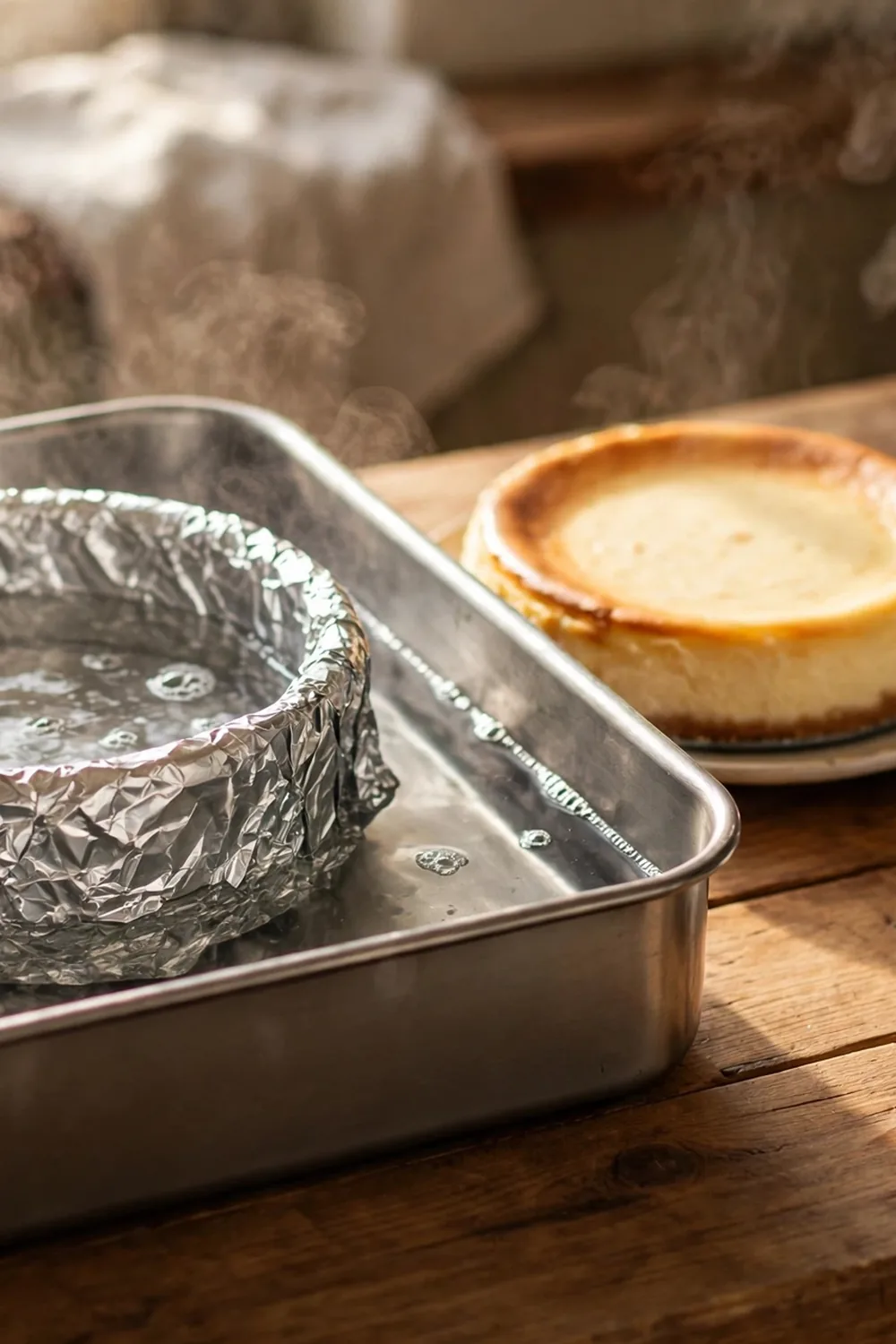
What You Need:
- Springform pan: It holds the batter and releases cleanly after chilling.
- Heavy duty foil: Wrap the pan well so no water leaks into the crust.
- Large roasting pan: It must fit the springform pan with room to spare.
- Kettle of hot water: Pour it in halfway up the sides of the springform pan.
A water bath wraps the cake in moist, steady heat, so the filling sets slowly from edge to center. The top stays level, the texture turns silky, and the cake cools without splitting. One extra pan is all it takes for a smooth finish every time you bake.
Do Not Overbake
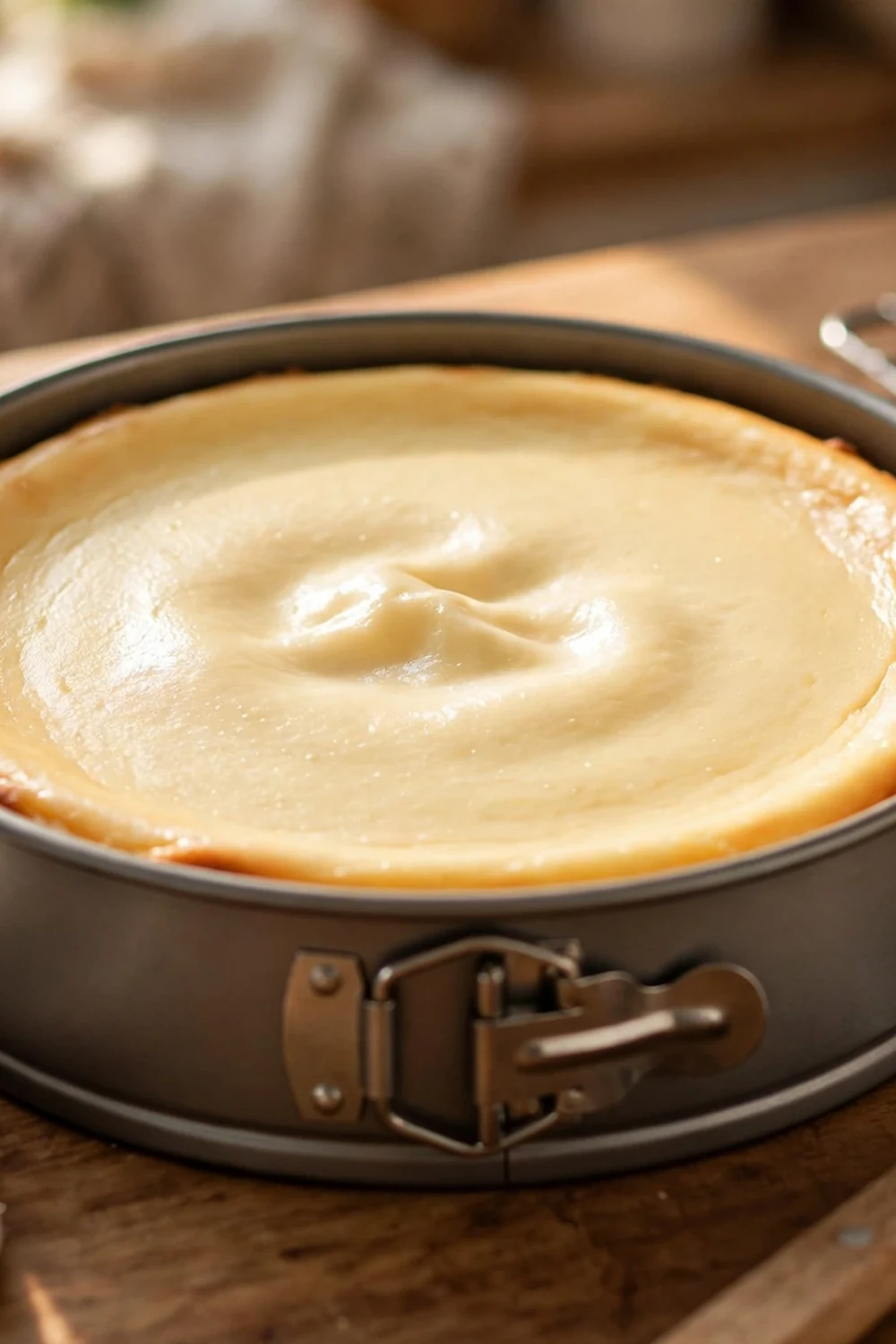
Before: Overbaking dries the filling and puffs the cake past its limit. The top looks set, then sinks and cracks as it cools. The texture turns dry, and the edges pull away from the pan.
After: With the right bake time, the center still jiggles slightly when you nudge the pan. The cake finishes setting as it cools, with a smooth top and a creamy center. Pull it early and let the resting heat do the rest.
Turn the oven off when the edges look set and the center still wobbles like jelly. Let the cake rest in the turned off oven with the door cracked for one hour. Gentle finishing keeps the top smooth and the center creamy on every cake you bake.
Keep the Door Shut
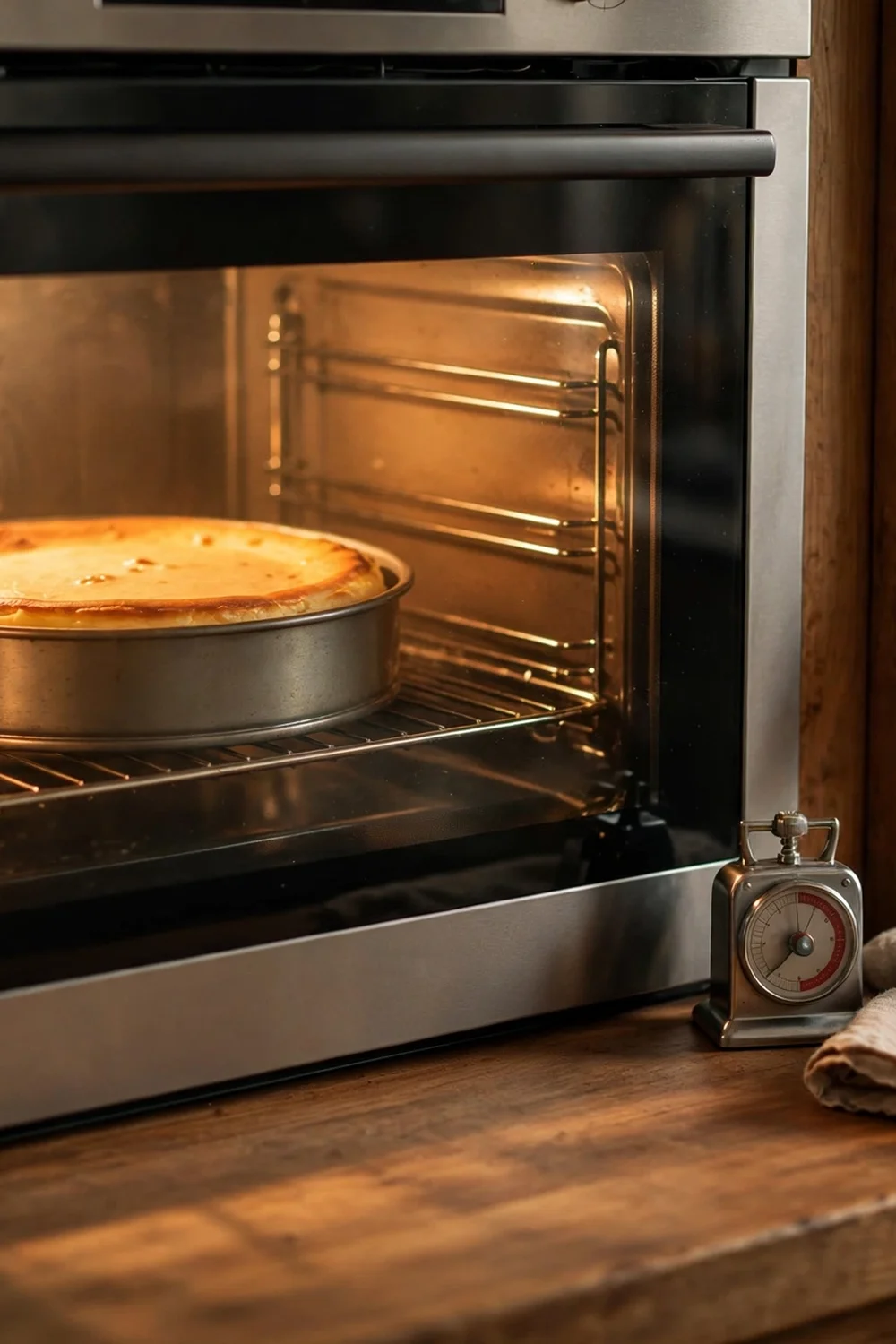
Do This:
- Keep the oven door shut for the full bake time.
- Check the cake through the oven light instead of opening the door.
- Peek once near the end, quickly and gently, if you must check.
Avoid This:
- Do not open the door to check the cake halfway through baking.
- Do not let cold air rush in while the filling is still half set.
- Do not jiggle the pan by opening and closing the door.
Opening the door lets cold air rush in and drops the oven heat fast. The half set filling cannot handle the sudden change, so the top cracks as the cake cools. Trust the timer and the oven light, and check the cake only when it is nearly done.
Cool the Cake Slowly
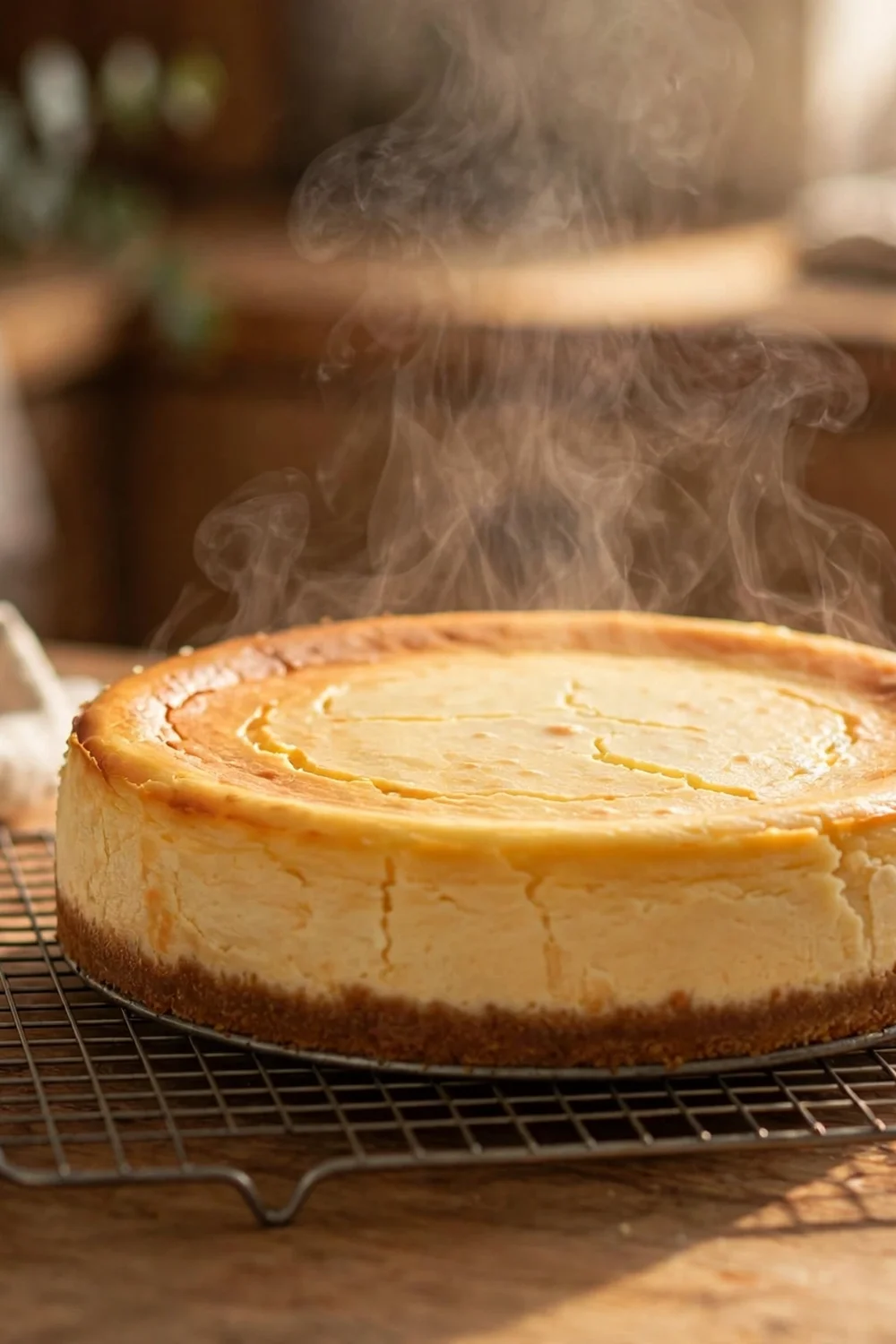
Oven rest: 1 hour with the door cracked
Counter rest: 1 hour at room temperature
Fridge chill: At least 4 hours before slicing
Best result: A smooth top with no splits
Sudden cooling shrinks the filling fast, and the top splits under the stress. A slow cooldown lets the cake settle gently, so the surface stays smooth. Patience here is the cheapest fix on this list, and it works every single time you bake a cheesecake.
Fix a Cracked Top
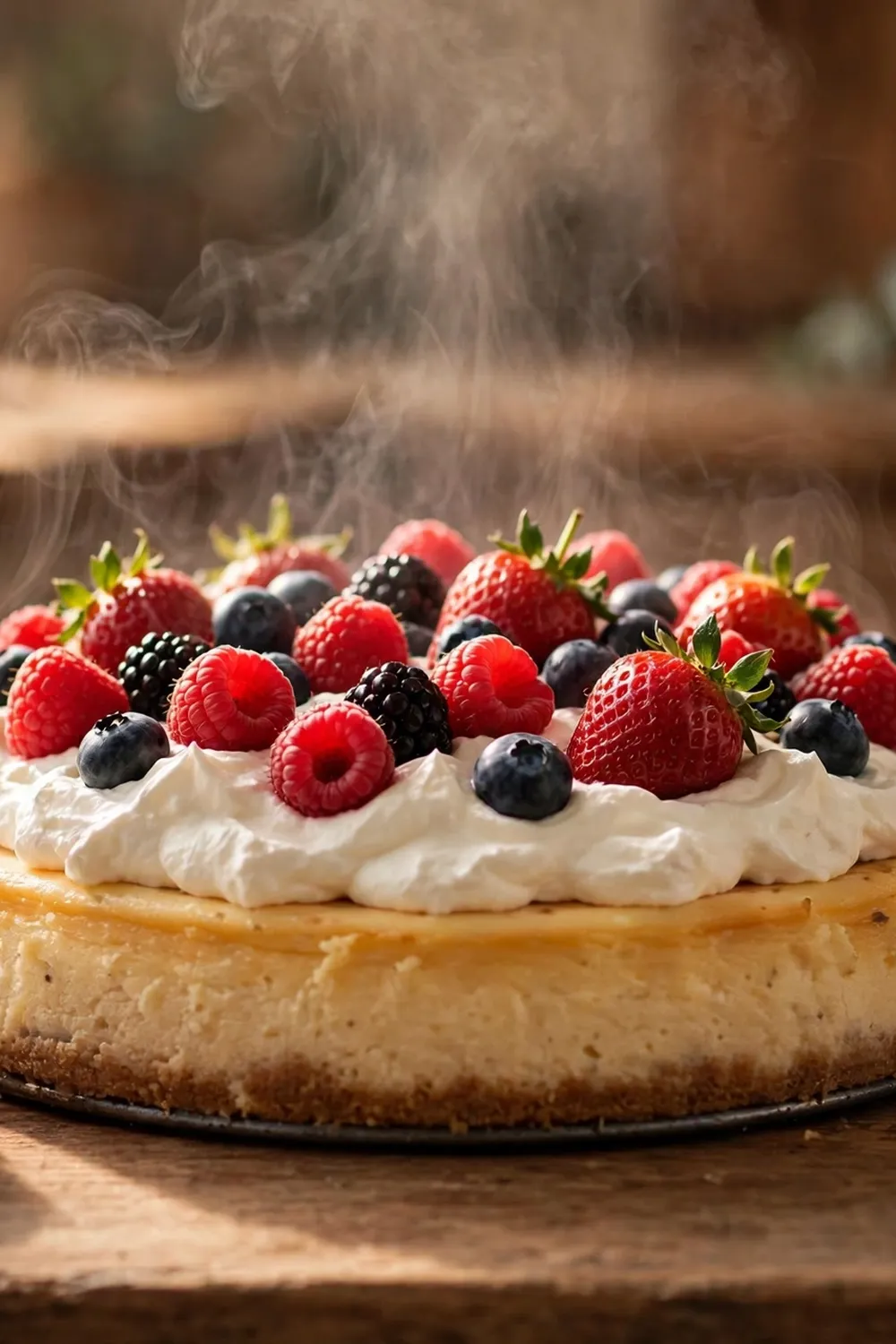
A crack does not ruin the cheesecake, even when it looks bad. The flavor stays the same, and a simple topping hides the split completely. A spoonful of sour cream, a layer of fresh fruit, or a swirl of soft whipped cream covers it well.
Spread warm sour cream over the crack after baking, or chill the cake and top it with berries. No one will see the split, and the cake will taste as rich and creamy. A cracked top is a chance to dress the cake up, not a reason to start over.
Common Mistakes to Avoid
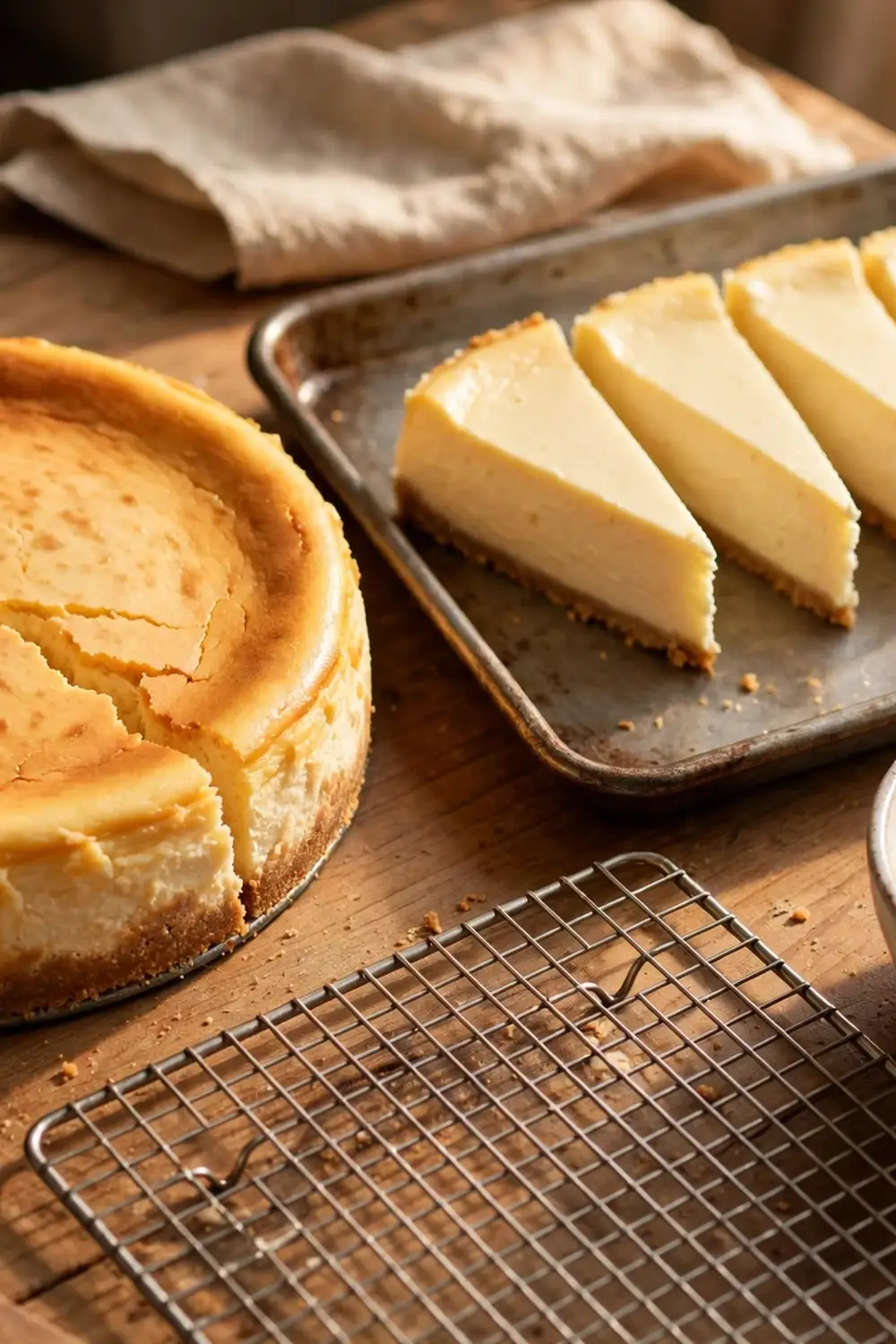
Most cracked tops come from the same few mistakes, and all of them are easy to fix. Change one thing at a time to see which fix made the difference. Start with the mixing, then the oven heat, then the cooling, in that order.
- Do not beat the batter on high speed.
- Do not bake at a high oven temperature.
- Do not skip the water bath for a tall cheesecake.
- Do not cool a hot cheesecake in the fridge.
What Perfect Looks Like
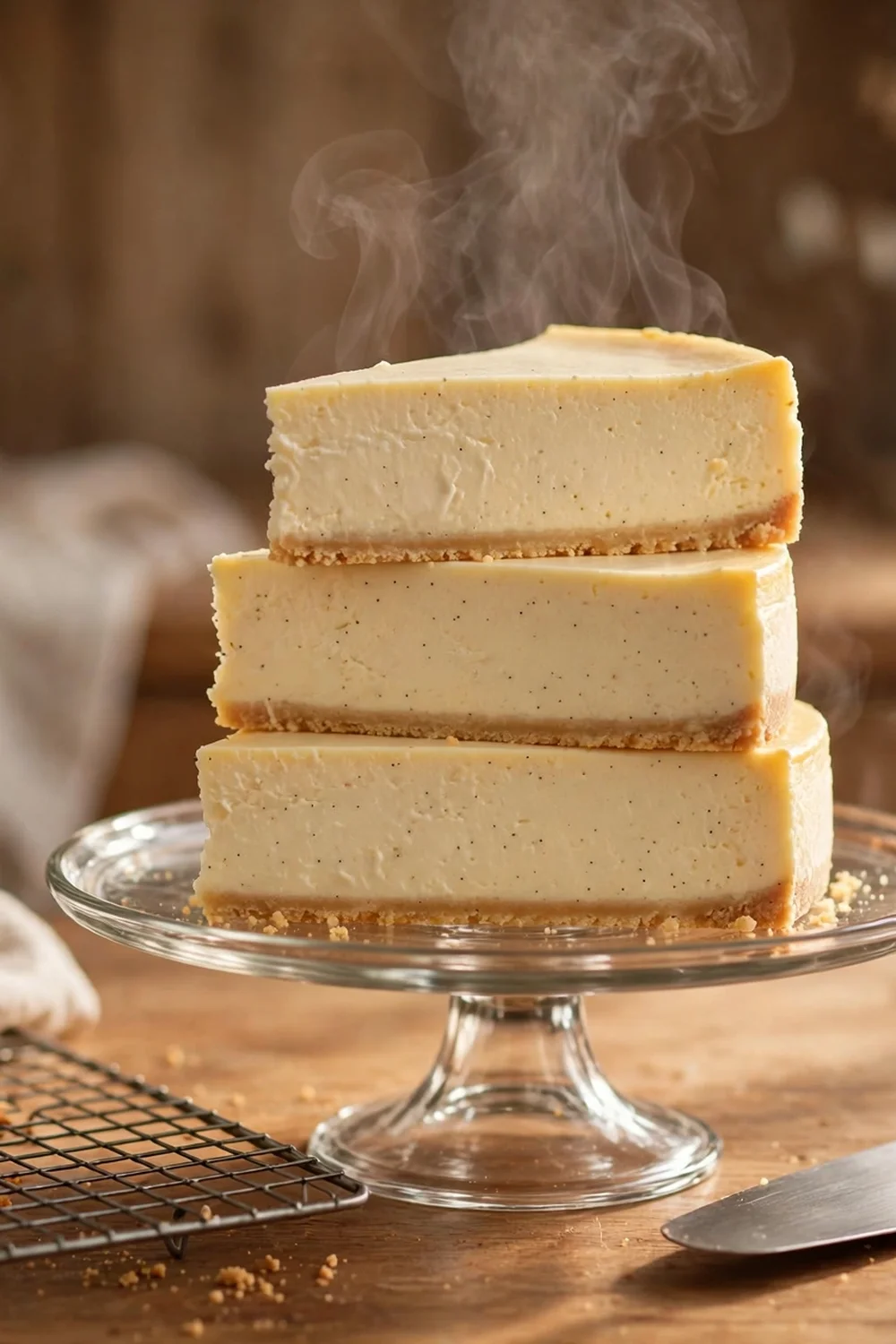
Quick Tip: A done cheesecake looks set at the edges and jiggles slightly in the center. The top looks smooth and pale, never browned or puffed. Trust these signs more than the color of the crust.
A good cheesecake tells you it worked before you taste it. The top looks level and smooth, the center feels creamy yet firm, and every slice holds its shape on the plate. That is the finish that every fix on this list is working toward.
Conclusion
In short, a cracked cheesecake comes from small, fixable causes, and now you know each one. Mix gently, bake low, cool slowly, and the next cake can surprise you. The fixes take no special tools, only a little care.
Pick one fix from this guide and try it on your next cake. Save this post on Pinterest so the fixes are there when you need them. Share it with anyone whose cheesecake cracks on top.
I have seen one small change turn a split top into a smooth one. Bake your next cake with these fixes and enjoy a smooth, creamy slice.