Why Did My Bread Come Out Dense and Heavy? Easy Fix Guide
Cutting into a fresh loaf should feel like a small reward, yet the slice sometimes turns out heavy and close textured. If dense bread keeps showing up in your kitchen, you are not doing anything strange. The cause is usually one small slip with a clear fix.
Most heavy loaves come from too much flour, tired yeast, water at the wrong heat, or a rise that ends too soon. These slips stack up fast, so even a good recipe can bake flat.
This guide walks through each cause in order, with a fix for your next bake. You need no special tools and no fancy flour. If your fudge turns out rough instead of creamy, see this guide on fixing grainy fudge for the same kind of simple fixes.
Why Bread Turns Dense
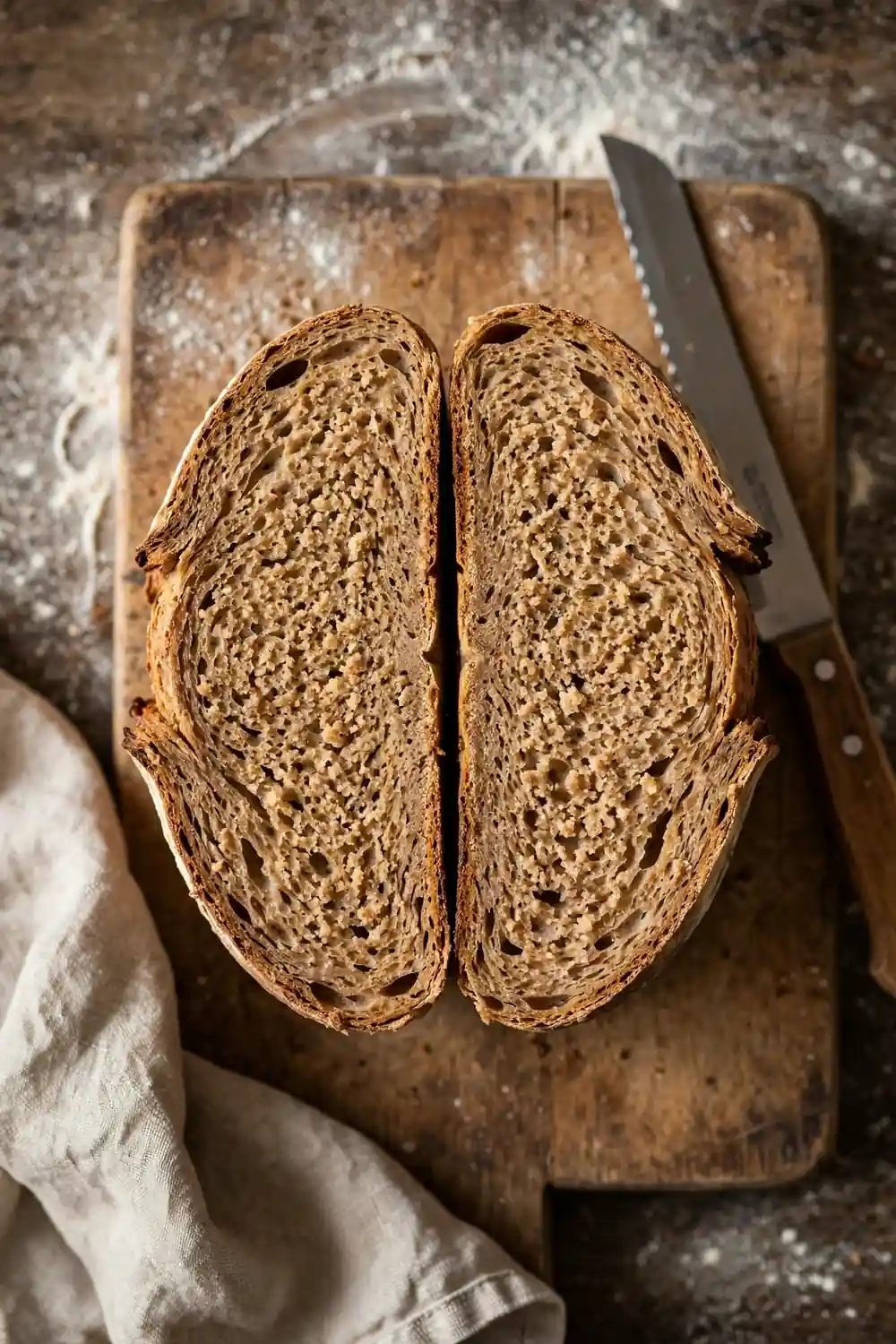
You slice into a fresh loaf hoping for a soft, open crumb, yet the inside feels heavy and hard to chew. The crust may look perfect while the crumb stays tight and close. This gap between crust and crumb points to a fixable cause, not bad luck.
Too much flour, tired yeast, and a short rise each push a loaf toward heavy. When any one of them is off, the dough cannot trap air and bakes up close textured. The good news is that each cause has a simple fix for your next loaf.
Check the Water Temperature
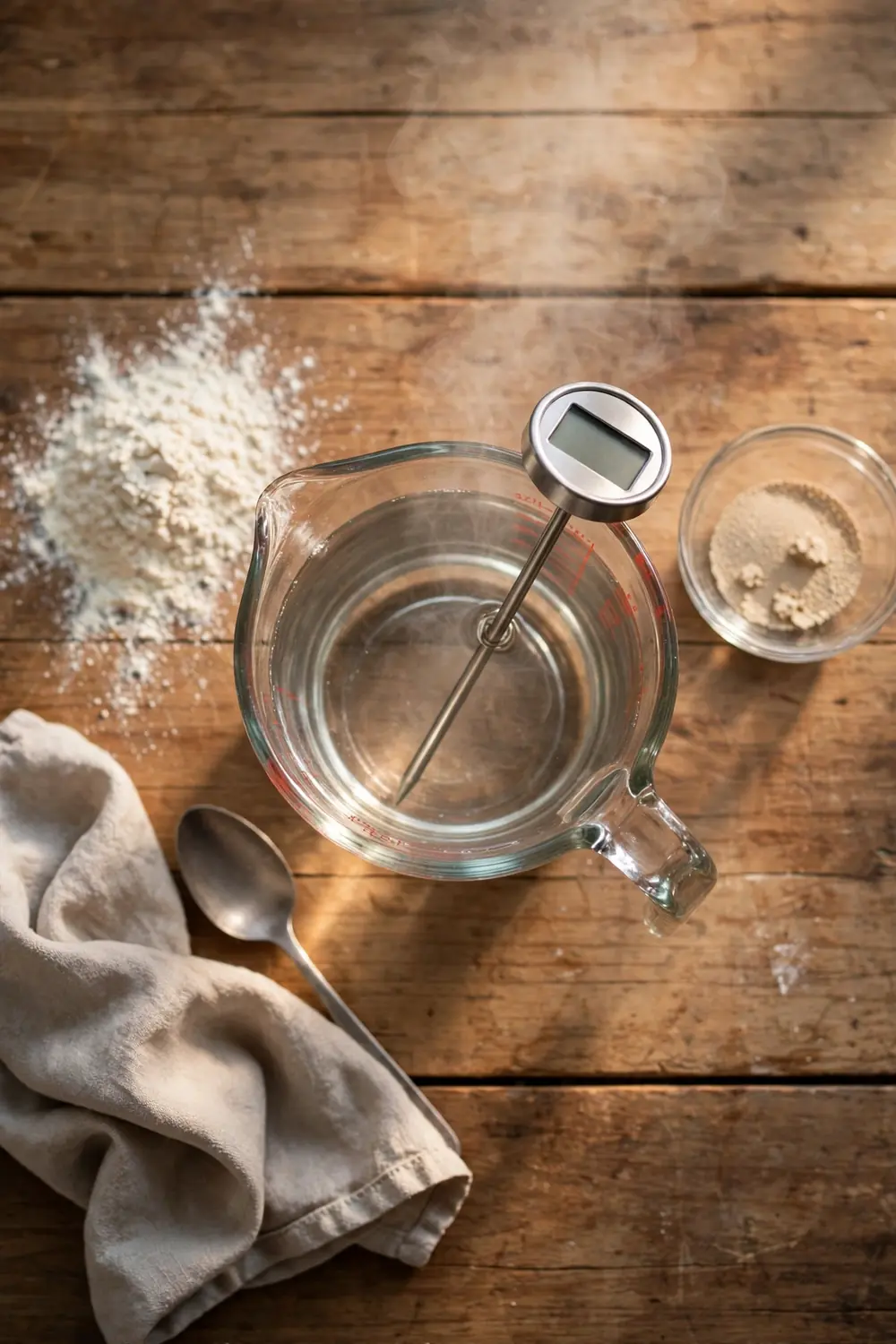
Water temperature decides whether the yeast wakes up strong or never gets going. Water that is too hot kills the yeast, while cold water leaves it sluggish. Aim for pleasantly warm water, and the dough will rise on schedule every time.
- Fill a cup with water that feels warm on your wrist, never hot.
- Check with a thermometer and aim for about 105 to 110 degrees Fahrenheit.
- Stir in the yeast and a pinch of sugar, then wait ten minutes for foam.
- If the water feels hot on your wrist, cool it down before adding yeast.
Use Fresh Yeast
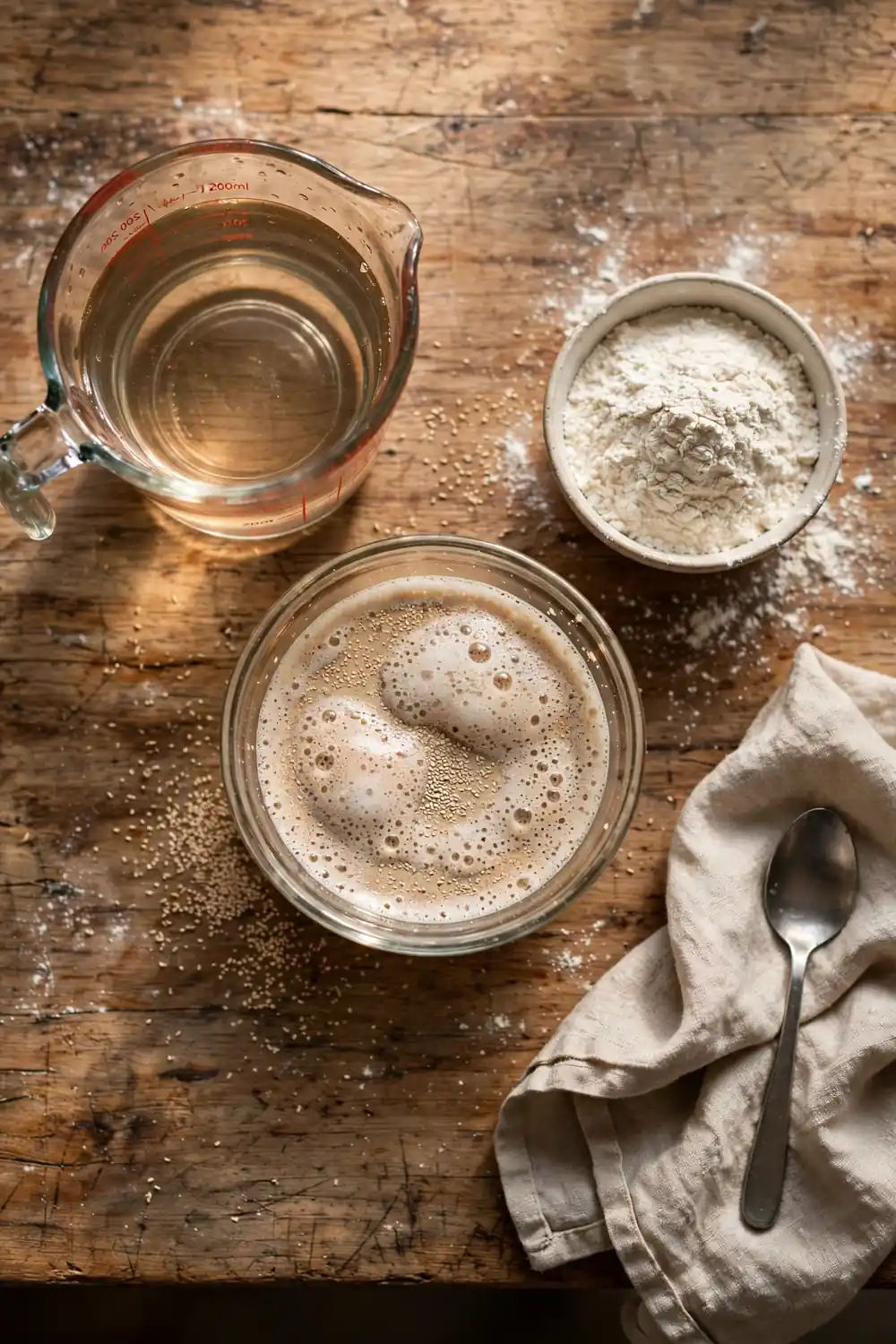
Quick Tip: Yeast is alive, and old yeast bakes up flat. Test the yeast in warm water with a pinch of sugar, and look for foam in ten minutes. No foam means the yeast is dead, so start with a fresh pack.
Buy small packs of yeast and keep them in the fridge after opening. Check the date before you bake, and proof the yeast when you are unsure. Fresh, active yeast is the simplest fix for a loaf that rises tall on every bake from now on.
Measure the Flour Right
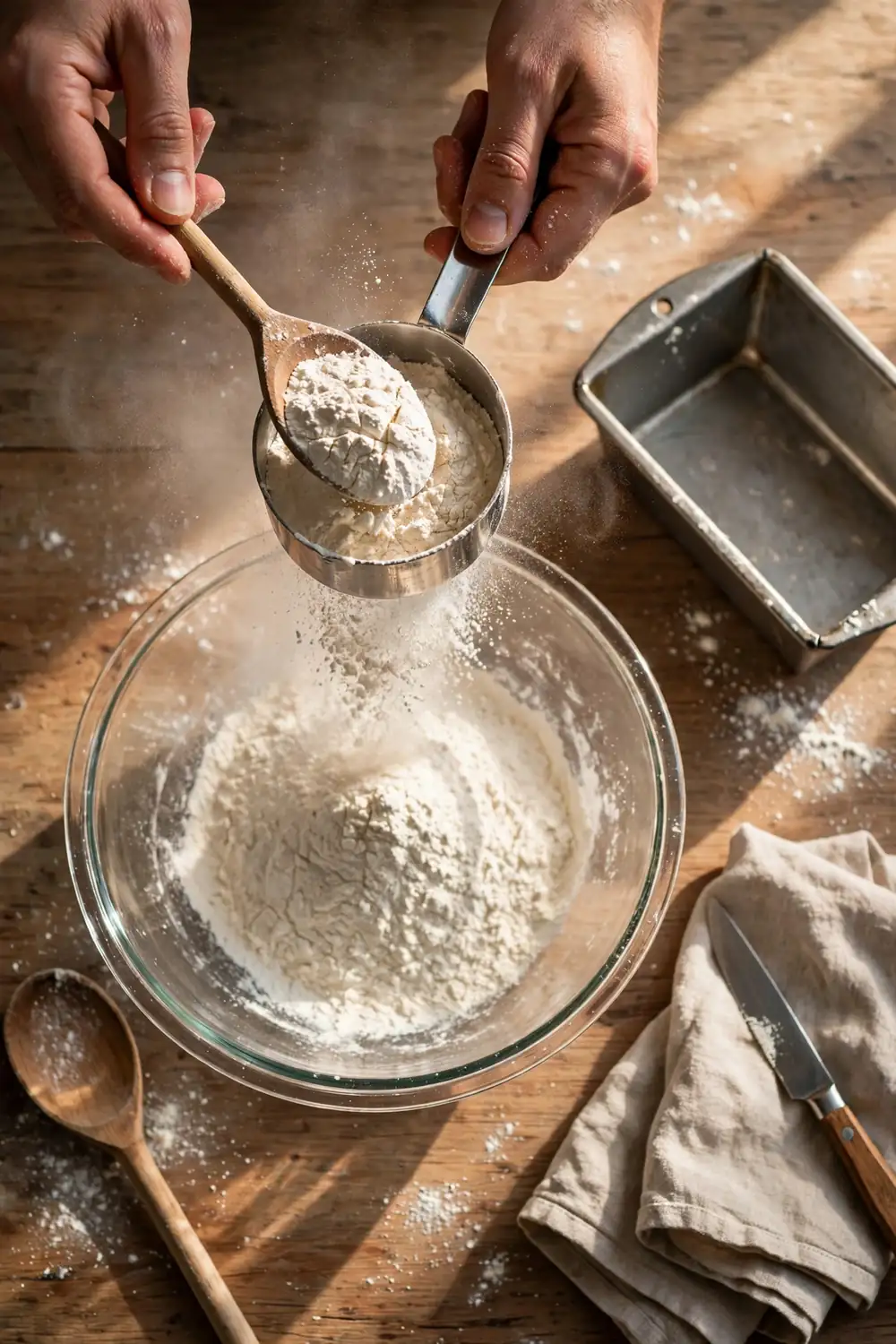
Common Mistake: Many bakers scoop flour straight from the bag, which packs the cup down. That packed cup can add several extra tablespoons to the dough. The dough turns stiff and dry, and the loaf bakes heavy.
The Fix: Spoon the flour loosely into the cup, then level the top with the back of a knife. Measure over the bowl so spills fall back in. This small change keeps the dough soft and the crumb open.
Too much flour is the biggest reason a loaf turns heavy, and it takes very little extra to spoil the crumb. Check the dough after mixing, and add water only if it feels stiff. Spooning and leveling keeps the measure right on every bake from now on.
Fix the Kneading
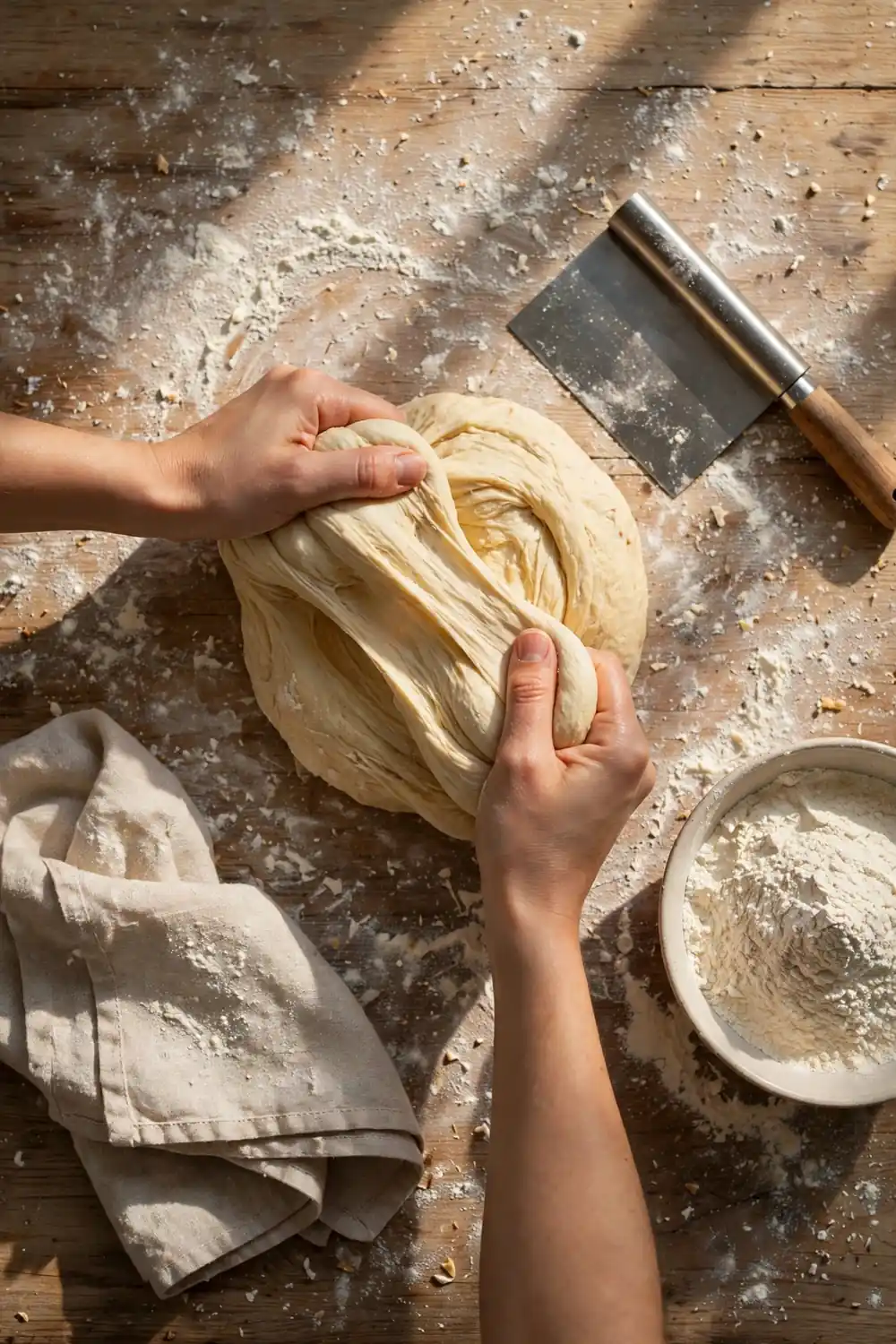
What You Need:
- A clean counter: A lightly floured surface gives the dough room to move.
- A timer: Ten minutes of kneading is easy to track with one.
- A bench scraper: It lifts sticky dough without adding too much flour.
- A small bowl of water: Wet hands handle sticky dough better than floured ones.
Kneading builds the gluten net that holds the gas the yeast makes. Weak gluten cannot hold that gas, so the loaf stays flat and heavy. Knead for eight to ten minutes, until the dough feels smooth, elastic, and springs back when poked. The windowpane test confirms the gluten is ready.
Give It Enough Rise Time
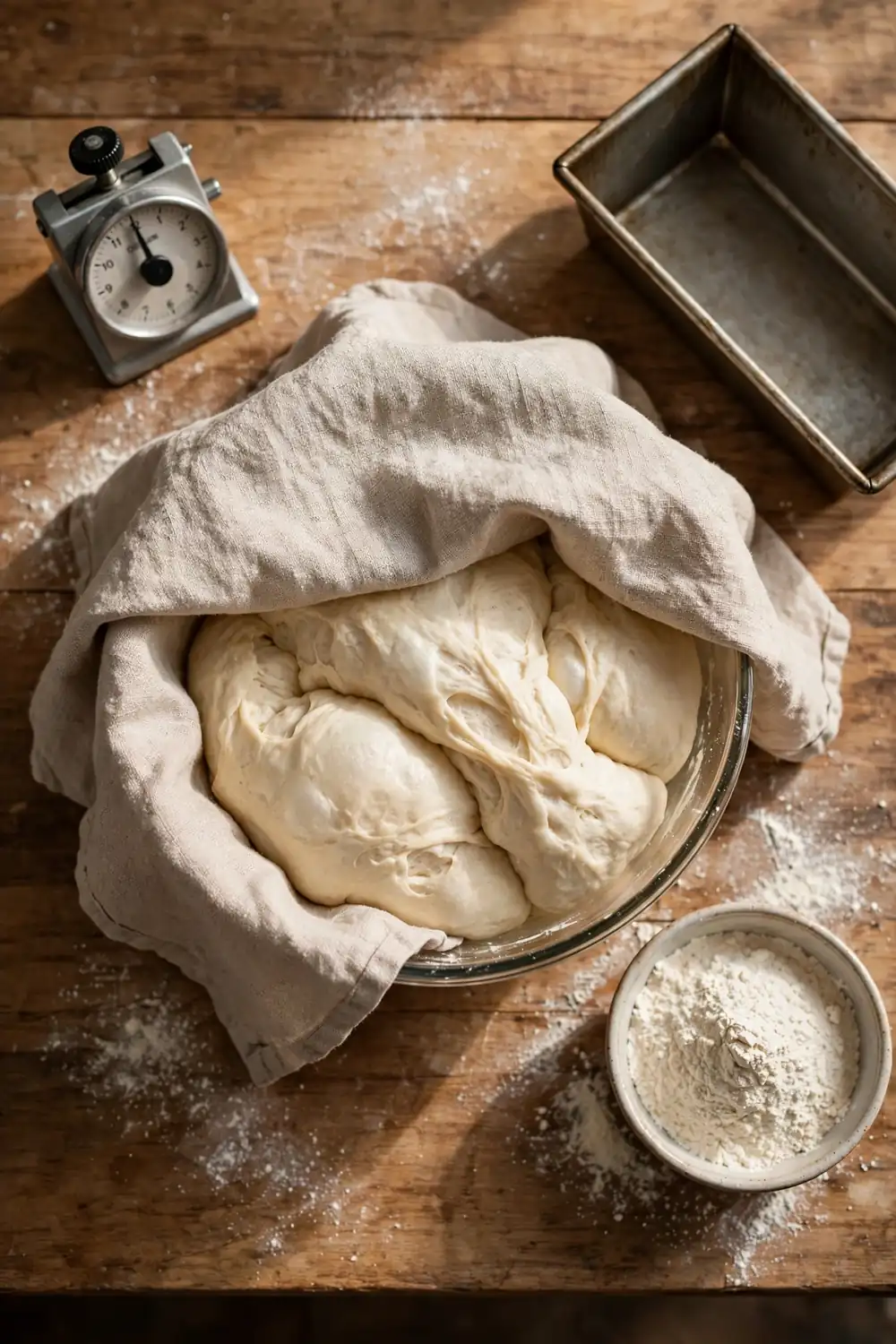
Before: A short rise leaves the yeast little time to make gas. The dough never doubles, and the loaf bakes flat and heavy. The crumb stays tight, and the crust turns hard.
After: A full rise lets the yeast build gas through the whole dough. The loaf bakes tall and golden, with a soft, open crumb. The crust stays tender after cooling.
Rising gives yeast time to work, so patience matters more than speed. Let the dough double in a warm spot, covered with a damp towel, and use a timer instead of guessing. Then shape it, let it rise again, and bake only when the shaped loaf looks puffy.
Shape the Loaf Gently
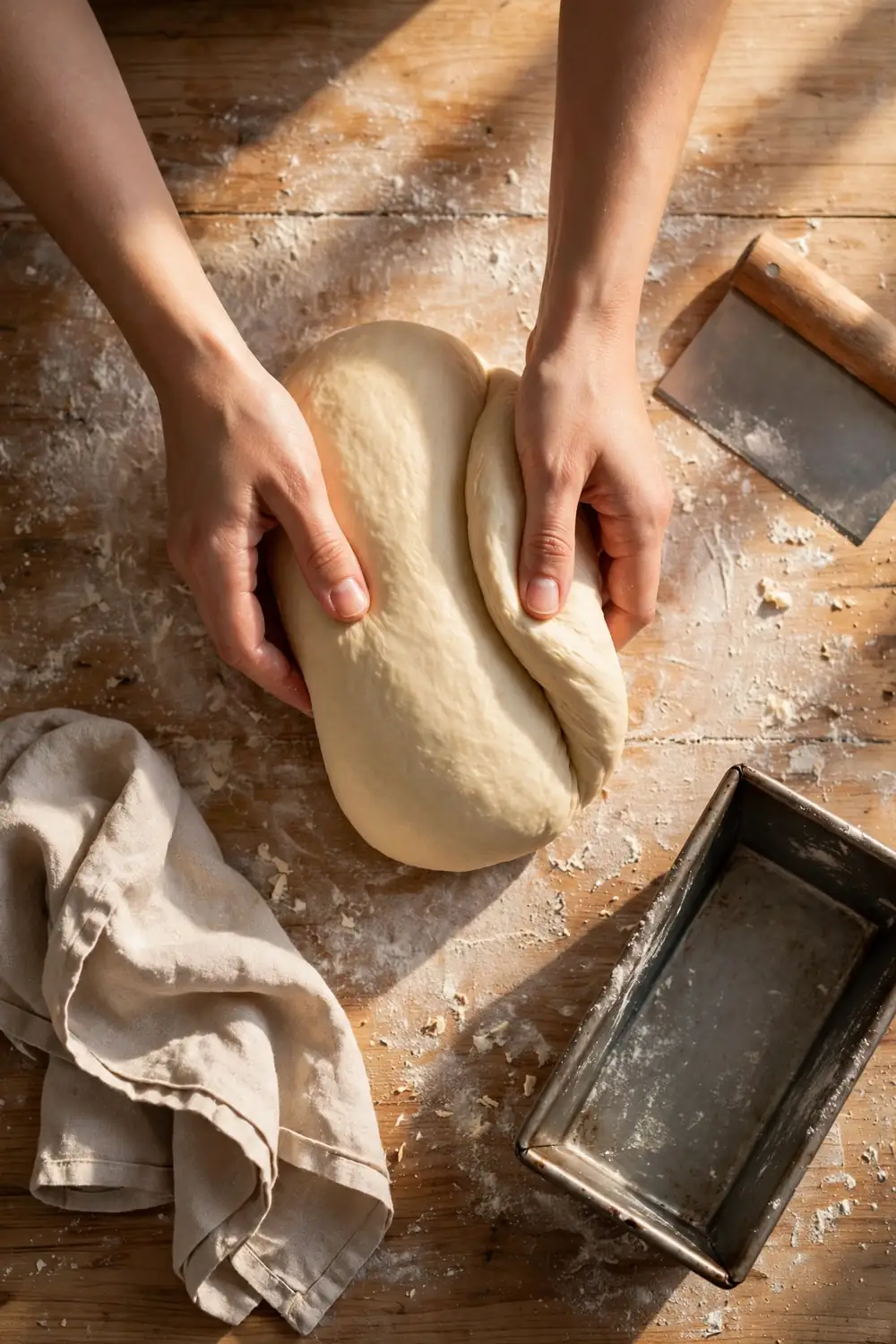
Do This:
- Shape with light, even pressure to keep the air inside.
- Tuck the seams under and pinch them closed.
- Place the loaf seam side down in the pan.
- Let the shaped loaf rise again before baking.
Avoid This:
- Do not punch the dough flat and knock out all the air.
- Do not stretch the dough thin or tear the surface.
- Do not skip the second rise after shaping.
- Do not shape cold dough straight from the fridge.
Shaping sets the final crumb, and rough handling knocks out the air fast. Gentle, even shaping keeps the gas inside and the loaf light. Fix the shaping once, and every loaf after it bakes soft and even from edge to center on every bake from now on.
Bake at the Right Heat
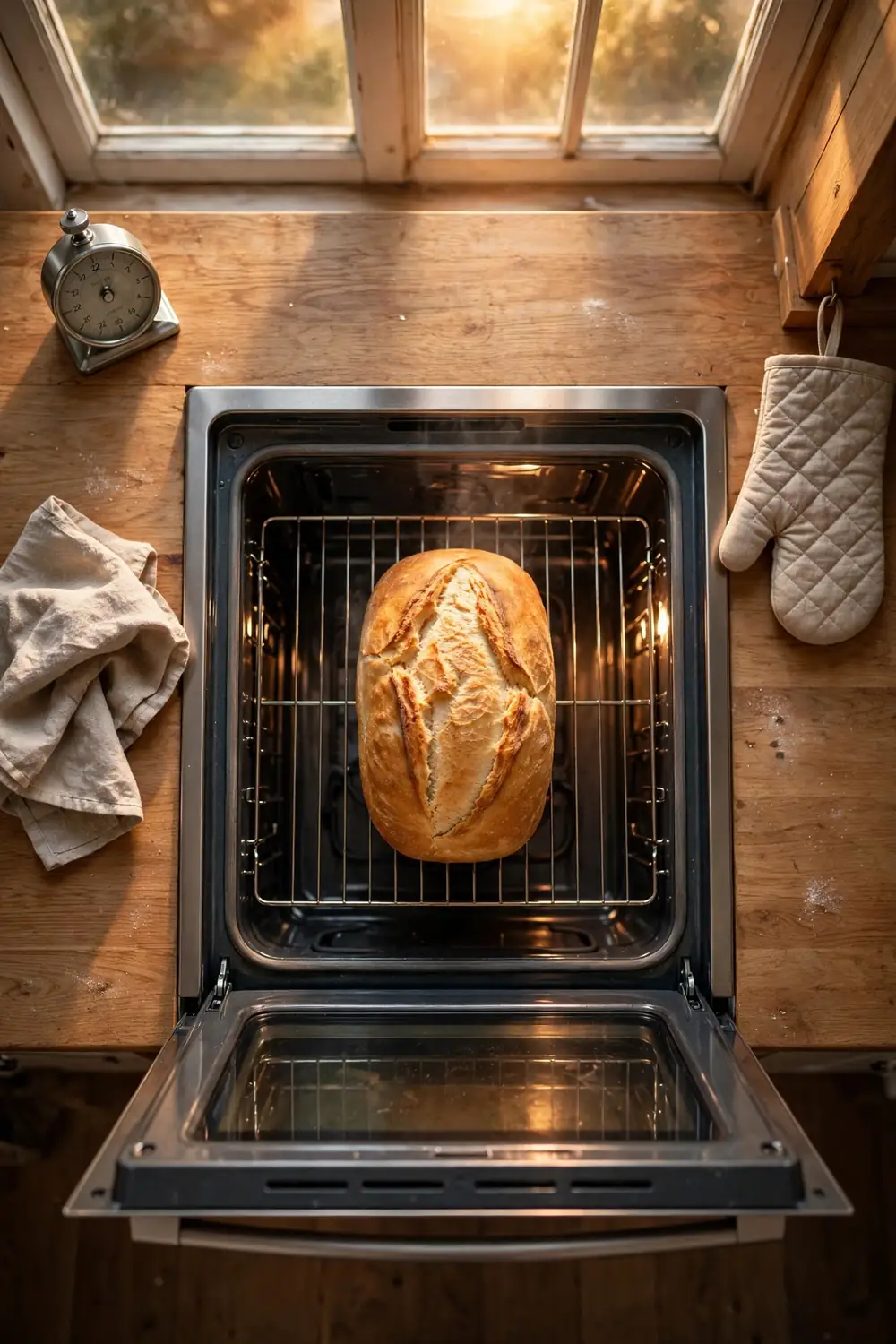
Best Rule: Bake in a fully hot oven so the loaf springs up fast
Check Time: Peek once near the end, quickly and gently
Risk: A cool oven gives a flat, heavy loaf
Result: A tall, golden loaf with a soft crumb
A cool oven lets the loaf spread before the crust can set, so the crumb stays close. The loaf bakes up flat and heavy instead of tall. Trust the oven heat and the timer, and bake until the crust turns deep golden on every bake.
Let the Bread Cool Right
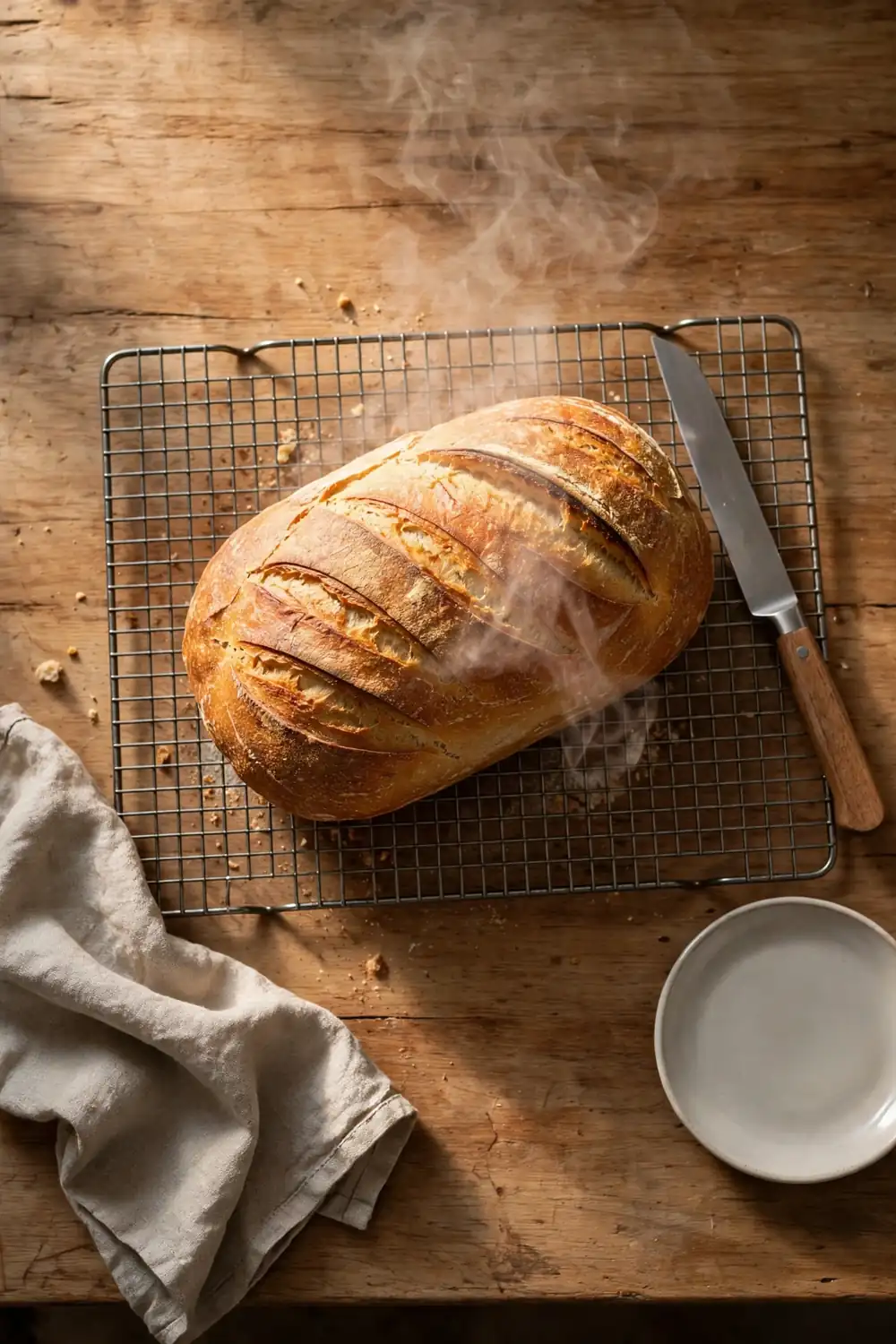
Cutting a hot loaf is the fastest way to ruin good bread, even when the bake was perfect. The crumb is still setting, and the loaf has not firmed up yet. A rushed slice turns gummy fast, and the loaf feels heavy as it cools.
Let the loaf cool on a wire rack for at least one hour, then slice it. Wait until the loaf feels barely warm and the crust sounds hollow when tapped. Patience here keeps the crumb soft, light, and even on every loaf you bake from now on.
Common Mistakes to Avoid
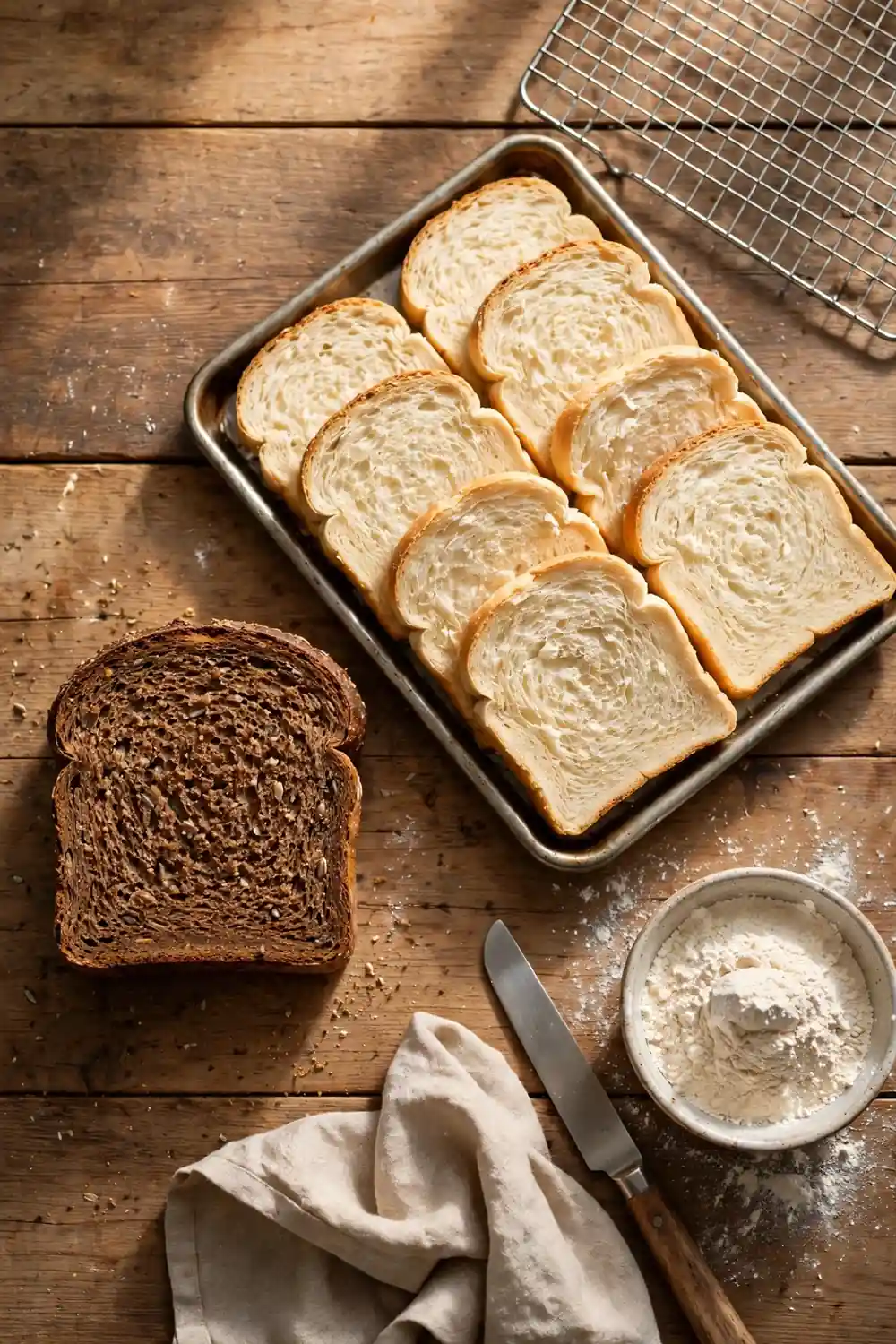
Most heavy loaves come from the same few mistakes, and all of them are easy to fix. Change one thing at a time, so you can see which fix made the difference. Start with the flour, then the yeast, then the rise.
- Do not scoop flour straight from the bag.
- Do not use hot water on the yeast.
- Do not use old or expired yeast.
- Do not skip the second rise.
Perfect Loaf Signs
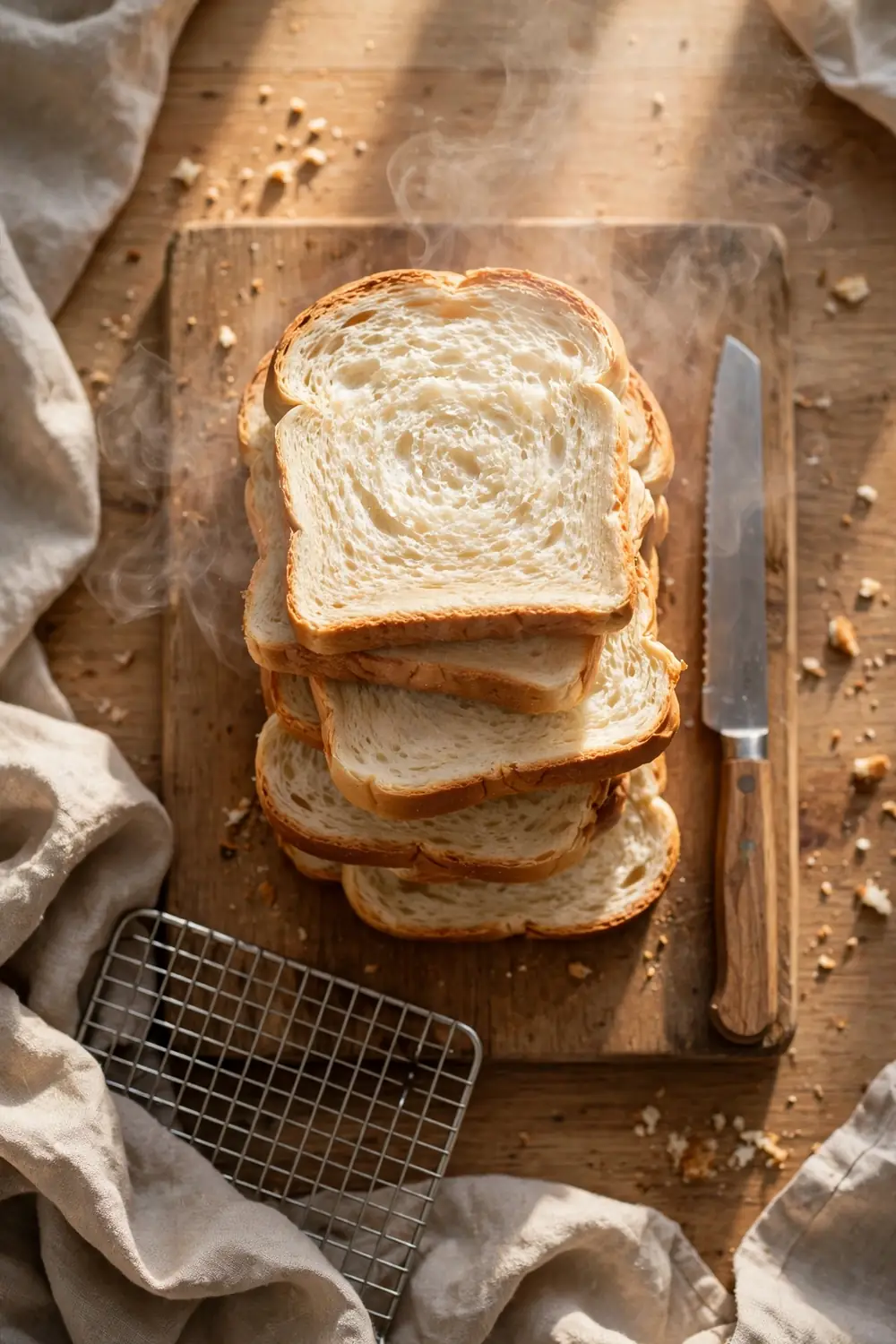
Quick Tip: A perfect loaf looks tall and golden, with an open crumb at the cut edge. The crust feels crisp, never hard or heavy. Trust these signs more than the color of the top crust.
A good loaf tells you it worked before you taste it. The top looks golden and crisp, the crumb opens up easily, and every slice holds its shape on the board. That is the finish every fix on this list is working toward every time.
Conclusion
Dense bread is not a sign of bad luck in the kitchen. It comes from small, fixable causes, and now you know each one. Measure with care, give the dough time to rise, and the next loaf can surprise you.
Pick one fix from this guide and try it on your next loaf. Save this post on Pinterest so the fixes are there when you need them, and share it with anyone whose bread turns out heavy.
I have seen how making this one change can completely shift the result. Bake your next loaf with these fixes and enjoy a soft, golden slice.