Why Is My Slow Cooker Pot Roast Tough? Easy Fix Guide
Lifting the lid to find tough pot roast that feels chewy and dry instead of tender and juicy is a real letdown. The good news is that a tough roast has clear causes, and each one has a simple fix.
In my experience, most roasts turn tough for a handful of reasons. The wrong cut, too little time, or lifting the lid can each keep the meat from breaking down. Small slips add up fast, and too little liquid makes things worse.
This guide walks through each cause with a fix you can use right away. You do not need special tools or fancy ingredients. If ground beef gives you the same trouble, see our guide to fixing gray watery ground beef for the same kind of easy fixes.
Why Pot Roast Turns Tough
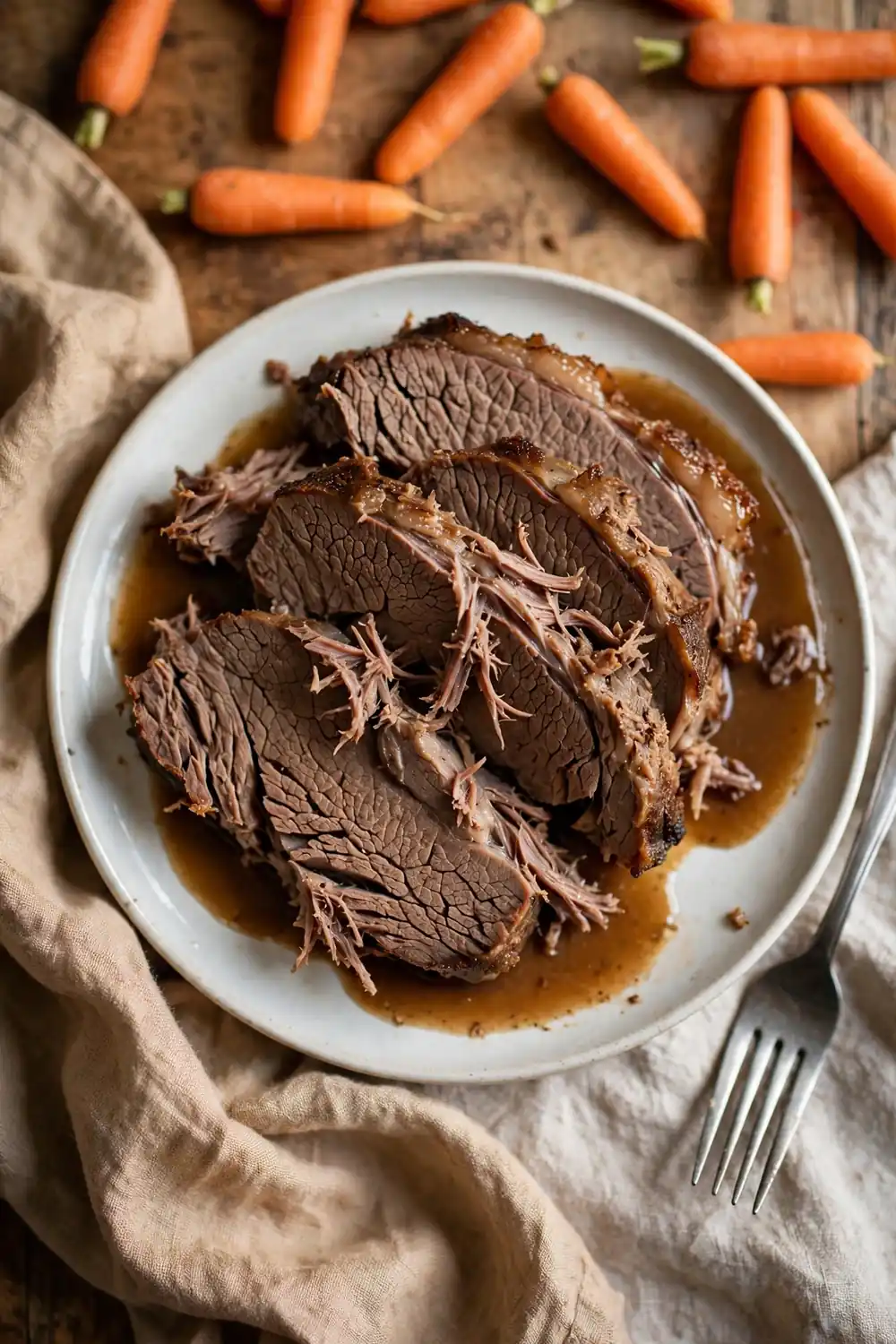
You lift the lid hoping for tender, juicy roast, and the meat feels chewy and dry instead. The problem is rarely one big mistake. It starts with how the cook is handled, from the cut you buy to the way the lid and heat are managed.
The wrong cut, too little time, and lifting the lid each push the roast toward tough. When any of those is off, the connective tissue never breaks down and the meat stays chewy. Each cause below has a simple fix for your very next roast.
Pick the Right Cut
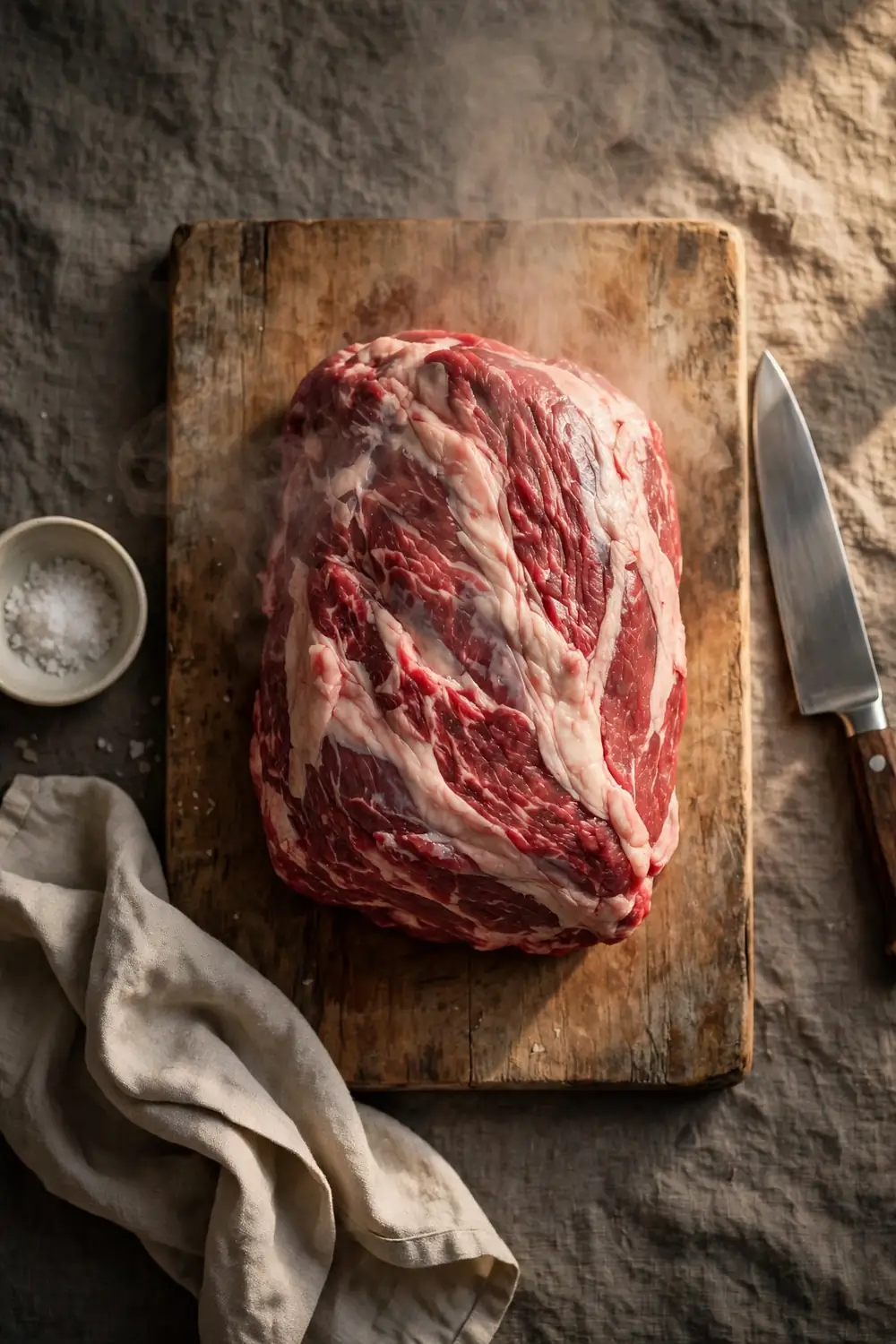
The cut decides the roast more than any other choice, and a lean cut can never turn tender in the slow cooker. Chuck has the fat and connective tissue that melt into tenderness. Picking chuck keeps the roast juicy every time.
- Choose chuck roast, never a lean round cut.
- Look for even marbling running through the meat.
- Pick a roast with some fat left on the outside.
- Buy a three to four pound roast for even cooking.
Add Enough Liquid
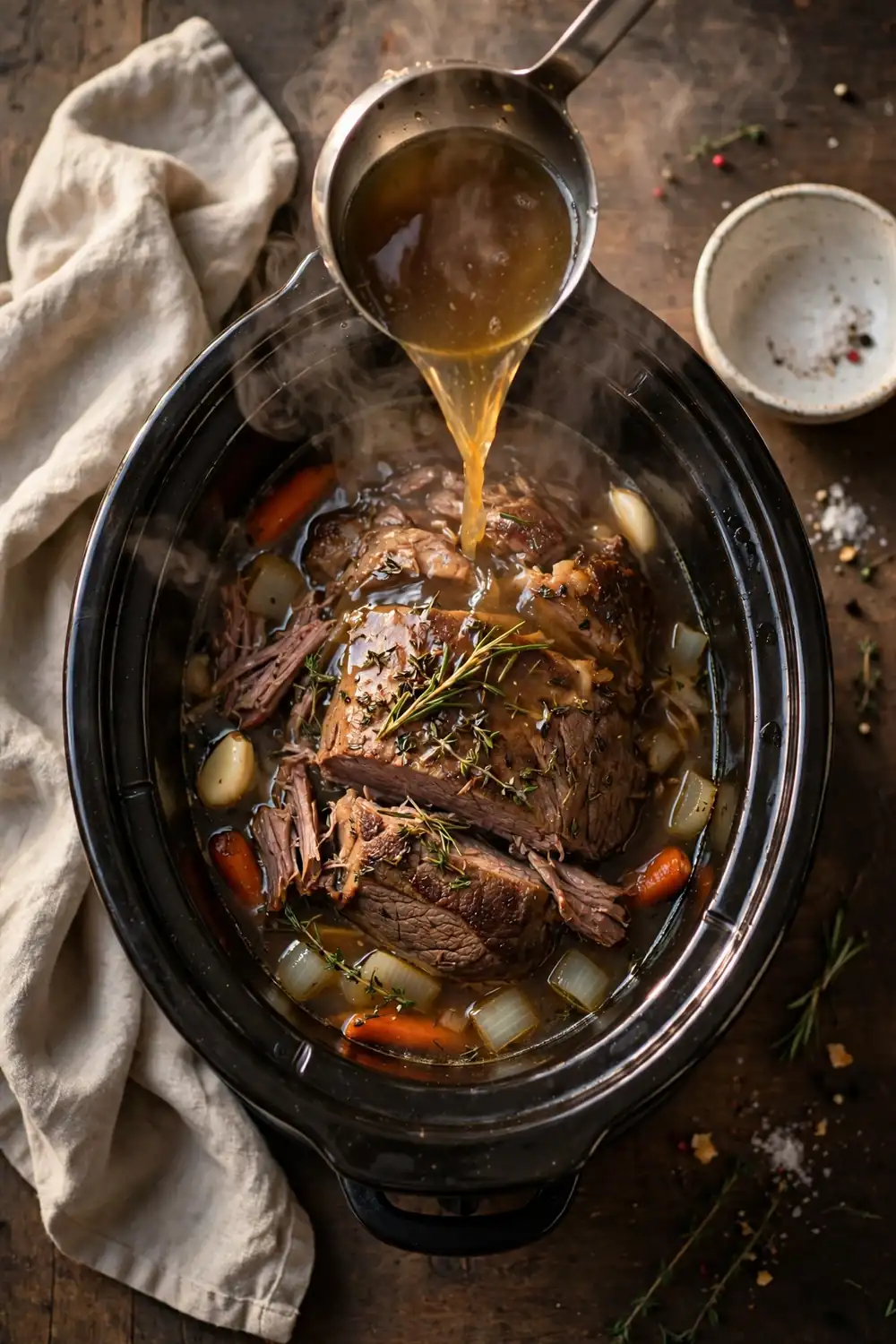
Quick Tip: Cover the roast halfway with broth, never all the way. Too much liquid drowns the flavor and turns the braise watery. Halfway gives steady moisture without washing the taste out.
Too little liquid leaves the top of the roast dry and exposed. The meat dries out on top while the bottom stays wet, so the roast cooks unevenly and the slices turn chewy. Enough broth lets the meat braise gently from all sides and melt evenly.
Cook It Low and Slow
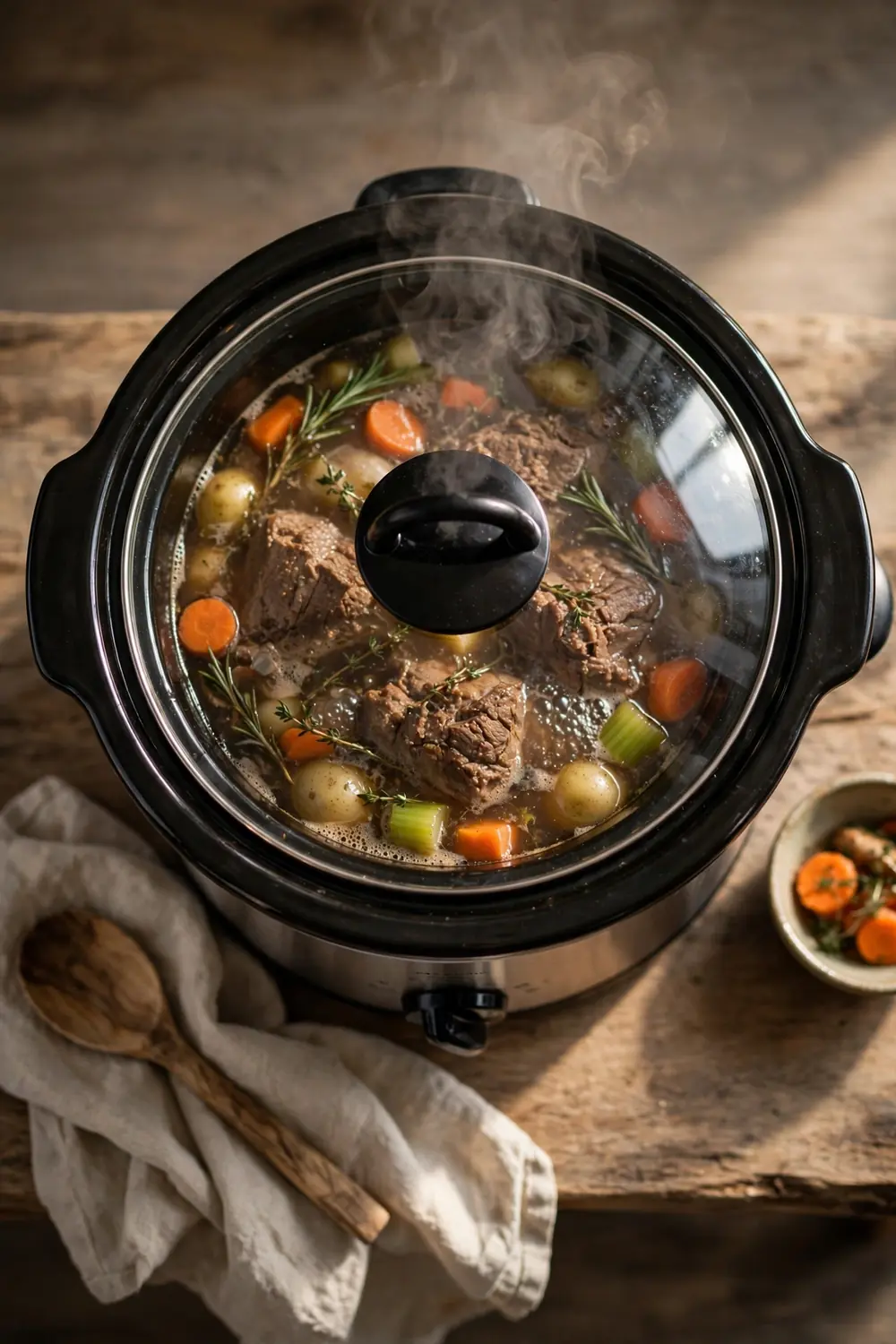
Common Mistake: Many cooks turn the heat up to finish faster, and the high heat tightens the meat and squeezes out the juices. The roast looks done on the outside while the inside stays chewy. Rushing the cook is the fastest way to a dry roast.
The Fix: Set the cooker to low and leave it alone for the full time. Low heat melts the connective tissue gently into tenderness. Patience on low is the simplest fix for a tender roast.
The meat needs hours for the tissue to melt, so rushing never works. A low, steady cook keeps the juices inside while the fibers soften slowly. Give the cooker the full time, resist the urge to turn the heat up, and let the slow heat do the work.
Give It Enough Time
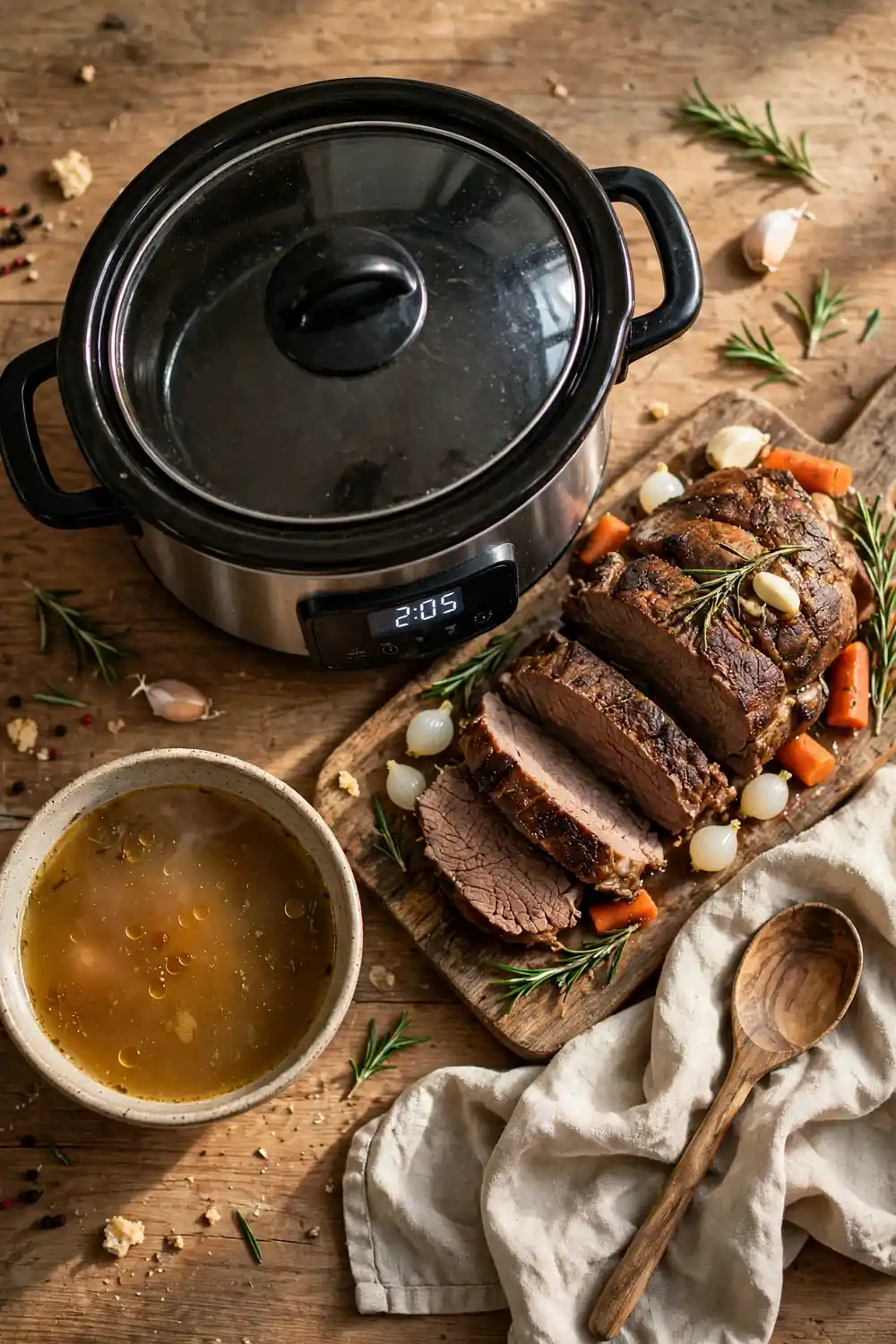
What You Need:
- A slow cooker: Low, steady heat melts the tissue without drying the meat.
- A fork: Use it to test tenderness without cutting the roast open.
- A timer: Set it so you do not pull the roast early.
- Broth: Add a splash if the liquid runs low during the cook.
Time melts the tissue, so a short cook can never turn a roast tender. The meat needs hours on low before it gives and turns soft. Give it the full time once, test with a fork, and the next roast should turn out tender and juicy.
Keep the Lid On
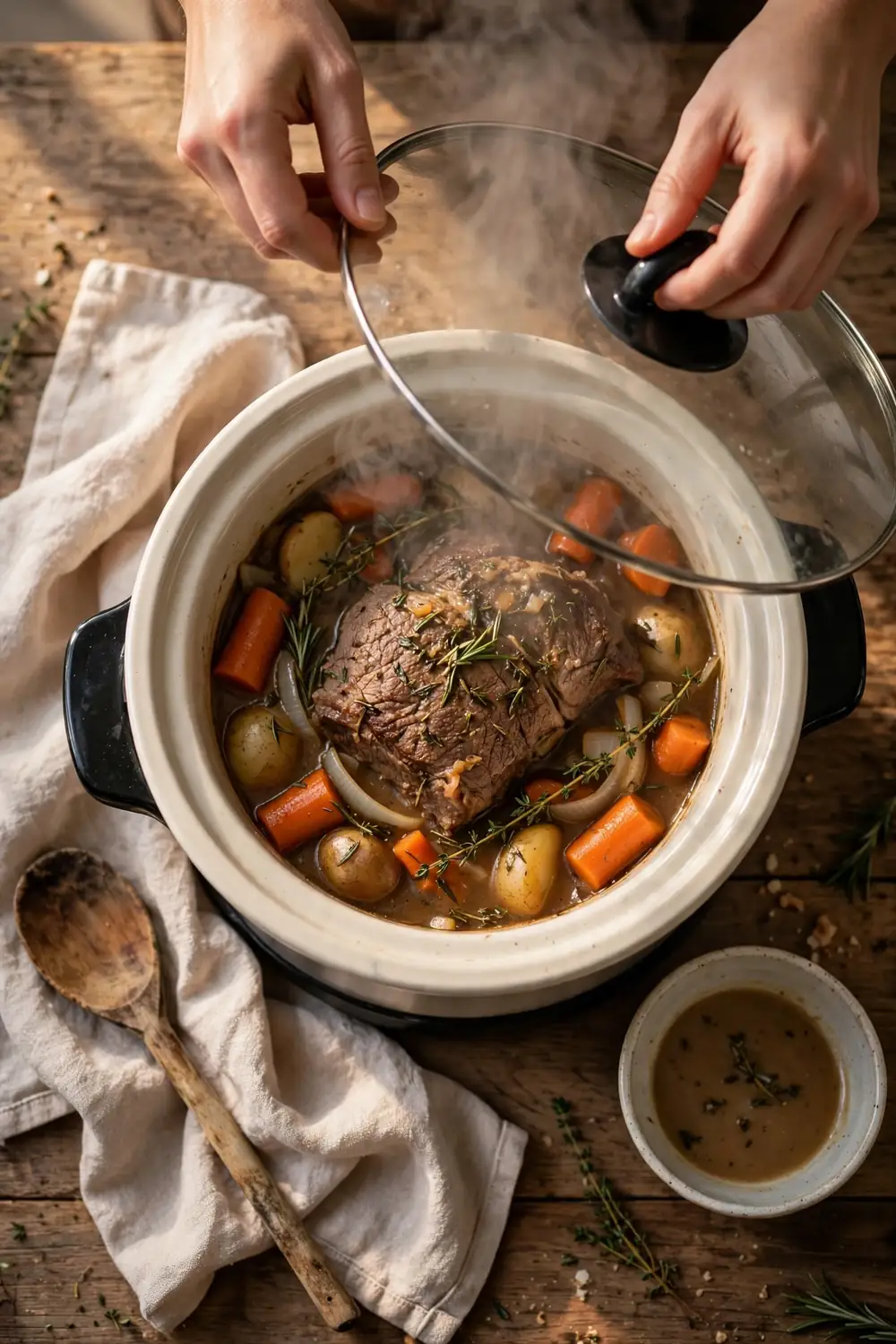
Before: Lifting the lid to peek lets heat and steam escape. Each peek drops the temperature, so the roast cooks slower and dries out fast. The long cook turns uneven when the lid keeps coming off.
After: With the lid on tight, the steam stays trapped and the meat stays moist. The temperature holds steady, so the tissue melts evenly through the long cook. The roast finishes tender without a single extra peek.
Every peek costs heat, so the roast cooks slower and dries out fast. The lid traps steam and keeps the meat moist through the long cook. Keep the lid on tight from start to finish, and the roast should turn tender and juicy every time.
Rest Before Slicing
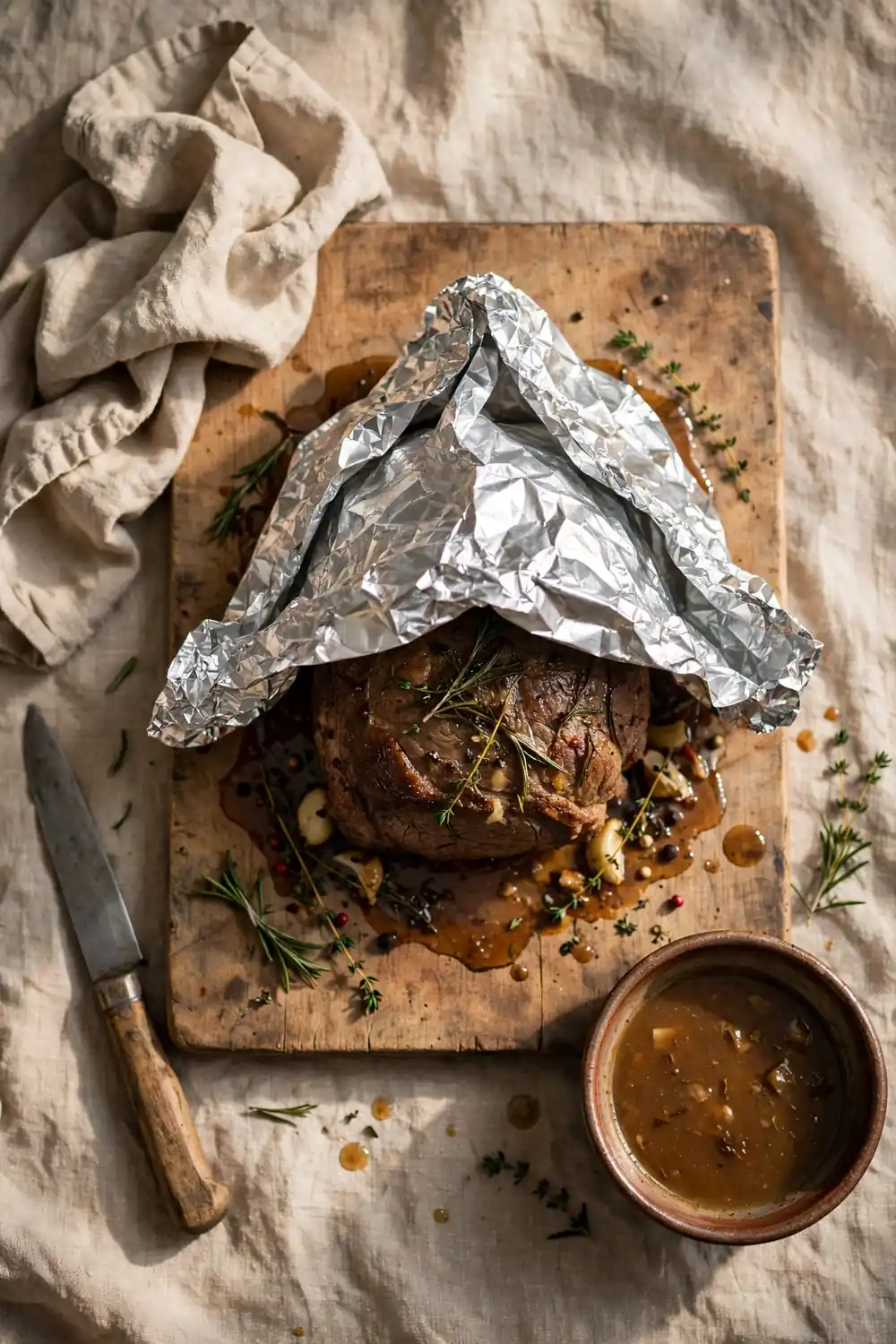
Do This:
- Rest the roast fifteen minutes under loose foil.
- Slice across the grain for tender pieces.
- Spoon warm broth over the slices.
- Serve at once while the roast is juicy.
Avoid This:
- Do not slice the roast straight off the heat.
- Do not cut with the grain.
- Do not let the roast sit uncovered.
- Do not pour cold gravy over hot slices.
Resting lets the juices settle back into the meat, and the slices stay moist. Cut too soon, and the juices run out onto the board instead of staying in the meat. Rest the roast once, and it should slice tender and juicy. A short rest is easy patience with a clear payoff.
Fix Tough Roast Fast
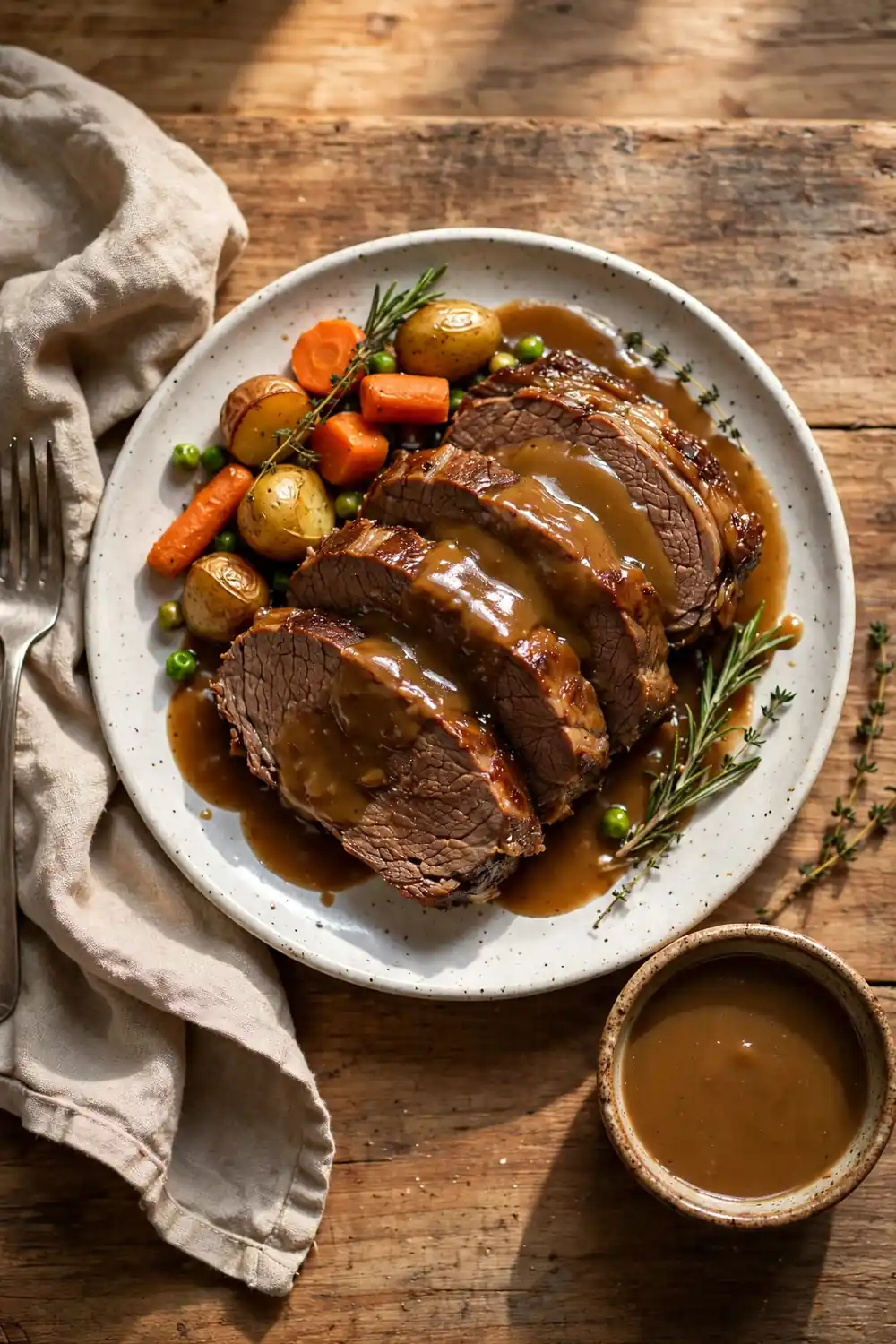
Best Fix: Return the roast to the cooker with more broth
Extra Time: Two more hours on low
Risk: High heat tightens the meat further
Result: Tender roast that slices cleanly
A tough roast is not lost, and more low time in broth can still save it. Return it to the cooker, add broth, and let it go two more hours. Trust the slow fix, and the roast should turn tender, juicy, and ready to serve.
Store Roast the Right Way
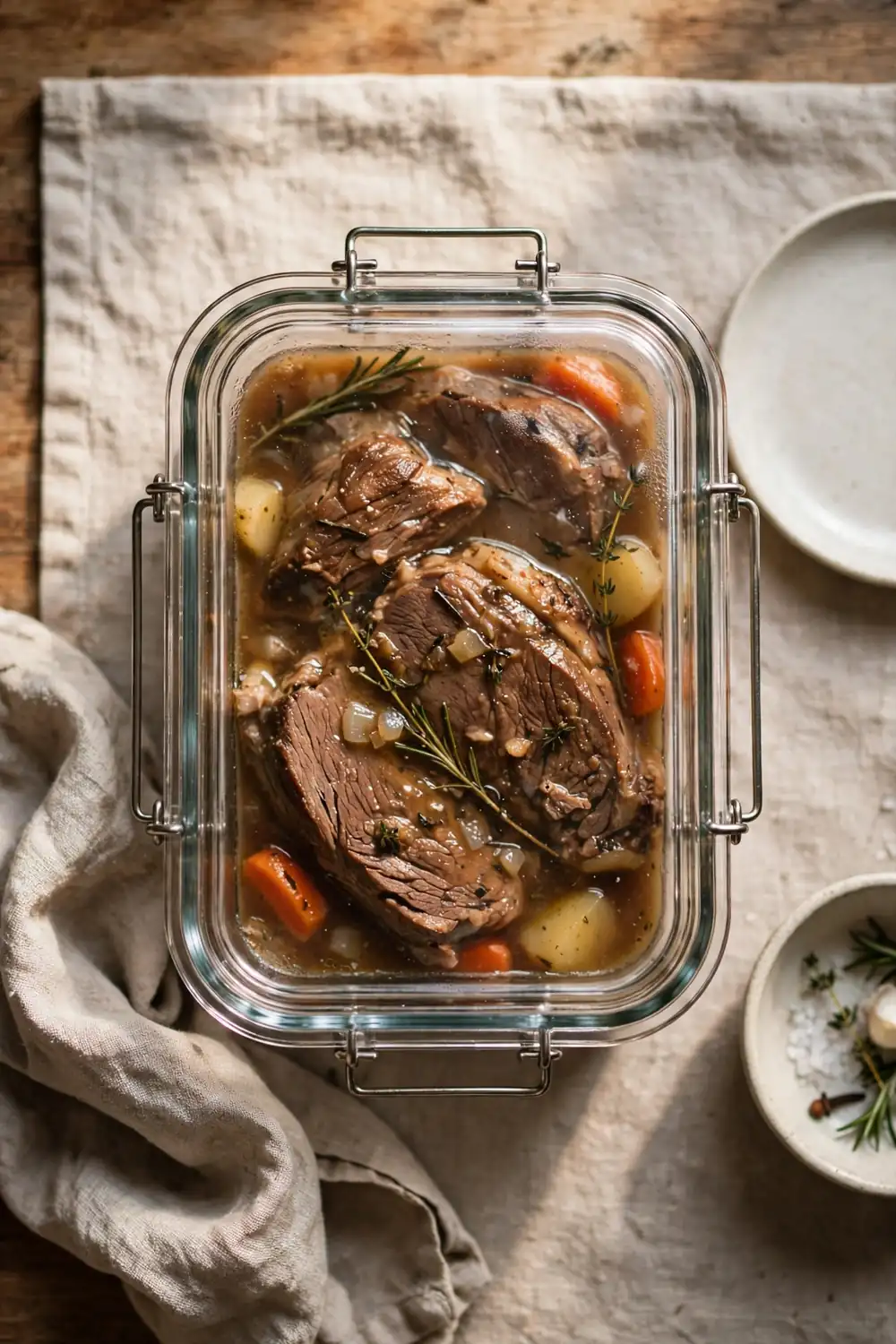
Storing roast uncovered in the fridge is the fastest way to dry it out, even when the roast was perfect. The cold pulls moisture from the slices, and the texture turns hard and tough. A dry slice feels chewy, and the roast loses its juicy bite as it sits.
Keep the roast in a sealed container with its broth for up to three days, then reheat gently. Layer the slices flat so they never stick together. Good storage keeps the roast moist, soft, and juicy for the next family meal.
Common Mistakes to Avoid
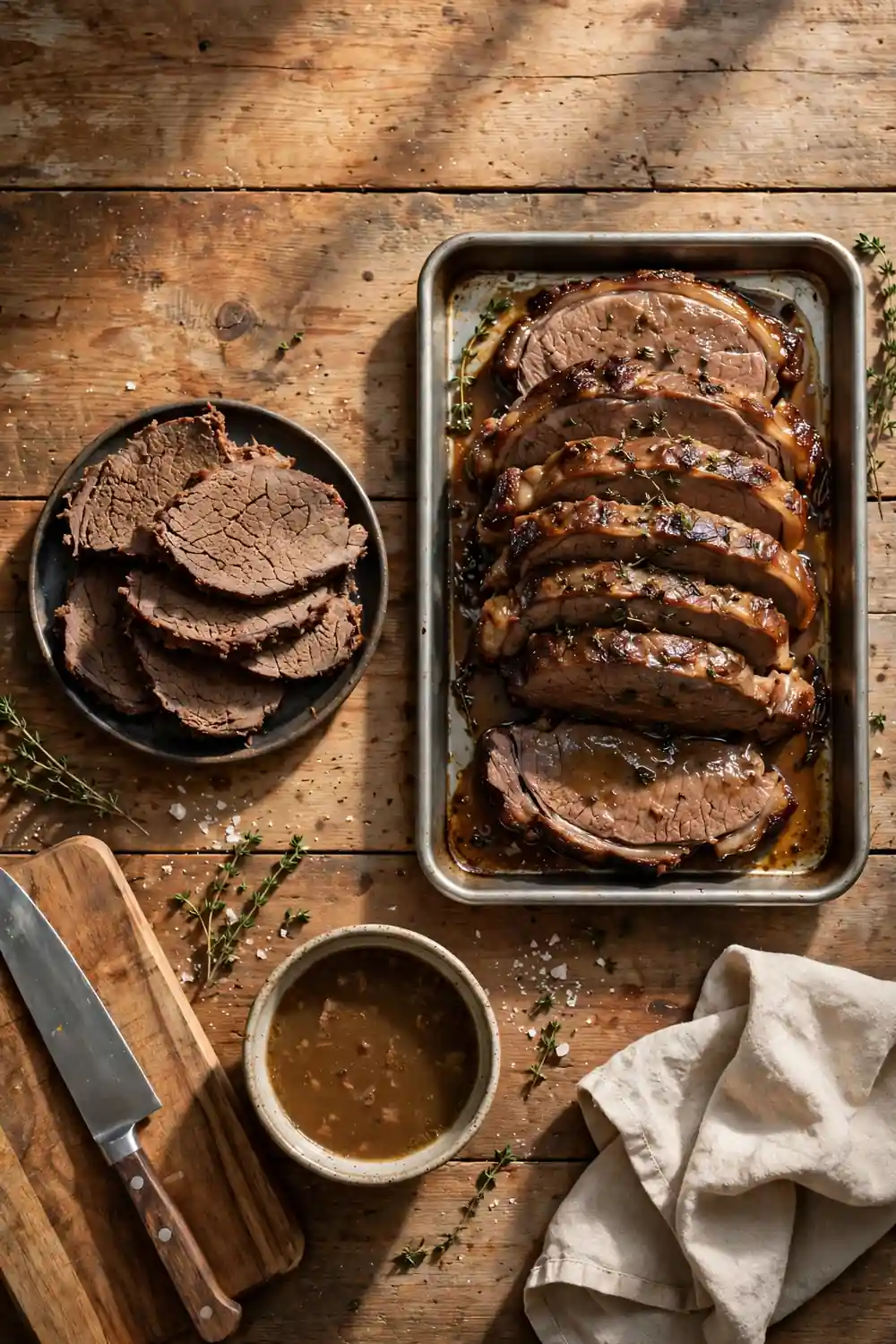
Most tough roasts come from the same few mistakes, and all of them are easy to fix. Change one thing at a time to see which fix made the difference. Start with the cut, then the time, then the lid, in that order.
- Do not use a lean cut for the roast.
- Do not cook the roast on high heat.
- Do not lift the lid while it cooks.
- Do not pull the roast before it is fork tender.
What Perfect Roast Looks Like
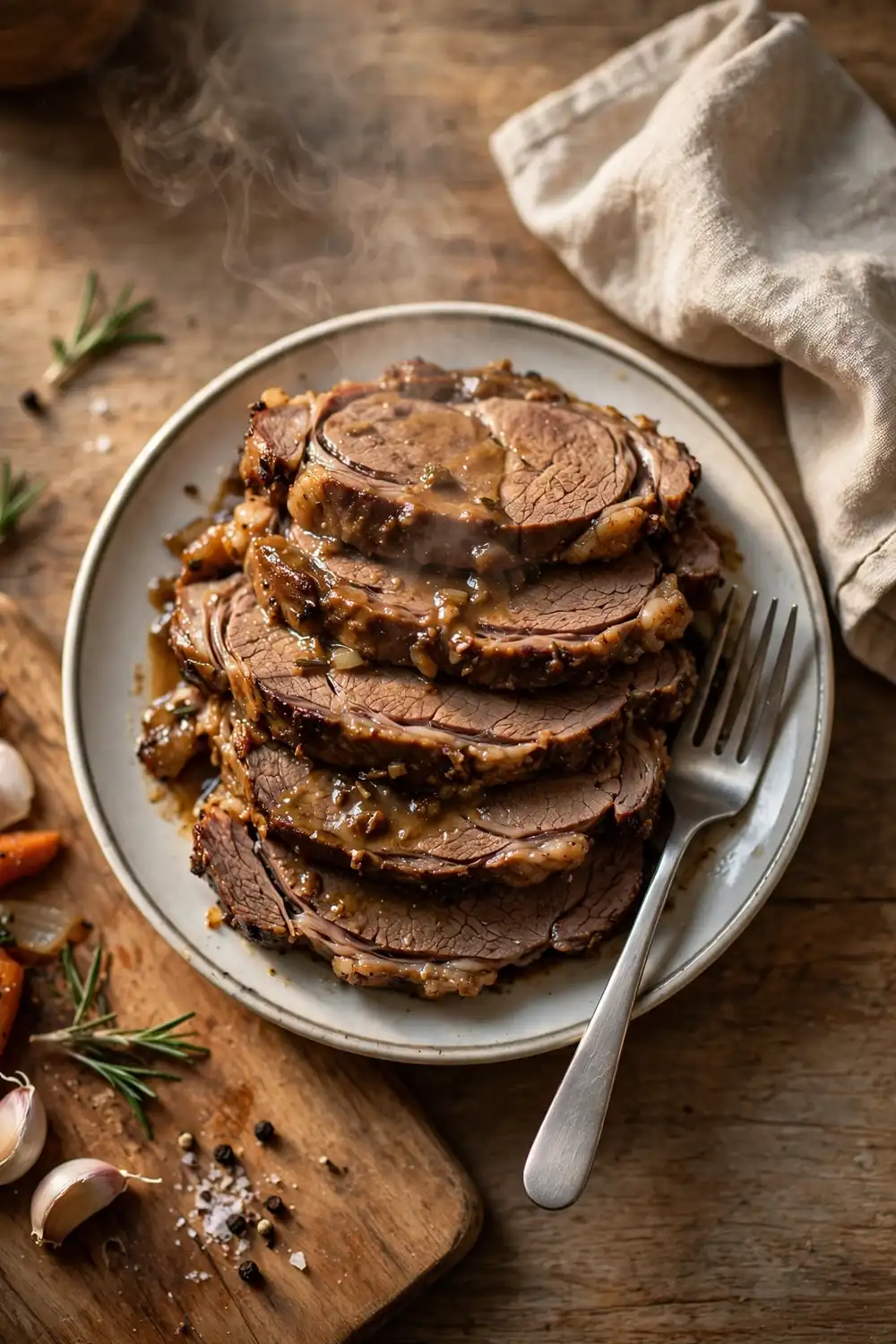
Quick Tip: Perfect roast looks tender and moist, with meat that pulls apart easily. The slices feel soft, never tough or chewy. Trust these signs more than the color of the outside.
Good roast tells you it worked before you taste it. The slices look moist and tender, the meat pulls apart, and every piece holds its shape on the plate. That is the finish every fix in this guide is working toward for your table tonight.
Conclusion
Tough pot roast is not a sign of bad luck in the kitchen. It comes from small, fixable causes, and now you know each one. Pick the right cut, give it time, and the next roast can surprise you.
Pick one fix from this guide and try it on your next roast. Save this post on Pinterest so the fixes are there when you need them, and share it with anyone whose roast turns out tough.
I have seen how making this one change can shift the result. Cook your next roast with these fixes and enjoy a tender, juicy slice.

One Comment