Why Is My Ground Beef Gray and Watery? Easy Fix Guide
You drop beef into a hot pan, hoping for rich brown crumbles, and gray watery ground beef stares back instead. The meat steams, the pan fills with liquid, and dinner looks far from appetizing. This common problem has clear causes and simple fixes.
Most gray beef comes from a crowded pan, weak heat, or salt added too soon. Each one traps steam and stops browning before it can start. Small timing slips add up fast, and a wet pan makes the problem worse.
This guide walks through each cause in order, with a fix you can use right away. You need no special tools or fancy ingredients. If turkey gives you the same trouble, see our guide to fixing dry turkey after basting for the same kind of easy fixes.
Why Ground Beef Turns Gray
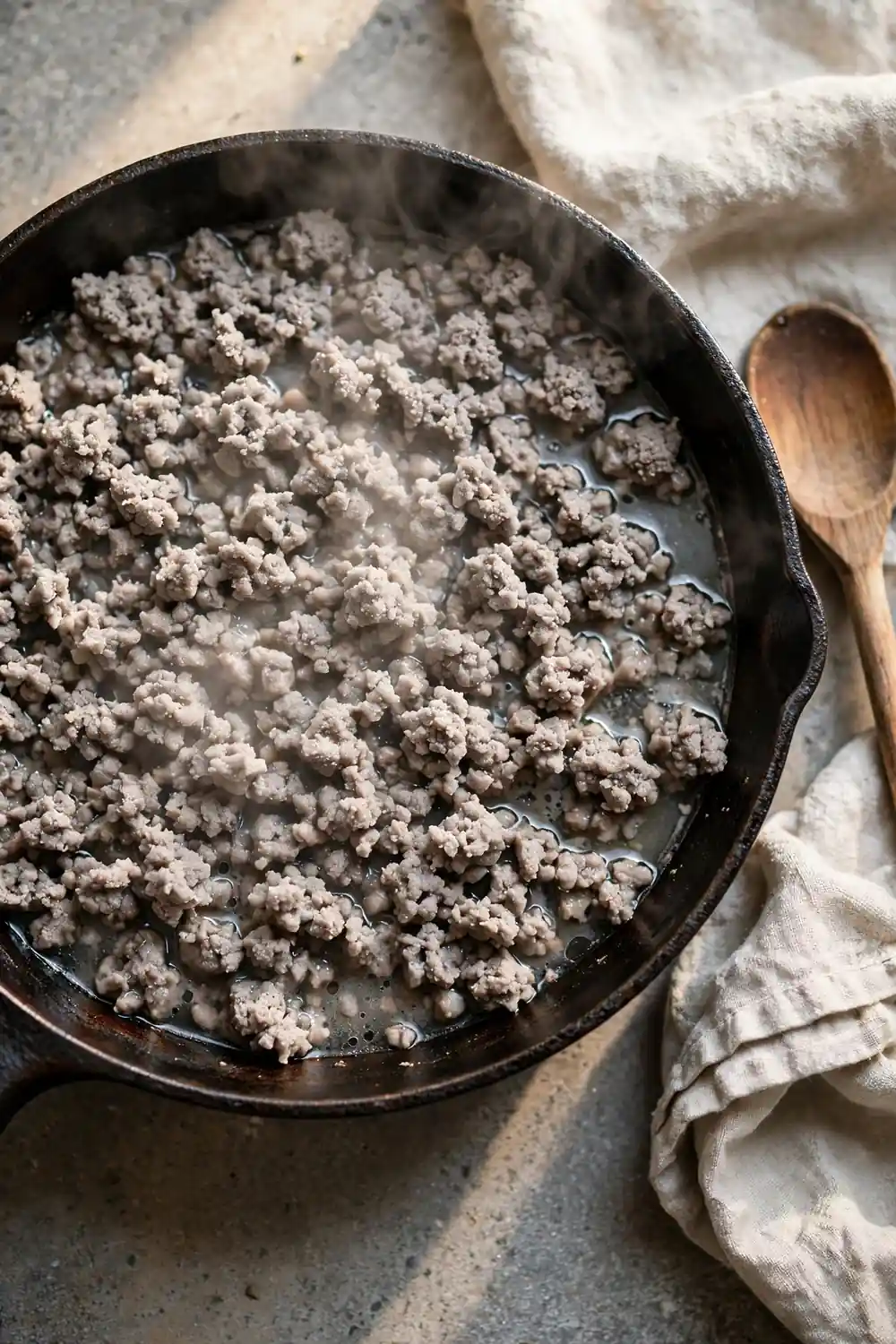
You drop the beef in the pan, expecting rich brown crumbles, but the meat turns gray and a puddle spreads across the pan. The color looks flat, and the texture stays soft instead of crisp. The problem is rarely bad meat, and it starts with how the pan is handled.
Too much meat, too little heat, and trapped steam each push the beef toward gray. When any of those three is off, the beef steams in its own juices instead of browning. The good news is that each cause has a simple fix for your very next batch.
Pick the Right Beef
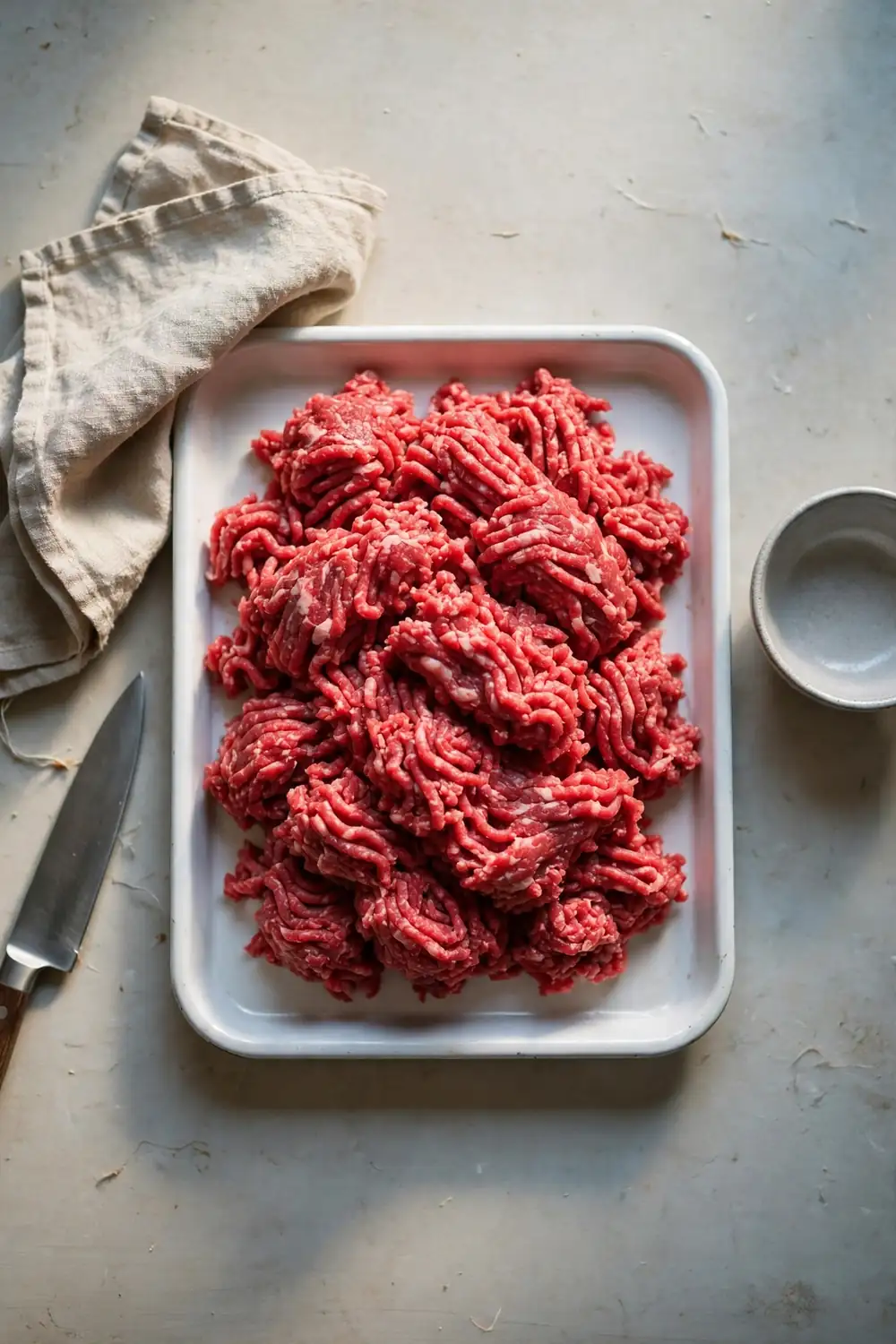
The beef you buy shapes the result more than any other choice, and very lean beef can release more water than fat. An 80/20 blend gives enough fat for browning and flavor. Picking the right blend keeps the beef brown every time.
- Choose 80/20 ground beef for everyday browning.
- Look for bright red meat with no gray spots at the store.
- Check the date, and cook it within two days of buying.
- Keep the beef cold until the pan is fully hot.
Fix a Crowded Pan
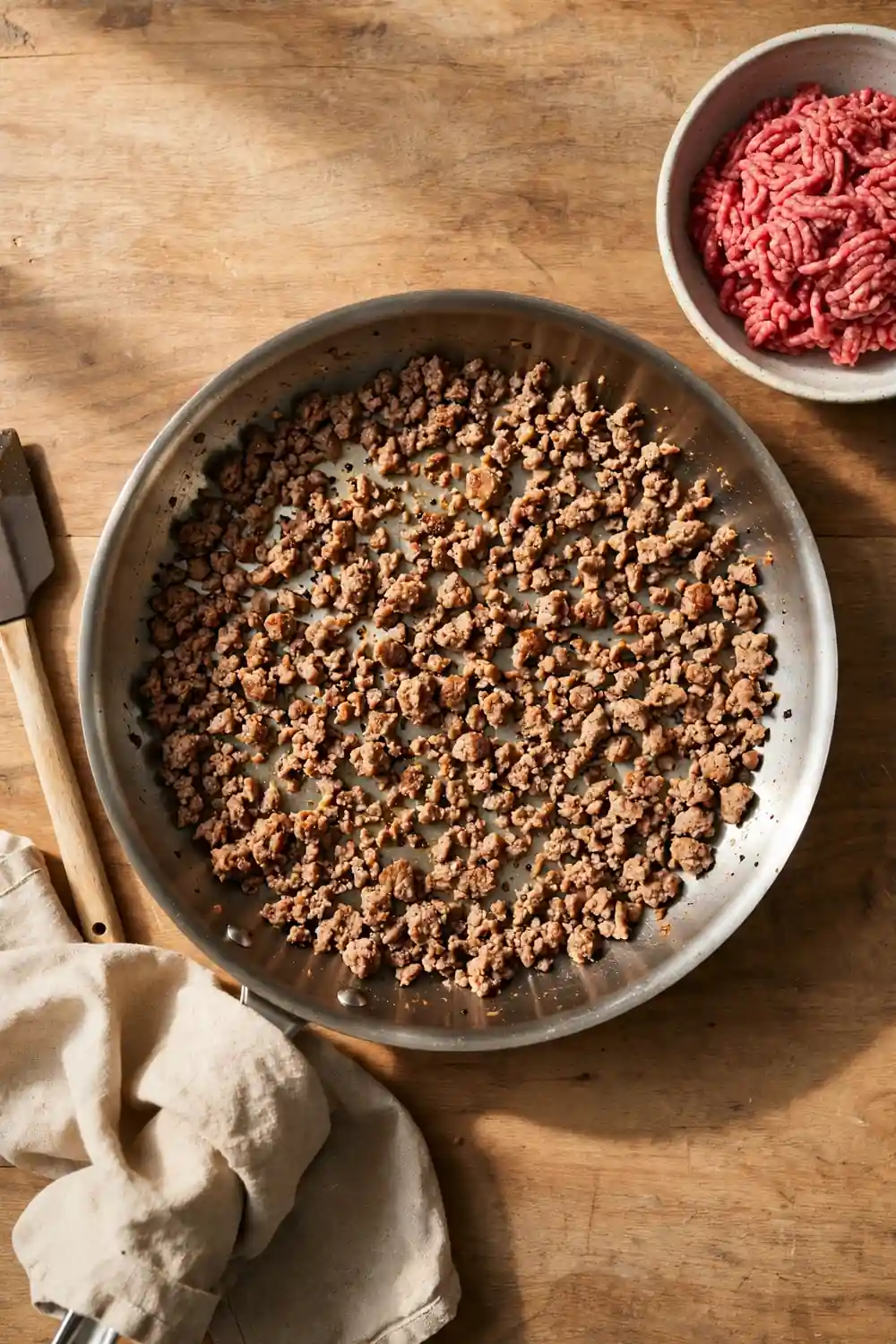
Quick Tip: Give every crumble room to spread in a single layer. A crowded pan drops the temperature fast, and the beef steams instead of searing. Use a large skillet, or cook in two rounds, so the heat stays high.
A crowded pan is the top cause of gray beef, and space is the fix. Give each crumble room to spread, and the pan stays hot enough to sear the surface. Fix the crowding once, and your beef browns evenly every time you cook it.
Brown It in Batches
Common Mistake: Most cooks dump the whole package into the pan at once. The pile of cold meat cools the pan fast, and the beef boils in its own juices. The crumbles stay pale, soft, and wet no matter how long they cook.
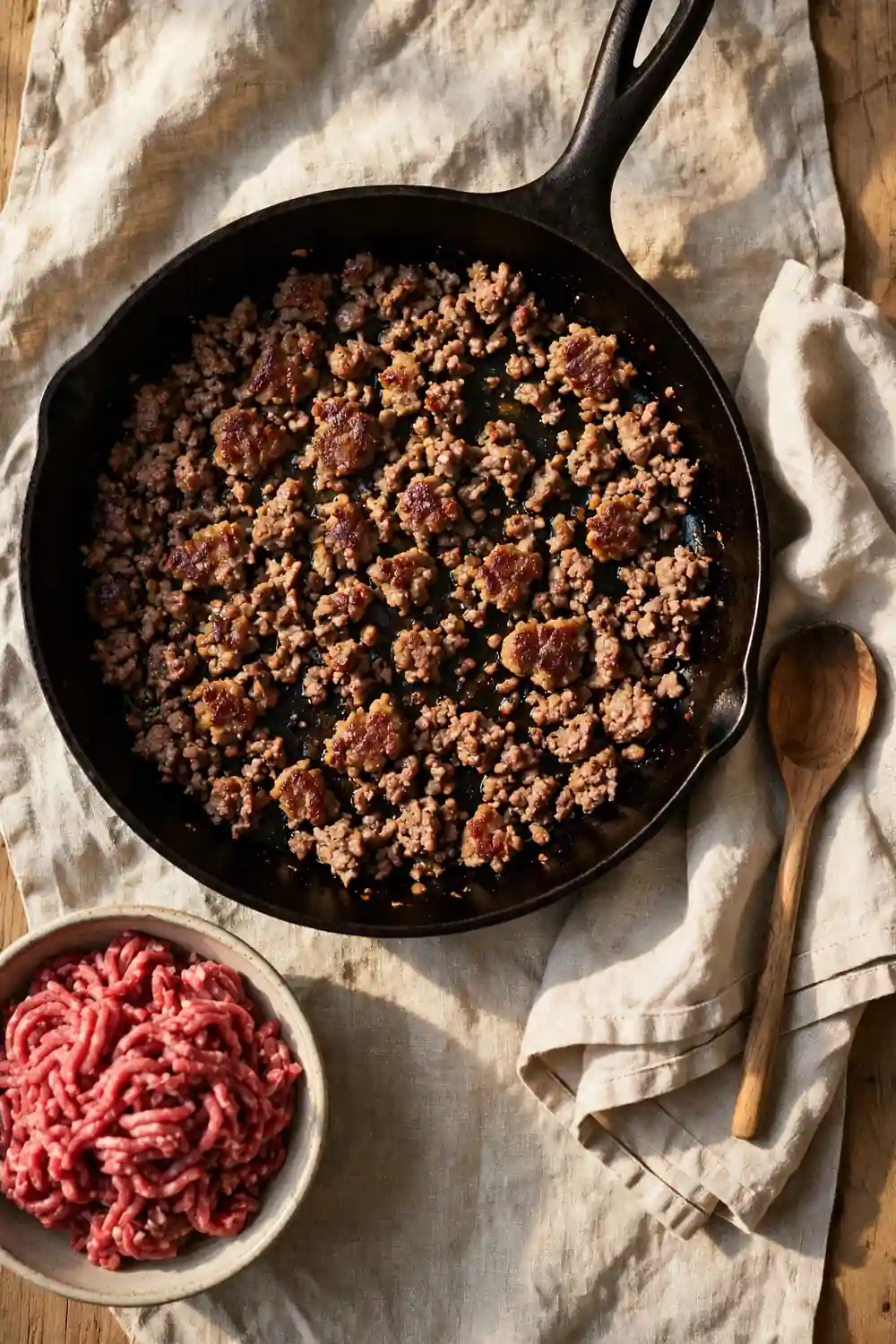
The Fix: Cook half the beef at a time, and leave space between the crumbles. Let the first batch brown fully, then set it aside and cook the rest. The pan stays hot, so each batch sears instead of steaming.
Working in batches takes a few extra minutes, yet it is the simplest fix for brown beef. The pan stays hot, so the beef sears instead of steaming in its own juices. Brown in batches once, and every pan after it turns out brown and crisp.
Get a Good Sear
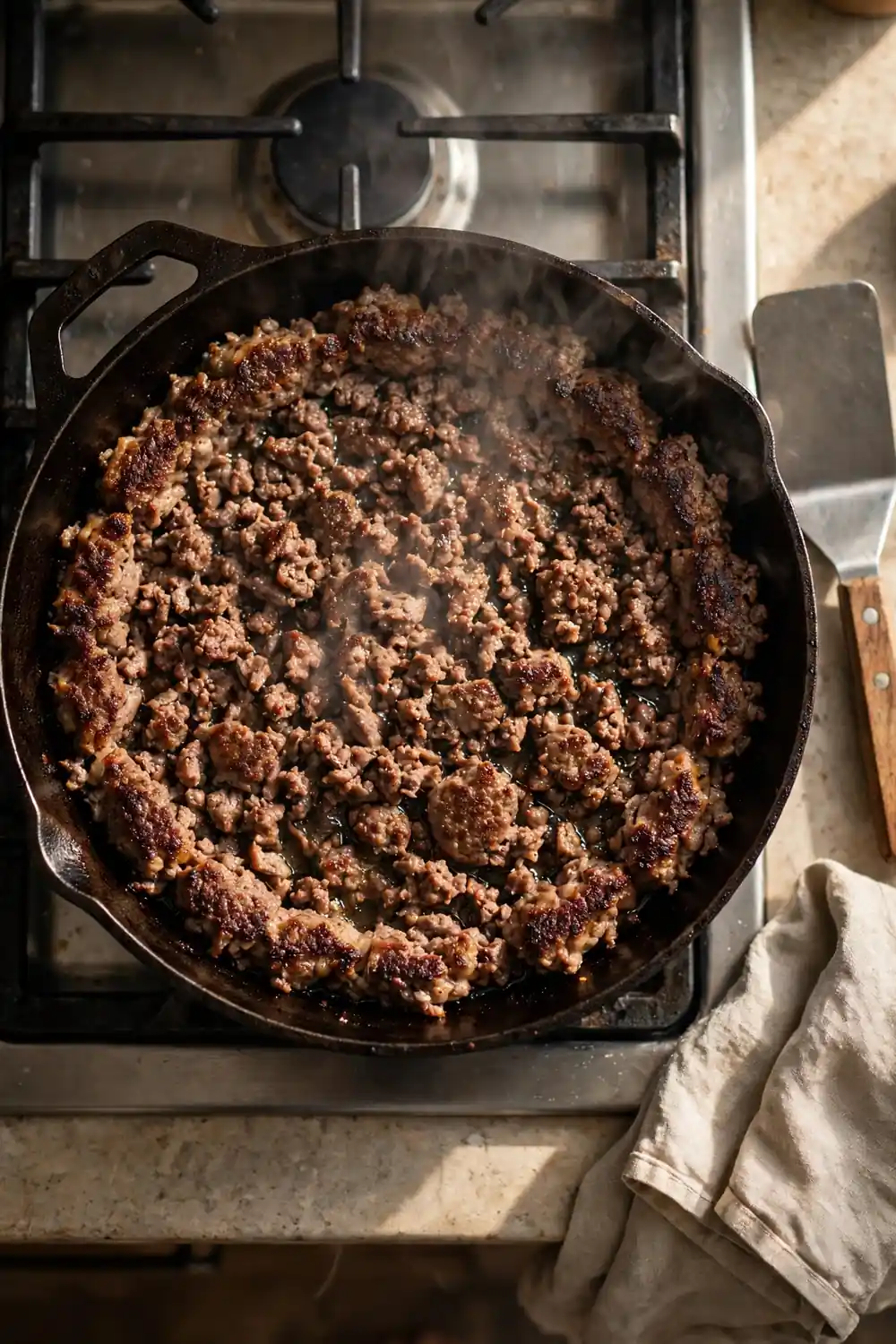
What You Need:
- A large heavy skillet: It holds heat steady so the beef sears instead of steaming.
- A wooden spoon: Use it to break the beef into small crumbles once the bottom browns.
- A spatula: Press the beef flat so more surface touches the hot pan.
- A heatproof bowl: Hold the first batch here while the second batch browns.
Searing needs heat and patience, so do not stir the beef right away after it hits the pan. Let it sit until the bottom turns brown, then break it up into small crumbles. One good sear changes the whole pan of beef for the better.
Drain the Liquid Right
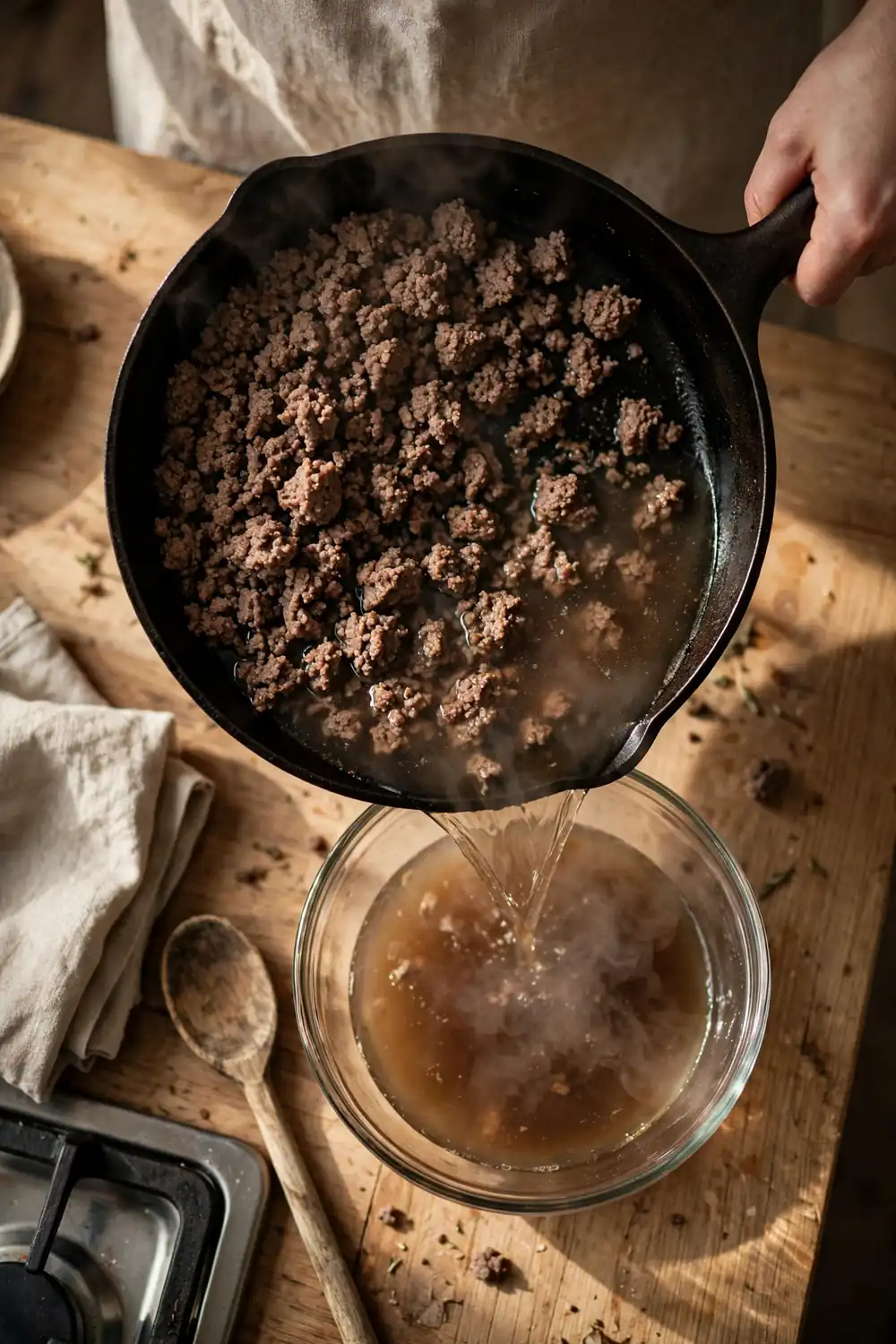
Before: The pan fills with watery liquid, and the beef keeps steaming in it. The crumbles never brown, and the texture stays soft and pale. Waiting longer only boils the meat further.
After: You tip out the liquid, and the pan turns dry and hot again. The beef sears fast, and the crumbles turn deep brown with crisp edges. The flavor stays bold, and the pan stays clean.
Water in the pan is the enemy of browning, so a wet pan can never turn beef brown. The beef needs a dry, hot surface before it sears and builds a crust. Drain the liquid once, and the beef browns fast and stays juicy for dinner.
Season at the Right Time
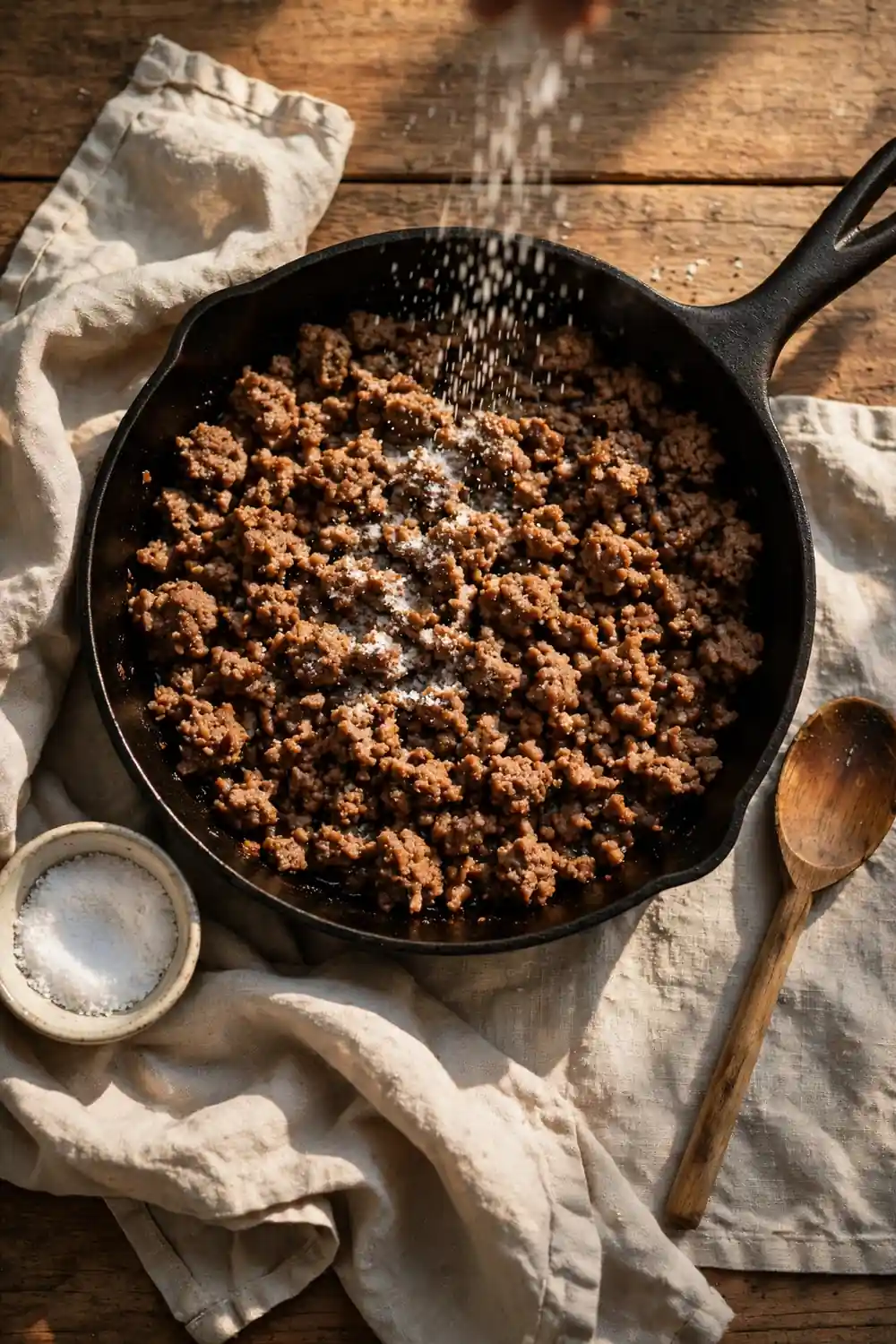
Do This:
- Season the beef after it browns, not before.
- Add salt once the water has cooked off.
- Taste at the end and adjust the seasoning.
- Let spices bloom in the hot fat for a minute.
Avoid This:
- Do not salt raw beef before it hits the pan.
- Do not add soy sauce or wet sauces early.
- Do not stir the beef every few seconds.
- Do not cover the pan while the beef browns.
Salt pulls water from raw beef, so early salting makes the pan wet before browning can start. Seasoning late keeps the beef dry enough to sear and build a crust. Time the seasoning once, and the beef browns better every time you cook it well.
Store Beef the Right Way
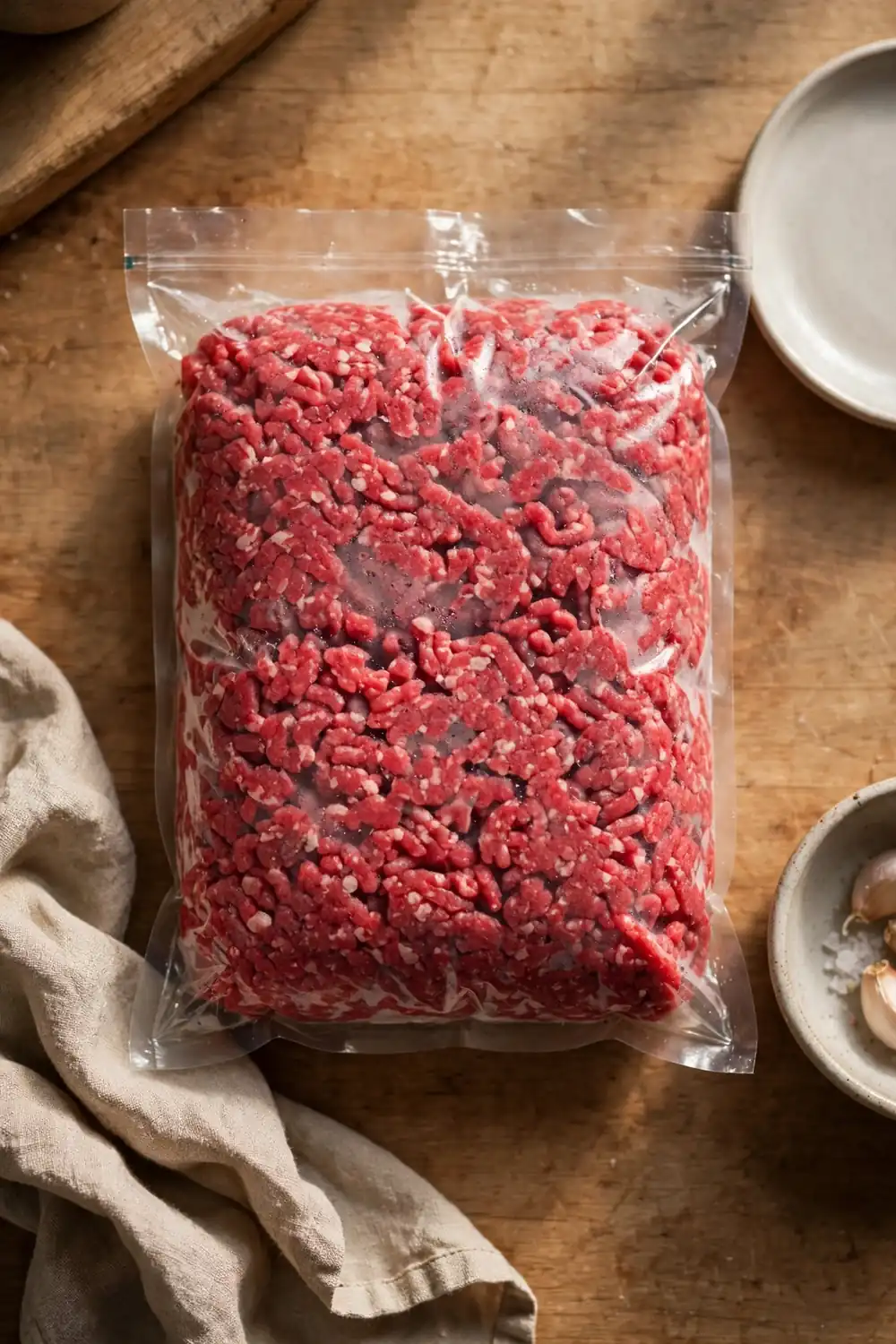
Best Rule: Freeze beef flat in sealed bags
Fridge Life: Cook fresh beef within two days
Freezer Life: Use frozen beef within four months
Result: Fresh beef that browns evenly
Storing beef in the fridge too long is the fastest way to gray beef, even when the beef was fresh. The cold air dries the surface, and the color fades from red to gray. Keep beef sealed and cold, and use it fast for the best browning.
Fix Gray Beef Fast
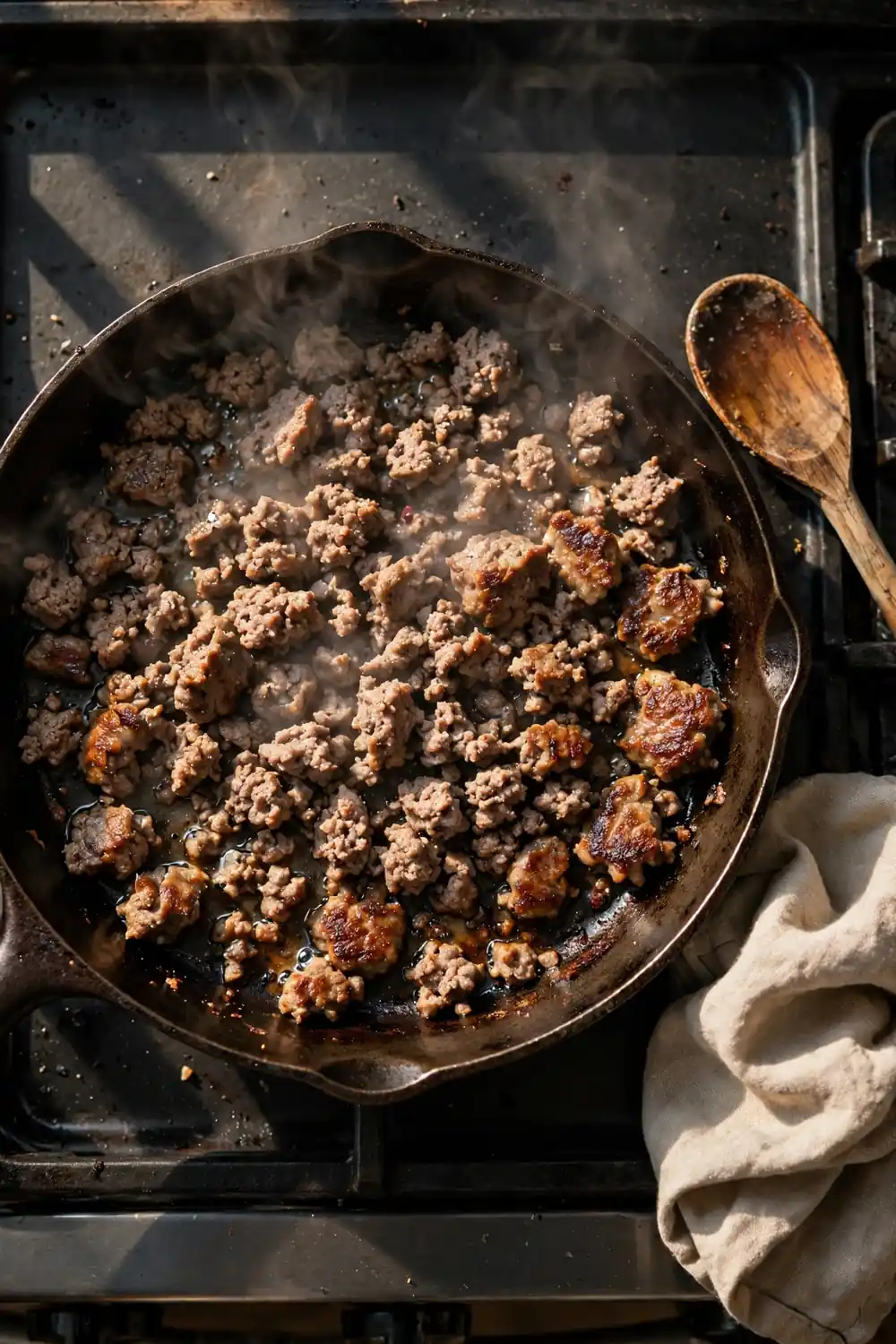
Gray beef is not ruined, and a hot pan can still save it. Drain the liquid, spread the beef thin, and let it sear without stirring for a full minute or two. The color comes back as the surface browns, and the flavor improves with it.
If the beef already looks gray, do not toss it yet, because a rescue sear works well. Turn the heat up, drain the pan, and give the crumbles a hard sear. Trust the hot pan, and the beef turns brown and tasty again for dinner.
Common Mistakes to Avoid
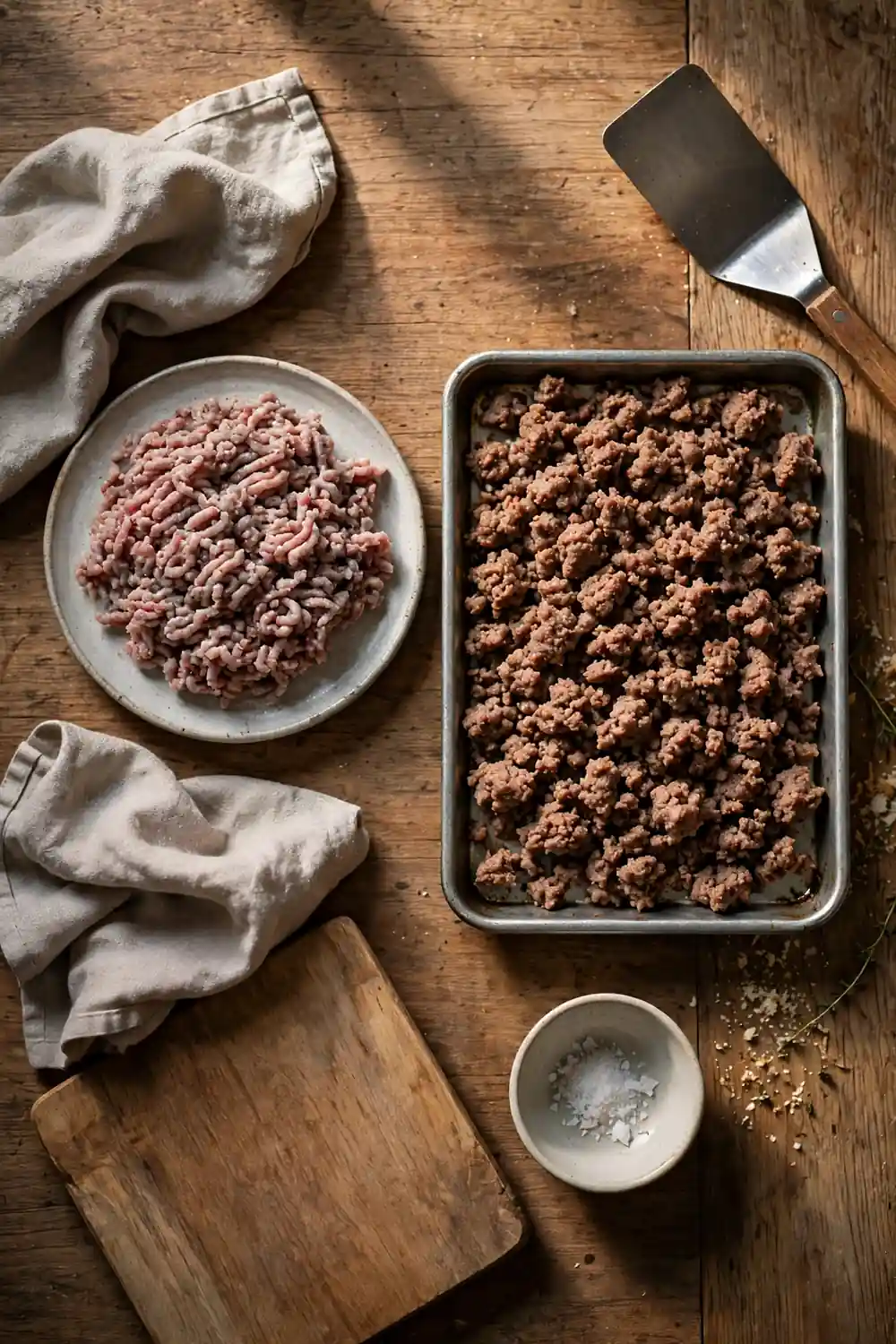
Most gray beef comes from the same few mistakes, and all of them are easy to fix. Changing one thing at a time shows you which fix made the difference. Start with the pan, then the batch size, then the heat, in that order.
- Do not crowd the pan with too much beef.
- Do not start with a cold or barely warm pan.
- Do not salt the beef before it browns.
- Do not cover the pan while the beef cooks.
What Perfect Beef Looks Like
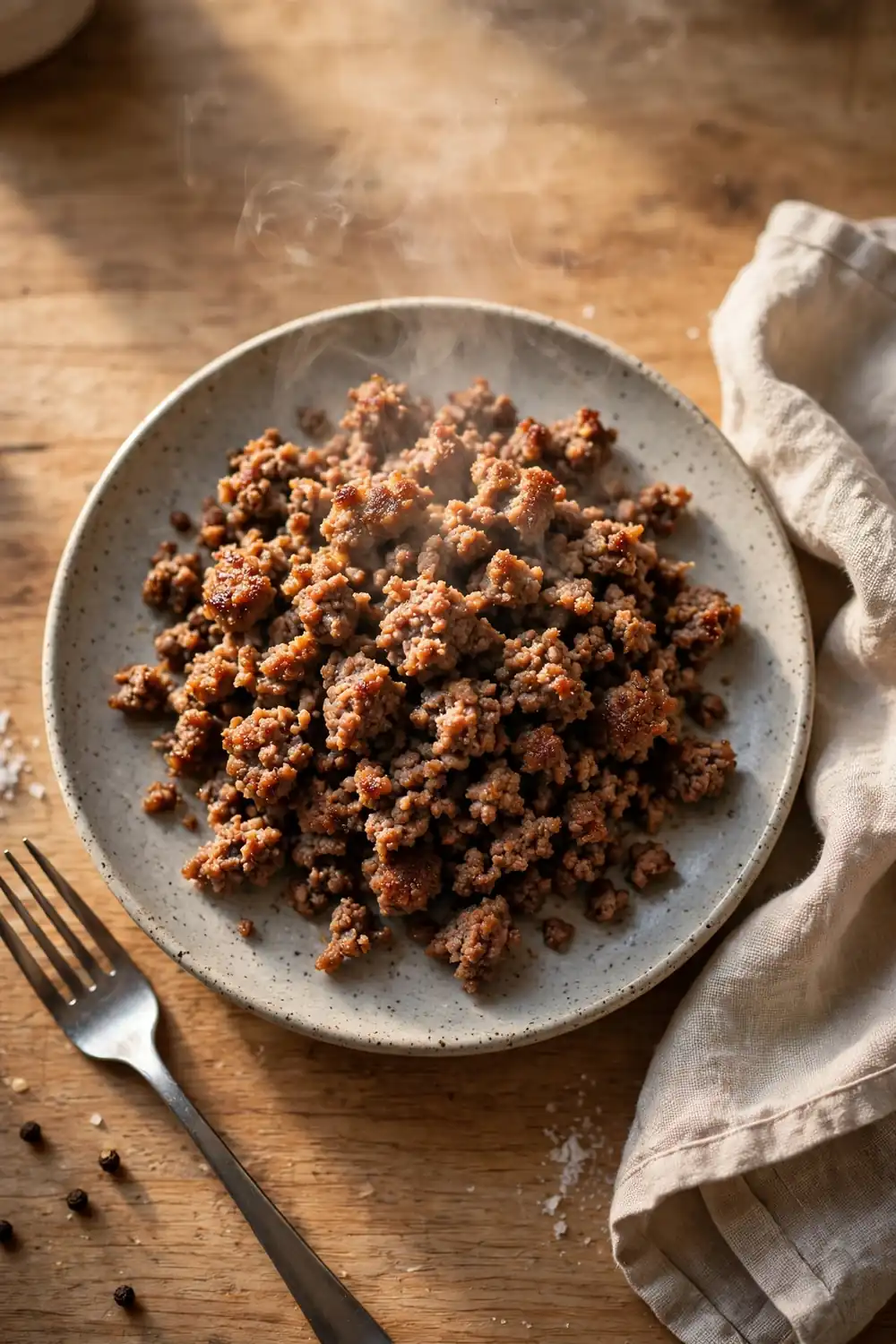
Quick Tip: Perfect beef looks deep brown and crumbly, with crisp edges and no puddle in the pan. The crumbles feel firm, never soft or wet. Trust these signs more than the color of the raw meat.
Good beef tells you it worked before you taste it. The crumbles look brown and crisp, the pan stays dry, and every piece holds its shape on the plate. That is the finish every fix on this list is working toward for you every single time.
Conclusion
Gray watery ground beef is not a sign of bad luck in the kitchen. It comes from small, fixable causes, and now you know each one. Pick the right beef, give it room, and the next batch can surprise you.
Pick one fix from this guide and try it on your next batch. Save this post on Pinterest so the fixes are there when you need them, and share it with anyone whose beef turns out gray.
I have seen how making this one change can completely shift the result. Cook your next batch with these fixes and enjoy brown, juicy beef.

One Comment