How to Keep Cut Avocado From Turning Brown? Easy Fix Guide
Cut avocado turning brown is a sight every avocado lover knows well. You slice one open for toast or salad, and the bright green flesh looks perfect. Within minutes, the surface darkens, and the fresh look fades fast.
Air starts the change the moment the cut surface meets oxygen. Warm kitchens speed it up, while cold air slows it down. The brown layer looks stale, but the flesh beneath it usually stays fresh and safe to eat.
This guide shows fixes that keep the flesh green, from lemon juice to tight wrapping and cold storage. Each method is simple, and you can use it today. And if your bread goes stale just as fast, see how to fix hard homemade bread with simple kitchen tricks.
Why Avocado Turns Brown
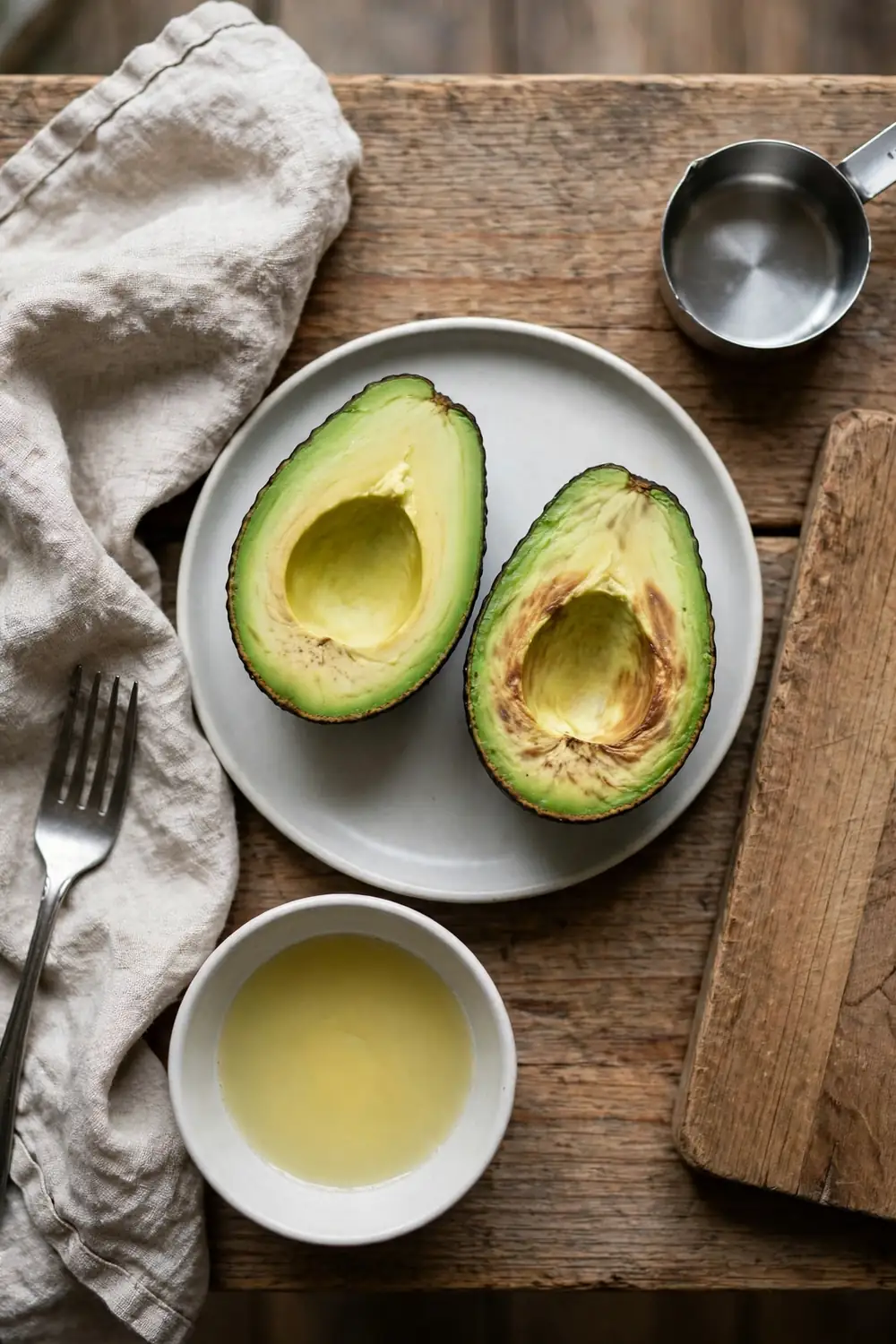
Oxygen in the air starts a reaction on the cut surface, and the flesh turns brown within minutes. Ripe avocado shows the change fastest, since soft flesh meets air at once. The brown layer looks old, yet the avocado under it stays fresh and ready to eat.
Browning does not mean the avocado went bad, and a quick check tells you more. Peel back the brown layer and look at the color below. Cool air slows the change, while warm air speeds it up. Knowing this helps you pick the right fix.
Use Lemon Juice
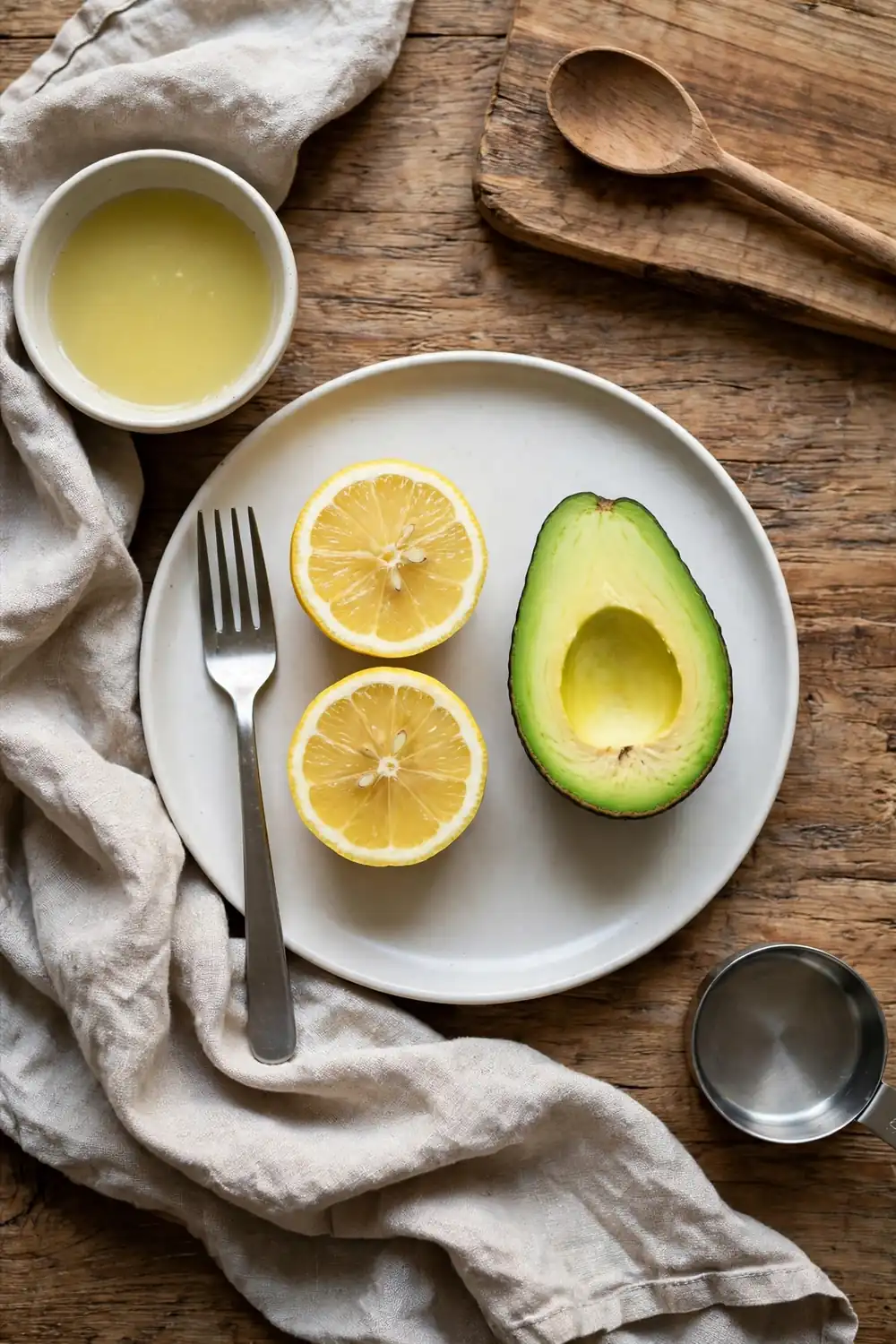
Lemon juice is the fastest fix for a cut avocado, and most kitchens already have a lemon. The acid slows browning and keeps the flesh bright green for hours. A light coat works best, since too much juice adds a sour taste.
- Cut the lemon in half and squeeze a small amount over the cut surface.
- Brush the juice across the whole surface with a spoon or pastry brush, leaving no dry spots.
- Place the avocado cut side up in the fridge until you serve it.
- Taste a small bit before serving, and blot extra juice if the flavor feels sharp.
Store It Right
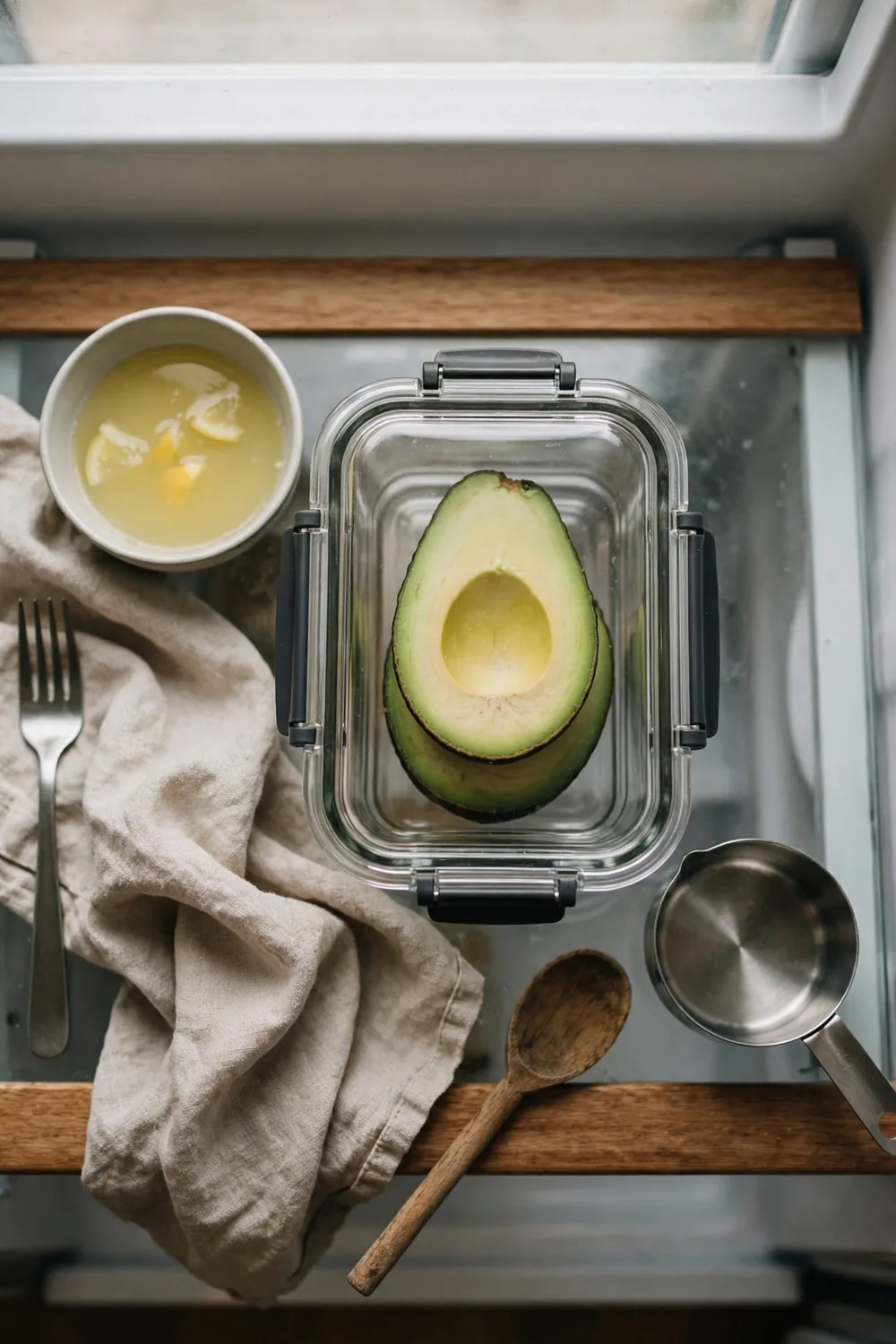
Quick Tip: Cold air is your friend here. Put the avocado in the fridge right after you treat the surface. A sealed container with little extra air keeps the flesh green much longer than an open plate.
Place the avocado cut side down in a sealed container, and close the lid tight. An open container lets air drift in, and the flesh browns even in the fridge. A snug container leaves less room for air, so the color holds. Check the avocado before serving, and use it within a day.
Use Plastic Wrap
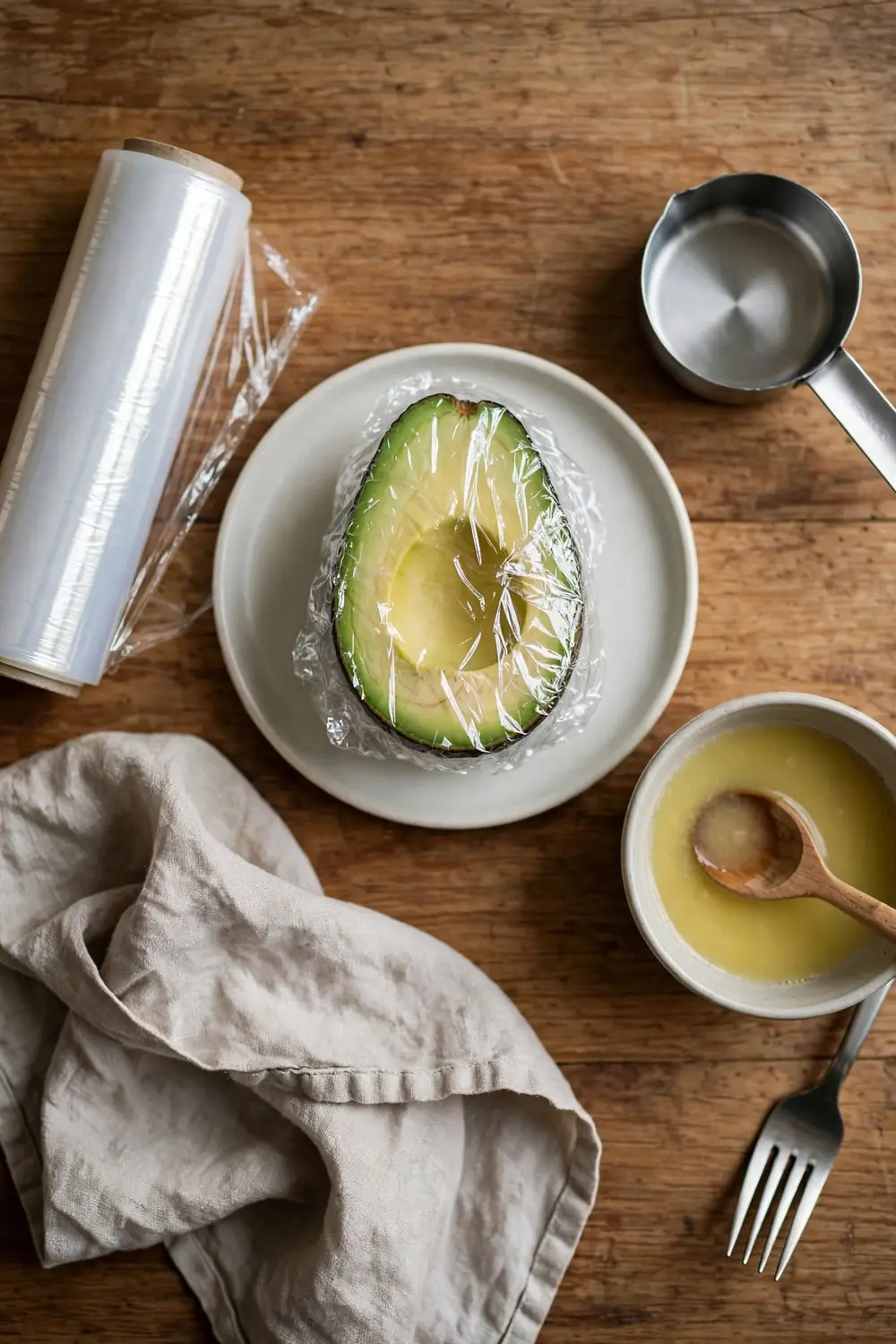
Common Mistake: Many people lay plastic wrap loosely over the bowl and leave air trapped below. That pocket of air keeps working on the flesh, so the surface still browns. A loose cover gives a false sense of safety.
The Fix: Press the wrap right against the cut flesh, with no gaps or bubbles. Smooth it from the center outward, then seal the edges tight. The wrap must touch the whole surface to block air.
Tight wrapping works alone or with lemon juice for longer storage. Wrap the half right after you cut it, and do not wait for the color to change. A firm seal keeps the flesh green for hours. If you see a bubble, lift the wrap and press it down again.
Try Lime Juice
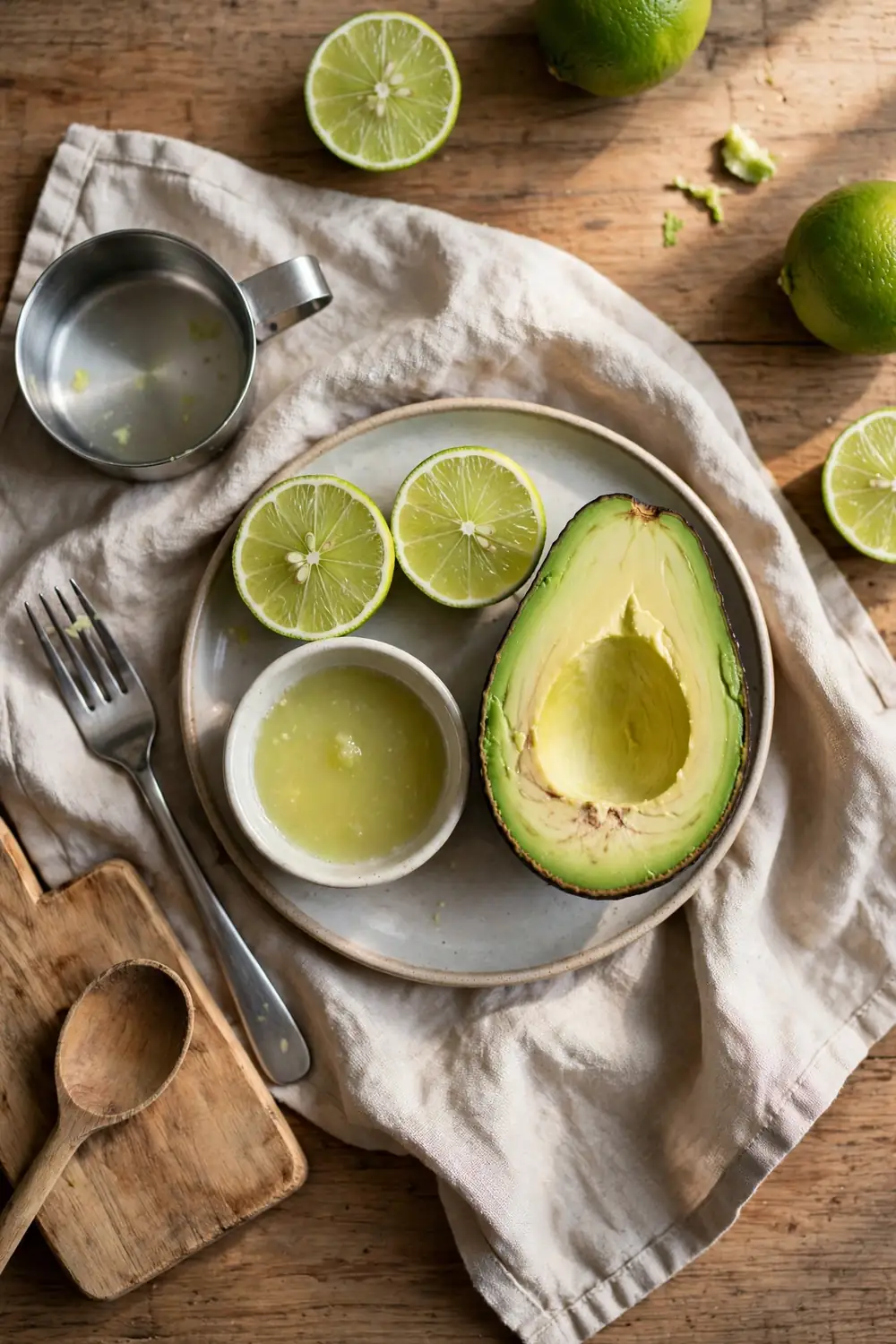
What You Need:
- Fresh lime: One fresh lime gives enough juice for two halves without overpowering the flavor.
- Spoon or brush: A small spoon or pastry brush spreads the juice in a thin even coat.
- Paper towel: A paper towel blots extra juice so the flesh stays fresh, not soggy.
- Sealed container: A snug container holds the treated avocado cold until you serve it.
Lime juice works like lemon juice, and the acid slows browning fast. A light squeeze over the cut surface keeps the flesh green, and the tang fits avocado well. Brush the juice over every edge, and leave no dry spots. Use fresh lime juice, not bottled juice, for the cleanest flavor.
Try Olive Oil
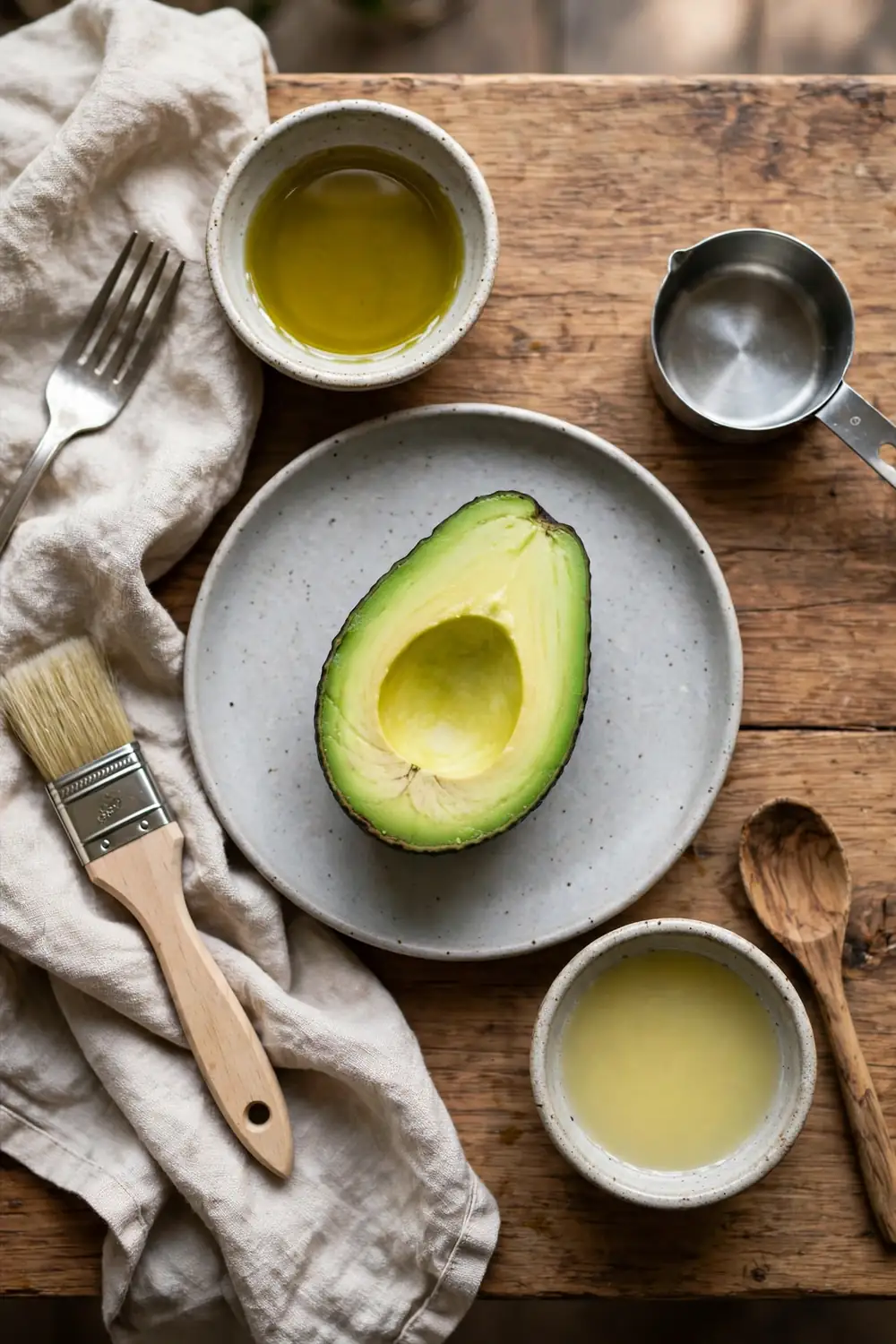
Before: A bare cut surface meets air at once, and the flesh darkens within minutes. The bright green fades first at the edges, then spreads inward. The avocado still tastes fine, but it looks tired.
After: A thin coat of olive oil seals the surface and slows the change. The flesh stays bright for hours, and the color holds at the edges. The avocado looks fresh when you serve it.
Brush a thin coat over the whole cut surface, and leave no dry spots. A thick coat feels greasy, and the avocado turns slick. A light layer keeps the avocado green, and the taste stays mild. Use a pastry brush for an even, thin coat.
Keep Guacamole Green
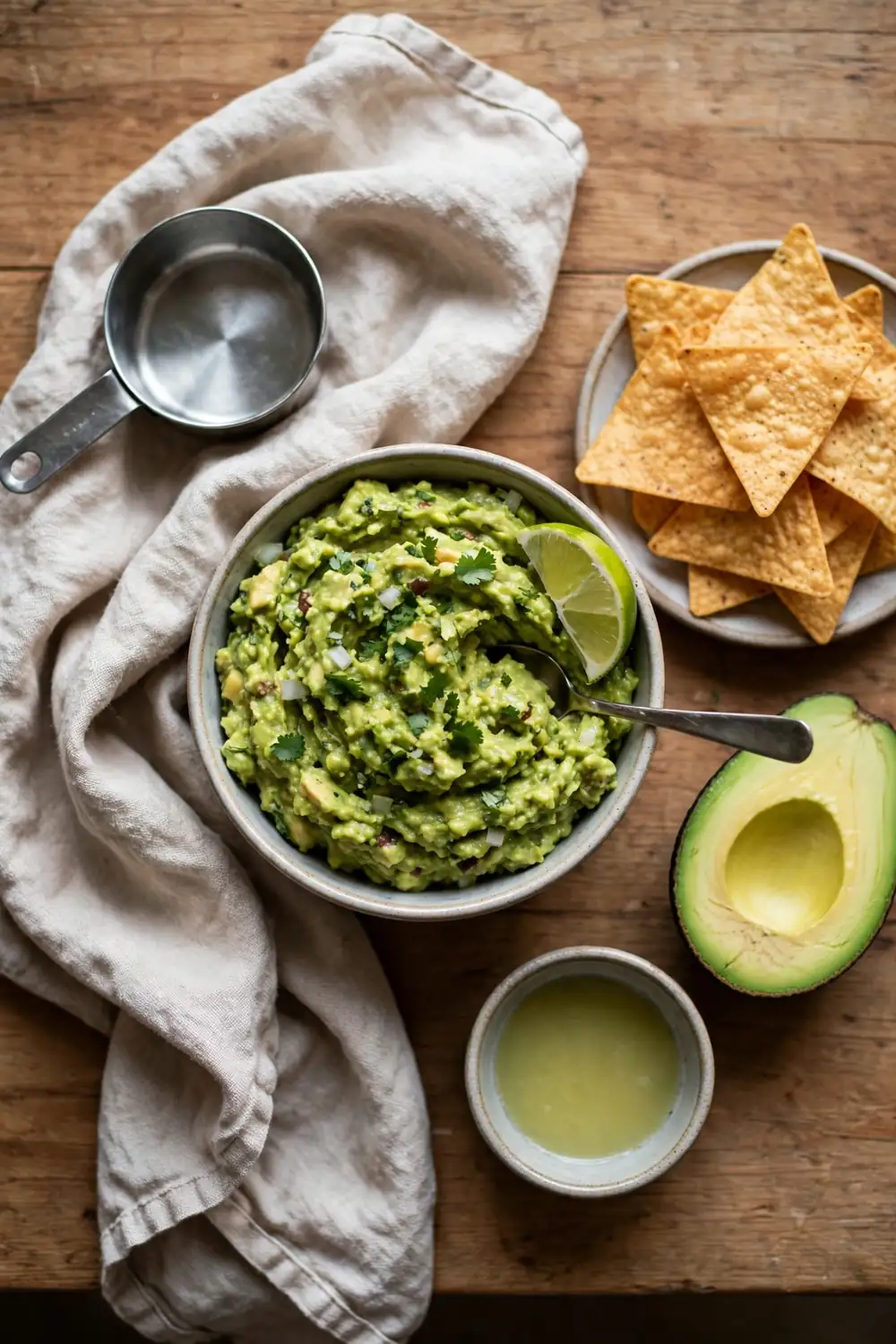
Do This:
- Stir lime or lemon juice through the guacamole before you store it.
- Press plastic wrap right against the surface of the dip.
- Seal the bowl tight and keep it cold in the fridge.
Avoid This:
- Do not leave the bowl uncovered on the counter.
- Do not stir the brown top layer back into the dip.
- Do not store guacamole in a wide bowl with lots of extra air.
Guacamole browns fastest on the top layer, since air touches it first. Juice mixed through the dip slows the change, and a tight wrap blocks air from the surface. Press the wrap down with a spoon to push out bubbles. Serve the guacamole within a day for the freshest color and taste.
Fix Brown Spots
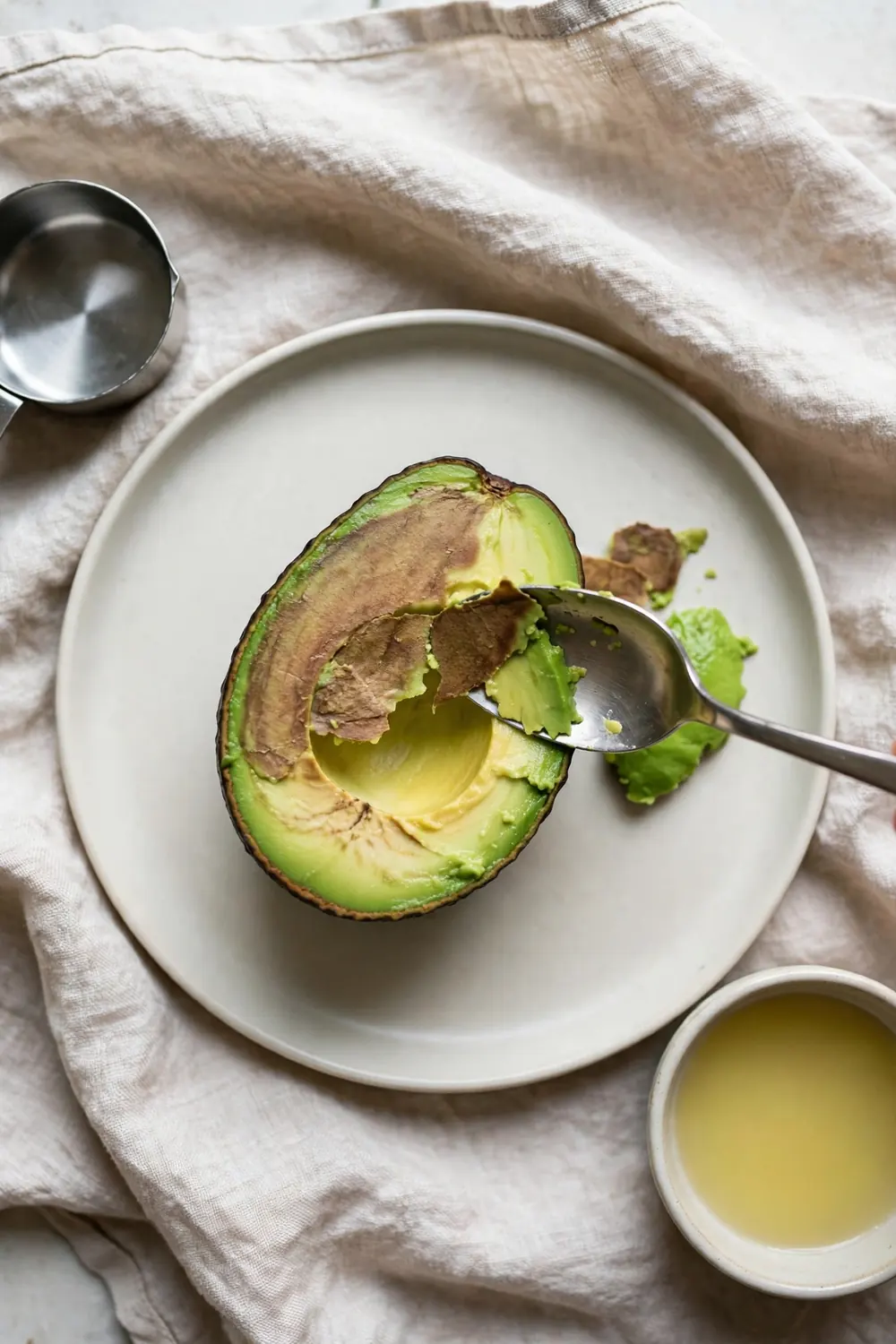
Time Needed: 2 minutes
Difficulty: Easy
Tools Required: Spoon
Best For: Thin brown layers
A thin brown layer can be scraped away, and the flesh under it stays fresh. Use a spoon to lift the brown layer off, and the green flesh shows again. Scrape gently, and take only the brown layer. Deep scraping wastes good flesh, so keep a light hand.
Pick the Right Method
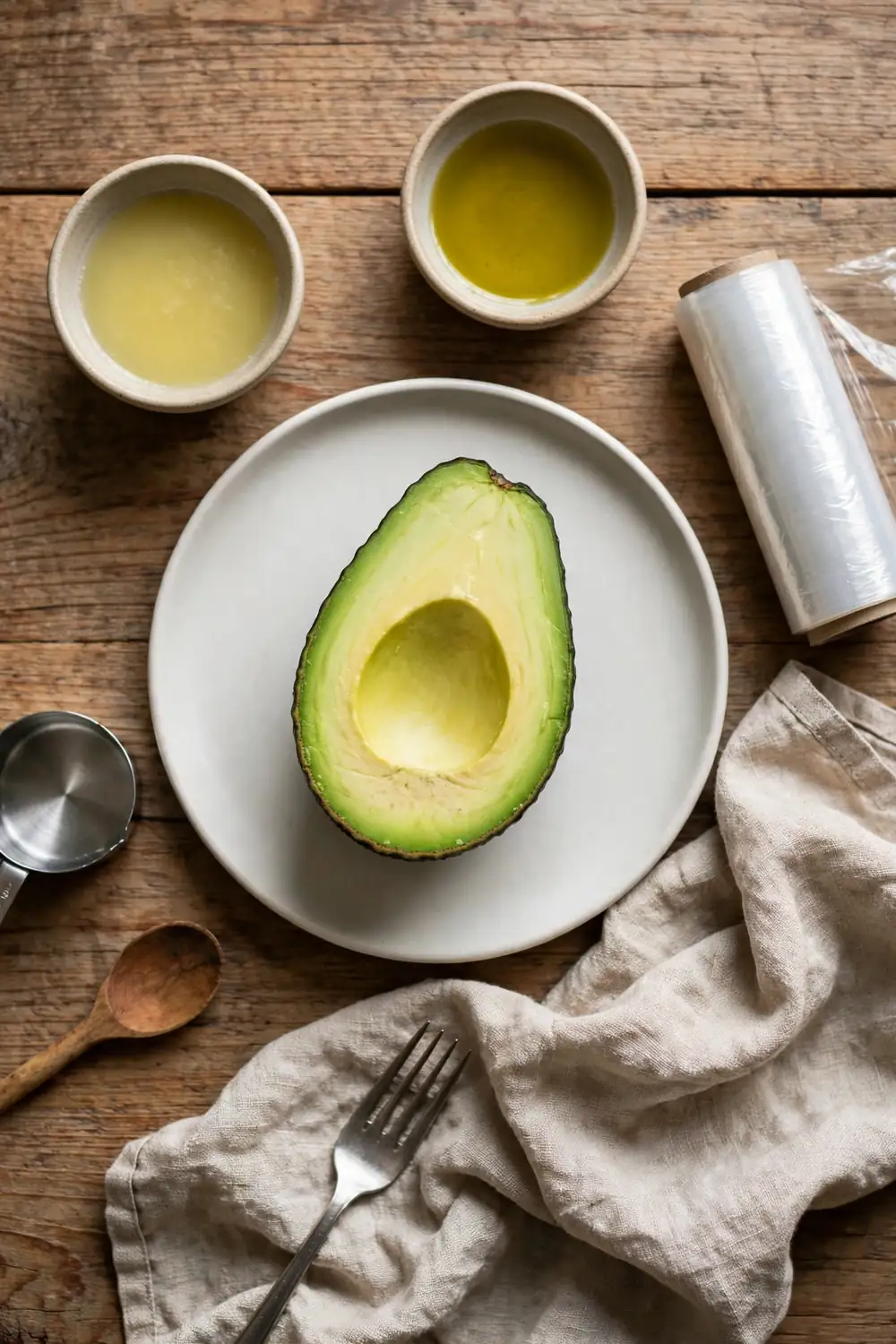
The best method depends on how soon you serve the avocado and how you plan to use it. Lemon juice works fast for same-day serving, and tight wrapping helps overnight storage. Olive oil suits a plain half that you plan to slice later for toast.
For a quick snack, use lemon juice and serve the avocado soon. For longer storage, wrap the avocado tight and keep it cold in the fridge. Match the method to the moment, and the avocado stays bright. One good method beats three half-done fixes every time.
Common Mistakes to Avoid
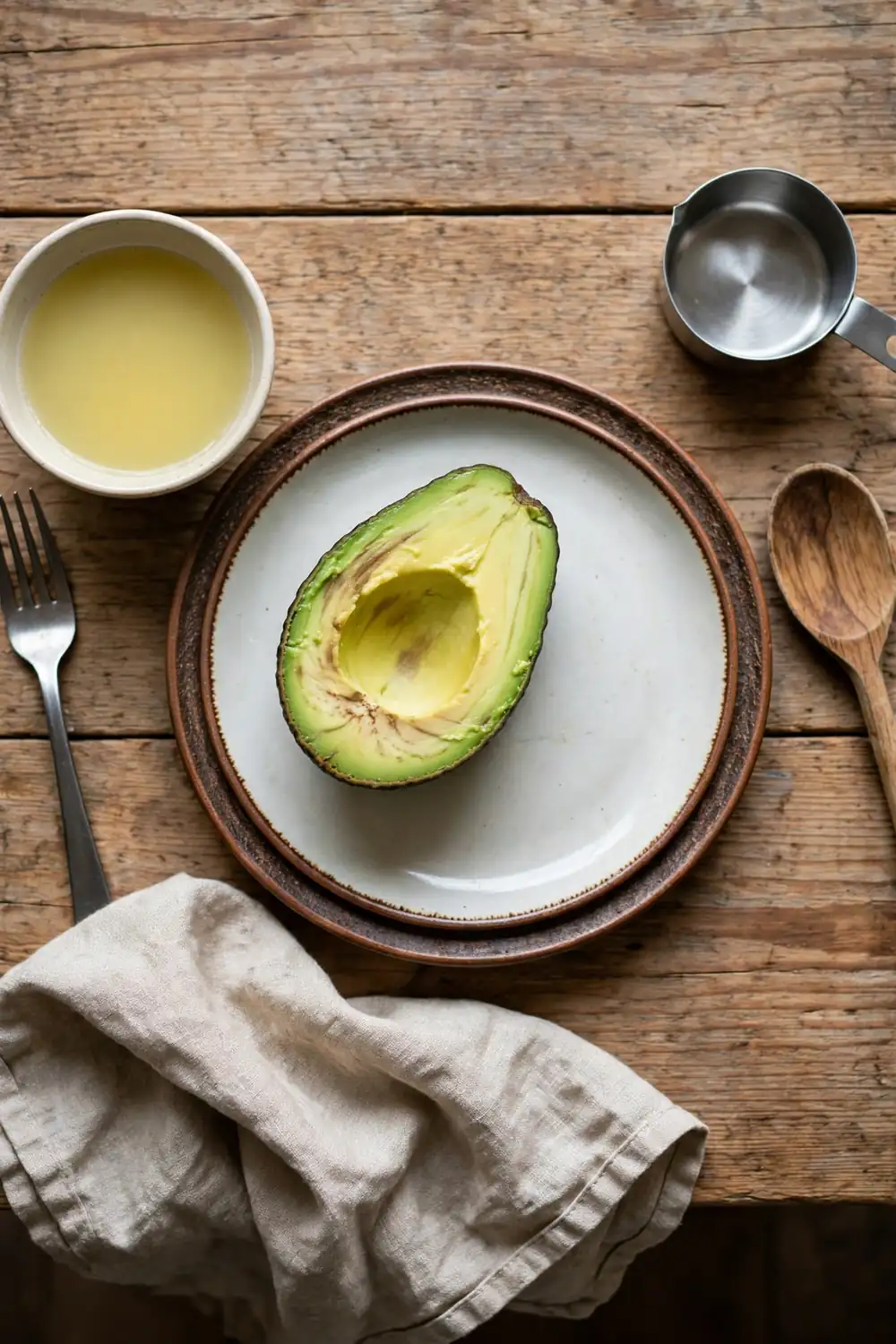
Most browning comes from a few repeatable habits, not bad fruit. Fix one habit at a time, starting with a tight cover and cold storage. The list below covers the mistakes I see most often in home kitchens, and each one is easy to fix.
- Do not leave cut avocado uncovered on the counter, since air browns the flesh within minutes.
- Do not skip the acid, since a light squeeze of lemon or lime juice slows browning even in the fridge.
- Do not use a loose cover, since trapped air keeps working on the flesh.
- Do not store cut avocado in a warm spot, since warm air speeds the color change.
What Fresh Avocado Looks Like
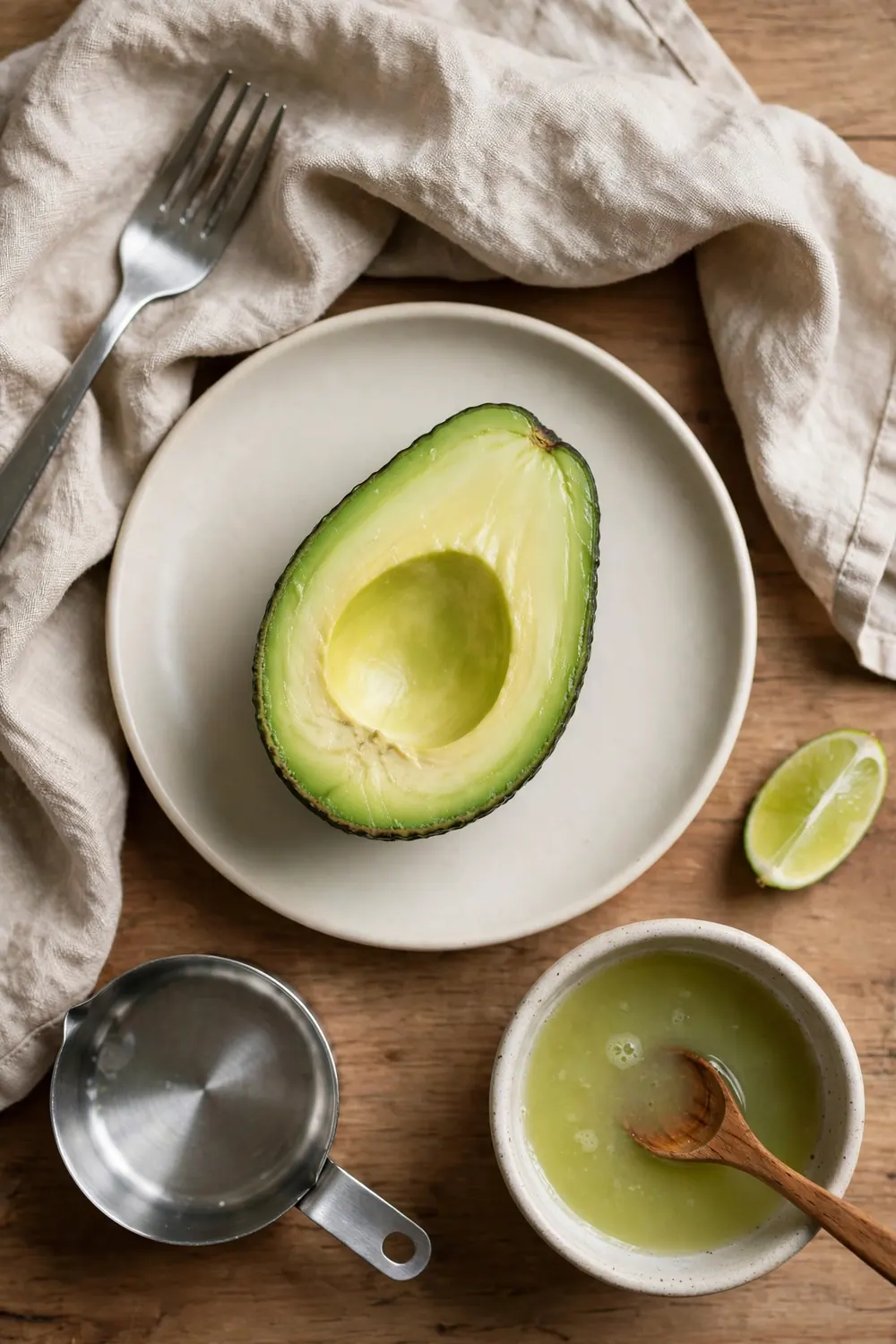
Quick Tip: Judge the avocado by the flesh under the surface, not the top color alone. A thin brown layer can hide bright green flesh below. Scrape a small spot and check the color before you toss it.
Fresh avocado shows bright green flesh, and the cut surface looks smooth and glossy. The flesh feels soft but firm, and the color stays even. A good avocado shows no brown patches, and the surface stays moist. Look for even color and a smooth, glossy cut surface.
Conclusion
Cut avocado turning brown is not a sign of bad avocado. It comes from air touching the flesh, and now you know each fix. Match the method to the moment, and the next avocado can stay bright.
Lemon juice, tight wrapping, and cold storage each slow the change. Pick the method that fits your plan, and the avocado stays green. Small steps keep the avocado fresh.
Keep the avocado covered, use a little acid, and store it cold. Save this guide on Pinterest, and try it on your next avocado. If you also run out of eggs mid-bake, read our guide on egg substitute in baking for simple swaps.
One Comment