Why Is My Tomato Sauce Too Acidic? Easy Fix Guide
Tasting dinner should feel rewarding, yet acidic tomato sauce can turn a good meal sharp and sour in one spoonful. The acid bites the tongue and covers the tomato flavor. The good news is that sharp sauce has clear causes, and each one has a simple fix.
Most sauces turn sharp for a handful of reasons. Underripe tomatoes, a short simmer, or missing balance can each push the acid too far. Small cooking slips add up fast, and the wrong heat makes it worse.
This guide walks through each cause one by one, with a fix you can use right away. You do not need special tools or fancy ingredients. If your soup also turns too salty, see our guide on fixing too salty soup for a balanced, flavorful bowl.
Why Sauce Turns Sharp
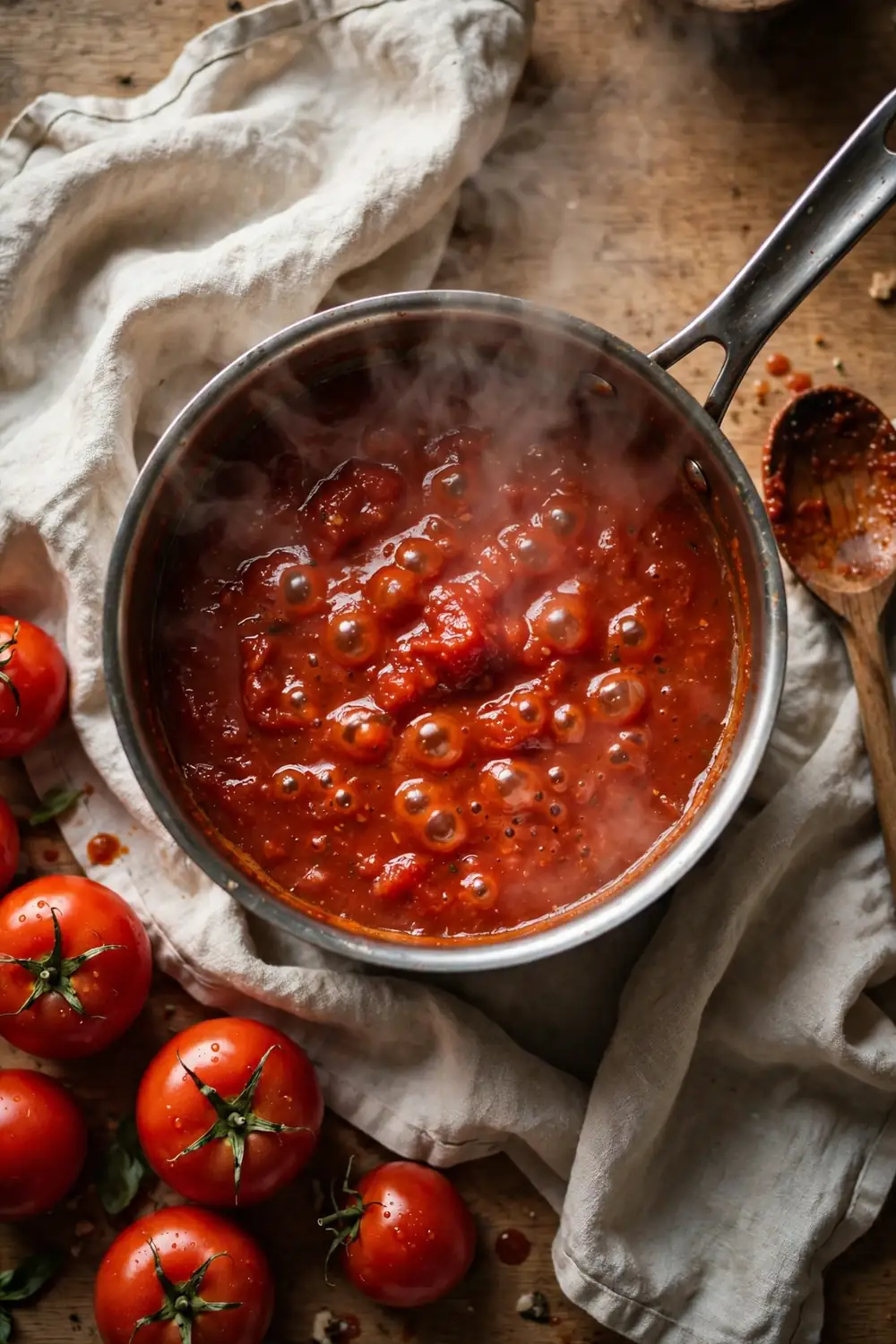
You taste the sauce, hoping for rich and balanced flavor, but it comes out sharp and sour. The tomatoes may be fine, yet the acid bites the tongue. The problem is rarely the recipe, and it starts with how the tomatoes are handled. Early tasting can still save the pot.
Underripe tomatoes, too little simmering, and no balance each push the sauce toward sharp acid. When any of those three is off, the acid stays harsh and the sauce tastes sour. The good news is that each cause has a simple fix for your very next batch.
Pick Ripe Tomatoes
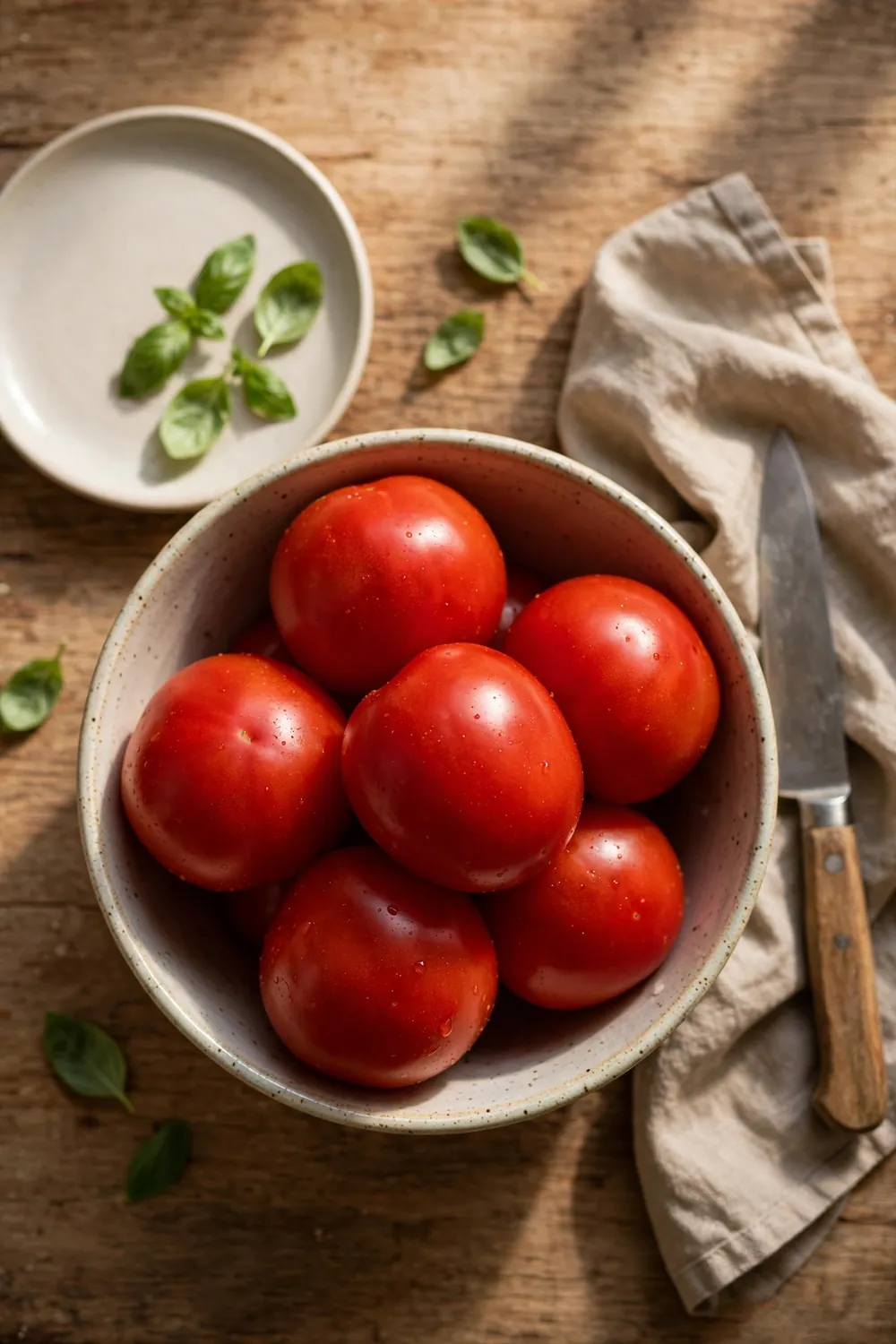
The tomatoes you buy decide the result more than any other choice, and underripe tomatoes can never cook into a sweet sauce. Deep red, heavy, fragrant tomatoes give natural sweetness. Picking ripe tomatoes keeps the sauce balanced every time. Trust your nose and hands more than the label.
- Choose deep red tomatoes that feel heavy for their size.
- Smell the stem end for a sweet, fresh scent.
- Skip pale, hard, or green-shouldered tomatoes.
- Use canned San Marzano tomatoes in winter.
Crush Tomatoes Well
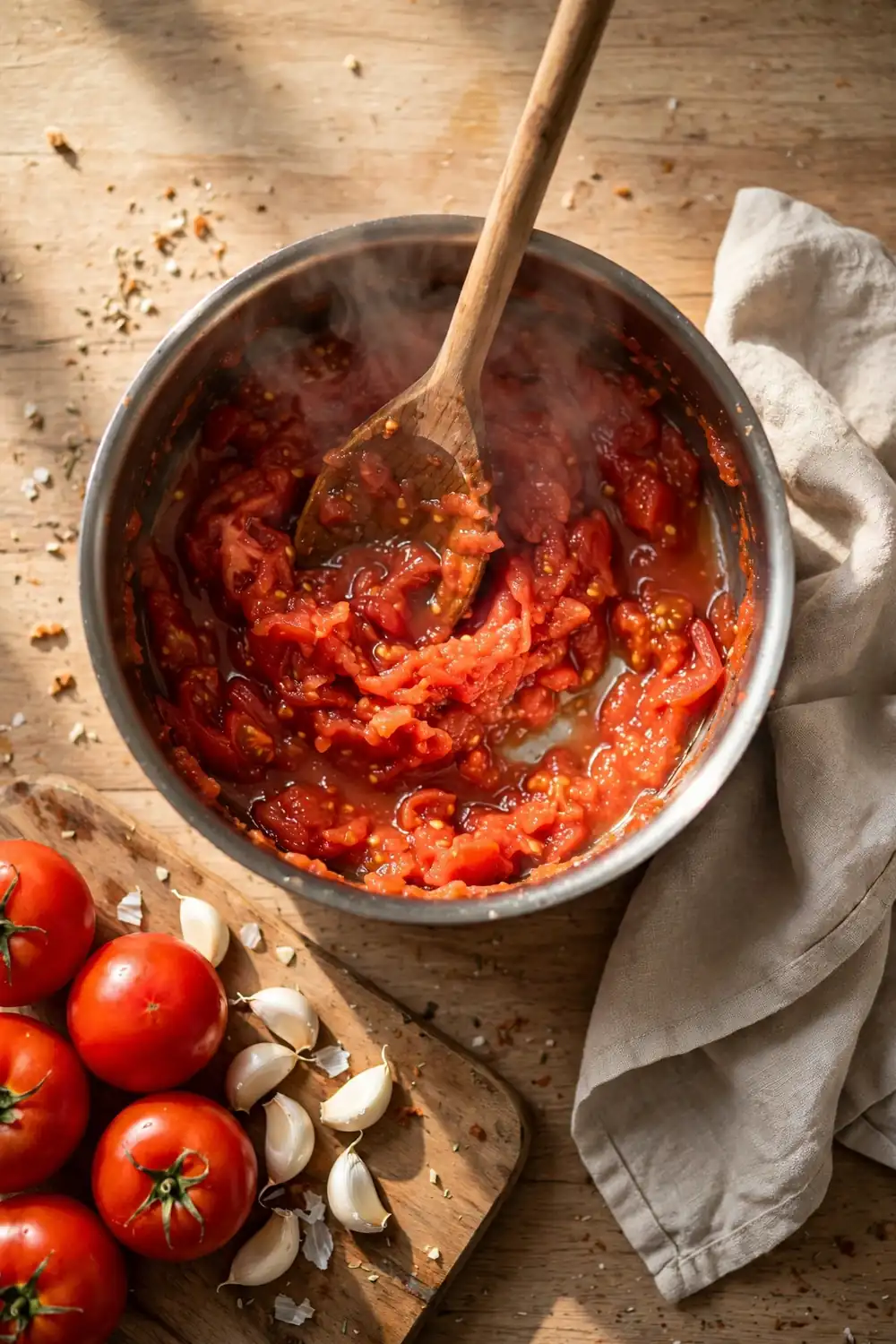
Quick Tip: Crush the tomatoes well before they hit the heat. Even pieces cook at the same pace, so nothing stays raw in the middle while the edges scorch.
Tomatoes cooked too fast stay raw in the middle while the edges scorch. The sauce tastes sharp and thin, and the acid never mellows. Gentle heat solves the problem before it even starts. Low heat gives the tomatoes time to break down and sweeten slowly.
Simmer It Longer
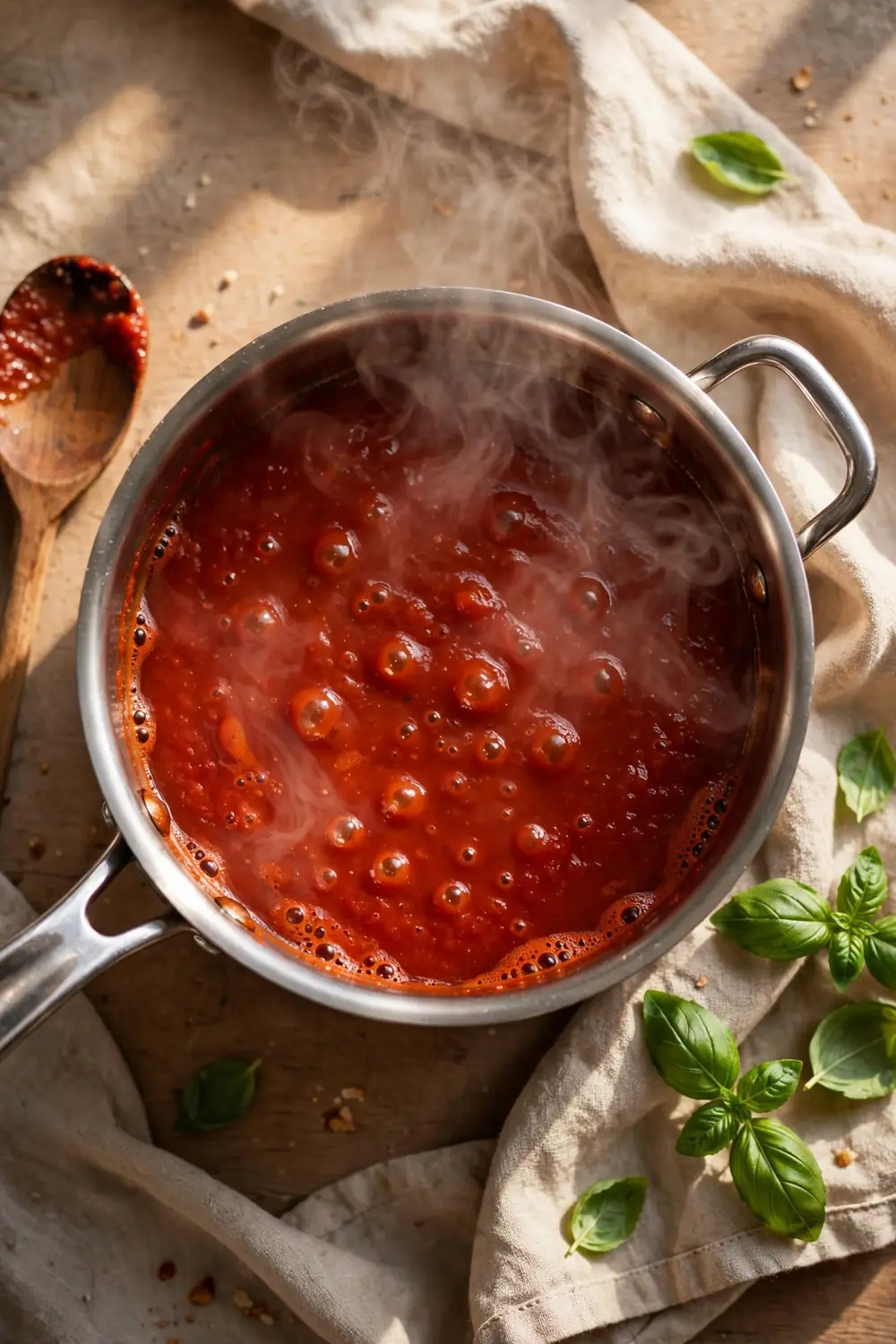
Common Mistake: Many cooks rush the sauce off the heat, thinking a quick simmer is enough, and the acid stays sharp. The tomatoes never break down, and the sauce tastes raw and sour. Sauce needs a long, slow simmer, not a fast boil, to turn sweet.
The Fix: Simmer the sauce low and slow for at least forty-five minutes, then taste it. The acid mellows, and the sauce turns rich. A long simmer is the simplest fix for balanced sauce.
A fast boil drives off water but leaves the acid harsh, so the sauce tastes sharp and thin. Slow heat breaks down the tomatoes and softens every bite. Simmer low once, and the sauce turns rich and mellow every single time you cook it at home.
Add a Pinch of Sugar
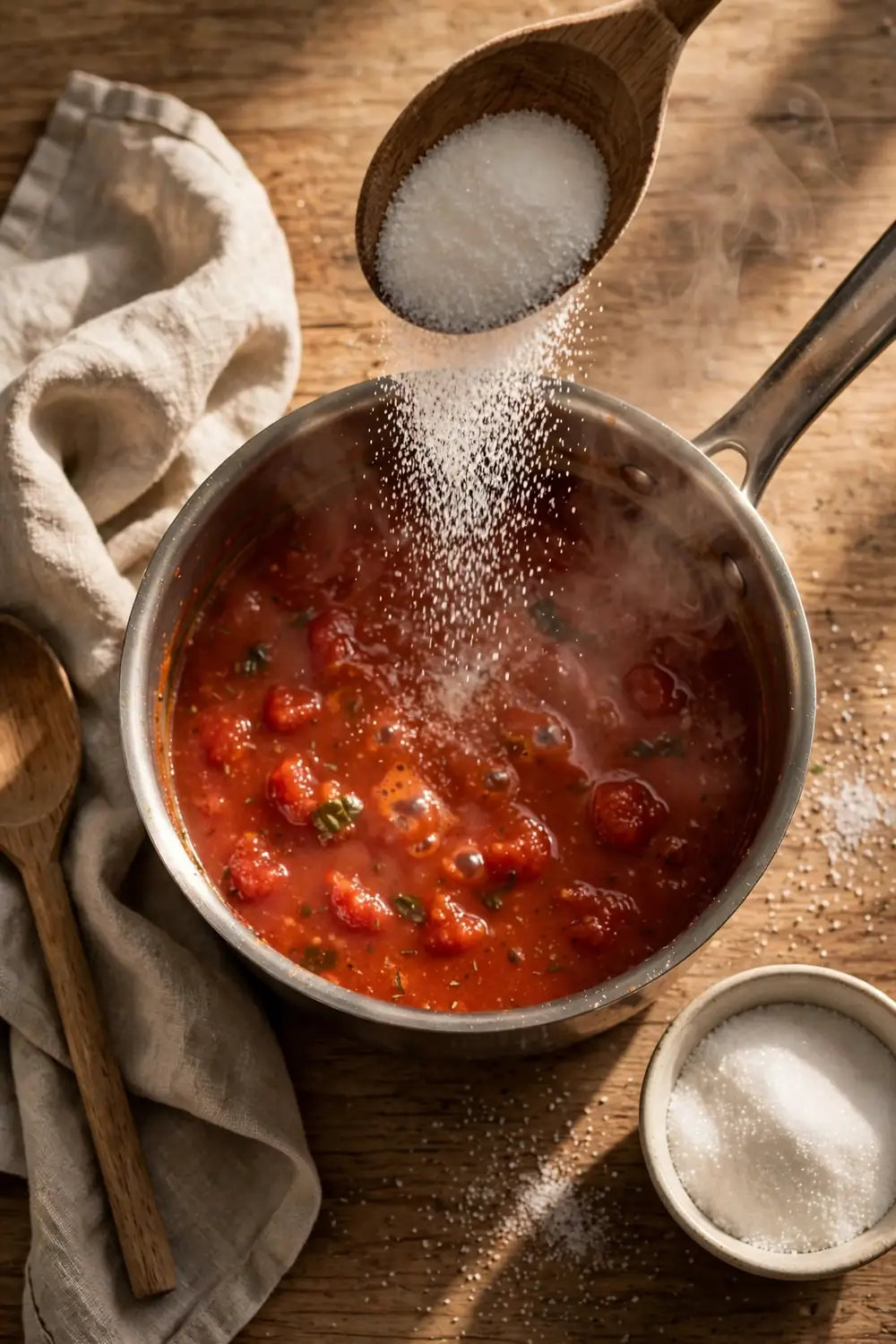
What You Need:
- Sugar: A small pinch rounds out sharp acid without making the sauce sweet.
- Teaspoon: Use it to measure half a teaspoon at a time.
- Spoon: Taste with a clean spoon after each small addition.
- Patience: Wait a minute between additions so the flavor settles.
Add half a teaspoon of sugar at a time, then taste the sauce before adding more. The sugar softens the acid and lets the tomato flavor shine through. A little sugar once, and the sauce turns smooth and balanced every single time you cook it.
Balance With Butter
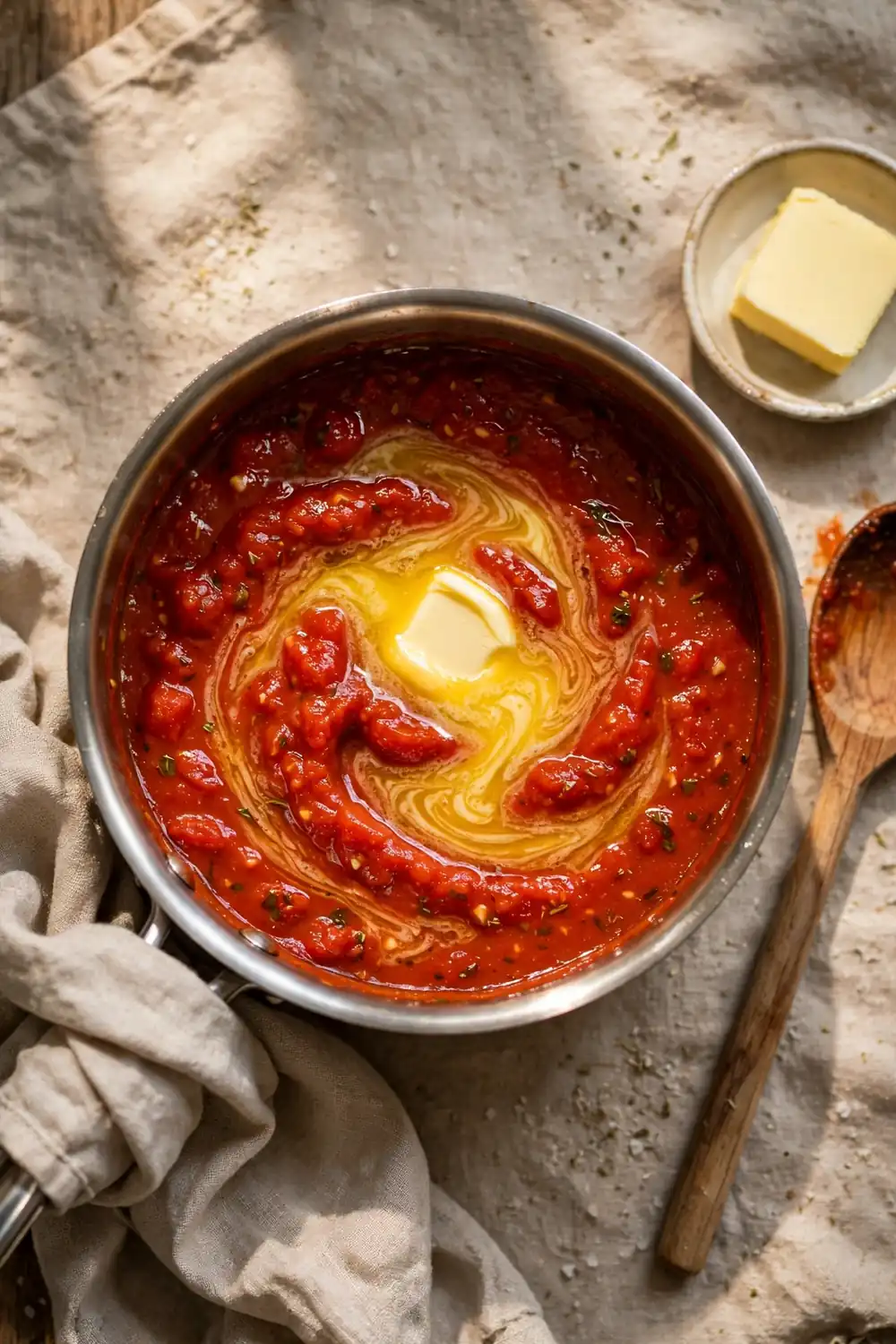
Before: Sharp sauce straight from the pot can taste sour on the tongue. The acid bites at the back of the throat, and the sauce feels thin and harsh. The flavor is bright, but the acid spoils the dish.
After: Sauce finished with butter tastes round and mellow. The butter coats the tongue, the acid calms down, and the sauce feels rich. The flavor stays bright, and every serving tastes balanced.
Butter stirred in at the end coats the tongue and softens the acid without any sweetness. The sauce looks glossy for a moment, then turns rich and smooth. A single pat is enough for a whole pot of sauce, so add it last and stir gently.
Try Baking Soda
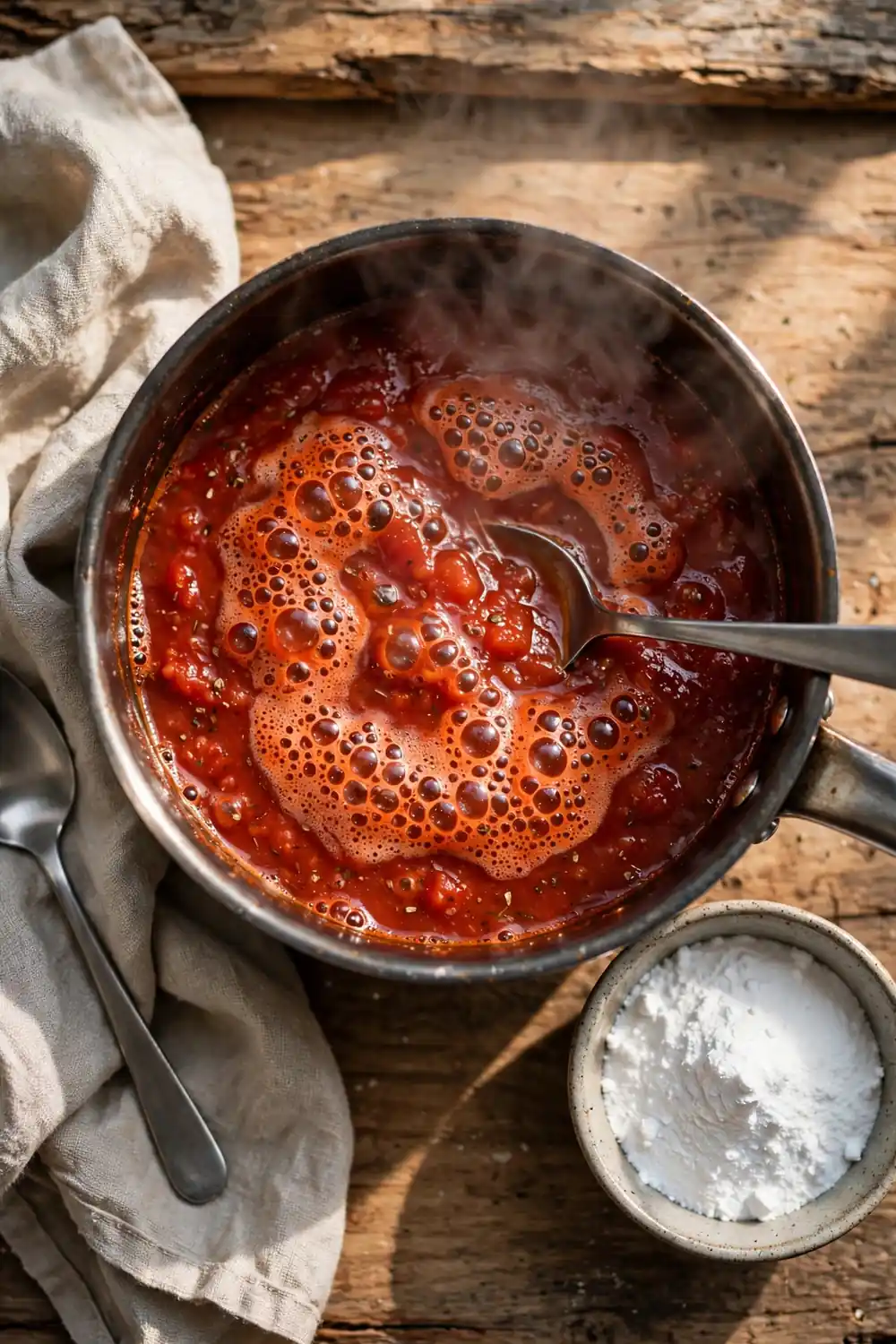
Do This:
- Add just an eighth of a teaspoon of baking soda at a time.
- Stir well and wait for the fizz to settle.
- Taste the sauce before adding any more.
Avoid This:
- Do not add baking soda by the tablespoon.
- Do not add more before the fizz settles.
- Do not use baking soda as a fix for burnt sauce.
Baking soda neutralizes acid, so a tiny pinch can calm a sharp pot very fast. Too much leaves a flat, soapy taste that no simmer can fix. Use it as a last small step after simmering, sugar, and butter have done their work for you.
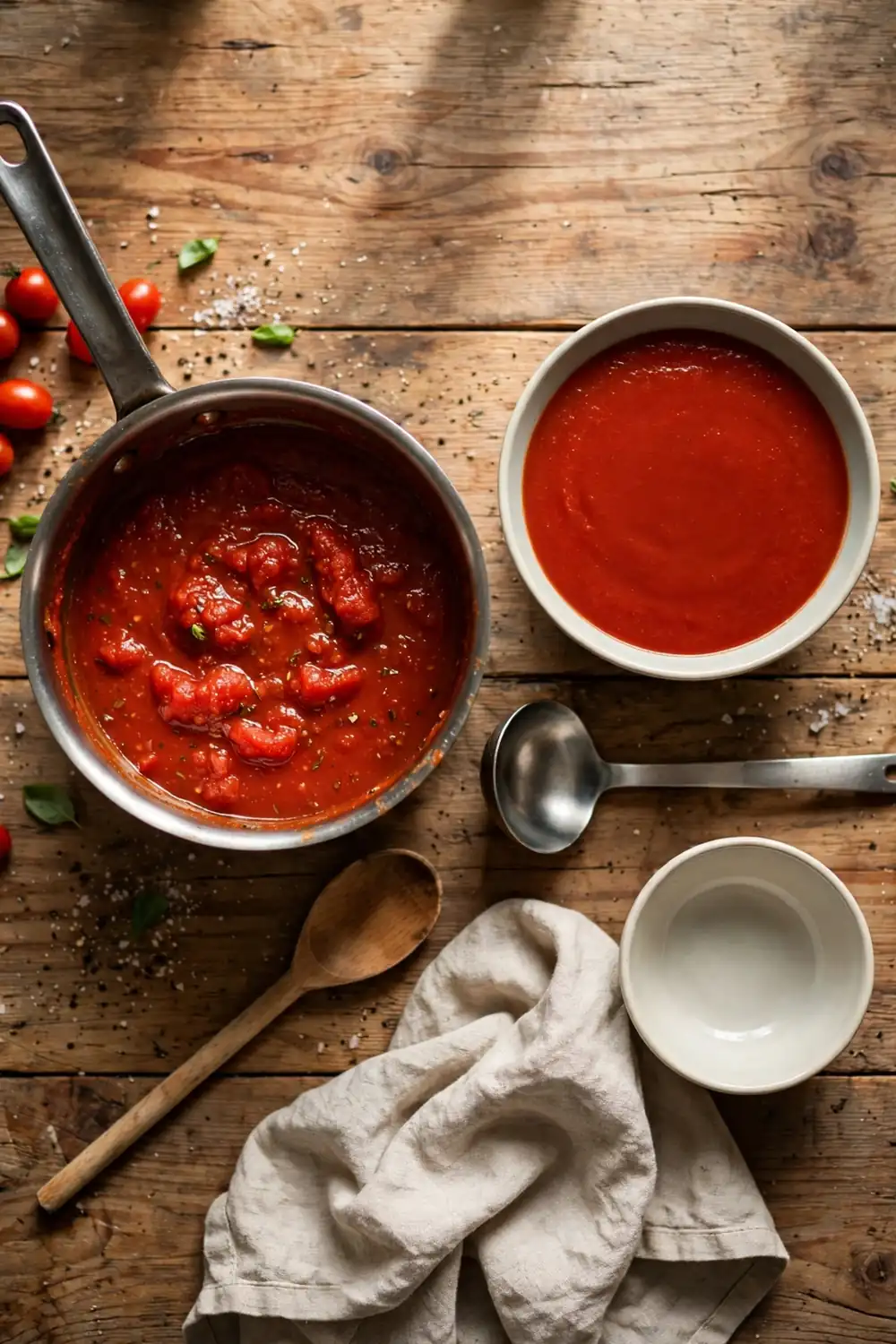
Fix Sauce Fast
Time Needed: 10 minutes
Difficulty: Easy
Best For: Sauce that tastes sharp near serving time
Result: Smooth, balanced sauce
Sharp sauce is not ruined, and the flavor is still good inside the pot. Simmer it longer, balance it gently, and serve it smooth with fresh basil. A little care saves dinner, and the sauce tastes great for everyone at the table tonight. Taste once more before you serve it.
Store Sauce Right
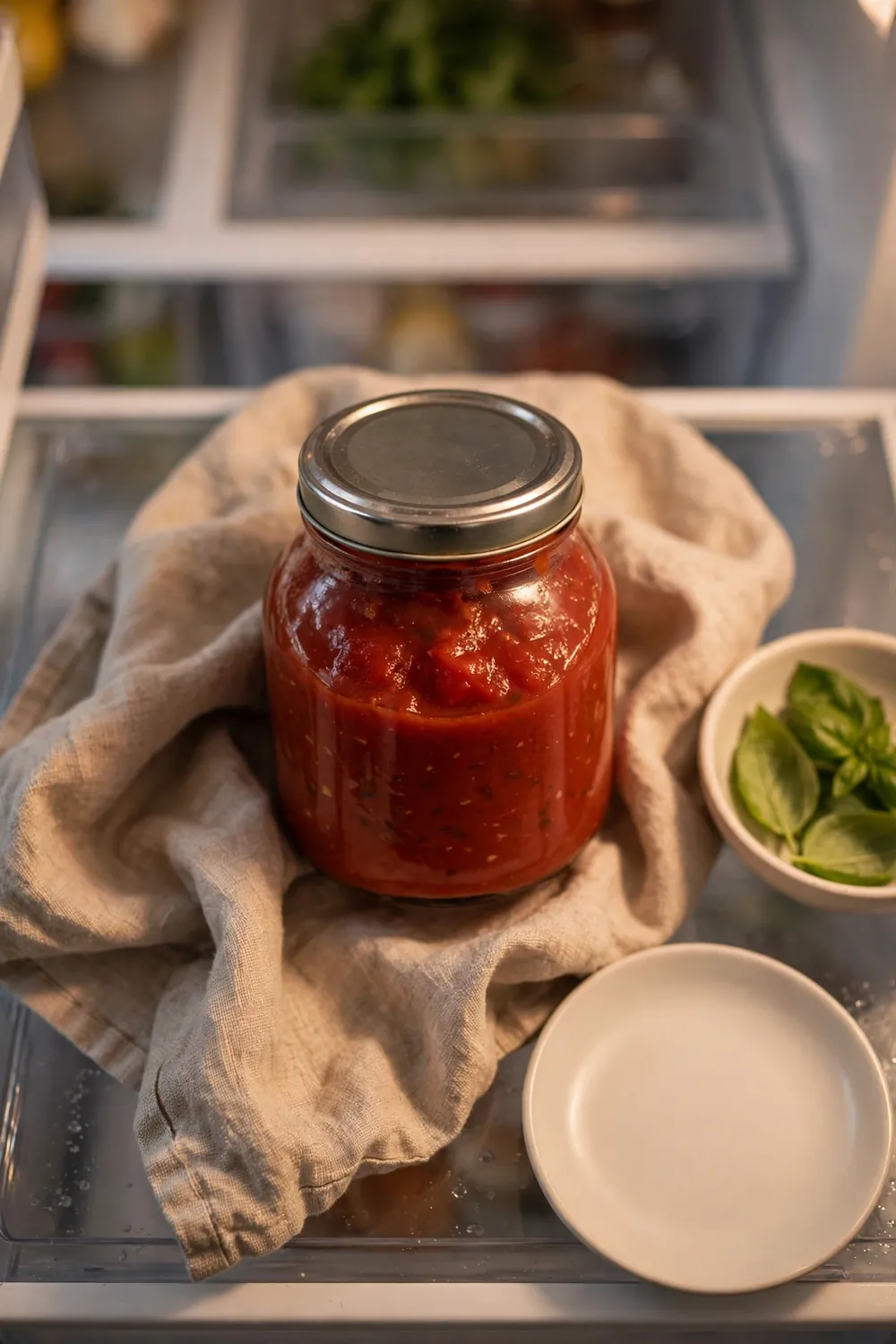
Storing sauce uncovered in the fridge dries the surface and dulls the flavor, even when the sauce was perfect. The cold pulls moisture from the top, and the taste turns flat and sharp. Seal it tight in a jar, and the sauce stays rich for days after cooking.
Cool the sauce before you seal it, then keep leftovers up to five days in the fridge. For longer storage, freeze the sauce up to three months. Reheat it gently on low heat, and the sauce comes back rich and smooth every time.
Mistakes to Avoid
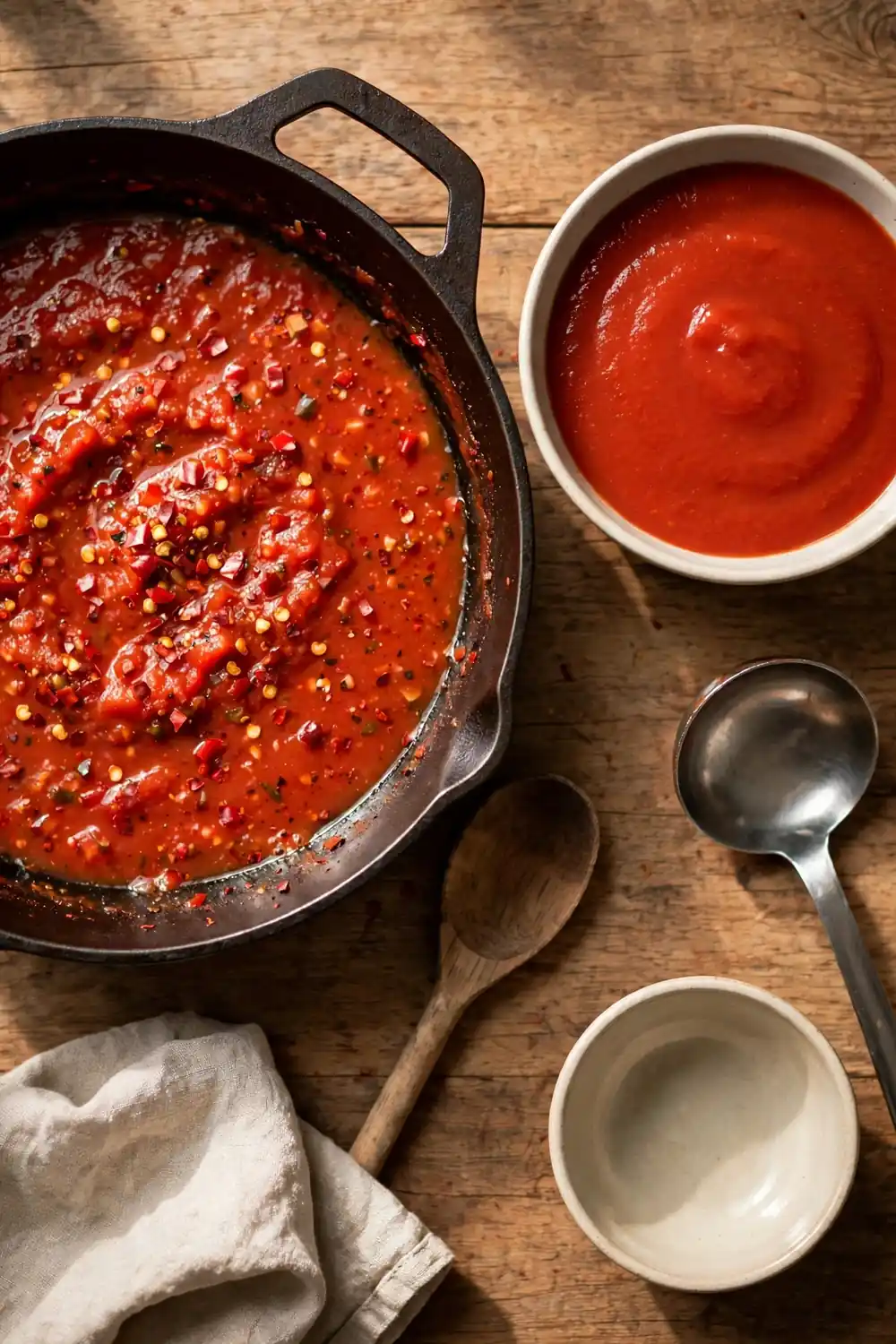
Most sharp sauces come from the same few mistakes, and all of them are easy to fix. Changing one thing at a time shows you which fix made the difference. Start with the tomatoes, then the simmer, then the balance, in that order.
- Do not use underripe tomatoes.
- Do not rush the simmer.
- Do not add sugar by the spoonful.
- Do not skip tasting before serving.
Perfect Sauce Signs

Quick Tip: Perfect sauce looks rich and glossy, with a deep red color that coats the spoon. The sauce feels smooth, never sharp or thin. Trust these signs more than the color of the tomatoes.
Good sauce tells you it worked before you taste it. The sauce looks rich and glossy, the flavor feels balanced, and every serving sits neat on the plate. That is the finish every fix on this list is working toward for you at home tonight.
Conclusion
Acidic tomato sauce is not a sign of bad luck in the kitchen. It comes from small, fixable causes, and now you know each one. Simmer it low, balance it, and the next sauce can surprise you.
Pick one fix from this guide and try it on your next sauce. Save this post on Pinterest so the fixes are there when you need them, and share it with anyone whose sauce turns sharp.
I have seen how making this one change can completely shift the result. Make your next sauce with these fixes and enjoy a rich, balanced flavor.




One Comment