Why Do My French Fries Come Out Soggy in the Air Fryer? Easy Fix Guide
Soggy air fryer fries can turn a fast snack into a letdown. You open the basket expecting golden crunch, and the fries feel soft and limp instead. The flavor is still there, but the texture misses the mark.
In my experience, steam is the main culprit, not the potatoes. Wet sticks, a crowded basket, and a cool start trap moisture around every fry. Once you see steam as the enemy, each fix starts to make sense.
This guide walks through each cause in order, from cutting and drying to heat and shaking. Follow the steps, and your next batch should stay crisp and golden. And if your pizza base also turns soft, see why soggy pizza crust happens and how to fix it with simple kitchen tricks.
Why Fries Turn Soggy
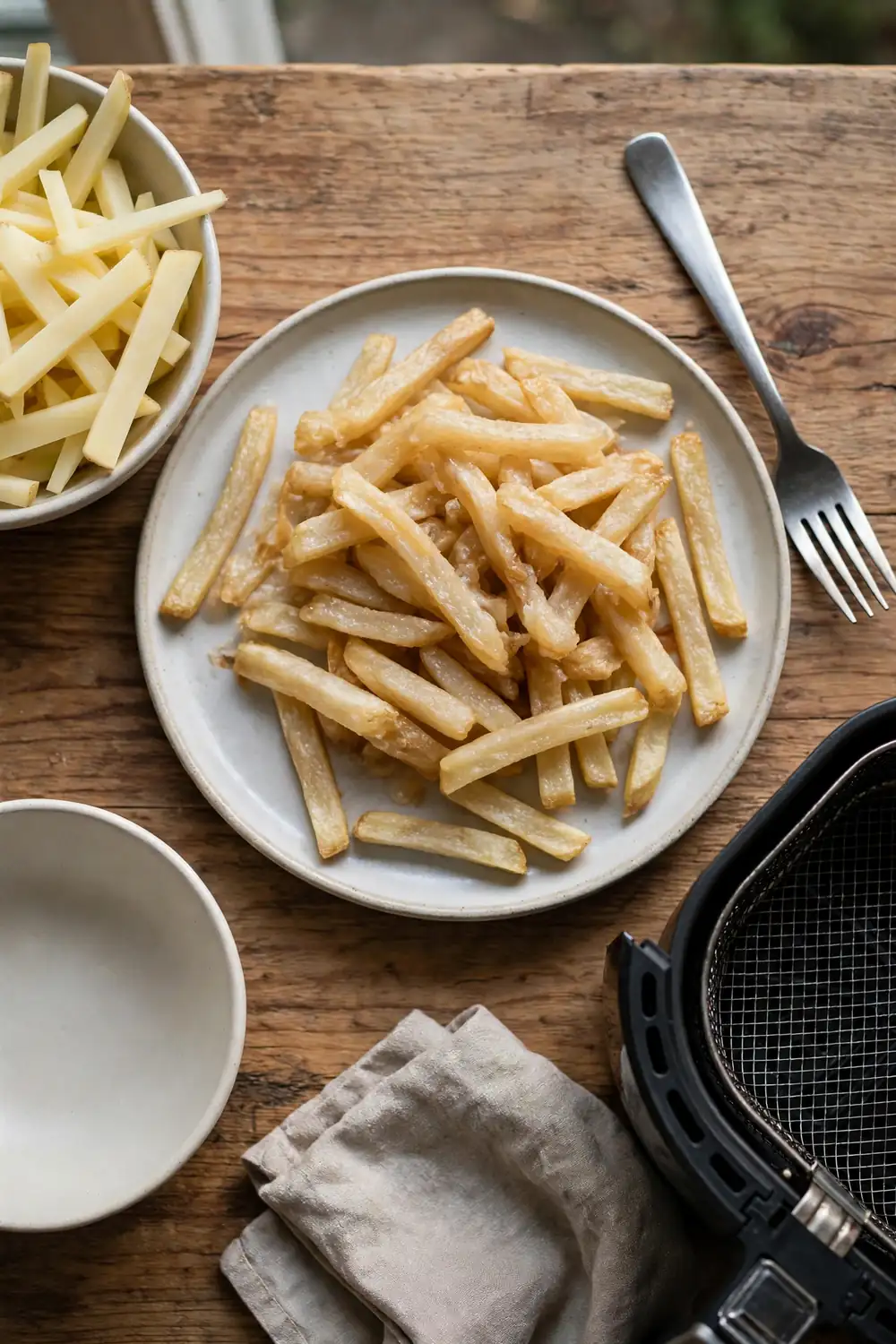
Fries turn soft when steam stays trapped around them. Wet potatoes, a crowded basket, and low heat each keep the outside from crisping. The fries cook through, but the crust never forms. That trapped moisture is the main reason a batch feels limp on the plate.
Steam forms fast, and it builds with every wet stick you add. A dry basket lets hot air reach each fry and brown the outside. A wet basket does the reverse, and the fries steam in their moisture. Learn this cause first, and every fix after it falls into place.
Cut Them Thin
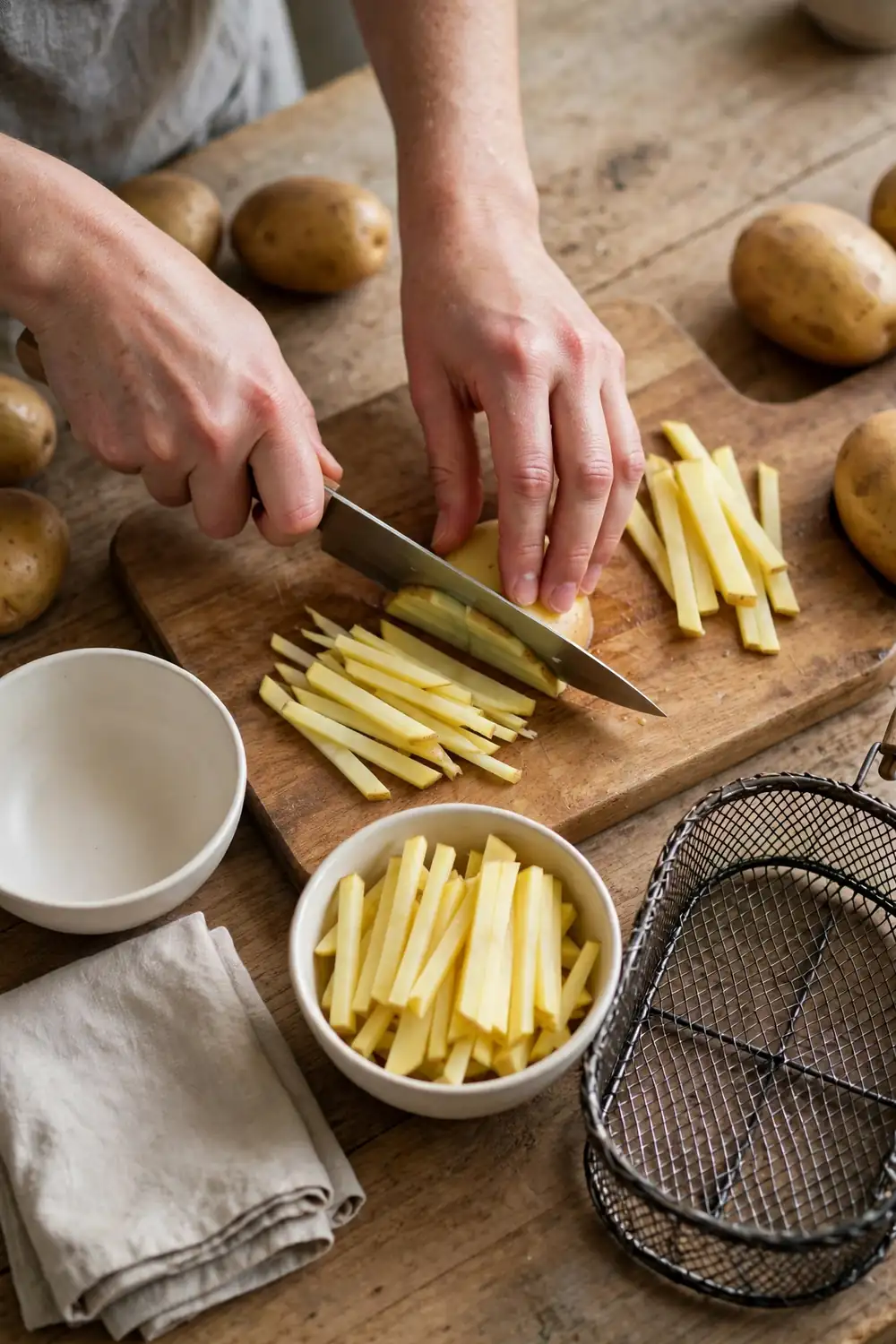
Thin cuts crisp all the way through, while thick cuts stay soft in the center. The outside browns too fast on a thick stick, and the center never catches up. Even sticks cook at the same speed, so the whole batch finishes crisp together at serving time.
- Cut each potato into sticks about as wide as a finger.
- Keep every stick the same size so none burn while others stay soft.
- Trim odd thick ends down before the fries go in the basket.
- Take an extra minute to cut with care, since even cuts save the batch.
Dry Them Well
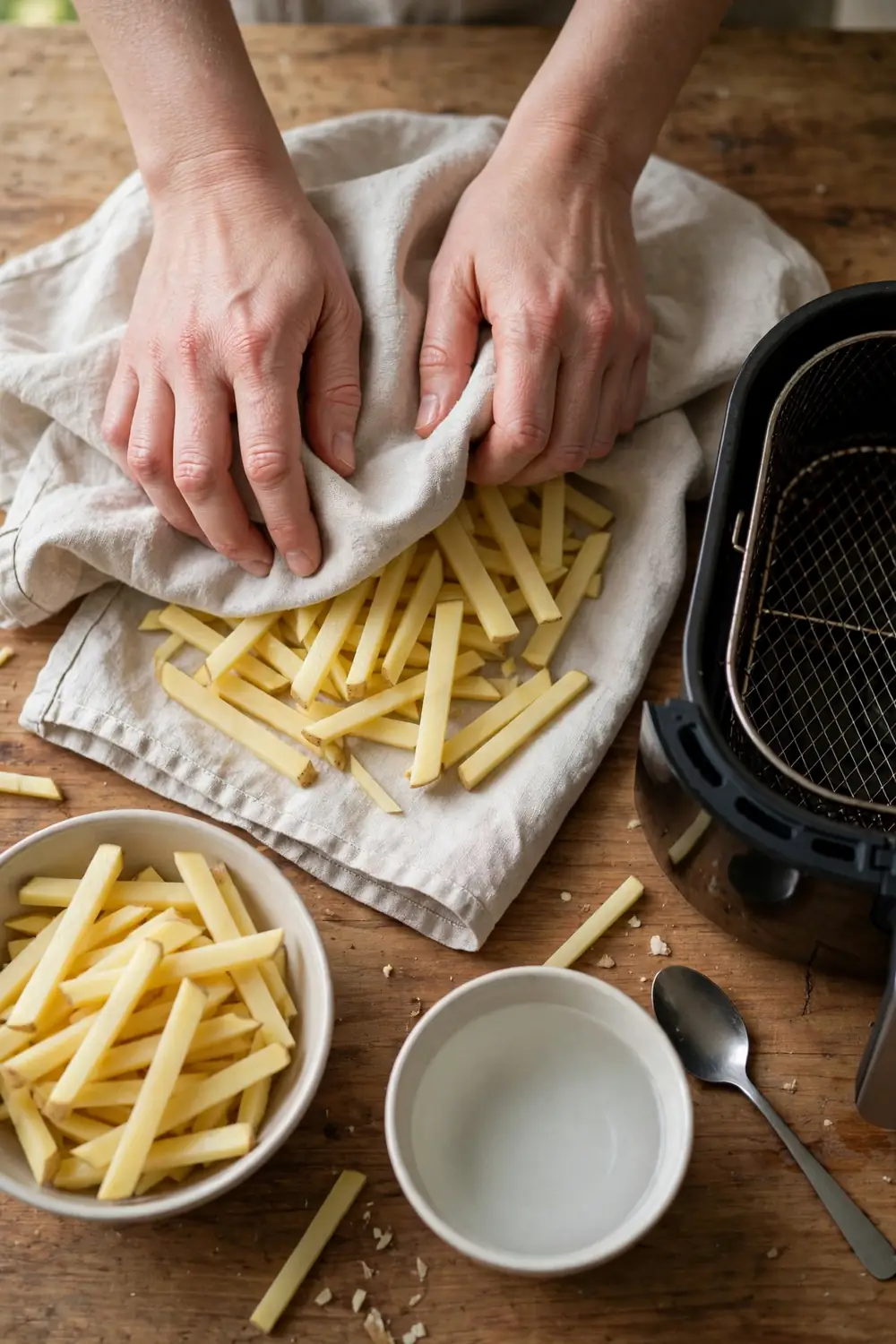
Quick Tip: Pat the fries twice for the best crunch. Press them between clean towels until no damp spots remain. A second pat right before cooking catches the last surface water.
Dry potatoes crisp fast, and the fries turn golden with a light crust. Wet fries steam instead of crisping, and the batch stays soft. Spread the cut sticks on a towel, press gently, and let them air dry for a few minutes first. That short rest makes the crunch far more reliable.
Use Less Oil
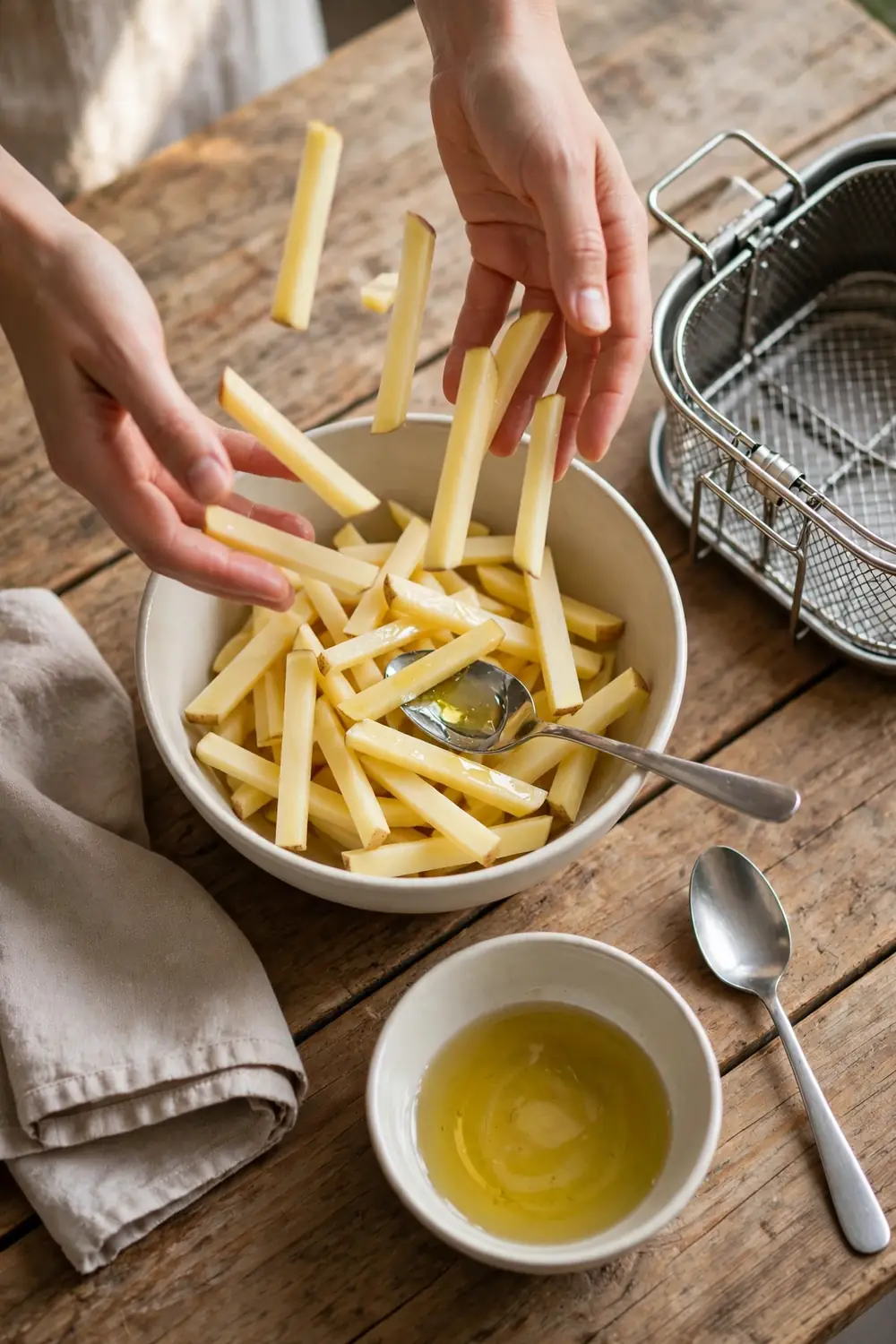
Common Mistake: Most cooks pour oil straight from the bottle over the fries. The oil pools in the basket, and the bottom sticks fry in a puddle instead of crisping. That extra oil is a common reason a batch turns heavy and soft.
The Fix: Measure one spoon of oil and toss the fries in a bowl first. A thin even coat crisps the outside without pooling. Use a spoon, not a free pour, and keep the coat light.
A light coat of oil helps heat reach the surface and brown it evenly. Too much oil soaks the sticks and keeps them soft, no matter how long they cook. Toss the fries well, check that no puddle forms, and add nothing more once they are in the basket.
Preheat the Basket
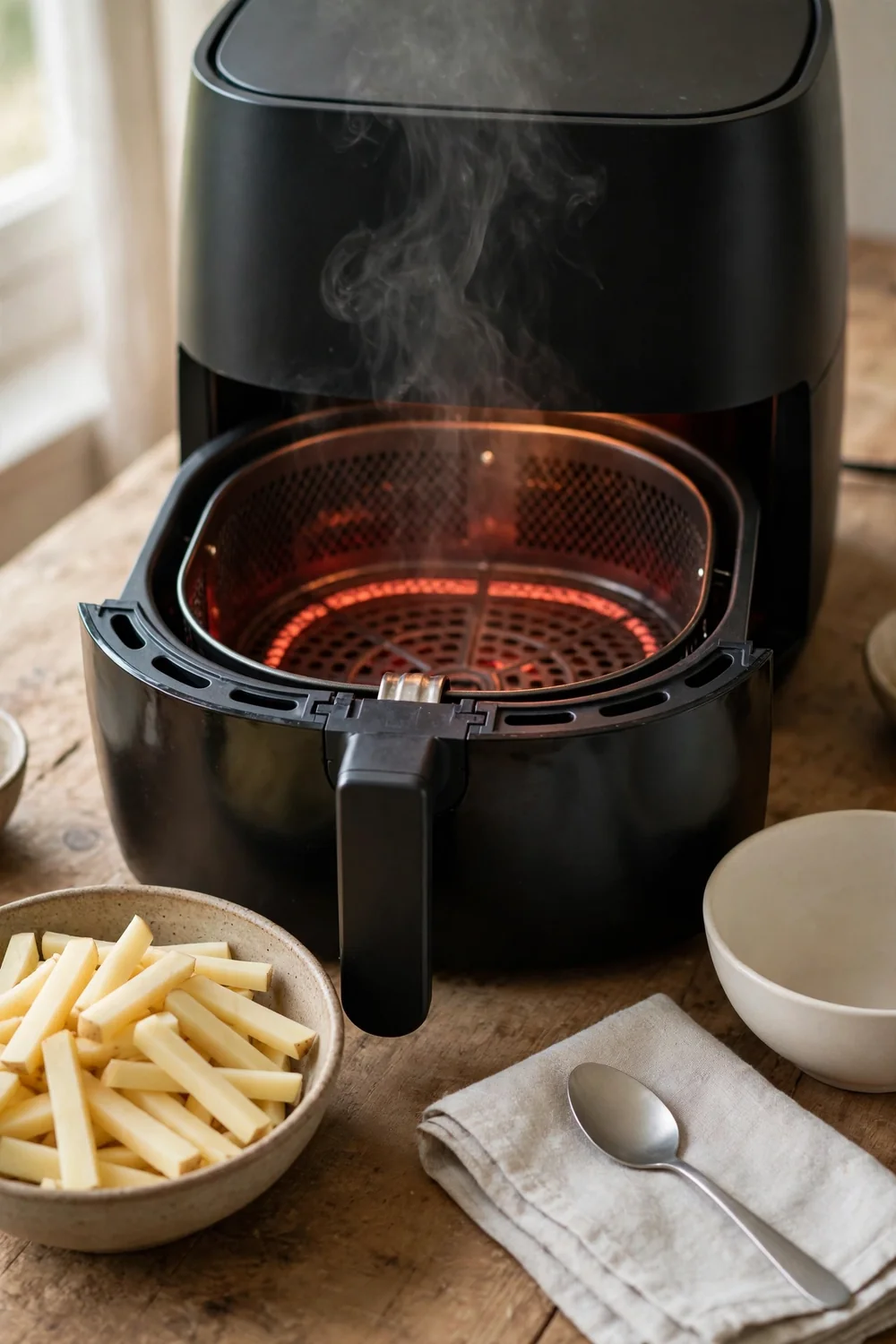
What You Need:
- Air fryer: A clean basket with room for hot air to move.
- Paper towels: Use these to dry the cut sticks before cooking.
- Bowl: Toss the fries with oil here for an even coat.
- Timer: Set it so the preheat runs the full three to five minutes.
A hot basket crisps the fries on contact, and the outside turns golden fast. A cold basket steams the fries instead, and the batch stays soft. Preheat the fryer for three to five minutes, wait for the ready beep, and load the fries only when the basket is fully hot.
Skip the Crowding
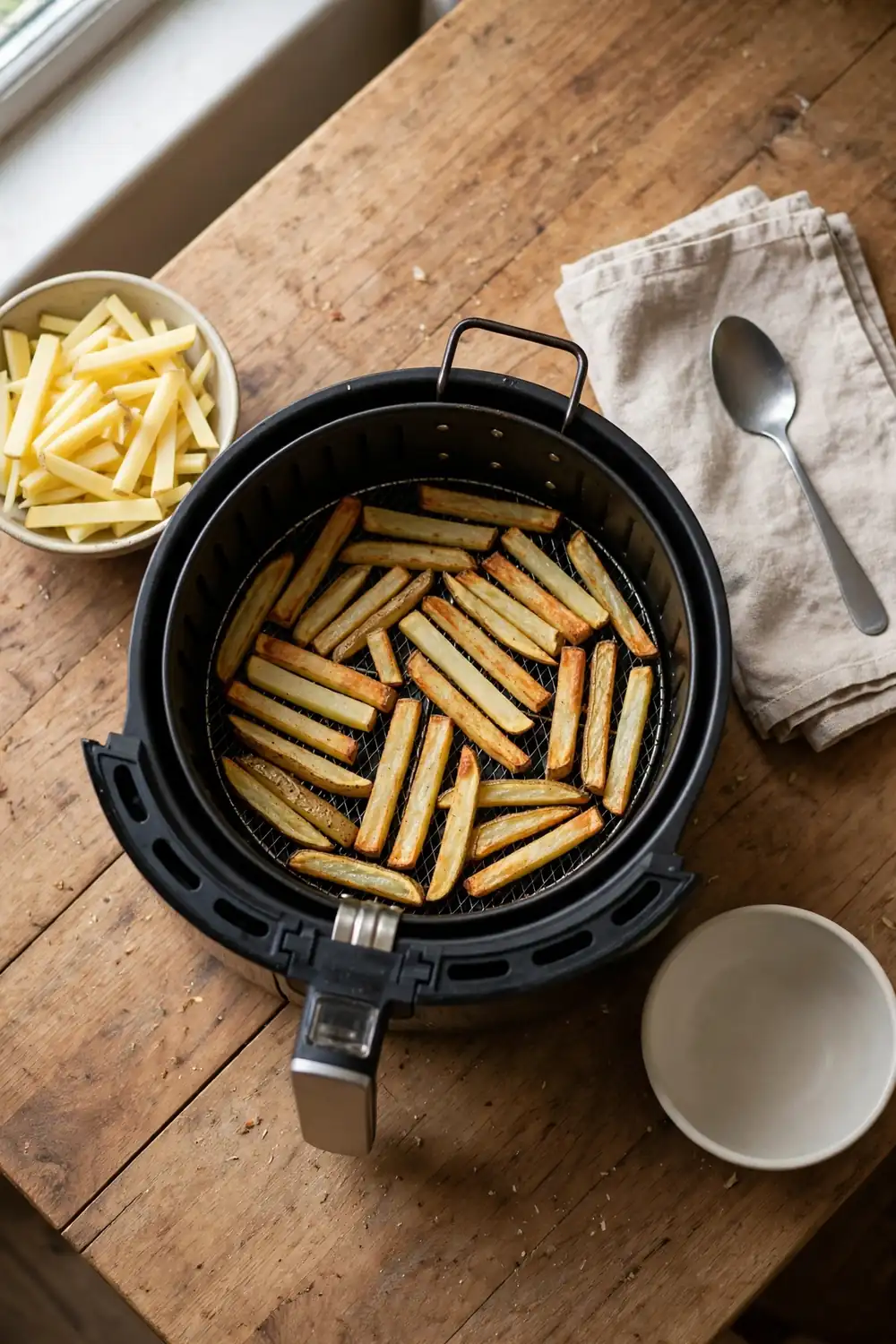
Before: A crowded basket traps steam between the sticks. Hot air cannot reach the middle fries, so they stay pale and soft. The top layer browns while the bottom layer steams, and the batch cooks unevenly.
After: A single layer gives every fry room to crisp. Hot air moves around each stick, and the whole batch browns evenly. The fries come out golden, dry, and ready to serve at once.
Leave clear gaps between the sticks, and let hot air move around them. Stacked fries cook unevenly, and the middle ones stay soft. Cook less per round for a better crunch, since one open layer beats a full basket every time. Space is the simplest fix in this guide.
Cook in Batches
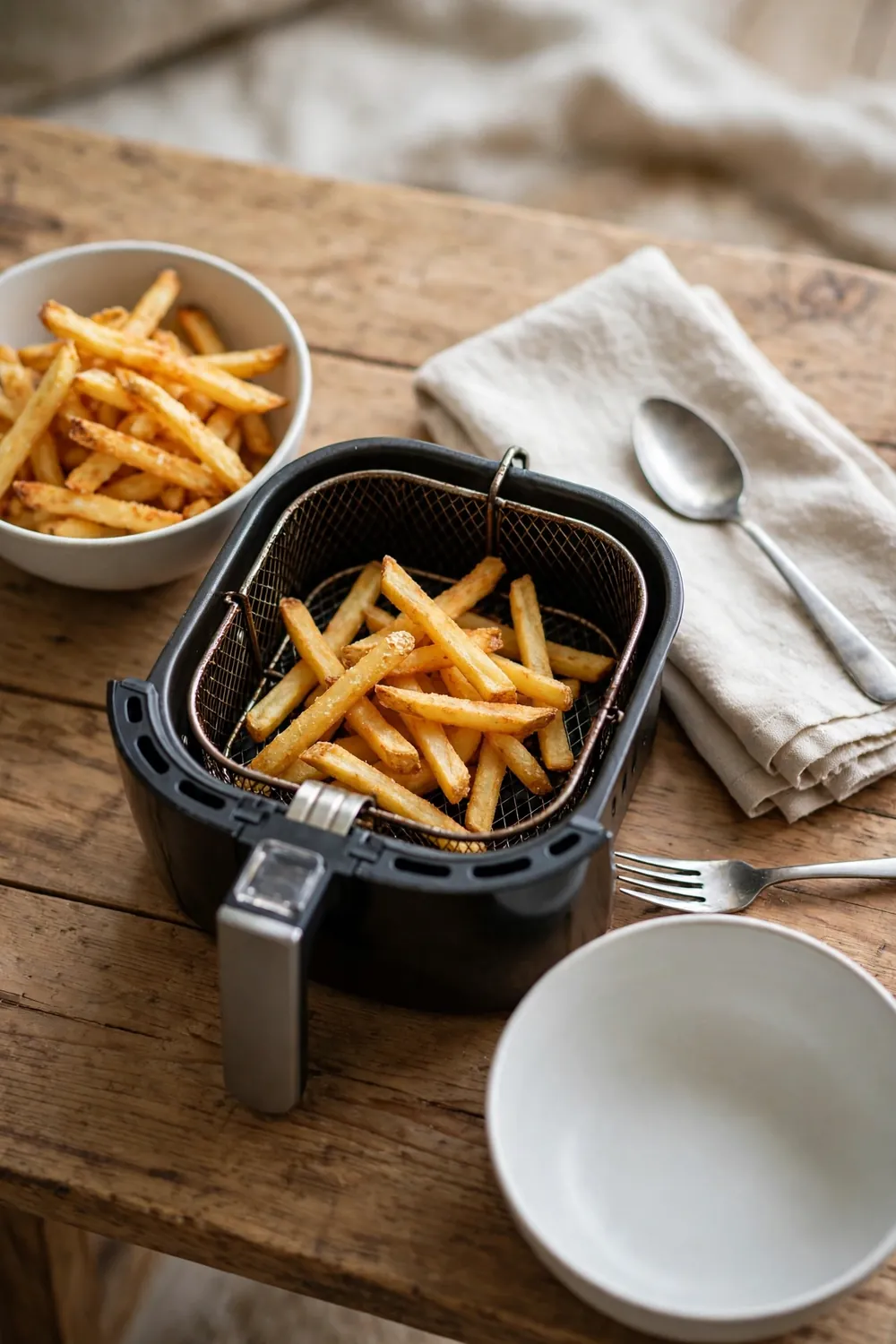
Do This:
- Cook half a basket at a time so hot air reaches every fry.
- Keep the next batch waiting on a dry tray while the first cooks.
- Hold cooked fries in a warm oven until every batch is done.
Avoid This:
- Do not fill the basket to the top to save time.
- Do not pile fresh sticks on top of cooked fries.
- Do not let finished fries sit in a closed basket while you wait.
Small batches crisp well, and the fries turn golden with a light crust. A full basket traps steam, and the fries stay soft. Two small batches take longer, but the crunch is worth the wait. Serve all batches together while hot for the best texture.
Shake Halfway
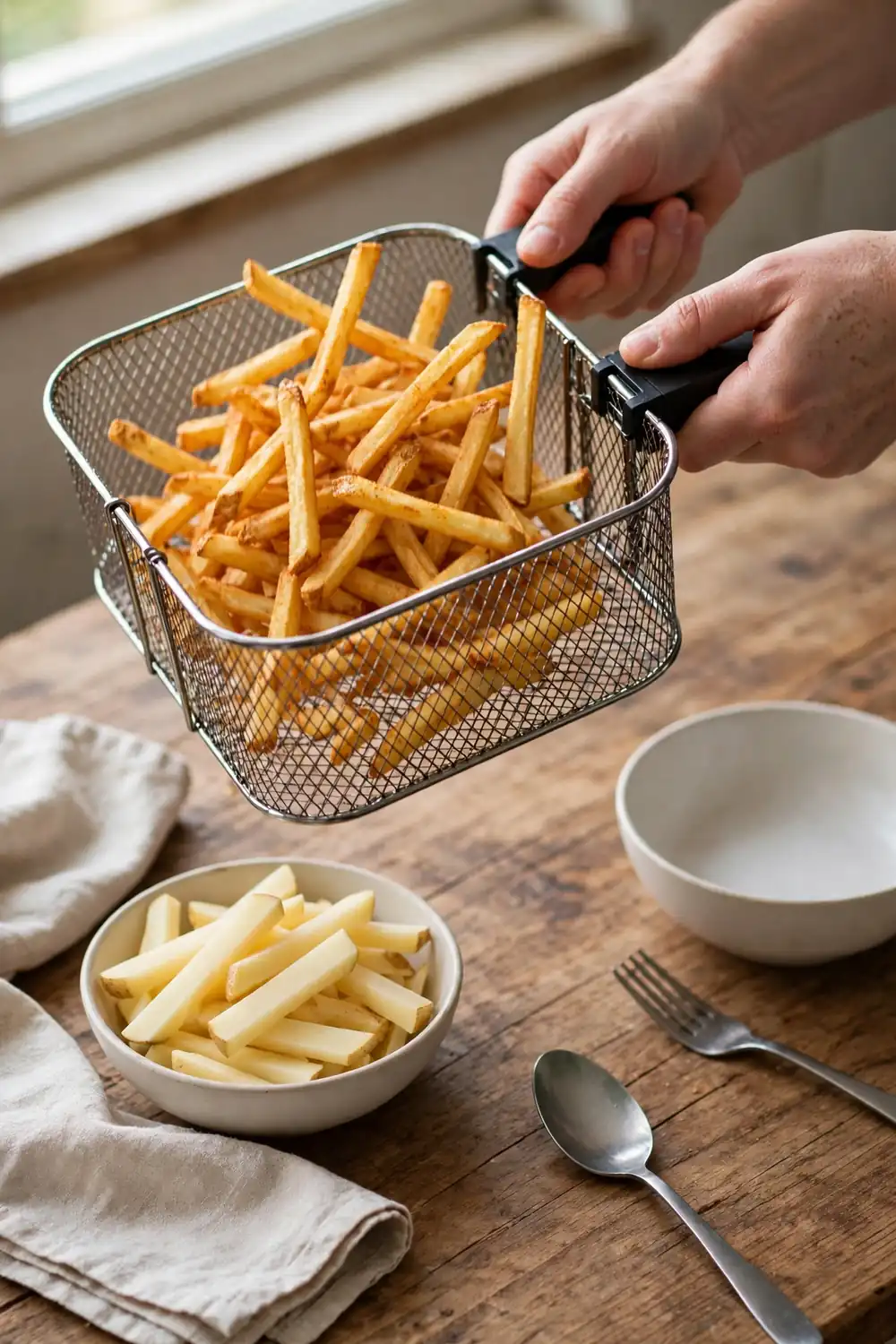
Time to shake: Halfway through the cook
Shake count: Once per batch
Basket time: Keep the basket out for seconds only
Best tool: Tongs or a firm shake
Shaking halfway moves the fries around so every side crisps. Fries that sit still cook unevenly, and the bottom ones stay soft. Pull the basket out, give it one firm toss, and slide it back in right away. One quick shake beats five small ones, and the heat stays in.
Test One Batch
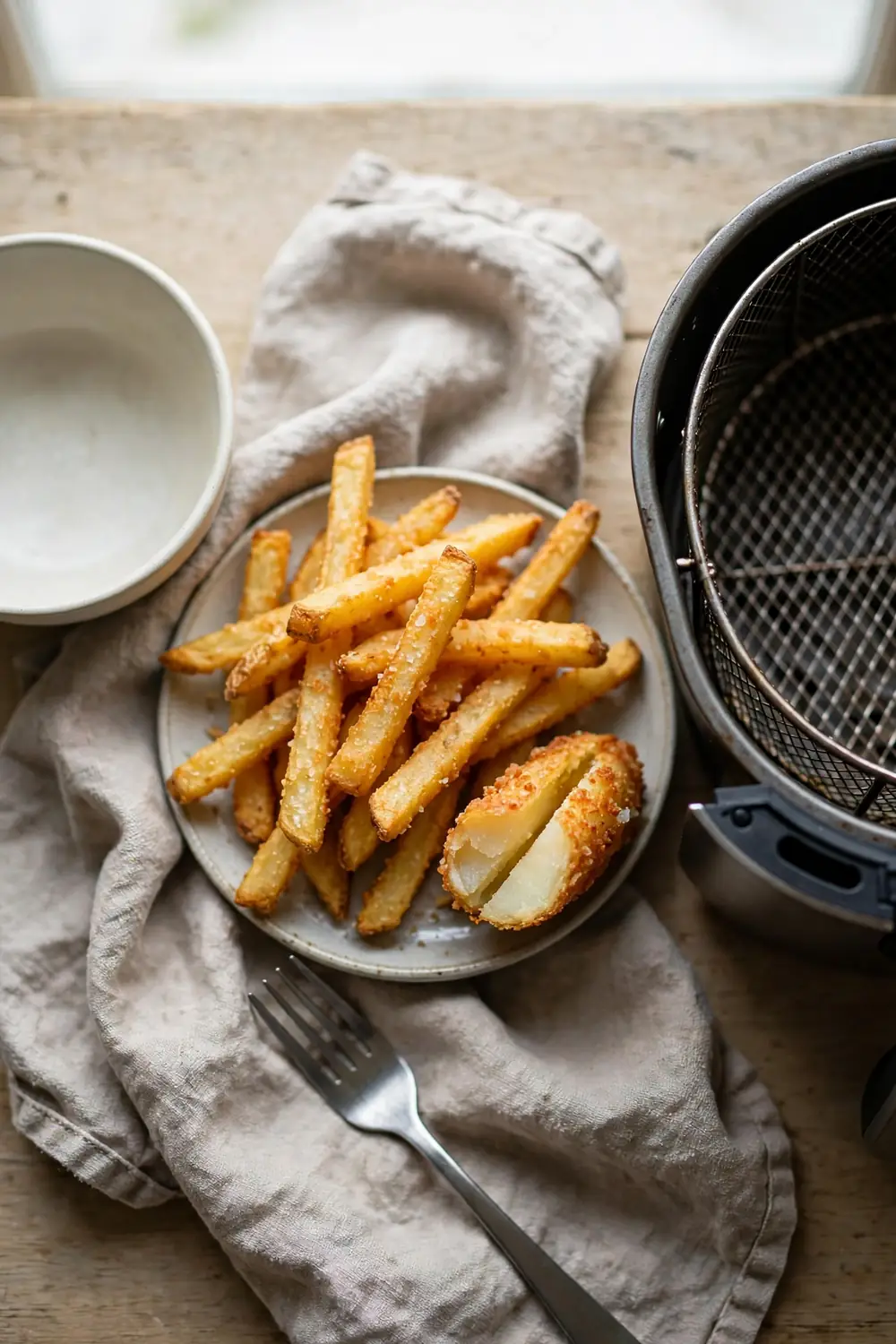
Cook one small test batch before you commit the whole bag. A test shows if the fries need more drying, more heat, or more space. One batch saves the whole cook, and the fix stays small. Taste that batch while it is hot, and judge the crunch with care.
Taste the test batch, and adjust the cook right away. Dry more if the fries feel soft, and raise the heat if they look pale. Cook the rest only when the test turns out crisp. Testing is a habit that pays off every single time.
Common Mistakes to Avoid
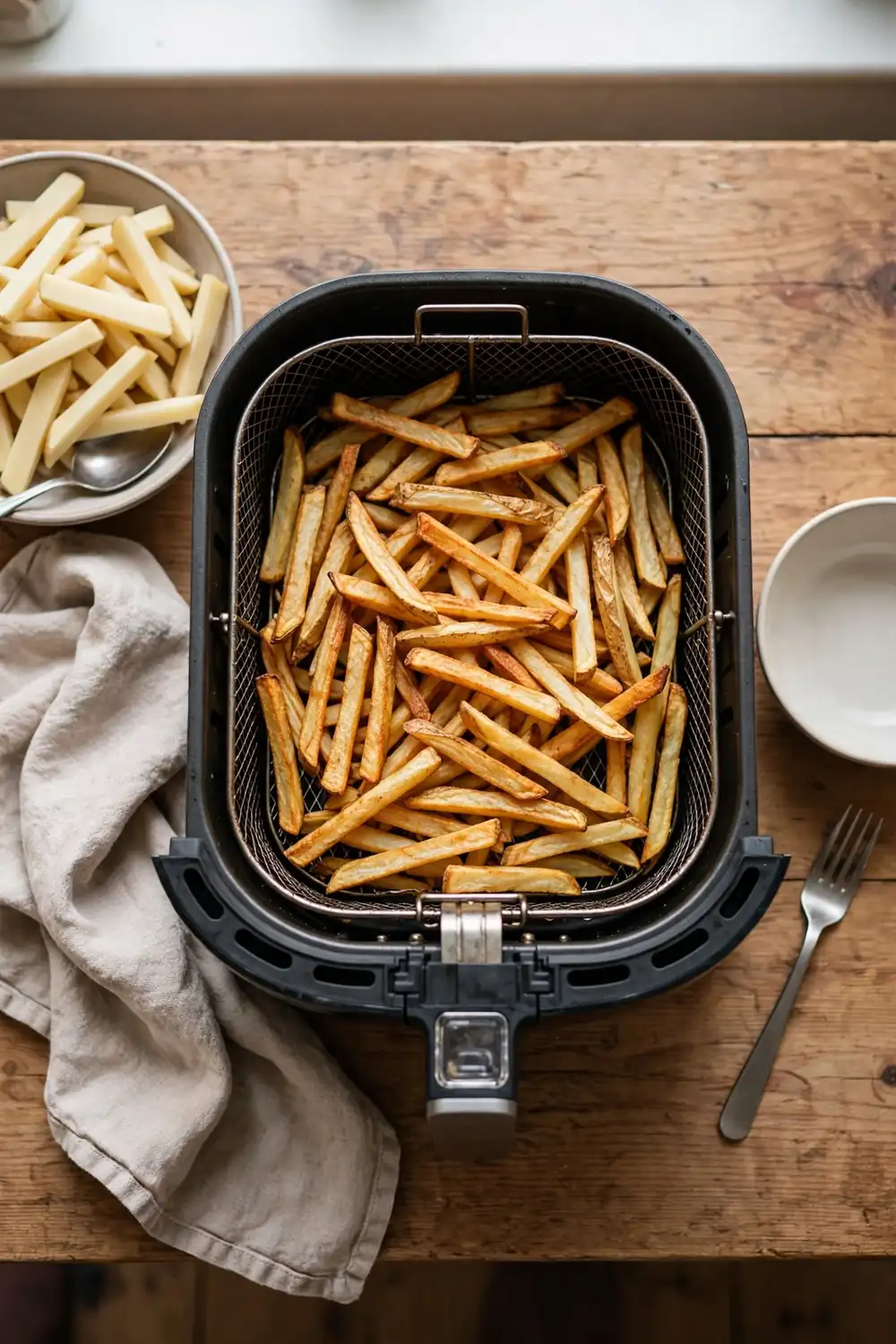
Most soft batches come from a few repeatable habits, not bad potatoes at all. Fix one small habit at a time, starting with a dry fry and a hot basket. The list below covers the mistakes I notice most often in home kitchens each week.
- Do not cook wet fries straight from rinsing, since surface water steams the batch.
- Do not crowd the basket, since trapped steam keeps the middle fries soft.
- Do not skip the preheat, since a cold start steams instead of crisping.
- Do not flip the heat up to rush the cook, since fast heat browns the outside while the center stays soft.
What Crisp Fries Look Like
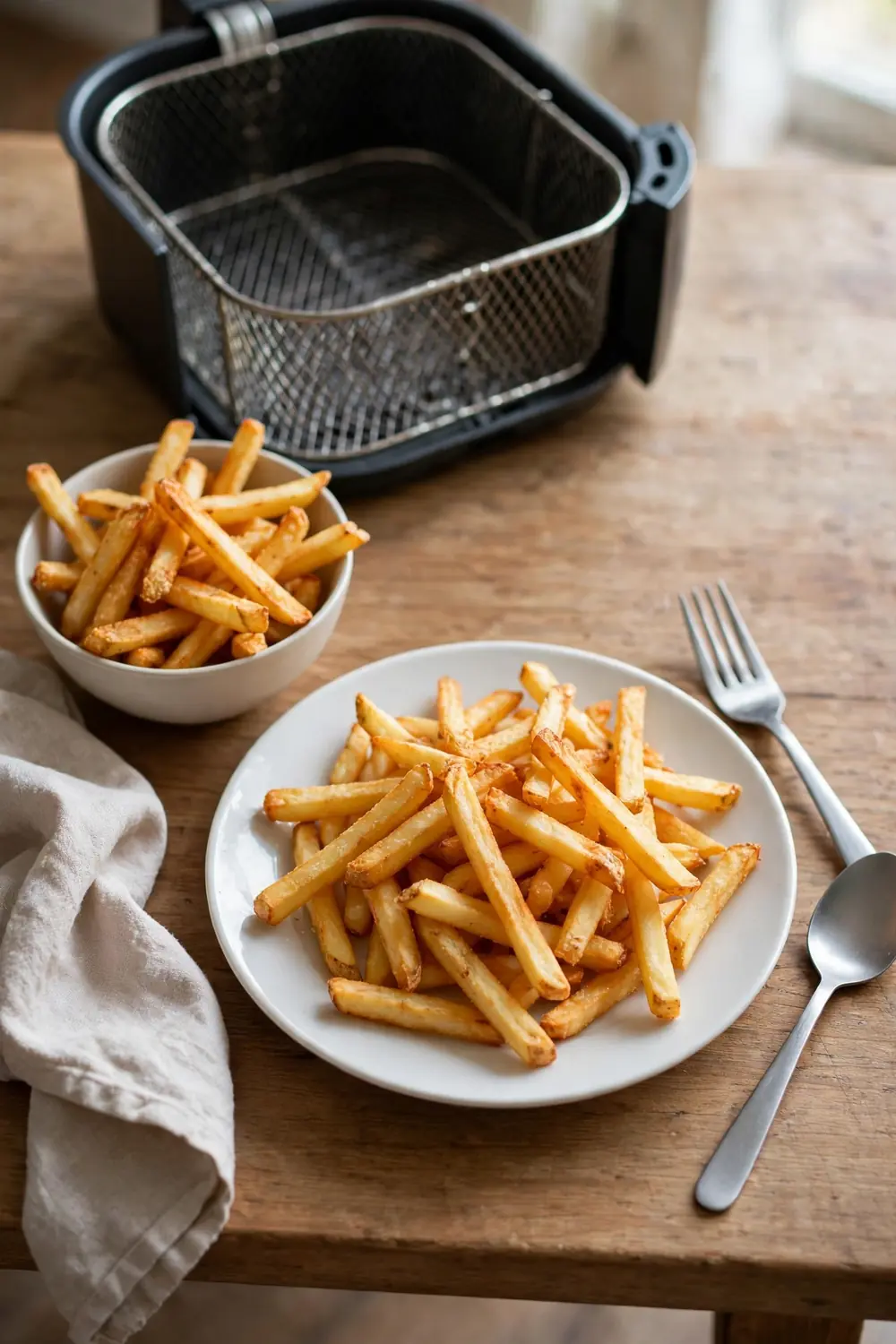
Quick Tip: Serve the fries at once for the best crunch. Let them rest only a minute on a rack, not in a closed bowl. A rack keeps air moving, so the crust stays dry.
Crisp fries show a golden outside, and the inside stays soft. The fries feel light, and the crunch sounds clear when you bite in. A good batch stands tall with even color and a dry golden crust. Look for that color, then serve the fries hot.
Conclusion
Soggy air fryer fries are not a sign of bad potatoes. They come from trapped steam, and now you know each fix. Dry sticks, a hot basket, and small batches keep the next batch crisp.
Pick the simplest fix first, then add the next one. Small changes protect the flavor while the look improves. Save this guide on Pinterest for your next fry night.
Dry well, cook in batches, and shake halfway. The fries turn golden, and the batch looks fresh. Your next batch can stay crisp. If your pancakes also come out flat, read our guide on pancakes not fluffy for tall, soft, fluffy pancakes every time.


2 Comments