Why Is My Homemade Pizza Crust Soggy in the Middle? Easy Fix Guide
Soggy pizza crust can turn a homemade pizza into a limp slice that flops as you lift it. You pull a golden pie from the oven, yet the middle stays soft and wet. This flaw has clear causes and simple fixes.
Most soft centers come from trapped steam, wet toppings, or an oven that never got hot enough. Each cause feeds the next, so one small slip can undo a good bake. In my experience, the base tells the story before the first slice.
This guide walks through each fix in order, from heat and sauce to baking time. Work through them on your next pie, and the base should stay firm. If your cake turns out dry, see why dry crumbly cake happens and how to fix it.
Why Crust Turns Soggy
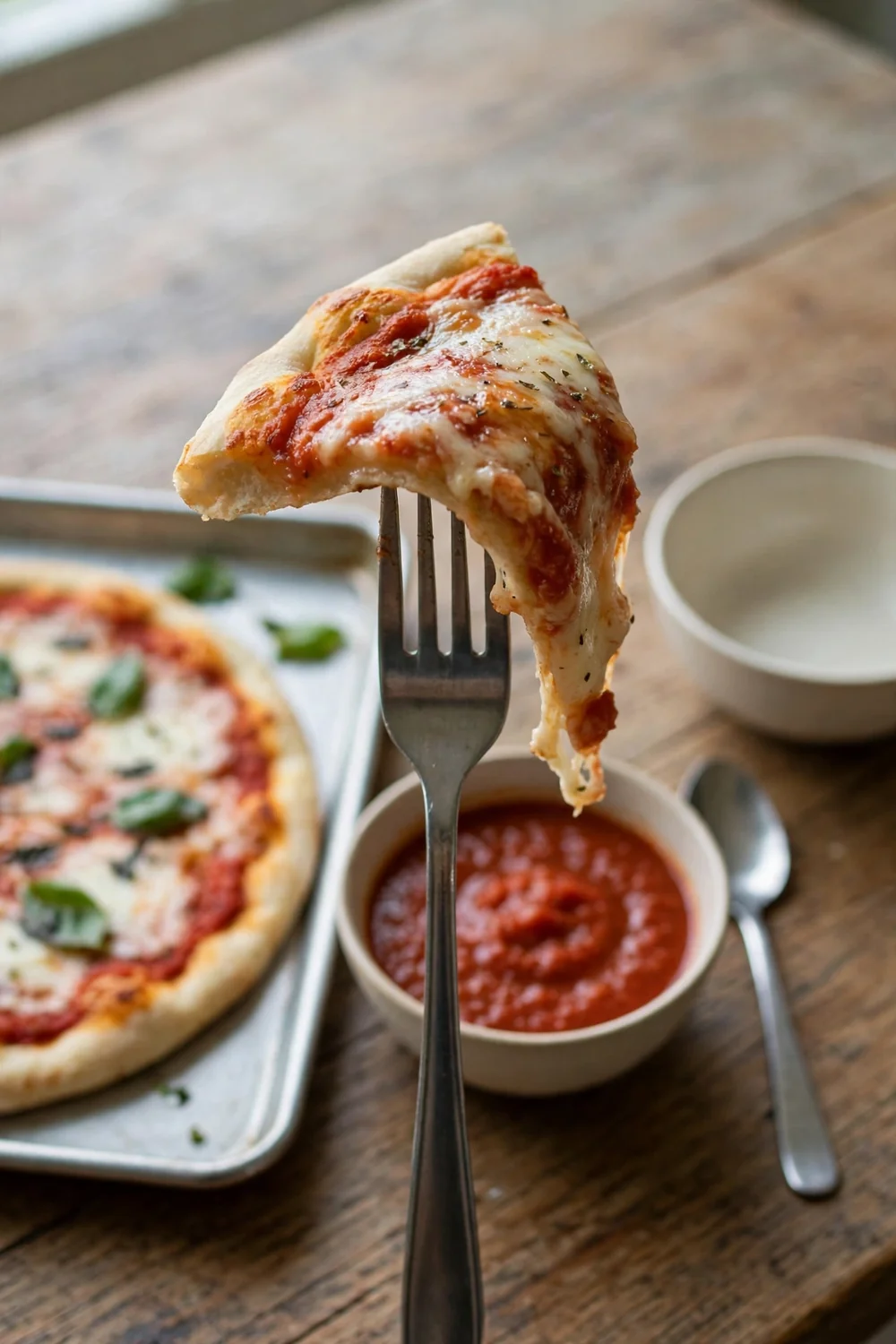
Steam is the main culprit behind a soft center. As sauce, cheese, and wet toppings heat up, they release water that has nowhere to go. The moisture soaks down into the dough and keeps the base from crisping, even when the top looks done and golden.
A cool oven, a thick base, and a heavy sauce layer make the problem worse. Each one adds moisture or slows the bake, so the center stays damp while the edges brown. Once you spot which cause fits your pie, the fix becomes clear and the next bake turns firmer.
Heat the Oven Fully
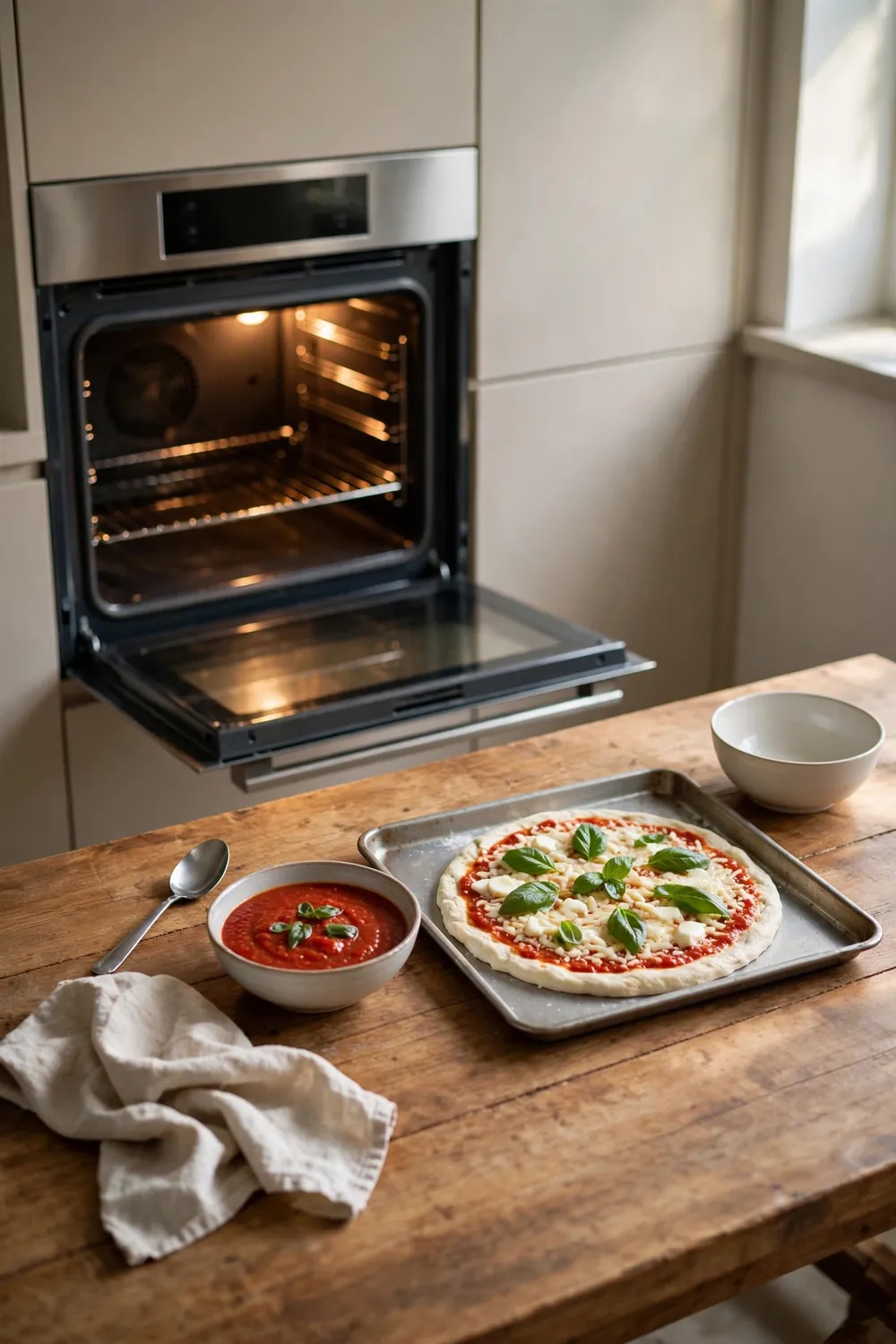
A fully heated oven gives the base a blast of heat the moment the pizza goes in. That fast heat dries the surface and sets the crust before steam can soak in. Wait a full twenty minutes before you load the pie.
- Set the oven to its highest safe baking setting, usually between 475 and 500 degrees Fahrenheit.
- Let it heat for at least twenty minutes after the beep.
- Place the rack in the lower third so the base gets strong heat from below.
- Load the pizza quickly and shut the door so the heat stays inside.
Prebake the Base
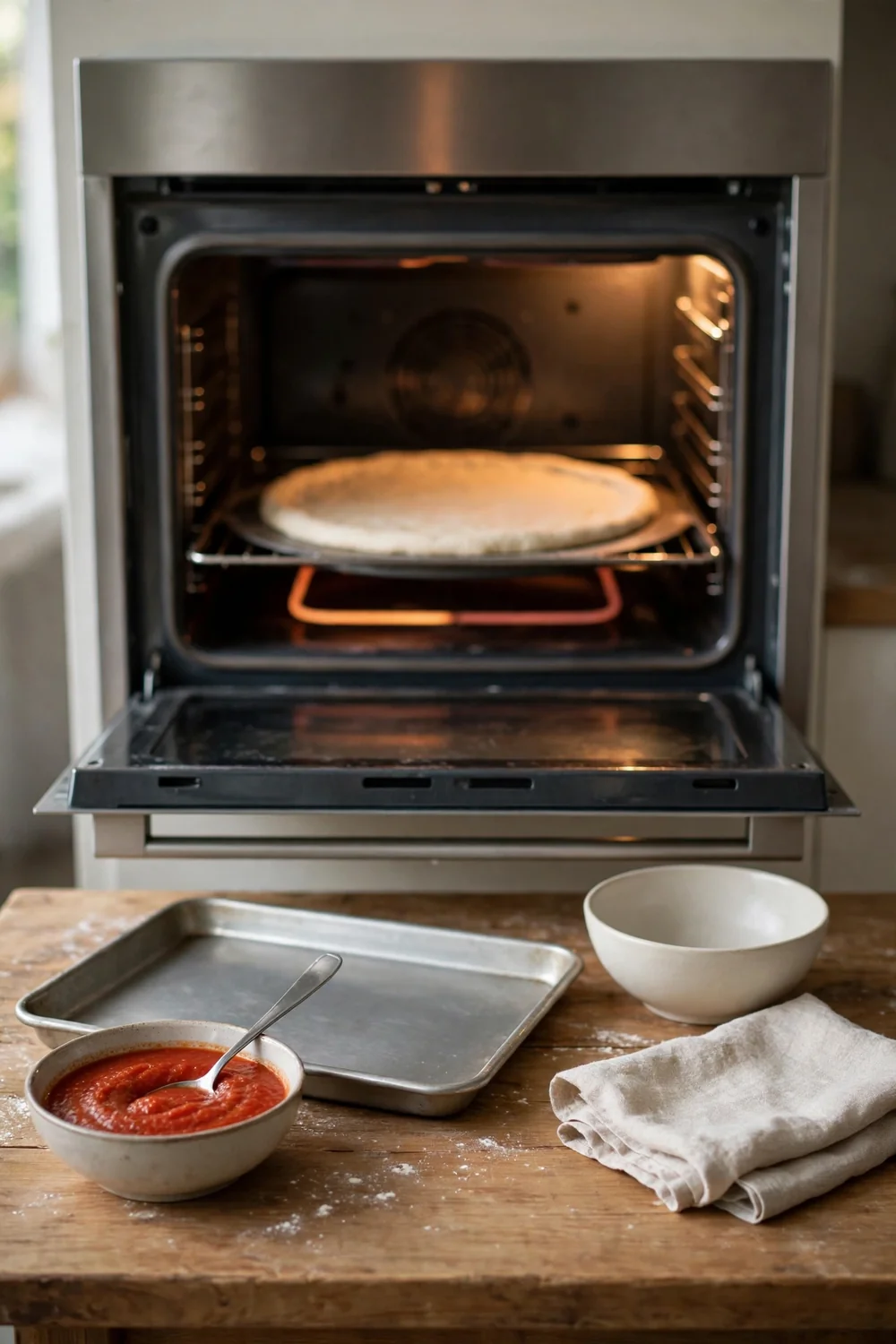
Quick Tip: Bake the plain crust for five minutes before you add toppings. This short head start dries the surface and firms the base, so wet sauce has less raw dough to soak into.
A prebaked base holds up under cheese, sauce, and vegetables without turning limp. Slide the plain dough into the hot oven and watch it puff slightly and set. Then add toppings and return the pie for the final bake. That extra step takes little time, yet it protects the center on every pizza you make.
Roll It Thin
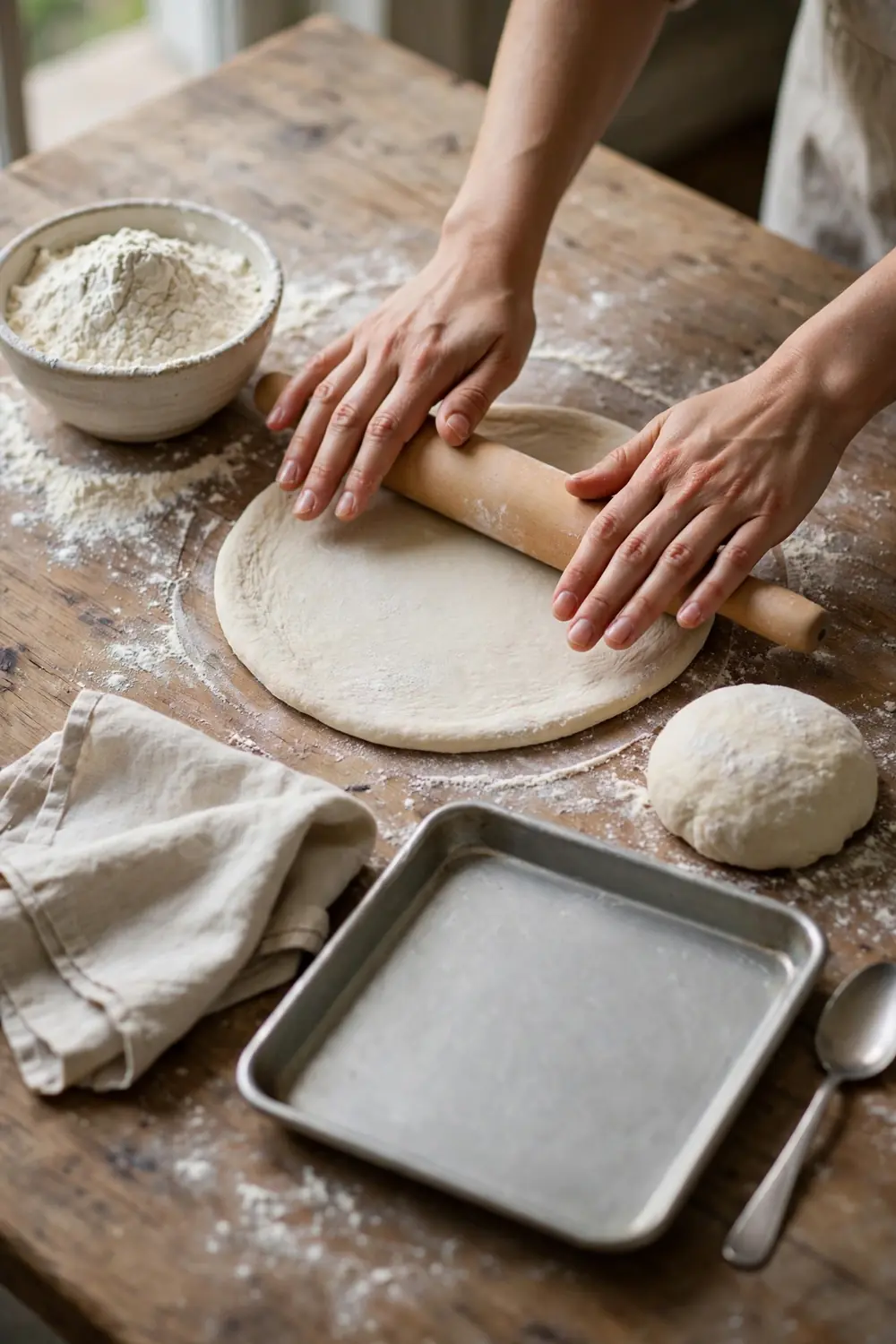
Common Mistake: Many cooks leave the center thick while rolling, thinking a hearty base tastes better. The thick middle bakes slowly and stays damp long after the edges turn brown. A heavy center also traps steam under the toppings.
The Fix: Roll the dough from the center outward until it feels even all across. Aim for a thin, uniform sheet with slightly raised edges. Even dough bakes at one speed, so the middle finishes with the rim.
Thin dough lets heat reach the middle fast, so the base dries and crisps before toppings release their water. Take an extra minute to roll with care and check the thickness with your fingers. Patience here pays off with a pie that slices clean and holds its shape.
Use Less Sauce
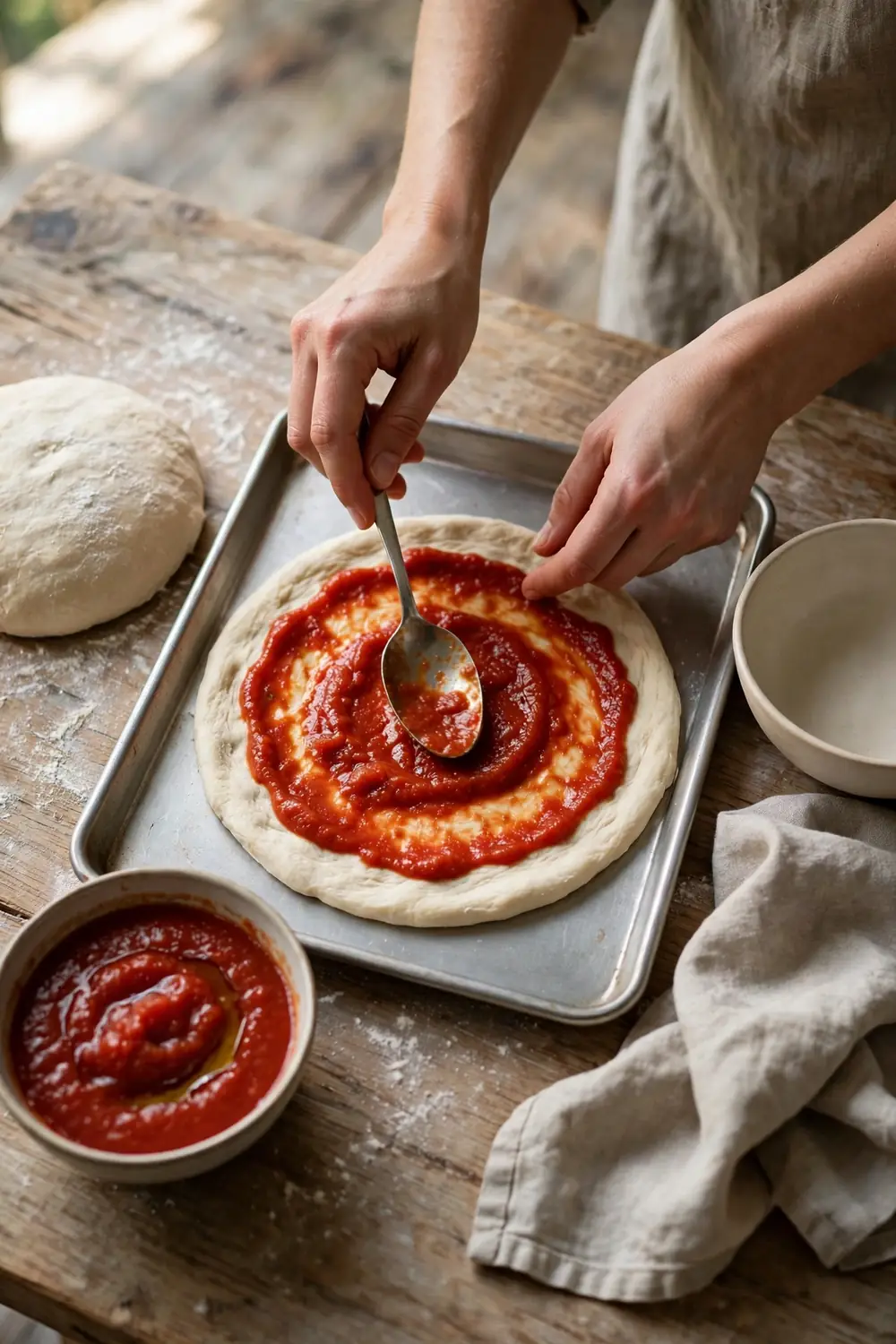
What You Need:
- Sauce: Measure about one third of a cup so the layer stays thin.
- Spoon: Spread the sauce from the center outward in a light, even coat.
- Ladle: A small ladle keeps portions steady when you make several pies.
- Paper towel: Blot canned tomatoes first if the sauce looks watery.
A thin sauce layer bakes dry instead of pooling on the dough. Spread it lightly and leave a clear rim around the edge for the crust to puff. Less sauce still gives full flavor, since the toppings and cheese carry the pie. Your base will thank you with a firm, crisp bite.
Drain Wet Toppings
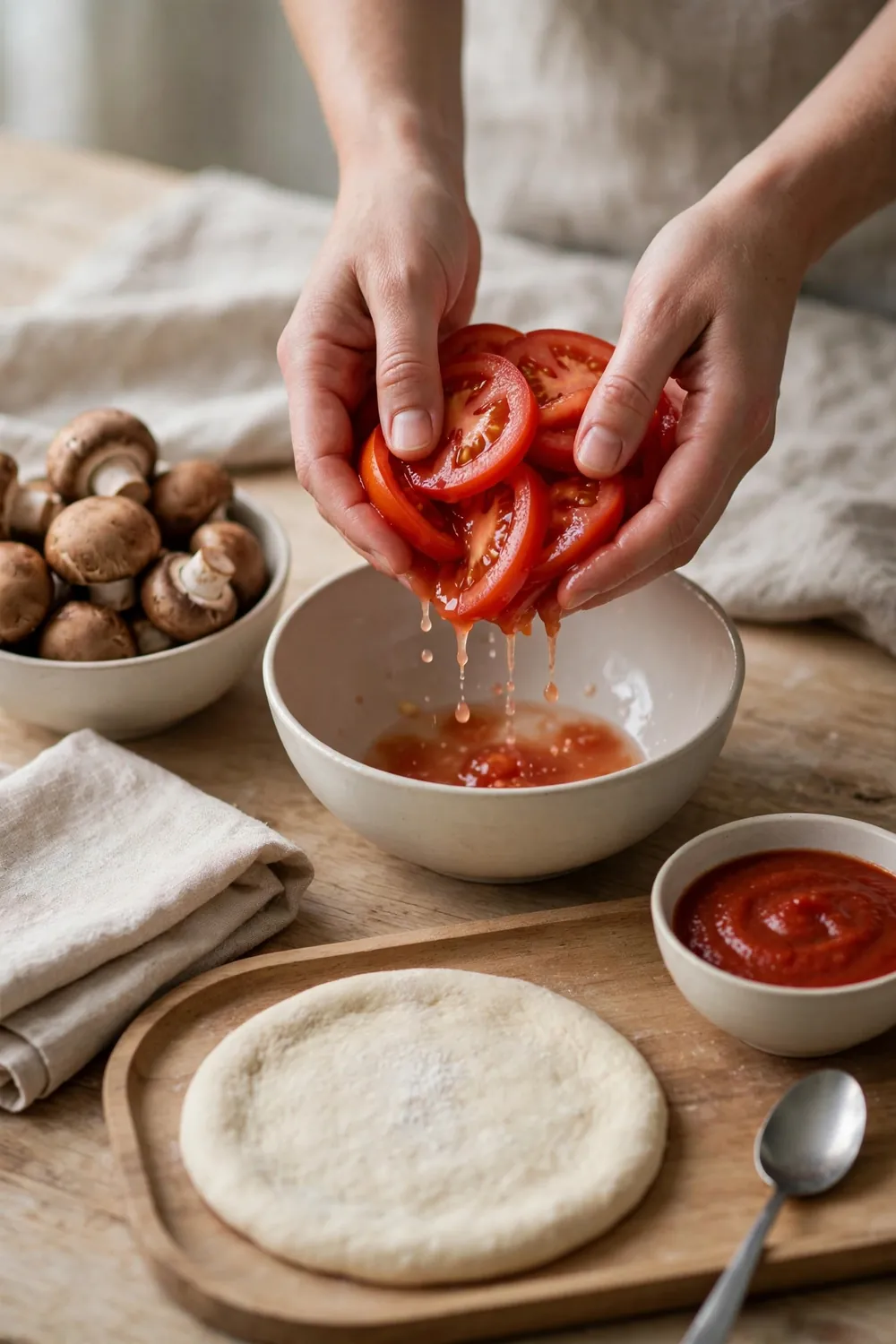
Before: Wet tomatoes, mushrooms, and spinach release water as they bake. That water pools on the dough and keeps the center soft. The pie may look fine on top while the base stays limp.
After: Drained toppings stay light and let the base bake dry. The crust turns golden and firm under the same cheese and sauce. Each slice lifts clean without folding at the middle.
Drain tomatoes in a bowl, squeeze spinach dry, and pat mushrooms with a towel before topping. A quick drain takes two minutes and saves the whole pie from a wet middle. Keep a towel beside the board whenever you build a pizza, and dry toppings will soon feel like habit.
Use a Hot Pan
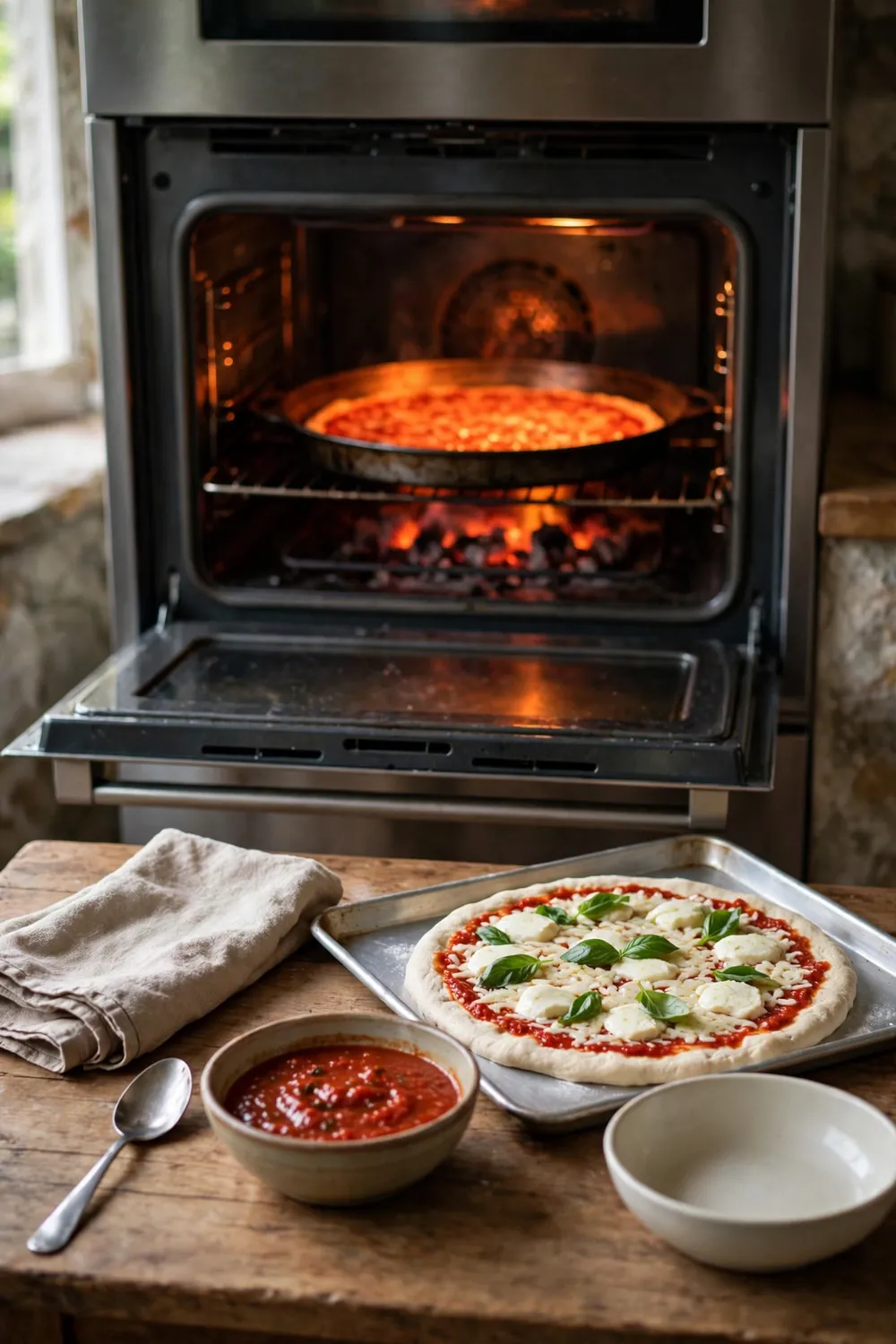
Do This:
- Heat your baking sheet, stone, or steel in the oven while it preheats.
- Slide the pizza onto the hot surface with parchment or a peel.
- Keep the oven door closed so the heat stays strong.
Avoid This:
- Do not place dough on a cold pan, since the base steams instead of crisping.
- Do not use a thin warped tray that cools fast.
- Do not touch the hot pan without oven mitts.
A hot pan crisps the base on contact, much like a griddle searing bread. The sudden heat sets the dough before steam can settle into it. Let the pan heat with the oven, and handle it with care at every step. That one habit can rescue pies that always turned out soft.
Bake It Longer
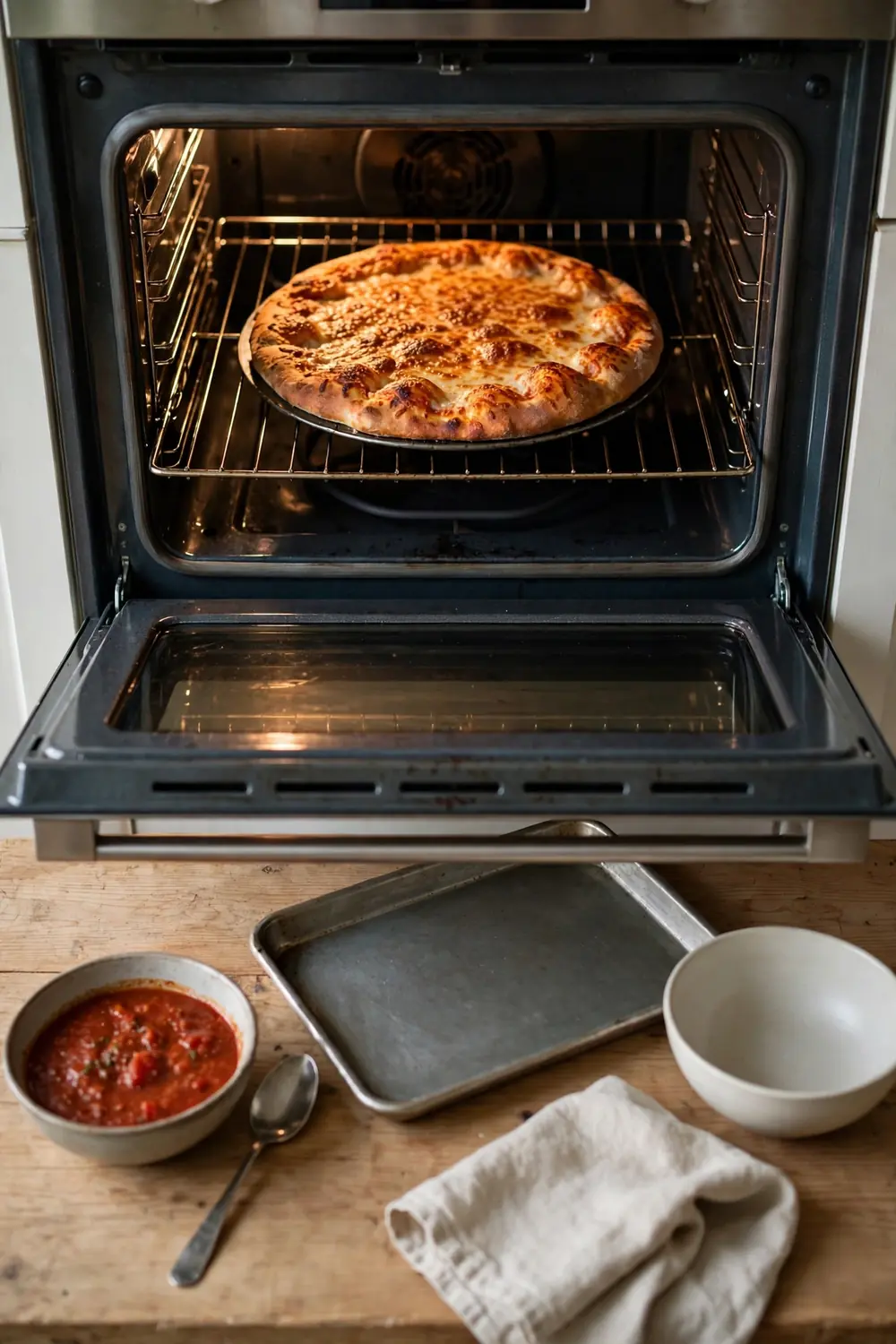
Time Needed: 2 to 4 extra minutes
Difficulty: Easy
Best For: Pale, soft centers
Result: A dry, golden base
A few extra minutes can dry the base without burning the cheese if you watch closely. Check the bottom by lifting the edge with a spatula and looking for even gold color. Pale dough means the bake is short, so give it more time. Trust color over the clock, since ovens vary.
Test One Pizza
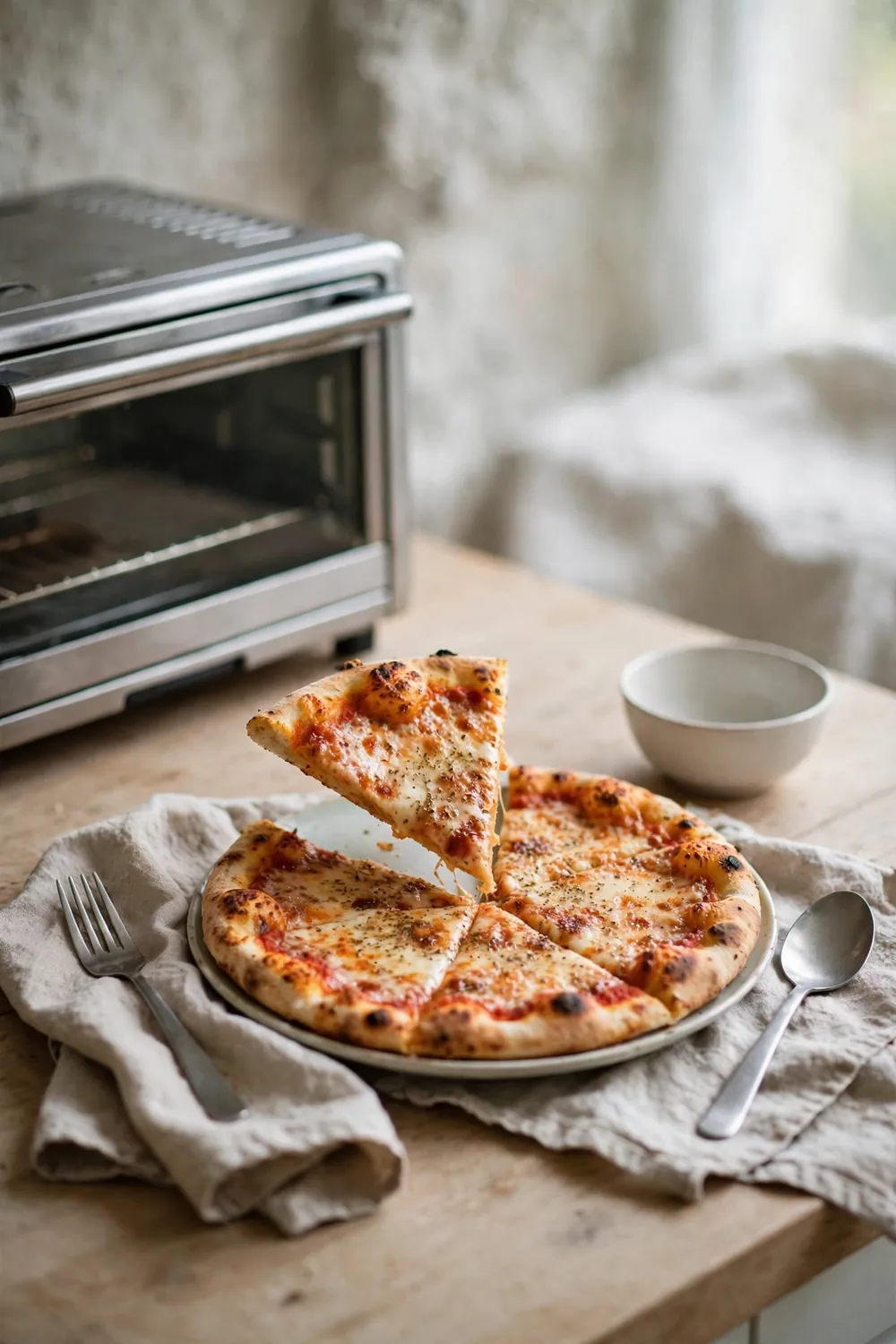
A single test pie shows what your oven, dough, and toppings do together before you commit to a full batch. Bake one pizza with your usual method and check the base as soon as it leaves the oven. The test takes little extra effort and removes the guesswork.
Lift the test pie and look at the bottom for color and firmness. Add heat if the base feels soft, cut sauce if it feels wet, or bake longer if the center stays pale. Bake the rest only when the test turns out crisp, and your batch will thank you.
Common Mistakes to Avoid
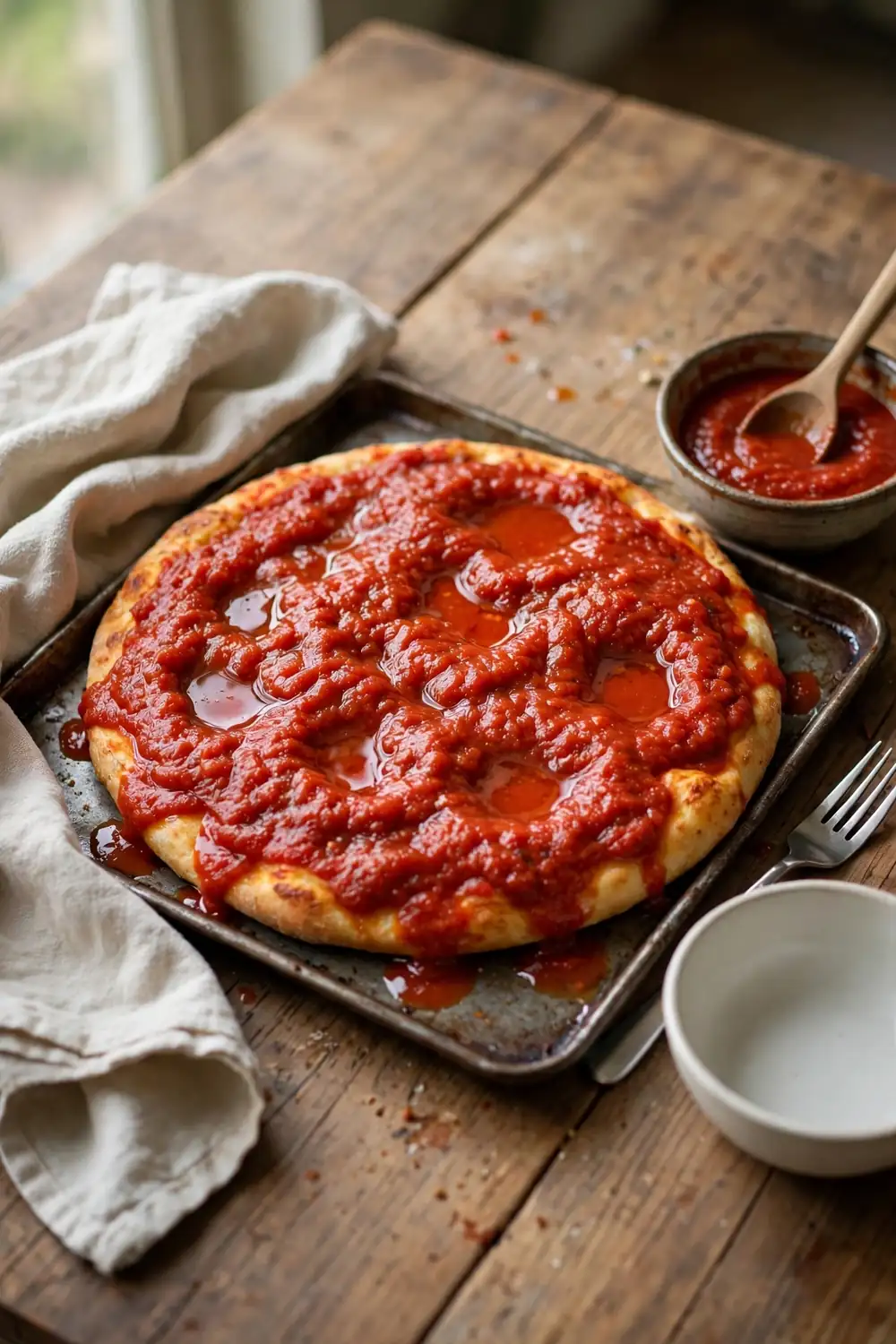
Most soft centers come from a few repeatable habits, not bad dough. Fix one habit at a time, starting with heat and sauce, and the results will show fast. The list below covers the mistakes I see most often in home kitchens.
- Do not flood the dough with sauce, since the extra water soaks straight into the base.
- Do not skip the preheat, since a cool oven steams the pie instead of crisping it.
- Do not pile on wet toppings without draining them first.
- Do not slice the pie the second it leaves the oven, since the base firms as it rests a minute.
What Crisp Crust Looks Like

Quick Tip: Judge the base, not the cheese, when you decide if a pizza is done. A crisp pie shows a golden, dry bottom and a rim that feels firm. Lift the edge and check before you slice.
A good pie holds its shape when you lift a slice, with no droop at the middle. The base sounds faintly crisp when tapped, and the crumb inside feels light and dry. That finish is the goal every fix in this guide works toward, and you will know it at once.
Conclusion
Soggy pizza crust is not a sign of bad dough. It comes from trapped steam, and now you know each fix. Match the fix to your bake, and the next pie can surprise you.
Pick one change first, such as a hotter oven or a thinner sauce layer, and test it on your next pizza. Save this guide on Pinterest so the fixes are there when you need them.
Try the steps on your next pie and enjoy a firm, golden base. If your fries also come out limp, read our guide on soggy air fryer fries for crisp, golden fries every time.



One Comment