23 Lauded Chicken Korma Ideas Everyone Will Ask About
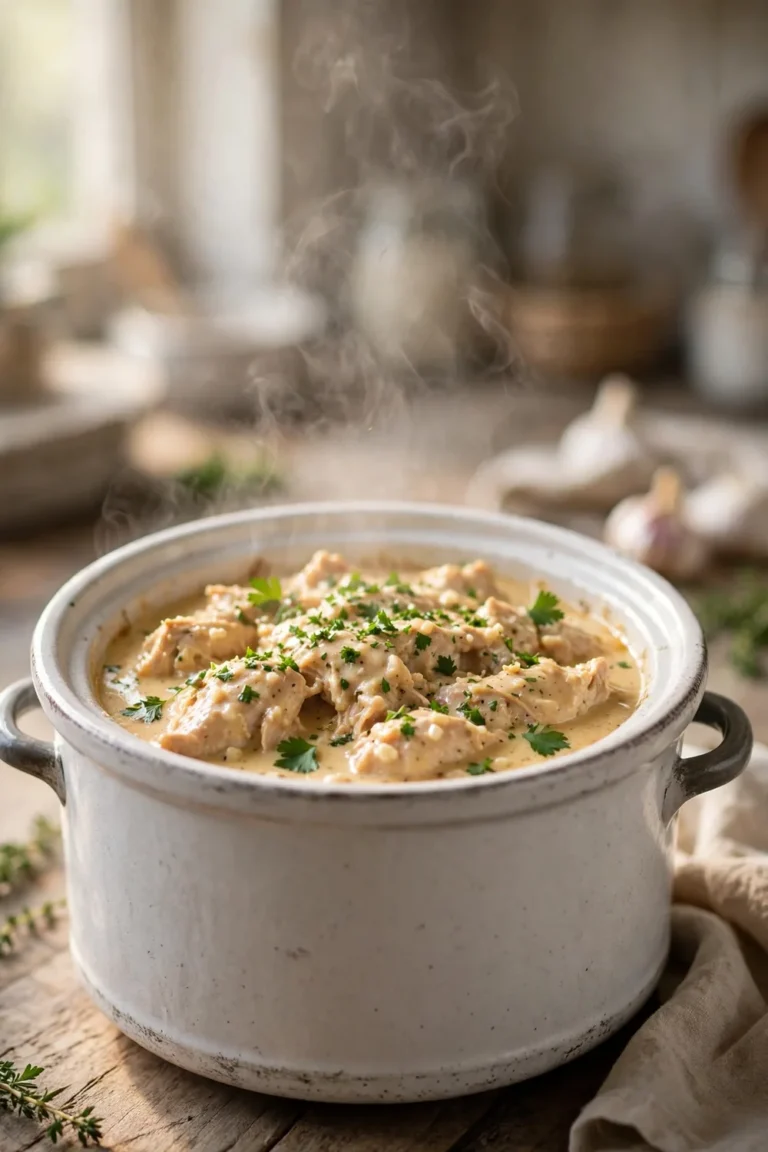
There is a reason chicken korma shows up at weddings, family feasts, and quiet Sunday tables alike. The sauce is gentle but layered, built on browned onions, warm spices, and something creamy that rounds every sharp edge into silk.
This collection gathers twenty-three versions, from the classic creamy pot to almond, coconut, cashew, and saffron variations. Some stay mild for the kids, others bring a slow chili warmth that builds with every bite.
Every version follows the same promise: tender chicken, a sauce worth spooning over rice, and flavors that taste like they took all afternoon, even on the nights they really take forty minutes. And for tomato cream nights, my chicken tikka masala takes over.
Classic Creamy Style
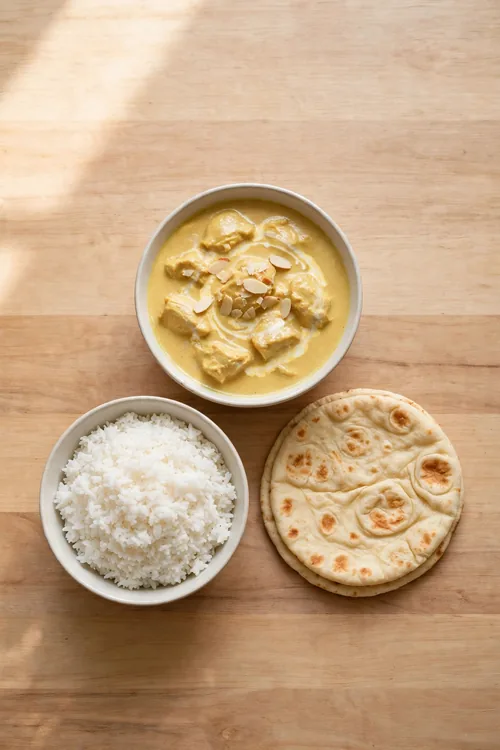
The classic version is where every korma journey should begin, because it teaches the balance the whole dish depends on. Onions cook slowly until sweet and golden, spices bloom in the fat, and the chicken simmers gently until the sauce turns glossy and pale gold.
A swirl of cream at the end is not decoration, it is the signature. It softens the spice edges, gives the sauce its famous silk texture, and makes the bowl taste like a celebration even on an ordinary Wednesday night at home with rice and warm naan.
Almond Rich Pot
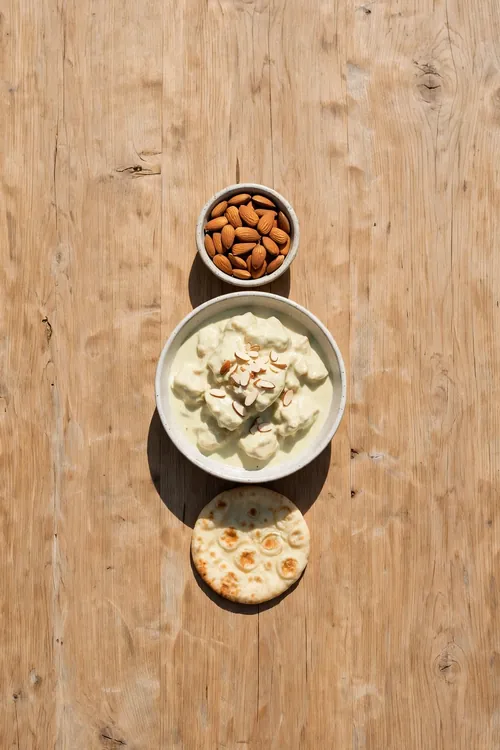
- Grind blanched almonds with a splash of warm water until completely smooth, since gritty paste means a grainy sauce later.
- Fry the paste in ghee for two minutes so the nutty flavor deepens before any liquid joins the pot.
- Add the chicken after the base turns glossy, and let it poach gently rather than boil hard.
- Finish with slivered almonds toasted in butter, scattered over the top for crunch against the silk.
Almonds give this version its royal reputation, the same richness that made it a court favorite centuries ago. The sauce stays pale and elegant, mildly spiced, and deeply nutty. I serve it when guests say they love curry but fear the heat at the table.
Coconut Milk Twist
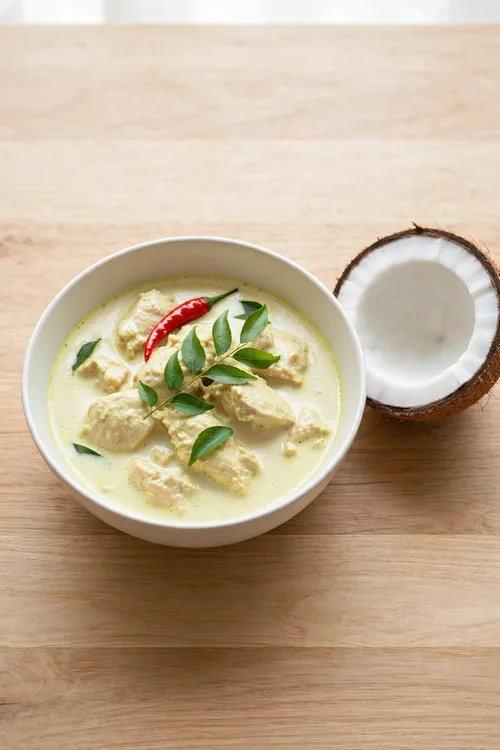
Quick Tip: Shake the coconut milk can well before opening, then add it in two pours. The first pour cooks into the base during the simmer. The second, added near the end, keeps the flavor fresh and the sauce bright instead of dull and oily.
Coconut milk changes the personality of the pot completely, trading dairy richness for something lighter and faintly sweet. Curry leaves and a whole red chili perfume the sauce without overwhelming it. This is the version I make when summer heat kills everyone’s appetite for heavy food.
Spicy Red Heat
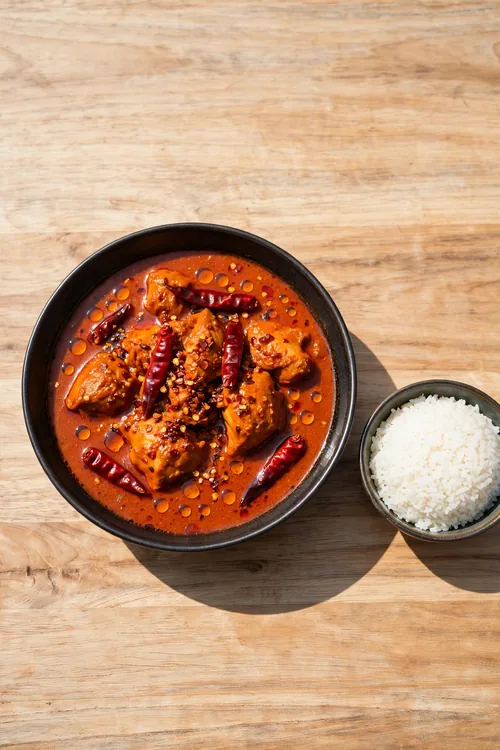
BEFORE: Too many spicy versions are just the mild classic with chili powder dumped in at the end. The heat sits raw on the surface, the sauce tastes dusty, and one spoonful burns while the next tastes bland, because the spice never married the base.
AFTER: Bloom the chili flakes and Kashmiri chili in hot oil with the onions, and the whole pot changes. The color deepens to brick red, the heat spreads evenly through every spoonful, and the warmth builds slowly instead of shouting over the cream and spice.
Heat lovers finally get a version with real depth instead of raw burn. Keep a bowl of plain yogurt or raita nearby, not as an apology, but as the cool contrast that makes the next spicy bite taste even better than the first one did.
Slow Cooker Comfort

- Brown the onions and spices on the stove first, ten minutes that the slow cooker cannot do for you.
- Tip everything into the cooker with the chicken, yogurt, and a splash of water, then stir once to coat.
- Cook on low for six hours, until the chicken surrenders at the touch of a spoon.
- Stir in the cream during the last thirty minutes so it stays silky instead of splitting.
Slow cooker days are the ones where dinner cooks itself while life happens elsewhere. The long gentle heat melts the onions fully into the sauce, so it tastes even more blended and mellow than the stovetop pot. Leftovers reheat beautifully for tomorrow’s lunch at work.
Yogurt Tang Base
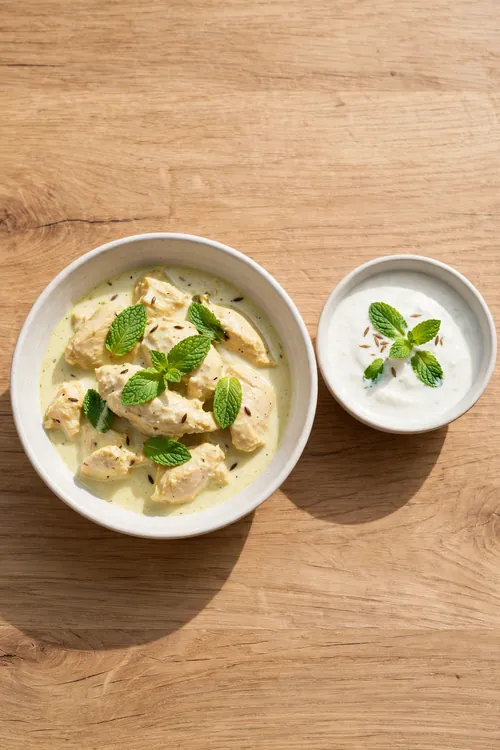
| Point | Yogurt Base | Cream Base |
|---|---|---|
| Flavor | Bright and tangy with a gentle sour edge | Rich and mellow with soft sweetness |
| Texture | Lighter sauce that coats without heaviness | Thick silk that clings to every bite |
| Best moment | Weeknight dinners and summer tables | Weekend feasts and special guests |
Yogurt is the original base, older than the cream-heavy restaurant style, and it gives the sauce a lift that rich versions cannot match. Whisk it smooth and add it off the boil, and it stays silky. The tang makes plain rice taste alive and bright.
Cashew Silk Sauce
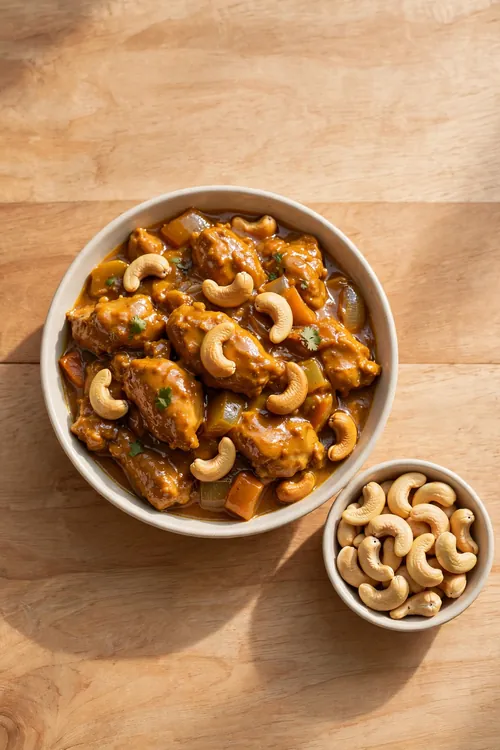
DO: Soak the cashews in hot water for thirty minutes so they blend into a sauce with no grit at all. DO: Blend them with the cooking liquid from the pot for the deepest flavor. DO: Stir the cashew cream in near the end and warm it gently.
DON’T: Boil the sauce hard after the cashew cream goes in, or it can turn heavy and dull. DON’T: Skip the soaking to save time, because raw blended cashews stay grainy no matter how long they spin. DON’T: Salt everything at the start before tasting.
Cashew cream makes the silkiest sauce of all, thicker than dairy and naturally a little sweet. The first time I served it, nobody believed there was no cream in the pot. It is my answer for guests who avoid dairy but love richness on their plates.
Tomato Light Version
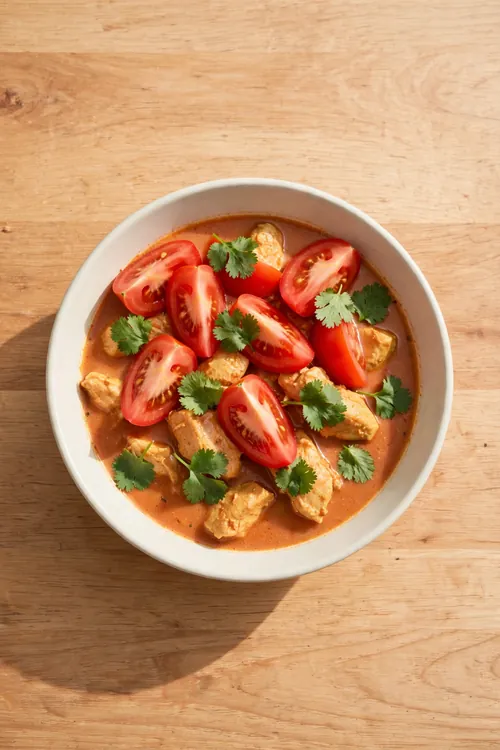
Cost: Low, tomatoes do the heavy lifting
Time Needed: 35 minutes
Difficulty: Easy
Best For: Light weeknight dinners
Tomatoes pull this version toward freshness, thinning the gravy and adding a gentle acidity that cuts the richness. It is the lightest pot in this whole collection, the one that pairs with a simple cucumber salad and still feels like a full dinner for everyone.
Restaurant Shahi Style
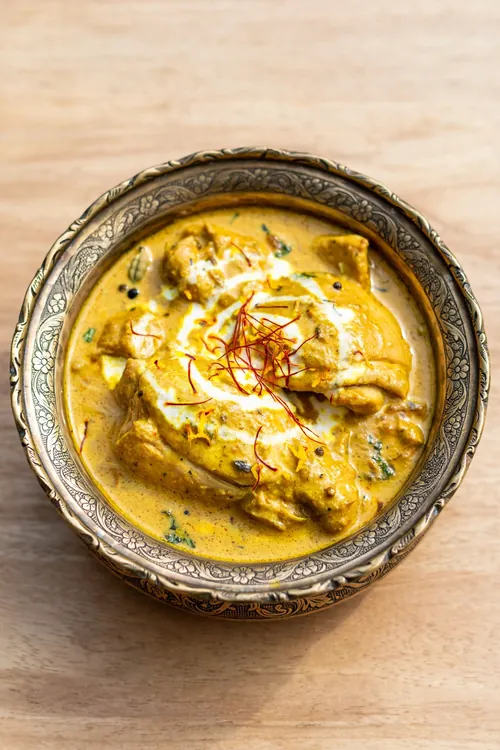
Shahi means royal, and this version cooks like it knows the title. The gravy is strained for absolute smoothness, the spices are layered in stages, and a pinch of sugar balances the onion sweetness the way old court kitchens taught their cooks for generations. Serve it in your best bowl.
The chicken rests in the sauce for ten minutes off the heat before serving, drinking in the perfume of cardamom and saffron. That small pause is the difference between a good pot and the one guests describe to friends the next day at work too.
Bone-In Traditional

- Choose drumsticks and thighs on the bone, the cuts that stay juicy through a long gentle simmer.
- Brown the pieces well before the sauce starts, since the bone protects the meat while the skin crisps.
- Give the pot twenty extra minutes compared with boneless, and let the meat nearly slip from the bone.
- Serve straight from the pot with plenty of napkins, because fingers beat forks for this version.
Bone-in chicken rewards patience with flavor no shortcut can copy, because the bones season the sauce from inside as it cooks. My grandfather refused every other version, and after years of testing, I understand him completely. Some traditions survive because they work every single time.
Garlic Ginger Boost

Quick Tip: Add half the ginger at the start so it melts into the base. Save the rest, cut into fine matchsticks, for the top. The cooked ginger brings deep warmth while the raw matchsticks stay bright and sharp, giving the bowl two kinds of heat.
Ginger and garlic do more than add punch here, they wake up the cream and keep the rich sauce from feeling heavy. A heavy hand works, as long as the garlic cooks golden instead of raw. The whole kitchen smells incredible within minutes of starting.
Cardamom Perfumed Pot
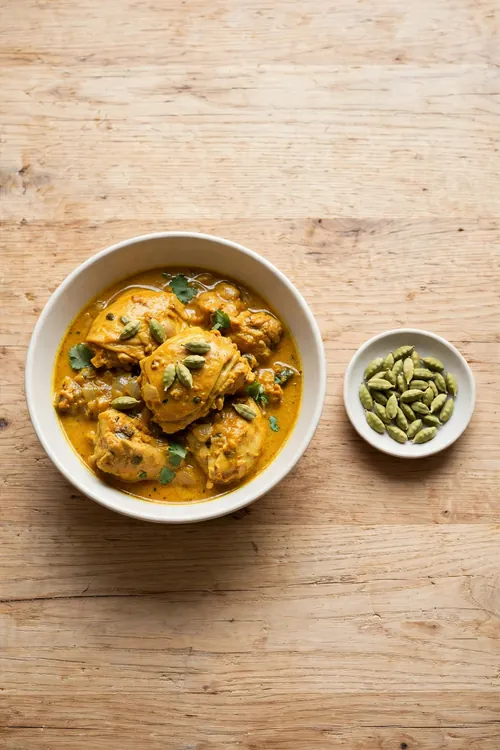
BEFORE: Ground cardamom from a jar that has sat open for a year gives this dish almost nothing. The sauce tastes fine but flat, the aroma fades before the bowl reaches the table, and the famous perfume that defines the dish never arrives at all.
AFTER: Crack fresh green pods just before they hit the hot oil, and the pot blooms with a scent somewhere between flowers and citrus. The sauce tastes brighter, the chicken carries the perfume into every bite, and the kitchen smells like a celebration all evening.
Cardamom is the quiet luxury of this dish, never loud, always present. A few pods cost little and change everything, which is why I keep a fresh jar near the stove. It is the version I choose for small, special dinners at home with friends.
Brown Onion Base
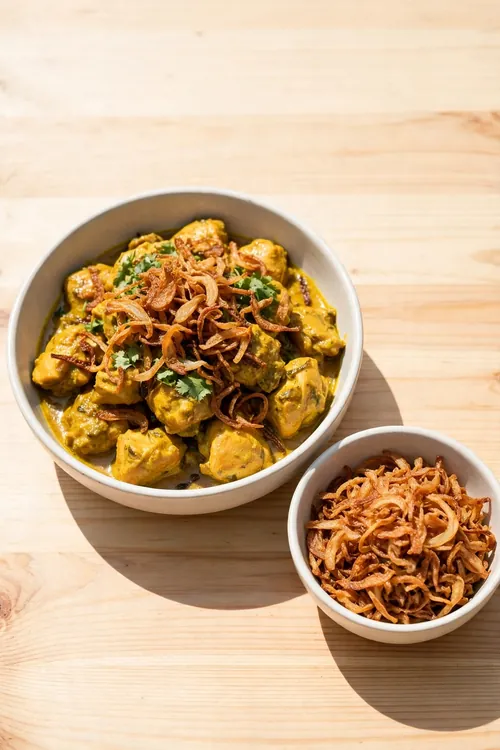
- Slice four onions thin and fry them low and slow in ghee, stirring often, for a full twenty-five minutes.
- Pull out a third of the crispest onions and save them for the top of the finished dish.
- Blend the rest with a little water into a deep brown paste, the true foundation of the sauce.
- Build the sauce on that paste with spices and yogurt, then simmer the chicken through it gently.
Everything in this dish stands on the onions, so rushing them is the one real mistake. Pale, undercooked onions give a raw sweetness that never settles, while deep brown ones give the gravy its restaurant depth. The crispy tangle on top is pure joy to eat.
Boneless Quick Version
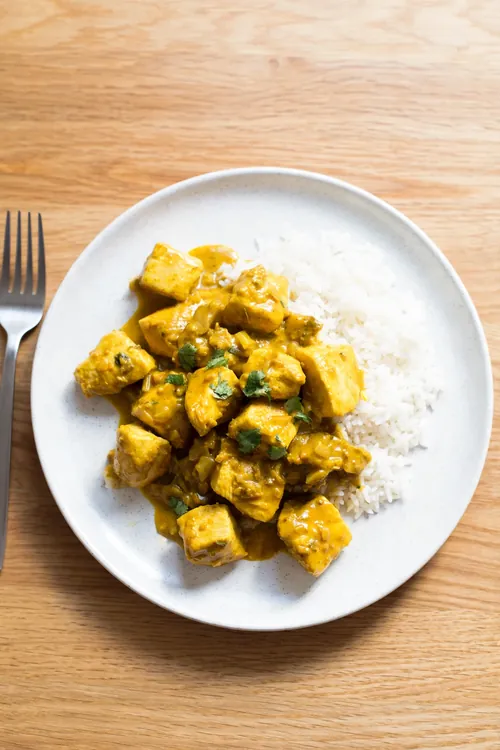
Boneless Version: Cubes of thigh or breast simmer in fifteen minutes flat, drink up the sauce quickly, and serve neatly over rice with no bones to navigate. It is the version for packed lunches, picky kids, and nights when the clock wins every argument easily.
Bone-In Version: Pieces on the bone need forty minutes and give back deeper flavor, a sauce seasoned from within, and that satisfying pull of meat that nearly falls apart. It asks for patience and a slower table, and it pays both back generously every time.
Neither version wins outright in my kitchen, because they answer different evenings. Boneless is the sprinter I lean on midweek, bone-in is the slow Sunday pot. Knowing both means the dish fits your calendar instead of fighting it, and that really matters most of all.
Dum Style Layers
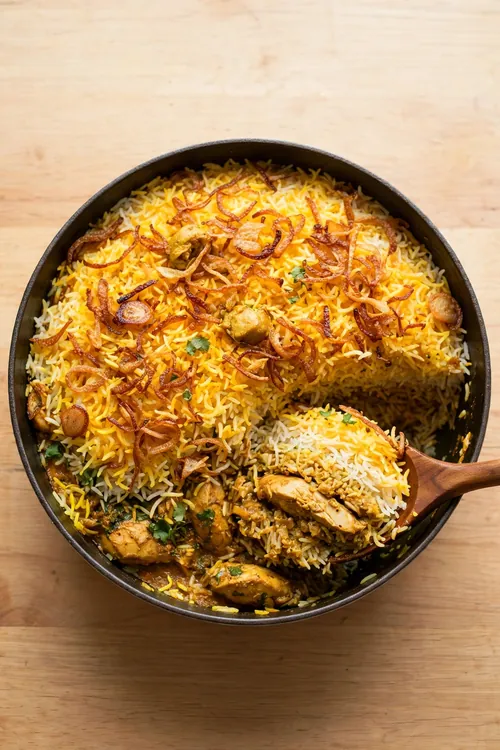
- DO: Layer the chicken and sauce with par-cooked rice, so the grains finish steaming in the curry perfume.
- DO: Seal the pot lid with a ring of dough or a tight foil layer to trap every bit of steam.
- DO: Rest the sealed pot off the heat for fifteen minutes before anyone lifts the lid.
- DO: Open it at the table, where the first rush of steam becomes part of the show.
- DON’T: Stir the layers together in the pot, or the clean strata turn into an ordinary mixed rice.
- DON’T: Use fully cooked rice, which goes soft and heavy during the long steaming.
- DON’T: Peek under the lid halfway through, since the escaped steam never comes back.
- DON’T: Rush the dum with high heat, which scorches the bottom layer before the top wakes up.
Dum cooking is theater and technique in one pot, the slow sealed steam marrying rice and sauce into a single perfume. It takes planning, not skill, and the reveal at the table makes people lean in before the first spoon even moves every single time.
White Sauce Elegance
Cost: Moderate, white pepper and cashews
Time Needed: 45 minutes
Difficulty: Medium
Best For: Elegant dinners and mild palates
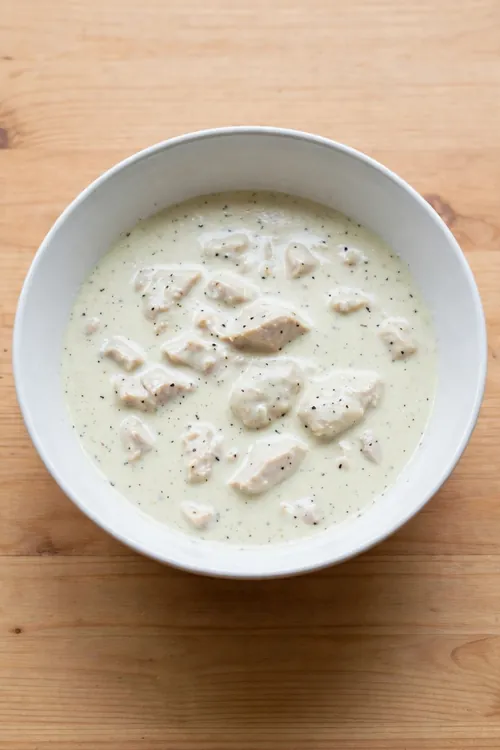
White korma breaks the golden rule of curries by refusing color, and the result is quietly stunning. White pepper replaces chili heat with a slow glow, and the pale sauce tastes richer than it looks. Serve it in white bowls for full effect at dinner.
Smoky Charcoal Finish
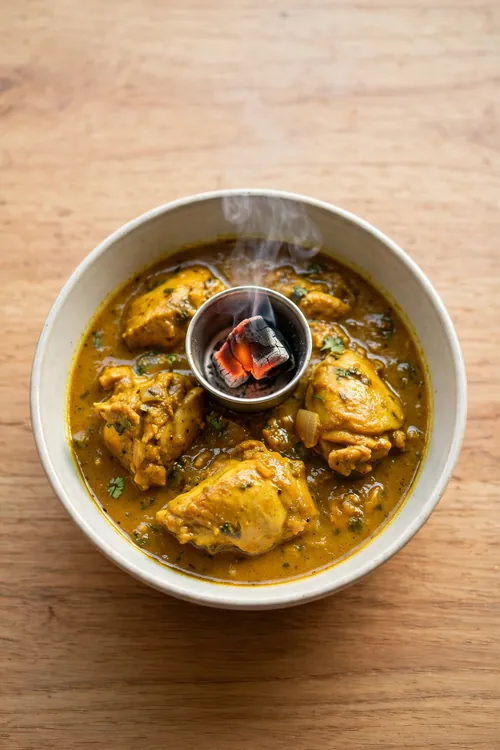
A piece of glowing charcoal sounds like a stunt until you taste what it does to this gentle dish. The chicken finishes cooking, then rests under a lid with the smoke for five minutes, and the mild sauce picks up a whisper of the tandoor.
The method is simple: heat the charcoal until red, set it in a tiny cup on the sauce, drizzle ghee over it, and clamp the lid on fast. Five quiet minutes later, the whole pot smells like it came from a clay oven at home.
Green Chili Kick
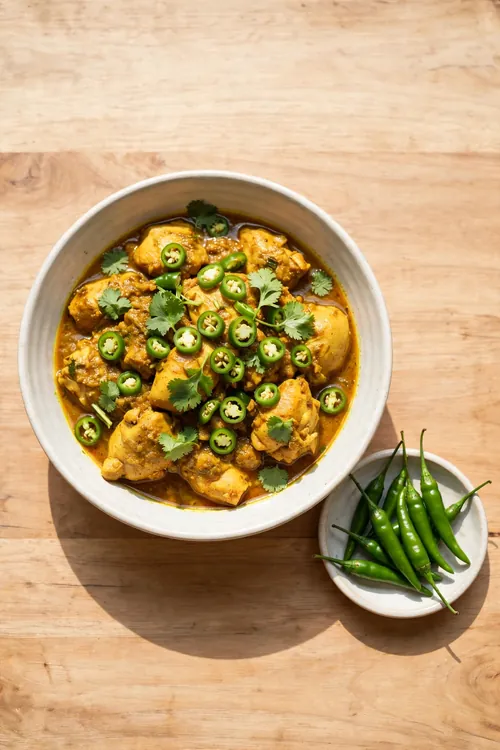
- Blend two green chilies with the coriander stems for heat that tastes fresh instead of harsh.
- Slice two more chilies over the finished bowl, so the first bite announces what is coming.
- Keep the base sauce mild and creamy, because the green heat needs a soft landing.
- Warn the table honestly, then watch the chili lovers quietly move the dish closer to themselves.
Green chilies bring a different fire than dried red ones, brighter and more herbal, almost grassy against the cream. This is the version for people who find the classic too polite. A squeeze of lemon at the end sharpens everything in the bowl beautifully too.
Saffron Royal Touch
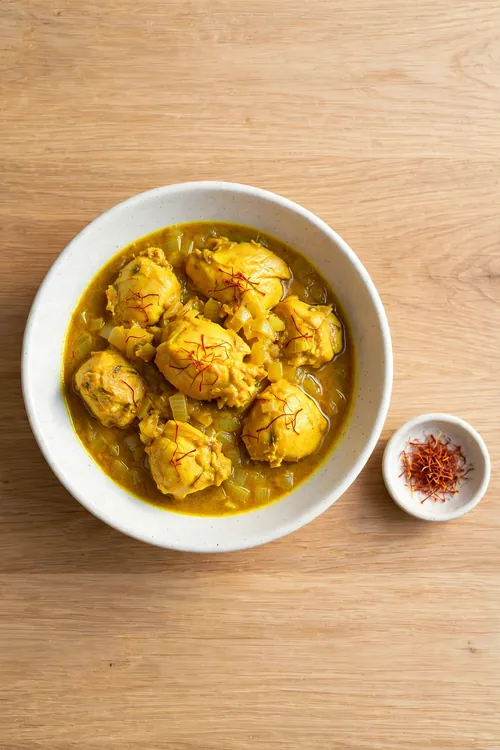
Quick Tip: Bloom the saffron threads in three spoonfuls of warm milk for twenty minutes before they go anywhere near the pot. The liquid turns deep orange and carries the perfume evenly through the whole sauce. Dry threads tossed in late leave half their magic behind.
Saffron is the most expensive spice in the pot and the one nobody forgets. A pinch turns the sauce sunset gold and adds a honeyed, floral note that makes the whole dish taste like a wedding feast. Save it for people you love most dearly.
Mughlai Rich Gravy
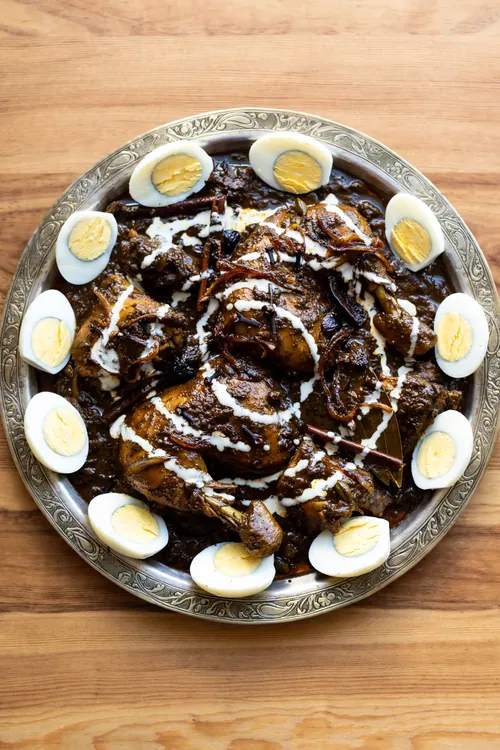
BEFORE: A thin, rushed gravy does this royal dish no real justice at all. The sauce splits, the spices taste separate instead of married, and the plate looks like an ordinary weeknight curry wearing a costume it cannot quite carry off with pride every time.
AFTER: Give the gravy time and it turns into the deep, glossy, almost dark sauce the Mughal courts prized. Fried onions, nut paste, and cream melt into one another, the eggs halve neatly alongside, and every spoonful tastes like a small ceremony at the table.
This is the richest plate in the collection, the one I save for festivals and the coldest winter nights. A little goes a long way, especially with plain rice and a sharp onion salad cutting through the richness beside it, exactly as it should be.
One Pot Weeknight

- Use one heavy pot from start to finish, since every layer of flavor should stay in the same place.
- Brown onions, bloom spices, and sear the chicken in that order, scraping the bottom between each stage.
- Add yogurt and a splash of water, cover, and let everything simmer together for twenty-five minutes.
- Rest the pot ten minutes off the heat while you warm the naan and set the table.
One pot means one washing-up session, which is exactly the energy a Tuesday deserves. The flavors still layer properly because nothing leaves the pot, and the sauce picks up every browned bit along the way. Dinner feels generous without feeling like hard work at all.
Cashew Versus Almond
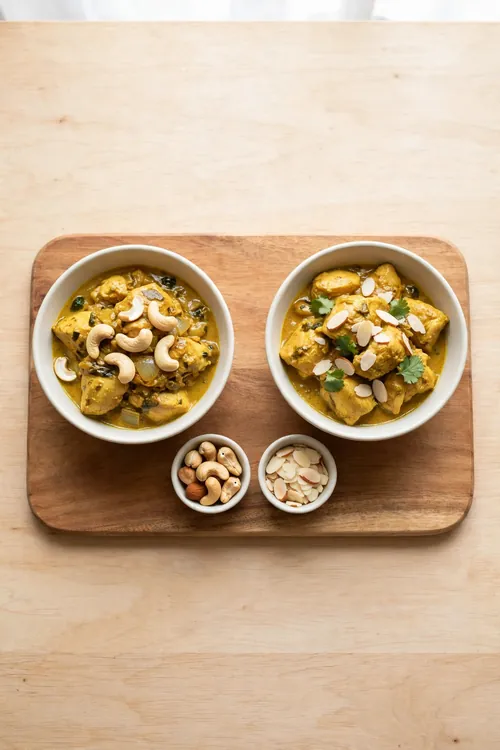
- Base richness: Cashew sauce tastes rounder and sweeter, while almond sauce stays lighter with a cleaner nut finish.
- Texture: Cashew blends completely silk, while almond keeps a faint, pleasant grain that feels more rustic.
- Cost: Almonds usually win on price, while cashews climb higher but deliver the most luxurious spoonful.
- Best moment: Cashew belongs at celebrations, while almond quietly carries the everyday family pot.
Both nuts earn their place, and the honest answer is that the pot decides. Rich occasions pull me toward cashew, ordinary weeks toward almond, and nobody at the table has ever complained about either. Keep both stocked in the pantry if you can. You will use them.
Party Platter Serving
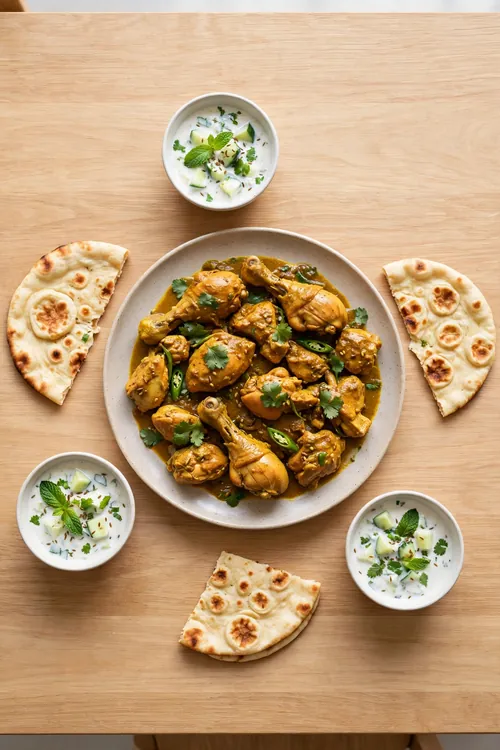
| DO | DON’T |
|---|---|
| Serve the curry on one wide warm platter so the sauce shines | Crowd the platter with every side dish you own |
| Set small bowls of raita and onions around the edge | Hide the garnish under a lid until the last second |
| Warm extra sauce in a small pot for second helpings | Let the platter sit cold while guests arrive slowly |
| Scatter fried onions and herbs right before carrying it out | Pile the naan on top where it soaks and goes soggy |
A platter turns dinner into an event before anyone tastes a thing, and this gentle curry was born for the center of a table. Keep the sauce warm, the garnishes bright, and the extra naan coming. Parties remember plates like this for years and years.
Conclusion
Twenty-three versions later, the heart of the dish never changes: patient onions, warm spice, tender chicken, and a sauce built to be spooned over something plain. That is why chicken korma survives every trend and keeps its seat at the celebration table every single season.
Pick the version that fits your week, save this collection for the nights you need it, and share it with the cook who still thinks gentle food cannot be exciting. One pot will change their mind, the way it first changed mine years ago at home. When I crave slow comfort, my pork ragu never lets me down.