21 Supportive Chicken Gumbo Ideas to Pin for Later
A great chicken gumbo starts long before the first spoonful, with a roux stirred patiently until it turns the color of dark chocolate. That deep, nutty base is what separates an ordinary stew from the Louisiana classic people drive across town for.
This collection gathers twenty-one versions worth pinning, from the classic dark roux pot to sausage loaded bowls, okra rich stews, slow cooker comfort, and lighter weeknight pots. Each one keeps the soul of the dish and changes one thing that matters.
Save the ones that fit your Sundays, your spice tolerance, and your people. Every pot below comes with the small hard-won details that make the difference between good enough and gone by morning. And on wrap night, my chicken gyros steal the show.
Classic Dark Roux
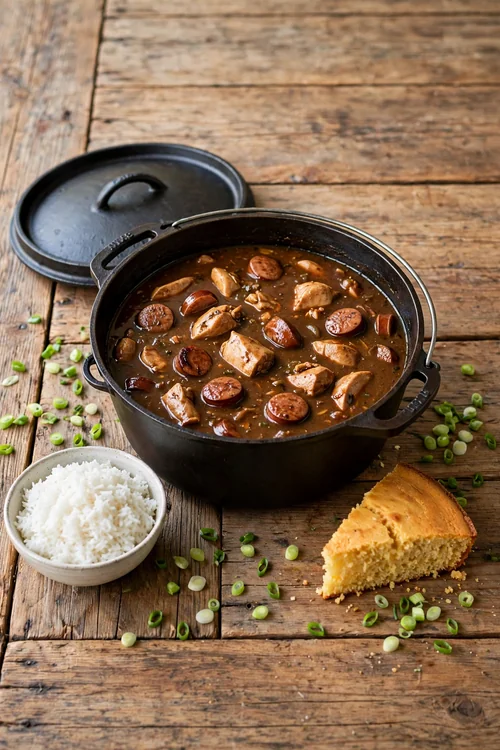
The roux is the whole game here, equal parts flour and oil stirred over medium heat until it passes tan, then copper, then deep mahogany. It smells like toasted nuts and takes a good forty minutes, and there is no shortcut that honestly replaces it in flavor or in color.
Once the trinity hits that dark base, the pot already tastes like gumbo before the chicken even goes in. The finished stew is thick, glossy, and quietly smoky, the version every other pot in this list is measured against on the very first spoonful at the table.
Sausage Loaded Pot

- Choose real andouille if you can find it, the smoked Cajun sausage that brings both heat and a deep campfire flavor.
- Brown the sausage coins first and cook the roux in the drippings, so the smoky fat seasons the whole pot from underneath.
- Slice the links into thick coins rather than crumbles, and they stay meaty and satisfying in every spoonful.
- Add half the sausage early for depth and the rest near the end, so some pieces stay firm with browned edges.
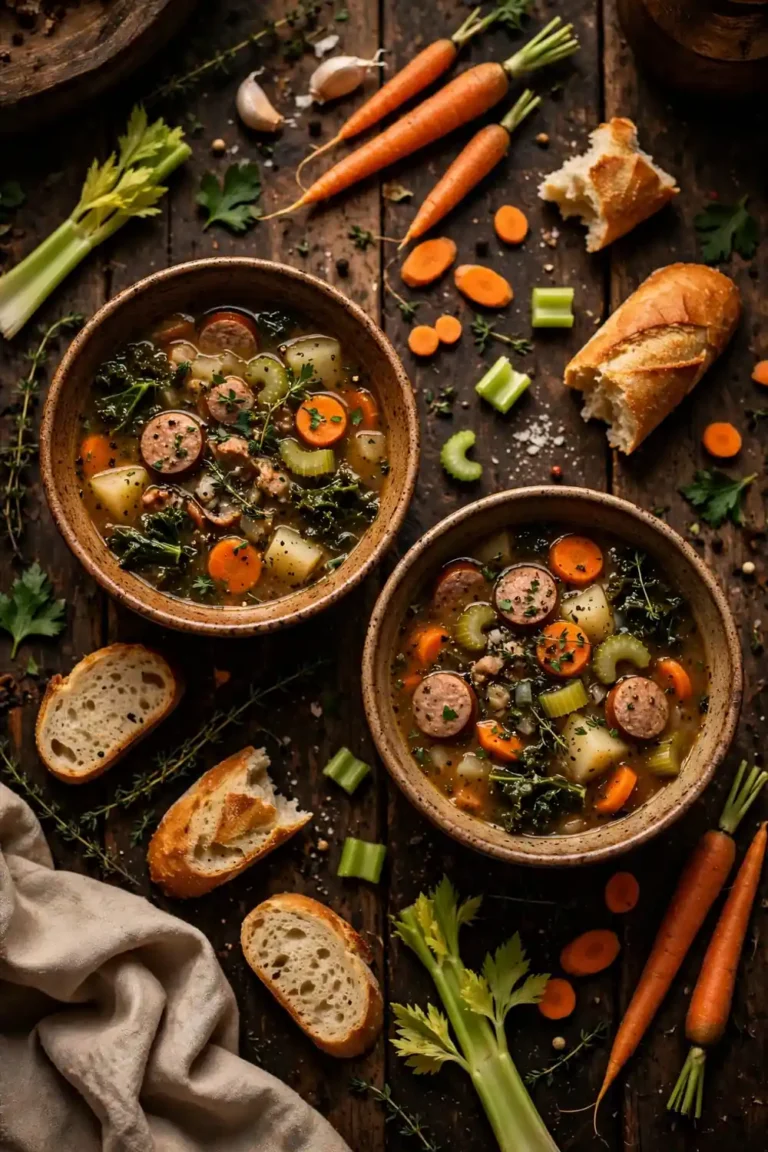
This is the pot for people who think gumbo should be a meal all by itself, no sides required. The sausage turns every bowl into something hearty and peppery, and I have yet to see a single coin left behind in any bowl at my table.
Okra Rich Bowl
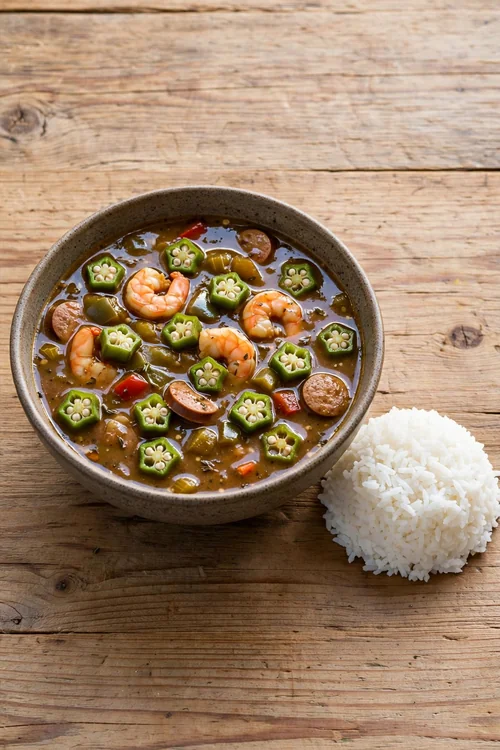
Quick Tip: Sear the okra slices in a hot dry skillet for five minutes before they meet the pot. The sticky strands calm right down, and the edges pick up a little char. Then add them in the last half hour so they thicken the stew without falling apart into it.
Okra does two jobs in this bowl, body and bite, thickening the broth while keeping its own grassy snap. In my experience it is the version traditionalists defend loudest, the one that tastes exactly like grandmothers are still supervising every spoonful from somewhere near the old stove at home.
Spicy Cajun Heat
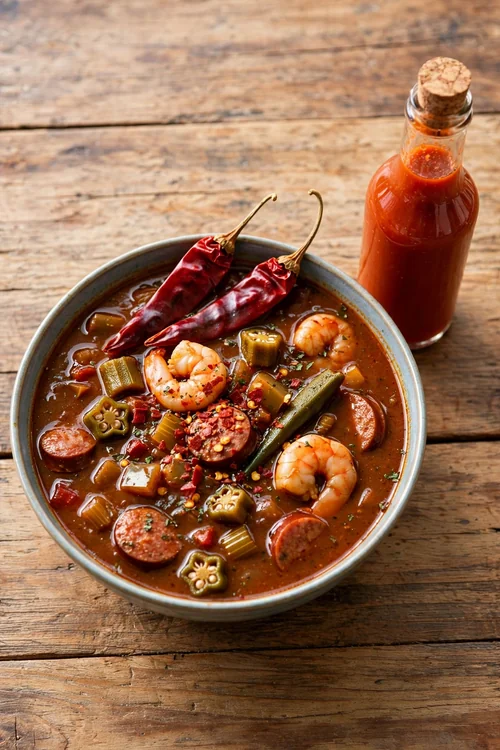
BEFORE: Too many spicy pots cheat by shaking cayenne over the finished bowls at serving time. The heat floats raw and sharp on the surface, the first spoonful scorches, the second tastes plain, and the deep flavor of the stew never gets a chance to meet the fire properly at all.
AFTER: Bloom the cayenne and chili flakes in the hot roux for the last two minutes of stirring, and everything changes completely. The heat soaks into the fat, spreads evenly through every bite, deepens the color, and builds slowly at the back of the throat instead of attacking the tongue first.
This is the bowl that makes chili heads sit up straight and ask what you did differently this time. Keep cold drinks and plain rice close, not to rescue anyone, but because the contrast makes the next fiery spoonful taste even better than the one before it did.
Slow Cooker Sunday
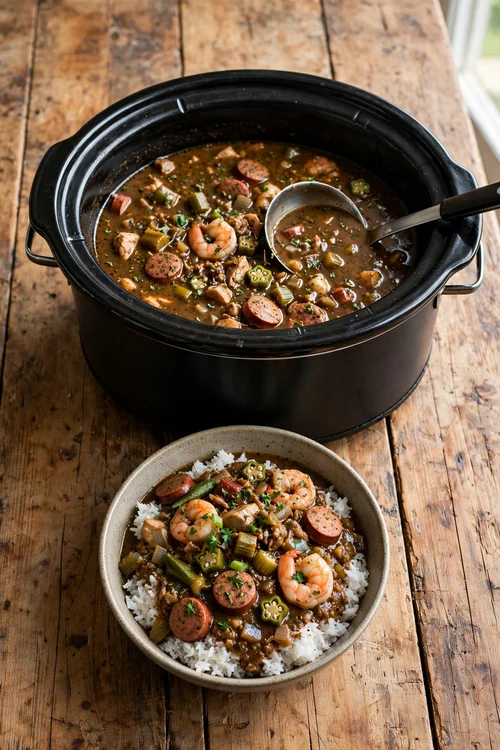
- Make the roux on the stove first and stir it dark, because the slow cooker will never brown flour for you.
- Add the trinity, chicken thighs, sausage, broth, and spices to the cooker and stir everything once to coat.
- Cook on low for six hours, until the chicken pulls apart at the touch of a spoon.
- Stir in the okra for the last thirty minutes, then rest the pot ten minutes before serving over rice.
Slow cooker days are for people who want Sunday flavor on a schedule that ignores them completely. The long gentle simmer marries the sausage and roux into something deep and unified, and the house smells like a Louisiana kitchen by noon without anyone standing over a stove at all.
Roux Color Choices
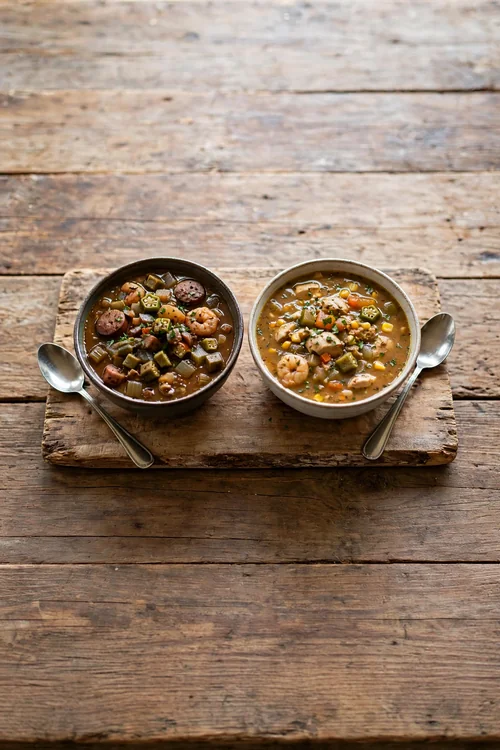
| Point | Dark Roux | Light Roux |
|---|---|---|
| Color | Deep mahogany, nearly chocolate brown | Golden caramel, like peanut butter |
| Flavor | Nutty, smoky, and deeply savory | Mild, buttery, and gently toasted |
| Stirring time | 35 to 45 minutes of steady stirring | 15 to 20 minutes, much more forgiving |
| Best for | Classic pots, sausage, and seafood versions | Lighter pots and delicate chicken versions |
Neither roux is wrong, they simply answer different cravings at different tables. Dark is the traditional Louisiana soul of the dish, light is the friendlier weeknight compromise, and plenty of good cooks keep both in rotation depending on the season and the crowd coming through the door.
First Timer Basics
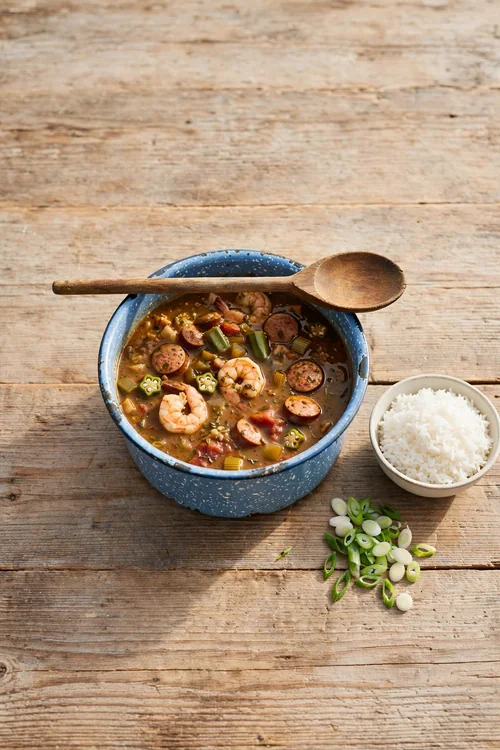
- DO: Stir the roux constantly with a flat wooden spoon, scraping the corners where flour loves to hide and scorch.
- DO: Keep the heat at medium, because a dark roux rewards patience and punishes a rushed burner every time.
- DO: Add warm broth a ladle at a time, stirring hard after each pour so the base stays smooth.
- DO: Let the finished pot rest fifteen minutes off the heat before serving, so the flavors settle together.
- DON’T: Walk away from a darkening roux, since it can go from perfect to burnt in under a minute.
- DON’T: Splash cold broth into hot roux, which shocks the base and can turn it stubbornly lumpy.
- DON’T: Add the filé at a rolling boil, because boiling makes it stringy instead of silky.
- DON’T: Skimp on the trinity, because onion, celery, and pepper are the backbone the whole pot stands on.
First pots teach more than any recipe card, and the mistakes are almost always the same handful of impatient moments. Follow the list above and your very first attempt will taste like you have been making this for years, which is exactly the confidence a new gumbo cook needs most.
Pantry Friendly Pot
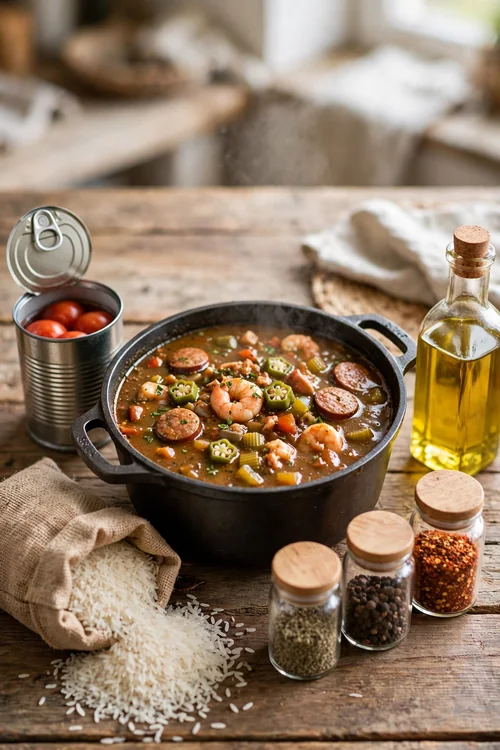
Cost: Low, built on flour, oil, and frozen vegetables
Time Needed: About 2 hours
Difficulty: Medium
Best For: Feeding a crowd from pantry staples
Everything in this pot probably already lives in your kitchen, which is exactly the point on weeks when the grocery money runs thin. Frozen peppers, canned tomatoes, and a bag of rice carry the whole dinner, and nobody at the table will ever guess how little it cost.
Smoky Paprika Depth
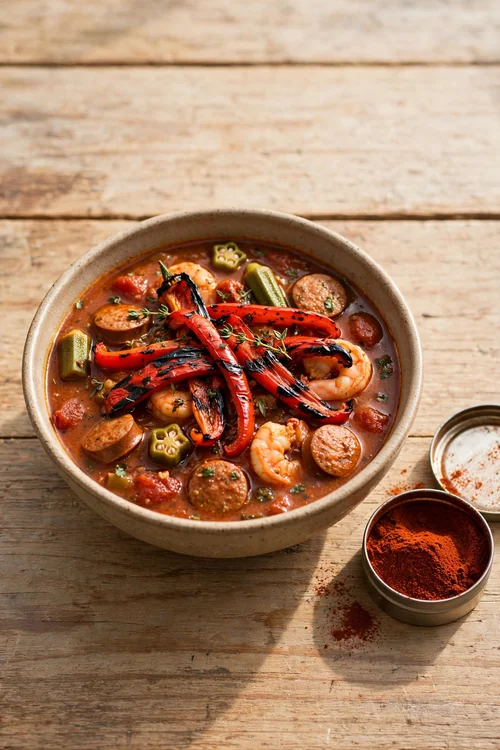
Smoked paprika and a pinch of chipotle give this pot its campfire soul without a single minute over actual wood smoke. The paprika goes in with the trinity so its oils bloom, staining the whole base a deep brick red that promises flavor before anyone even tastes it.
Use smoked chicken if you can get it, or stir a spoon of the paprika paste into rotisserie chicken for a weeknight cheat. The result tastes like the pot sat over embers all afternoon, layered and warm, with a slow smokiness that lingers pleasantly after every single bite.
Seafood Combo Pot

- Build the base exactly like the classic pot, since shrimp and crab deserve the same dark roux respect.
- Add peeled shrimp only in the last eight minutes, so they stay plump and sweet instead of rubbery.
- Fold in lump crab at the very end and barely warm it through, because crab breaks apart if you stir hard.
- Save the shrimp shells and simmer them into the broth first, an easy step that doubles the seafood flavor.
This is the celebration pot, the one for birthdays and the first cold weekend of the year in my house. Chicken keeps it grounded and hearty while the seafood makes it feel like an occasion, and the bowls always come back to the pot for seconds before anyone sits down.
Holy Trinity Base
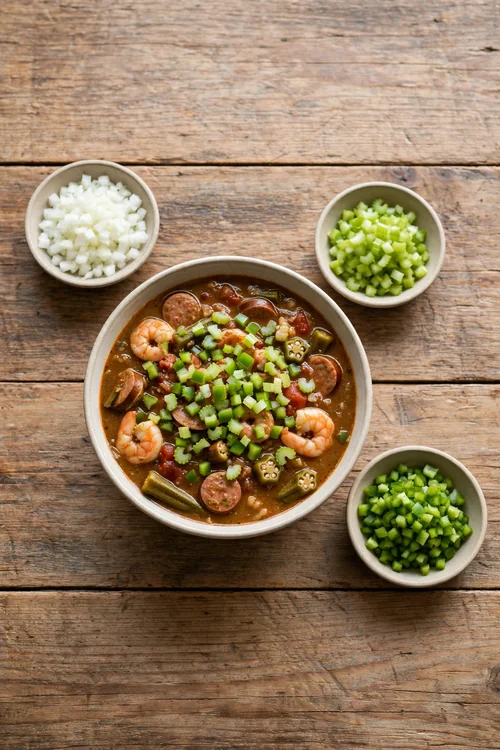
Quick Tip: Dice the onion, celery, and bell pepper to the same small size, roughly a quarter inch, before anything touches the heat. Even pieces melt into the roux at the same pace, so no raw crunchy bits survive into the stew. The base should look like a paste when it is ready.
Louisiana cooks call onion, celery, and bell pepper the holy trinity, and this pot leans on them harder than any other version here. They cook down sweet and savory into the roux, building the foundation that every other flavor in the bowl quietly stands on for support.
Make Ahead Magic
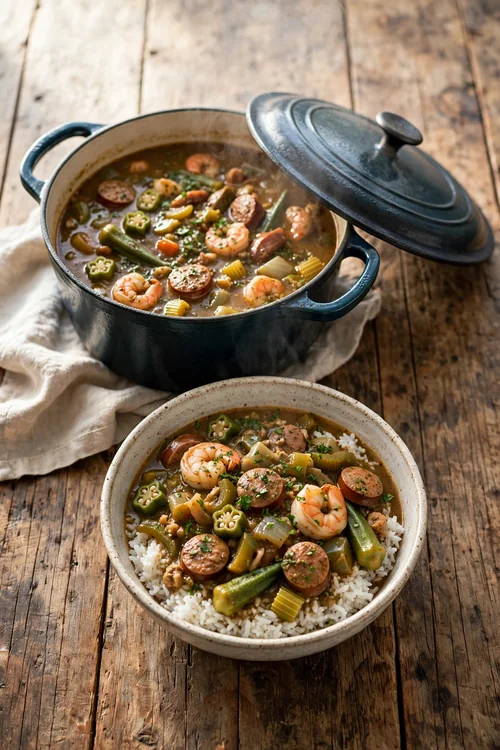
BEFORE: A pot rushed to the table the same hour it cooks tastes fine but strangely separate, the roux in one corner and the spice floating in another. The broth feels thin, the chicken tastes plain inside, and the whole bowl reads like a soup still deciding what it wants to become.
AFTER: One quiet night in the fridge changes everything about this dish in the best possible way. The chicken drinks in the seasoned broth, the spices marry into the fat, and the reheated bowl tastes deeper, rounder, and noticeably more itself, like the pot finally finished its own sentence at last.
I have started cooking this pot on Saturday purely for Sunday’s table, and the difference is not subtle at all. Make-ahead is not a shortcut here, it is the technique, the quiet overnight rest doing work that no extra spice or stirring can honestly do for you.
Rice Bowl Serving
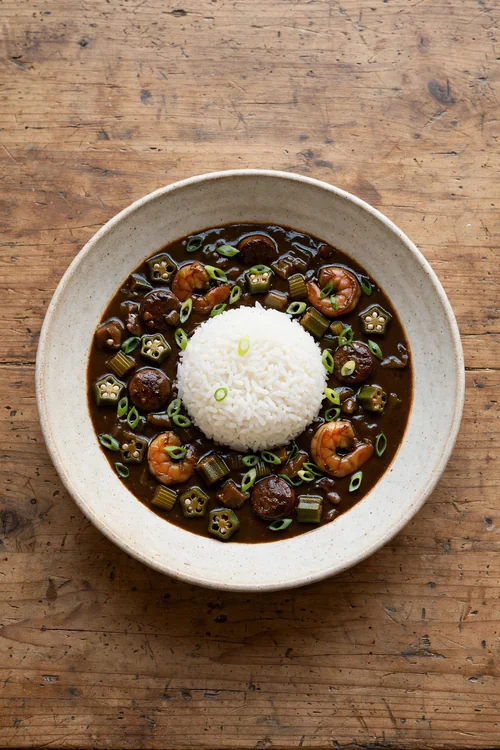
- Cook the rice separately until fluffy, since rice cooked inside the pot drinks the broth and turns gummy.
- Warm your serving bowls with hot tap water so the thick stew stays steaming to the last spoonful.
- Pack a scoop of rice into a small cup, flip it into the center of each bowl as a neat mound.
- Ladle the gumbo around the rice, not over it, so every eater mixes their own perfect ratio.
- Finish with sliced scallions and a shake of hot sauce at the table, never in the pot.
Serving sounds like a small thing until you watch someone mix that first perfect spoonful of rice and dark stew together. The mound keeps the grains distinct, the broth stays rich instead of starchy, and the whole bowl eats like two good things becoming one at exactly the right moment.
Thickener Two Ways

Filé Powder: Ground sassafras leaves stirred in at the table thicken each bowl to a silky, almost velvet body, and they add a gentle earthy flavor nothing else quite copies. Filé goes in off the boil, a spoonful per bowl, or it turns stringy and dulls.
Okra Simmered: Okra cooked inside the pot thickens from within, giving the broth a hearty body you can see on the spoon. It is the older, humbler method, and it suits big rustic pots where the okra itself is half the pleasure of eating at the table.
Plenty of Louisiana cooks swear you must choose one and stay loyal, but my pot has happily used both on different nights for years. Filé for silky bowls, okra for rustic ones, and the argument at the table is honestly half the fun of serving either version.
Party Pot Rules
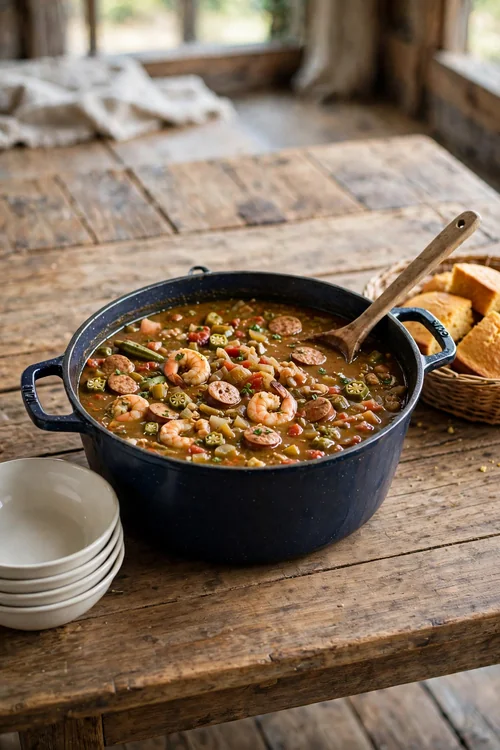
| DO | DON’T |
|---|---|
| Double the roux and broth, not just the chicken | Fill the pot to the brim and hope it behaves |
| Set out rice, scallions, and hot sauce as a topping bar | Season every bowl for your guests in advance |
| Hold the pot at a bare simmer on the back burner | Leave the pot boiling while you greet everyone |
| Make the base a day ahead and add seafood at serving | Cook shrimp all afternoon until it turns to rubber |
A party pot has one job, feeding a room without chaining the cook to the stove all evening long. Follow the table and the gumbo mostly serves itself, leaving you free to actually enjoy the people you invited over for dinner in the first place tonight.
Budget Friendly Batch
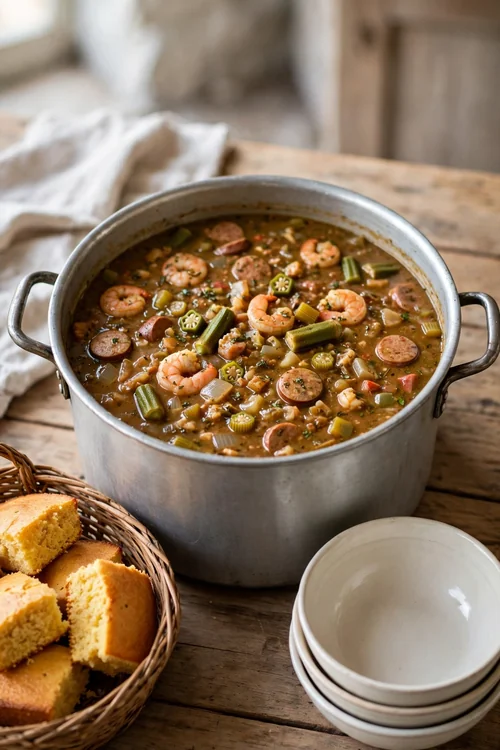
Cost: Very low per bowl
Time Needed: About 2 hours
Difficulty: Easy
Works In: Any large stockpot or Dutch oven
Thighs, sausage ends, frozen peppers, and rice stretch a small grocery budget across a table full of people without apology. This is the batch I make in the last week of the month, and it has never once tasted like a compromise to anyone eating it warm.
Thigh Meat Richness
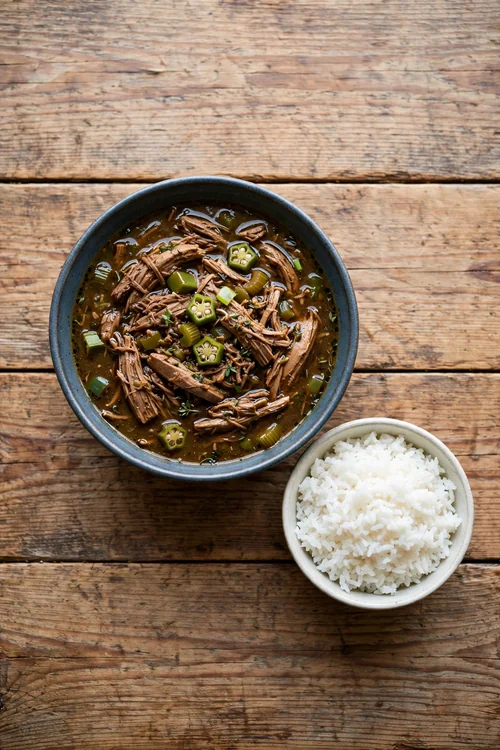
Breast meat dries out in a long simmer, but bone-in thighs were practically invented for this pot and its patience. The bones season the broth from inside, the dark meat stays silky for hours, and the pieces nearly fall apart at the touch of a spoon.
Brown the thighs skin-side down first if the skin is on, then let them braise in the seasoned broth until tender. I pull the meat off the bones before serving, so every bowl gets generous shreds instead of one awkward piece that needs a knife and a strategy.
Cornbread Side Pairing
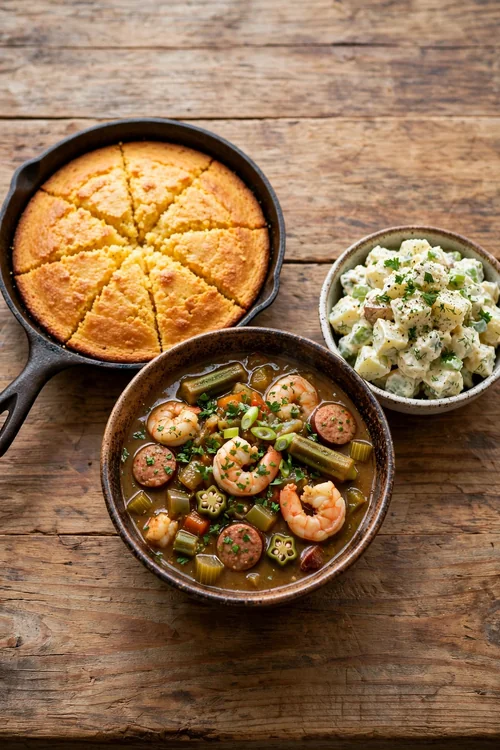
- Bake skillet cornbread with crisp edges, the classic partner for sopping up every last streak of broth.
- Add a cool scoop of potato salad, the tangy chilled contrast Louisiana plates have loved for generations.
- Put out pickled okra or quick pickles, since a sharp bite resets the palate between rich spoonfuls.
- Keep crusty bread on standby for the end of the bowl, when the broth is too good to leave behind.
The stew may be the headline, but the sides decide whether the meal feels complete or merely started at my table. Cornbread for sopping, something cold and tangy for contrast, and bread for the final swipe turn one pot into a full Louisiana spread worth remembering.
Freezer Friendly Batch
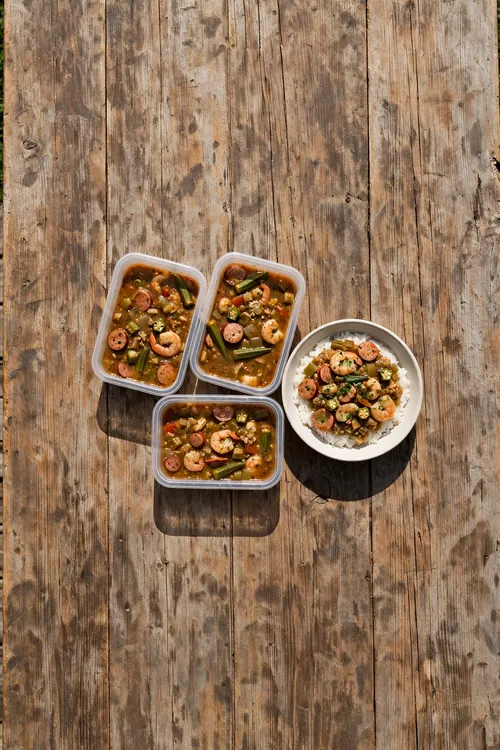
Quick Tip: Cool the finished pot fast in shallow pans before freezing, so it chills evenly and stays safe. Freeze it without rice, because rice turns grainy and swells as it thaws in the broth. Portion it flat in bags, and a weeknight bowl is never far away again.
A freezer stash of this stew has saved more of my weeknights than any takeout menu ever printed anywhere. It reheats like it was made that morning, especially over fresh rice, and future you will be quietly grateful every time the freezer door opens on a tired Tuesday.
Lighter Weeknight Version

BEFORE: The classic pot can land heavy on a Tuesday, all that roux oil, rich sausage, and dark meat in one sitting. It tastes wonderful, but it eats like a Sunday celebration, and most of us cannot do celebration weight on an ordinary weeknight without feeling it until bedtime.
AFTER: A lighter hand with the roux, lean turkey sausage, skinless thighs, and double the peppers and okra change the math completely. The bowl still tastes deep and smoky, still satisfies like the original, but it lands gently enough for seconds and an early alarm the next morning too.
Lightening this dish is about balance, not apology, and nobody at my table has ever once called this version a diet bowl. The flavor stays where it belongs, the richness simply learns some manners, and Tuesday night gets its gumbo back without the Sunday food coma attached.
Leftover Remix Ideas
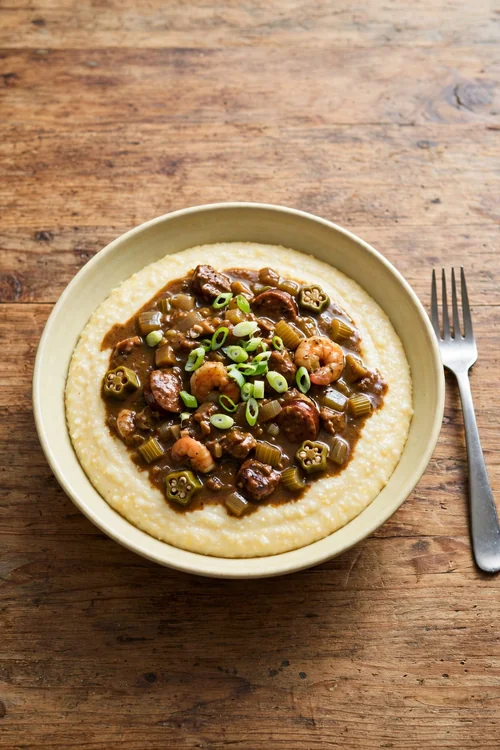
- Spoon cold leftovers over creamy stone-ground grits for a breakfast bowl that eats like a brand new dish.
- Fill a pie crust with the thickened stew, top with a second crust, and bake until deeply golden.
- Stuff the mixture into hollowed bell peppers, scatter cheese over the top, and bake until bubbling.
- Add a splash of broth and a handful of greens, and the leftovers become a lighter soup night.
Leftovers of this stew are an ingredient, not an obligation, and treating them that way keeps the pot exciting all week. In my experience the stuffed peppers disappear fastest, though the pie has its loyal defenders, and honestly both camps are right to love their favorite here at home.
Conclusion
Twenty-one pots later, the lesson stays simple: patience with the roux and respect for the base turn chicken gumbo into the kind of meal people request by name at every family gathering. Everything else, the sausage, the okra, the heat, is just your signature on a classic.
Pick one version for this weekend, save this collection for the cold months ahead, and share it with the friend who still thinks stew is boring. I’ve seen one quiet pot of this do more for a family table than a whole week of fancy dinners ever could manage. On noodle night, my chicken lo mein disappears in minutes.