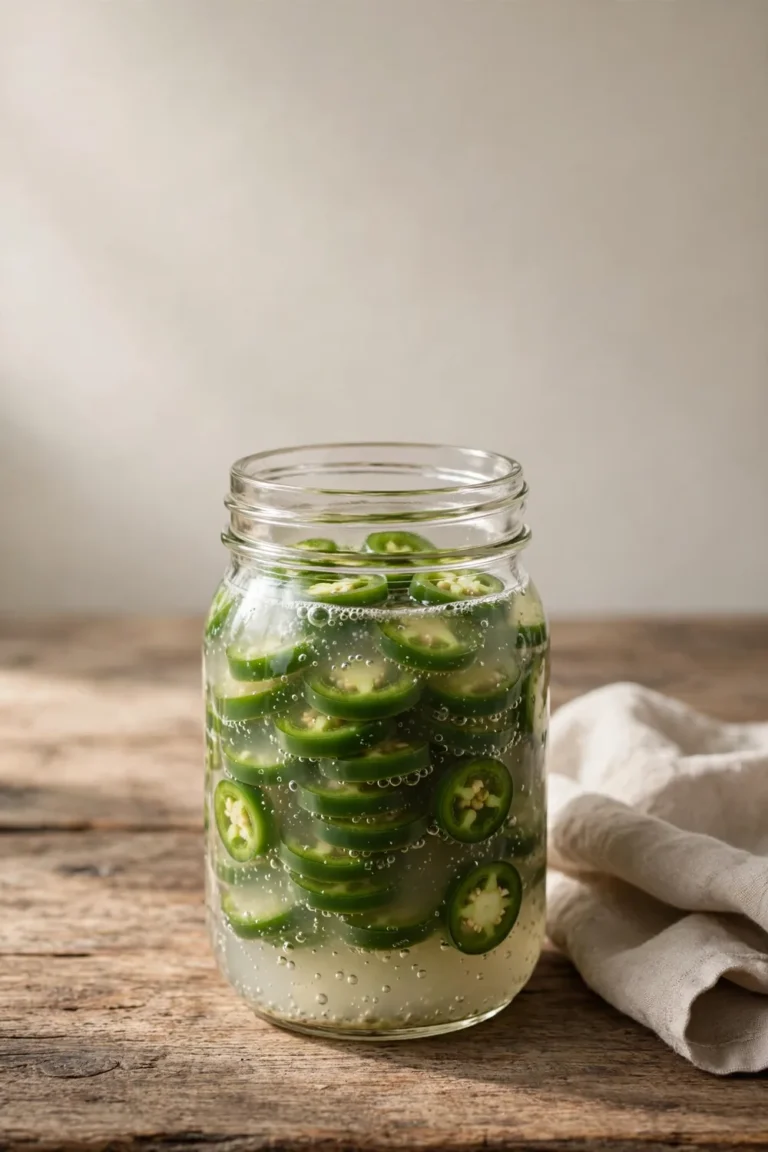
21 Truly Enchanting Chimichurri Sauce Ideas to Love
A great chimichurri sauce can rescue the plainest grilled dinner, turning simple chicken, steak, or vegetables into something guests ask about long after the plates are cleared. This bright Argentine herb sauce takes minutes to make and keeps beautifully.
Below you will find twenty-one ways to mix, tweak, and serve it, from the classic parsley original to smoky, spicy, creamy, and mild blends for every table. Each version lists exact swaps, serving matches, and storage notes.
In my experience, one small jar in the fridge makes weeknight cooking feel easy all week long. Pick one version tonight, then work through the list as grilling season unfolds. And for noodle night, my dan dan noodles bring the same punchy heat.
Classic Parsley Original
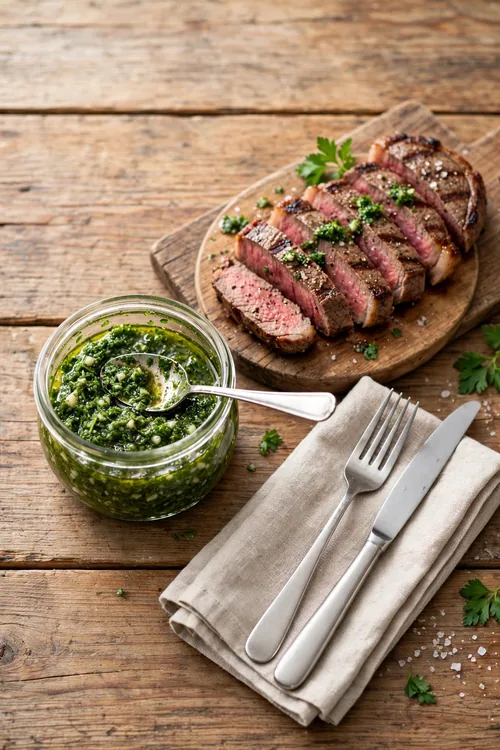
Flat-leaf parsley does the heavy lifting in the original version, chopped fine enough to melt into the olive oil yet coarse enough to keep a fresh, grassy bite. Red wine vinegar adds brightness, garlic adds punch, and red pepper flakes bring a gentle warmth that never bullies the herbs.
Resting time matters more than most cooks expect with this blend. Ten minutes lets the garlic soften into the oil, and a full hour marries the flavors into something rounder and deeper. Spoon it over sliced steak while the meat rests, and every bite tastes like a Buenos Aires parrilla.
Cilantro Lime Twist
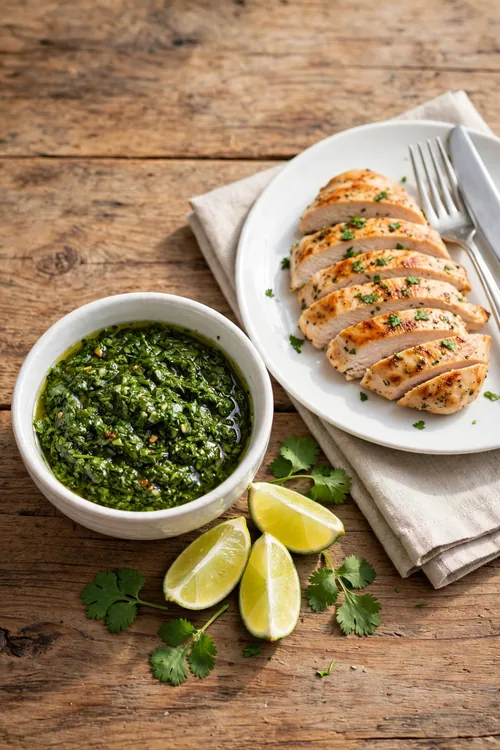
- Swap half the parsley for fresh cilantro leaves and tender stems, which carry the brightest flavor in the whole bunch.
- Replace red wine vinegar with fresh lime juice, added at the very end so its citrus sparkle survives the oil.
- A teaspoon of lime zest deepens the citrus note without extra acidity thinning the texture.
- Keep the garlic raw and finely grated so it spreads evenly through every spoonful.
Chicken and shrimp absolutely sing under this brighter, greener blend, especially straight off a hot grill. In my experience, the lime version disappears faster than the classic at summer cookouts, so doubling the batch is rarely a mistake worth regretting on a hungry Saturday afternoon with friends.
Smoky Chipotle Heat
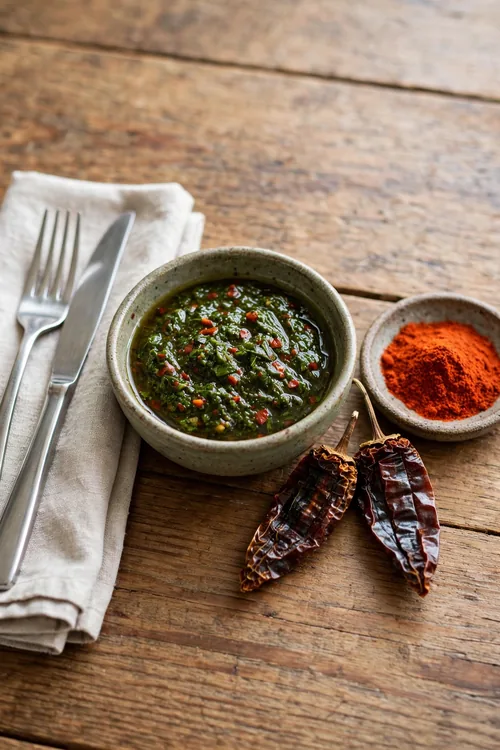
Quick Tip: Blend one chipotle pepper in adobo with a spoonful of its sauce for smoke that builds slowly instead of burning upfront. One pepper is plenty for most tables. Stir the pepper in last, taste, then decide whether the second pepper earns its place in your jar today.
Smoked paprika supports the chipotle without adding more heat, keeping the balance firmly on the smoky side of the jar. This is the version to reach for when burgers, ribs, or grilled portobello mushrooms need a deeper and darker kind of spark than the classic green blend offers.
Traditional Argentine Style
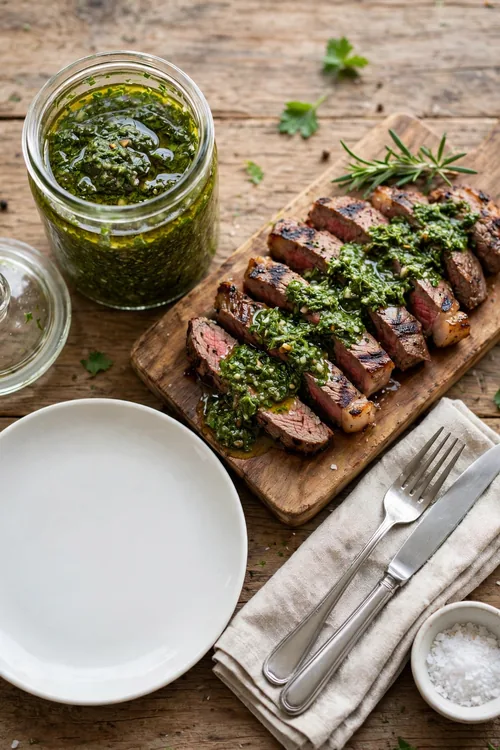
BEFORE: Before this style reaches the table, grilled meat often sits plain and underseasoned, relying on salt alone while its juices go to waste on the board. The meal tastes fine, yet nothing ties the smoky beef, the bread, and the salad into one story.
AFTER: After a spoonful of the traditional blend lands, dried oregano and aji molido wake the beef up, the vinegar cuts through the fat, and every slice tastes seasoned from the inside out. Suddenly the whole asado plate feels connected, generous, and complete.
Authenticity here is about restraint as much as ingredients, since Argentine cooks keep the herb mix coarse and the oil generous. Water is never added, the garlic stays raw, and the sauce rests at room temperature so the flavors stay bold, rustic, and unmistakably true to its countryside roots.
Grilled Steak Partner
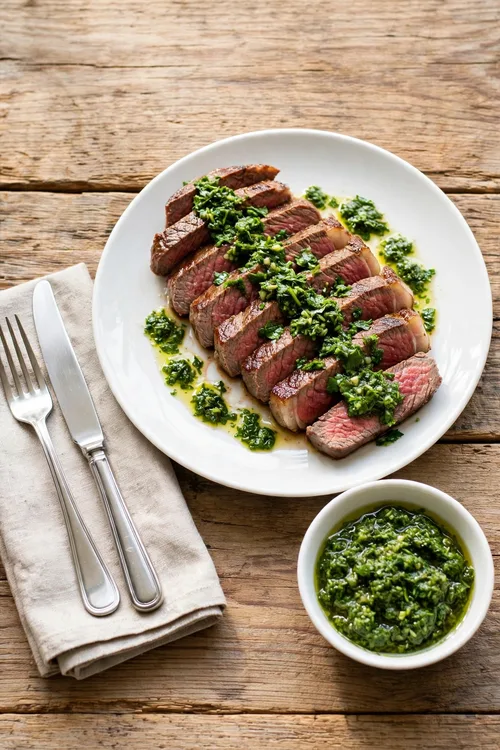
- Salt the steak forty minutes before grilling so the surface dries and sears into a deep, even crust.
- Grill over high heat until the internal temperature sits five degrees below your target, since carryover heat finishes the job.
- Rest the meat ten minutes on a warm plate, keeping every drop of juice inside the slices.
- Spoon a generous layer of chimichurri over the sliced steak right before serving, never during grilling.
Flank, skirt, and ribeye all welcome this treatment, though leaner cuts gain the most from the herbed oil. Serving the sauce at room temperature protects the crust you worked for, because cold sauce on hot steak turns that beautiful sear soft and steamed within a couple of minutes.
Chimichurri Butter Melt
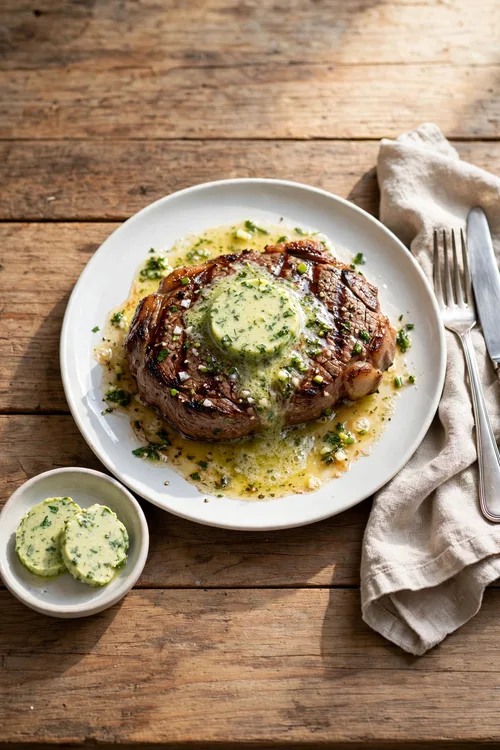
| Compound Butter | Classic Oil Blend | |
|---|---|---|
| Texture | Firm pat that melts slowly over heat | Loose spoonable oil that pools fast |
| Best moment | Final minute on steak, corn, or warm bread | Marinades, drizzling, and table serving |
| Storage | Rolled in a log, sliced as needed, freezes three months | Jarred in the fridge for two weeks |
| Flavor feel | Rich and rounded, herbs mellowed by butterfat | Bright and sharp, vinegar forward |
Softened butter whipped with finely chopped chimichurri herbs, garlic, and lemon zest becomes a finishing weapon worth keeping in every freezer. One melting slice over grilled fish or a baked potato delivers all the herby punch of the original with a silkier and more luxurious finish.
Chicken Marinade Magic
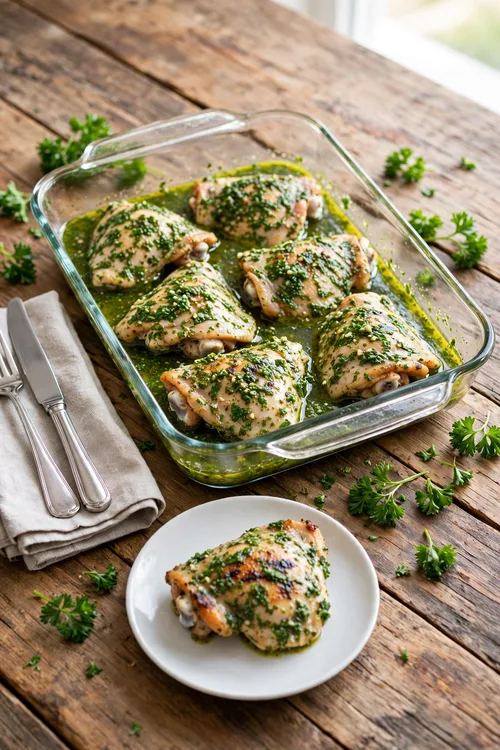
- DO: Marinate chicken thighs for at least two hours so the vinegar and herbs can season past the surface.
- DO: Reserve a clean spoonful of fresh sauce before marinating, and serve that portion at the table.
- DO: Pat the chicken dry before grilling so the skin crisps instead of steaming in excess marinade.
- DON’T: Reuse marinade that touched raw chicken as a finishing sauce, even if it smells wonderful.
- DON’T: Marinate delicate chicken breasts overnight, because the acid turns their texture chalky and soft.
- DON’T: Grill over gentle heat, since marinated skin needs strong heat to char before it sticks.
Boneless thighs reward this treatment most, staying juicy under the acid where leaner cuts sometimes suffer. Grill the chicken until the edges char in spots, rest it briefly, then spoon the reserved fresh sauce over the top for a double layer of herby brightness in every bite.
Roasted Veggie Drizzle

- Cost: Low, mostly pantry oil and fresh herbs
- Time Needed: Five minutes of whisking after roasting
- Best For: Carrots, zucchini, peppers, and sweet potatoes
- Result: Caramelized vegetables with a bright herbal finish
Roasting concentrates the natural sugars in vegetables, and a raw herby drizzle restores the freshness that high heat cooks away. Add the sauce after the tray leaves the oven, never before, so the parsley stays green and the garlic keeps its pleasant bite against the sweet caramelized edges.
Garlic Lovers Blend
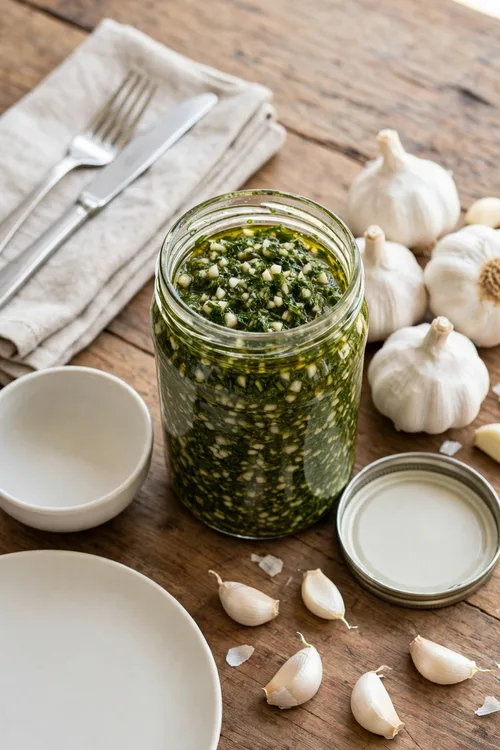
Doubling the garlic changes this blend from background seasoning into the main event, and garlic lovers would not have it any other way. Raw cloves grated on a microplane disperse completely, so no bite overwhelms and every spoonful carries the same savory depth from first taste to last.
A small pinch of sugar, barely a quarter teaspoon, rounds the raw garlic edge without any detectable sweetness. Serve this bolder batch with crusty bread for dipping, and watch it vanish before the main course lands, because garlic bread’s herby cousin rarely survives the first ten minutes.
Spicy Red Pepper Version
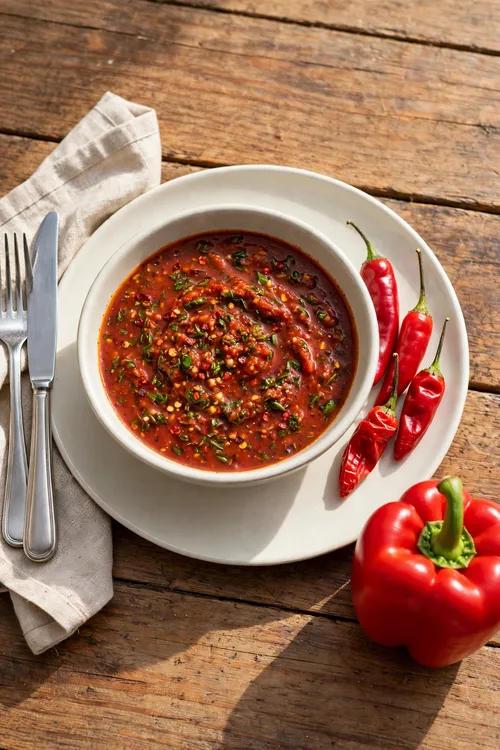
- Build the red base with finely diced red bell pepper plus a spoonful of smoked paprika for body.
- Red pepper flakes and a fresh red chile set the heat level; add half now and adjust after resting.
- A splash of sherry vinegar softens the edges while keeping the color deep and glossy.
- Parsley still leads, though a handful of oregano leaves pushes the flavor toward a rustic countryside profile.
Red chimichurri, called chimichurri rojo in Argentina, brings warmth and color that the green classic cannot match on grilled sausages and pork. I’ve noticed guests reach for the red jar when the menu leans smoky, because its gentle burn stretches each bite a little longer.
Mint Garden Fresh
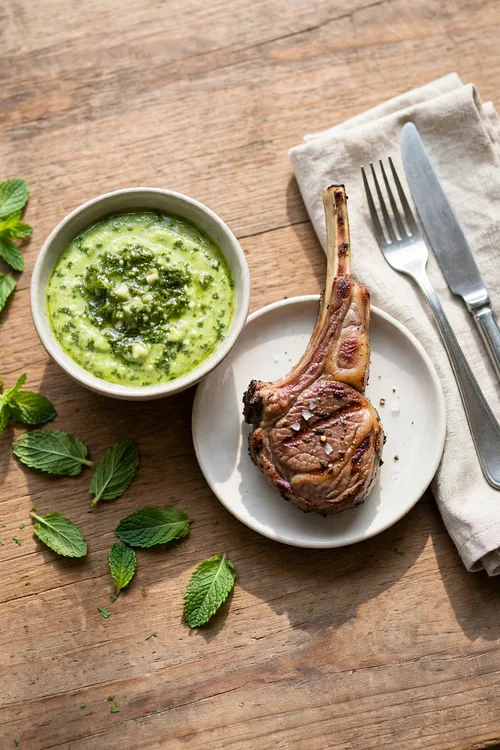
Quick Tip: Bruise mint leaves gently with the flat of a knife before chopping, and the oils release without turning the leaves black. Add mint at the very end of mixing, because its delicate aroma fades fast once it meets vinegar and salt. Serve this batch the same day for the brightest flavor.
Lamb and mint share a long history at the table, and this fresher pairing keeps that tradition without the sweetness of jelly. Grilled lamb chops, roasted carrots, and even a simple cucumber salad all brighten under a spoonful, especially during the first warm weekends of spring.
Shrimp Skewer Glaze
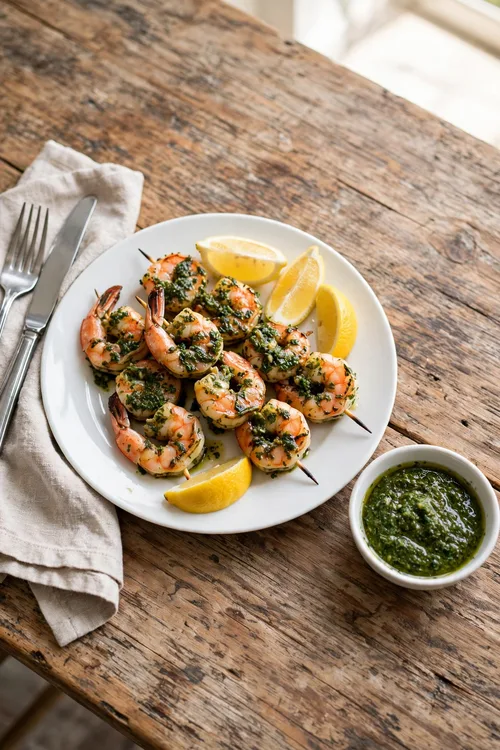
BEFORE: Before the glaze, grilled shrimp can taste sweet but one-note, their delicate flavor gone in two chews. Skewers pulled from the grill often sit waiting for something bright to pull them together.
AFTER: After two spoonfuls of herby chimichurri, the shrimp taste garlicky, lemony, and alive, with the charred edges playing against the raw herbs. Every skewer suddenly carries the energy of a coastal grill party.
Thread the shrimp tightly so they cook evenly, then glaze them during the final minute rather than marinating for hours beforehand. Acid-heavy marinades toughen shrimp quickly, while a late glaze keeps them snappy, juicy, and coated in green long enough to reach the table still shining.
Creamy Mayo Dip Remix
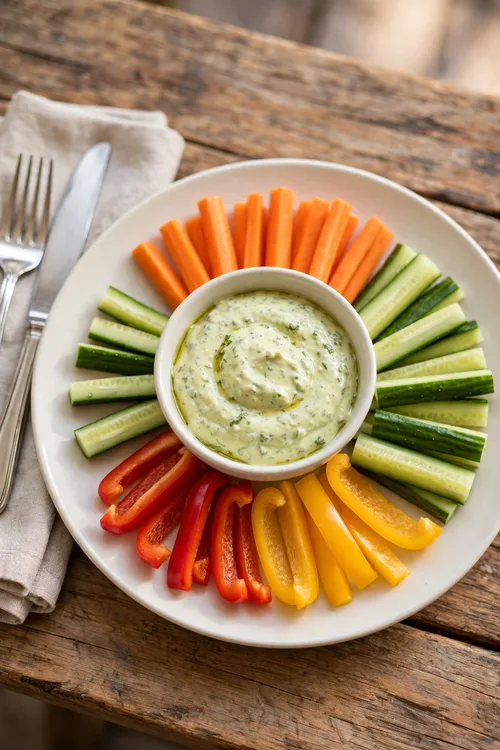
- Whisk one cup of mayonnaise with three tablespoons of finely chopped classic chimichurri until the streaks turn pale green.
- Fold in a teaspoon of lemon juice and a pinch of smoked paprika for brightness and gentle warmth.
- Rest the dip thirty minutes in the fridge so the garlic mellows into the mayonnaise completely.
- Taste with an actual chip or carrot stick, since dips always need more salt than a spoon suggests.
Crudites, fries, and grilled chicken sandwiches all benefit from this softer and friendlier remix of the original. Kids who refuse the sharp green version usually accept the creamy one without negotiation, which makes it a smart jar to keep ready for mixed crowds on busy weekends.
Blended Versus Hand Chopped
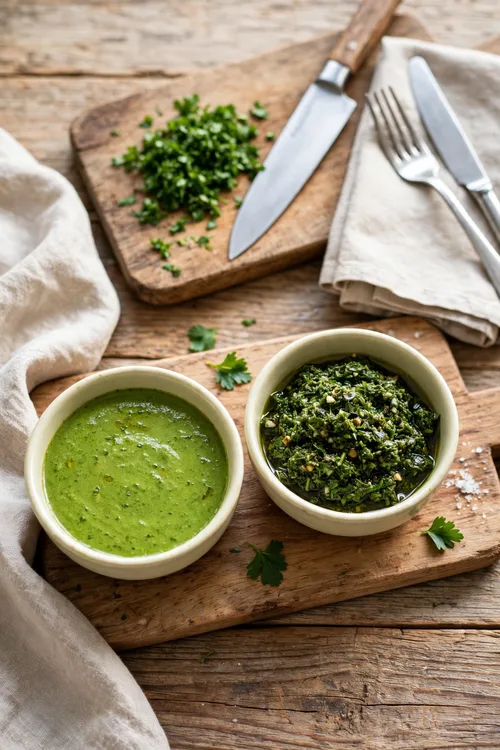
| Blender Batch | Hand Chopped Batch | |
|---|---|---|
| Texture | Smooth and emulsified, almost pourable | Coarse and rustic, herbs stay distinct |
| Flavor release | Immediate and uniform in every bite | Layered, changing from spoonful to spoonful |
| Best use | Marinades and thin drizzles over salads | Finishing steaks and grilled bread |
| Cleanup | Blender jar and blades to wash | One knife and a cutting board |
Neither method wins outright, because the right texture depends entirely on where the sauce lands at your table. My own habit is simple: blend the marinade batch, chop the finishing batch, and let each style do the single job it honestly performs better than the other.
Pork Chop Partner
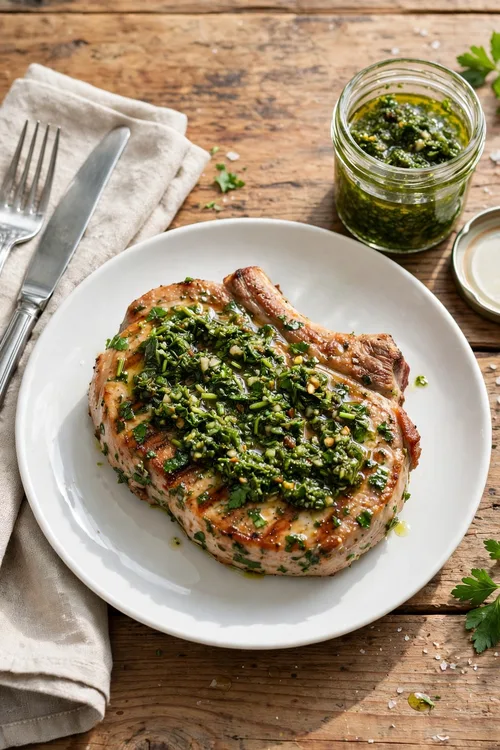
- DO: Choose thick bone-in chops, since lean pork dries quickly and needs the sauce’s oil for insurance.
- DO: Spoon chimichurri over the chops while they rest, letting the warm juices mingle with the herbs.
- DO: Add a pinch of cumin to the blend when pork is on the menu for a warmer backbone.
- DON’T: Sauce the chops before searing, because wet herbs scorch and turn bitter in a ripping hot pan.
- DON’T: Slice the pork immediately off the grill, or the seasoned juices flood the board instead of the meat.
- DON’T: Skip the rest just because the sauce smells ready, since five patient minutes protect the whole chop.
Pork’s mild sweetness welcomes the vinegar bite that might overwhelm more delicate proteins at the table. Thick chops grilled over medium-high heat, rested under foil, and finished with a heavy green spoonful deliver the kind of weeknight dinner that tastes planned even when it absolutely was not.
Herb Vinaigrette Dressing
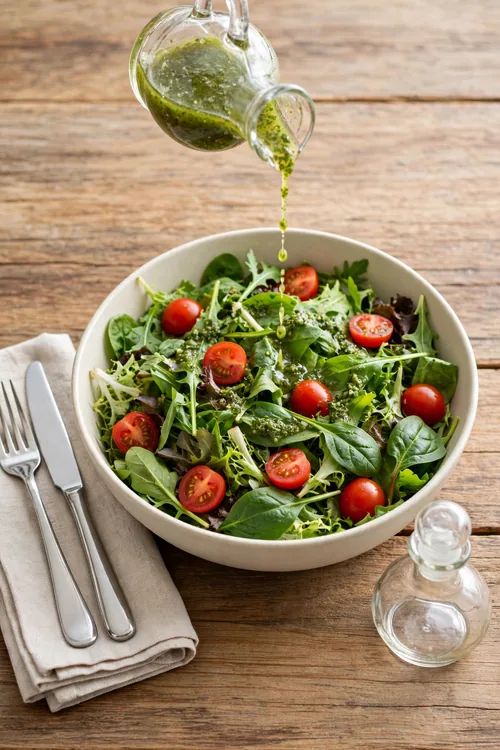
- Cost: Low, stretches a small herb bunch across a week of salads
- Time Needed: Ten minutes including the resting jar shake
- Difficulty: Easy, one jar and a steady hand
- Result: Bright pourable dressing with a garlicky herbal punch
Extra vinegar and a lighter hand with the oil turn the classic blend into a dressing that coats leaves instead of weighing them down. Shake the jar hard before every pour, because the herbs settle fast and the final spoonful should taste as lively as the first.
Sweet Pepper Mild Blend
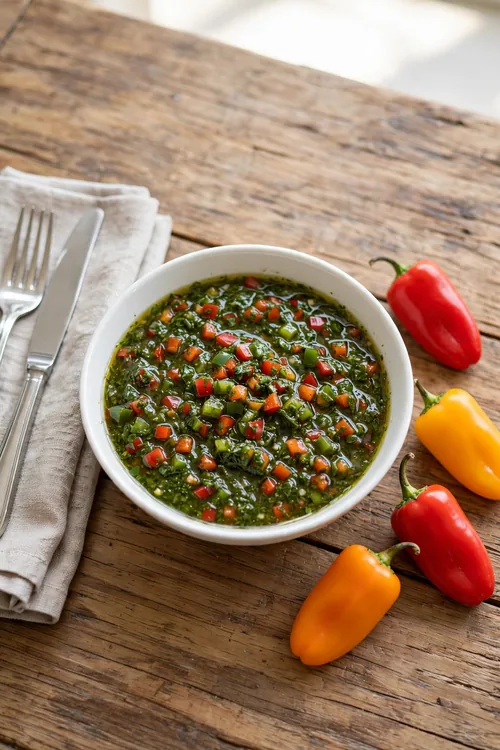
Sweet peppers replace the chile heat in this family-friendly batch, bringing color and gentle crunch instead of fire. Red and yellow bells, diced very fine, fold through the parsley base like confetti, and a touch of honey balances the vinegar for younger palates at the table.
Mild does not mean bland when the garlic, oregano, and good olive oil still show up in full measure. Spoon this version over grilled hot dogs, chicken tenders, or scrambled eggs, and the whole family eats the same sauce happily, with no separate bland batch required.
Grilled Corn Topper
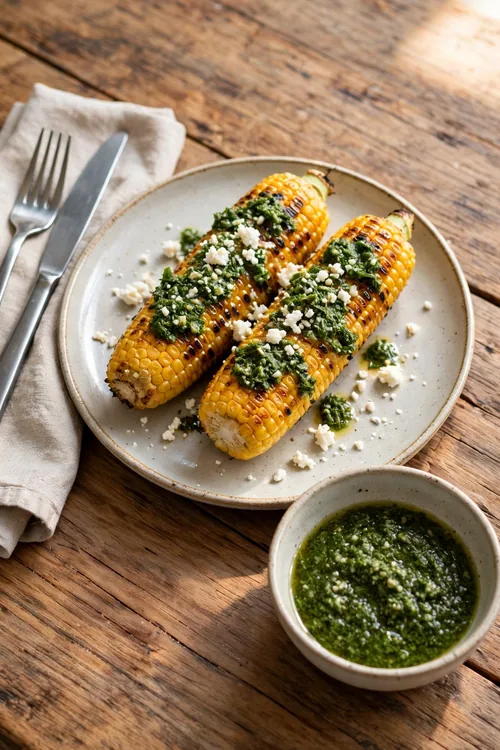
- Grill corn in its husk for fifteen minutes, then peel back and char the kernels directly for smoky stripes.
- Brush the hot cobs with chimichurri the moment they leave the grate so the oil melts into every row.
- A shower of crumbled cotija or feta adds salty creaminess against the sharp herbs.
- Serve extra sauce in a small bowl for double dippers, because one pass is rarely enough.
Sweet corn and sharp green herbs were clearly made for each other, each one covering the other’s weaknesses at the cookout. In my experience, corn disappears first when this topper appears, outpacing even the burgers, so two cobs per guest is the safest summer math available.
Breakfast Toast Topper
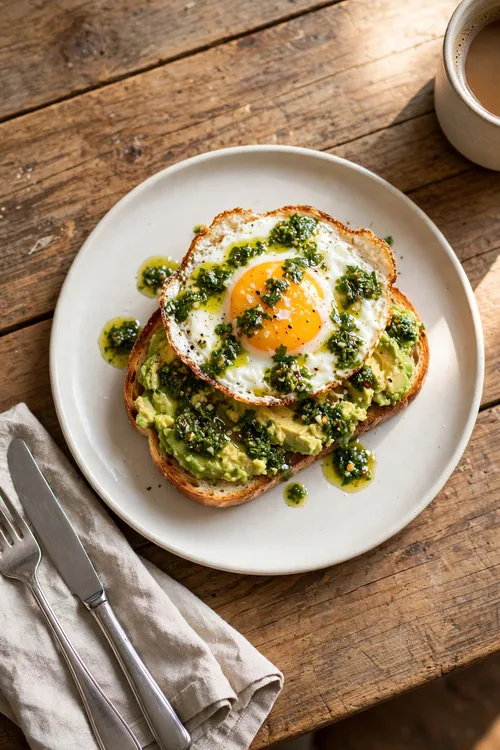
Quick Tip: Spoon the sauce over the egg while it is still in the pan for the final thirty seconds, and the residual heat blooms the herbs without cooking them dull. Warm sauce, warm egg, crisp toast is the whole secret here. A squeeze of lemon over the top keeps the avocado green and bright.
Avocado toast gains the seasoning it usually begs for, and a fried egg under the herby drizzle turns breakfast into something worth sitting down for. Leftover sauce from last night’s grill session finally finds a morning job, which makes the whole jar feel twice as useful.
Freezer Cube Prep

BEFORE: Before this prep habit, a big batch of fresh sauce often faded in the fridge, its bright color dulling before the week ended. Good herbs went into the compost while weeknight dinners stayed plain.
AFTER: After freezing, every cube holds the flavor of the day it was made, ready to melt over soup, eggs, or a last-minute steak. One tray quietly stocks the freezer with two weeks of instant seasoning.
Freeze the sauce in a standard ice cube tray, then pop the cubes into a labeled bag once they are solid through. Each cube equals roughly two tablespoons, which makes mid-recipe math painless on the busiest evenings of the entire month for home cooks everywhere.
Rice Bowl Drizzle

- Build the bowl base with warm rice, a sliced protein, and at least two vegetables with contrasting textures.
- Thin two tablespoons of chimichurri with a teaspoon of warm water so it drizzles in ribbons instead of clumps.
- Drizzle in a zigzag across the whole bowl, aiming for sauce in every third bite rather than a single pool.
- Finish with something crunchy, like toasted seeds or crispy shallots, to play against the soft rice.
Grain bowls solve the weeknight dinner puzzle, and this green drizzle is the piece that makes them taste finished rather than assembled. Rotisserie chicken, leftover rice, and a jar of sauce become a complete meal in ten minutes flat on the tiredest Tuesday of the month.
Conclusion
Twenty-one versions later, the real lesson is how forgiving this sauce family is once the parsley, garlic, vinegar, and oil balance clicks. Swap the herbs, change the heat, blend it smooth or keep it rustic, and a trustworthy chimichurri sauce still lands on the table every single time.
Save this list for your next grill night, share it with a friend who still buys jarred sauce, and start with the version that made your mouth water most. In my kitchen, the classic parsley jar never lasts the week, and that says everything worth saying. Grill night next? My chicken yakitori skewers love this same bold treatment.