Why Is My Hollandaise Sauce Splitting? Easy Fix Guide
Split hollandaise shows up when a smooth sauce suddenly turns oily in the bowl. You whisk with care, yet the butter separates and the creamy texture slips away. The flavor stays rich, but the broken look makes serving feel awkward.
Most breaks come from heat that runs too hot or butter that goes in too fast. Hot yolks curdle, cold bowls chill the butter, and a rushed pour floods the emulsion. One small slip can turn a glossy sauce grainy.
This guide walks through each cause, then gives fixes you can use today. Follow the steps, and your next batch should stay smooth and ready to serve. And if your yogurt also turns thin, see why runny homemade yogurt happens and how to fix it with simple kitchen tricks.
Why Sauce Splits
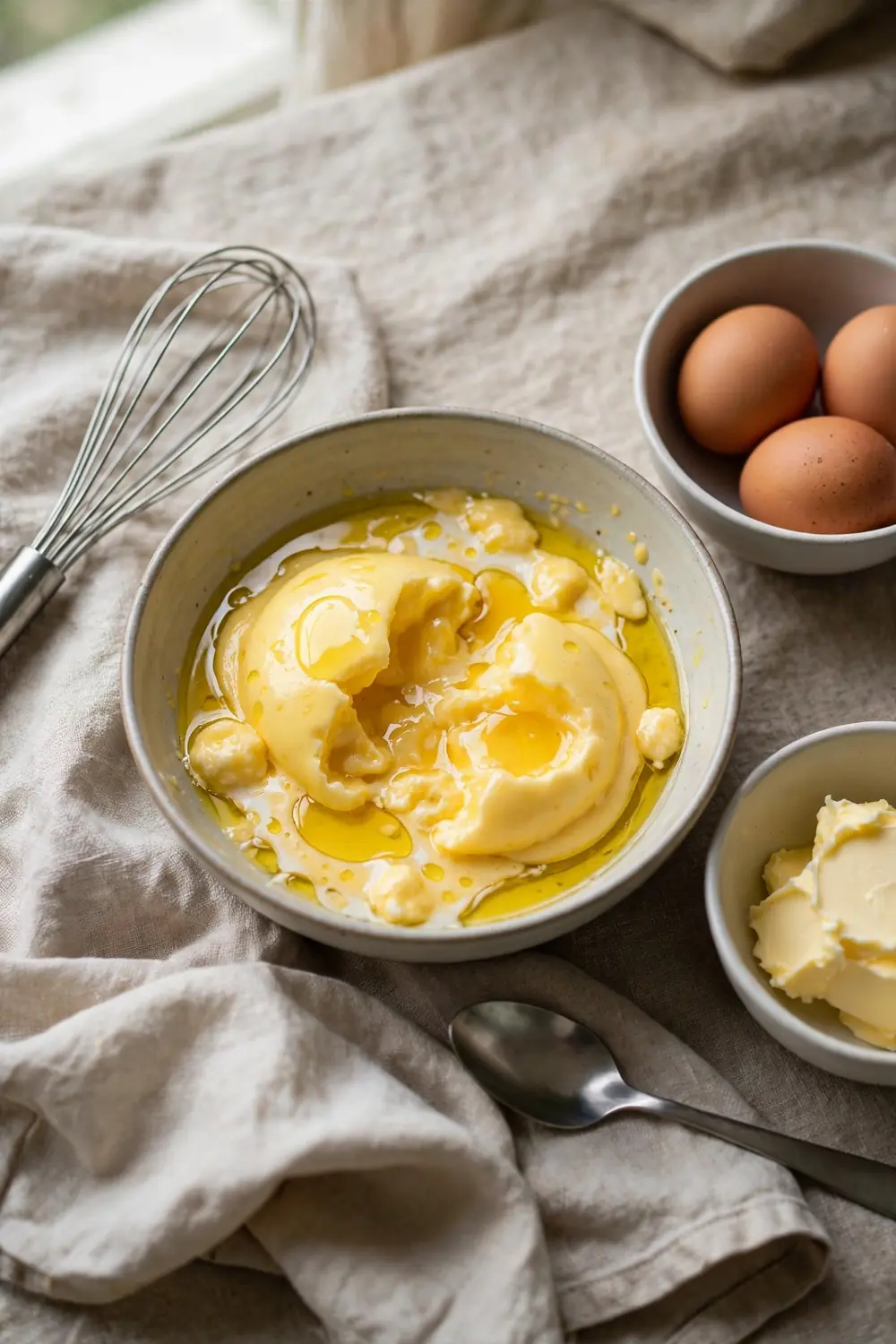
A sauce splits when the yolks lose their hold on the butter. Heat makes the yolks tighten, and the butter slips free instead of staying blended. The result looks oily on top, with grainy flecks below. Once the emulsion breaks, whisking alone rarely pulls it back.
Heat is the usual trigger, but speed and temperature matter too. Butter poured too fast floods the yolks, while a cold bowl firms the butter early. A sauce that looks shiny at first can still split as it sits. Check heat, pace, and bowl warmth first.
Melt the Butter
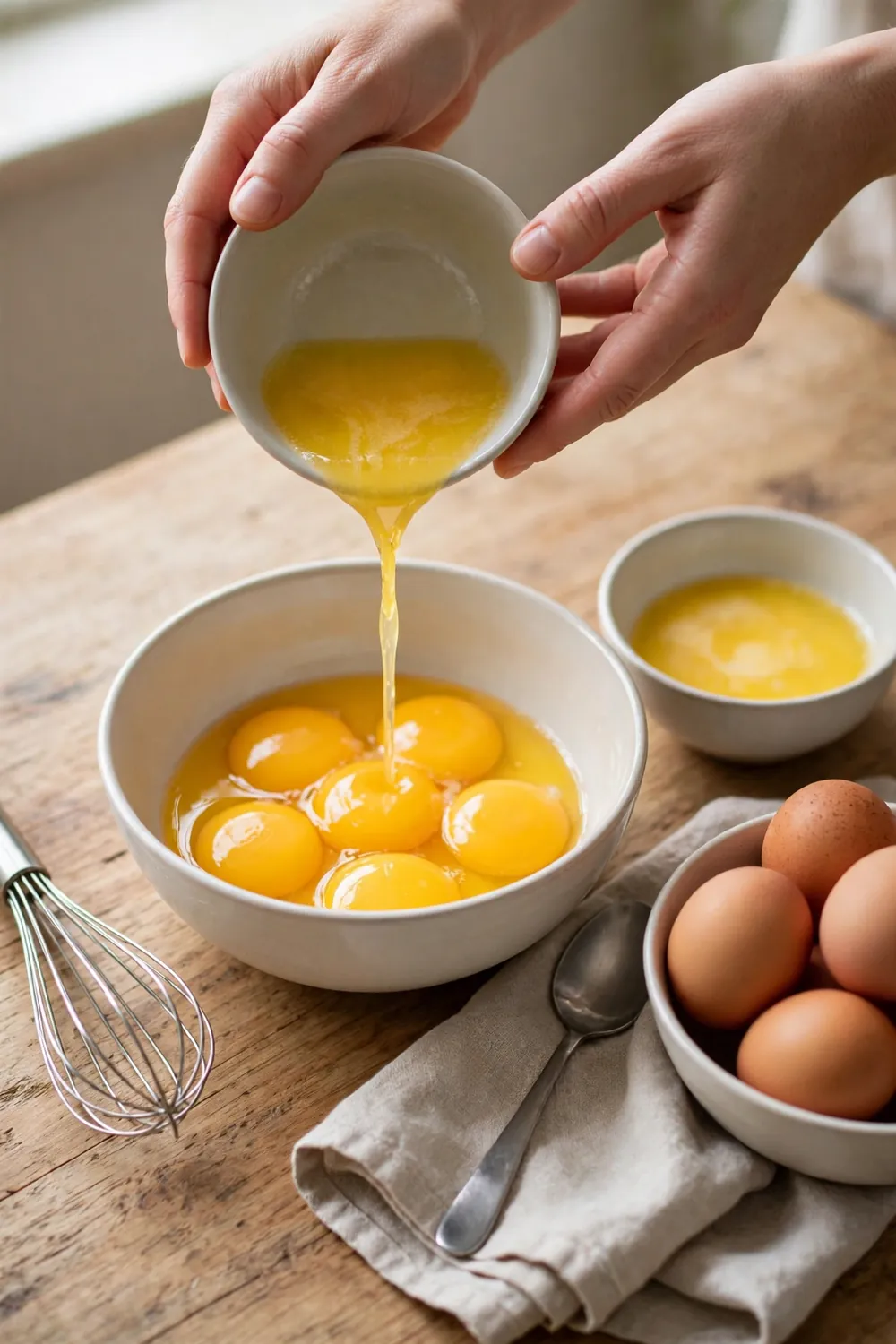
Butter sets the texture of the whole sauce, so its state matters before it meets the yolks. Melted butter blends in a thin stream, while cold lumps fight the emulsion. Warm butter gives the yolks a fair chance to hold every drop.
- Melt the butter in a small pan over low heat until it turns fully liquid.
- Skim off any white foam, then keep the butter warm, not hot.
- Pour from a jug with a spout so the stream stays thin and easy to control.
- Stop before the milky solids at the bottom if you want a cleaner sauce.
Use Low Heat
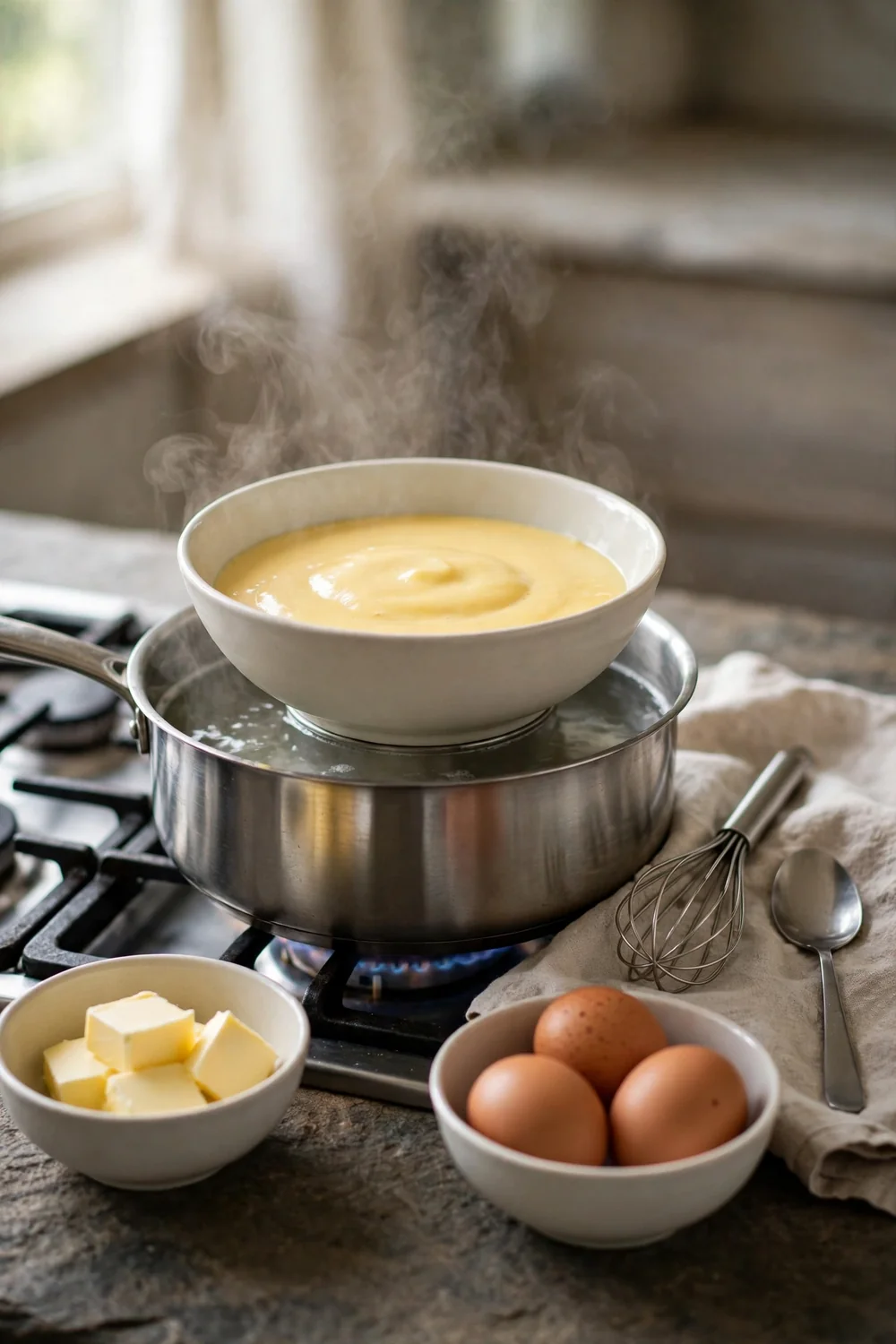
Quick Tip: Keep the water at a bare simmer, with only a few small bubbles rising. Lift the bowl off the steam every few seconds to check the warmth. If the bowl feels hot to hold, the heat is already too high.
Low heat lets the yolks thicken slowly without curdling. A hard boil drives too much heat into the bowl, and the sauce breaks before it turns glossy. Set the pan over gentle heat, and give the bowl a rest above the steam between whisks. Steady warmth builds a smooth sauce that holds its shine.
Whisk It Steady
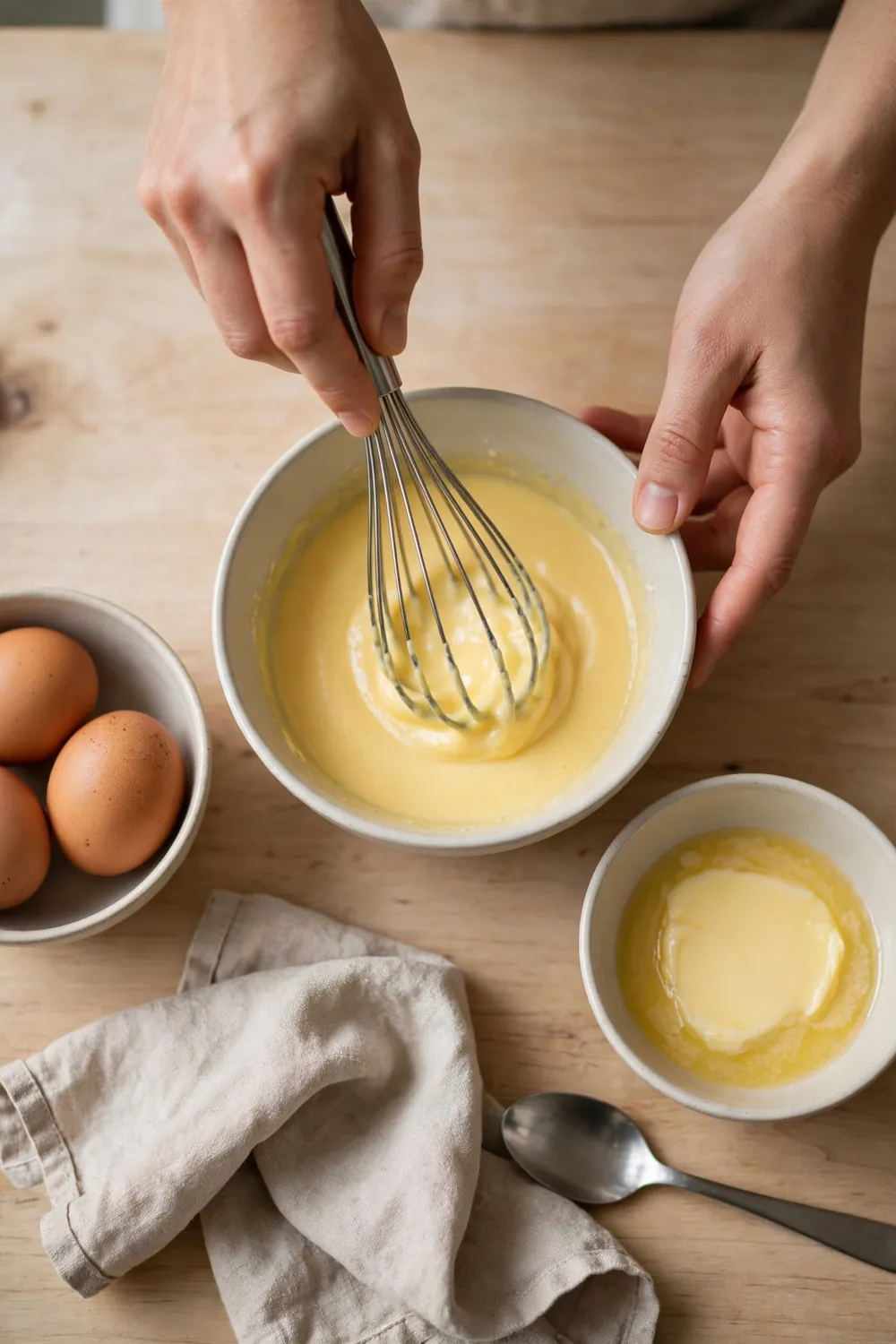
Common Mistake: Many cooks whisk as fast as they can, thinking speed builds thickness. Fast whisking splashes butter to the sides and beats air into the yolks. The sauce looks foamy, then turns grainy as the emulsion strains.
The Fix: Use wide, even circles at a calm pace, and keep the whisk in contact with the bowl. Let each drizzle of butter blend before you add the next. A steady rhythm holds the emulsion together far better than speed.
A large whisk helps here, since it moves more sauce with each stroke. Keep your wrist loose and your pace even, and scrape the sides often. If the sauce starts to look shiny or oily, pause the butter and whisk the yolks alone. A calm hand keeps the texture smooth from start to finish.
Add Butter Slow
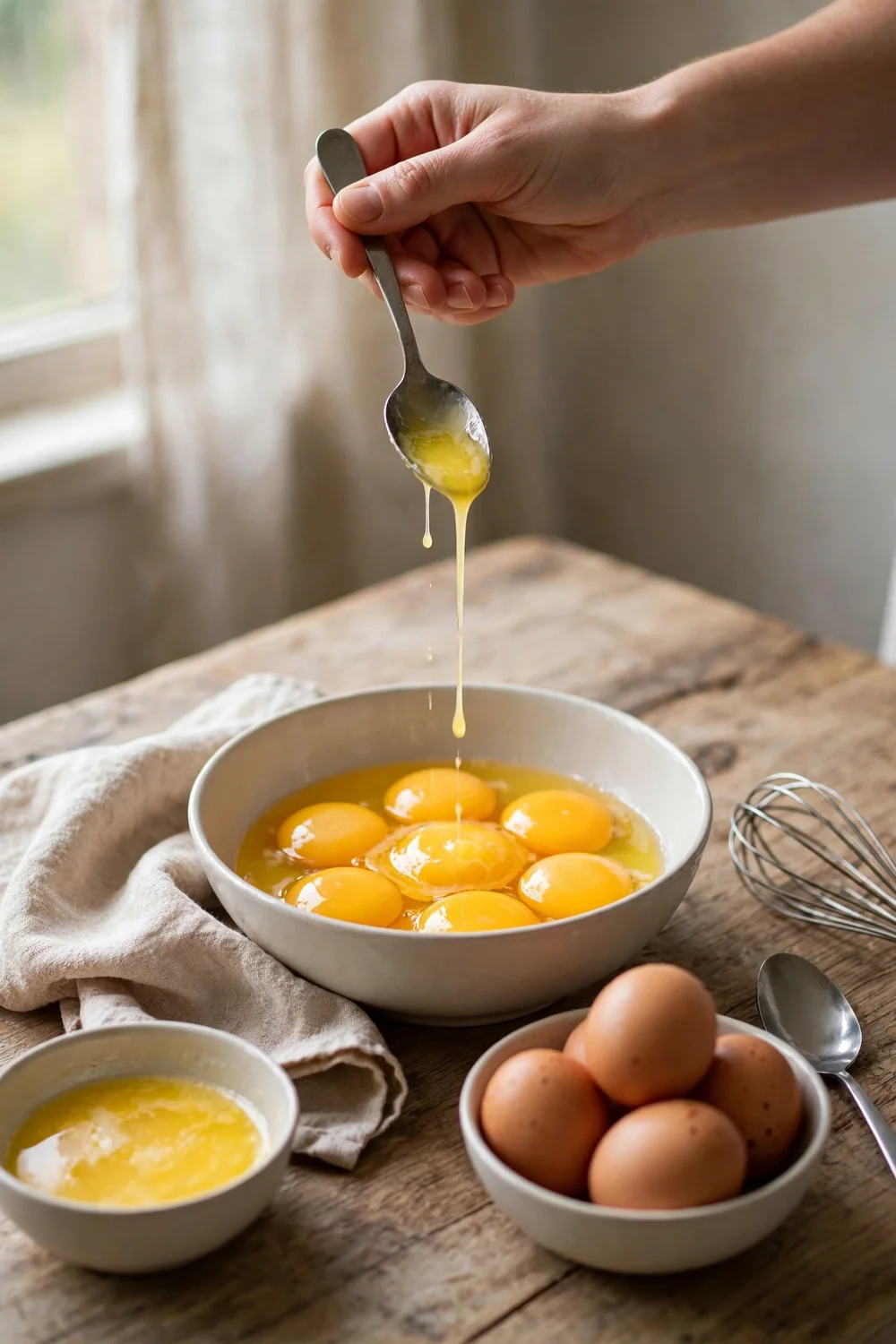
What You Need:
- Warm melted butter: Keeps the emulsion fluid so each drop blends at once.
- Large bowl: Gives the whisk room to move without splashing butter up the sides.
- Steady whisk: Moves the sauce in wide circles and pulls butter into the yolks.
- Small jug: Lets you pour a thin, controlled stream instead of a heavy splash.
A slow pour is what turns butter and yolks into one glossy sauce. Add the butter a little at a time, and wait until each drizzle disappears before you pour more. The sauce should thicken in small steps, not all at once. Patience at this stage pays off with a spoon that lifts clean.
Add Lemon Juice
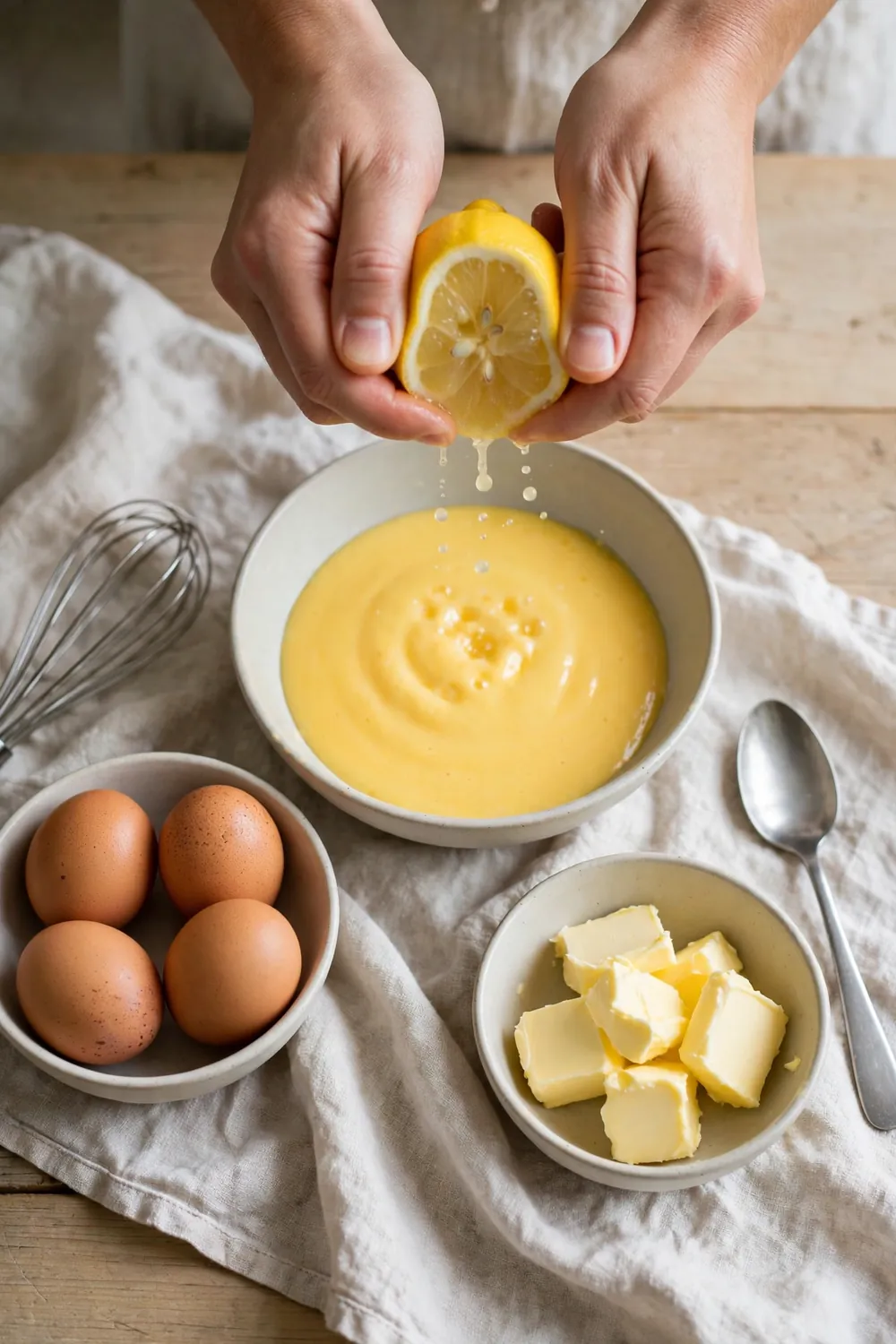
Before: Plain yolks break fast under heat, and the sauce can turn grainy before the butter is half in. The flavor stays flat, and the texture looks dull. A sauce with no acid gives you little room for error.
After: A spoon of fresh lemon juice steadies the yolks and brightens the whole sauce. The emulsion holds longer, and the flavor tastes clean and fresh. The finished sauce looks glossy and pours in a smooth ribbon.
Add the lemon juice early, right after the yolks go into the bowl. One tablespoon is enough for a small batch, and fresh juice beats bottled juice for flavor. Whisk it in well before the first drizzle of butter. Acid early gives the sauce a steadier start.
Use Warm Bowls
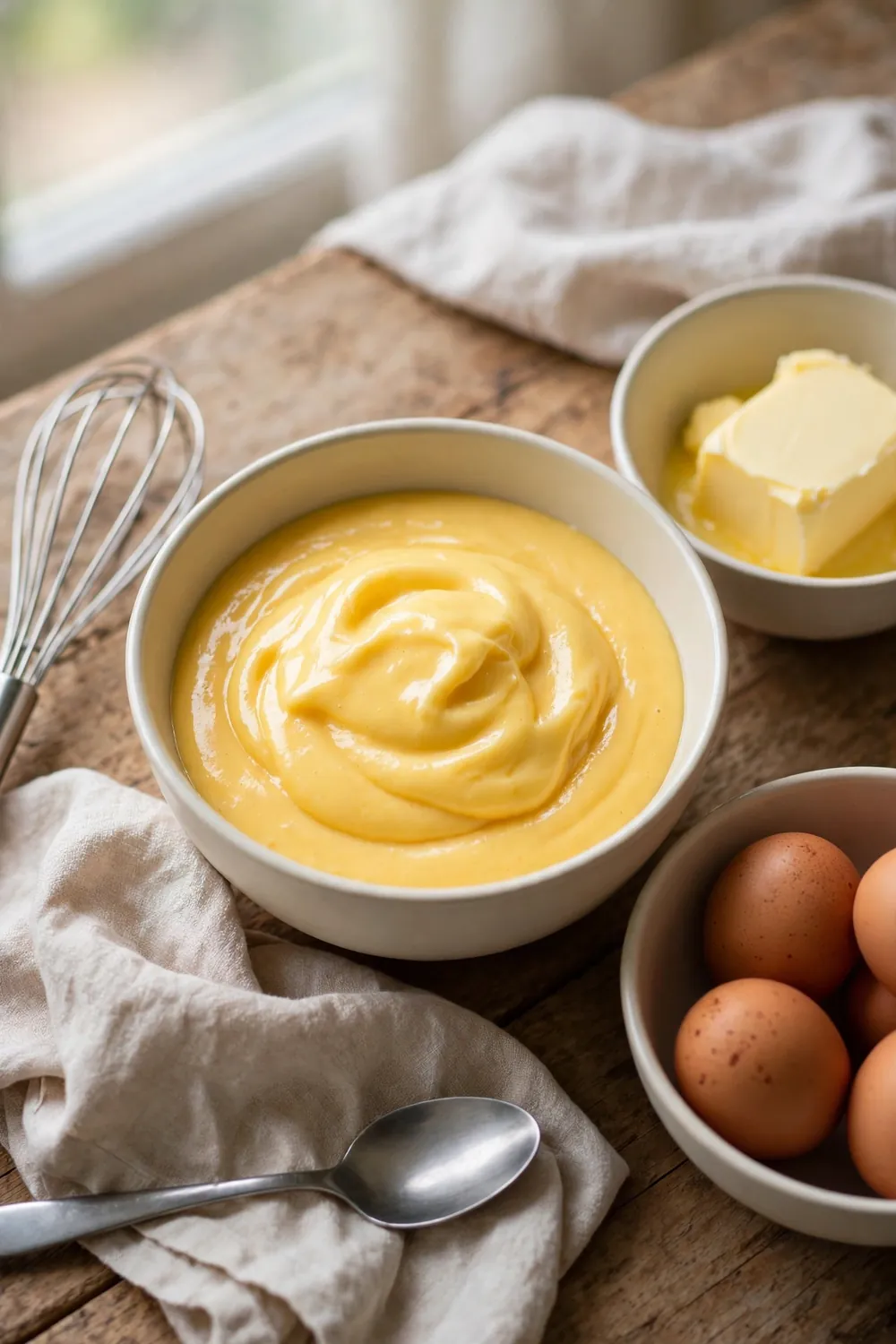
Do This:
- Warm the bowl with hot water, then dry it well before you start.
- Keep the bowl warm between whisks so the butter stays liquid.
- Set the bowl over gentle steam, not a rolling boil.
Avoid This:
- Do not start in a cold bowl straight from the cupboard.
- Do not leave a wet bowl, since water thins the sauce.
- Do not set the bowl over high heat to speed things up.
A warm bowl keeps the butter fluid while the yolks do their work. Cold glass or steel chills the butter on contact, and the sauce seizes before it blends. Rinse the bowl, dry it well, and start while it still feels warm. Warm and dry is the rule for a smooth finish.
Fix a Split Sauce
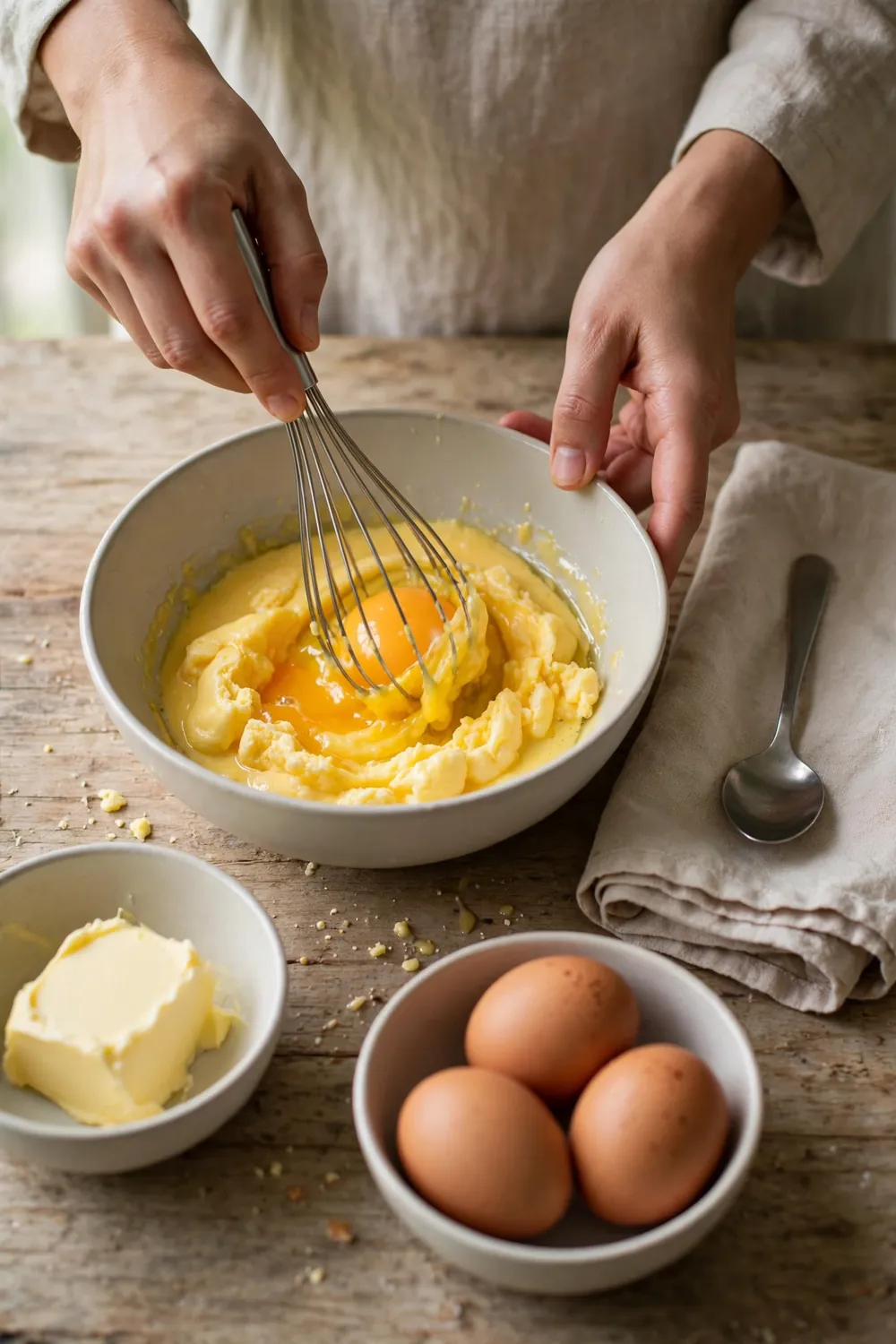
Time Needed: 2 minutes | Difficulty: Easy | Cost: One extra yolk
Best For: Sauce that looks oily but still tastes fresh | Result: Smooth sauce again
A fresh yolk can rescue a sauce that has already split. Whisk the yolk in a clean bowl, then add the broken sauce a spoon at a time. In my experience, this slow restart binds the butter again and the shine returns. Stop as soon as the sauce turns creamy, and serve it at once.
Test One Batch
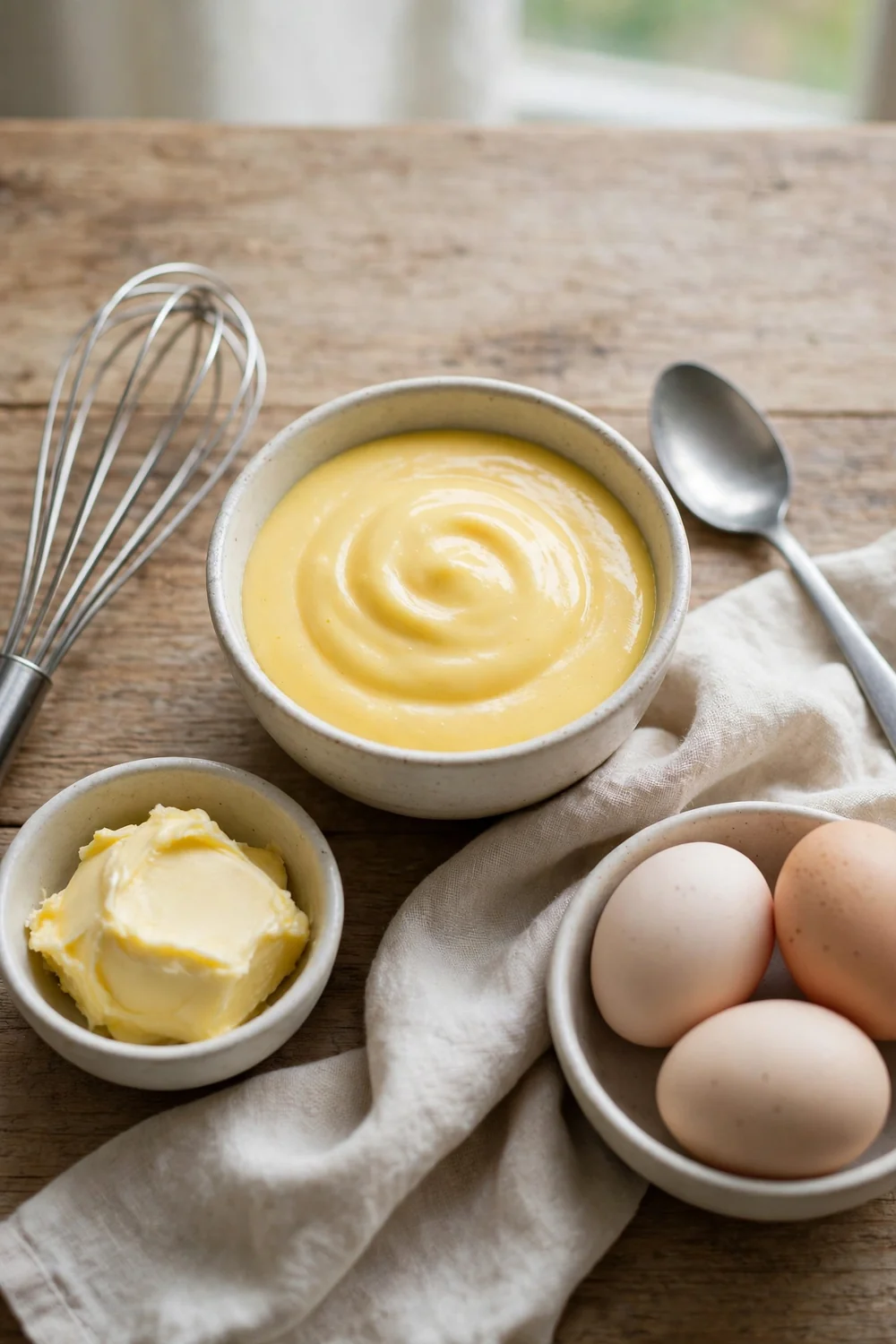
A small test batch shows trouble before it costs you the whole sauce. Whisk one yolk with a few spoons of butter, and watch how the texture holds. If it stays glossy, your heat and pace are right. If it splits, you can adjust before the full batch.
Use the test to check heat, butter speed, and bowl warmth in one quick run. Spoon the sauce and look for oil on the surface or grain in the spoon. A smooth test means the full batch should follow the same path. A quick check saves butter, eggs, and time.
Common Mistakes to Avoid
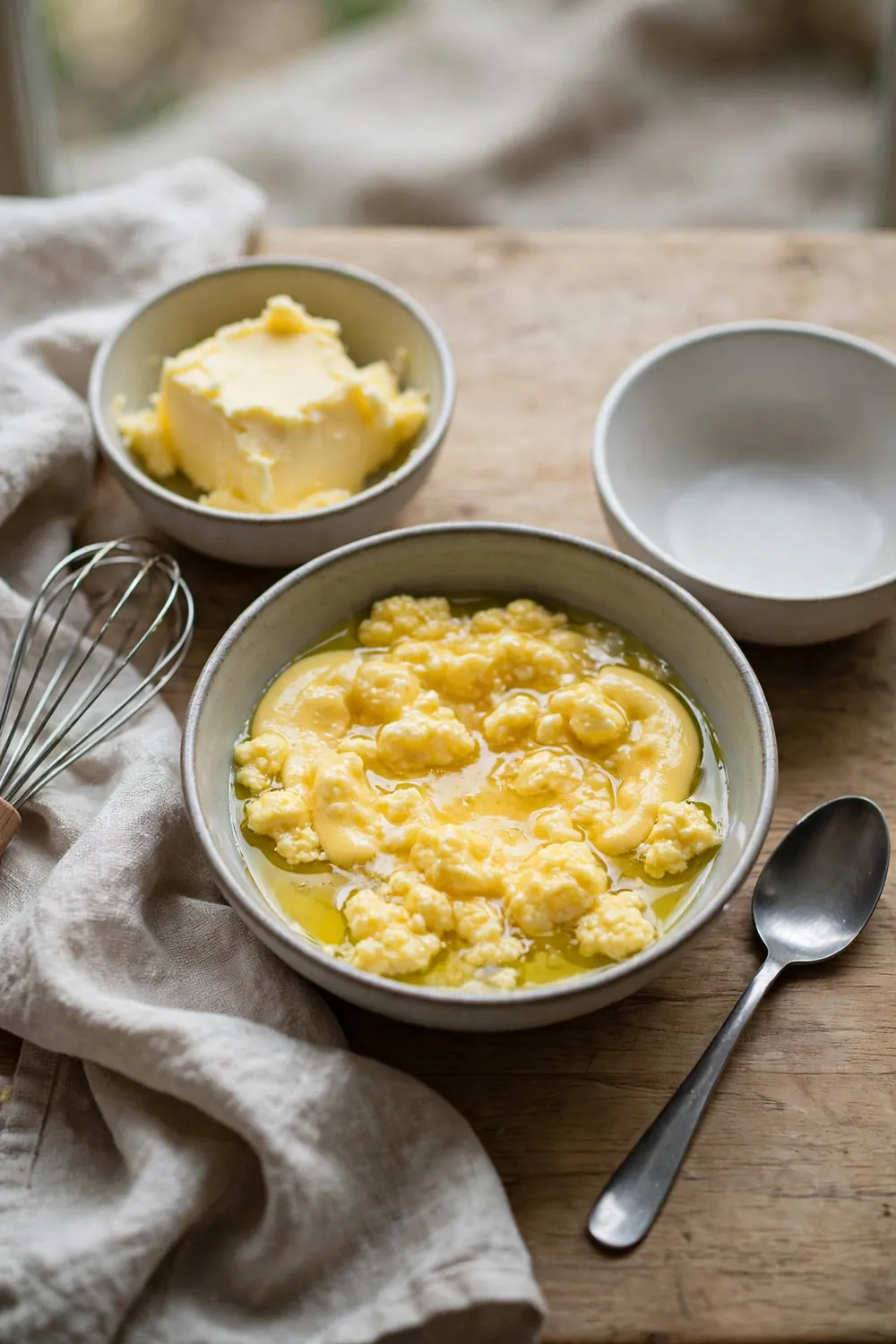
Most split sauces trace back to a few repeatable habits, not bad eggs. Fix one habit at a time, starting with heat and butter speed. The list below covers the slips I see most often in home kitchens, and each one is easy to change.
- Do not cook the yolks over a hard boil, since fast heat curdles them.
- Do not pour the butter in a thick stream, since it floods the yolks.
- Do not start in a cold or wet bowl, since both fight the emulsion.
- Do not skip the lemon juice, since acid helps the yolks hold.
What Smooth Sauce Looks Like
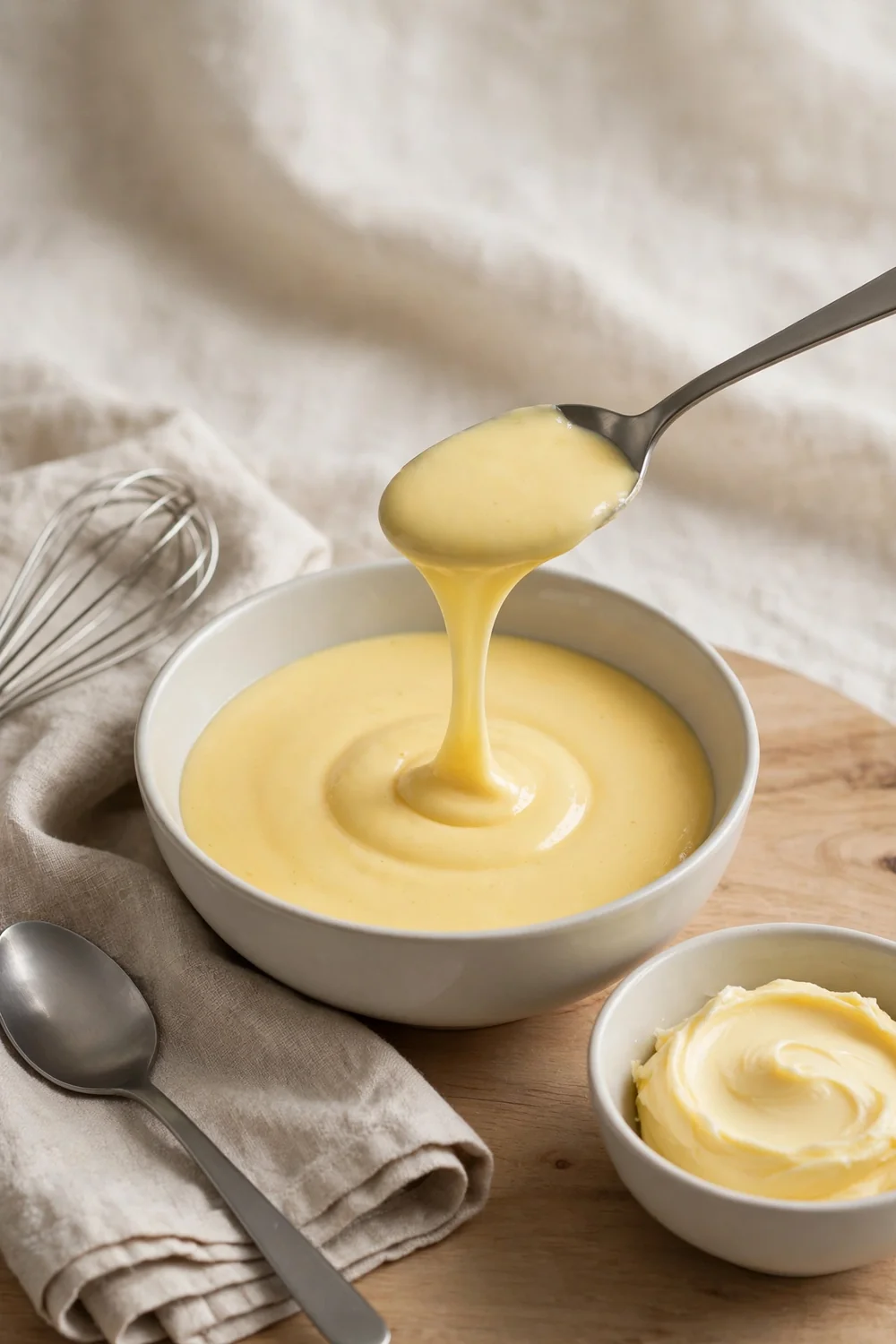
Quick Tip: Lift the spoon and watch the sauce fall in a slow ribbon. It should coat the back of the spoon and hold a line when you draw a finger through it. If oil pools on top, whisk in a spoon of warm water.
A finished sauce looks glossy, with even color and no oil on the surface. It pours slowly, coats the spoon, and holds its shape for a moment. The flavor tastes rich yet bright, with lemon in the background. Serve it fresh, since the sauce thickens and dulls as it cools.
Conclusion
Split hollandaise is not a sign of bad eggs. It comes from high heat and fast butter, and now you know each fix. Match the method to the moment, and the next batch can surprise you.
Low heat, slow butter, and steady whisking each keep the sauce smooth. Pick the method that fits your plan, and the sauce turns creamy. Use one fix at a time.
Whisk slow, pour slow, and watch the heat. Save this guide for your next sauce day. If your cream also stays thin, read our guide on whipped cream not thickening for thick, fluffy cream at home every time.

2 Comments