Why Is My Coleslaw Watery? Easy Fix Guide
If your watery coleslaw turns into a puddle, you are not alone. Shredded cabbage releases water as it sits, and a thin dressing only makes things worse. The good news is that a few small steps keep it crisp for hours.
This guide covers salting, draining, dressing thickness, and timing. You will learn why the slaw weeps and how to stop it before it starts. Every fix uses basic tools and pantry staples.
Once your slaw stays crisp, the next side on the list may need the same care, so keep the potato salad guide nearby for your next picnic bowl with confidence.
Why Coleslaw Turns Watery

Most watery slaw has one root cause: salt draws moisture out of the cabbage after dressing. The longer the mix sits, the more liquid pools at the bottom. Thin, vinegar heavy dressings speed up the process because they cannot cling to the shreds.
Warm cabbage makes it worse, since heat opens the cell walls and lets water escape faster. In my experience, the biggest mistake is dressing the slaw an hour early and hoping it holds. A few simple habits, salting first and dressing late, keep the bowl crisp from the first serving to the last.
Salt and Drain Cabbage

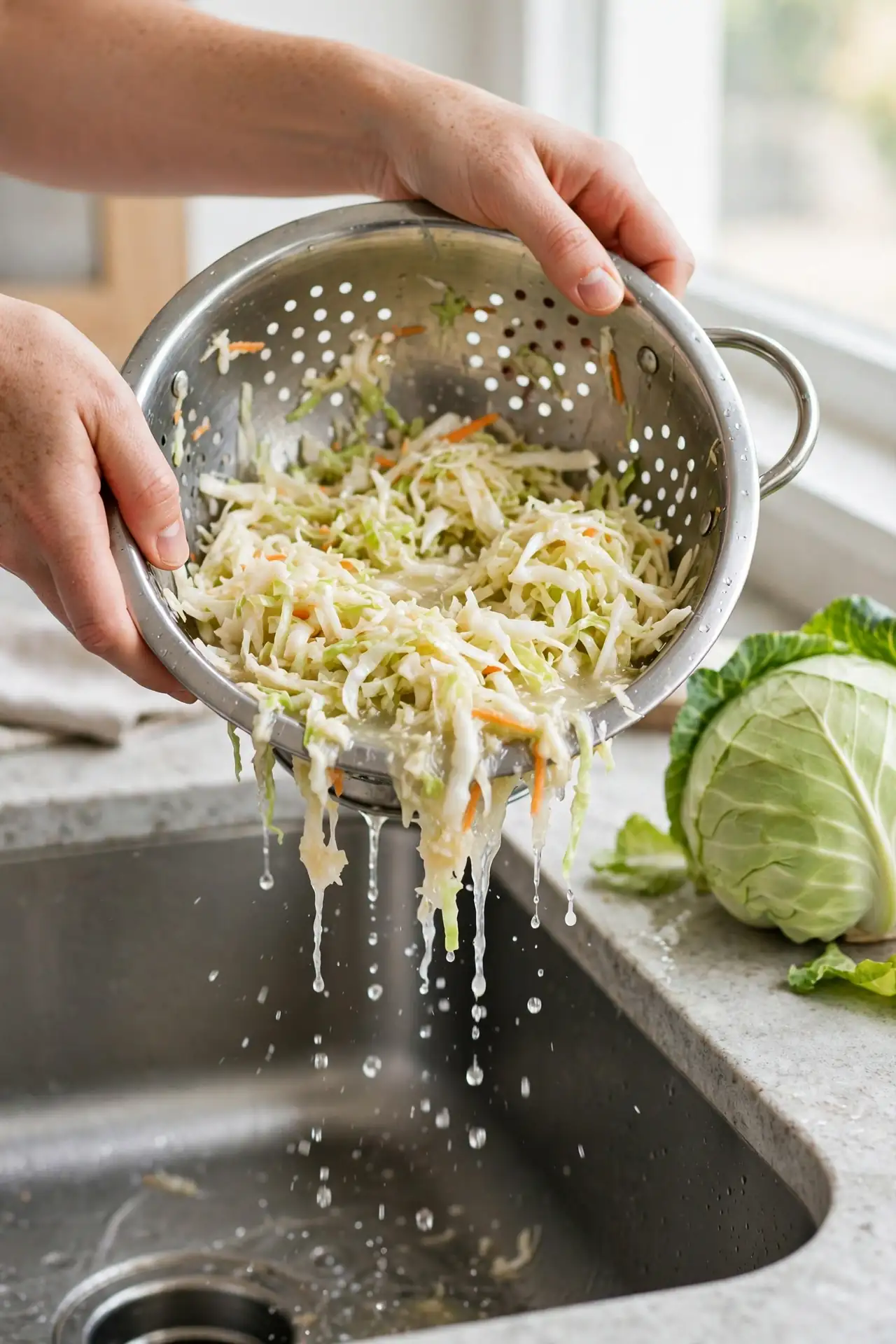
Salting the cabbage before dressing is the single most effective fix. It pulls out the loose water now, so it cannot weep into your dressing later. Follow these steps for a dry, crisp base. A colander and a clean kitchen towel do the draining job well.
- Toss shredded cabbage with one teaspoon of salt per head.
- Rest 30 minutes in a colander set over a bowl.
- Squeeze the cabbage gently in handfuls to press out water.
- Pat dry with a clean towel, then dress and serve.
Dress at Serving Time

Quick Tip: Keep the dressing in a separate jar until serving. Toss the slaw at the table, and the cabbage stays crisp through the whole meal.
Timing matters more than any single ingredient. Even a thick dressing thins out if it sits on salted cabbage for an hour. If you must prep ahead, store the shreds and the dressing apart, then combine them before eating. The slaw will taste fresh, and no puddle will form at the bottom of the bowl.
Fix a Soggy Batch
Common Mistake: Many cooks add more dressing to a weeping slaw. The extra liquid only adds to the puddle and makes the cabbage softer.
The Fix: Drain first, then add fresh crunch. Pour off the liquid, stir in a handful of fresh shreds, and add a spoon of thick dressing.
Rescue works best if you act early. Drain the bowl in a colander, shake off the excess, and taste the cabbage before you add anything. If it still tastes salty, rinse it quickly and pat dry. Then rebuild with thick dressing and fresh shreds, and serve right away.
Pick a Thick Dressing

What You Need:
- Full fat mayonnaise: gives body so the dressing clings instead of running.
- Sour cream or yogurt: thickens the mix and adds tang.
- Apple cider vinegar: adds brightness in small amounts.
- Sugar: balances the vinegar and rounds out the flavor.
- Celery seed: adds the classic slaw aroma.
A thick dressing is your best defense against weeping. It coats each shred and stays put instead of sliding to the bottom. Use less vinegar than you think, since acid pulls water from cabbage. Taste the dressing alone first, then toss it with the shreds in small amounts.
Before Runny After Crisp

Before: The slaw swims in thin liquid. The cabbage is limp, the dressing tastes watered down, and the bottom of the bowl is a puddle.
After: The slaw is crisp and lightly coated. Each shred crunches, the dressing clings, and the bowl stays nearly dry.
The change comes from two habits: salting the cabbage first and dressing it late. Nothing fancy is needed, and the prep time barely changes. Once you see the crisp version next to the runny one, you will never dress slaw an hour early again. A thick dressing clings to cabbage instead of pooling.
Do and Don’t Basics

Do This:
- Salt and drain the cabbage before dressing.
- Chill the shreds until cold and dry.
- Dress the slaw just before serving.
- Use a thick, clingy dressing.
Avoid This:
- Do not dress warm cabbage.
- Do not use a thin, watery dressing.
- Do not let dressed slaw sit for hours.
- Do not add extra vinegar to a weeping bowl.
These habits keep the crunch where it belongs. Cold, dry cabbage plus a thick dressing plus late tossing is the whole secret. Once the routine is set, the slaw holds up at picnics, barbecues, and weeknight dinners without any rescue work. Dry cabbage is the real secret to a crisp and crunchy bowl.
Quick Crunch Facts

Time Needed: 15 minutes plus 30 minutes salting.
Difficulty: Easy, with no special tools.
Best For: Barbecue, sandwiches, and picnic spreads.
Pro Tip: Add carrots last, since they weep less.
Carrots and red cabbage hold up better than green cabbage, so they can rescue the texture of a soft batch. If your slaw always turns wet, try a mix with more carrot and red cabbage. The bowl stays colorful, and the crunch lasts longer on the table.
Keep Leftovers Crisp

Leftovers stay crisp if you store the parts apart. Dressed slaw softens overnight, but undressed shreds keep their crunch for days in a sealed container. Keep the dressing in its own jar and toss only what you plan to eat.
If the slaw is already dressed, drain off any liquid before storing, and press a paper towel on top to catch moisture. The next day, stir in a few fresh shreds and a spoon of dressing. The bowl will taste close to fresh instead of soggy. Refrigerate leftovers uncovered for an hour before sealing the container.
Rescue a Watery Bowl

A weeping bowl can still be saved at the table. Drain the liquid, add fresh crunch, and re-season lightly. Work fast so the cabbage does not sit in the puddle. Drain the slaw again in a colander before serving, and toss it with fresh dressing at the table.
- Pour the slaw into a colander and drain fully.
- Shake off the liquid and return the slaw to the bowl.
- Fold in a handful of fresh shredded cabbage and carrot.
- Add one spoon of thick dressing and toss.
- Taste, adjust salt, and serve at once.
Serve It Fresh

Quick Tip: Serve slaw in a chilled bowl. The cold surface slows weeping and keeps the shreds crisp while the bowl sits out.
Presentation helps the texture too. A cold bowl, a small serving size, and a fork instead of a spoon all keep the slaw from sitting in liquid. Refill the bowl with fresh slaw instead of letting one big bowl go warm. Small, fresh servings always beat one large soggy bowl.
Conclusion
Fixing watery coleslaw comes down to salting the cabbage, draining it well, and dressing it late. Those three steps stop the weeping that ruins most batches. Once the habit is set, crisp slaw takes no extra effort.
Work through these fixes one at a time, and your next batch will show the difference.
Keep the dressing thick, the cabbage cold, and the tossing close to serving time. For another side that often turns soft at picnics, see the egg salad guide, then enjoy your slaw while it still crunches with a crisp finish.