Why Is My Whipped Cream Not Thickening? Easy Fix Guide
If whipped cream not thickening has ruined dessert plans at your house, you are not alone. Many cooks watch cream stay loose no matter how long they whisk. Thin cream usually comes from small fixable causes, not bad cream.
Most thin bowls trace back to warmth, low fat, or slow whisking. A warm bowl melts fat before peaks can form, and light cream lacks the fat that builds structure. In my experience, chilling tools first fixes more bowls than any other single change.
This guide walks through each cause, from cream choice and chill to whisking speed and stopping point. Follow the steps, and your next bowl should turn thick and fluffy. And if your sauce also splits, see why split hollandaise happens and how to fix it.
Why Cream Stays Thin
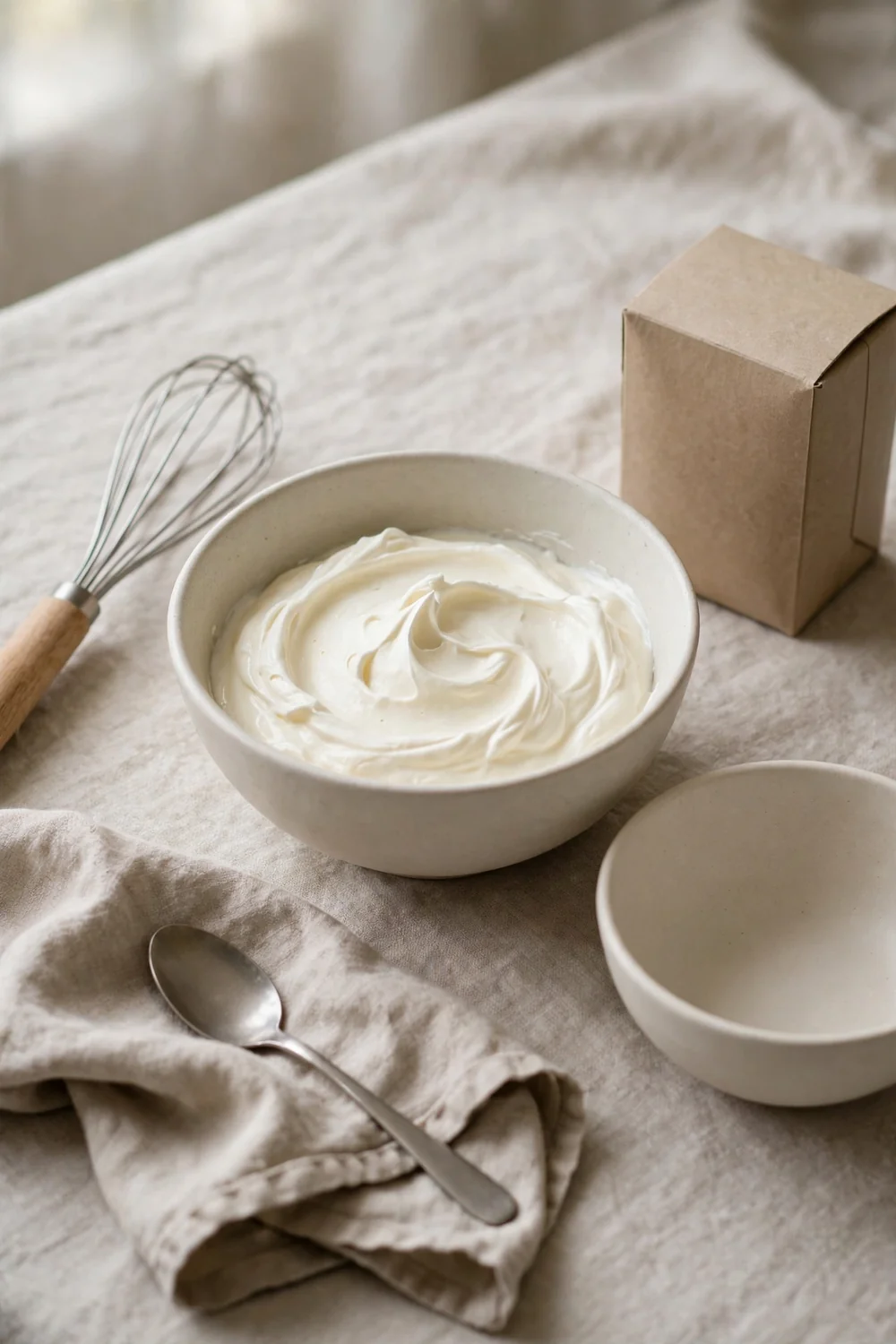
Cream thickens when tiny fat droplets link into a firm web that traps air. Warmth keeps that fat soft, so the web never sets and the whisk just slides through. Low fat cream has fewer droplets to link, which leaves the same loose result even with steady whisking.
That is why chill matters more than effort. A cold bowl, cold cream, and a cold whisk let the fat firm up fast, so peaks form with less work. Once you see thin cream as warm fat rather than failed cream, every fix below falls into place.
Pick Heavy Cream
Fat is what builds peaks, so cream choice decides the outcome before you whisk. Heavy cream holds enough fat to trap air, while light cream stays loose no matter how fast you whisk. Start with the right carton, and the rest gets easier.
- Buy heavy cream or heavy whipping cream, and check the label for at least 36 percent fat.
- Skip light cream, half and half, and single cream, since none hold firm peaks.
- Keep the carton cold in the fridge until the moment you pour.
- Shake the carton gently before pouring, then pour straight into the chilled bowl.
Chill the Bowl
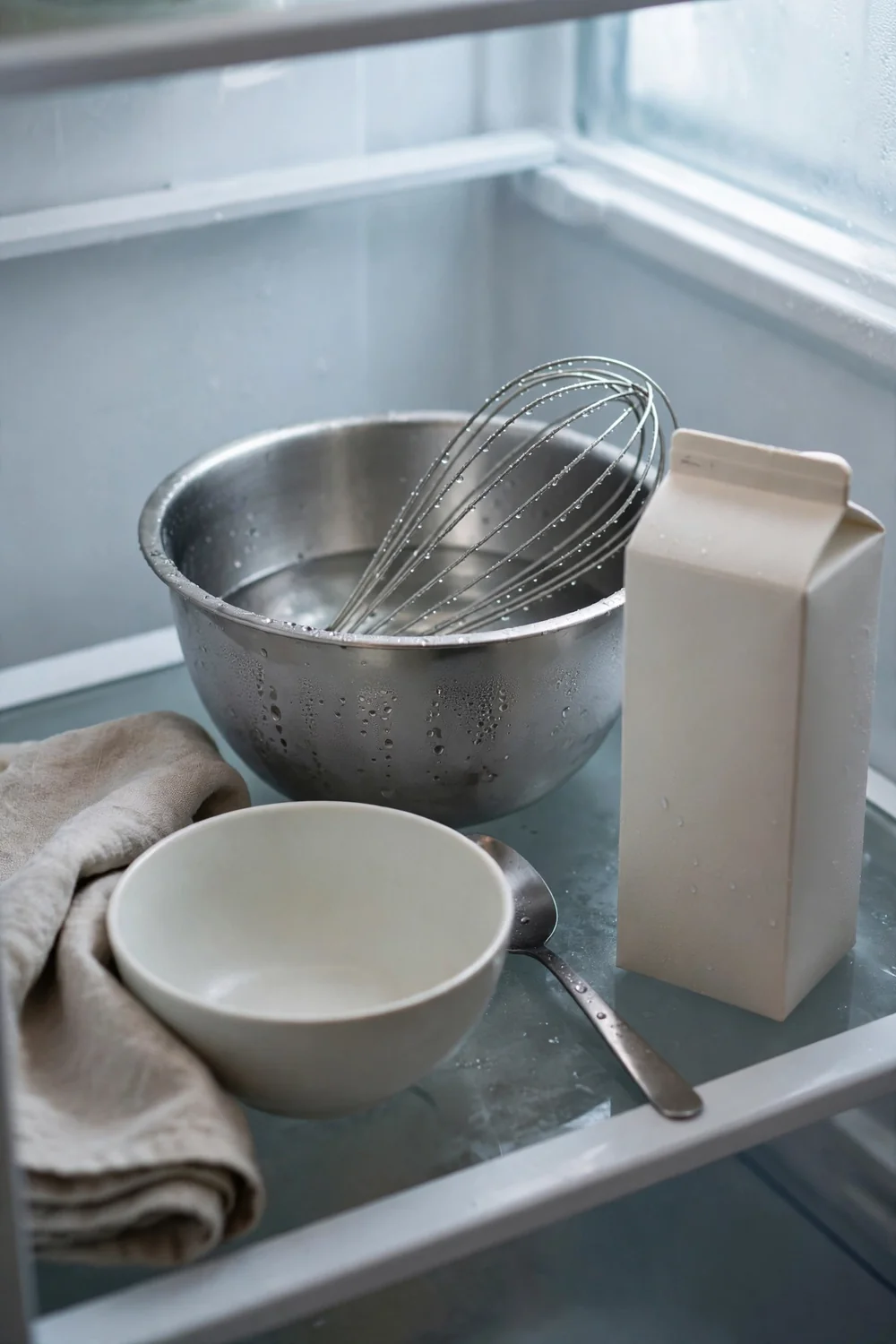
Quick Tip: Chill the bowl and whisk in the freezer for fifteen minutes before you start. A metal bowl chills fastest, since it holds the cold well. Do this before you measure anything else, so the tools are ready when the cream comes out.
A cold bowl keeps the fat firm while you whisk, so peaks build fast and hold their shape. A warm bowl melts the fat on contact, and the cream turns soupy before it ever thickens. Set a timer if it helps, and keep the bowl cold until the cream goes in.
Use Cold Cream
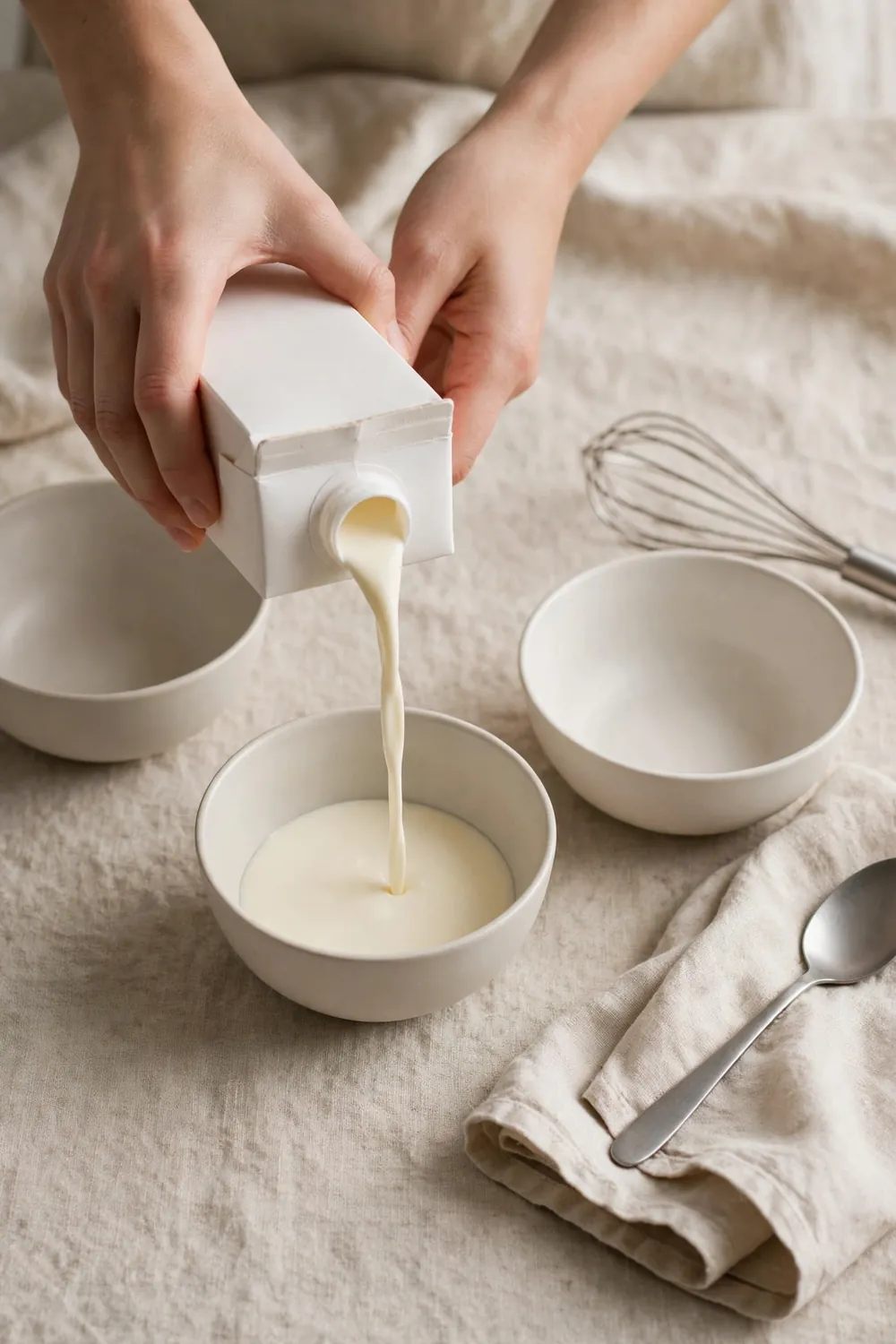
Common Mistake: Most cooks leave the cream on the counter while they gather tools. The cream warms in minutes, and warm cream whips thin no matter how fast you whisk. Room temperature cream looks fine, yet it hides the warmth that ruins peaks.
The Fix: Keep the carton in the fridge until the bowl and whisk are fully chilled. Pour the cream straight from the fridge, and start whisking at once. If the cream feels cool to the touch, it is ready.
Cold cream whips thick because the fat stays firm enough to trap air. Warm cream lets air slip out, so the bowl stays loose and the peaks fall flat. Check the carton with your hand before pouring, and chill it longer if it feels warm at all.
Whisk It Faster
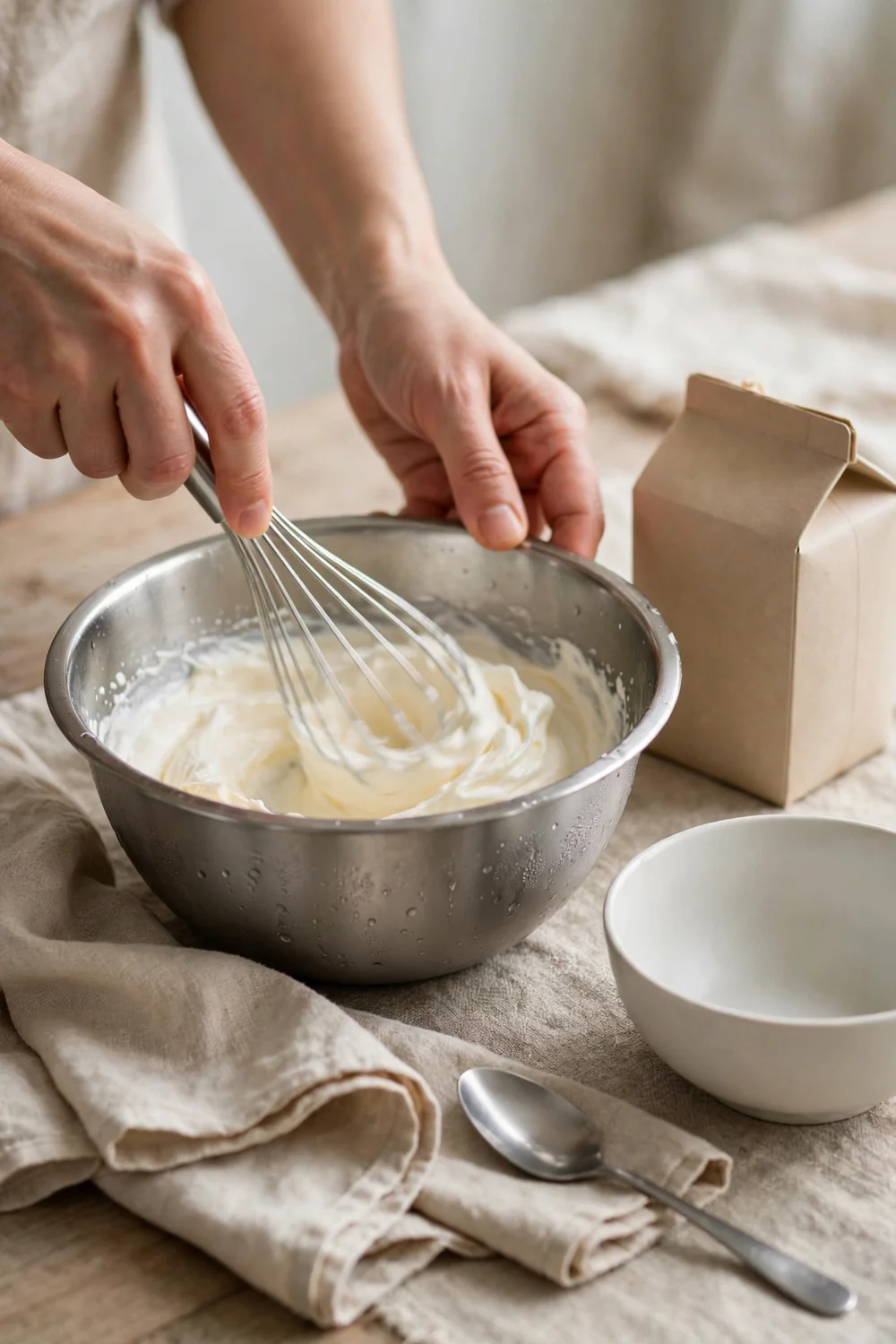
What You Need:
- Large balloon whisk: The wide wires pull in more air with each stroke.
- Chilled metal bowl: Cold steel keeps the fat firm while you work.
- Cold heavy cream: Firm fat is what traps air and builds peaks.
- Timer: A timer keeps you from drifting into slow whisking.
Speed builds peaks because each fast stroke folds air into the cream. Slow whisking lets the fat warm up, and the cream stays loose even after minutes of work. Use wide steady circles, keep the pace up, and watch soft peaks form within a few minutes.
Add Sugar Late
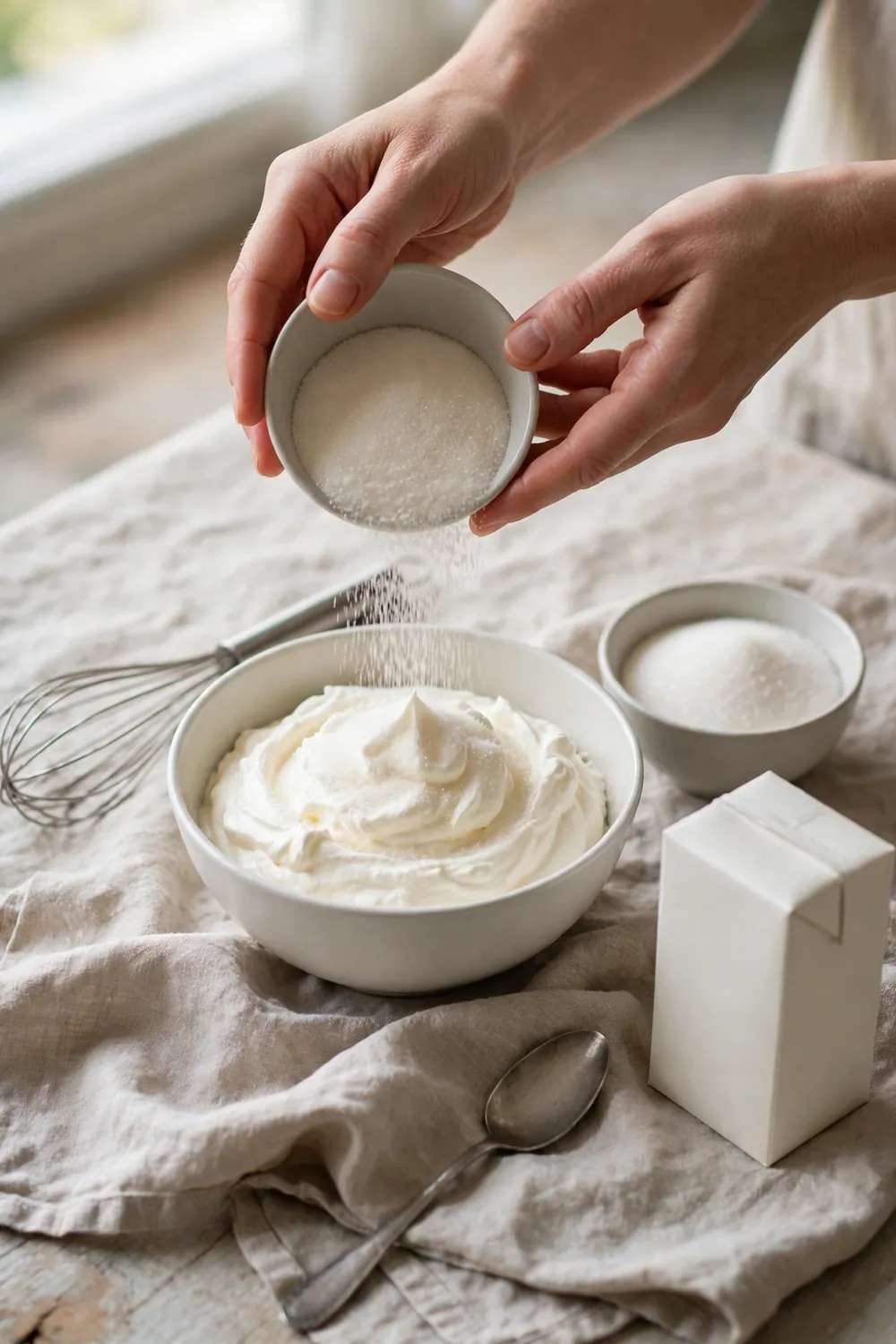
Before: Sugar added at the start weighs the cream down before peaks can form. The grains pull in moisture, and the extra liquid keeps the bowl loose. Early sugar turns a promising bowl thin and hard to rescue.
After: Sugar added near the end blends into cream that already holds soft peaks. The peaks stay tall, and the sweetness spreads evenly with a few more strokes. Late sugar keeps the texture thick and the flavor balanced.
Whip the cream plain until soft peaks curl at the whisk tip, then add sugar one spoon at a time. Whisk just enough to blend each spoon in, and stop as soon as the sugar disappears. Taste a small spoonful before adding more, since you can always sweeten further.
Add a Stabilizer
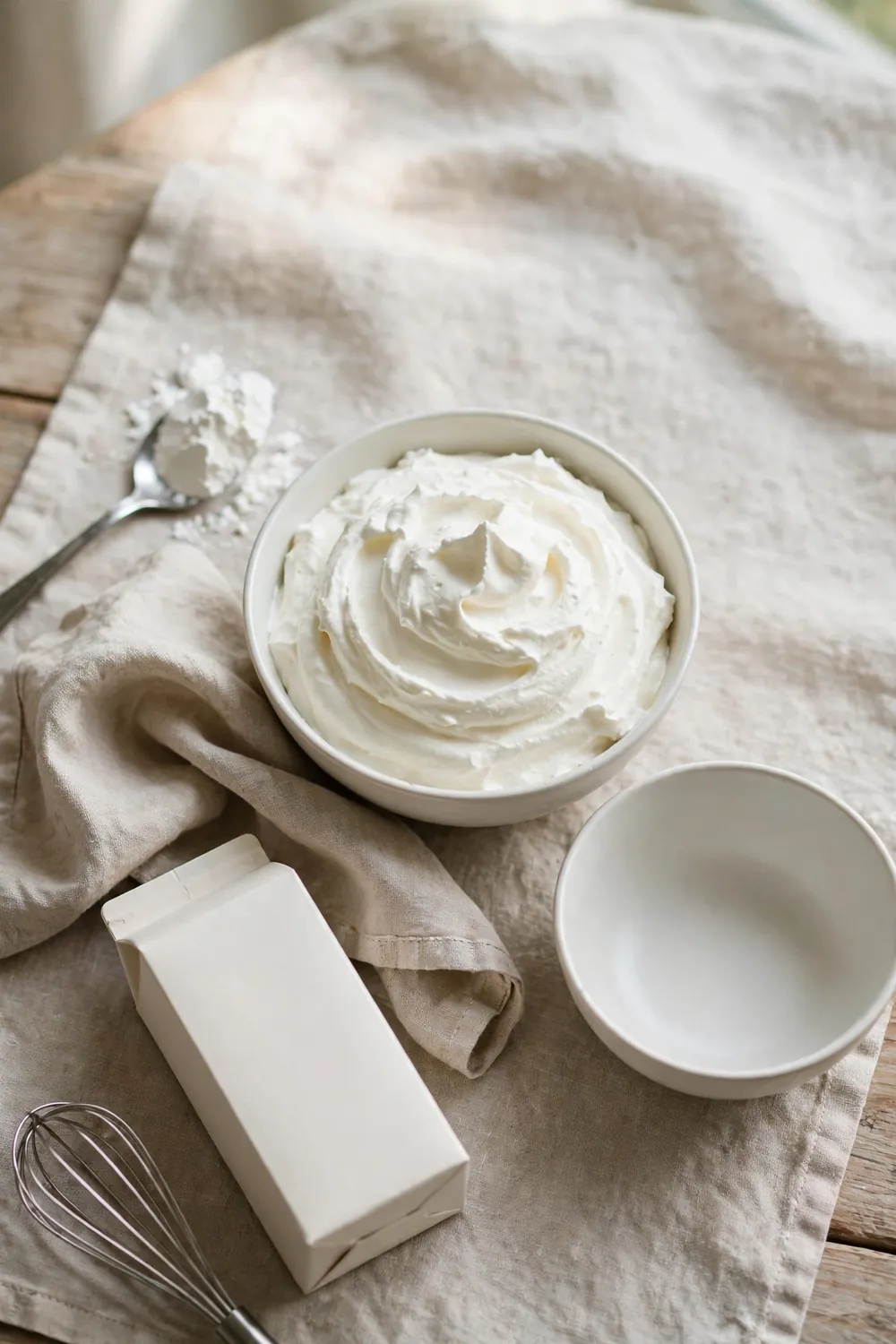
Do This:
- Mix one teaspoon of cornstarch with one tablespoon of powdered sugar before adding it.
- Whisk the mix in once soft peaks form, and blend it fully.
- Use stabilized cream for cakes and desserts that sit out for hours.
- Chill the finished bowl until serving time for the firmest hold.
Avoid This:
- Do not dump dry cornstarch straight into the bowl, since it clumps.
- Do not add a stabilizer after stiff peaks, since it will not blend in.
- Do not use more than one teaspoon per cup, since extra starch tastes chalky.
A stabilizer holds peaks steady, so cream made ahead still looks fresh at serving time. Plain cream softens within an hour, which suits a quick dessert but not a cake that waits. One small spoon of starch keeps the texture firm without changing the flavor at all.
Stop Before Butter
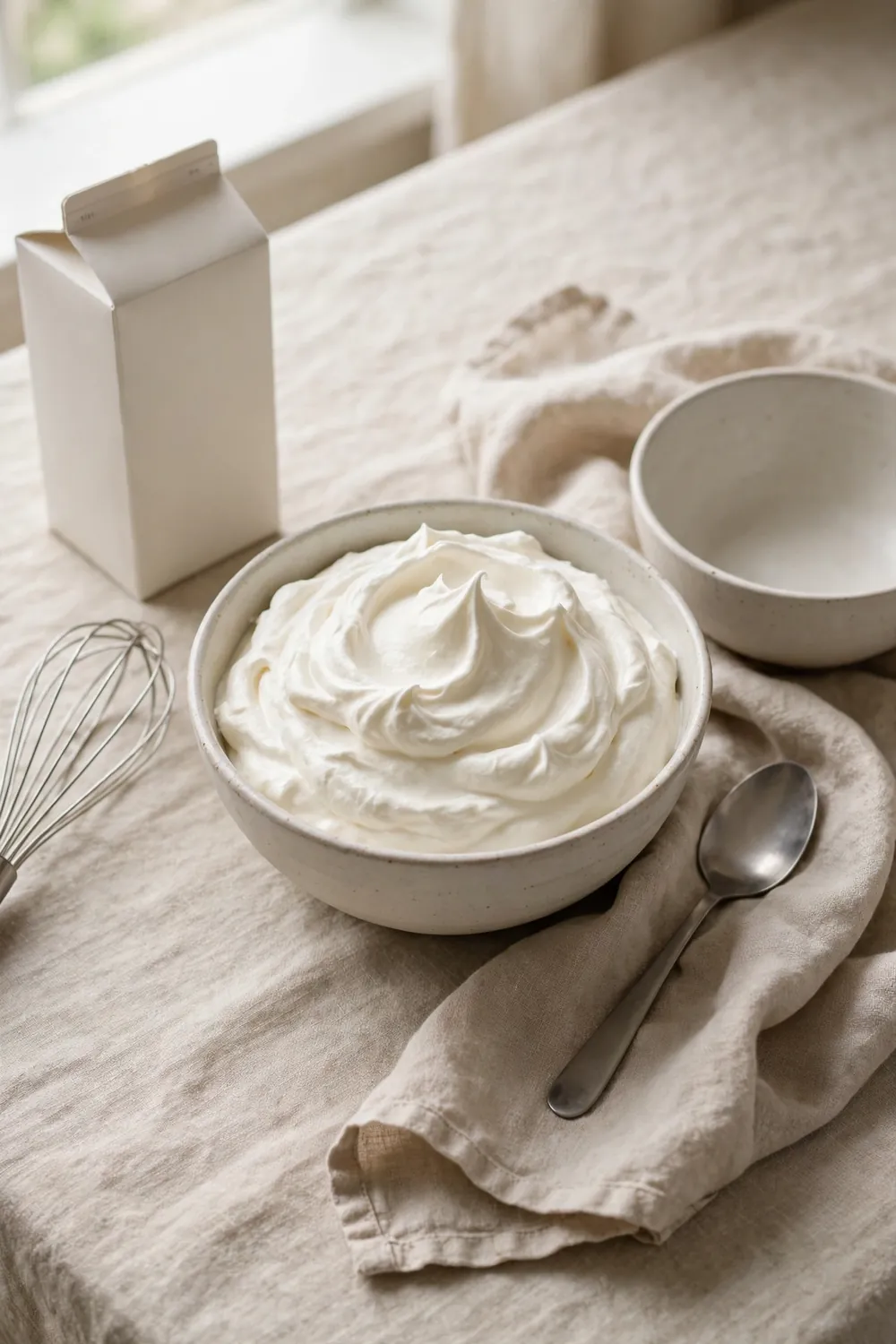
Time Needed: 3 to 5 minutes
Difficulty: Easy
Watch For: Soft peaks that curl
Result: Thick cream that holds shape
Cream moves from soft peaks to butter faster than most cooks expect. Stop when lifted peaks curl over softly, and the surface looks smooth and thick. A few extra strokes can turn the bowl grainy, so check after every few whisks near the very end.
Test One Bowl
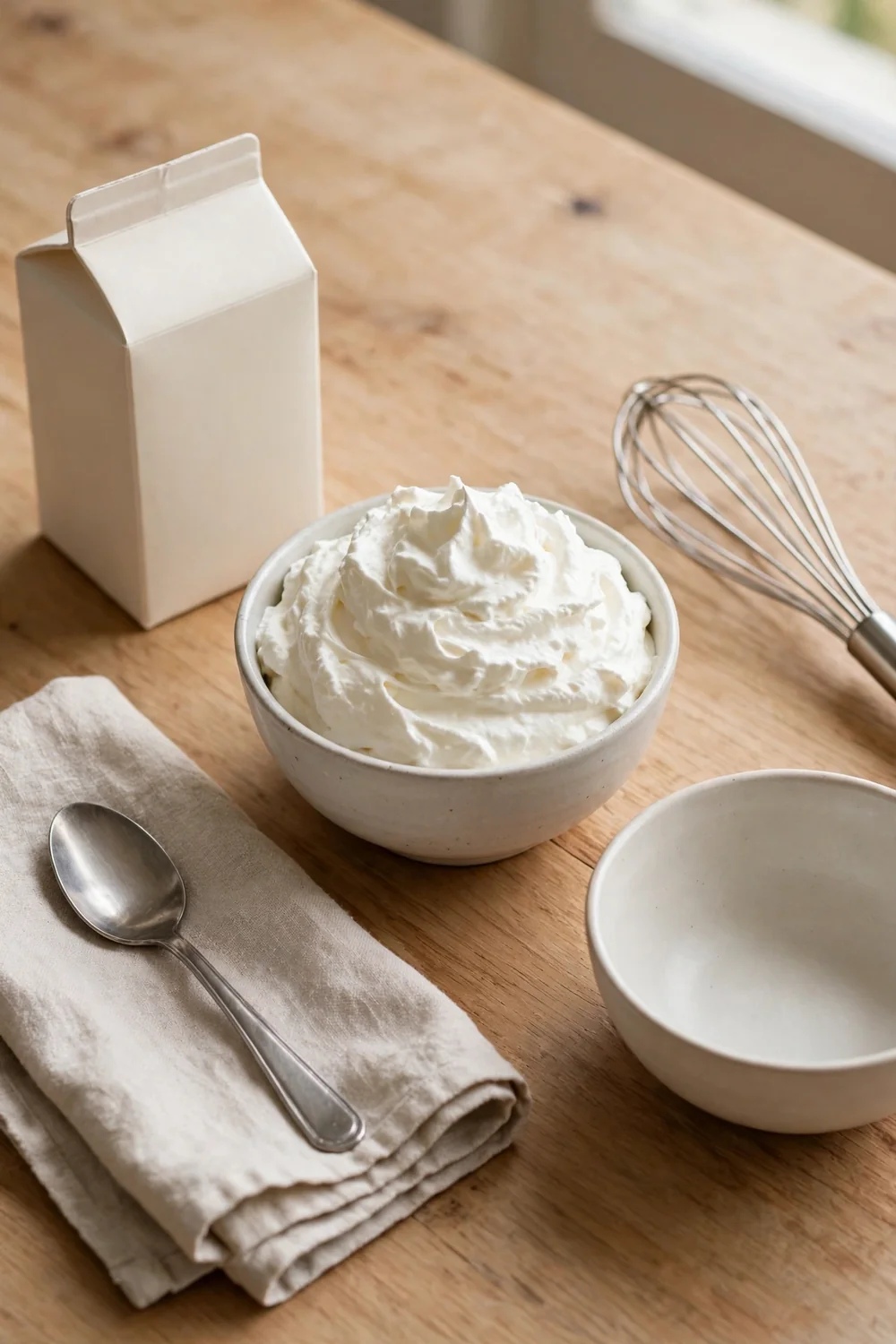
A small test bowl saves the whole carton when something feels off. Whip two or three spoonfuls of cream first with the chilled tools, and watch how fast peaks form. A quick test shows whether the cream needs more chill, more speed, or a different carton.
If the test thickens, whip the rest with confidence and the same steady pace. If it stays thin, chill everything for fifteen minutes longer before trying again. Testing takes two minutes, and it keeps one weak bowl from becoming a ruined dessert for guests.
Common Mistakes to Avoid
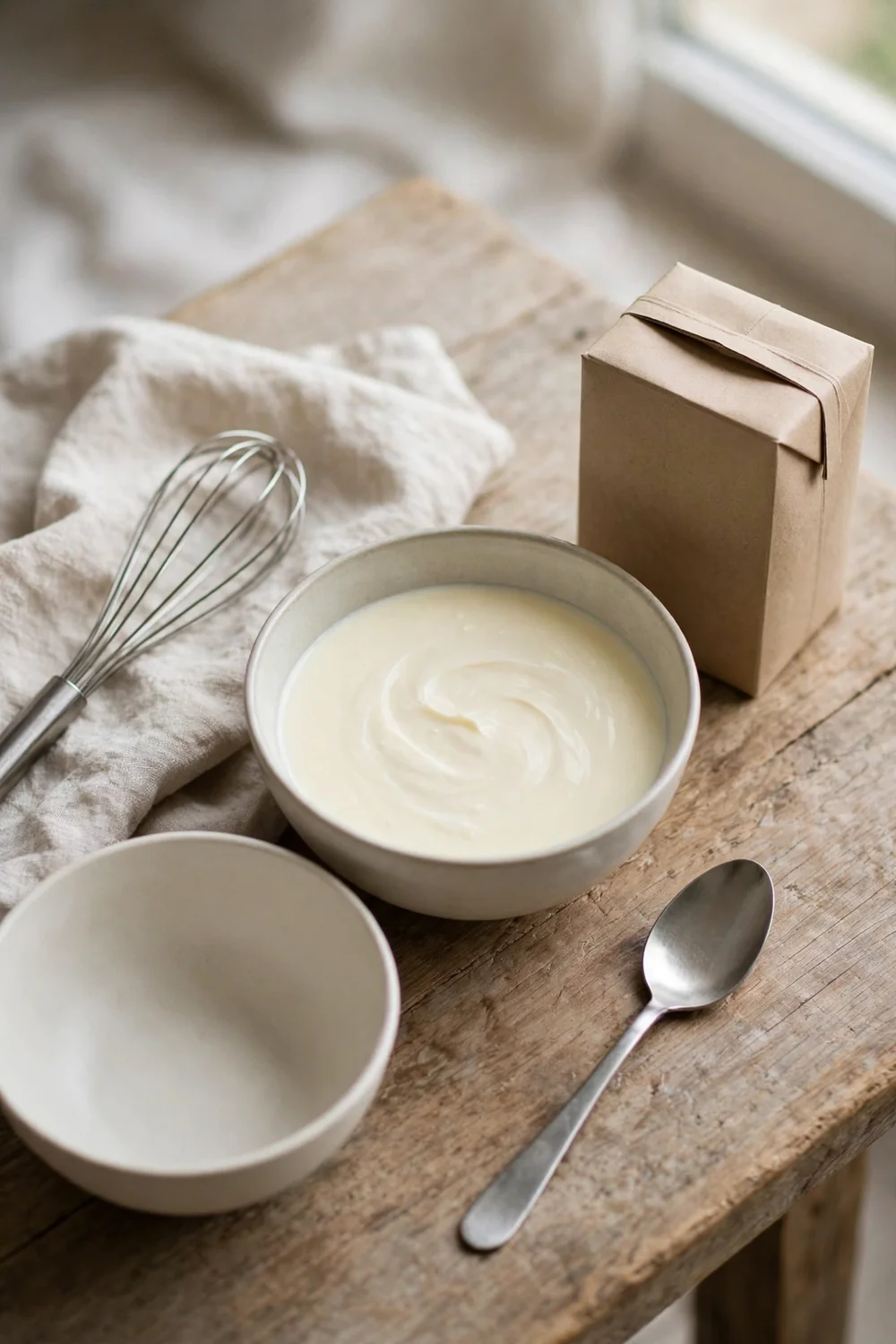
Most thin bowls come from a few repeatable habits, not bad cream. Fix one habit at a time, starting with chill and cream choice. The list below covers the mistakes I see most often in home kitchens. Each fix takes only minutes, yet each one protects the peaks.
- Do not whip warm cream straight from a warm kitchen counter, since warmth melts the fat that builds peaks.
- Do not use light cream or half and half, since low fat cream cannot hold firm peaks.
- Do not add sugar at the start, since early sugar weighs the cream down.
- Do not whip past soft peaks, since overwhipping turns the cream grainy and then buttery.
What Thick Cream Looks Like
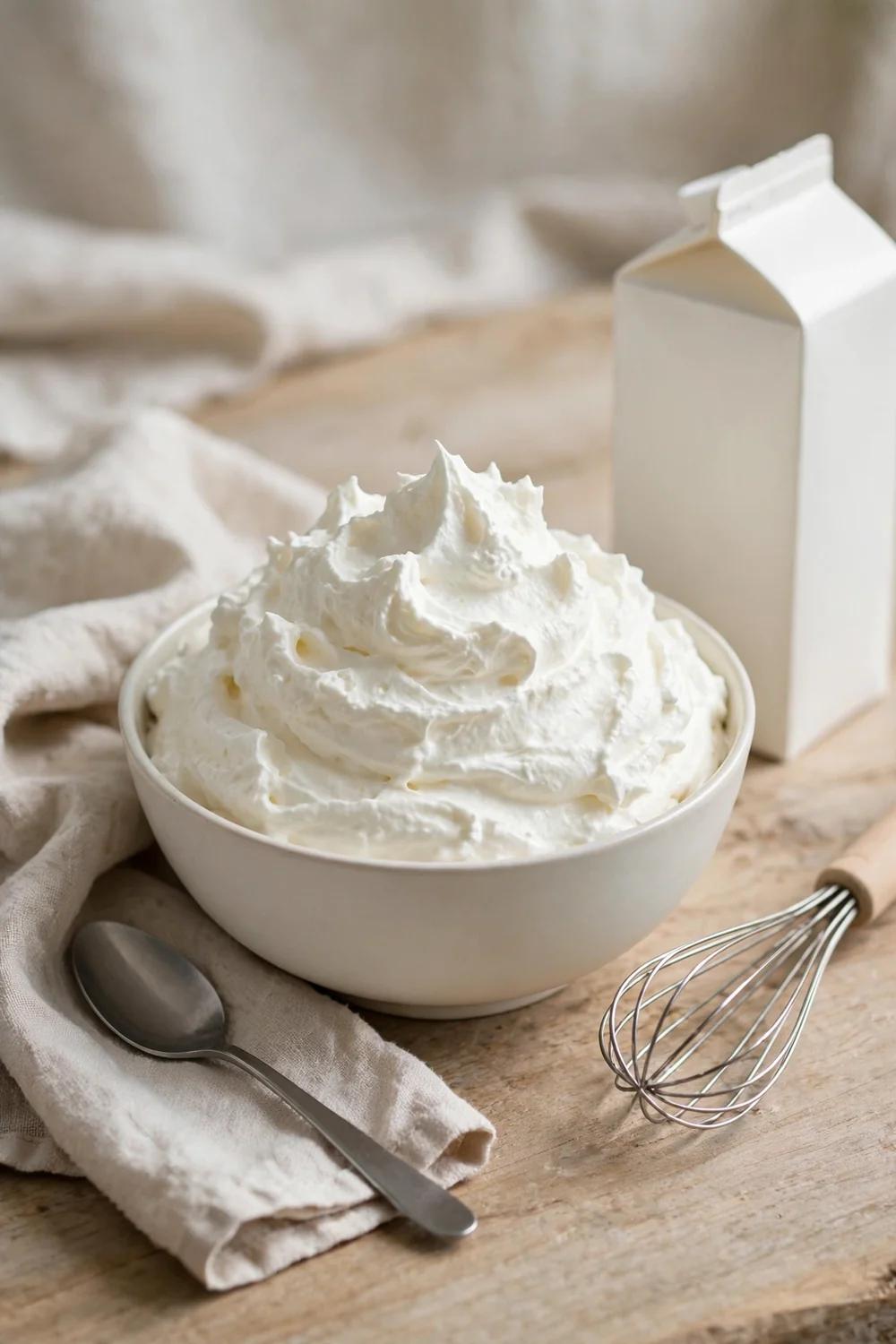
Quick Tip: Thick cream holds a peak when you lift the whisk, and the peak curls softly at the tip. The surface looks smooth and matte, with no thin puddles at the edges. Spoon a little up, and it should hold its shape for a moment.
Good cream shows tall even peaks and a fluffy texture that holds its shape on the spoon. The surface stays smooth, and the bowl shows no loose liquid when you tilt it gently. Serve it fresh for the best texture, since even thick cream softens as it waits.
Conclusion
Whipped cream not thickening comes from warmth, low fat, or slow whisking. Cold tools, heavy cream, and fast whisking build peaks that hold. Match the fix to the cause, and the next bowl can surprise you.
Start with the simplest fix first, then add the next one if the cream still stays thin. Small changes protect flavor while texture improves. Save this guide on Pinterest for your next dessert.
Chill the bowl, whip fast, and stop at soft peaks. Your next bowl can stay thick and fluffy. If your caramel also turns hard, read our guide on crystallized caramel for smooth, silky caramel at home every time.
2 Comments