Why Is My Beef Stew Tough And Bland? Easy Fix Guide
If your tough bland beef stew chews like leather, you are not alone. The wrong cut, rushed cooking, and flat seasoning all stack up. The good news is that time and a few smart steps fix all three.
This guide covers cut choice, browning, seasoning, and simmering. You will learn why the meat stays tough and how to build deep flavor. Every fix uses basic tools and pantry staples. It works well.
Once your stew turns tender, the next quick cooked dish may need the same care, so keep this rubbery shrimp guide handy for tender, juicy shrimp at every single dinner.
Why Stew Turns Tough

Most tough stew comes from rushed cooking. Connective tissue in stewing cuts needs long, gentle heat to soften, and a fast boil tightens the meat instead. Once the meat seizes, no quick fix will soften it.
Flat flavor has its own cause: seasoning added once at the start fades over a long cook. In my experience, the fix is twofold: give the pot time, and season in stages. Low heat plus layered seasoning turns a tough pot tender and rich. Low heat and plenty of time turn tough cuts meltingly tender, so never rush the pot.
Brown Meat in Batches

Browning builds the deep flavor that a pale stew lacks. Work in batches so the meat sears instead of steaming. Follow these steps for a rich brown crust. Brown the meat in small batches so the pan stays hot and each cube sears deeply on all sides.
- Pat the beef cubes dry with paper towels.
- Heat oil until it shimmers, then add one layer of meat.
- Sear each side for 2 to 3 minutes without moving it.
- Remove the batch and repeat until all the meat is browned.
Season in Two Stages

Quick Tip: Season the meat before browning, then season the finished stew again. Early salt builds flavor in the meat, and late salt wakes up the broth.
Seasoning in stages fixes the faded flavor that long cooking causes. Salt the cubes before searing, add herbs with the vegetables, and taste again at the end. If the stew still tastes flat, a splash of vinegar or Worcestershire sauce will lift it. Small, late additions make a big difference.
Fix a Tough Pot
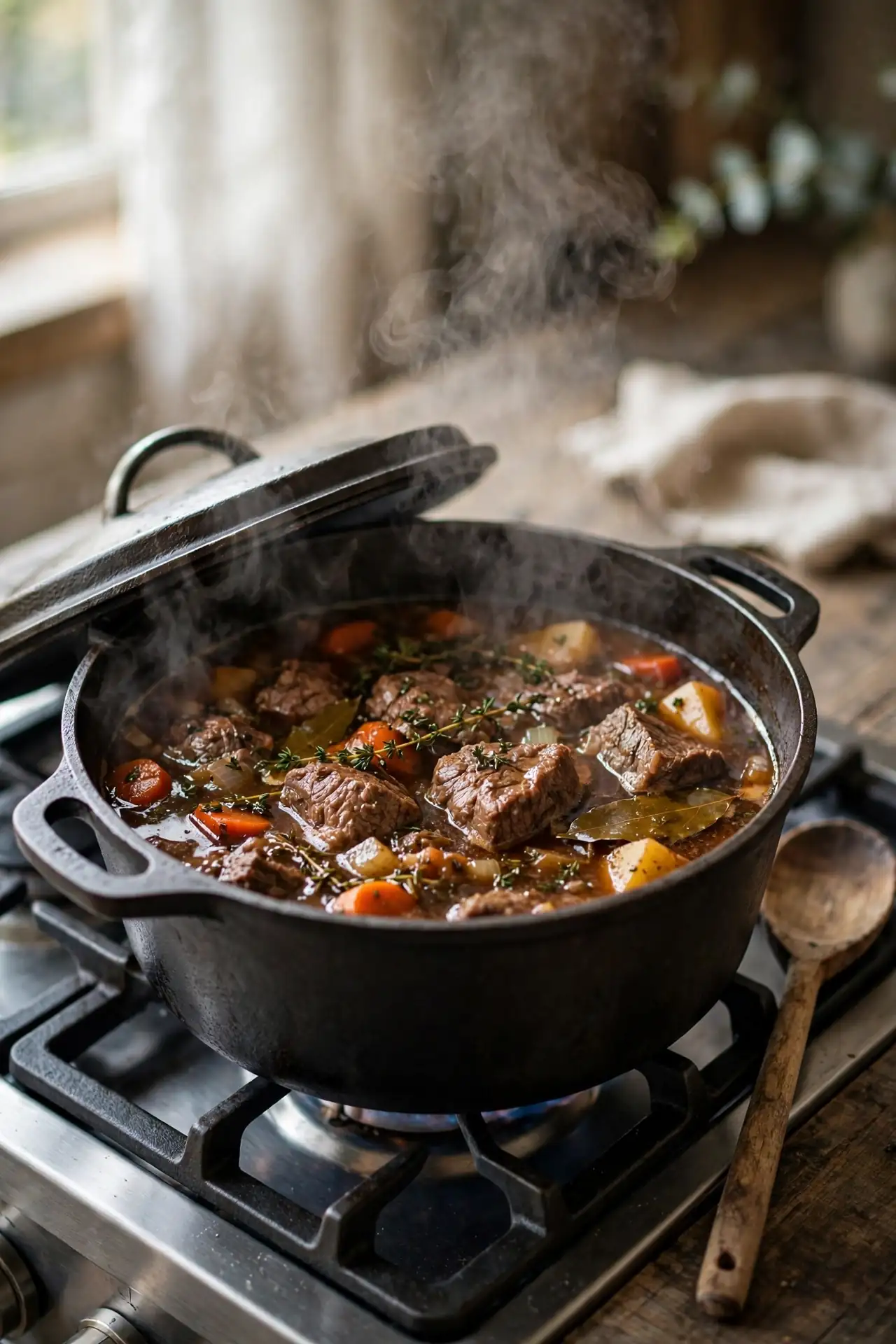
Common Mistake: Many cooks turn up the heat when the meat stays tough. Higher heat tightens the meat further and dries it out.
The Fix: Lower the heat and give it time. A gentle simmer for another hour will soften even a stubborn pot.
Patience is the real rescue here. Keep the pot at a lazy simmer, with only a few bubbles breaking the surface. Check the meat every 30 minutes, and stop when a fork slides in easily. If the broth gets too thick, add a splash of stock to keep the meat covered.
Choose the Right Cut
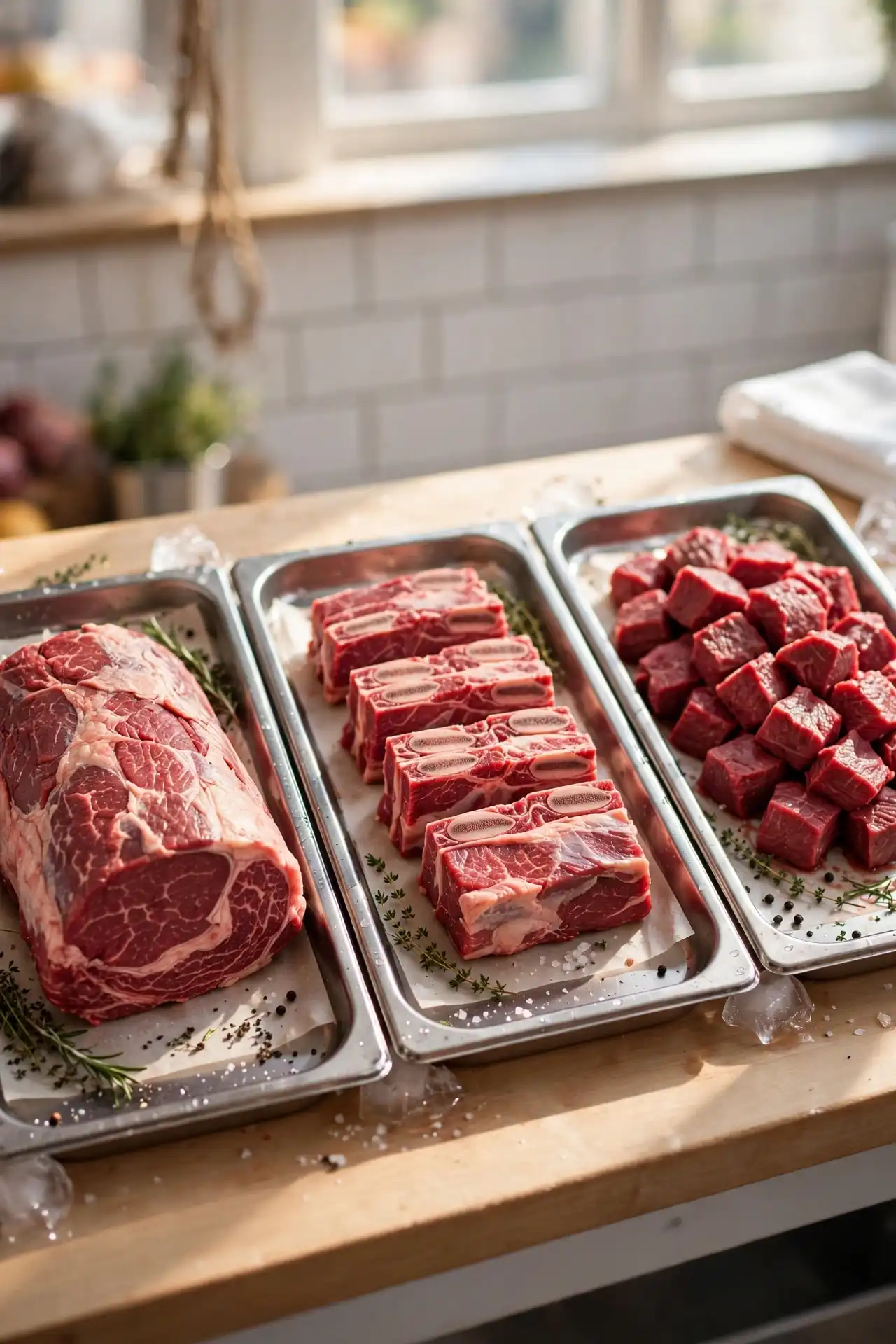
What You Need:
- Beef chuck: the best stew cut, with fat and tissue that melt into tenderness.
- Short ribs: rich and beefy, great for a deeper stew.
- Tomato paste: adds color and savory depth when browned.
- Red wine or stock: deglazes the pot and builds the sauce.
- Bay leaves and thyme: give the classic stew aroma.
Cut choice decides the final texture. Chuck is forgiving and turns tender with time, while lean cuts like sirloin dry out in a long cook. Buy one large piece and cut it yourself for even cubes. Even cubes cook evenly, so no piece turns tough while another falls apart.
Before Tough After Tender

Before: The meat is chewy and dry. The broth is thin and pale, and the vegetables taste plain.
After: The meat yields to a fork. The broth is glossy and deep, and every bite tastes rich.
The change comes from browning, patience, and staged seasoning, not from a new recipe. Brown in batches, simmer low, and season twice. Those habits turn a tough pot into a stew worth serving to guests. A heavy pot holds heat evenly and prevents scorching, so the stew cooks gently for hours.
Do and Don’t Basics

Do This:
- Use chuck or another stewing cut.
- Brown the meat in batches.
- Simmer low with the lid ajar.
- Season in two stages.
Avoid This:
- Do not boil the stew hard.
- Do not crowd the pan when browning.
- Do not add all the salt at the start.
- Do not rush a tough pot with high heat.
These habits protect both texture and flavor. A good cut, a brown crust, and slow heat do most of the work. Once the routine is set, tender stew becomes the normal result. Taste before serving and adjust the salt last, since long cooking dulls seasoning over time in the pot.
Quick Stew Facts

Time Needed: 2 to 3 hours on low heat.
Difficulty: Medium, with mostly hands off time.
Best For: Cold weekends and family dinners.
Pro Tip: Stew tastes better the next day.
An overnight rest lets the flavors blend and the meat relax. Cool the pot quickly, refrigerate it, and reheat gently the next day. Skim any fat that firms on top, taste, and adjust the salt. The stew will taste deeper than it did fresh. Serve over mash for a hearty family dinner.
Simmer Low and Slow

Low, slow heat is what turns tough tissue into silky tenderness. The pot should barely bubble, with the lid ajar so the broth reduces gently. That calm simmer lets the meat relax instead of seizing.
Check the pot every 30 minutes and stir gently so nothing sticks. If the broth drops too fast, add a splash of stock and lower the heat. A stew that simmers calmly for two hours will always beat one that boils hard for one. Simmering low and slow is the whole secret to tender beef that falls apart on the fork.
Rescue a Bland Batch
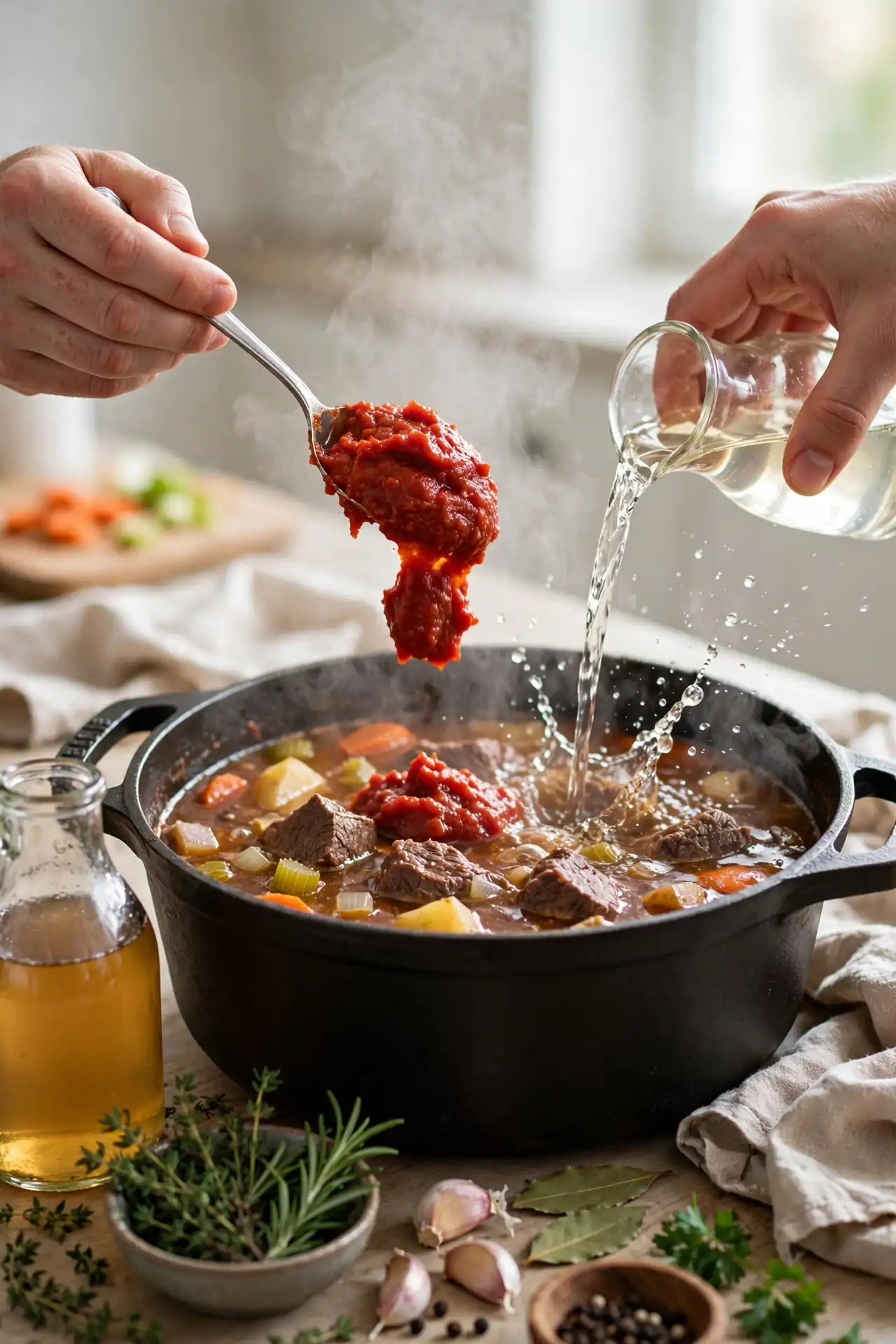
A flat stew can still be saved at the end. Add depth, acid, and salt in small amounts, tasting after each one. Work slowly so the flavor builds instead of turning sharp. Add a splash of vinegar to wake up a flat stew right before serving.
- Taste the broth and note what is missing.
- Stir in a spoon of browned tomato paste.
- Add a splash of vinegar or Worcestershire sauce.
- Simmer 10 minutes, then adjust salt.
- Finish with fresh herbs just before serving.
Serve It Rich
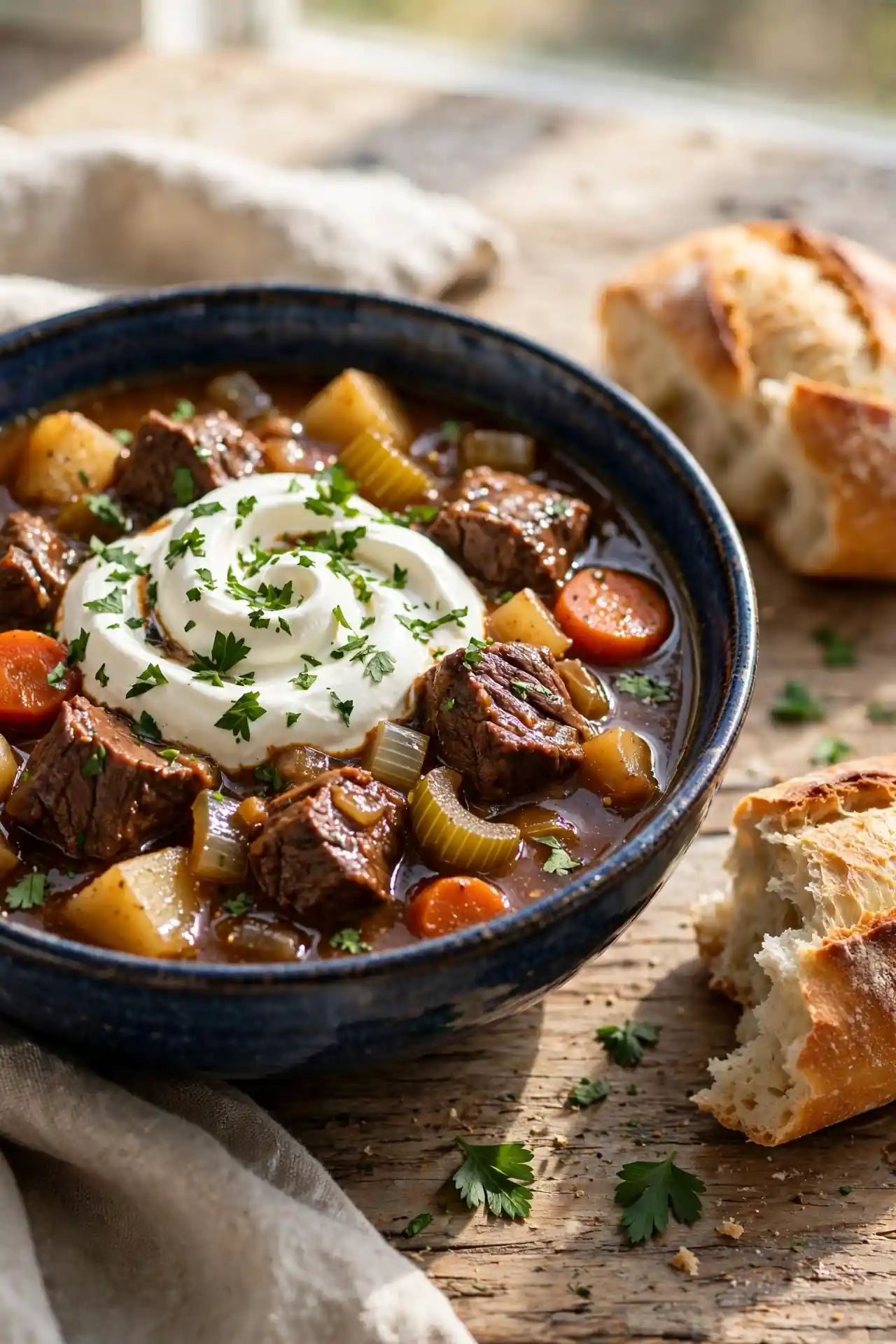
Quick Tip: Serve stew in warm bowls. A cold bowl cools the gravy fast and dulls the flavor, while a warm bowl keeps it rich.
Serving matters for a stew that took hours to build. Ladle the meat and vegetables first, then spoon the gravy over the top. A fresh herb sprinkle and warm bread turn the bowl into a full meal. The same stew will taste far better with a careful serve.
Conclusion
Fixing tough bland beef stew comes down to the right cut, patient browning, and slow simmering. Those three habits give tender meat and deep flavor. Once they are routine, rich stew takes no extra effort.
Work through these fixes one at a time, and your next batch will show the difference.
Season in stages, and let the pot rest before serving if you can. For another dish where timing is everything, see this chicken soup guide for a clear broth, then serve your stew while it is still steaming hot tonight.