20 Beef Pho Ideas to Add to Your Truly Robust Favorites
A steaming bowl of beef pho is Vietnam’s gift to cold mornings and slow Sundays alike, all clear spiced broth, tender slices, and herbs piled high.
This collection gathers twenty versions worth saving, from the classic Hanoi bowl to brisket rich pots, meatball comfort bowls, spicy chili editions, and weeknight shortcuts that skip the all day simmer without losing the soul of the dish.
Every bowl below comes with the small details that matter, broth clarity, charred aromatics, herb timing, and the order things hit the water. Save your favorites, stock the freezer, and let the first spoonful do the convincing at your table. And for taco night, my beef barbacoa steals the show.
Classic Hanoi Style
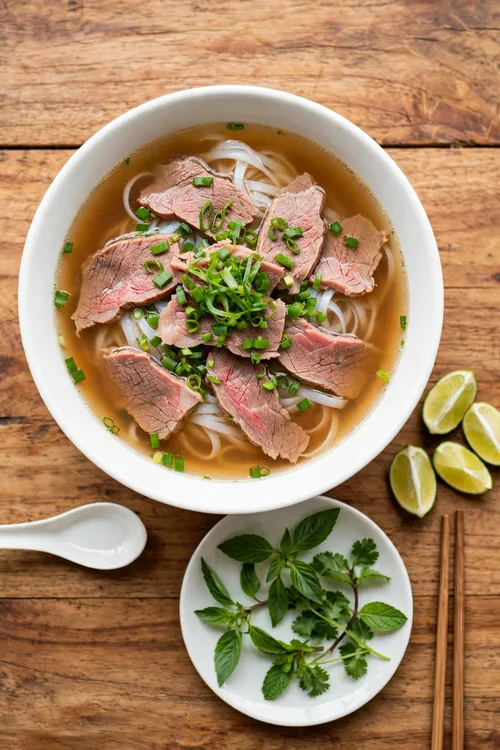
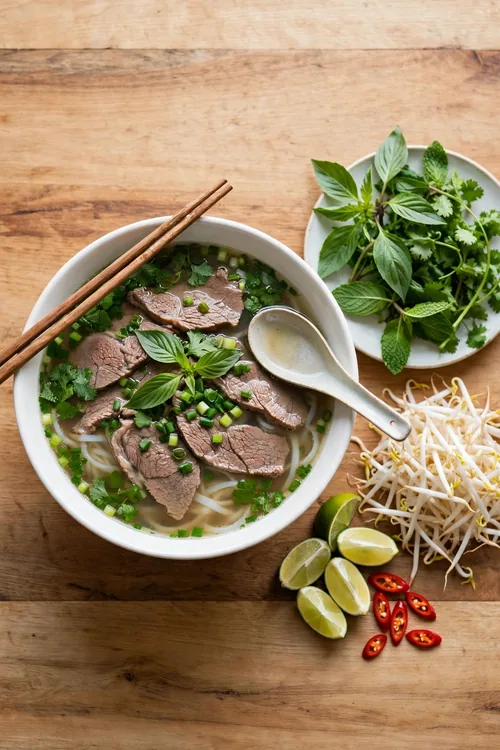
The Hanoi bowl is built on restraint, a broth so clear you can see the noodles through it, seasoned with fish sauce and barely a whisper of sugar. Raw beef slices cook right in the ladled soup, staying silky and pink instead of turning boiled and gray at the edges.
Northern bowls lean on charred ginger and a tangle of scallions instead of the big herb plates of the south. In my experience this is the version that teaches you the broth itself, because a weak pot has absolutely nowhere to hide behind garnishes and heavy toppings here.
Rare Beef Slices
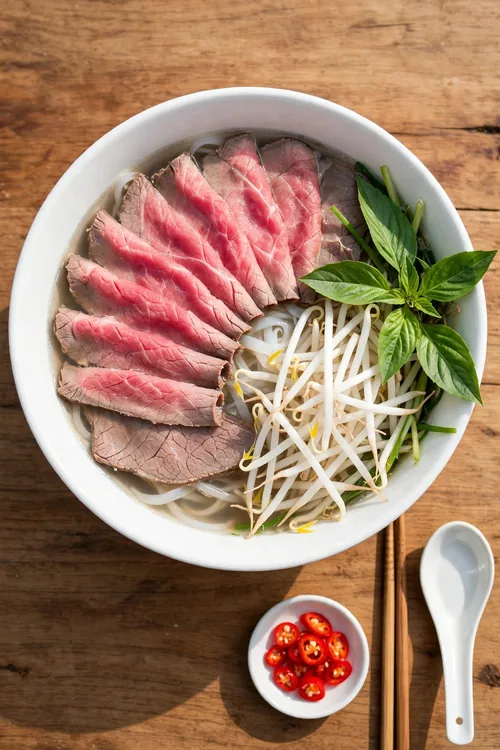
- Freeze the steak for thirty minutes before slicing, and the knife glides into paper thin sheets instead of tearing.
- Slice across the grain always, so each ribbon stays tender instead of chewing like a rubber band.
- Lay the raw slices over the hot noodles and let the broth do the cooking in the bowl.
- Serve within a minute of ladling, while the centers are still blushing pink and silky.
Paper thin slices are the whole point of this bowl, and the freezer trick is what makes them possible at home without a deli slicer. I have served this to skeptical friends who swore raw beef sounded risky, and every one of them asked for a second bowl.
Brisket Rich Bowl
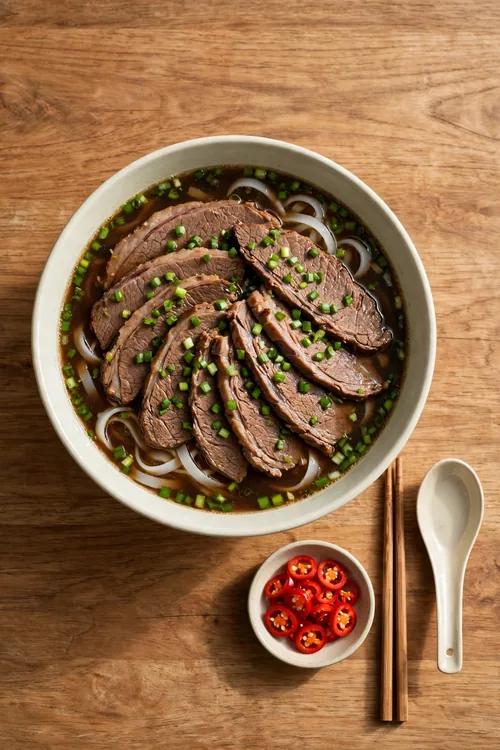
Quick Tip: Simmer the brisket in the broth until it yields to a spoon, then chill the whole piece before slicing. Cold brisket cuts into clean, thin sheets that stay intact. Warm the slices back through the broth for just a minute before serving.
Brisket brings the deep, beefy bass note that lean slices cannot, and its fat melts into the broth during the long simmer. Serve the slices fanned over the noodles with the cooking broth ladled hot on top, and the bowl tastes like it came from a shop that has simmered the same pot for years.
Meatball Comfort Pot
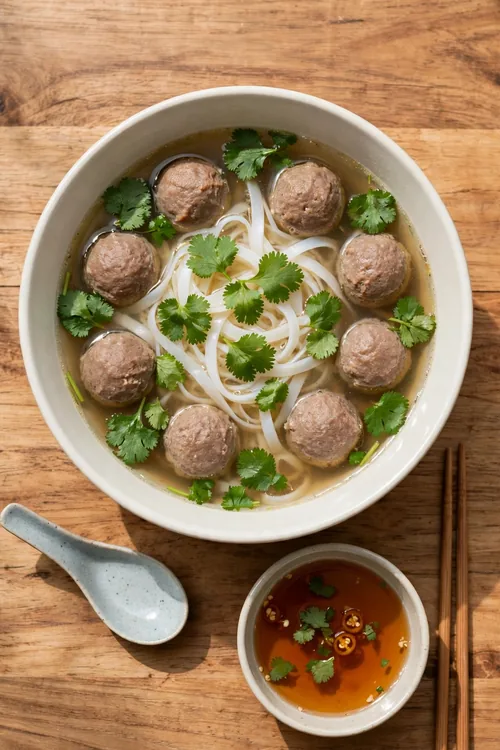
BEFORE: Too many meatball bowls start with dense, bouncy balls that taste like they came from a freezer bag. They simmer into rubber, squeeze out no juice, and sit in the broth like strangers, while the soup around them stays thin and the whole bowl feels like two separate dinners sharing one dish.
AFTER: Hand mixed balls change everything, ground beef folded with minced onion, garlic, fish sauce, and a pinch of baking powder for lift. Poached gently in the broth, they stay tender and springy, season the soup as they cook, and give back little bursts of juice in every single bite you take.
This is the bowl kids request and grandparents approve of, familiar and deeply comforting without being plain. Make a double batch of the meatballs and freeze half on a tray, because a pot of broth plus frozen meatballs is a weeknight dinner hiding in plain sight in your freezer.
Charred Onion Broth
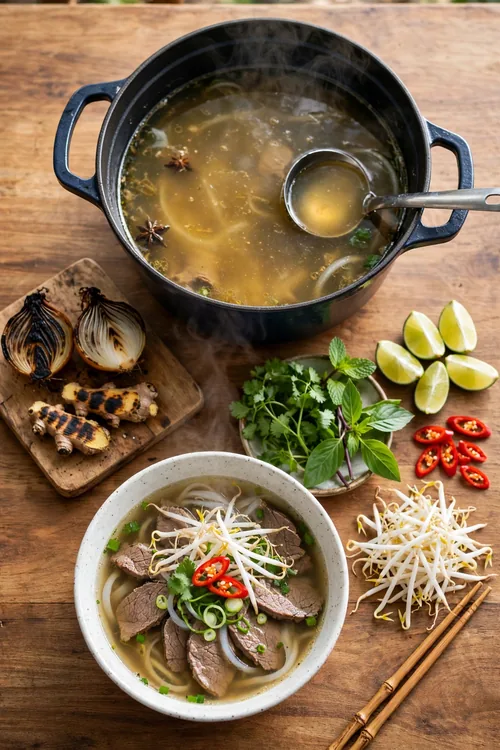
- Halve an unpeeled onion and a fat hand of ginger, then char both cut side down in a dry cast iron pan until blackened at the edges.
- Rinse the char under water, rubbing off the loose black bits while keeping the deep brown color.
- Add the charred aromatics to your broth with star anise, cinnamon, and cloves for the last hour of simmering.
- Strain the broth through a fine sieve so all the spice and char stay behind in the cloth, not the bowl.
Charring is the step shortcuts skip and the one your nose notices first, that smoky sweetness drifting off the pot. It takes ten minutes and a hot pan, and it is the difference between a bowl that tastes flat and one that tastes like a Hanoi side street at dawn.
Broth Clarity Choices
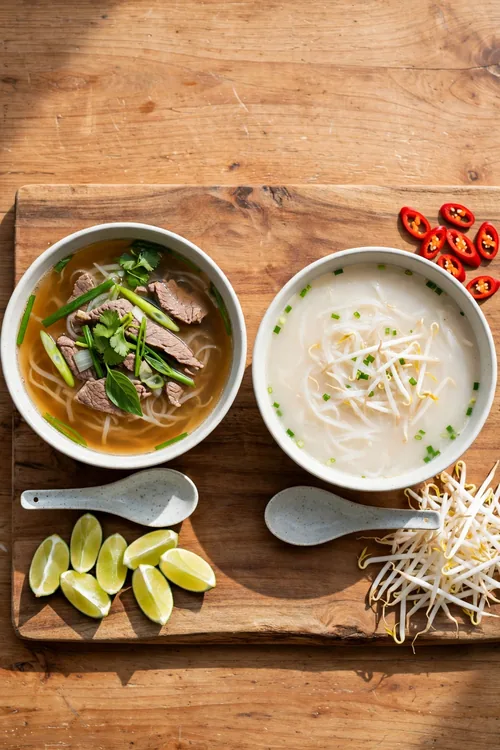
| Point | Clear Broth | Cloudy Broth |
|---|---|---|
| Skimming | Skimmed often, fat lifted away | Skimmed rarely, fat left in |
| Flavor | Clean, bright, and spice forward | Rich, heavy, with rounder edges |
| Look | Amber and see through | Milky and opaque |
| Best for | Classic bowls and rare beef | Brisket and meatball pots |
Neither bowl is a mistake, they simply serve different moods at different tables. Clear is the traditionalist standard and the harder one to fake, while cloudy forgives a rushed pot and leans into comfort. Learn the clear version first, and the cloudy one becomes a choice instead of an accident.
First Bowl Basics
- DO: Char the onion and ginger until blackened at the edges, because that smoky base flavors the whole pot.
- DO: Skim the broth in the first hour, lifting off foam so the finished soup stays clear and bright.
- DO: Warm the bowls with hot water before ladling, so the soup stays steaming at the table.
- DO: Set herbs, lime, and chilies on a side plate and let each person season their own bowl.
- DON’T: Boil the broth hard, because a rolling boil turns it cloudy and muddy tasting.
- DON’T: Cook the noodles in the broth pot, since their starch clouds the soup and dulls the spices.
- DON’T: Add the herbs early, because basil and cilantro blacken and lose their perfume in hot soup.
- DON’T: Salt everything at the start, since fish sauce and reduction change the seasoning as it simmers.
First bowls teach more than any video, and the mistakes are nearly always the same rushed handful of moments. Follow the list above and your first pot will taste like your tenth, which is exactly the confidence a new cook needs before inviting friends over to share it with pride.
Weeknight Shortcut Pot
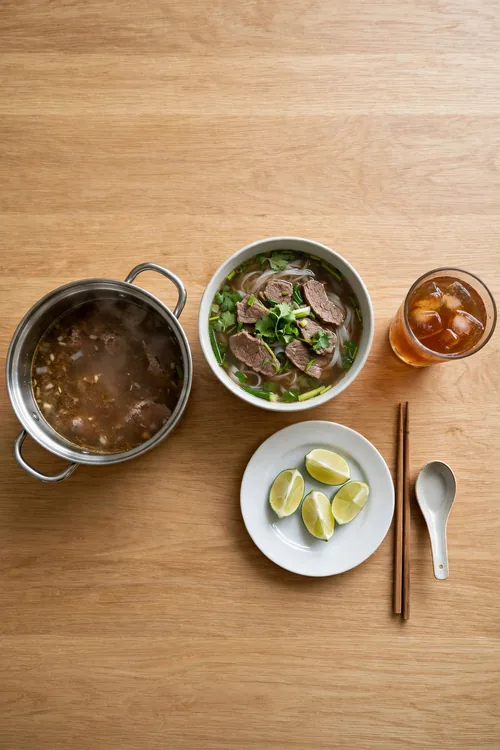
Cost: Low, mostly bones, spices, and pantry staples
Time Needed: About 45 minutes with stock shortcuts
Difficulty: Easy
Best For: Busy weeknights and first time cooks
A shortcut bowl is not a lesser bowl when the seasoning is right and the herbs are fresh. Good stock, charred aromatics from a quick pan sear, and fish sauce added in small splashes get you remarkably close to the all day version on a Tuesday night budget of time.
Spicy Chili Kick

Heat changes the personality of this broth completely, turning a gentle morning soup into something with a slow burn at the back of the throat. Fresh red chilies sliced over the top keep their bright fire, while chili oil settles into the fat and carries warmth through every spoonful.
Balance is the whole skill here, heat layered on top of the warm spices instead of bulldozing them flat. Add the chilies in stages and taste as you go, because a bowl that makes you sweat through the star anise has simply traded one pleasure for a louder one.
Slow Cooker Broth
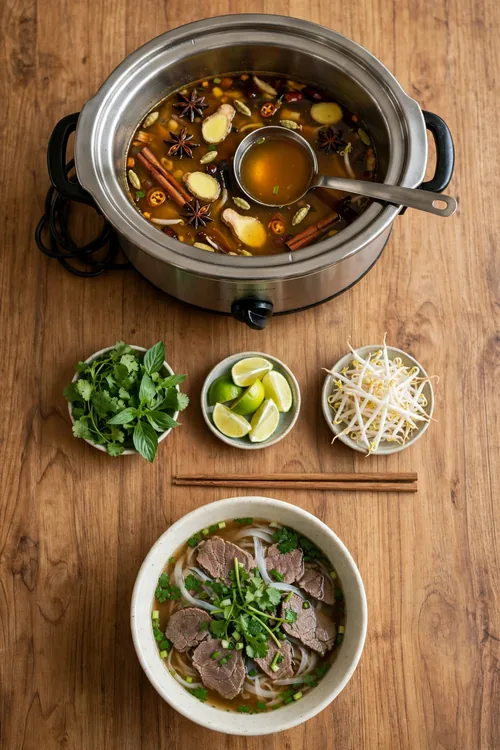
- Brown the beef bones and aromatics on a sheet pan first, because the slow cooker will never brown anything for you.
- Fill the cooker with bones, charred onion, ginger, and spices, then top with water just to the line.
- Cook on low for eight to ten hours, until the broth tastes round and the fat renders clear.
- Strain, chill overnight, and lift the solid fat cap off in one clean piece the next morning.
Slow cooker broth is the version for people who want a Saturday pot with a weekday schedule. The flavor runs a little softer than a stovetop simmer, but a hard char on the aromatics and a final splash of fish sauce at serving close the gap almost completely for most tables.
Instant Pot Fast
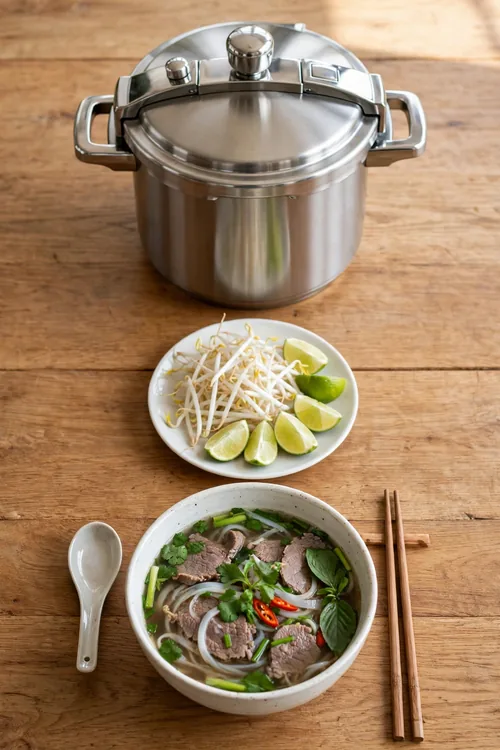
Quick Tip: Use the pressure cooker for the broth only, and keep the beef slices and noodles out of it entirely. Thirty five minutes under pressure pulls the spice and bone flavor into the water beautifully. Everything else cooks faster and fresher outside the pot.
Pressure cooking trades a little clarity for a lot of time, and on a weeknight that trade is easy to accept. Skim well after the lid comes off, let the pot settle for ten minutes, and the broth pours clearer than you would expect from such a fast method.
Herb Loaded Garden
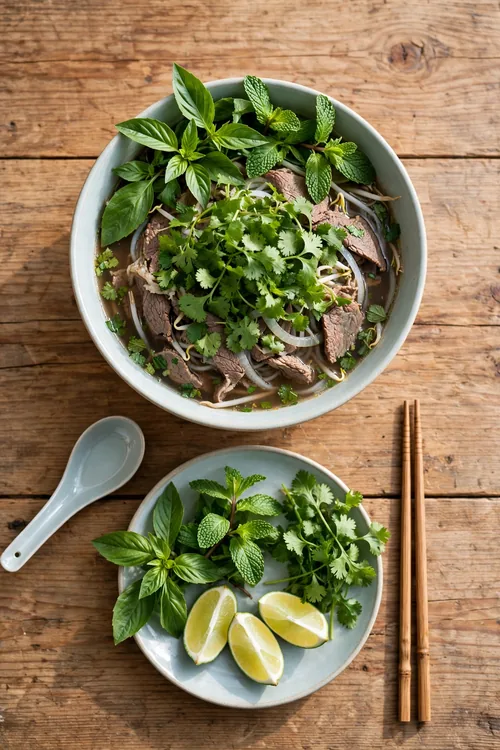
BEFORE: A bowl with three tired basil leaves wilting on top tastes like an apology, no matter how good the broth underneath it is. The herbs are not decoration in this soup, they are half the flavor, and a skimpy handful leaves the bowl smelling flat and tasting one dimensional by the second spoonful.
AFTER: A proper herb plate changes the math, basil, mint, cilantro, and sawtooth herb piled loose and fragrant beside every bowl. Torn in at the table, the leaves stay green and loud, perfuming the steam and giving each bite a fresh top note that keeps the rich broth from ever feeling heavy.
Herbs go in at the table, never in the pot, and that one rule protects everything green and fragrant in the bowl. Buy more than you think you need, wash them gently, and keep the plate within reach, because people always reach back for a second handful halfway through.
Star Anise Depth
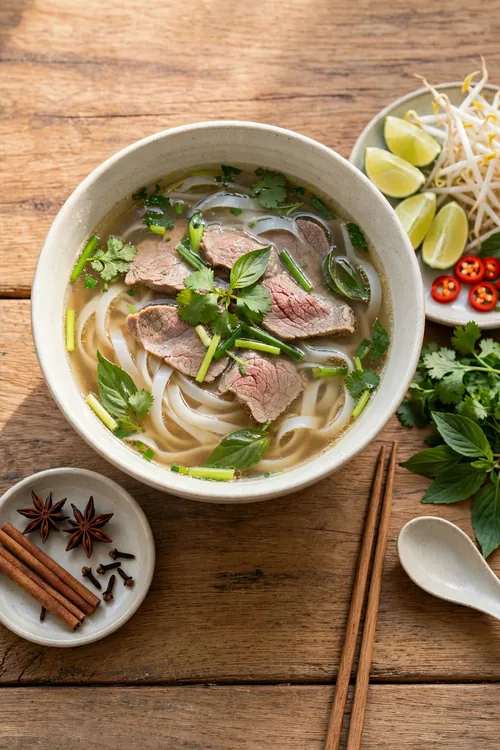
- Toast whole star anise in a dry pan for one minute, until the pods smell sweet and faintly like licorice.
- Add the pods to the broth for the final forty minutes only, so the flavor perfumes without taking over.
- Count your pods going in and count them coming out, because a lost pod keeps steeping in the pot.
- Balance with cinnamon and clove in smaller amounts, letting the anise stay the clear lead voice.
Star anise is the spice people taste without naming, the quiet sweetness behind every good bowl. It is powerful enough that two pods flavor a whole pot, and bitter when it overstays, so treat it like a guest you invite in late and walk politely to the door on time.
Broth Base Two Ways

Bone Broth Base: Simmered from roasted marrow bones and knuckles for six hours or more, this base carries body that gelatin gives and no powder can fake. It pours rich, coats the noodles, and sets softly in the fridge overnight, the surest sign the bones gave everything they had to give.
Quick Stock Base: Built on good store bought stock, charred aromatics, and thirty minutes of spice simmering, this base wins on speed and honesty. It tastes lighter and cleaner, asks almost nothing of your afternoon, and still beats a rushed bone pot that never got the hours it truly needed.
Choose the base your day can honestly support, because a rested cook seasons better than a resentful one. I keep frozen bone broth for weekends and lean on the quick stock all winter on weeknights, and both bowls earn their place at my table without any apology at all.
Table Serving Rules

| DO | DON’T |
|---|---|
| Warm every bowl before ladling | Serve soup in cold bowls that steal its heat |
| Put sauces and chilies on the table | Season every bowl yourself in the kitchen |
| Ladle broth over noodles at serving time | Let filled bowls sit and steam themselves soggy |
| Offer extra herbs halfway through | Clear the herb plate before people finish |
Serving this soup well is mostly small courtesies done in the right order, heat first, seasoning second, herbs always within reach. Get those habits into your hands and even a simple weeknight pot arrives at the table tasting like an occasion somebody planned with care for the people eating.
Mushroom Umami Twist
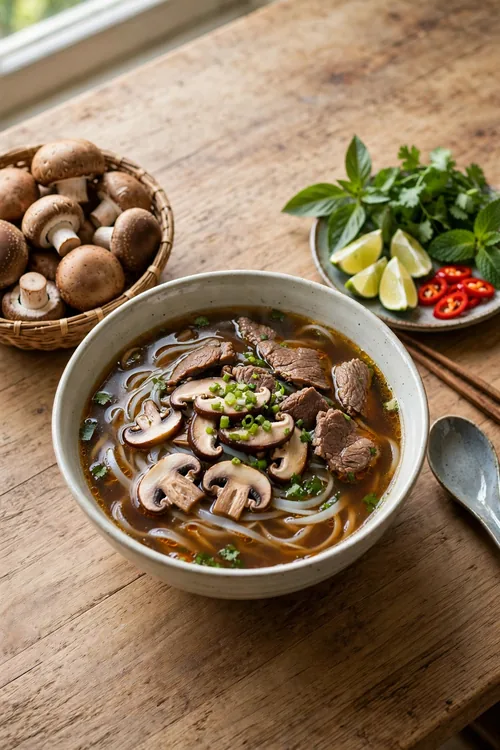
Cost: Medium, mushrooms carry the price here
Time Needed: About 2 hours with simmering
Difficulty: Easy
Result: Deep, earthy, almost meaty broth
Mushrooms are the quiet amplifier in this bowl, soaking up spice and giving back a deep savory hum that makes the beef taste beefier. Dried shiitakes earn their keep twice, once in the broth they steep and again sliced over the top where their chew plays against the tender slices.
Flank Steak Favorite
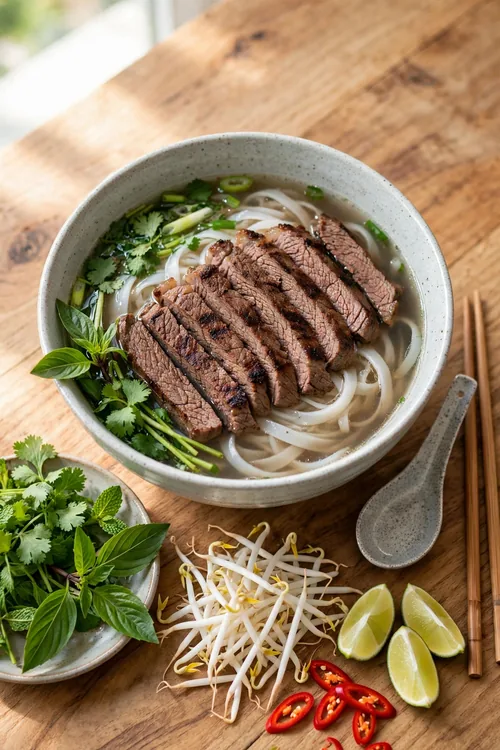
Flank is the cut I reach for when guests are coming, because it slices clean, cooks in seconds, and carries real beef flavor instead of just texture. Cut it thin across the grain and the ribbons stay tender even if the broth is only just at a simmer.
A hard sear on half the slices before serving adds a second register, charred edges against the silky raw cooked ribbons in the same bowl. It is a small restaurant trick that costs two minutes, and it makes the whole bowl taste deliberate rather than merely assembled at home.
Noodle Texture Guide
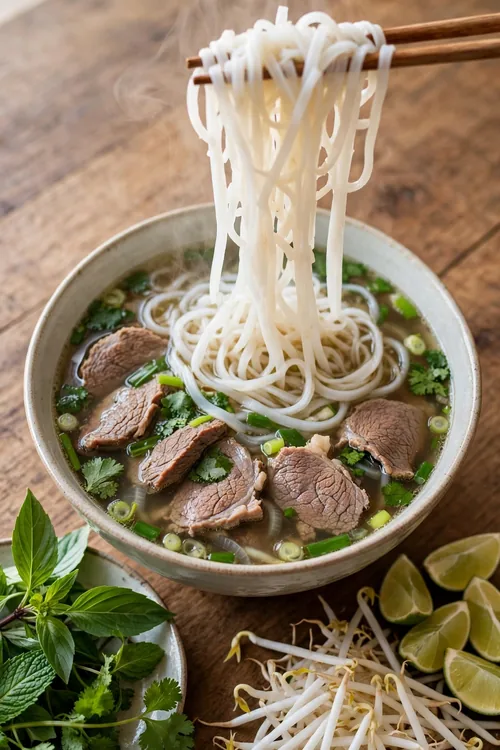
- Cook the noodles in their own pot of plain water, never in the broth, so the soup stays clear.
- Pull them thirty seconds early, because they keep softening in the hot broth after ladling.
- Rinse briefly under warm water to stop the cooking and wash off the surface starch.
- Divide noodles into bowls first, then arrange beef and herbs on top before the broth lands.
Noodles are the silent deal breaker in this soup, perfect broth over gummy ribbons still eats like a failure. Treat them as their own small recipe with its own timer, and the bowl comes together the way it does in the shops, springy, clean, and worth every bit of slurping.
Lemongrass Bright Bowl
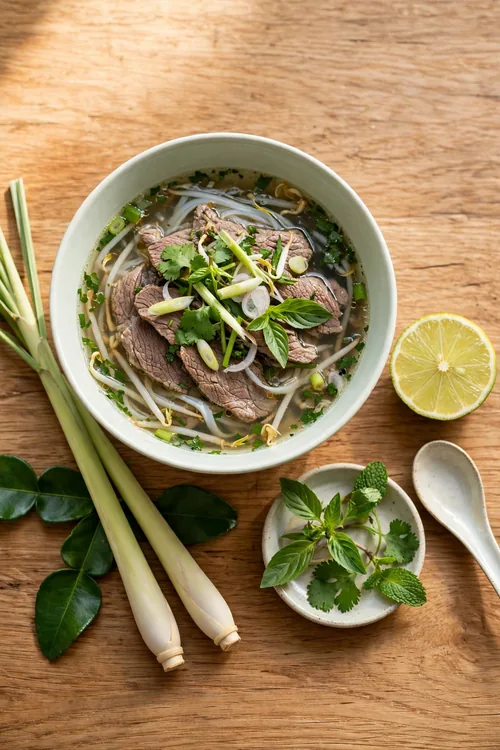
Quick Tip: Bruise two lemongrass stalks with the flat of a knife and simmer them in the broth for the last twenty minutes only. The flavor stays bright and lemony instead of woody. Pull the stalks out before ladling so nobody meets one in the bowl.
Lemongrass turns this into the bowl for heavy weather and heavier moods, bright enough to cut through a rich pot without shouting over the spices. Serve it with extra lime and the palest broth you can manage, and it tastes like the first clear morning after a long rain.
Leftover Remix Bowls

BEFORE: Leftover broth usually dies quietly at the back of the fridge, reheated plain until it tastes tired and a little sad. The noodles go gummy in storage, the herbs are long gone, and the second bowl feels like an obligation instead of the pleasure the first one was at dinner.
AFTER: Stored smart, the remix bowl can outshine the original, broth frozen flat, noodles cooked fresh, and a new topping in charge. Fried shallots, a soft egg, or a handful of mushrooms change the personality completely, and yesterday’s pot comes back tasting like a deliberate second recipe instead of a repeat performance.
Freeze the broth the same night you make it and the remix is always within reach on a thin evening. I keep two flat bags in the freezer door all winter, and they have rescued more weeknight dinners than any delivery app ever managed to save at my house.
Conclusion
Twenty bowls later, the pattern is clear: great beef pho is built on a clean spiced broth, honest beef, and herbs added at the very last second. Char the aromatics, skim with patience, and the pot rewards you every time.
Pick the version that fits your next quiet morning, pin this collection for the season ahead, and share it with the friend who still orders the same bowl every single time. I have watched one pot of this broth turn an ordinary Tuesday into the meal everyone talks about all week. For a sweet savory skillet night, my beef bulgogi wins.