Why Does My Homemade Granola Come Out Chewy Not Crunchy? Easy Fix Guide
If your chewy granola turned out soft and chewy instead of crisp, you are not alone. Chewiness comes from too much liquid sweetener, a crowded pan, and pulling the tray before the granola dries in the oven. The fix usually comes down to a few small choices you can change next time.
This guide walks through what went wrong, the exact steps that fix it, and the habits that keep it from happening again. Spot the weak step, adjust it, and test the result with a small batch first.
Work through the sections in order, or jump to the fix that matches your batch. For another rescue, see our guide to cookie icing fixes and keep building your skills.
Why Granola Stays Chewy

Soft, limp granola usually comes from heavy syrup, a packed tray, and pulling the pan out before it dries fully. In my experience, cooks blame the recipe when the real issue is one small habit that is easy to change.
Spread the granola thin, bake low until dry, and let it cool fully on the tray so it crisps as it sets. Try the change on a small test batch first, then compare it side by side with your usual method. The difference will tell you whether you found the true cause or only part of it.
Spread It Thin
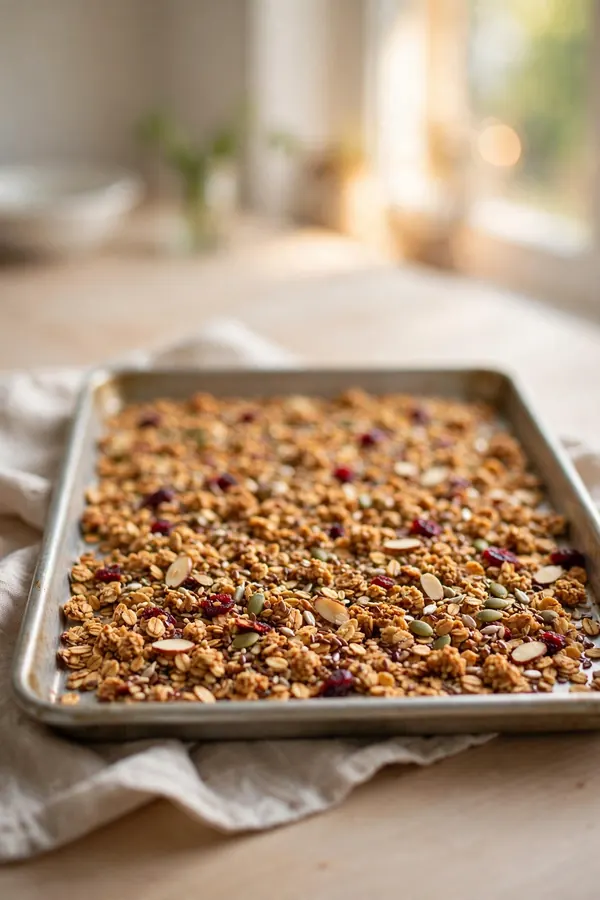
Spread the mix thin, bake low until dry, and cool it fully on the tray before touching a single cluster. Follow the steps below in order, and give each one your full attention. Rushing the early steps is how the same problem comes back, so slow down where it counts.
- Toss oats, nuts, oil, and sweetener.
- Spread thin on a lined sheet pan.
- Bake at 300 F for 25 minutes.
- Cool fully on the tray without touching.
Bake Low Slowly
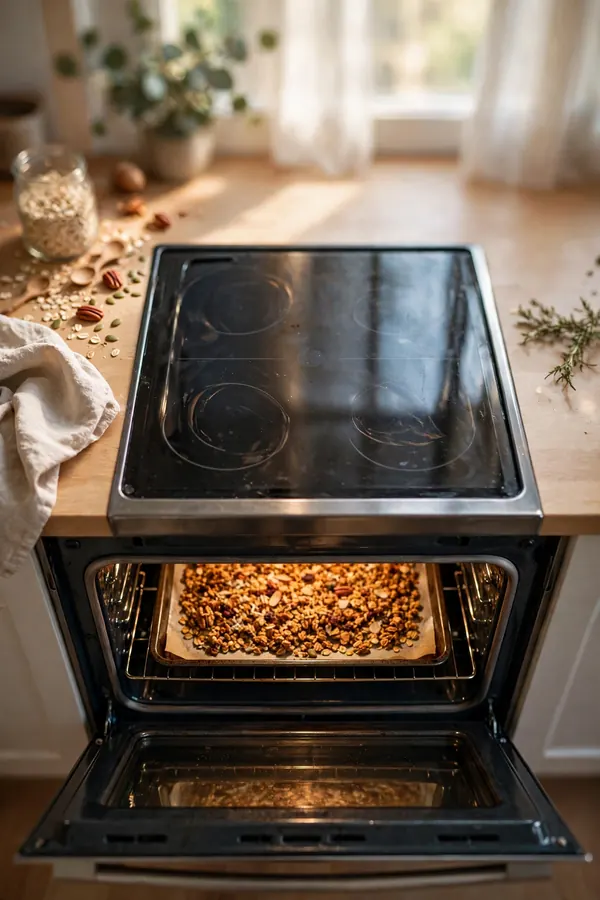
Quick Tip: Granola crisps as it cools. If it still feels soft in the oven, give it 5 more minutes, then let the tray cool fully. Write the tip on your recipe card so you remember it next time.
Too much liquid sweetener, a crowded pan, and an early pull leave the oats damp. Keep the tip in mind while you work, and check the result before you move to the next step. Good cooking is mostly good timing, and a quick pause to look, smell, and taste will catch most trouble early.
Cool Fully First

Common Mistake: Many cooks add dried fruit before baking, which steams the oats, and they stir so often that clusters never form. Cooling fully on the tray lets the syrup harden and lock the clusters together.
The Fix: Bake the oat mix alone with little stirring, add the fruit after, and cool the tray fully before breaking clusters. Leave the tray untouched until the granola feels dry and crisp at room temperature.
Cooling is when the crunch actually forms. Hot granola always feels soft, so judging it straight from the oven leads to overbaking. Spread it thin, leave it untouched on the tray, and let it cool completely. The sugars harden as the tray cools, and the clusters turn crisp and snappy.
Sweetener Balance Tips

What You Need:
- Rolled oats: The crisp base of the batch.
- Maple syrup or honey: Binds and sweetens, used lightly.
- Neutral oil: Helps oats toast evenly.
- Nuts and seeds: Add crunch and body.
- Dried fruit: Added after baking to stay chewy.
Gather everything before you start so you are not hunting for tools mid-recipe. Start with a thin layer, bake low and slow, and leave the tray alone until the granola cools and sets. A calm, organized setup makes each step easier and keeps the timing on track.
Oil Ratio Matters
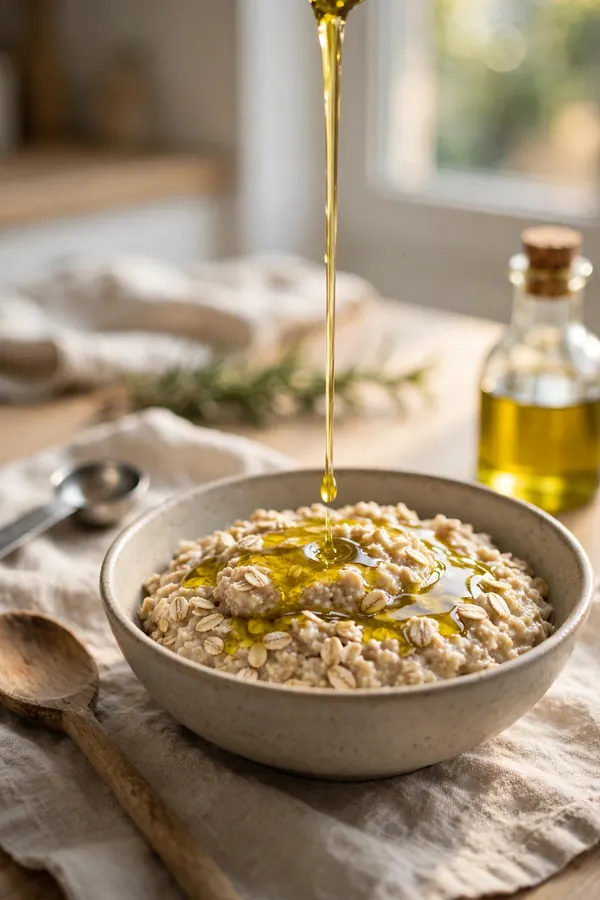
Before: The granola looked golden, yet it bent instead of crunching and turned limp in the jar within a day. The right oil ratio coats the oats lightly without soaking them heavy.
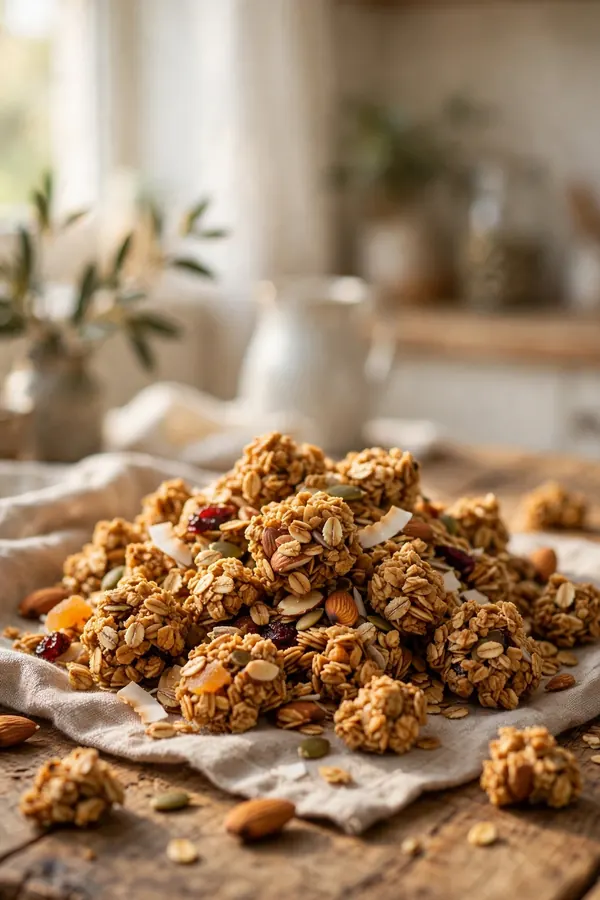
After: Spread thin and cooled fully, the same mix turns crisp, clusters hold, and the jar stays crunchy. Balanced oil lets the oats crisp instead of turning soft in storage.
Oil coats every oat and helps the clusters bake evenly. Too little oil leaves dry, dusty flakes, while too much oil keeps the mix soft and greasy. Measure carefully, toss until every piece glistens lightly, and spread the mix thin. The result is golden, crunchy clusters that stay crisp in the jar.
Stir Or Not
Do This:
- Spread the mix thin.
- Bake at 300 F.
- Cool fully on the tray.
- Add fruit after baking.
Avoid This:
- Do not crowd the pan.
- Do not drown oats in syrup.
- Do not jar while warm.
- Do not stir constantly.
A thin layer, a low oven, full cooling on the tray, and dried fruit added last bring back the crunch. Keep this short list beside you while you cook, and check off each point as you finish it. A simple checklist beats memory when the kitchen gets busy.
Add Fruit Later

Time Needed: 2 minutes, after the tray cools.
Best For: Raisins, cranberries, chopped apricots, and cherries.
Pro Tip: Cut large pieces small so they mix evenly.
Result: Crisp oats with soft, sweet fruit in every scoop.
Dried fruit holds water, so it steams the oats when it bakes with them. That steam softens clusters and leaves the tray limp. Bake the oats on their own, then stir the fruit through once the tray feels cool and dry. The fruit stays tender, the oats stay crisp, and each scoop keeps its crunch.
Store Airtight Always

Storage decides whether crisp granola stays crisp or turns soft overnight. Let the tray cool fully, then move the granola into a dry, airtight jar at once. Warm granola traps steam inside the jar and softens every cluster. A cool, dry jar keeps the crunch for days.
Keep the jar in a cool, dry spot away from the stove and the sink. Open it only when serving, and close it right after scooping. A tight seal blocks humidity, so the clusters stay snappy from the first bowl to the last.
Clusters That Hold

Clusters form when the granola cools untouched on the tray, so patience matters more than stirring. Check the tray for dryness, break the sheet gently by hand, and use the four moves below in order. Each one helps the clusters hold their shape in the jar.
- Check that the granola feels dry.
- Break into clusters by hand.
- Stir in dried fruit.
- Store airtight the same day.
Final Crunch Check

Quick Tip: Pick up one cluster and listen for a crisp snap when it breaks. If it bends softly, return the tray to a low oven for five more minutes. Jar the granola only when the test cluster snaps cleanly.
A final crunch check keeps soft granola out of the jar. Break one cluster from the center of the tray, where the heat runs weakest, and listen for the snap. If it crunches, jar the batch at once and seal it tight. The clusters should stay crisp for days.
Conclusion
With these fixes, chewy granola can turn into a result you are proud to serve. Start with the biggest cause, change one thing at a time, and taste as you go so you know what actually helped. Small, steady adjustments beat a full recipe overhaul, and they teach you how your oven, your pans, and your ingredients behave. If you want one more rescue to study, read our guide to cheesecake fixes and add it to your notes. Keep this guide nearby, trust your senses, and enjoy the next batch.