24 Cute Chicken Biryani Ways Better Than Any Restaurant
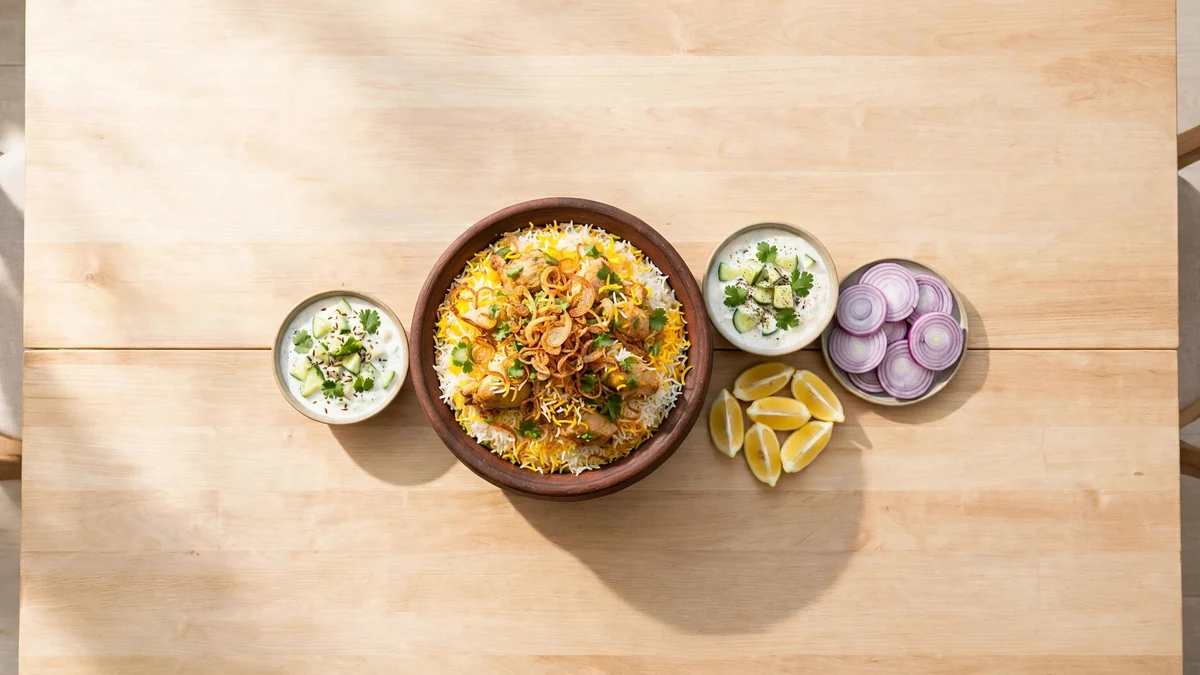
A great chicken biryani is the pot everyone gathers around before it even reaches the table, drawn in by saffron, fried onions, and warm spice drifting from the kitchen. One sealed lid holds back a layered world of rice, marinade, and patience underneath.
This collection gathers twenty-four versions worth saving, from the classic Hyderabadi dum to pale Lucknowi layers, green mint masala, smoky charcoal finishes, and weeknight shortcut pots. Each one keeps the soul of the dish and changes a single detail that truly matters most.
Save the pots that fit your Sundays, your spice tolerance, and your people. Every version below carries the small hard-won details that separate a flat rice dish from the pot guests request again before they have even finished their first helping.
Classic Hyderabadi Dum
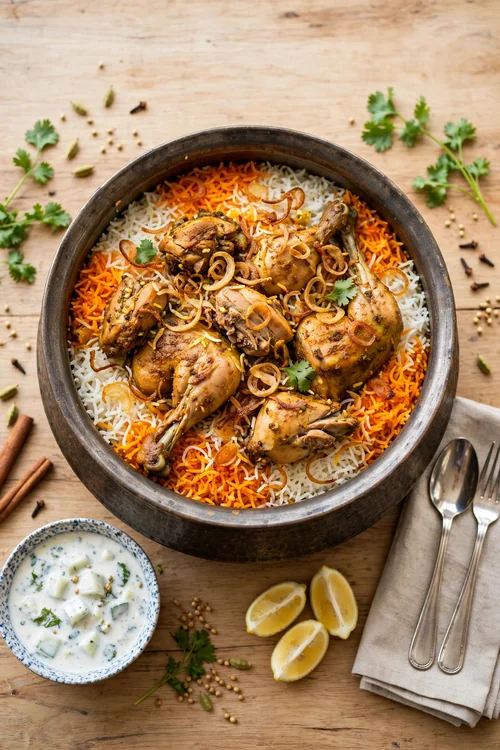
The sealed pot is the whole promise here, dough pressed around the lid so no steam escapes while the rice finishes in its own fragrant cloud. Underneath, marinated chicken cooks gently in the masala it brought with it, seasoning the grains from below upward slowly.
When the seal cracks at the table, the first spoonful tells you why Hyderabad guards this method so fiercely for generations. The grains stay separate and perfumed, the chicken stays silky, and the bottom layer carries a deep toasted flavor no stovetop shortcut has ever matched. And on cozy nights, my chicken curry tastes like a hug.
Lucknowi White Layers
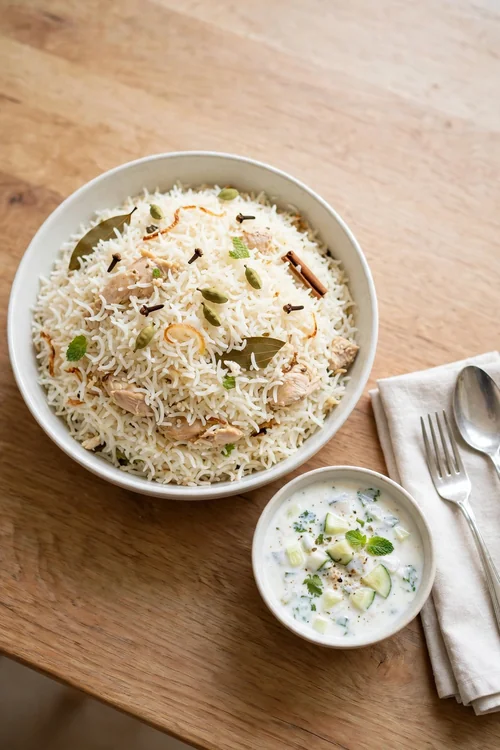
- Keep the spice list gentle and whole, since ground chili and turmeric would stain the pale grains this style is famous for.
- Fry the onions only to a light gold, because dark onions darken the cooking liquid and the rice layered over it.
- Use kewra or rose water sparingly at the end, a few drops that perfume the pot without tasting like soap.
- Serve it straight from the handi in soft layers, never tossed, so the white and faintly golden bands stay visible.
Lucknow’s version is the quiet aristocrat of this list, all restraint and perfume rather than heat and color at the table. In my experience it wins over guests who claim they cannot handle spicy food, then surprises everyone else with how much flavor hides inside such pale, delicate grains.
Saffron Layered Pot
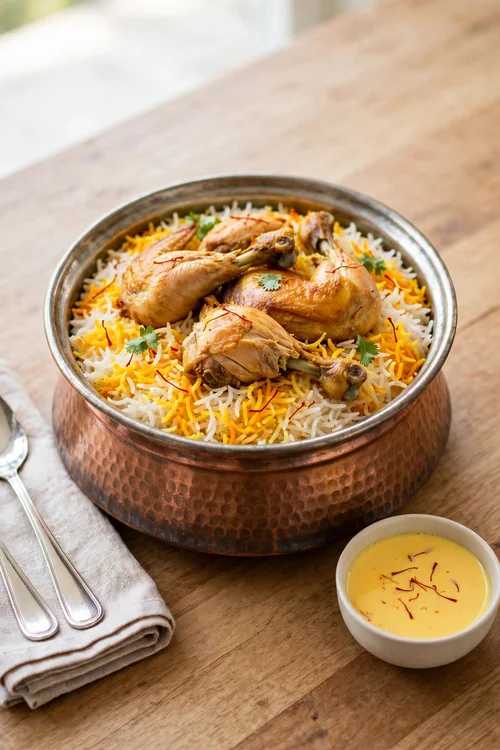
Quick Tip: Steep a generous pinch of saffron in warm milk for twenty minutes before the pot is layered. Spoon the golden liquid over the top layer only, so it streaks downward as the rice rests. That restraint is what creates the marbled white and gold look everyone photographs.
Saffron does more than color here, it scents the steam that greets the table when the lid finally lifts off. Use the real threads and skip the food coloring entirely, because the perfume is the entire point and no orange dye has ever fooled a table of experienced eaters.
Fiery Red Heat
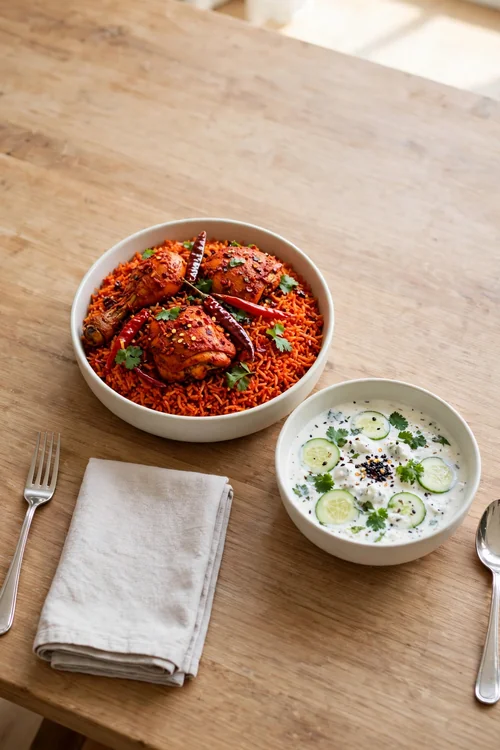
BEFORE: Too many fiery versions cheat by shaking chili powder over the finished pot at serving time like an afterthought. The heat sits raw on the surface, the first bite scorches, the second tastes oddly plain, and the deep spice of the dish never gets to meet the fire properly.
AFTER: Bloom the chilies, chili flakes, and a spoon of Kashmiri chili in the hot oil before the marinade ever touches the pot. The heat soaks into the fat, spreads through every layer evenly, stains the rice a deep celebratory red, and builds slowly instead of attacking the tongue.
This is the pot for chili lovers who want warmth that lingers rather than pain that passes in one bite. Keep raita and lemon wedges close, not as rescue equipment, but because the cool contrast makes the next fiery spoonful taste even better than the last one did.
Mint Green Masala
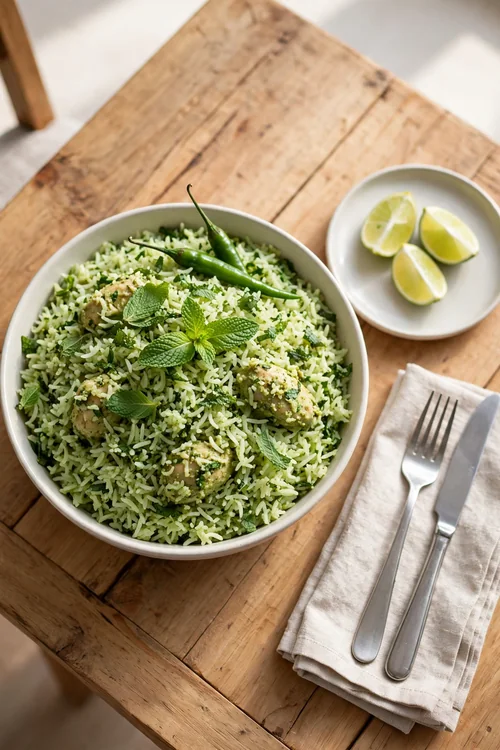
- Blend fresh mint, coriander leaves, green chilies, and yogurt into a smooth green marinade with no water added.
- Coat the chicken pieces fully and rest them at least two hours, so the herb color stains the meat itself.
- Parboil the rice in well salted water with whole spices, then drain it while the grains are still firm.
- Layer the green chicken and rice in the pot, scattering fried onions and mint leaves between the layers.
- Seal and steam on the lowest heat for thirty minutes, then rest ten before opening the lid.
The green marinade keeps this pot tasting garden fresh even after the long steaming, a bright counterpoint to the richer versions on this list. Serve it with plain raita and nothing heavier, because the herbs are doing delicate work that a heavy side would only trample over at serving.
Rice Grain Choices
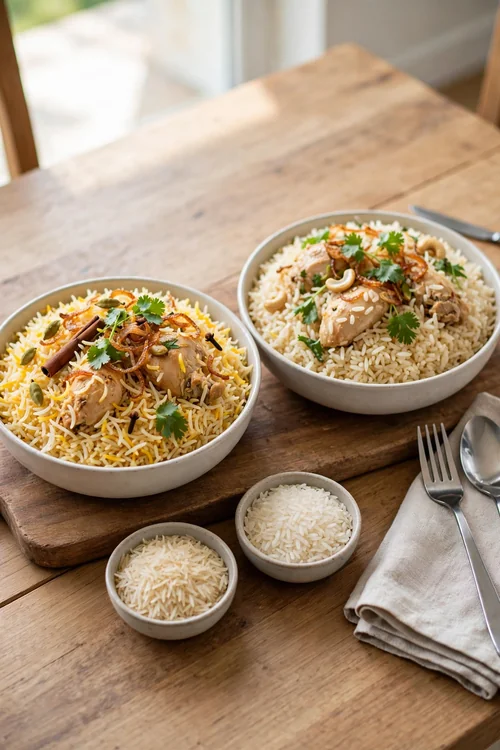
| Point | Basmati | Seeraga Samba |
|---|---|---|
| Grain shape | Long slender grains that stay separate | Short plump grains that drink in flavor |
| Texture after dum | Fluffy and distinct in every spoonful | Softer, denser, almost creamy bite |
| Aroma | Nutty and delicate when aged well | Deep, naturally fragrant without saffron help |
| Best for | Layered showpiece pots and party trays | Tamil style pots and homestyle versions |
Neither grain is wrong, they simply answer different cravings at different tables in different regions of the south. Basmati gives you drama and distinct grains, samba gives you depth and comfort, and plenty of good cooks keep both in the pantry for different weekends and different crowds entirely.
Marination Ground Rules
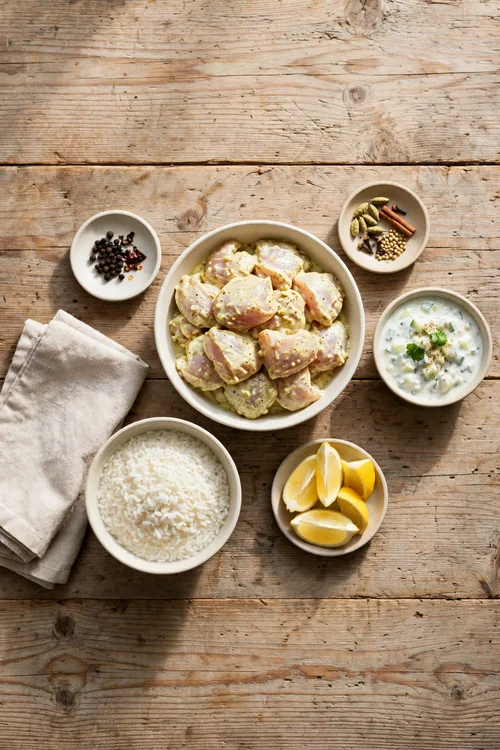
DO: Give the chicken a full two hours in the marinade, overnight whenever the day allows it. Salt the marinade properly, since undersalted meat stays bland no matter how spiced the rice turns out. Score the larger pieces lightly so the yogurt and spices reach deep into the meat.
DON’T: Rush the marinade down to twenty minutes and expect the same depth in the finished pot. Skip the acidic lemon or yogurt, because the meat needs that gentle tenderizing to stay silky through steaming. Crowd raw wet chicken straight into the rice without draining the excess liquid first.
Marination is the quiet half of this dish that nobody photographs and everybody tastes in the final pot. I have learned that when the chicken is seasoned deeply before layering, the rice needs almost no help, and the whole pot eats balanced from the first spoonful to the very last.
Weeknight Shortcut Pot
Cost: Moderate, mostly pantry spices and rice
Time Needed: About 50 minutes
Difficulty: Easy
Best For: Tuesday nights and small families
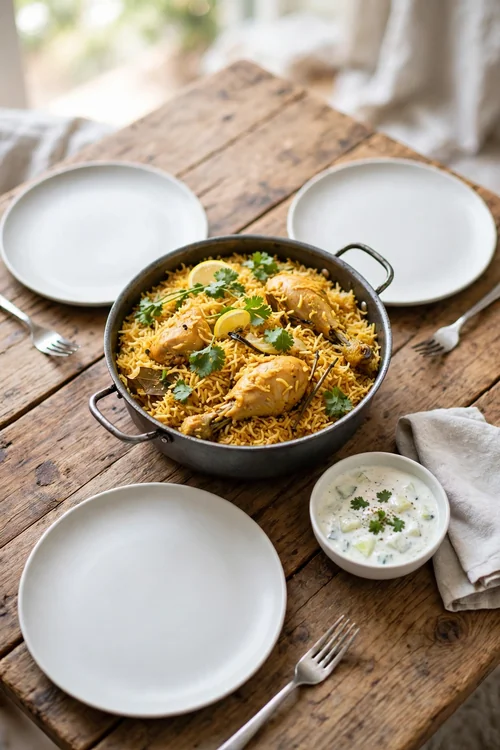
This version trades the long marinade for a quick spice paste and uses the time saved on better layering instead. The pot lands on the table in under an hour, still fragrant and layered, proof that a Tuesday version can respect the original without copying its entire afternoon schedule.
Pressure Cooker Version
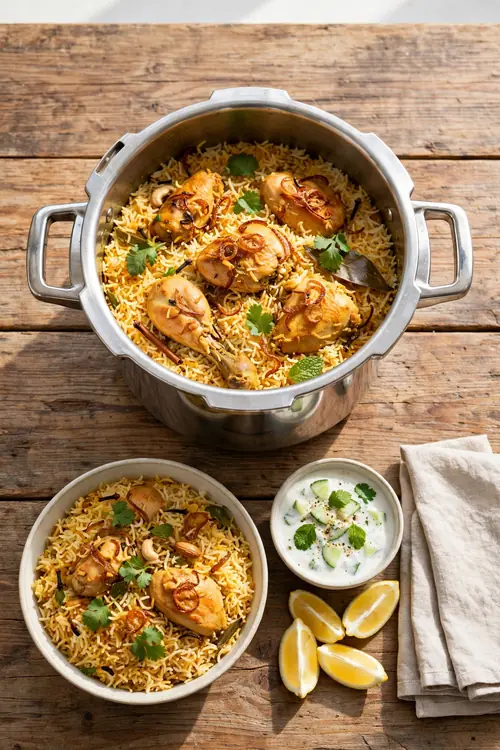
The pressure cooker trades ceremony for speed, sealing the layers under pressure so the rice cooks in the chicken’s own spiced steam. Fifteen minutes at pressure replaces the long dum, and the grains emerge tender, separate, and deeply flavored all the way to their centers here.
The trick is restraint with water, because the chicken and onions release plenty of their own liquid under pressure. Add only a splash, let the pressure fall naturally, and rest the pot ten minutes before fluffing, or the grains break and the layers blur into plain rice.
Slow Cooker Comfort
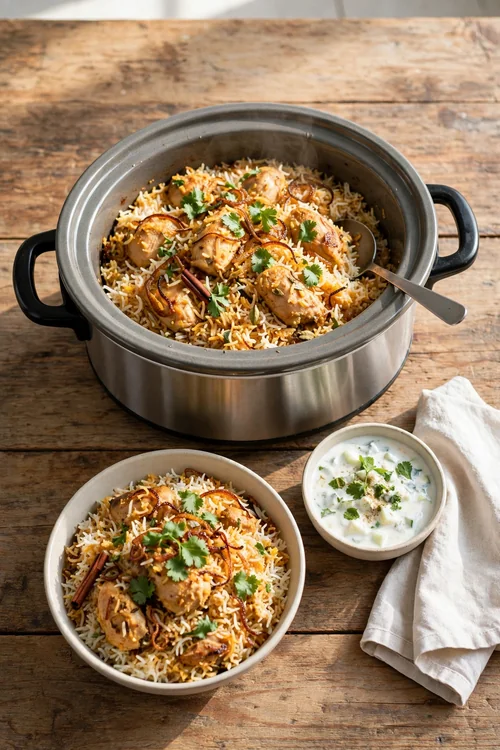
- Brown the chicken and onions on the stove first, because the cooker will never give you those caramelized edges.
- Layer the rice over the chicken rather than under it, so the grains steam gently instead of turning to porridge.
- Keep the lid closed the whole time, since every peek drops the temperature and stretches the cooking noticeably longer.
- Hold off on the fresh herbs until serving, when their color and perfume survive the long gentle heat.
Slow cooker days are for cooks who want the house smelling wonderful by noon without standing over a stove at all. The result is softer and more merged than a dum pot, closer to a hug than a showpiece, and completely right for cold Sundays and lazy family afternoons.
Egg Topped Serving
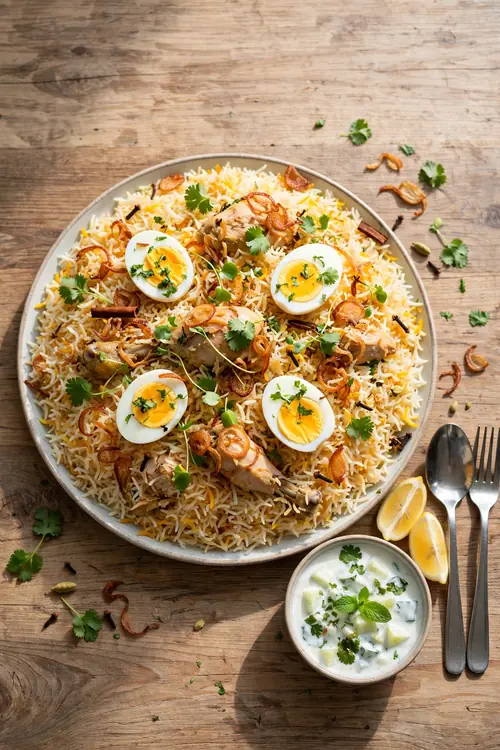
Quick Tip: Boil the eggs for exactly nine minutes, then chill them in cold water before peeling for clean halves. Roll the peeled eggs in the hot onion oil from the pot so they take on a golden skin. Slice them just before serving so the yolks stay bright.
The eggs turn a plain pot into something that looks deliberately finished, their pale halves catching the light against the orange rice. They also stretch the meal kindly, giving vegetarian leaning guests at the table something substantial while the chicken eaters claim the best pieces for themselves first.
Boneless Party Tray
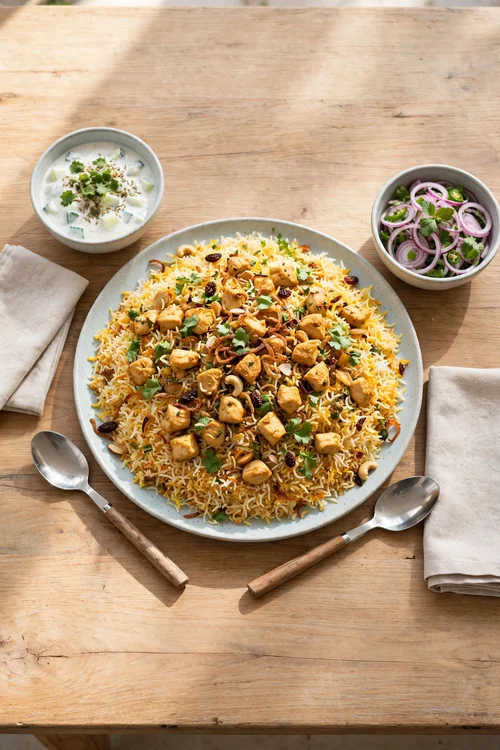
BEFORE: Bone-in pieces make a party tray awkward, since guests balance a plate in one hand and negotiate bones with the other at the buffet. Pieces land unevenly too, so one guest gets a generous portion while the next inherits mostly rice and an apologetic little shard of meat.
AFTER: Boneless thigh pieces cut into even chunks solve the whole problem in one decision at the cutting board. Every spoonful from the tray carries rice and meat together, guests serve themselves with one hand free, and the tray empties evenly instead of leaving a sad ring of rice.
For parties I still cook the marinade and masala exactly like the classic pot, changing only the cut of the meat. The tray travels well, reheats kindly, and lets the host actually join the party instead of performing surgery on chicken pieces in the kitchen all evening long.
One Pot Method

- Fry sliced onions in oil until deep golden, then lift out half for the garnish at the end.
- Sear the marinated chicken in the same oil until the yogurt cooks down and the masala turns glossy.
- Spread the drained rice over the chicken in one even layer and pour in the measured hot water.
- Cover tightly and cook on the lowest heat for twenty-five minutes without lifting the lid once.
- Rest the pot off the heat for ten minutes, then fluff gently from the edges inward.
One pot means one washing-up pile, which is exactly why this method survives in my kitchen month after month. The layering still happens, the dum still happens, only the fuss disappears, and the result feeds a family generously from a vessel that fits an ordinary weeknight stove at home.
Marinade Two Ways
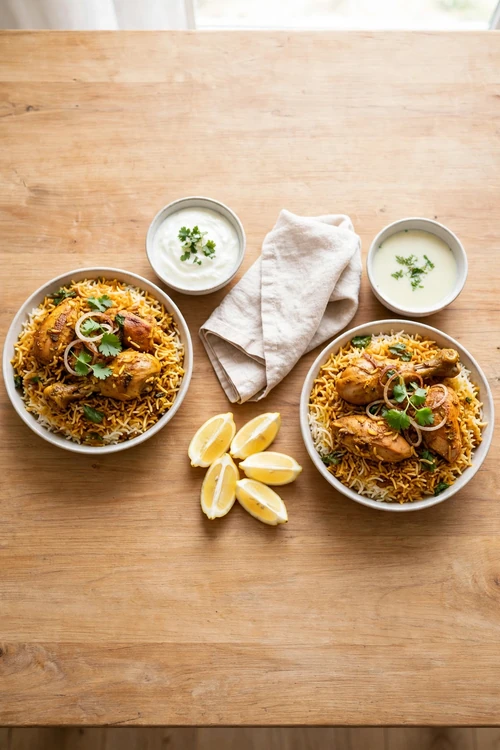
Yogurt Marinade: Thick curd clings to the chicken and carries the ground spices deep into the surface of every piece. It gives a tangy, slightly charred edge wherever the meat meets hot oil, and it keeps the finished pot tasting rich and rounded in the classic restaurant style.
Buttermilk Marinade: Thinner and gentler, buttermilk tenderizes the meat beautifully without the heavy tang of thick curd above. The rice around it stays a touch lighter in flavor, which suits delicate versions like the white Lucknowi layers where heavy spice would overwhelm the perfume of the grains.
Both marinades work, and the choice mostly follows the mood of the pot you are planning that weekend. Yogurt for richness and char, buttermilk for tenderness and lightness, and either way the chicken should rest long enough for the marinade to become seasoning rather than surface coating only.
Fluffy Grain Secrets
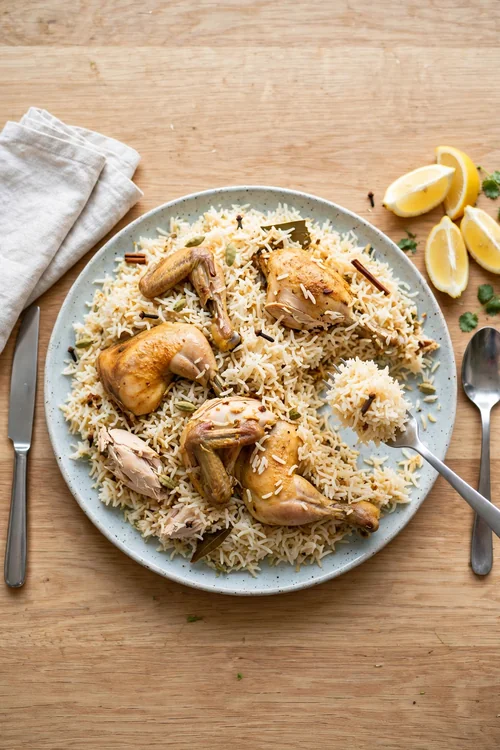
- DO: Soak the rice for thirty minutes so the grains lengthen instead of snapping during the boil.
- DO: Salt the boiling water generously, like pasta water, since it is the rice’s only real seasoning chance.
- DO: Drain the rice while it is still firm in the center, because the steam finishes it gently.
- DO: Spread the cooked pot onto a wide tray for two minutes if the grains ever threaten to clump.
- DON’T: Stir the pot after layering, or the grains break and the layers smear into each other.
- DON’T: Open the lid during steaming to check progress, since the escaping steam leaves the top layer raw.
- DON’T: Use fresh unaged rice for a showpiece pot, because it cooks soft no matter how careful you are.
- DON’T: Pour cold water over hot rice at any stage, which shocks the grains and splits them open.
Fluffy separated grains are the visible signature of a careful cook, the thing guests notice before the first bite lands. In my experience ninety percent of grain problems come from impatience at the draining stage, and the fix costs nothing but a timer and a little trust.
Meal Prep Friendly
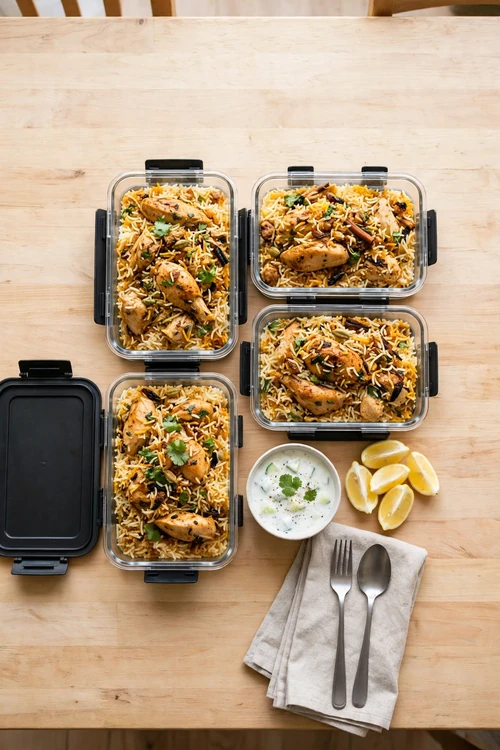
Cost: Low per portion in big batches
Time Needed: About 90 minutes
Difficulty: Medium
Works In: Any large heavy pot
Cooked once on Sunday, this pot quietly handles four lunches without ever tasting like a repeat performance at work. The spices actually deepen in the fridge overnight, and a spoon of fresh raita and a squeeze of lemon at serving make each portion taste newly made again.
Kolkata Potato Style
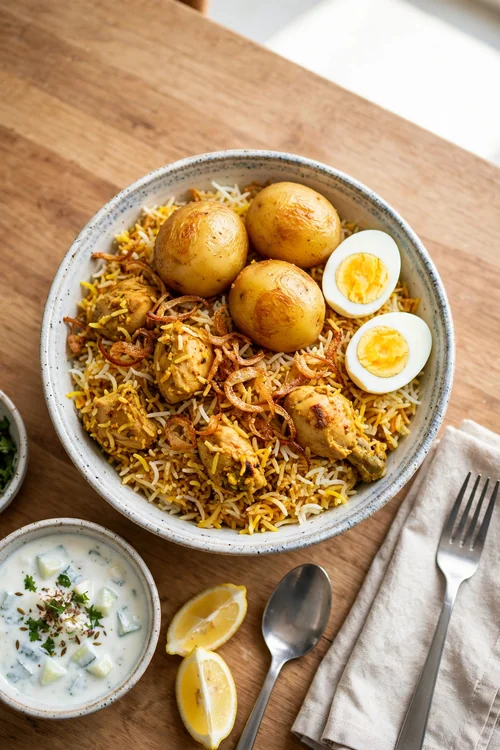
Kolkata’s beloved twist hides two treasures in the rice, whole golden potatoes and boiled eggs that regulars hunt for first. The potatoes fry in the spiced oil before layering, so their edges turn crisp and their centers drink up the masala like small savory sponges in the pot.
The rice itself stays lighter in Kolkata, perfumed with whole spices and a whisper of sweetness rather than heavy masala. It is the version that converts people who find other pots too rich, the potatoes doing the satisfying work while the grains stay fragrant, separate, and gently golden.
Malabar Coastal Touch
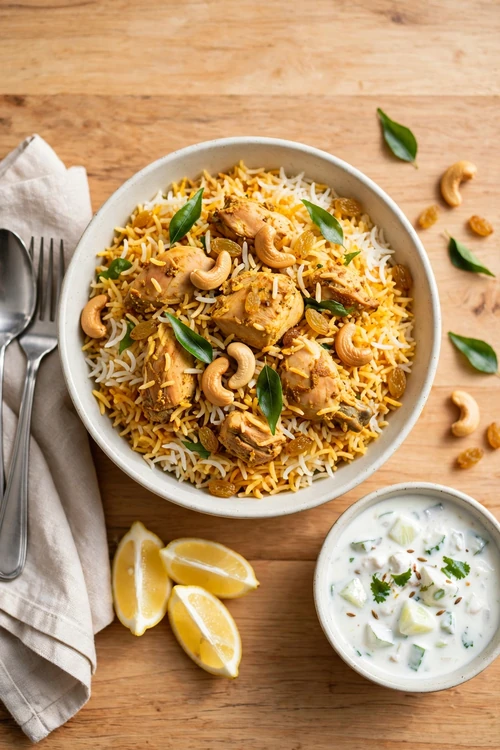
- Fry cashews and golden raisins in ghee until plump, then scatter them over the finished pot as garnish.
- Let coconut milk replace part of the water, so the rice cooks up richer with a gentle coastal sweetness.
- Use shorter local grains if you can find them, since Malabar versions traditionally skip long basmati altogether here.
- Add curry leaves to the hot oil at the start, where they crackle and perfume the whole base.
The coast softens this dish in the loveliest way, trading sharp heat for coconut richness and sweet pops of raisin. It is the pot I serve to friends who love the idea of the dish but flinch at chili, and it has never once left a single bowl unfinished.
Tomato Tangy Base
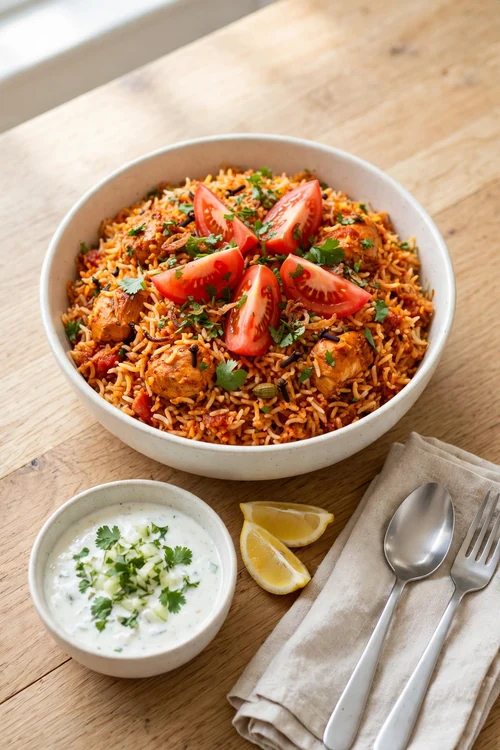
Quick Tip: Cook the tomatoes down until the oil visibly separates at the edges of the pan before layering anything. Raw tomato keeps cooking in the steam and turns the whole pot sour and watery by serving time. A patient ten minutes here protects every layer above it completely.
Tomato gives this version a bright tang that cuts through the richness and keeps the pot tasting lively to the last spoonful. Balance it with a pinch of sugar only if the tomatoes are truly sharp, because the goal is brightness, not a sweet sauce wearing rice underneath it.
Smoky Charcoal Finish
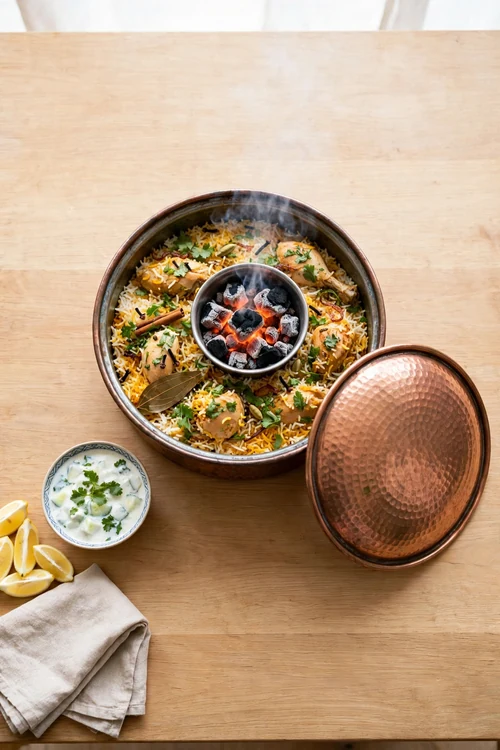
BEFORE: A plain finished pot can taste wonderful and still miss that one haunting note guests remember from restaurant versions eaten years ago. The spices are right, the rice is right, yet something in the aroma feels flat, like a song missing its lowest note underneath all the others playing.
AFTER: A small bowl of glowing charcoal set on the rice, drizzled with ghee and sealed under the lid, changes the entire pot in five minutes. The smoke curls through every layer, clings to the fat in the masala, and the opened pot smells like it cooked over open fire.
This finishing trick, called dhungar, costs one piece of charcoal and five patient minutes at the very end of cooking. I use it whenever the pot is headed for guests, because the aroma when the lid lifts does more for appetites than any garnish I have ever scattered.
Veggie Loaded Remix
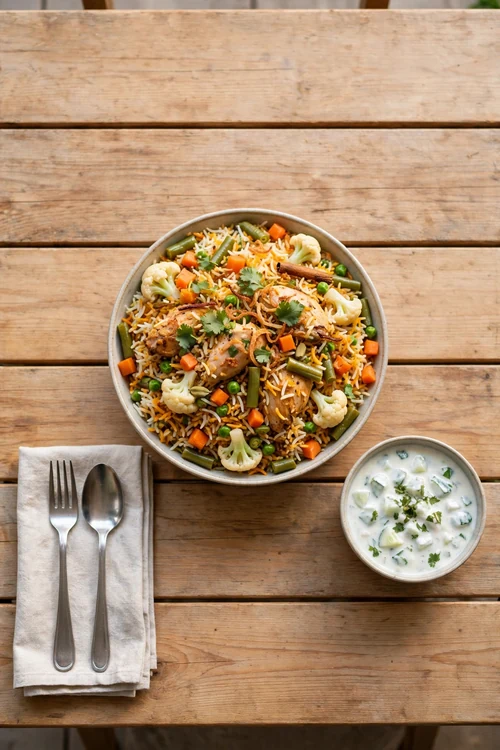
- Cut carrots, beans, and cauliflower into small even pieces so they cook at the same pace as the rice.
- Fry the harder vegetables in the spiced oil first, giving them a head start before any layering begins.
- Scatter peas and sweet corn through the middle layer, where the steam keeps them bright and tender.
- Keep the chicken marinade exactly as the classic pot, since the vegetables borrow its flavor while steaming.
- Rest the finished pot ten minutes so the vegetables settle into the layers instead of rolling off.
The vegetables turn one pot into a complete meal with nothing needed beside it except raita and a green salad. Kids pick out their favorites happily, the chicken goes further across more plates, and the colors in every serving spoon make the table look generous before anyone tastes anything.
Thigh Versus Breast
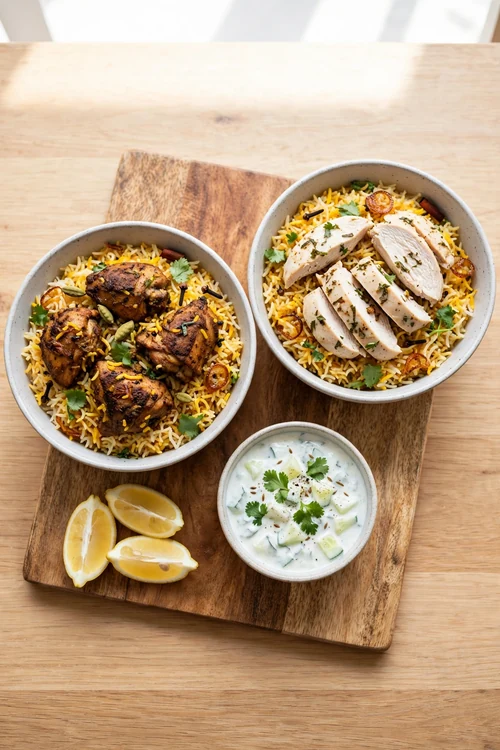
- Texture: Thigh meat stays silky through the long steam, while breast turns firm and can dry at the edges.
- Flavor: Dark thigh meat brings its own richness that seasons the rice, breast stays mild and lets spice lead.
- Forgiveness: Thighs forgive an extra ten minutes of cooking, breast punishes every extra minute without mercy at all.
- Cost: Thighs usually cost less per kilo, making them the kinder choice for big party pots and batches.
My own pots use thighs nine times out of ten, and the tenth time is only when a guest requests breast specifically. Cut breast into large chunks and pull the pot five minutes early if you go that route, and it will reward you with tender, respectable results too.
Serving Day Rules
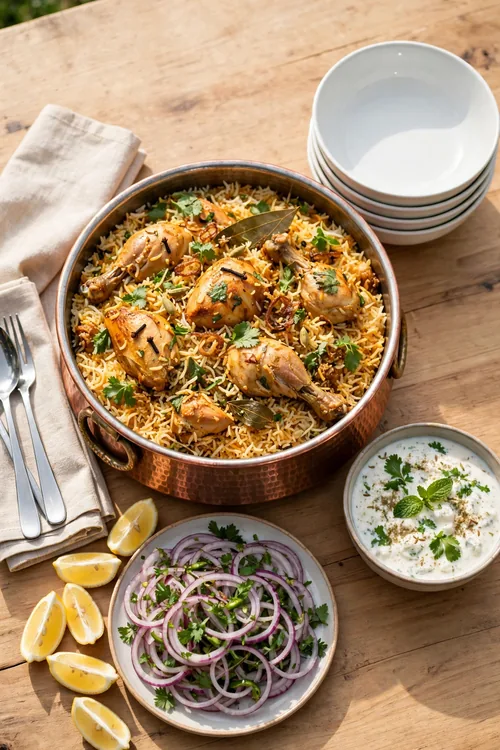
| DO | DON’T |
|---|---|
| Rest the sealed pot fifteen minutes before the first serving | Open the lid at the stove to show everyone the layers |
| Fluff from the sides with a wide spoon to keep layers visible | Dig straight down the middle and churn the pot into mash |
| Serve raita, onion salad, and lemon on the side of every plate | Pour raita over the whole tray and decide for your guests |
| Keep a second small pot warm for latecomers and second rounds | Reheat the whole tray repeatedly until the rice turns tired |
Serving day has its own quiet rules, and they protect all the work the cooking already did that afternoon. Follow the table and the pot reaches every plate looking layered and steaming, which is half the reason guests ask for this dish by name at gatherings year after year.
Freezer Friendly Batch

Cost: Low per portion
Time Needed: About 2 hours
Difficulty: Medium
Result: Six generous freezer portions
Freeze the portions flat in bags without the raita, and a genuine homemade dinner is never more than one reheat away. Steam it back to life with a splash of water and a tight lid, then finish with fresh herbs so nobody believes it ever saw the inside of a freezer.
Conclusion
Twenty-four pots later, the lesson stays beautifully simple: patience with the marinade, respect for the layers, and confidence at the lid turn chicken biryani into the meal people request by name at every single family gathering on the calendar each year.
Pick one version for this weekend, save this collection for the celebrations ahead, and share it with the friend who still thinks rice is boring. I have watched one quiet pot of this end arguments, start conversations, and empty faster than anything else on the table this year. For a Spanish rice night, my chicken paella feeds everyone.