22 Encouraging Chicken Cacciatore Ways to Pin for Later
A bubbling pot of chicken cacciatore on the stove can turn an ordinary Tuesday into the kind of dinner everyone drifts toward the kitchen for.
Inside you will find twenty-two ways to braise chicken the hunter’s way, from slow cooker Sundays and sheet pan shortcuts to mushroom loaded skillets, white wine braises, and creamy Tuscan finishes, each one with clear steps, smart swaps, and serving ideas worth saving.
Save the versions that match your week, stock the pantry with tomatoes, peppers, and olives, and let the sauce do the heavy lifting while you set the table, warm the bread, and call everyone in. And on creamy nights, my chicken paprikash brings the paprika warmth.
Classic Rustic Skillet
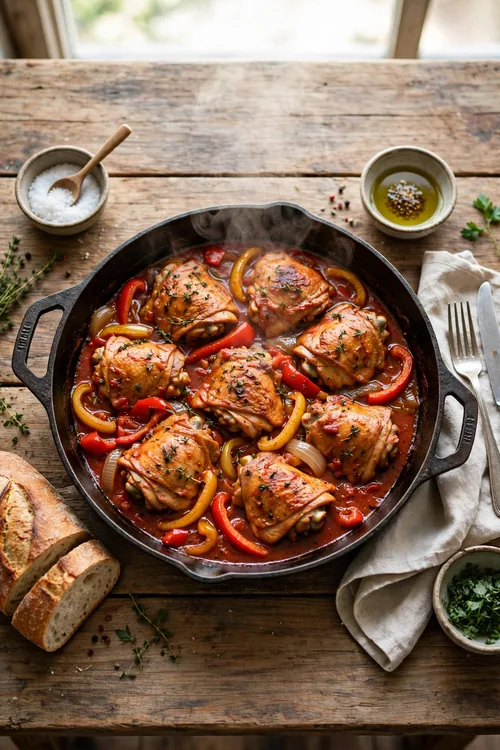
Brown the thighs hard in a wide skillet before anything else touches the pan. That deep golden crust is where the whole dish gets its backbone, and the browned bits left behind melt straight into the tomato sauce as it simmers, giving you flavor no shortcut can fake.
Peppers, onions, and garlic go in next, softening in the drippings until the edges catch a little color. In my experience, patience at this stage decides whether the sauce tastes flat or rich, so let the vegetables relax before the tomatoes join and the long, gentle braise begins.
Slow Cooker Sunday Style
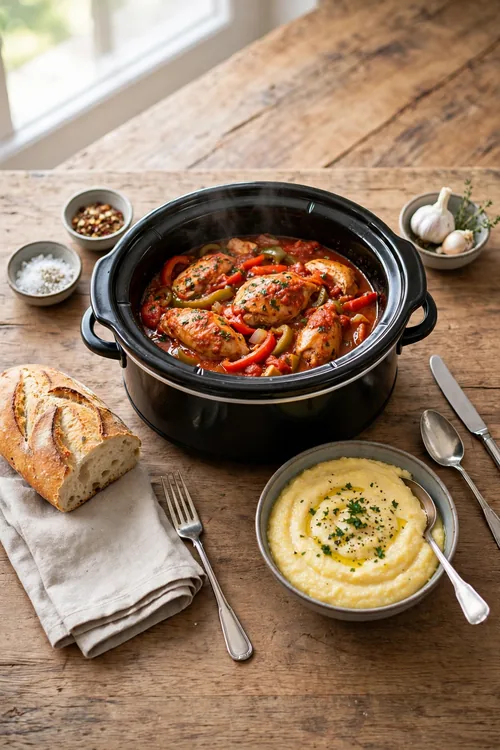
- Sear the chicken on the stove first, even on a slow cooker day, because that crust carries through the long cook.
- Layer peppers and onions under the meat so they soak up the juices instead of steaming on top.
- Hold back half the herbs until the final hour to keep their flavor bright instead of muddy.
- Leave the lid alone for the first three hours, since every peek drops the temperature and adds time.
By late afternoon the sauce turns silky and the chicken pulls apart with a spoon, ready for polenta or a pile of buttered noodles. Sundays at my house run on this rhythm now: ten minutes of morning work, a house that smells amazing, and dinner that waits for us.
Instant Pot Weeknight Version
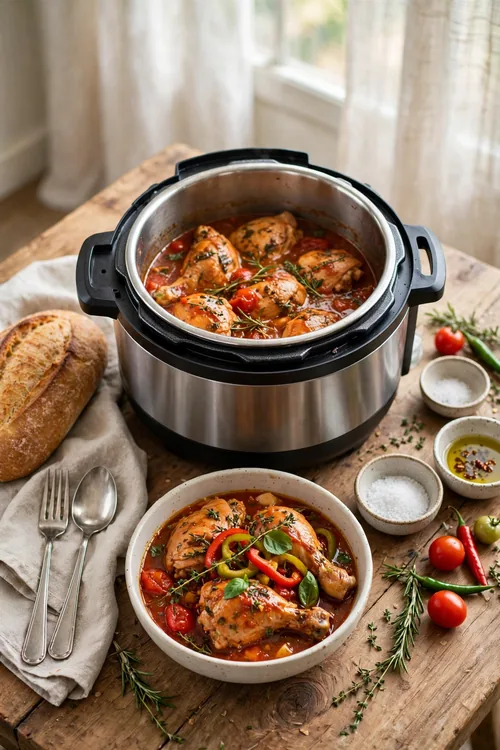
Quick Tip: Deglaze the pot with a splash of wine or broth and scrape every browned bit loose before pressure cooking. Those bits trigger the burn warning if they stay stuck, and they carry the deepest flavor in the whole dish. Two minutes of scraping saves the entire dinner.
Pressure cooking squeezes an all afternoon braise into about forty minutes, and the sauce still comes out tasting slow cooked. Sauté the peppers right in the pot afterward while the chicken rests, and the whole dinner lands on the table before homework even starts at my house.
White Wine Herb Braise

BEFORE: this version, weeknight braises at my table leaned heavy and one note, all tomato and no lift. The sauce coated everything the same way, the chicken tasted stewed instead of distinct, and by the second helping the richness turned tiring instead of comforting and bright.
AFTER: the white wine goes in, everything sharpens. The wine cuts the tomato richness, the herbs stay green and fragrant, and the sauce turns glossy enough to spoon over the chicken at the table. Each bite tastes layered now, with the meat, sauce, and herbs staying separate.
Dry white wine works best here, the kind you would happily drink with dinner. Pour a generous splash, let it bubble until the sharp smell fades, and then add the tomatoes. That small pause keeps the sauce mellow instead of harsh, and nobody tastes raw wine later.
Spicy Calabrian Heat
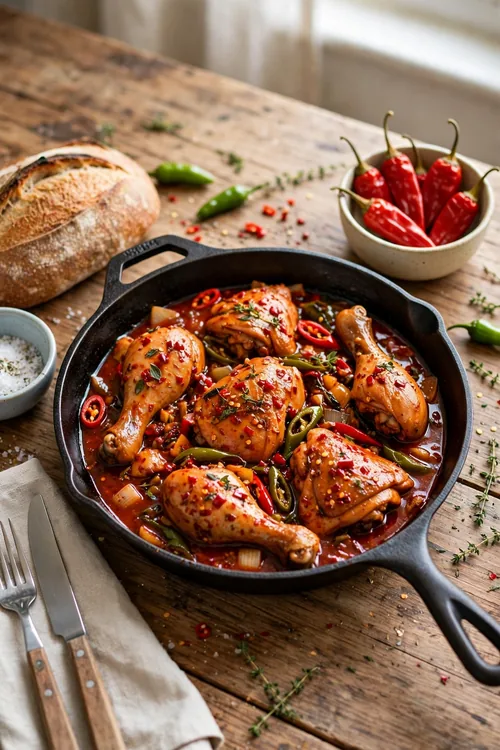
- Bloom the Calabrian chile paste in olive oil for one minute until the oil turns brick red and fragrant.
- Brown the chicken thighs in the chile oil, then set them aside while the peppers and onions soften.
- Add tomatoes and a spoon of honey, then return the chicken and simmer until the sauce thickens.
- Rest the pot off the heat for ten minutes so the heat settles into the sauce evenly.
The heat builds slowly here instead of hitting all at once, which keeps everyone at the table reaching for more bread instead of more water. A spoon of honey sounds odd, but it rounds the chile edges and lets the peppers taste sweet against the fire.
Mushroom Loaded Hunter Style
| Point | Cremini Version | Wild Mix Version |
|---|---|---|
| Flavor | Mild and earthy, close to the classic | Deep, woodsy, almost smoky |
| Sauce Body | Stays light and brothy | Turns rich and dark |
| Cost | Low, easy on the grocery bill | Higher, worth it for guests |
| Prep | Slice and go, no soaking | Soak dried mushrooms first |
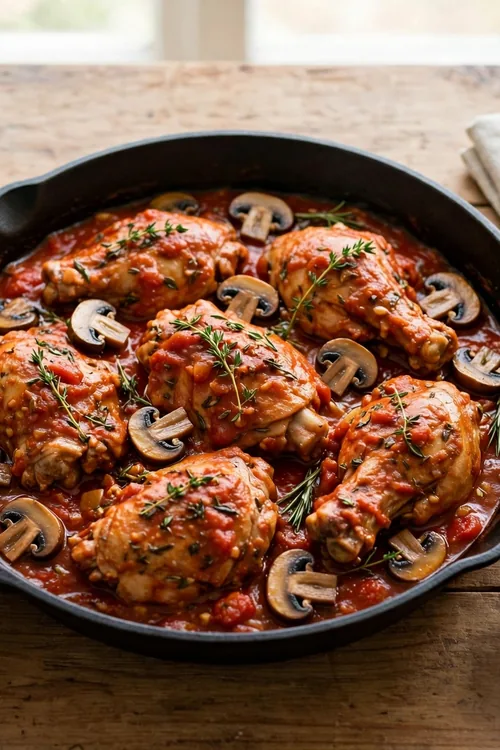
Mushrooms drink up the tomato sauce as they cook, so slice them thick and give them their own hard sear before the chicken returns to the pan. That extra step keeps them meaty instead of rubbery, and their juices deepen the braise in a way plain buttons never manage.
Olive And Caper Twist
| DO | DON’T |
|---|---|
| Add olives in the last twenty minutes so they stay firm | Cook olives from the start or they turn soft and bitter |
| Rinse capers before adding them to the sauce | Skip rinsing, or their brine takes over the pot |
| Balance the salt at the end, after tasting | Salt early like usual, before the olives give theirs up |
| Serve with lemon wedges for a fresh lift | Add lemon juice early, because it dulls as it cooks |
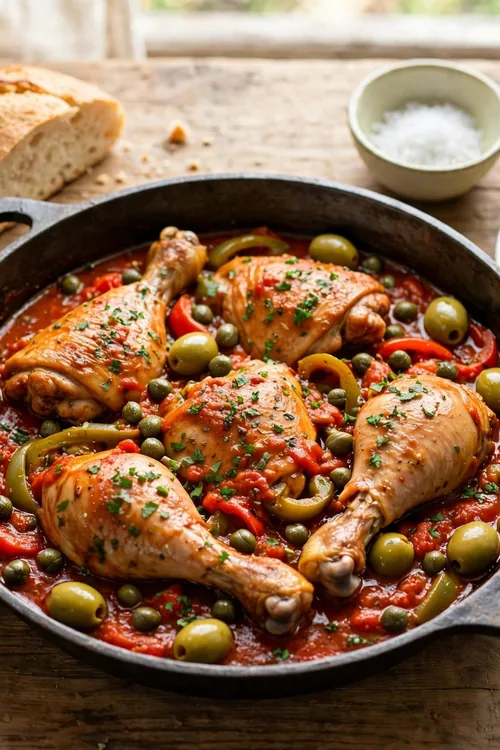
The briny pop from olives and capers wakes up the whole pot, especially against sweet peppers and rich tomato. I reach for green Castelvetrano olives when I can find them, since they stay buttery and mild, and I always warn guests about the pits before serving.
Sheet Pan Shortcut
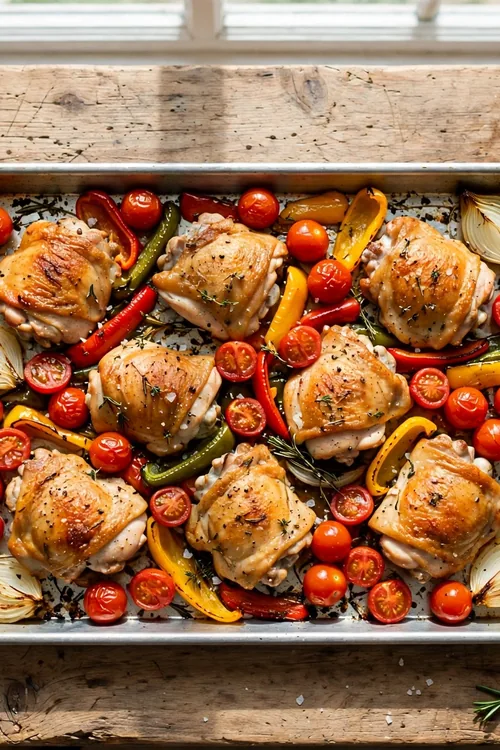
Cost: Low | Time Needed: 45 minutes | Difficulty: Easy | Best For: Busy weeknights with almost no washing up
Everything roasts on one pan here, chicken tucked between peppers, onions, and cherry tomatoes that burst into their own sauce. There is less simmering and more caramelized edges, so purists may argue, but on a tired Thursday this version wins on flavor per dish washed, every time.
Creamy Tuscan Finish
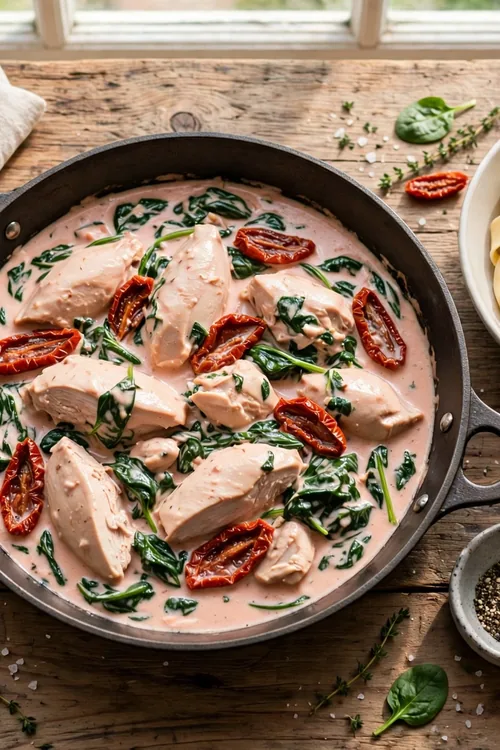
A splash of cream stirred in at the very end changes the whole mood of the pot. The tomato sauce turns blush pink and silky, softening the acidity, while spinach wilts into the folds and sun dried tomatoes add little bursts of sweetness against the rich, mellow base.
Serve this one over wide pasta ribbons or soft polenta so the sauce has somewhere to cling. Keep the cream off a hard boil once it goes in, since gentle heat keeps it smooth, and finish with parmesan at the table for anyone who wants extra salt and bite.
Peppers And Onions Loaded
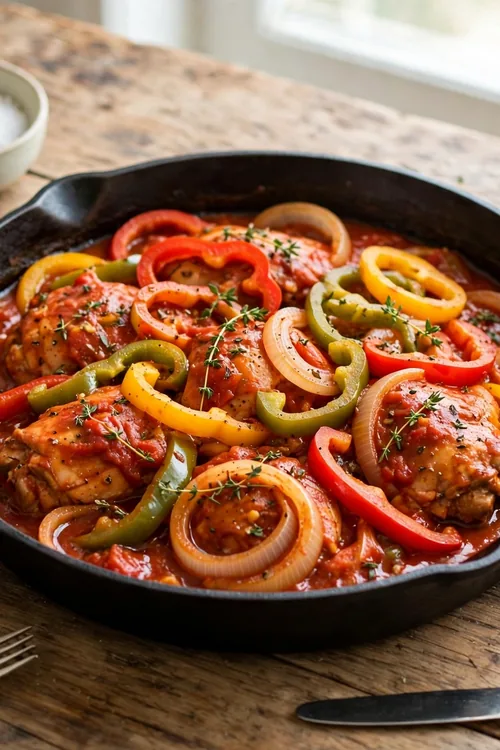
- Use three colors of peppers so the finished pot looks as lively as it tastes.
- Slice onions thick, since thin slices melt away during the long simmer.
- Add half the peppers early for sweetness and the rest late for bite.
- A pinch of sugar tames sharp tomatoes without making the sauce taste sweet.
This is the version for vegetable lovers, where the peppers nearly match the chicken bite for bite. Let the late peppers keep a little snap so the dish does not go soft, and serve it in wide bowls with garlic bread for dragging through the sweet, jammy onions.
Fire Roasted Tomato Base
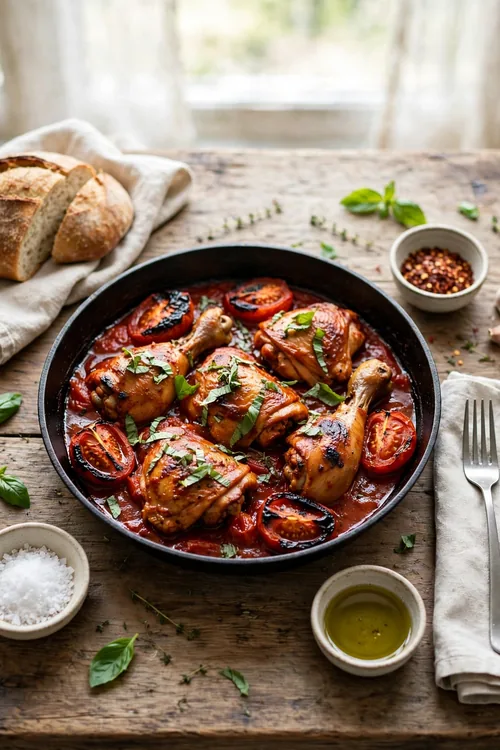
Quick Tip: Swap regular canned tomatoes for fire roasted ones and skip any extra smoky seasoning. The charred edges from the can do the work for you, deepening the sauce before it even simmers. One simple swap, and the whole pot tastes like it cooked over open flame.
Fire roasted tomatoes bring a gentle smoke that plays well with sweet peppers and oregano. Drain half the can if you like a thicker sauce, or use all the juices for a brothier bowl over rice. Either way, finish with torn basil so the top tastes fresh.
Bone In Thigh Classic
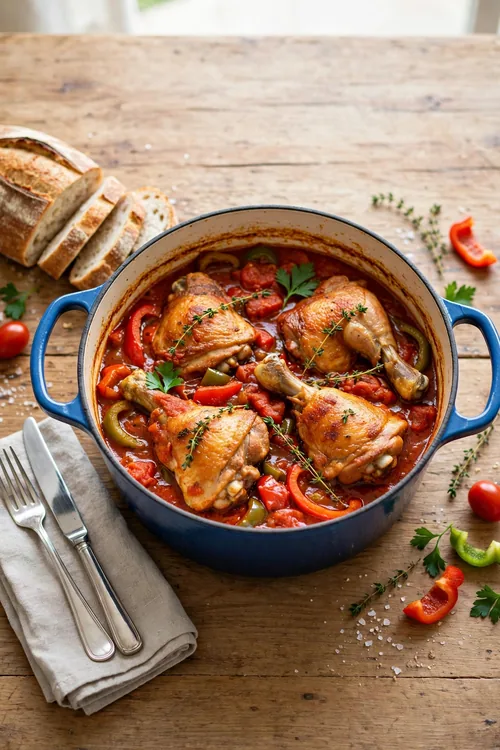
BEFORE: I committed to bone in thighs, my braises used boneless cuts that cooked fast but tasted a little plain. The sauce did most of the talking, the meat stayed mild, and by the time the peppers softened, the chicken had already given up its best texture.
AFTER: the switch, the bones quietly season the sauce as it simmers, and the meat stays juicy right down to the last bite. The skin crisps first, the flesh turns silky, and the whole pot tastes like it came from a grandmother’s stove on a Sunday afternoon.
Bone in pieces need a few extra minutes, so start them earlier and keep the simmer gentle rather than rushed. Pull the chicken out to rest while you reduce the sauce at the end, and the skin stays as crisp as a braise honestly allows at serving time.
Polenta Night Serving
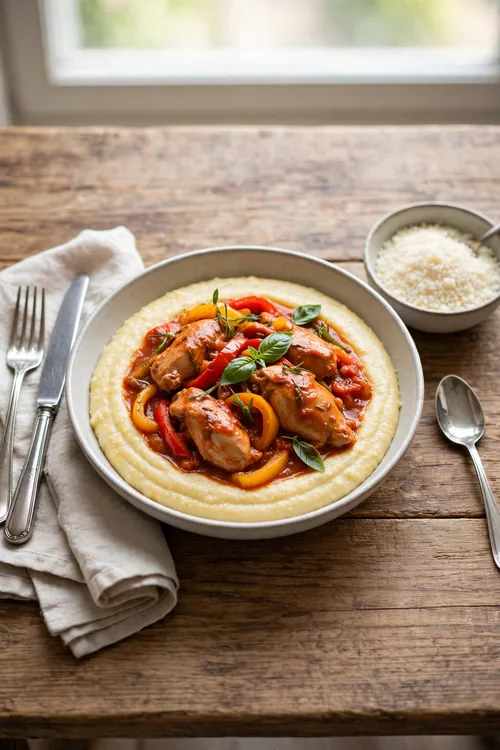
- Braise the chicken as usual, then keep it warm over the lowest heat while you cook the polenta.
- Whisk polenta into salted boiling water slowly, so it thickens smooth instead of lumpy.
- Stir in butter and parmesan off the heat until the polenta turns glossy and soft.
- Spoon polenta into warm bowls first, then ladle the chicken and plenty of sauce over the top.
Soft polenta catches every drop of the sauce, which is exactly why this pairing never leaves leftovers at my table. Serve the bowls right away while the polenta is still loose and creamy, since it firms up as it sits, and pass extra parmesan for the top.
Boneless Thigh Shortcut
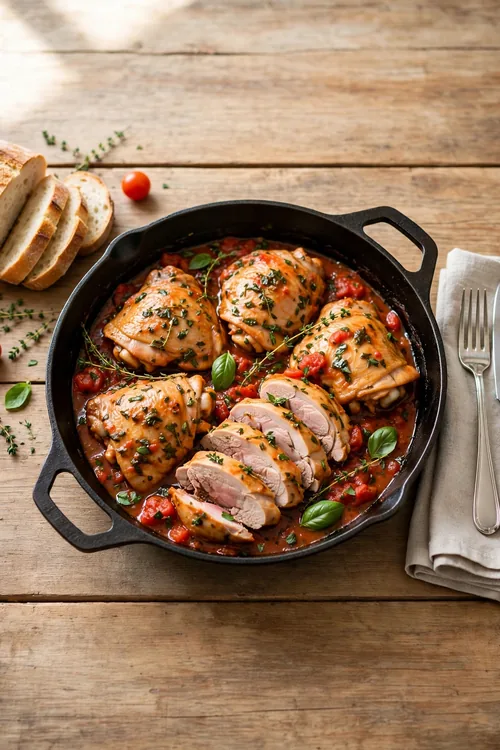
Stovetop Version: Boneless thighs brown fast and braise in about twenty five minutes, so this route suits weeknights when time runs short. The sauce clings well because the pieces are smaller, and nothing needs carving at the table, which makes serving kids and guests noticeably simpler.
Oven Version: In the oven, boneless thighs braise hands free at a gentle heat while you handle everything else. The sauce reduces slowly and evenly, the edges caramelize a little, and the meat stays tender without anyone standing at the stove stirring or watching the pot.
Boneless thighs forgive small timing mistakes better than almost any cut, which is why I recommend them to anyone new to braising. Just do not skip the sear, and give the sauce a final taste for salt, since boneless meat seasons the pot less than bone in pieces.
Red Wine Deep Braise
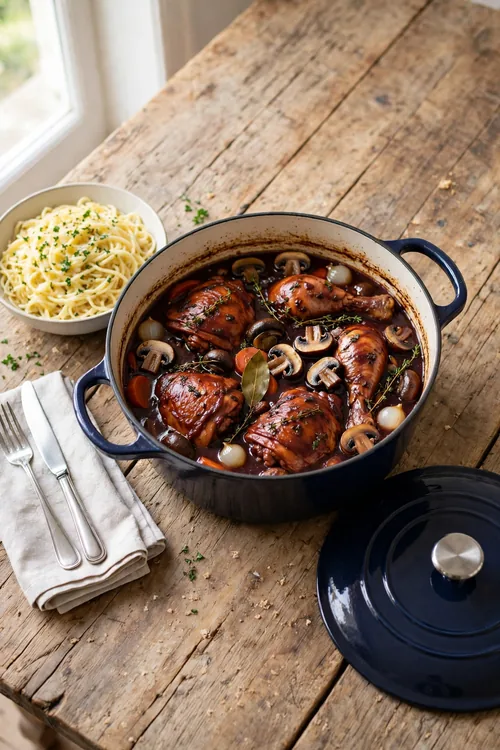
DO: Use a dry red wine you would drink, since its flavor concentrates as the sauce reduces.
DO: Let the wine simmer five full minutes before adding tomatoes, so the harsh edge cooks off.
DO: Add carrots and mushrooms, which love the darker, richer sauce this version builds.
DON’T: Pour in sweet wine, or the sauce turns jammy and hides the peppers.
DON’T: Rush the reduction at the end, since the sauce needs time to turn glossy.
DON’T: Skip tasting before serving, because red wine sauces drift bitter without a pinch of sugar.
Red wine gives this braise its deep color and a slightly grown up edge that suits a slower evening. I save it for weekends, light a candle even on a regular Saturday, and serve it with buttered noodles that catch the dark sauce in every fold and curve.
One Pot Orzo Version
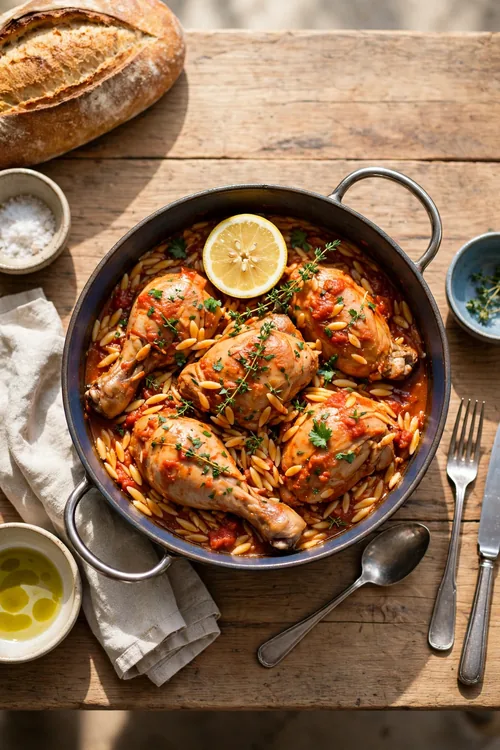
Time Needed: 40 minutes | Result: Saucy, risotto style grains | Works In: Wide Dutch oven | Pro Tip: Toast the orzo in the drippings first
Orzo cooks right in the braising liquid here, drinking up tomato and chicken juices until it turns almost risotto like. Stir often near the end so the grains do not catch on the bottom, and finish with lemon zest to wake the whole pot up before serving.
Balsamic Glazed Finish
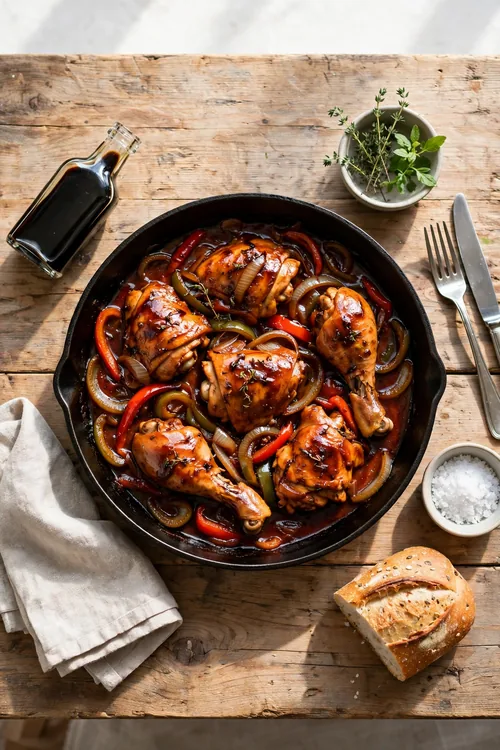
A spoon of balsamic stirred through at the end adds a dark sweetness that plain tomato sauces never quite reach. It rounds the acidity, deepens the color, and gives the peppers a glossy shine that makes the whole skillet look like it came from a little trattoria.
Add the balsamic off a hard boil and taste before adding more, since a little goes a long way. I have noticed that a final drizzle over each bowl, rather than the whole pot, lets everyone choose their own level of sweetness at the table with ease.
Italian Sausage Blend
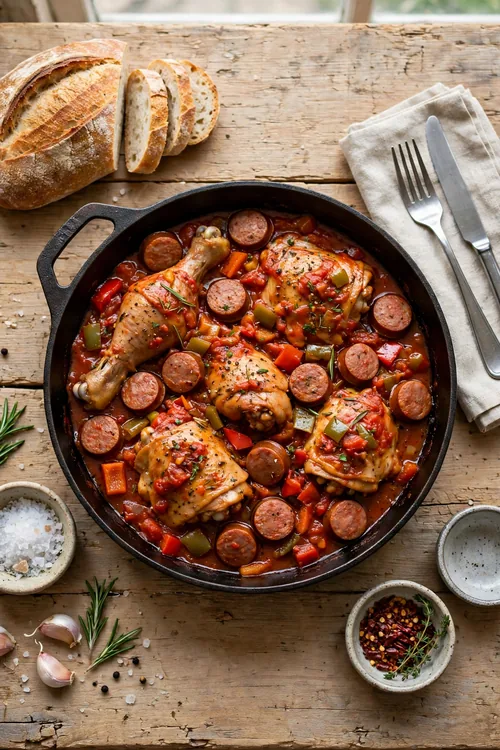
- Brown Italian sausage links first and use their spiced drippings to start the sauce.
- Slice the sausage into thick coins so each piece stays juicy through the braise.
- Split hot and sweet sausage if your crowd argues about heat at the table.
- Rest the finished pot ten minutes so the sausage juices settle back into the sauce.
Chicken and sausage together make this the heartiest pot in the whole list, built for cold nights and big appetites. The sausage seasons everything around it, so go lighter on added salt than usual, and serve with plenty of bread because nobody leaves this sauce behind.
Herby Garden Tomato
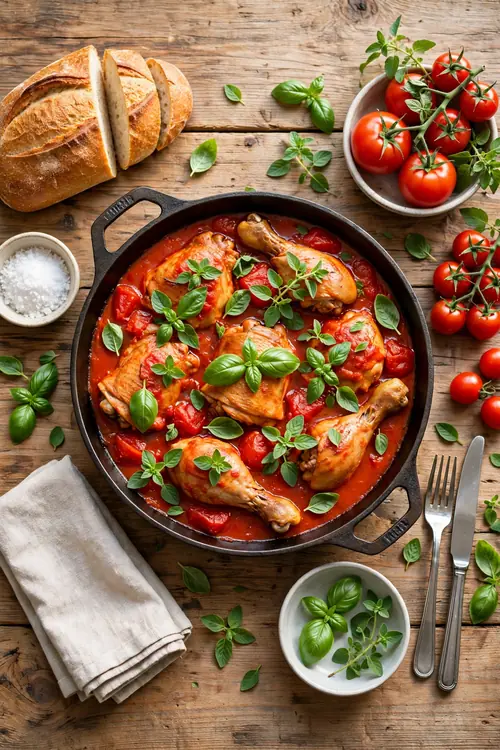
Quick Tip: Use fresh garden tomatoes at peak season and crush them by hand right over the pot. Their juices run thinner than canned, so simmer the sauce uncovered a little longer. That patience pays you back with the brightest, freshest flavor of the whole year.
Fresh basil and oregano go in during the last few minutes here, never at the start, so their flavor stays green and alive. On the best summer nights, I carry the whole pan outside and we eat straight from it, with the garden still smelling warm behind us.
Dutch Oven Campfire Style

BEFORE: the Dutch oven version, outdoor cooking at our cabin meant plain grilled chicken and whatever came from a can. The meals filled us up but never felt special, and the cook spent the evening standing at the grill instead of sitting with everyone around the fire.
AFTER: the heavy pot joined us, the chicken braises slowly over coals while the fire does the work and stories do the rest. Peppers soften, sauce thickens, and dinner tastes faintly of woodsmoke in the best possible way, with nobody stuck cooking alone in the dark.
The same pot works on a stovetop at home, so cabin food does not have to stay at the cabin. Keep the heat low and steady, turn the chicken once halfway, and let the lid trap every bit of moisture for meat that falls apart at a touch.
Crispy Skin First Method
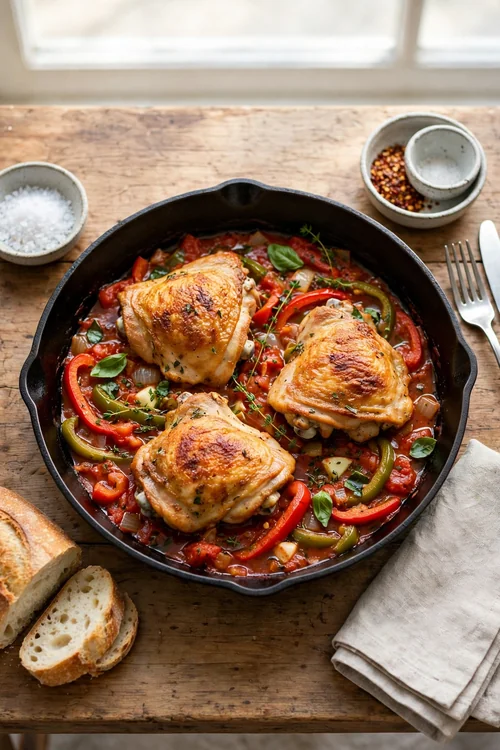
- Pat the skin completely dry with paper towels, since moisture is the enemy of a good crisp.
- Sear skin side down in a hot, oiled skillet for six minutes without moving the pieces.
- Flip once, then add sauce around the chicken, keeping the liquid below the skin line.
- Braise gently for twenty minutes and rest five, so the skin stays as crisp as possible.
Crisp skin on a braise takes a little strategy, but the payoff is a crackle in every bite that soft versions cannot offer. Keep the sauce level low, serve right away instead of holding it warm, and expect this method to become the house favorite by the second making.
Freezer Friendly Batch
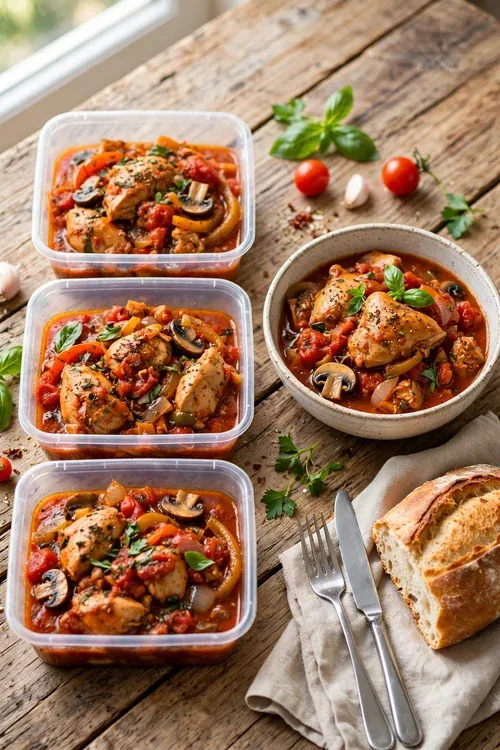
- Sauce: Fresh batch sauce tastes bright and herbal, while the frozen batch sauce deepens and melds after thawing.
- Chicken: Fresh chicken stays firmest, while frozen chicken turns extra tender, so shred it for bowls and sandwiches.
- Peppers: Fresh peppers keep a little bite, while frozen peppers go soft, which suits sauces and soups better.
- Storage: Fresh batch keeps four days in the fridge, while the frozen batch holds three months in flat freezer bags.
A double batch costs almost no extra effort and buys you a future dinner on the busiest weeknight of the month. Freeze the sauce and chicken together in flat bags, thaw overnight in the fridge, and reheat gently so the peppers keep some life in them.
Conclusion
Twenty-two pots later, the lesson is simple: chicken cacciatore bends to your schedule, your skillet, and whatever vegetables are waiting in the crisper.
Start with the classic rustic skillet, then work toward the spicy Calabrian pot or the freezer friendly batch when the week gets busy. In my experience, the leftovers taste even better the next day, once the peppers soften and the herbs settle into the sauce. Save this list to your dinner board, share it with a friend who loves a good braise, and keep a loaf of crusty bread nearby, because that sauce deserves to be wiped clean. Love lemon too? My chicken francese shines bright.