25 Traditional Chicken Vindaloo Ideas You’ll Brag About
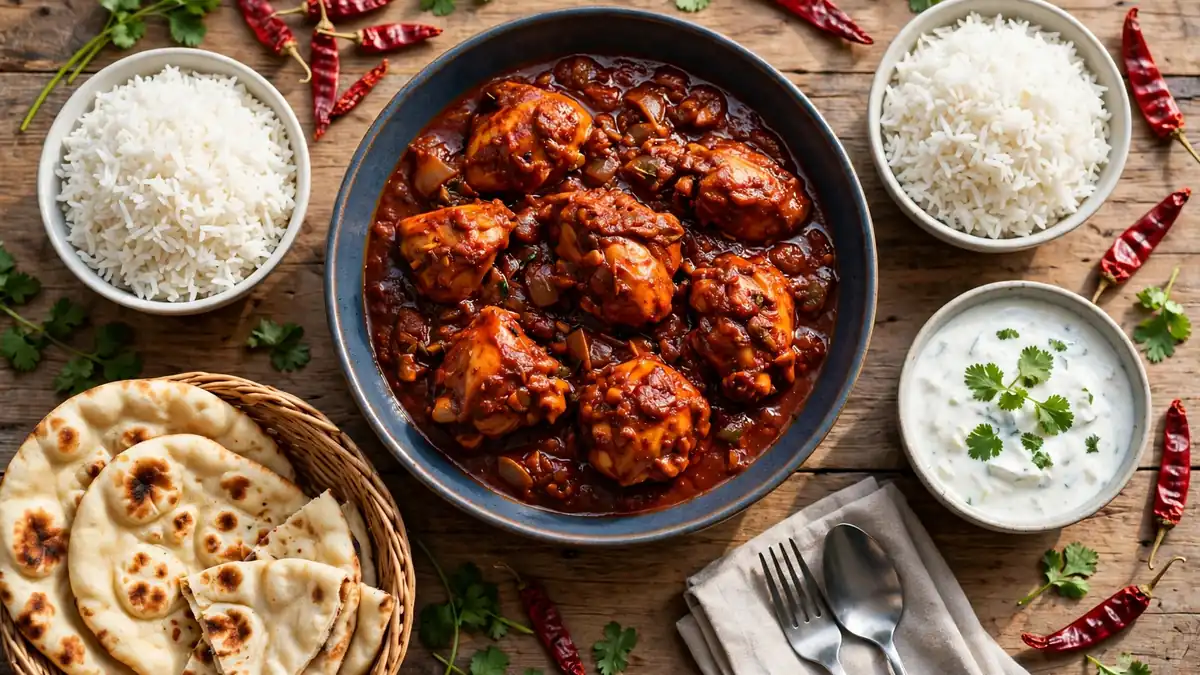
Some curries whisper, and then there is chicken vindaloo, the Goan classic that announces itself with vinegar tang, garlic depth, and a slow-building fire. Born where Portuguese vinegar met Indian spice, it is bold, brick red, and completely unapologetic on the table.
This collection gathers twenty-five versions worth bragging about, from the fiery classic pot to milder family bowls, potato loaded pans, slow cooker comfort, and tangy party batches. Each one keeps the soul of the dish intact and changes the details that matter most.
Save the pots that fit your heat tolerance, your schedule, and your people. Every version below carries the small hard-won details, the marinade timing, the vinegar balance, the resting, that separate a good curry night from one everyone talks about all week long.
Classic Goan Fire
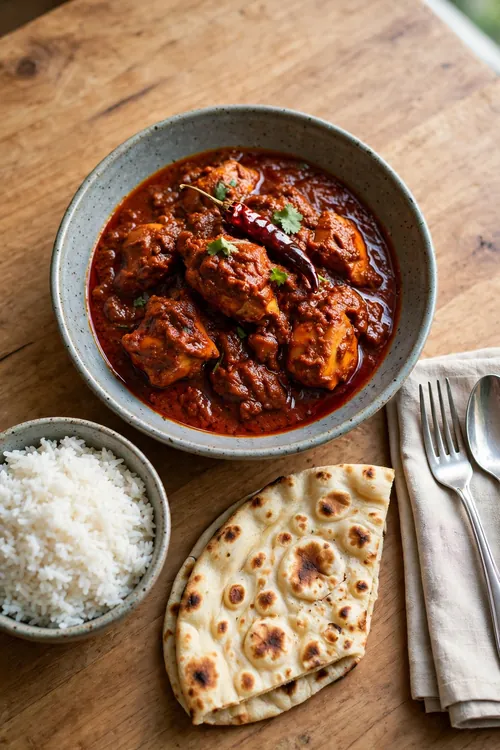
The classic starts with a paste, not a powder, dried red chilies soaked and ground with garlic, cumin, and vinegar until it turns brick red. That paste is the whole personality of the dish, fierce and tangy before the chicken even enters the pot for its first simmer.
Marinate the chicken in half of that paste for at least an hour, then braise it slowly with onions until the sauce clings and the oil glistens at the edges. The heat arrives in waves rather than one blast, and the vinegar keeps every single bite bright and alive. And for golden rice, my arroz con pollo feeds the table.
Potato Loaded Pot
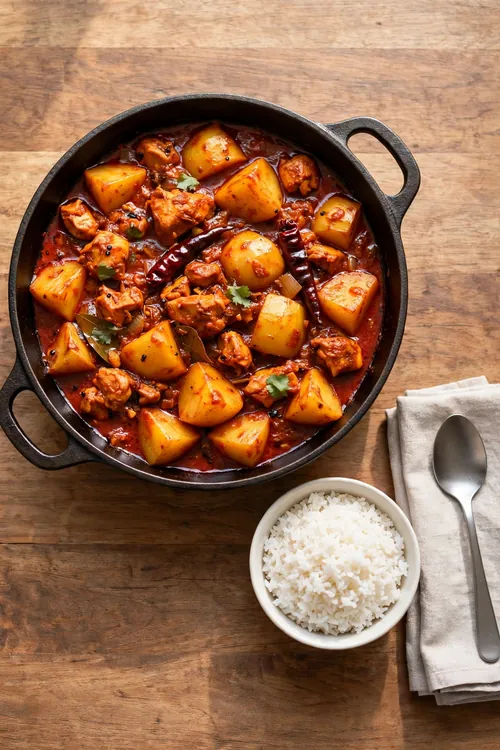
- Cut the potatoes into big chunks, because small pieces melt away during the long braise and vanish.
- Add the potatoes after the chicken has simmered twenty minutes, so both finish tender at the same time.
- Let the potato edges drink in the sauce; they come out fiery outside and soft, mild, and buttery inside.
- A splash of vinegar at the end wakes the whole pot back up after the starch settles in.
Potatoes turn this curry into a full meal without a single extra pan on the stove tonight. In my experience they also tame the heat politely, soaking up fire like little sponges, which makes this the version I serve friends who claim they are brave.
Vinegar Tang First
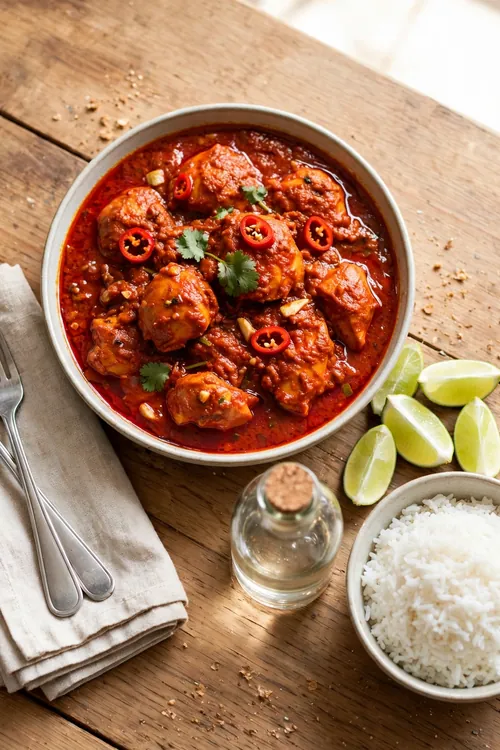
Quick Tip: Add half the vinegar to the marinade and save the rest for the final ten minutes of cooking. Early vinegar can turn harsh and flat, while a late splash stays bright and sharp. Taste before adding it all, because every vinegar brand pours differently.
That two-stage splash is the difference between a curry that merely burns and one that sings on the tongue. The tang lifts the garlic and spices instead of burying them, and the whole pot tastes fresher, like it was seasoned by someone paying very close attention.
Mild Family Version
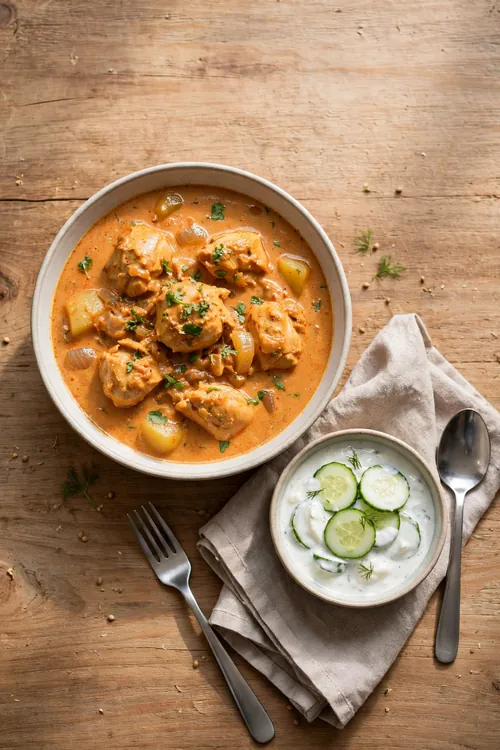
BEFORE: Family dinners used to split in two, a fiery pot for the adults and something plain and separate for the kids. The mild eaters felt like an afterthought, the cook doubled the work, and nobody shared the same meal or the same conversation around the table at night.
AFTER: Now the paste gets built with half the chilies and extra tomato, and the pot stays one happy pot for everyone. The tang and garlic still lead, the warmth hums gently underneath, and a bowl of raita on the side lets brave eaters stir in extra fire themselves.
Mild does not have to mean bland, and this pot proves it every single time it lands on our table. Kids scoop it over rice without flinching, grandparents go back for seconds, and the cook makes one dinner, which is the real weeknight victory worth celebrating here.
Slow Cooker Sunday
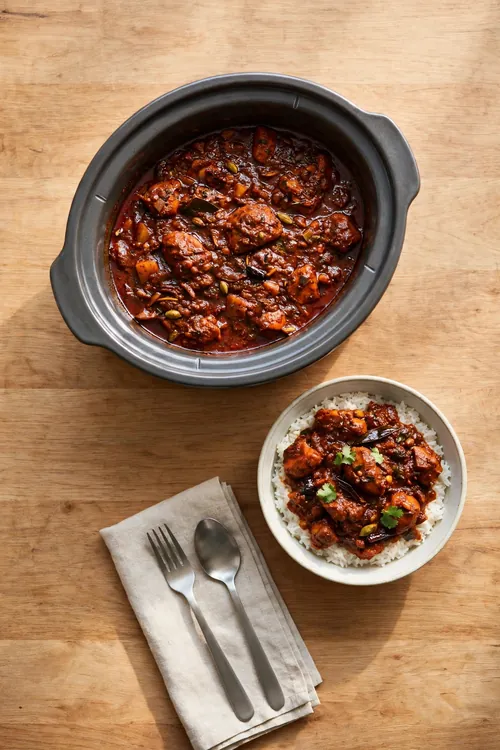
- Blend the soaked chilies, garlic, spices, and vinegar into a paste, then coat the chicken pieces thoroughly.
- Fry the onions on the stove until golden, because the slow cooker cannot brown anything for you.
- Tip everything into the cooker with a splash of water and cook on low for six hours.
- Rest the curry twenty minutes, skim the bright oil, and finish with a small splash of vinegar.
Slow cooker days deliver the deepest flavor with the least supervision of any method in this entire list. The long gentle heat melts the onions into the sauce completely, and by dinner the chicken surrenders at the touch of a spoon in the best possible way.
Heat Level Choices
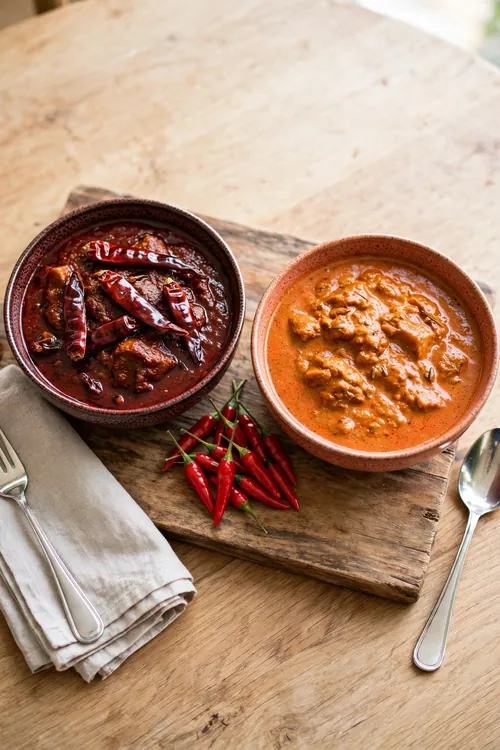
| Point | Fiery Classic | Gentle Heat |
|---|---|---|
| Chilies | A full handful of dried red chilies, seeds in | Half the chilies, seeds scraped out |
| Sauce Color | Deep brick red, almost mahogany | Warm orange red, noticeably lighter |
| First Bite | Heat lands fast and keeps building | Warmth arrives slowly and stays gentle |
| Best For | Chili lovers and bragging rights | Family tables and cautious guests |
Neither column is the correct one; they are simply different promises made to different people at your table. I keep the gentle version as my house standard and stir extra chili oil into my own bowl, so everybody wins without cooking two separate dinners on busy nights.
Marinade Basics First
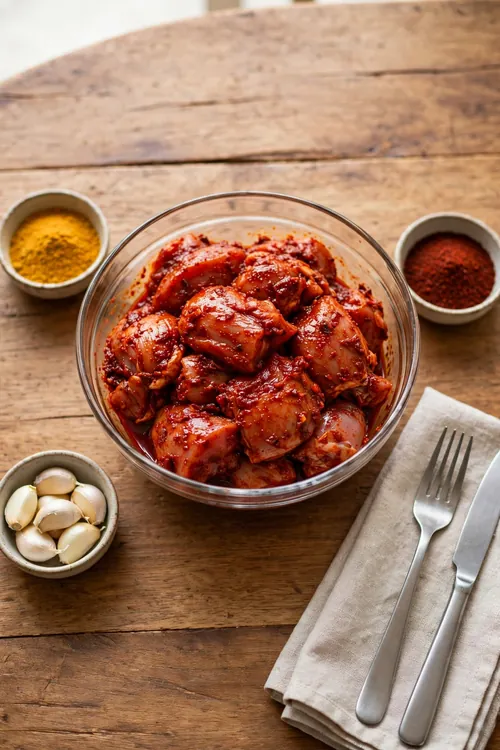
DO: Score the chicken pieces lightly so the paste reaches past the surface into the meat. DO: Give the marinade at least two hours, and overnight whenever the schedule allows it. DO: Salt the marinade itself, not the finished pot, so seasoning travels deep inside.
DON’T: Rush a thirty minute marinade and expect deep flavor, because the vinegar needs real time to work. DON’T: Leave the chicken sitting in raw marinade on the counter for hours. DON’T: Pour every drop of used marinade into the pot without simmering it fully first.
Good vindaloo is decided hours before the pot ever reaches the stove, right here in this quiet bowl. Treat the marinade like the main event instead of a formality, and the finished curry tastes seasoned to the bone rather than merely coated on the outside.
Pantry Spice Lineup
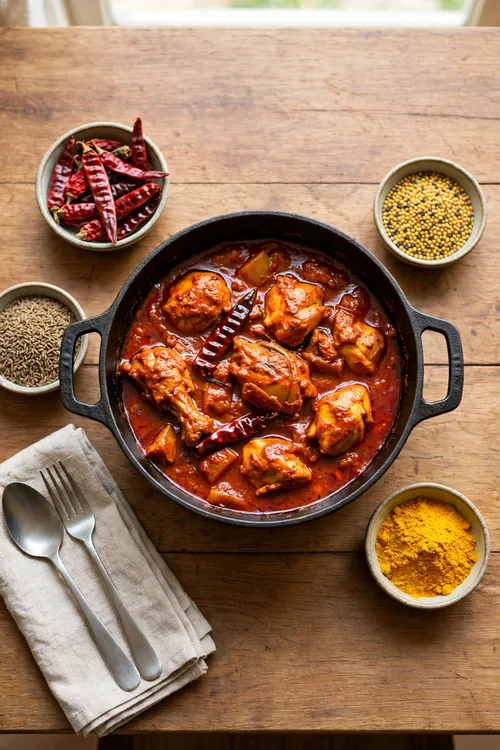
Cost: Low, dried spices and pantry staples carry it
Time Needed: About 1 hour plus marinating
Difficulty: Medium, mostly patience with the paste
Best For: Cooks who stock a serious spice drawer
Almost everything this curry needs keeps for months in a cupboard, which makes it the most reliable dinner in my rotation. Dried chilies, whole spices, garlic, and vinegar wait patiently until the day fresh chicken comes home and the whole house fills with that smell.
Smoky Charred Onions
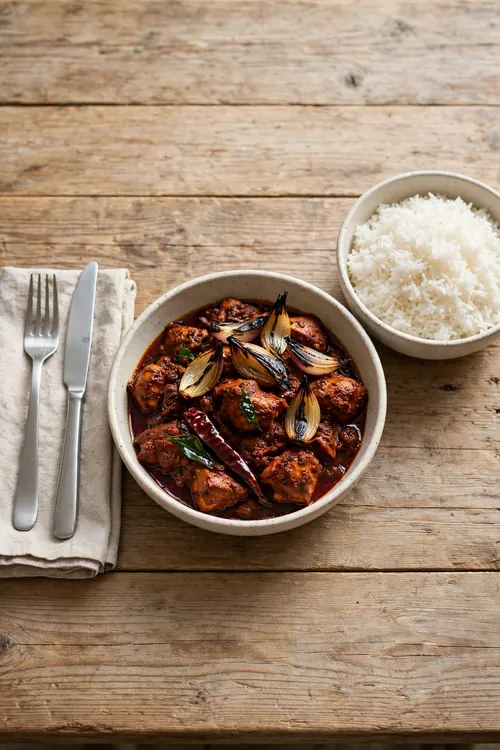
Char the onion wedges under a fierce broiler before they join the pot, and the whole curry shifts register completely. Their blackened edges melt into the sauce and leave behind a gentle smoke that makes the heat taste deeper, slower, and somehow more grown up than before.
Everything else stays classic: the chili paste, the vinegar finish, the long patient braise low on the stove. What changes is the finish, sweet char against bright tang, a contrast that keeps every spoonful interesting long after the third or fourth bowl gets ladled out tonight.
Coconut Softened Bowl
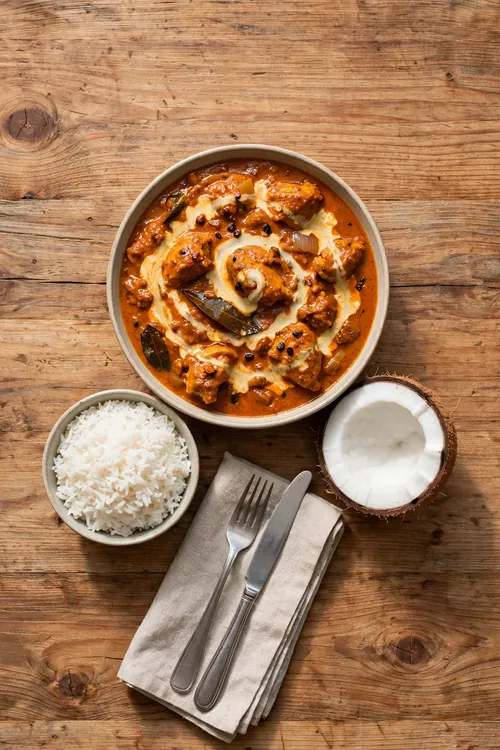
- Stir the coconut milk in during the last fifteen minutes so it stays silky and sweet.
- Keep the chili count honest; coconut softens heat, it should never erase it completely.
- A spoonful of coconut cream swirled on top at serving makes the bowl look gentle.
- Balance the richness with the full vinegar finish, or the sauce turns sleepy and heavy.
Coconut takes the sharp corners off this curry without sanding away its character, which is a neat trick. The sauce turns sunset orange, the heat glows instead of shouting, and rice soaks up every drop like it was designed for exactly this pot of dinner.
Instant Pot Express
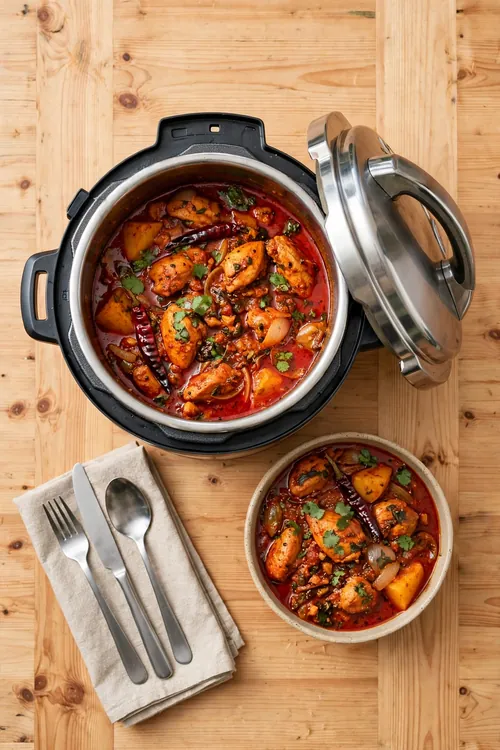
Quick Tip: Brown the paste in the pot on sauté before sealing the lid, because pressure alone never builds that fried depth. Twelve minutes at high pressure is plenty for bite-size chicken pieces. Let the pressure drop naturally for ten minutes before opening anything.
Weeknight vindaloo used to be a fantasy in my house, and now it is a Tuesday regular with rice. The sauce comes out slightly looser than the stovetop version, so simmer it open for five minutes at the end and it lands exactly right every time.
Make Ahead Depth
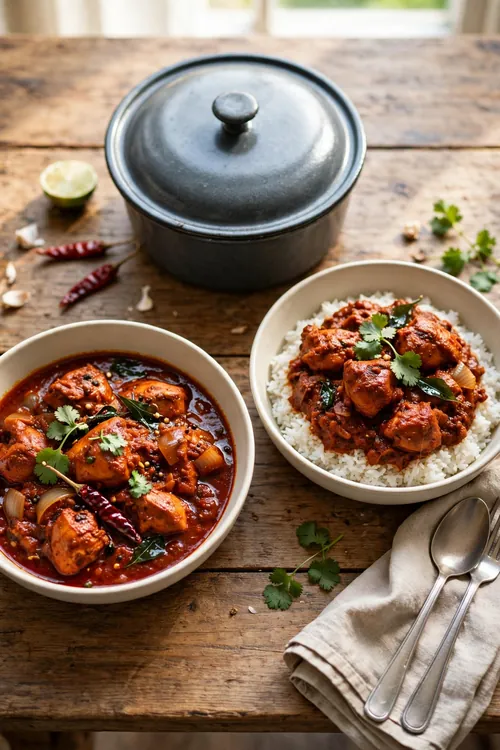
BEFORE: Served straight off the stove, a fresh pot can taste slightly disjointed, heat in one corner, tang in another. The spices feel loud rather than married, the chicken has not yet relaxed into the sauce, and the whole thing tastes younger than its ingredients deserve.
AFTER: One night in the fridge changes everything about this curry in the best possible way imaginable. The chicken drinks in the sauce, the vinegar softens its sharp shoulders, the heat spreads evenly, and reheated bowls taste rounder, deeper, and far more generous than yesterday’s ever did.
Now I cook this curry a day early on purpose, especially when guests are coming over for dinner. There is no last-minute fussing, the flavors arrive fully married, and I get to sit down with everyone instead of performing emergency kitchen surgery at the table.
Rice Bowl Serving
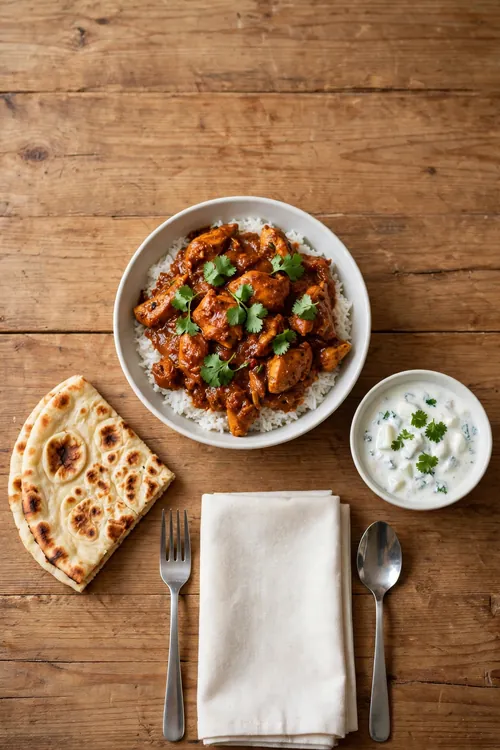
- Cook basmati until fluffy, then rest it covered for ten minutes so the grains stay separate.
- Spoon a generous mound of rice into wide bowls, leaving a shallow well in the center.
- Ladle the curry over the rice so the sauce runs down and seasons every grain below.
- Finish with cilantro, a wedge of lime, and one piece of chicken placed proudly on top.
Serving over rice is not just tradition; it is heat management your guests will thank you for. Every saucy spoonful carries its own cushion of grains, the fire spreads across the bowl instead of concentrating, and seconds happen naturally without anyone reaching for rescue milk.
Paste Two Ways
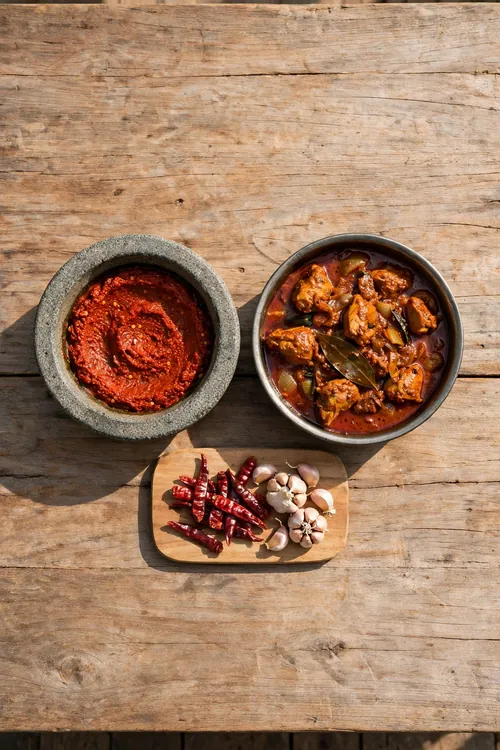
Fresh Ground Paste: Soaking dried chilies and grinding them with garlic, ginger, and whole spices builds a paste with real texture and layered heat. It takes twenty extra minutes and some elbow grease, and the sauce it makes tastes vivid, almost electric, compared with anything jarred.
Jarred Shortcut Paste: A good store-bought paste keeps this curry firmly in weeknight territory without embarrassing the cook at all. The flavor sits flatter and saltier, the color leans dull, yet with fresh garlic, extra vinegar, and a pinch of sugar stirred in, it lands surprisingly close.
My honest rule is fresh paste for weekends and people I want to impress, jarred for Tuesdays. Nobody has ever sent either version back, and the difference mostly matters to the cook, who knows exactly how much mortar work went into the bowl in front of them.
Party Pot Rules
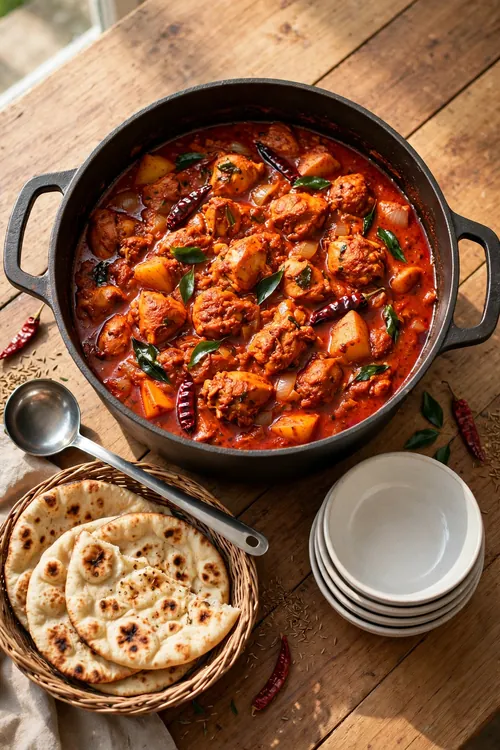
- DO: Double the recipe in your largest pot, because this curry disappears faster than polite estimates suggest.
- DO: Set out rice, naan, and raita as a cooling station next to the pot for guests.
- DO: Label the heat level honestly on a small card so nobody walks into the fire blind.
- DO: Keep the pot on its lowest warm setting so latecomers still get a proper hot bowl.
- DON’T: Make it hotter than your own taste to show off for the bravest guest present.
- DON’T: Let the pot sit at room temperature for hours after the party winds down.
- DON’T: Serve every side spicy too, or the table has no relief anywhere for anyone.
- DON’T: Skip the vinegar finish on a big batch; large pots mute brightness fastest of all.
A party pot of vindaloo does something safe menus never manage: it gets talked about for weeks afterward. People remember the brave spoonfuls, the rice refills, the friend who went back three times, and the cook gets asked for the recipe before dessert even lands.
Budget Friendly Batch
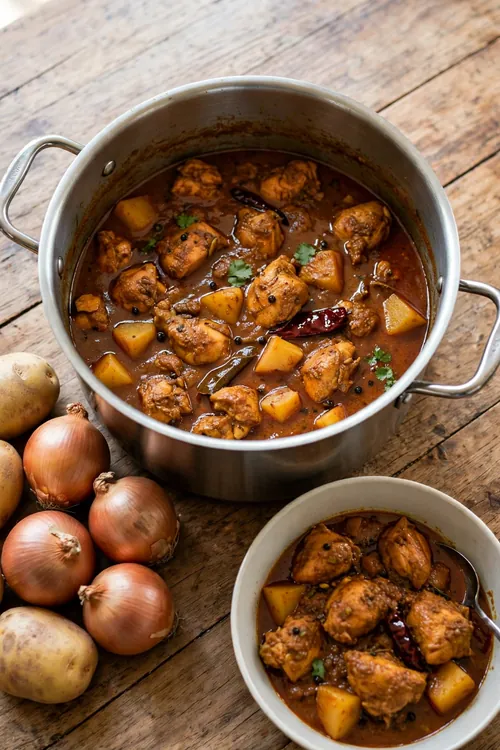
Cost: Low, thighs, onions, and dried spices do the work
Time Needed: About 1 hour plus marinating
Difficulty: Easy once the paste is made
Best For: Feeding many people on little money
Thighs cost less than breasts and taste better after a long braise, which makes them the budget cook’s best friend. Dried chilies and whole spices are cheap by the bag, so the expensive flavor here comes from patience, and patience costs nothing but a clock.
Sweet Tang Balance
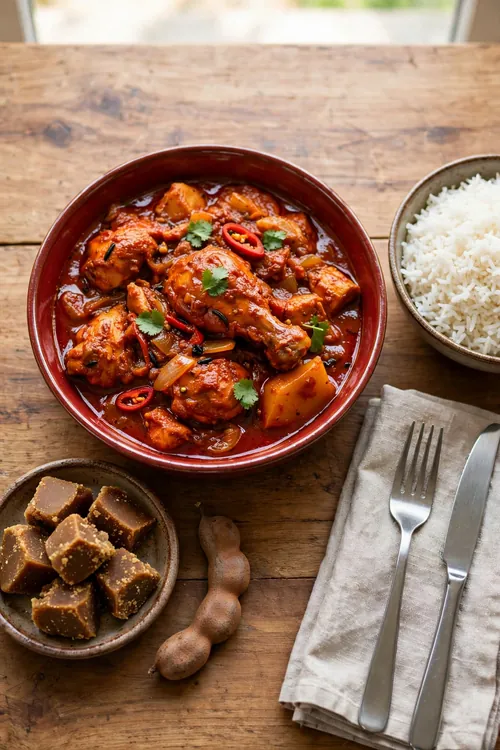
A teaspoon of jaggery does not make this curry sweet; it makes the tang behave itself beautifully. The vinegar sharpness rounds into something warm and wide, the garlic steps forward, and the heat stops poking and starts glowing across the whole bowl instead of jabbing.
Tamarind can do similar work when jaggery is missing, adding fruitiness alongside its gentle sour edge. Add either one near the end, a little at a time, tasting between spoonfuls, because balance in this pot is a moving target that depends on your vinegar and chilies.
Drumstick Rich Pot
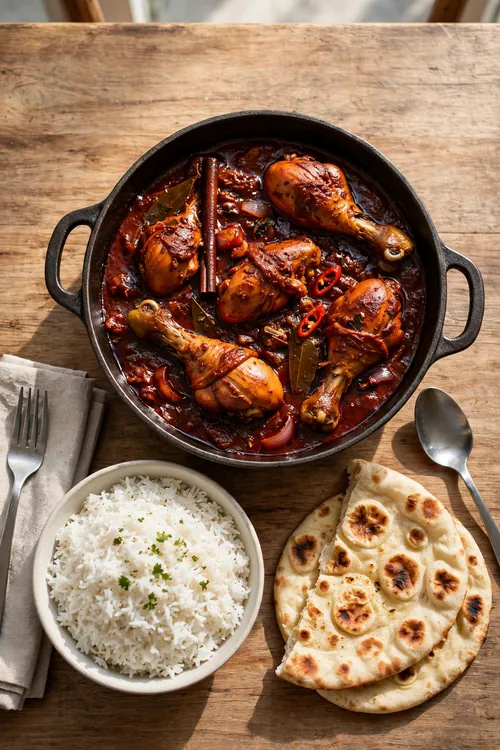
- Score each drumstick twice so the marinade reaches the bone instead of sitting on skin.
- Brown the drumsticks first; their rendered edges give the sauce a roasted depth cubes cannot.
- Braise a full forty-five minutes, until the meat nearly slips from the bone when nudged.
- Serve one drumstick per bowl standing in the sauce, and it looks generous without trying.
Drumsticks make this the most relaxed dinner in the list, built for eating with hands and torn naan. The bones keep the meat juicy through the long braise, the sauce turns extra rich, and nobody needs a knife for anything except maybe for the butter dish.
Freezer Friendly Batch
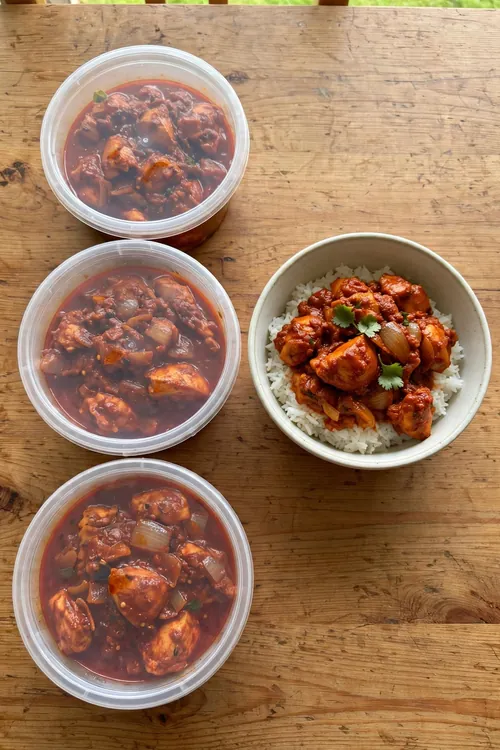
Quick Tip: Freeze the curry without potatoes, because spuds turn grainy and strange after a thaw and reheat. Cool the pot completely, fill containers with a little headspace, and freeze flat for easy stacking. Thaw overnight in the fridge and reheat gently with a splash of water.
A frozen batch of this curry is the smuggest feeling on a tired weeknight I know of. Dinner tastes like a Sunday project and behaves like a Tuesday shortcut, and future you, opening that freezer at six, will be extremely grateful past you bothered to cook double.
Low And Slow Braise
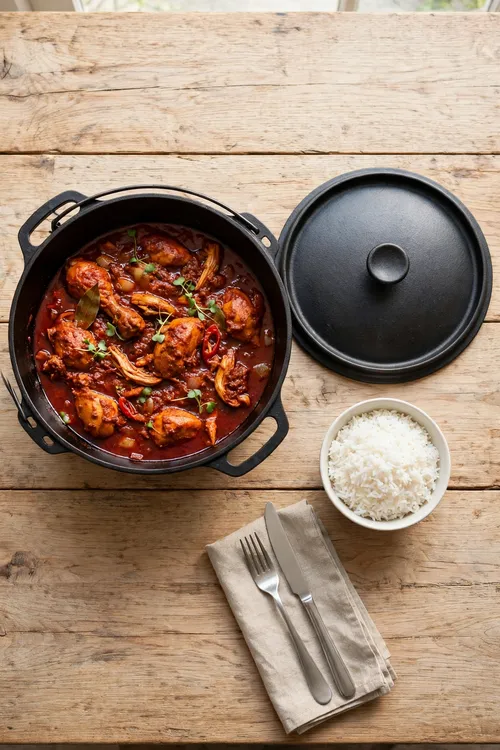
BEFORE: Rushed stovetop versions simmered hard for thirty minutes often arrive with tight, squeaky chicken and a thin sauce. The onions stay raw-edged, the spices taste separate and loud, and the pot looks impressive while quietly disappointing everyone who sat down hungry and hopeful for dinner.
AFTER: Two unhurried hours at the barest simmer change the chicken’s whole personality into something silky and giving. The meat relaxes, the onions dissolve into sweetness, the sauce thickens itself, and every bite tastes like the pot had all day, because this time it genuinely did.
Low and slow is not a technique here so much as a decision about what kind of evening you want. The pot murmurs, the kitchen smells incredible for hours, and dinner arrives at the table tasting like it was made by someone completely unbothered by time.
Naan Scoop Night
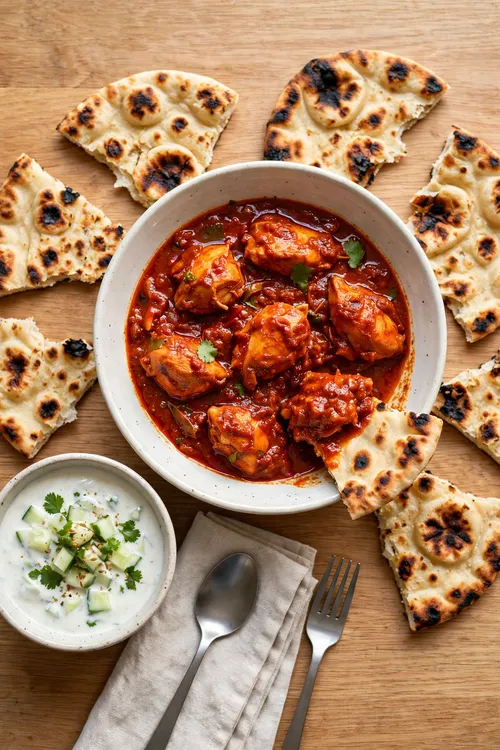
- Warm the naan over an open flame or dry skillet until it blisters and chars at the edges.
- Tear the breads into wide scoops, sturdy enough to carry chicken and sauce together.
- Set the curry bowl in the middle of the table with the naan piled around it.
- Let everyone scoop for themselves, dragging each piece through the sauce twice for good measure.
Naan night removes every bit of formality from this curry and replaces it with happy, saucy chaos. Bowls empty faster, conversation gets louder, and the last piece of bread becomes a small negotiation, which is exactly how a good family dinner should probably always end.
Serving Base Choices
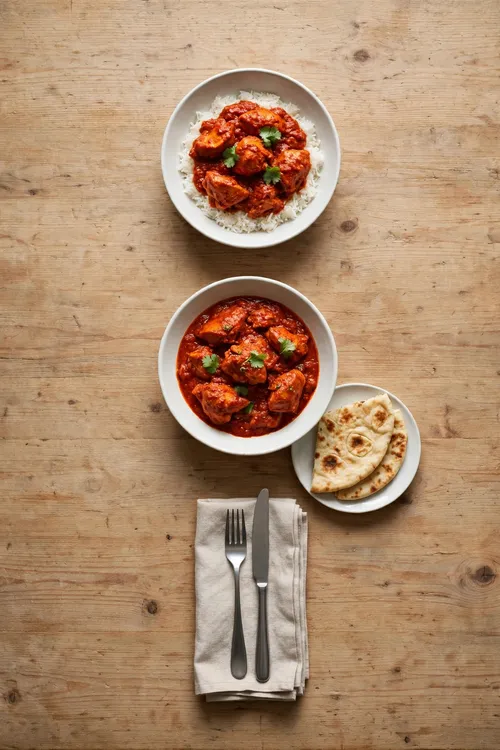
- Base: Fluffy rice soaks the sauce into every grain, while naan keeps the sauce pooled and scoopable on top.
- Heat Relief: Rice cushions every bite evenly, while plain naan cools only where the bread touches down.
- Texture: Rice turns the bowl soft and unified, while torn naan adds chew and charred edges.
- Best Moment: Rice wins on weeknights, while naan takes over when the table wants to linger.
There is no losing side in this comparison, only two different dinners hiding inside one pot of curry. I serve rice when the week is busy and naan when friends are staying late, and sometimes both, because nobody has ever complained about extra options at all.
Leftovers Done Right
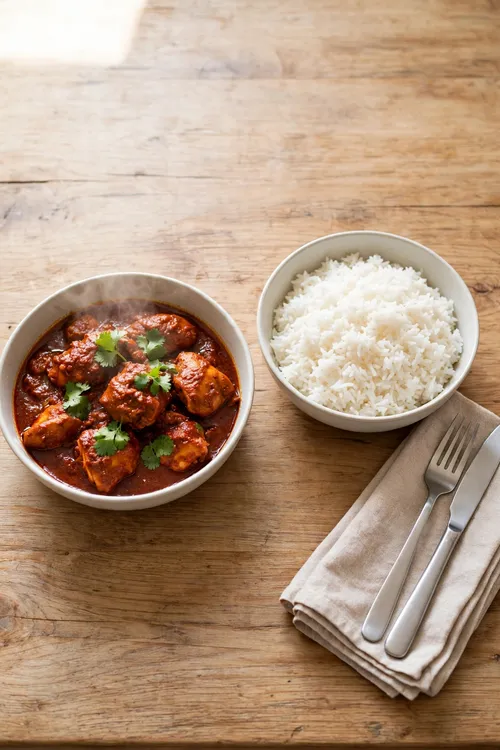
| DO | DON’T |
|---|---|
| Reheat gently over low heat with a splash of water | Boil leftovers hard, which tightens the chicken and dulls the sauce |
| Freshen the pot with new cilantro and a squeeze of lime | Serve it flat straight from the fridge with nothing new added |
| Cook fresh rice instead of reheating yesterday’s grains | Microwave the whole bowl until the edges scorch dry |
| Add a small vinegar splash to wake the flavors back up | Freeze the leftovers a second time after reheating them |
Leftover vindaloo is an argument for always cooking more than tonight needs, and I make it deliberately often. Day-two bowls taste deeper and rounder, lunch at work smells better than everyone else’s, and the small freshening tricks above make it feel newly cooked once more.
Weeknight Shortcut Facts
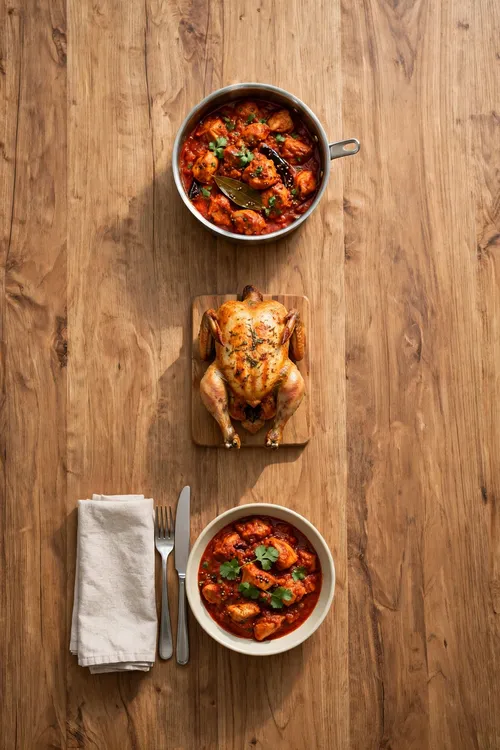
Time Needed: About 40 minutes with rotisserie chicken
Cost: Low, one bird and pantry spices cover it
Difficulty: Easy, the paste does the heavy lifting
Pro Tip: Shred the bird while the paste fries
Rotisserie chicken is the shortcut nobody at the table will ever detect inside a sauce this bold. The paste fries while you shred, the pot simmers while rice cooks, and a curry that tastes like a project lands on a school night without any drama.
Restaurant Style Finish
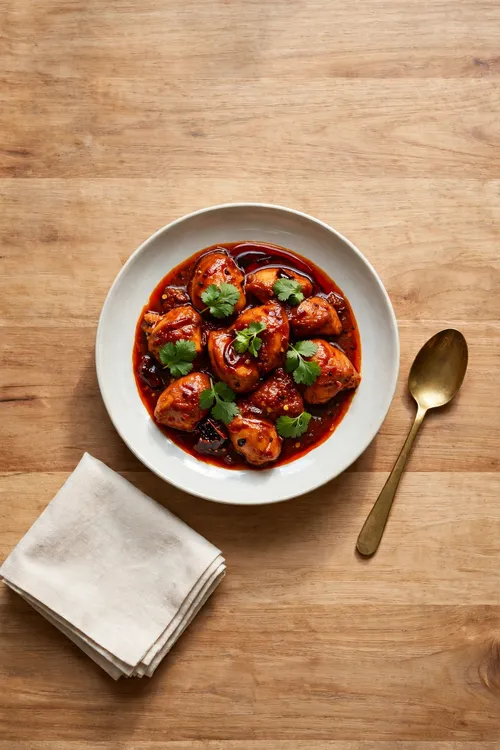
Restaurants finish this curry with two quiet moves: a rest off the heat and a swirl of the bright red oil across the top. The sauce settles glossy and unified, the chicken glistens, and the bowl looks like something worth dressing up for dinner over.
Serve it in shallow warm bowls with the neatest pieces arranged on top and cilantro placed, not scattered carelessly. Nothing about the recipe changed, only the presentation, yet guests lean in closer, phones come out, and the bragging in the title starts making complete sense.
Conclusion
Twenty-five pots later, the lesson is simple: great chicken vindaloo is not about reckless heat, it is about balance. Vinegar for brightness, garlic for depth, patience for the sauce, and a rest before serving so every flavor settles into place properly.
Pick one pot from this list and make it this week, then save the rest for the nights that need some courage. Share the fiery ones with your bravest friends, keep the mild bowls for family, and let the leftovers remind you tomorrow how good a plan it was. For a gentler green bowl, my thai green curry soothes.