How To Fix Gravy That Tastes Floury And Raw? Easy Fix Guide
Floury raw gravy tastes pasty and coats the tongue with uncooked starch. The roux did not cook long enough, the stock went in too fast, or the gravy never got a proper simmer. Every cause has a straightforward fix.
You will learn how to cook a roux until it smells nutty, how to whisk in stock without lumps, and how long to simmer for a clean flavor. The fixes work for turkey, chicken, beef, and vegetarian gravies alike.
Once the method clicks, your gravy will pour smooth and rich, and the next guide on banana bread shows how to fix banana bread that tastes like eggs.
Why Gravy Tastes Floury

Gravy tastes floury when the starch never fully cooks. Raw flour needs sustained heat to lose its pasty flavor, and a quick whisk with hot stock is not enough. Raw flour needs time and heat to lose its pasty taste, and a rushed roux never gets there.
Too much flour for the fat also leaves uncooked starch behind. The right ratio, plus a patient simmer, turns the same ingredients into silky gravy. Equal parts fat and flour give the roux enough fat to coat every grain. Too much flour leaves dry pockets that never cook through.
Cooking The Roux Right

A roux is equal parts fat and flour, cooked until the raw smell disappears. Color tells you how far it has gone. Stir the roux constantly over medium heat and watch the color shift from pale to golden. Two to three minutes is usually enough for a smooth base.
- Melt the fat over medium heat.
- Whisk in the flour until smooth.
- Cook for 2 to 3 minutes, stirring constantly, until nutty smelling.
- Add warm stock a little at a time, whisking well.
Fixing Raw Flour Taste

Quick Tip: If the gravy already tastes floury, simmer it gently for 10 more minutes, stirring often. The extra time cooks out the raw starch without changing anything else.
Do not rush this simmer. Ten full minutes on low heat is what turns pasty gravy into smooth gravy. Taste again at the end before deciding whether it needs anything more. Simmer the finished gravy for ten full minutes, tasting at the end. The floury note fades slowly, so give the pot the full time.
Stock And Seasoning Balance

Common Mistake: Many cooks dump all the stock in at once. The roux seizes into lumps, the flour cooks unevenly, and the gravy turns both lumpy and pasty.
The Fix: Add the stock in three additions, whisking smooth after each one. The gradual method keeps the gravy lump free and lets the flour cook evenly.
Warm stock works better than cold, since it keeps the roux fluid. Cold stock shocks the roux into clumps that are hard to whisk out. A pinch of black pepper and a splash of soy sauce deepen the flavor without changing the texture. Season in small steps and taste after each one.
Lumps And Thin Gravy
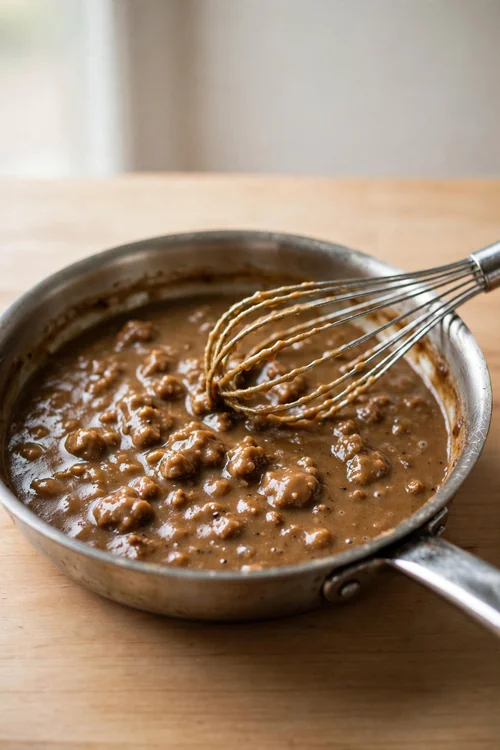
What You Need:
- Whisk: Keeps the roux smooth as stock goes in.
- Heavy saucepan: Even heat prevents scorching.
- Warm stock: Blends into the roux without seizing.
- Fine strainer: Catches any lumps for a silky finish.
- Ladle: Serves the gravy without disturbing the pot.
A whisk and warm stock are the two things that matter most. With them, lump free gravy is easy. Keep a spare cup of warm stock nearby, so you can thin the gravy if it thickens too fast. A smooth gravy should pour in a steady ribbon.
Straining For Smoothness

Before: Before, my gravy tasted like wallpaper paste. I whisked the flour into cold stock and served it two minutes later, wondering why it tasted raw.
After: After cooking the roux until nutty and simmering for ten full minutes, the same gravy tastes rich and smooth. The ingredients never changed.
The fix is time and heat, not a new recipe. A patient simmer turns pasty gravy into the kind people ask about. Finish with a knob of cold butter whisked in off the heat for shine. The butter also rounds out any last hint of rawness.
Butter And Cream Finish
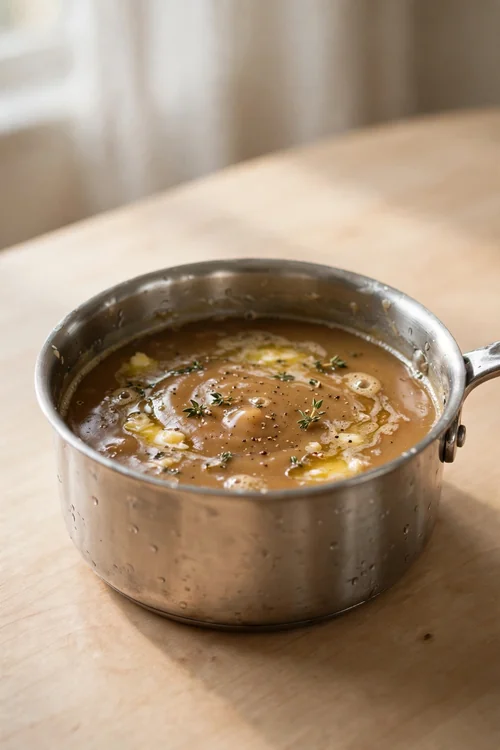
Do This:
- Cook the roux until nutty smelling.
- Add warm stock gradually.
- Simmer for at least 10 minutes.
- Strain if any lumps remain.
Avoid This:
- Do not dump cold stock into the roux.
- Do not skip the simmer.
- Do not use too much flour for the fat.
- Do not serve gravy straight off a fast boil.
These habits give smooth gravy every time. Once they feel routine, floury gravy becomes a thing of the past. Warm the serving jug with hot water before pouring, so the gravy stays fluid at the table. A cold jug sets the gravy too fast. Warm the jug while the gravy simmers.
Serving Gravy Hot

- Time Needed: About 15 minutes from roux to serving.
- Difficulty: Easy, mostly stirring.
- Cost: Pantry staples and stock only.
- Best For: Turkey, chicken, beef, and vegetarian gravies.
A roux needs 2 to 3 minutes of cooking to lose its raw flavor. Gravy needs at least 10 minutes of simmering after the stock goes in. Two tablespoons each of fat and flour thicken about two cups of stock. Store gravy in a shallow container so it cools quickly and reheats evenly.
Storing Leftover Gravy

Lumps happen when stock hits the roux too fast. Whisk hard for a minute, and most small lumps will dissolve. For stubborn ones, pour the gravy through a fine strainer. Reheat gravy gently with a splash of stock, whisking as it warms. A fast boil can split the sauce and bring back a grainy feel.
Thin gravy needs a longer simmer, not more flour. Simmer uncovered until it coats the back of a spoon, then taste and season. If the gravy still tastes floury after reheating, simmer it five more minutes.
Reheating Without Splitting

Straining is the fastest route to silky gravy. It takes one minute and fixes almost any texture problem. Whisk from the corners of the pan, where lumps like to hide. A flat whisk reaches the edges better than a balloon whisk.
- Set a fine strainer over a clean pot.
- Pour the gravy through in a slow stream.
- Press the solids gently with a spoon.
- Return the smooth gravy to the heat and season.
Gravy Success Checklist
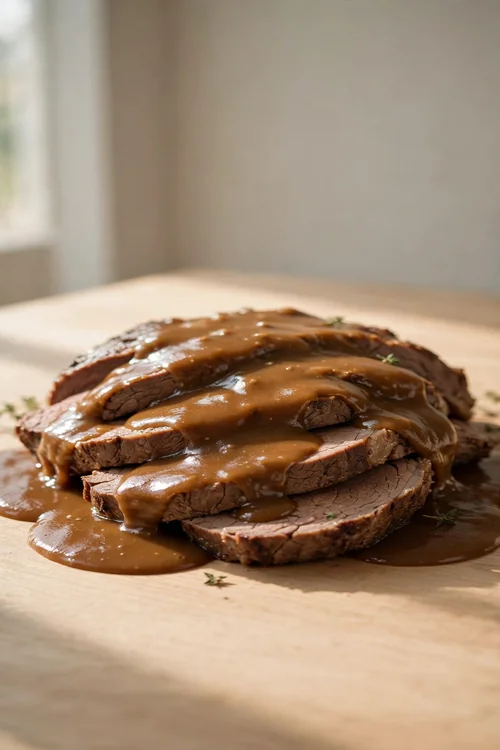
Quick Tip: Finish with a knob of cold butter, whisked in off the heat. The butter adds shine and silk, and it rounds out any last hint of flour.
Serve the gravy hot, in a warm jug, so it stays fluid at the table. Smooth, rich gravy is the finishing touch that makes the whole roast shine. Serve the gravy in a warm jug with a small ladle, so everyone can pour their own.
Conclusion
Smooth gravy is a matter of patience, not talent. When floury raw gravy shows up, cook the roux until it smells nutty, whisk in warm stock slowly, and simmer for a full ten minutes. Straining catches any lumps, and a knob of butter at the end adds silk. Taste before serving, and adjust salt and pepper last. Keep the gravy hot until the moment you serve. With these habits, your gravy will pour smooth and rich every time. For the fix that came before this one, see the potato curry guide for firm potatoes in every serving.