How To Stop Cookies Burning On The Bottom? Easy Fix Guide
If your cookies burning on bottom turn dark underneath while the tops still look pale, you are not alone. Many home bakers face this same problem, and the good news is that golden cookies take only a few simple changes.
The usual causes are easy to spot. A hot oven, a low rack, or a dark thin pan pushes too much heat into the base. Once you see which cause fits your oven, the fix becomes clear.
This guide walks you through each fix in order, from heat and rack position to pans and timing, so your next tray turns out golden all over. For a dessert rescue next, read runny tiramisu after this one.
Why Cookie Bottoms Burn
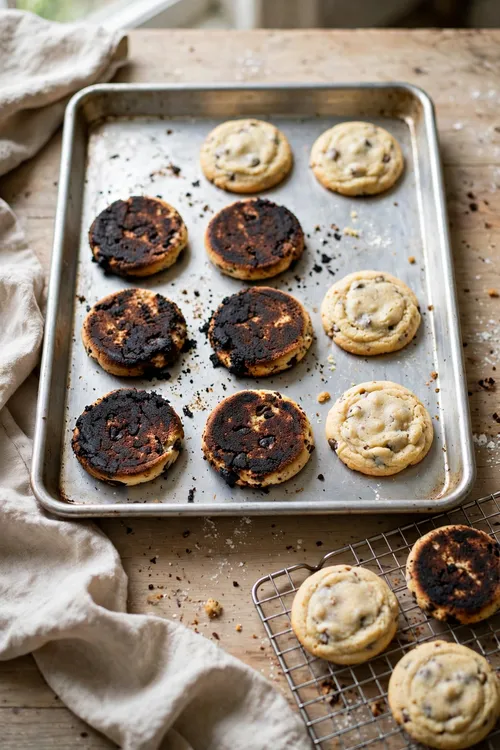
Cookie bottoms burn when the base gets far more heat than the top. Dark pans absorb heat fast, and a low rack sits close to the heating element. Thin pans pass that heat straight into the dough. The base sits closest to the lower element, so it always cooks fastest.
Old ovens often run hotter than the dial shows. In my experience, a small oven thermometer explains many burnt batches, and the fix is usually heat, rack, or pan, not the recipe. A light pan and a higher rack slow the bottom heat down.
Lower Oven Heat
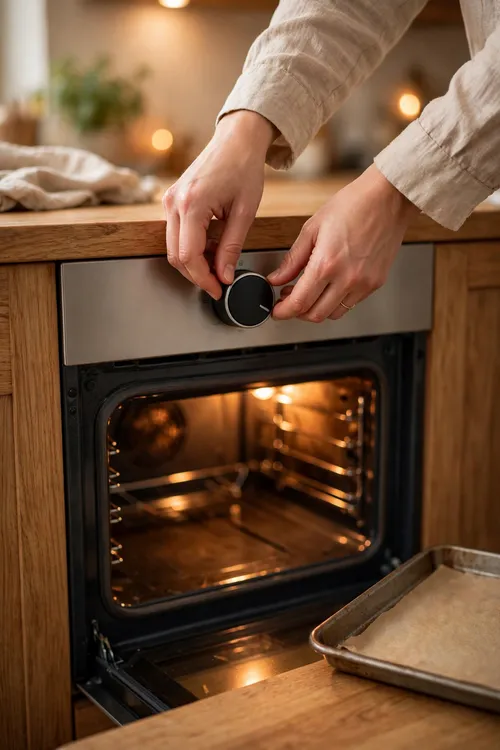
Lower heat gives the whole cookie time to bake evenly. Most cookies bake well at 325 to 350 F, and a small drop often fixes burnt bases. Most cookie dough bakes well near 350 degrees, and a cooler oven evens the bake.
- Set the oven 25 degrees lower than the recipe says.
- Let the oven heat fully for at least 15 minutes.
- Check the temperature with an oven thermometer.
- Keep the door closed so the heat stays steady.
Move Rack Up

Quick Tip: Move the rack to the middle or upper middle position. The center of the oven heats most evenly, while the bottom rack sits right over the heat source.
If your oven has a strong bottom element, the top rack can work even better. Watch the first tray closely, since moving up can slow browning on the base. A middle rack is the safest start. A middle or upper middle rack keeps the base away from direct heat.
Use Light Pans

Common Mistake: Many bakers use dark nonstick sheets for every cookie. Dark metal absorbs heat and browns the base long before the top is done.
The Fix: Switch to light colored, heavy aluminum sheets. They reflect some heat and spread the rest evenly, so the base bakes gently.
If you only own dark pans, line them with parchment and lower the heat by 25 degrees. Two stacked sheets also insulate the base and slow browning. If you only own dark pans, line them with parchment and lower the heat. Parchment shields the base and gives a more even bake.
Line Your Pans

What You Need:
- Light baking sheets: Reflect heat and bake the base gently and evenly.
- Parchment paper: Adds a thin barrier between dough and hot metal.
- Silicone mat: Insulates the base and stops sticking without extra oil.
- Oven thermometer: Shows the true oven temperature behind the dial.
- Cooling rack: Lets air reach the base so cookies stop baking fast.
Parchment is the cheapest fix on this list. It keeps the base from scorching, makes cleanup easy, and lets you slide a whole tray of cookies onto the rack at once. Parchment costs little and saves many trays from burnt bases. Keep a roll beside the baking sheets, not in a far drawer.
Cool Between Batches

Before: Before the fix, the cookies baked on a hot dark sheet straight from the last batch. The bases turned black while the tops stayed pale.
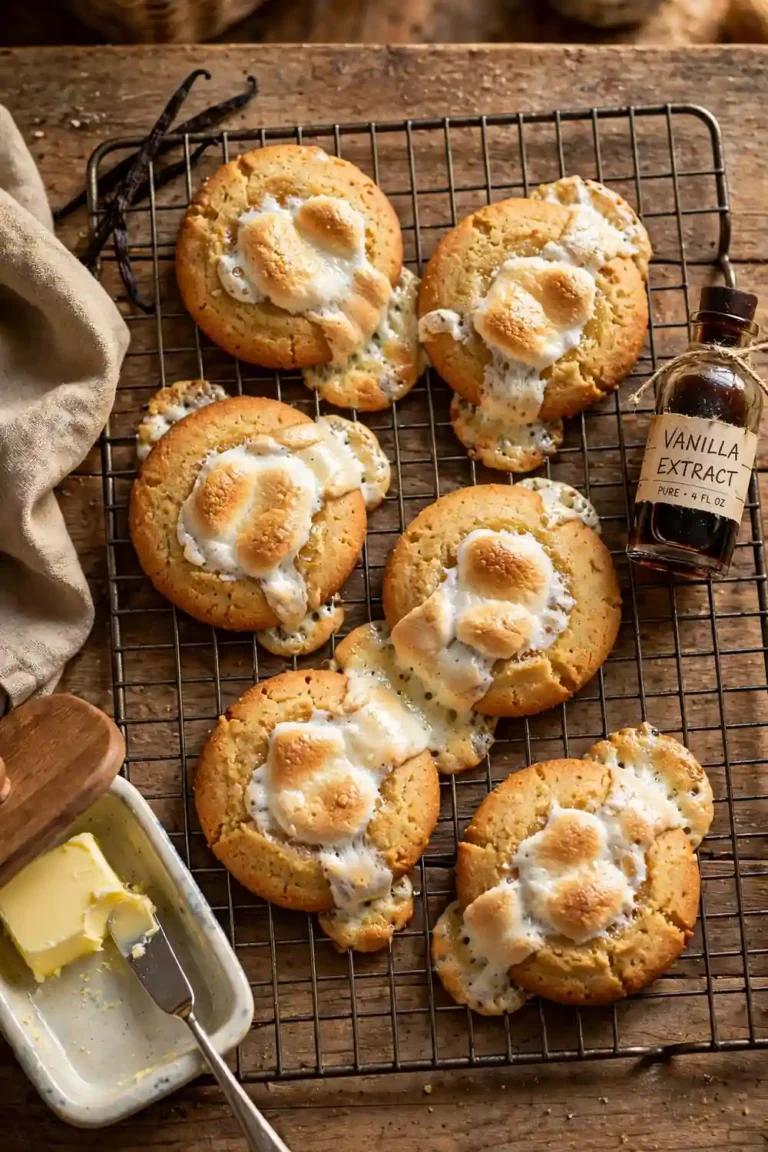
After: After the fix, the same dough bakes on a cool, lined, light colored sheet. The bases turn pale gold, and the tops set at the same pace.
A hot pan is a hidden cause of burnt bottoms. Let each sheet cool to room temperature, or rotate two sheets so one cools while the other bakes. Cool pans give every batch a fair start. Cool each sheet fully before the next batch goes on.
Watch Bake Time
Do This:
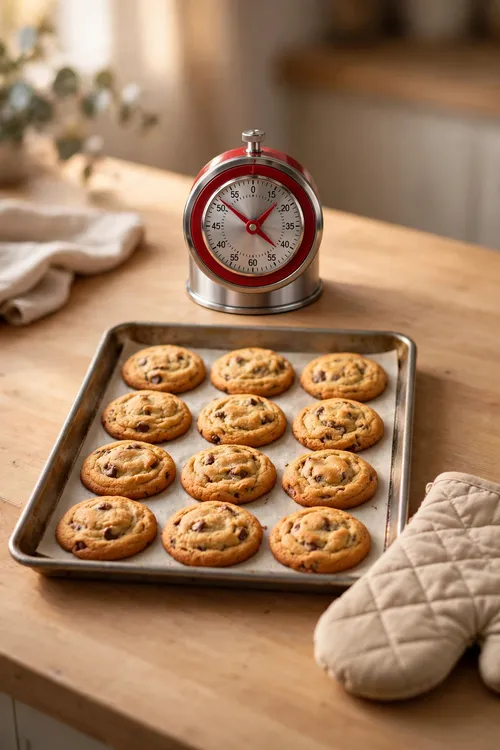
- Set a timer for two minutes less than the recipe says.
- Check the edges, which should look set while the centers look soft.
- Pull the tray when the centers still look slightly underdone.
Avoid This:
- Do not wait for the tops to look brown, since the base will burn first.
- Do not open the oven every minute, or the heat will swing.
- Do not leave cookies on the hot tray while you check them.
Cookies firm up as they cool, so pulling them early is safe. A tray that looks slightly soft in the middle will set into perfect cookies on the rack. Pull the tray when the edges look set but the centers still look soft. The cookies firm up on the hot sheet as they cool.
Check Dough Temperature

Time Needed: About 10 to 13 minutes per tray at 350 F.
Difficulty: Easy, once the rack and pan are right.
Cost: Low, since parchment and a thermometer cost little.
Best For: Drop cookies, cutouts, and bars baked on sheets.
Chilled dough spreads less and bakes more evenly. If your dough feels soft and sticky, chill the scoops for 20 minutes before baking. Cold dough also helps the base stay pale. Chill the dough for thirty minutes if it feels soft or sticky. Cold dough spreads less.
Rescue Burnt Cookies

Burnt cookies can often be saved. Let them cool, then rub the dark base gently with a fine grater or the rough side of a sponge. The burnt layer comes off and leaves a pale cookie behind. Let burnt cookies cool fully, then rub the bases gently with a fine grater.
If the burnt taste lingers, crumble the cookies over ice cream or yogurt. The cold, creamy topping hides any bitter notes, and nothing goes to waste. Crumbling the worst cookies over ice cream hides the burnt taste very well indeed.
Serve Golden Cookies

Serve cookies on a plate once they feel firm but still soft in the middle. A glass of cold milk makes the golden color look even better. Serve the cookies once they feel firm but still soft in the center.
- Move the cookies to a rack after two minutes on the tray.
- Let them cool for at least ten minutes.
- Stack them loosely so the bases stay crisp.
- Store extras in a sealed container once fully cool.
- Warm one cookie for ten seconds before serving if you like.
Final Golden Check

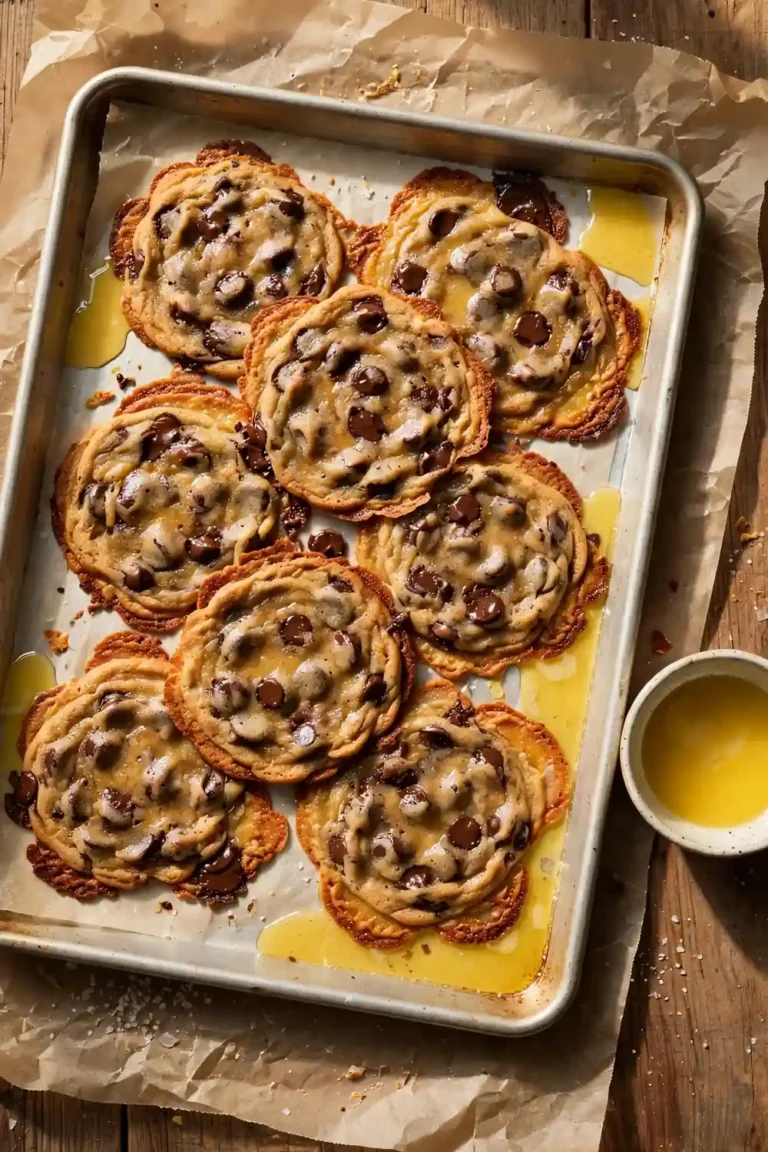
Quick Tip: Lift one cookie and look at its base. A well baked cookie has a pale, even golden base with no dark spots. If the base looks dark, lower the heat for the next tray.
This quick check takes only a second. A pale base means the whole batch baked evenly, and a small heat adjustment now saves every tray after it. A pale golden base means the bake was right, while a dark base means lower heat next time.
Conclusion
Fixing cookies burning on bottom comes down to lower heat, a middle rack, and a light lined pan. Those three changes turn scorched bases into golden cookies with soft centers. Try them on your next tray and enjoy cookies that look as good as they taste. Keep the heat moderate and the pans light every time you bake, and golden cookies will become your normal result. A middle rack and a cool lined sheet make all the difference, and soon every tray will bake evenly. For another dessert rescue, read chocolate mousse next.