Why Is My Homemade Ice Cream Icy and Hard? Easy Fix Guide
Icy homemade ice cream can spoil a batch you worked hard to churn. You freeze the base, wait overnight, and scoop a hard, crystal filled block instead. The flavor stays sweet, but the icy bite disappoints. Thin bases and slow freezing usually cause the trouble.
Most icy batches trace back to a warm base, low fat, or a freezer that runs too warm. Each one lets large crystals grow, so the scoop turns hard. In my experience, one weak step is enough to freeze the whole tub solid.
This guide walks through each cause, from base to storage, with a fix for every step. Follow the fixes for a smooth, creamy scoop. And if your muffins also bake flat, see why flat muffin tops happen and how to fix them.
Why Ice Cream Turns Icy
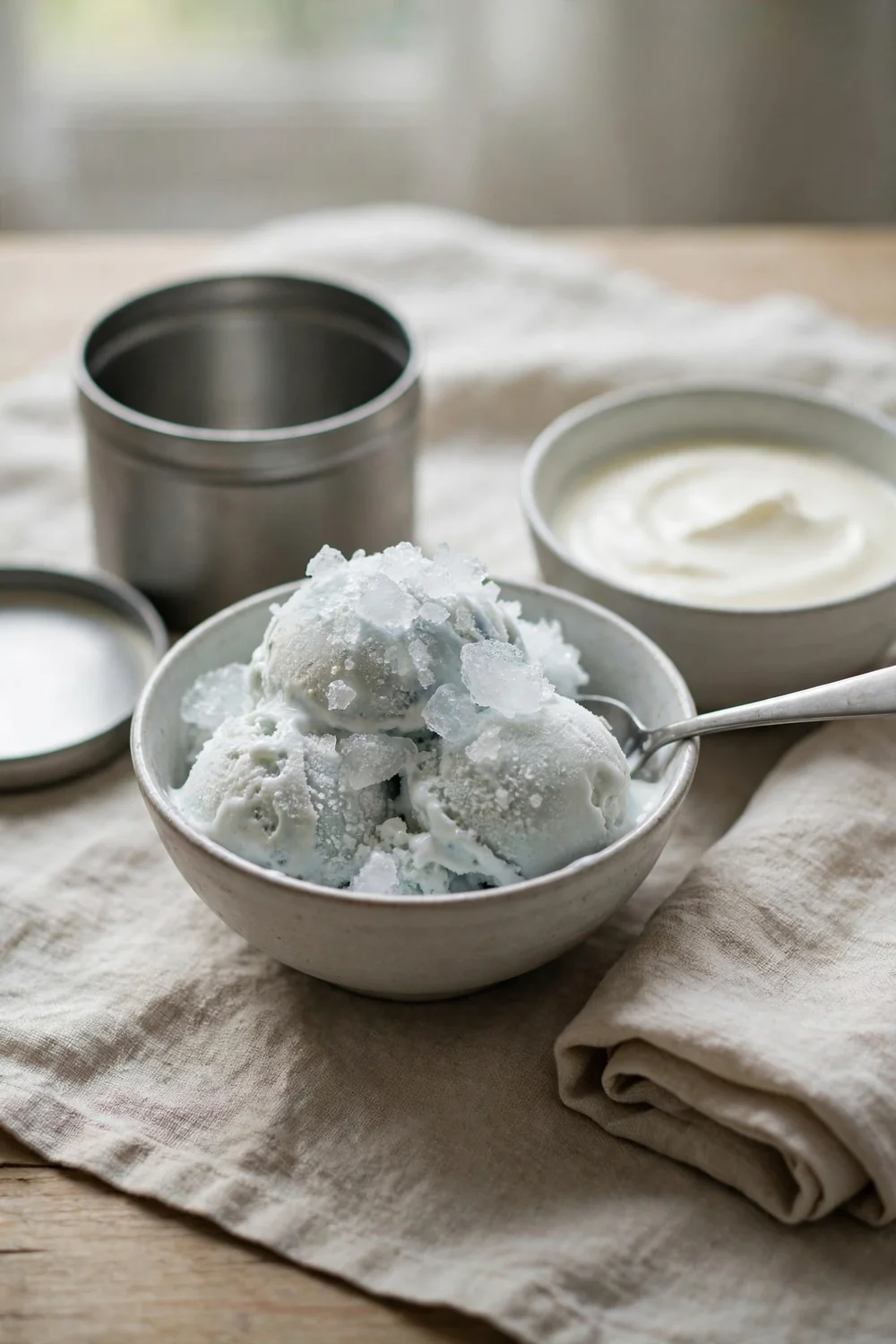
Ice cream turns icy when water freezes into large crystals instead of staying smooth. A thin base, slow freezing, and warm storage can each grow big crystals. The base sets, but the creamy texture never stays. Icy scoops feel hard, and the soft spoon never comes.
Icy ice cream does not mean the base went bad, and the batch stays usable. The slow freeze builds crystals first, then the tub stays hard with time. A fast freeze sets smooth, and a slow freeze stays icy. Check the base before you toss it.
Use More Fat
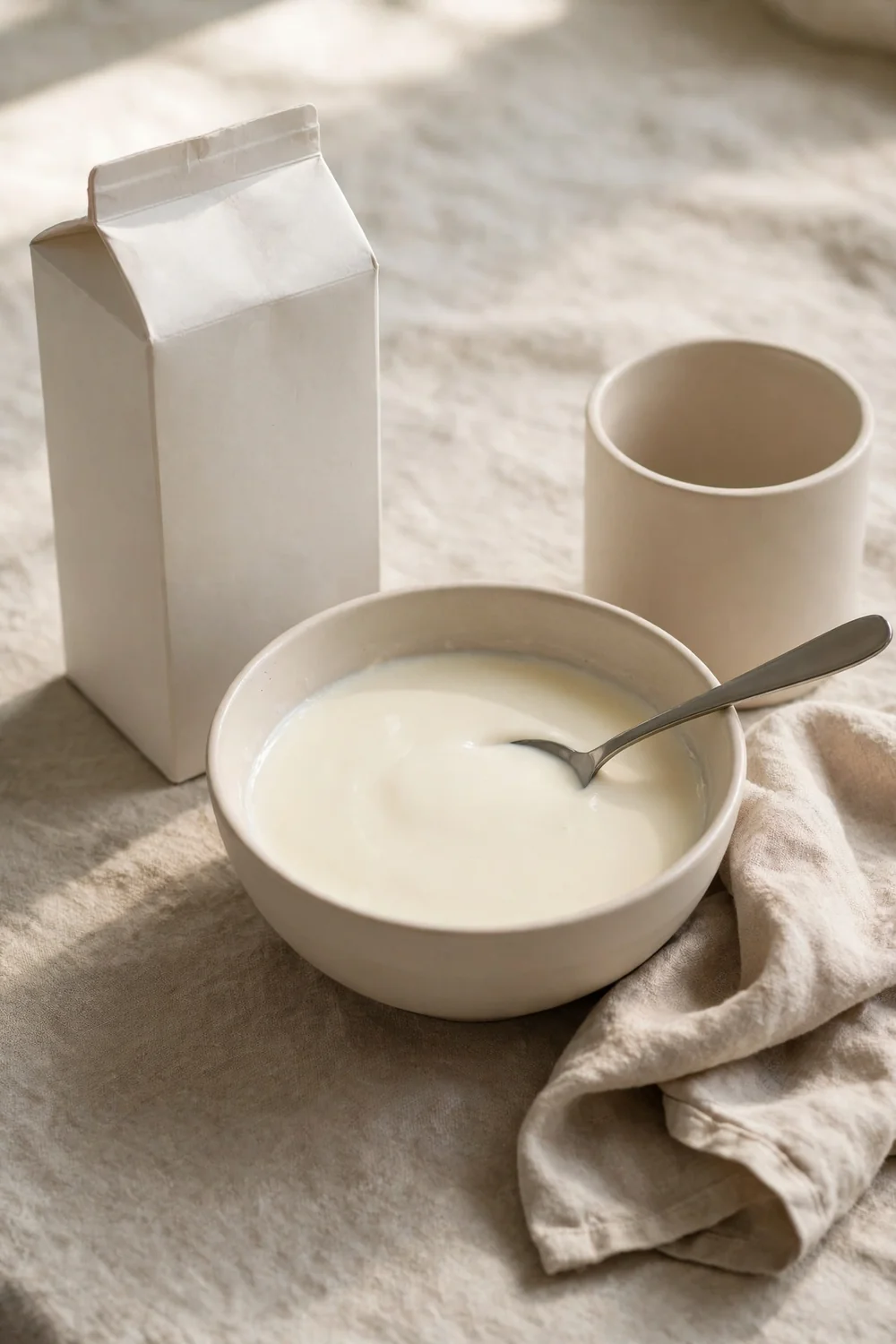
Fat coats the tongue and blocks large crystals, so a rich base scoops soft straight from the tub. Low fat milk freezes into a hard block, since water has little fat to break up the crystals. Heavy cream builds a smooth, soft scoop from the start.
- Use heavy cream as the main dairy, and check the label for full fat.
- Skip skim milk for this batch, since it freezes hard and icy.
- Keep the cream to milk ratio rich, near two parts cream to one part milk.
- Chill the rich base well before churning, so the churn starts cold.
Chill the Base Fast
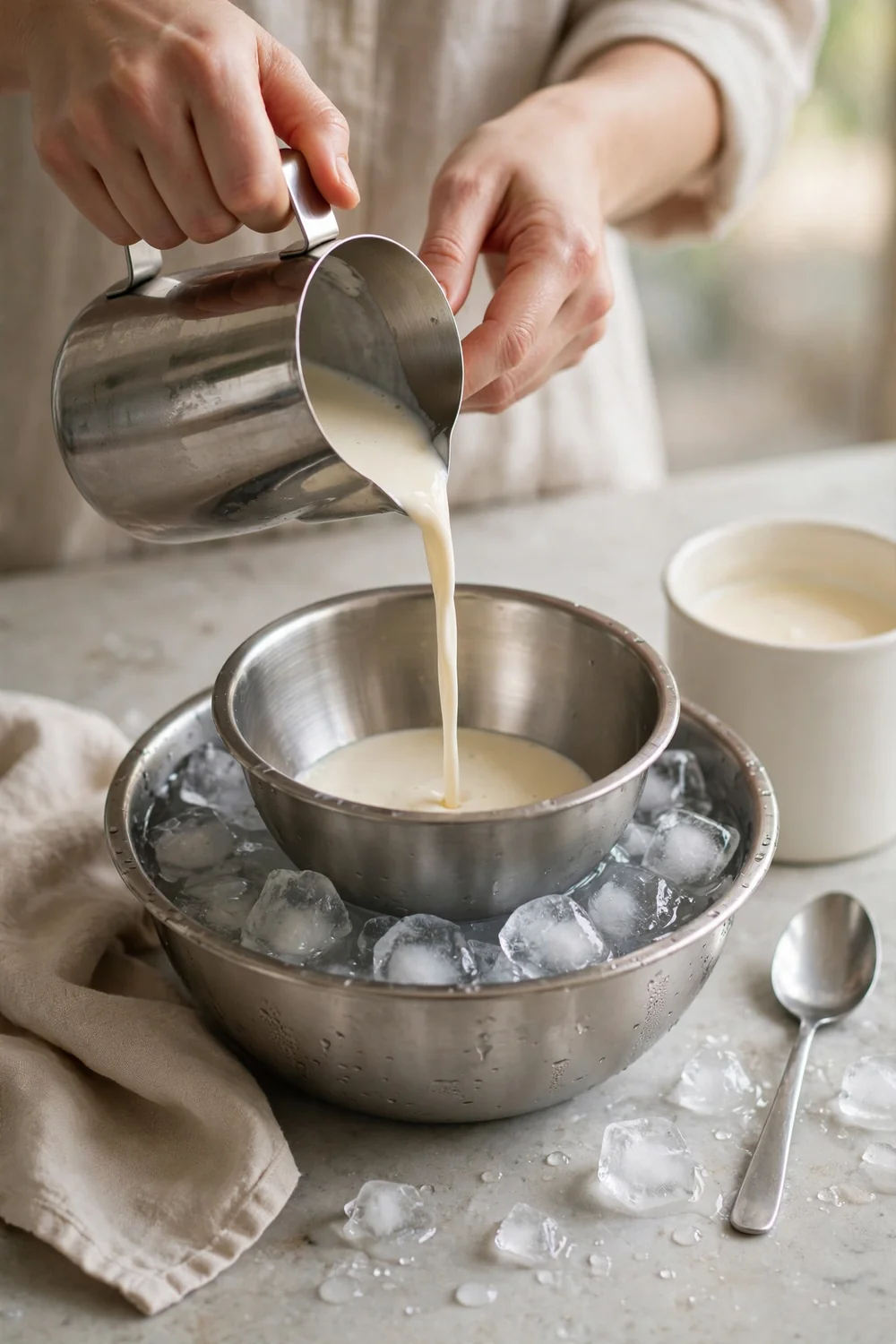
Quick Tip: Chill the base in a bowl set over ice, and stir it now and then. The base should feel cold through the bowl before it meets the maker. A deep chill shortens the churn and keeps crystals small.
A warm base churns slow, and the slow churn grows large crystals. A cold base thickens fast in the maker, so the crystals stay tiny. Chill the base in the fridge for four hours, or overnight for the best result. Cold base makes the smoothest scoop.
Add a Little Sugar
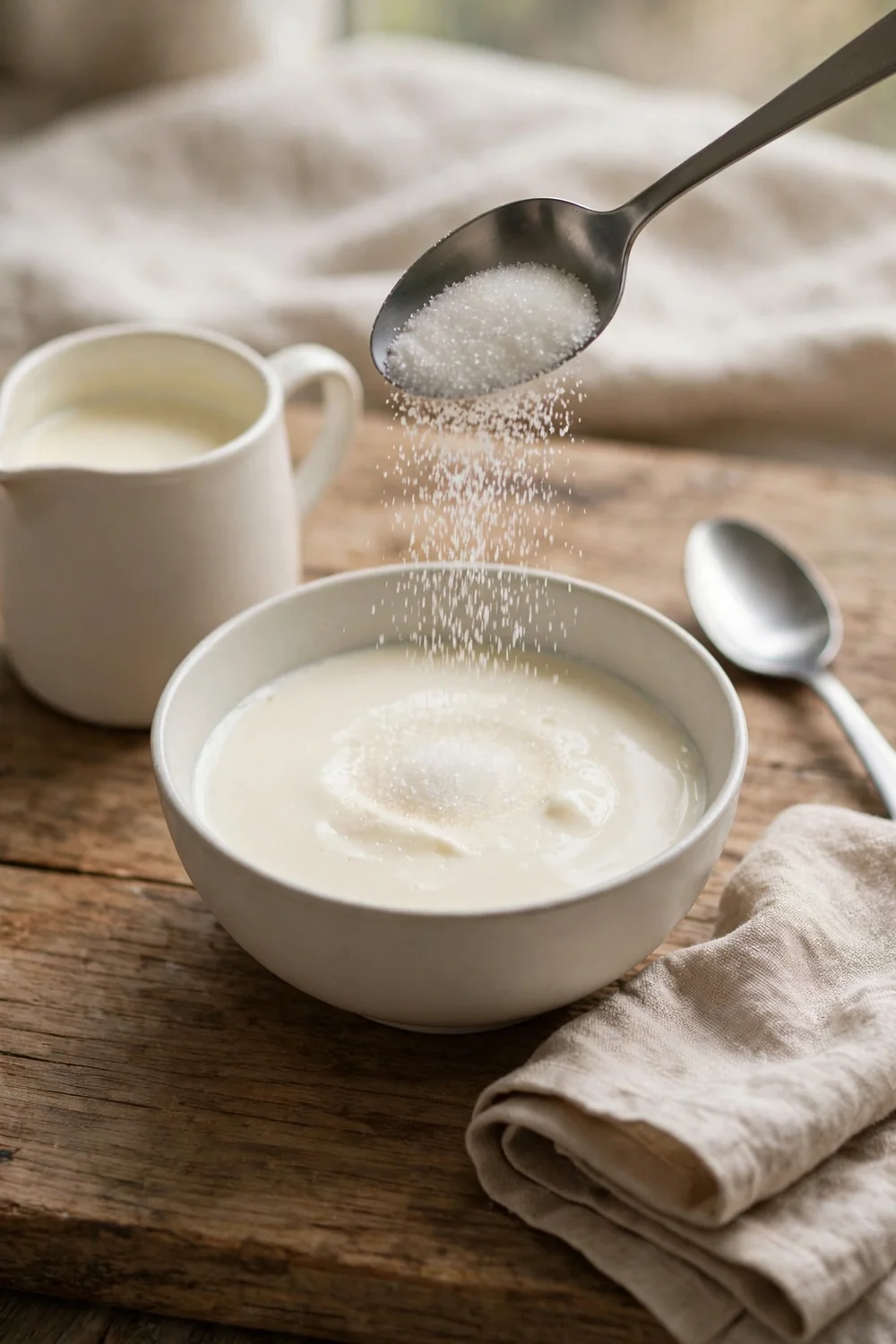
Common Mistake: Many cooks cut the sugar to make a lighter dessert. Less sugar lets the base freeze rock hard, since sugar lowers the freezing point. The scoop turns icy, and the texture stays gritty.
The Fix: Use the full sugar in the recipe, and measure it with care. A spoon of corn syrup or honey can help too, since it blocks crystals. Sweet base freezes soft and scoops clean.
Sugar does more than sweeten the base, and it keeps the scoop soft. A low sugar base freezes hard, and the spoon meets a solid block. Follow the recipe amount, and taste the base before churning. Enough sugar keeps the tub smooth for days at home.
Freeze It Fast
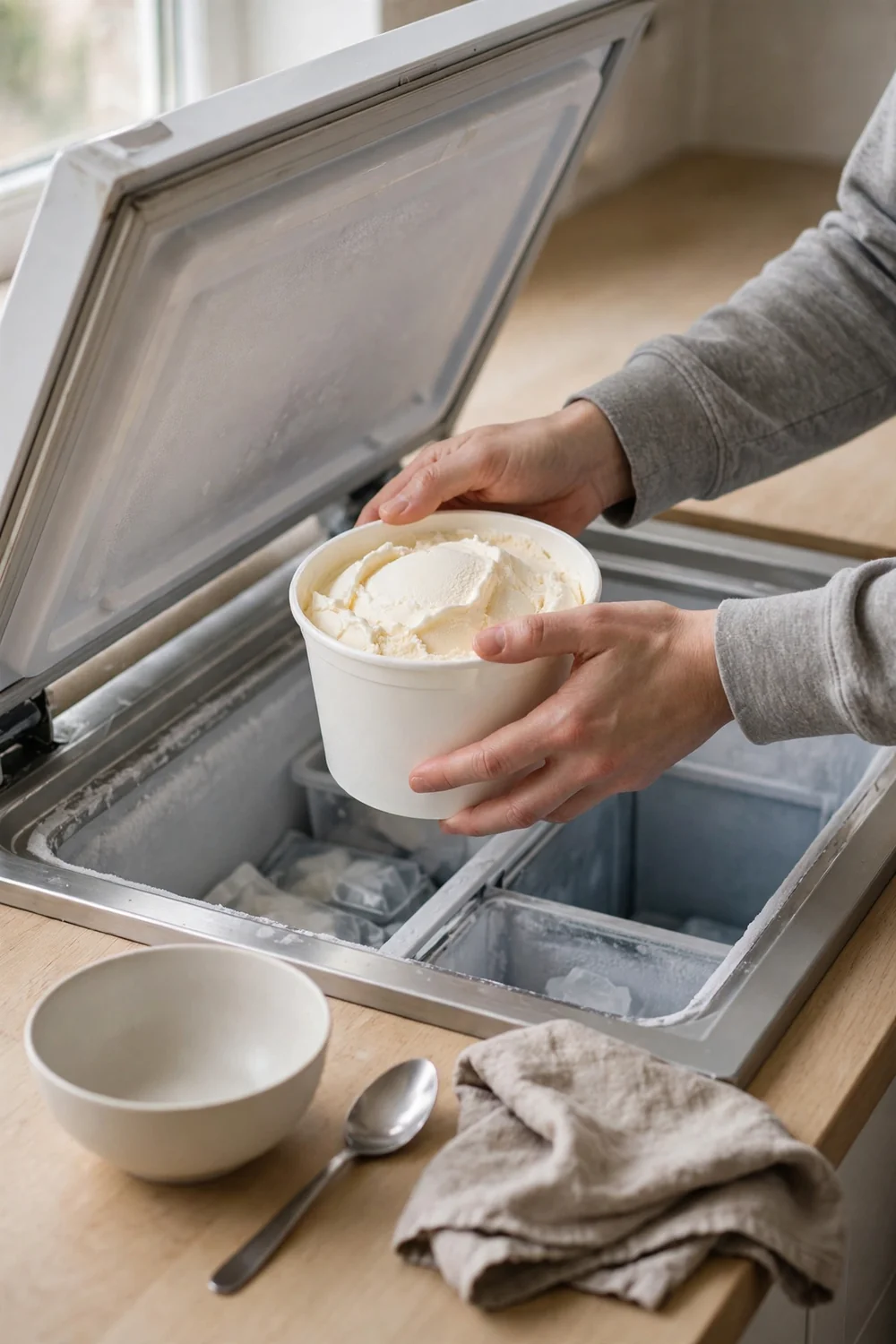
What You Need:
- Coldest shelf: The back of the freezer holds the steadiest cold.
- Shallow container: A wide, flat tub freezes faster than a deep one.
- Plastic wrap: Press it right on the surface to block air.
- Tight lid: Seals the tub and keeps freezer smells out.
Fast freezing keeps crystals small, so the scoop stays smooth. Move the churned base straight to the coldest part of the freezer. A slow freeze grows big crystals, and the tub turns icy. Freeze fast for the softest scoop. Check the freezer dial before the batch goes in.
Churn It Longer
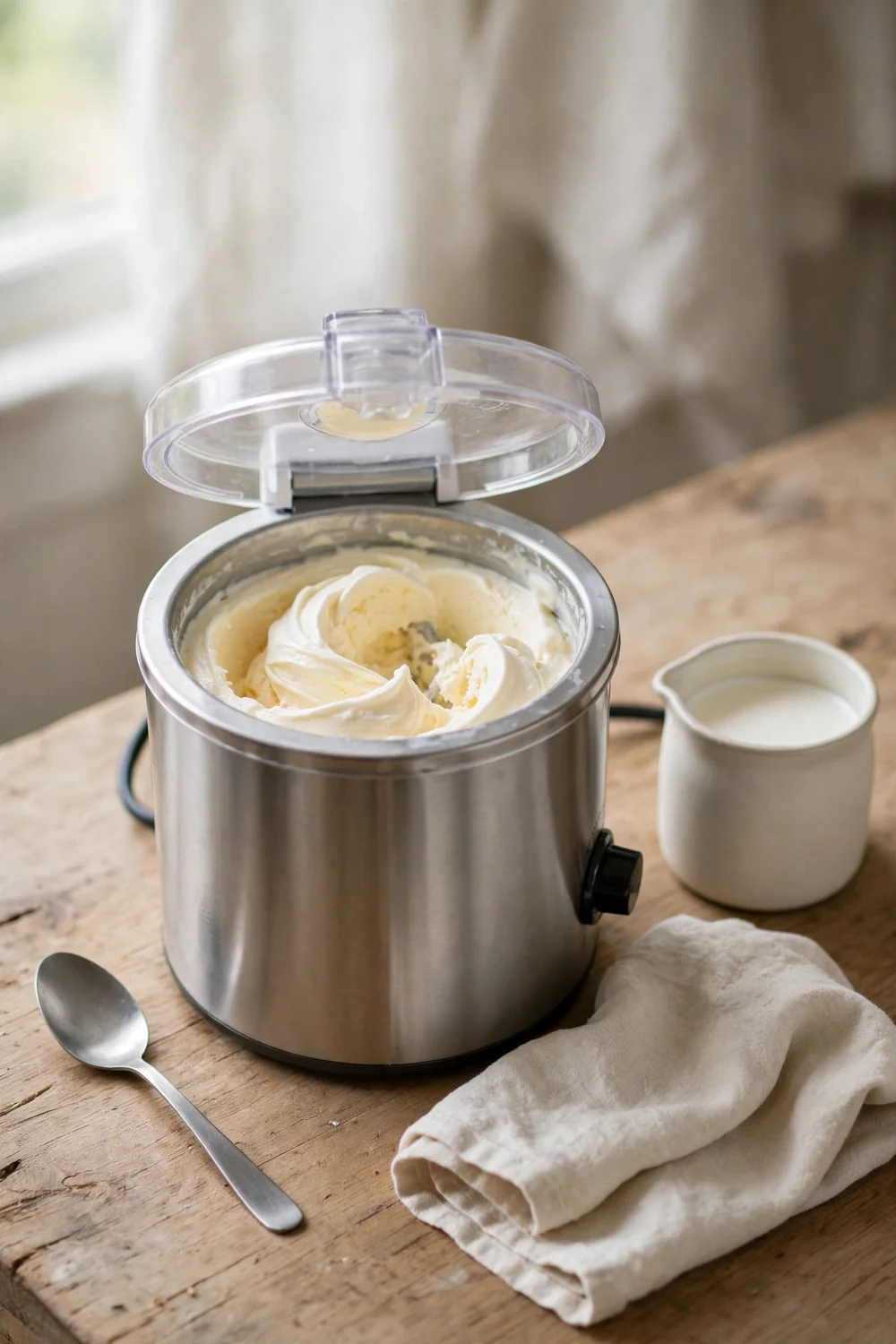
Before: A short churn leaves the base soft and full of large crystals. The tub firms in the freezer, but the scoop stays icy and hard. The maker stopped before the base thickened, so the crystals grew unchecked.
After: A full churn thickens the base to soft serve texture, and the crystals stay tiny. The tub firms smooth in the freezer, and the spoon glides through. The base feels thick and soft when the maker stops.
Churning breaks up crystals as they form, so a longer churn means a smoother scoop. Let the maker run until the base pulls away from the sides and looks thick. Rushing the churn saves minutes and costs the batch. Time in the maker builds the smooth scoop.
Skip the Overfill
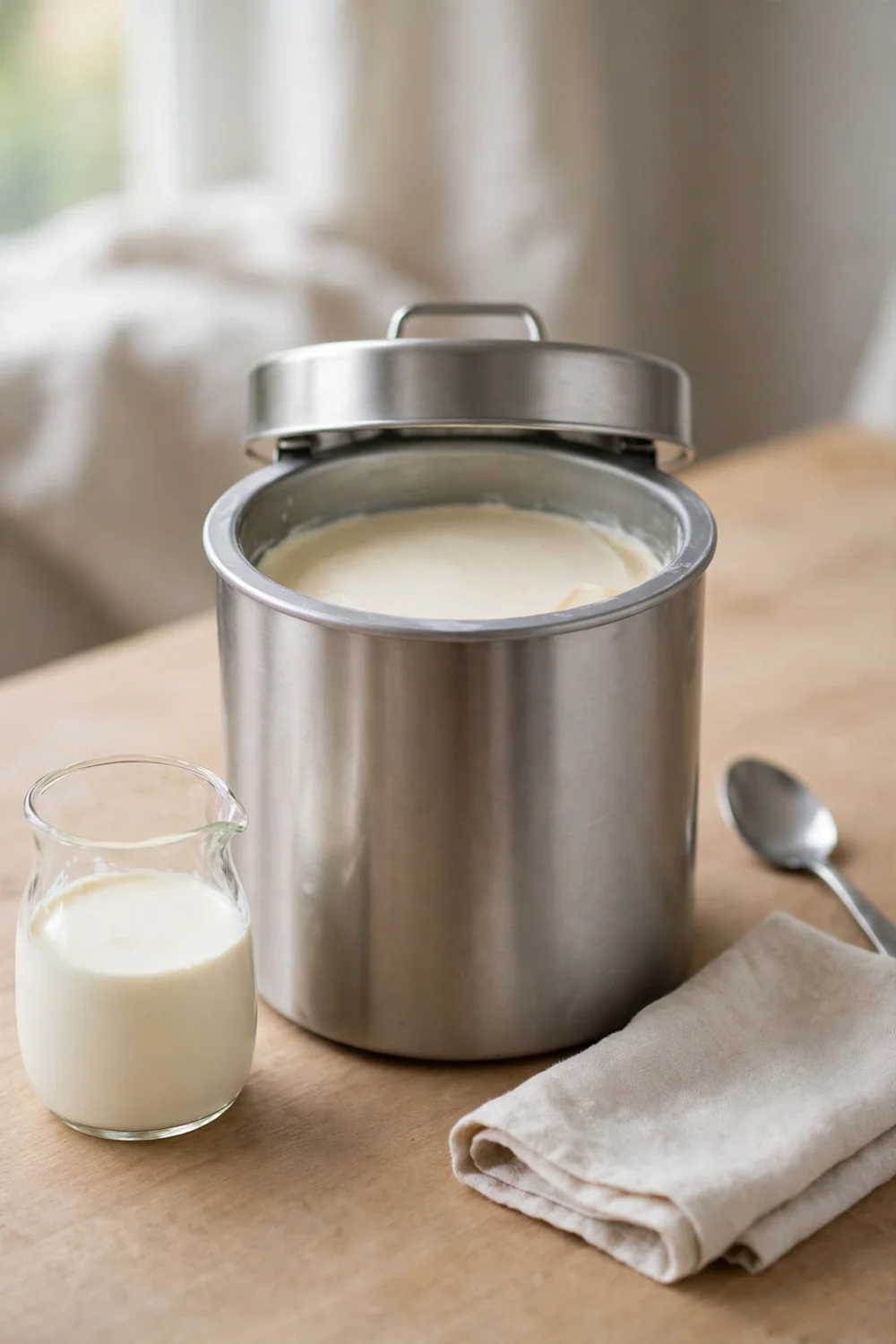
Do This:
- Fill the maker only two thirds full, so the base has room to churn.
- Churn a smaller batch when the maker runs small.
- Stop at the fill line marked inside the bowl.
Avoid This:
- Do not pack the bowl to the top, since a full bowl churns slow.
- Do not add warm base to a half frozen batch.
- Do not open the lid often, since warm air slows the churn.
An overfilled maker churns slow, and slow churning grows large crystals. Room to move lets the dasher break crystals as they form. A half full maker churns fast and freezes even. Less base makes the smoothest scoop. Even freezing beats a big batch every time.
Store It Airtight
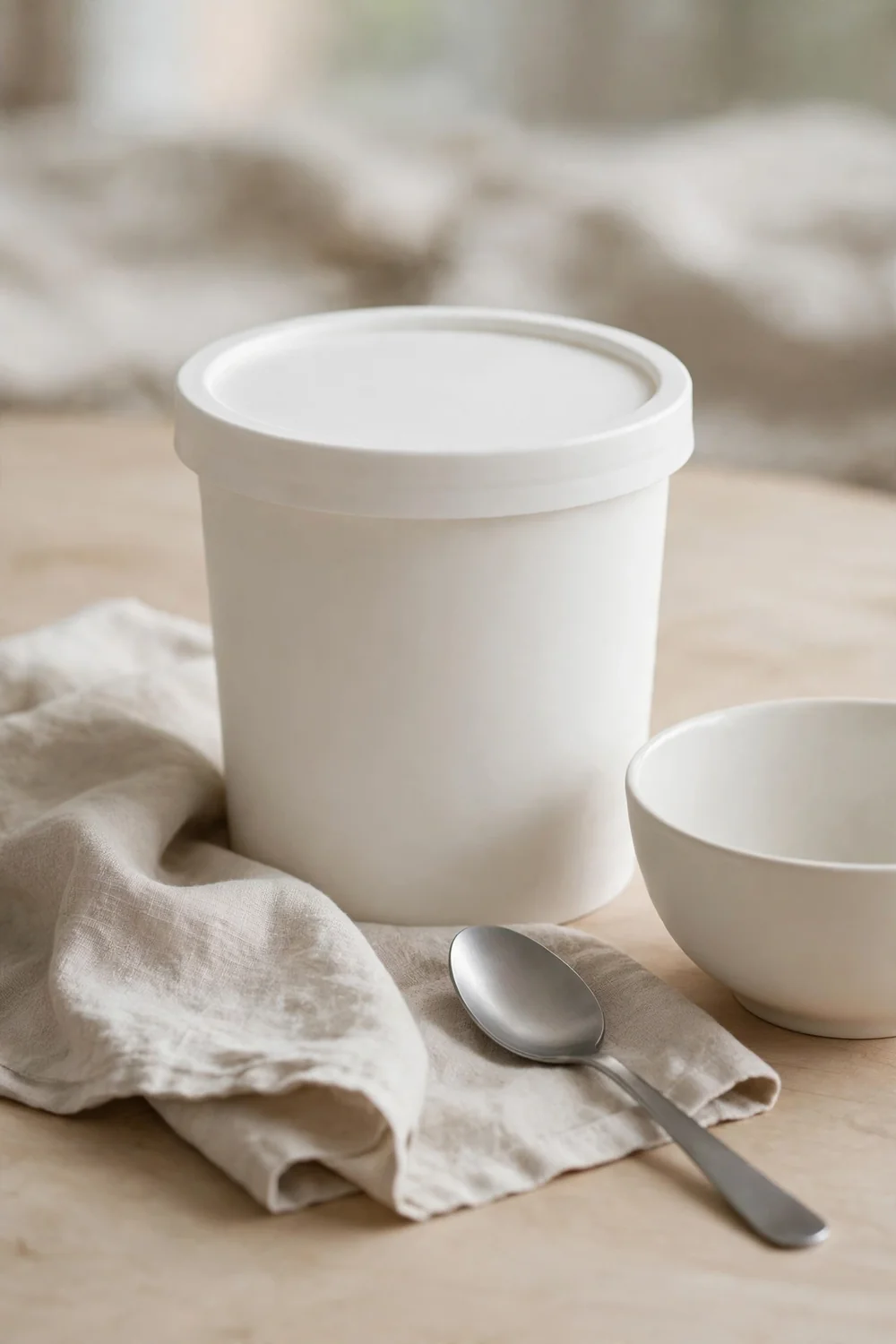
Time Needed: 5 minutes
Difficulty: Easy
Tools Required: Wrap, tub, lid
Result: Smooth scoop for two weeks
Air dries out ice cream, and a loose lid lets crystals grow on the surface. Press wrap right on the ice cream, then seal the lid tight. Keep the tub at the back of the freezer, away from the door. A sealed tub keeps the best scoop.
Test One Batch
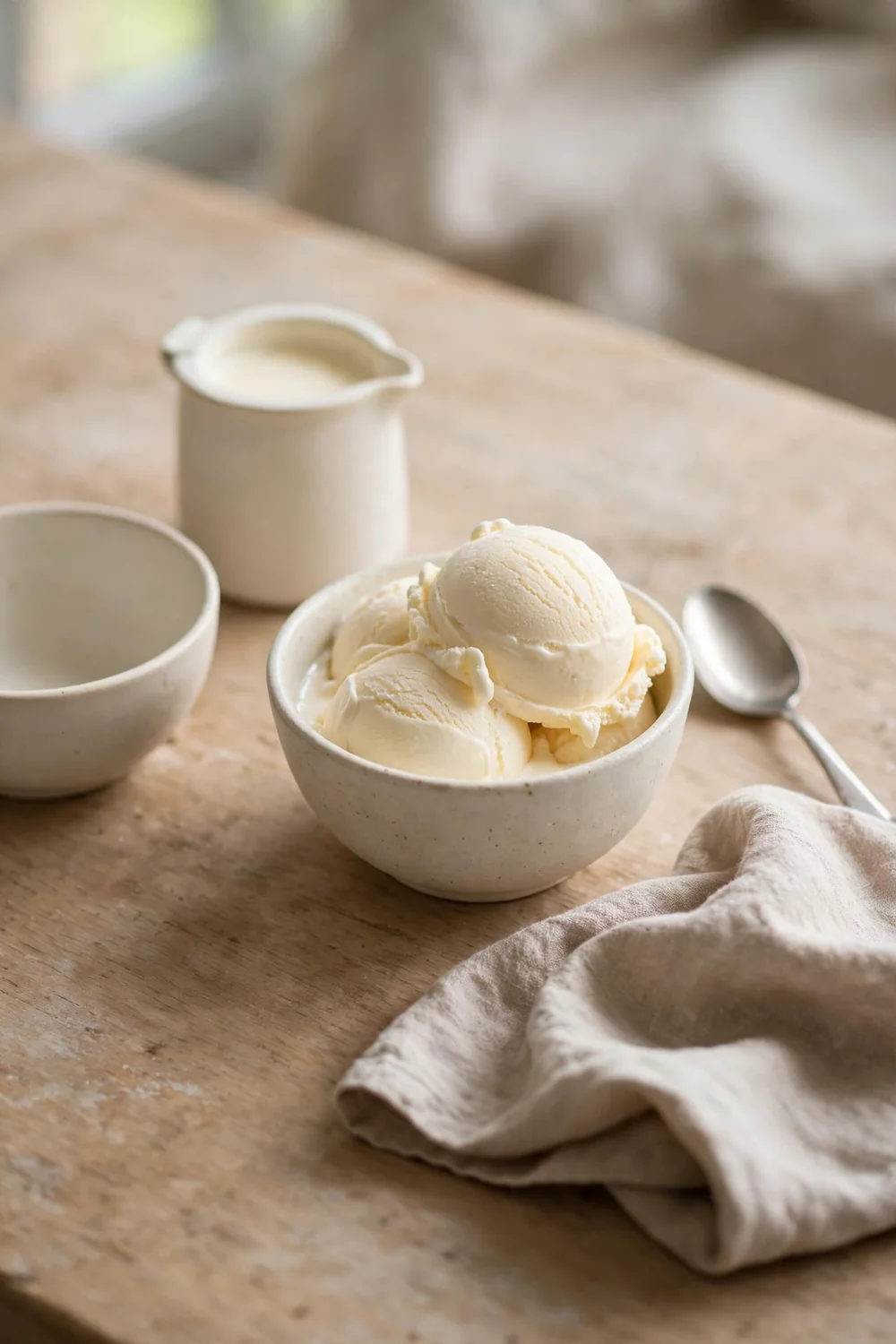
Freeze one small batch first, and check the scoop before you commit a full base. A test shows whether the tub needs more fat, more sugar, or a faster freeze. One batch costs little, and the answer saves the whole base. Small tests build real confidence.
Spoon the test batch after a night in the freezer, and look for a smooth, soft curl. Add more fat if the scoop feels icy, and freeze faster if it feels hard. Make the rest only when the test turns out smooth. A smooth test tub means the method works.
Common Mistakes to Avoid
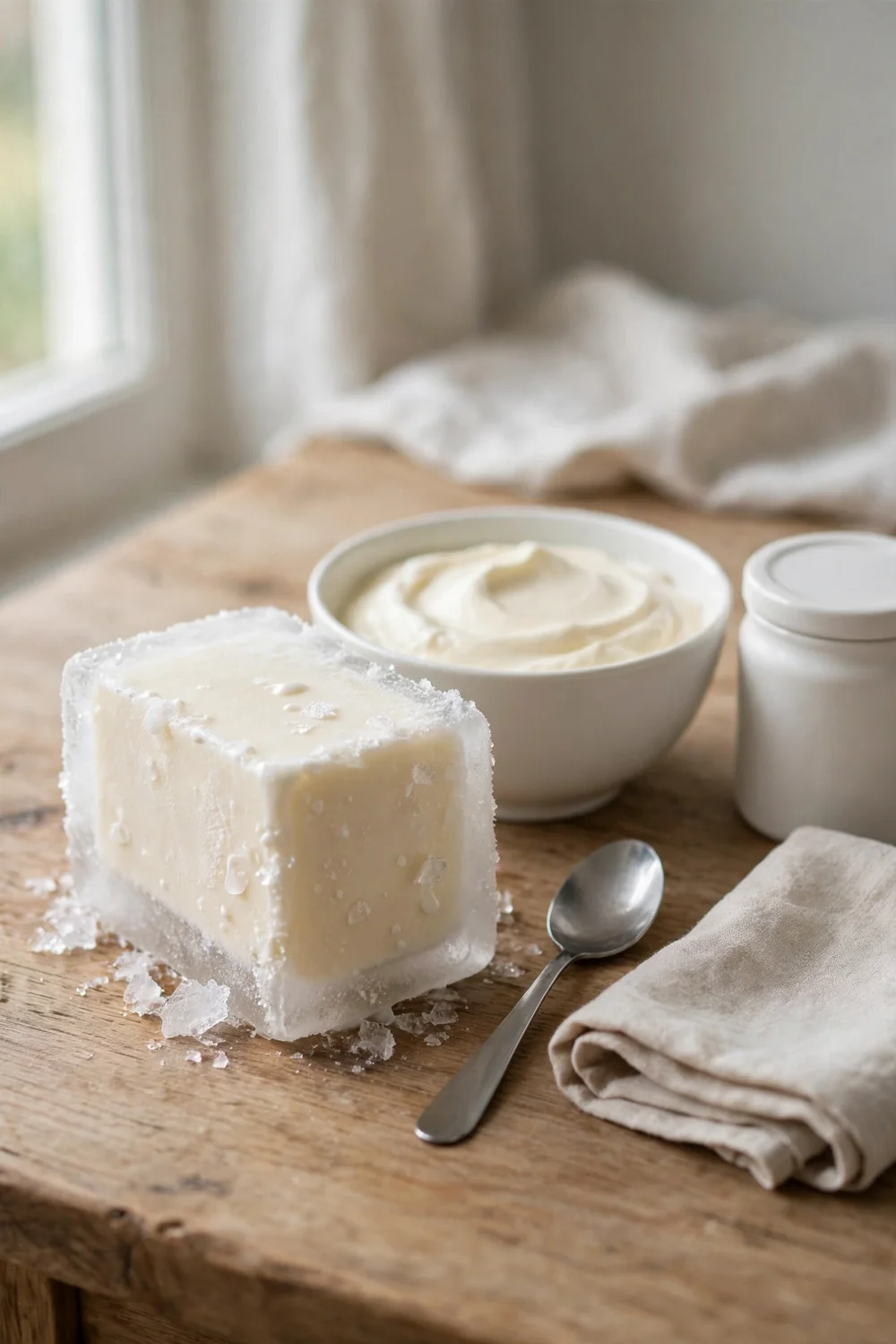
Most icy tubs come from a few repeatable habits, not bad cream. The list below covers the ones I see most often in home kitchens. Fix one habit at a time, starting with chill and fat. Small fixes stack up fast.
- Do not churn a lukewarm base, since warm base freezes slow and icy.
- Do not cut the sugar, since low sugar base freezes rock hard.
- Do not leave the tub loosely sealed, since air grows crystals on top.
- Do not store the tub in the door, since the door runs warmest.
What Creamy Ice Cream Looks Like
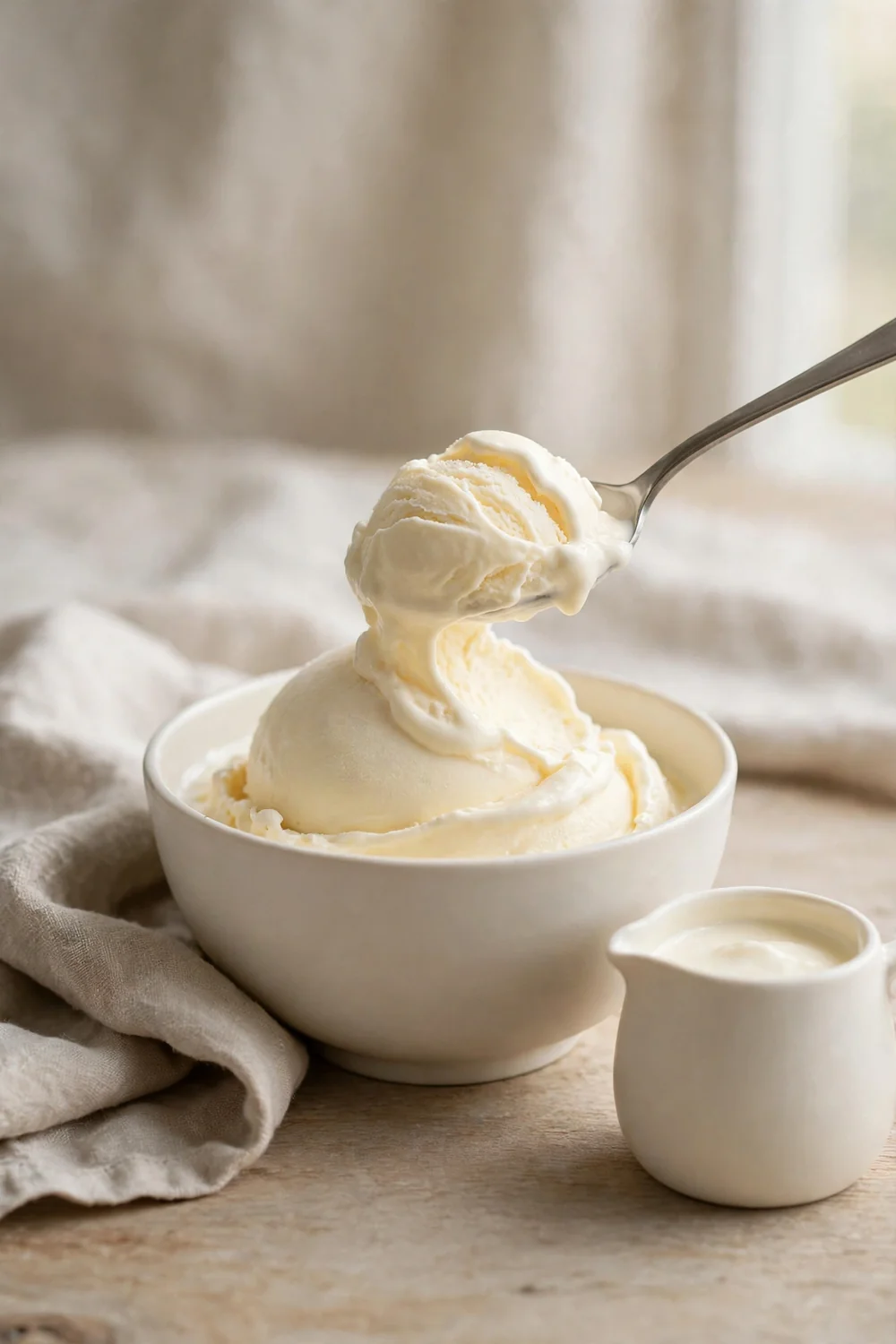
Quick Tip: Judge the scoop after the tub sits out for five minutes. A tub straight from the freezer always feels firmer than the true texture. Rest it briefly, then check the spoon.
Creamy ice cream shows a smooth scoop, and the spoon glides through without force. The surface looks even, with no icy crystals on top. The flavor stays rich, and the texture holds its shape. When the spoon moves easy and the surface stays smooth, the batch worked.
Conclusion
Icy homemade ice cream is not a sign of bad cream. It comes from slow freezing and thin base. Match the fix to your tub, and the next batch can surprise you.
Cold base, rich cream, and fast freezing each keep the scoop smooth. Pick the method that fits your kitchen, and the tub turns creamy. Small steps keep the scoop soft, and the texture stays smooth.
Chill the base, churn it long, and freeze it fast. The tub turns smooth. Save this guide for next time. If your yogurt also turns thin, read our guide on runny homemade yogurt for thick, creamy yogurt at home.



2 Comments