How To Fix Mushy Roasted Vegetables? Easy Fix Guide
If your mushy roasted vegetables come out soft and pale instead of crisp and golden, you are not alone. Many home cooks face this same letdown, and the good news is that a few simple changes can fix it fast.
The usual causes are easy to spot. Low heat, wet pieces, or a crowded pan lets the vegetables steam in their own moisture instead of roasting. Once you see which cause fits your tray, the fix becomes clear.
This guide walks you through each fix in order, from cutting and drying to heat and timing, so your next tray turns out crisp at the edges and tender inside. For a sauce rescue next, read this curry gravy guide after this one.
Why Vegetables Go Soft

Vegetables turn soft when water cannot escape. A pan full of wet, crowded pieces releases steam, and steam cooks gently instead of browning. The result is pale, limp pieces with no crisp edges. Crowding the pan traps steam, so the pieces steam instead of browning.
Low heat makes it worse, since the pieces sit in moisture for a long time. In my experience, the fix is rarely a new recipe. It is hotter air, drier pieces, and more room on the pan. A hot oven and a single layer give every piece room to crisp and brown.
Use High Heat

Hot air is what makes roasting work. A fully heated oven drives moisture off the surface fast, so the edges can brown. Preheat the oven fully and let the pan heat with it. Hot metal sears the cut sides fast, so the pieces brown before they soften.
- Set the oven to 425 F and let it heat for at least 15 minutes.
- Preheat the sheet pan in the oven for five minutes before adding the vegetables.
- Use the middle rack so heat reaches the pan from all sides.
- Keep the oven door closed so the temperature stays high.
Cut Pieces Evenly

Quick Tip: Cut every piece to about the same size, roughly one inch across. Even pieces finish at the same time, so nothing turns soft while waiting for bigger chunks to cook.
Small pieces cook faster and brown more, while large chunks stay firm in the middle. If you mix sizes on one tray, the small ones overcook and the large ones stay pale. Sort by size when you are short on time. Cut dense roots slightly smaller than soft vegetables, so all pieces finish together.
Dry Before Roasting

Common Mistake: Many cooks toss wet vegetables straight from the colander onto the pan. The extra water turns into steam, and the tray ends up boiling the pieces instead of roasting them.
The Fix: Spread the cut pieces on a clean towel and pat them dry before oiling. Let them air dry for ten minutes if you have time. Dry surfaces brown far faster in a hot oven.
This one step changes the whole tray. Dry pieces pick up color within minutes, while wet pieces stay pale for the whole roast. Keep the towel handy for the next batch too. Pat the pieces until the towel comes away nearly dry. Dry surfaces brown fast, while wet ones steam and stay pale.
Space The Pan

What You Need:
- Large sheet pan: Gives every piece room to breathe and brown on all sides.
- Parchment paper: Keeps pieces from sticking without trapping extra moisture.
- Clean towels: Dry the cut pieces well before they reach the pan.
- Tongs or spatula: Turn pieces gently without breaking their browned edges.
- Oven thermometer: Confirms the oven is truly hot enough before roasting.
A big pan matters more than a fancy one. If your tray looks crowded, split the batch across two pans. Two roomy trays always beat one packed tray. If the tray looks crowded, split the batch across two pans. Two half full pans roast better than one packed tray.
Pick The Right Oil

Before: Before the fix, the vegetables swam in a pool of oil and their own juices. They came out soft, greasy, and pale.
After: After the fix, each piece carries only a thin coat of oil. The tray comes out with crisp browned edges and centers that stay tender.
Use about one tablespoon of oil per pound of vegetables. Toss well so every piece shines lightly, then spread the pieces out. High smoke point oils like avocado or refined olive oil handle the heat best. Toss with the oil in a bowl first, so every piece gets an even coat.
Season At Right Time

Do This:
- Salt lightly before roasting, then adjust the seasoning at the end.
- Add delicate herbs like basil after roasting so they stay fresh.
- Taste one piece before serving and add a squeeze of lemon if needed.
Avoid This:
- Do not salt heavily at the start, since salt pulls out water.
- Do not add honey or sugar glaze early, or it will burn.
- Do not cover the pan, because a lid traps steam.
Seasoning at the right time protects texture. Salt early in small amounts is fine, but the final seasoning belongs after the tray leaves the oven, when the edges are crisp. Salt draws water out, so salting early can soften the edges. Season near the end for the crispest finish.
Flip Once Only

Time Needed: About 25 to 35 minutes at 425 F, depending on the vegetable.
Difficulty: Easy, once the pan is hot and the pieces are dry.
Cost: Low, since the fix uses heat and space, not new tools.
Best For: Carrots, potatoes, zucchini, peppers, and cauliflower.
Flip the pieces once, about halfway through roasting. One flip is enough to brown the second side without breaking the pieces apart. If the edges look dark early, lower the heat by 25 degrees. Let the pieces sit undisturbed until the undersides turn golden. Moving them too soon breaks the crust before it forms.
Rescue Soft Vegetables
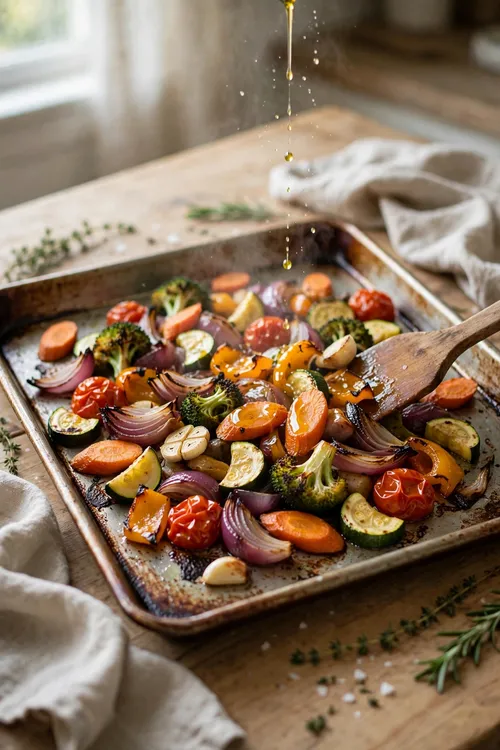
Soft vegetables can still be rescued. Spread them on a hot oiled pan in a single layer and roast at 450 F for eight to ten minutes. The high heat drives off moisture and adds color. A hot oven and a second blast of heat can still crisp soft pieces.
Another rescue is the broiler. Spread the pieces out, broil for two to three minutes, and watch them closely. A short blast of heat crisps the edges without cooking the centers further. The broiler works fast, so watch the tray closely and flip once.
Serve Them Crisp

Serve roasted vegetables right away, while the edges are still crisp. A wide bowl beats a deep pile, since stacking traps steam. Serve the vegetables the moment they leave the oven, while the edges still crackle. A warm platter keeps them hot without steaming them soft.
- Move the vegetables to a wide serving bowl or platter.
- Scatter fresh herbs over the top for color and scent.
- Add lemon juice or vinegar just before serving.
- Leave the serving dish uncovered so steam can escape.
- Serve with a crisp dip on the side if you like.
Final Crisp Check

Quick Tip: Pick up one piece and bite it. The edge should feel crisp and the center should stay tender. If it still feels soft, give the tray five more minutes in a hot oven before serving.
This quick check takes seconds and saves the meal. A tray that tastes crisp will please everyone at the table, and a short extra roast is always better than serving a soft batch. If the tray still looks pale, give it five more minutes at high heat.
Conclusion
Fixing mushy roasted vegetables comes down to high heat, dry pieces, and plenty of room on the pan. Those three changes turn pale, limp trays into golden vegetables with crisp edges and tender centers. Try them on your next tray and enjoy the difference. Keep these habits in mind every time you roast, and crisp trays will become your normal result. A hot oven, dry pieces, and room on the pan make all the difference, and soon you will not need to check the clock at all. For another everyday kitchen rescue, read this cinnamon roll guide next.