Why Are My Roast Potatoes Not Crispy? Easy Fix Guide
If your not crispy roast potatoes come out of the oven pale and soft instead of golden and crunchy, you are not alone. Many home cooks face the same limp tray even with good potatoes. The good news is that a few small changes can fix the crunch.
Roast potatoes stay soft when water sits on the surface and the oven heat never gets a fair chance. A cool tray, crowded pieces, and waxy potatoes all work against crispness. In my experience, dry potatoes and hot fat fix most trays.
This guide walks through each cause, from potato choice to roasting. Follow the steps for a tray that turns out crisp. And if mushy grains are your trouble instead, see why mushy bitter quinoa happens and how to fix it.
Why Potatoes Stay Soft
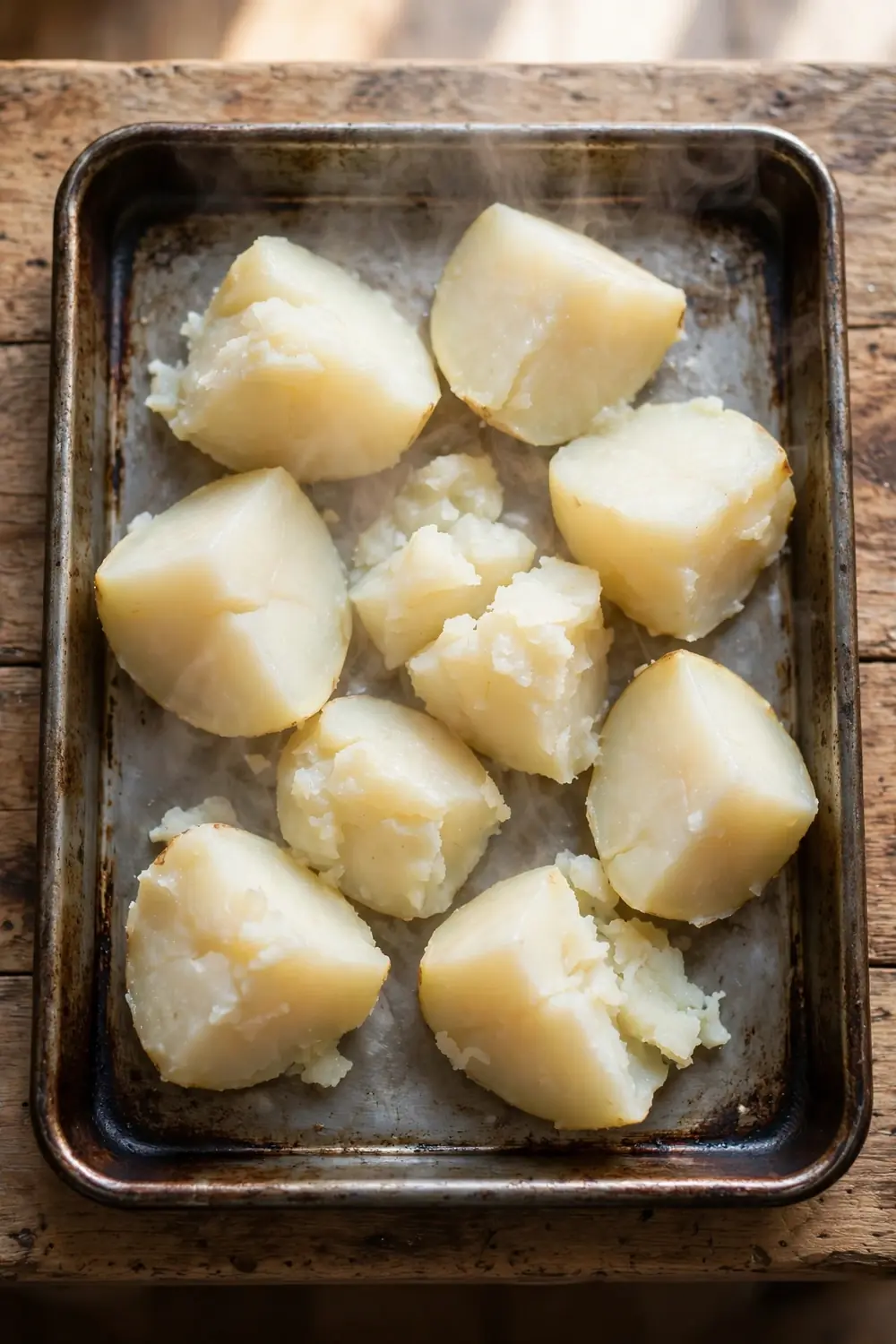
Quick Tip: Dry the chunks well and give them room on the tray, since those two habits fix most soft trays. Start with floury potatoes, since waxy flesh never crisps well. Hot fat does the rest.
Potatoes stay soft when steam clings to the surface and stops the outside from drying out. Wet chunks, a cool tray, and crowded pieces all trap steam. Waxy potatoes hold firm flesh that never turns fluffy, so the crust has nothing to crisp. Low heat makes things worse, since the potatoes bake instead of roasting.
Pick Floury Potatoes
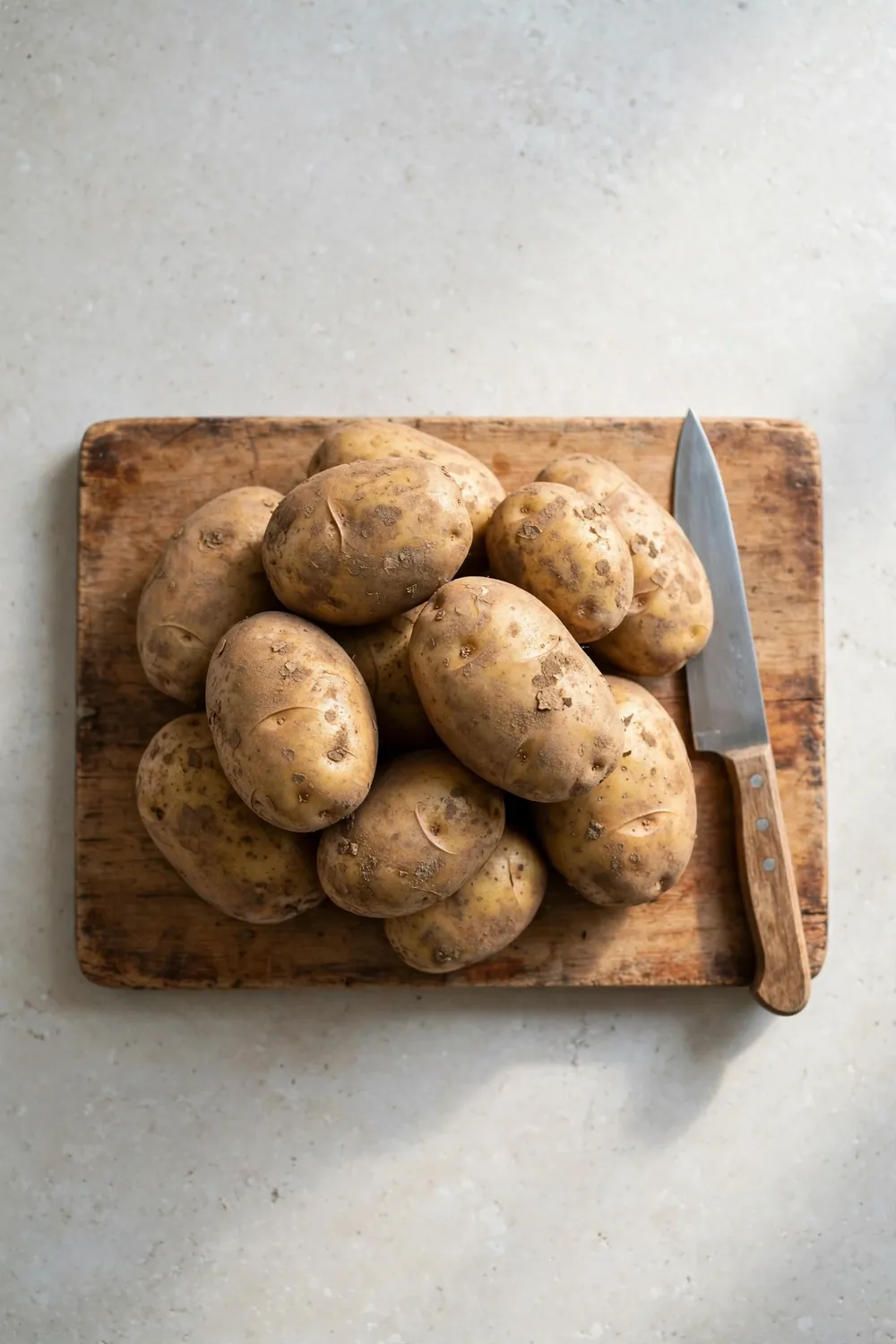
Floury potatoes are the first defense against a soft tray. Russets and other mealy types break down at the edges and turn fluffy when parboiled. Waxy red or new potatoes stay firm and shiny, so they never crisp well. Look for large russets with rough brown skin and dry flesh.
Skip green spots and soft patches, since they roast unevenly. Peel the potatoes just before cooking so the flesh stays fresh. A floury potato gives crisp edges with far less effort, and the rest of the work feels easy. Good potatoes make every later step work better.
Parboil Until Edges Fluff
Common Mistake: Most cooks skip the parboil and put raw chunks straight in the oven. A smooth raw surface browns slowly and never builds a real crust. The centers cook through, but the outside stays pale and soft.
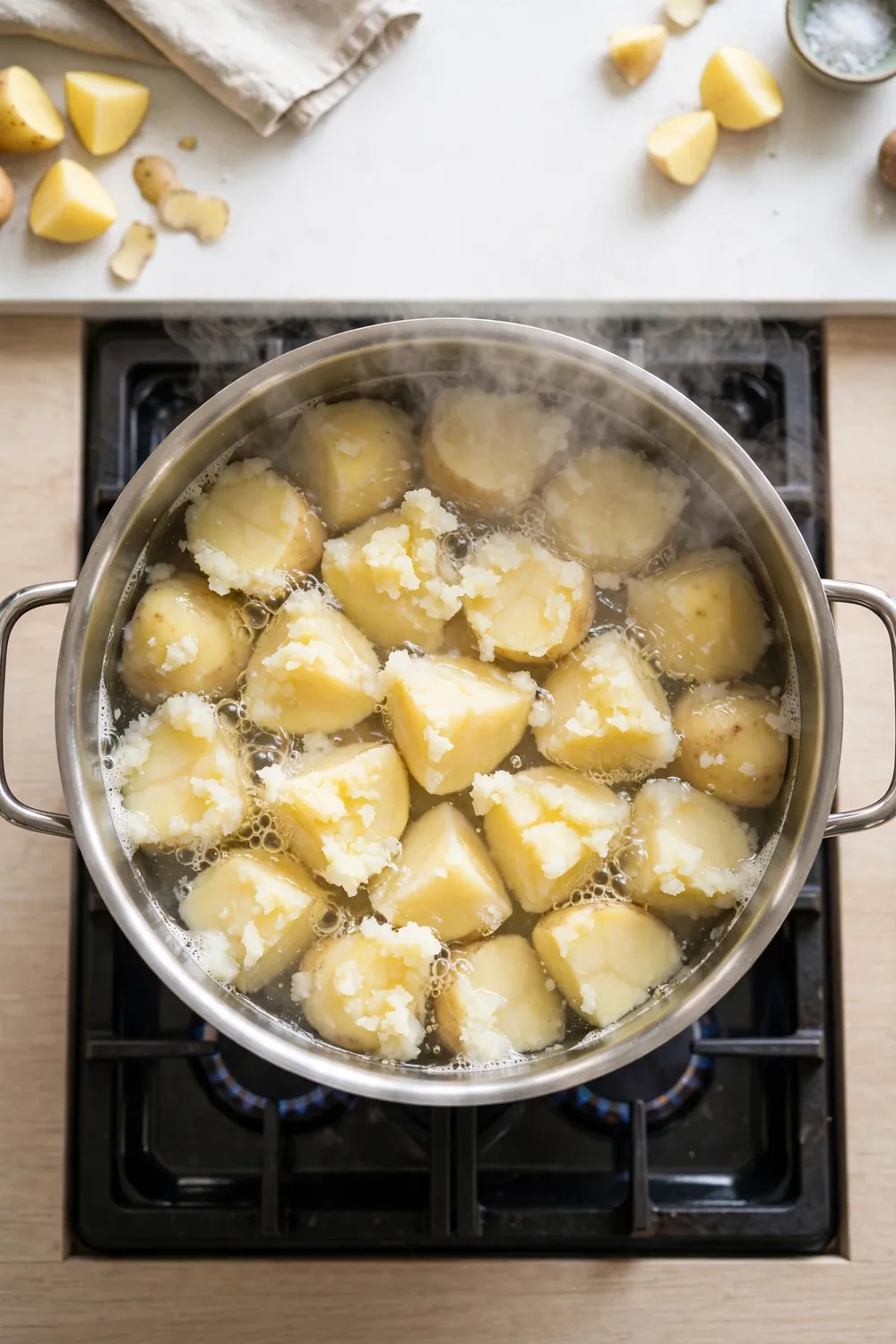
The Fix: Boil the chunks for seven to ten minutes, until the edges look fluffy and soft. Start the potatoes in cold salted water so they cook evenly. Drain as soon as the edges fluff, so the centers stay firm.
Parboiling builds the rough surface that turns crisp in the oven. A roughed up edge catches the heat fast, while a smooth one browns slowly. Test with a fork, since it should slide in with light pressure. That fluffy edge is the secret to a crunchy crust.
Preheat the Fat
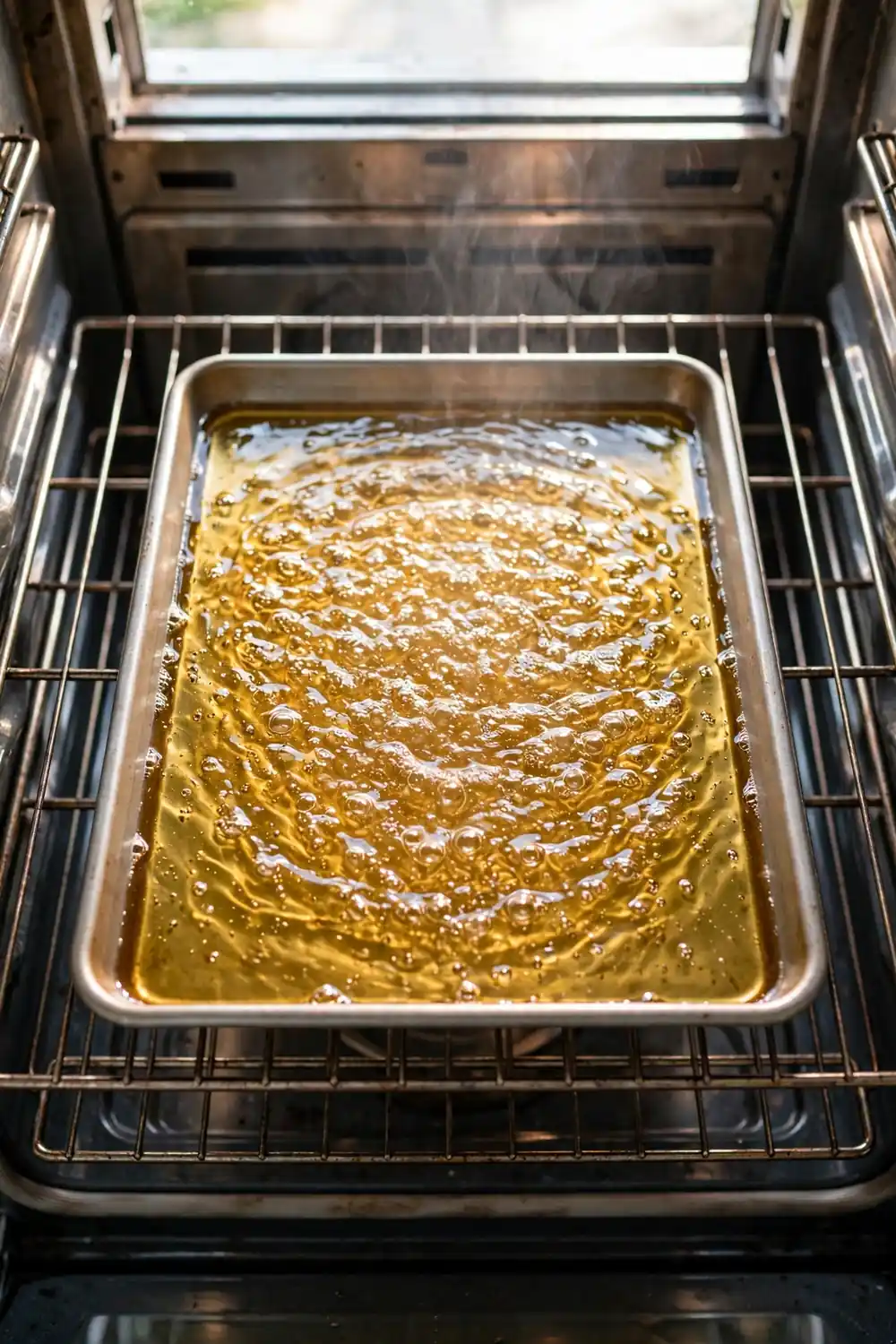
Hot fat seals the outside at once and starts the crisping right away. Cold fat soaks into the potatoes and leaves them greasy instead of crisp. Give the tray ten minutes in the hot oven before the potatoes go in. A hot start gives every chunk a crisp shell from the first minute.
- Put the tray with oil in the oven while it heats.
- Wait until the oil shimmers before the potatoes go in.
- Test the fat with one chunk, since it should sizzle at once.
- Keep the oven door closed while the tray heats.
Dry Potatoes Well
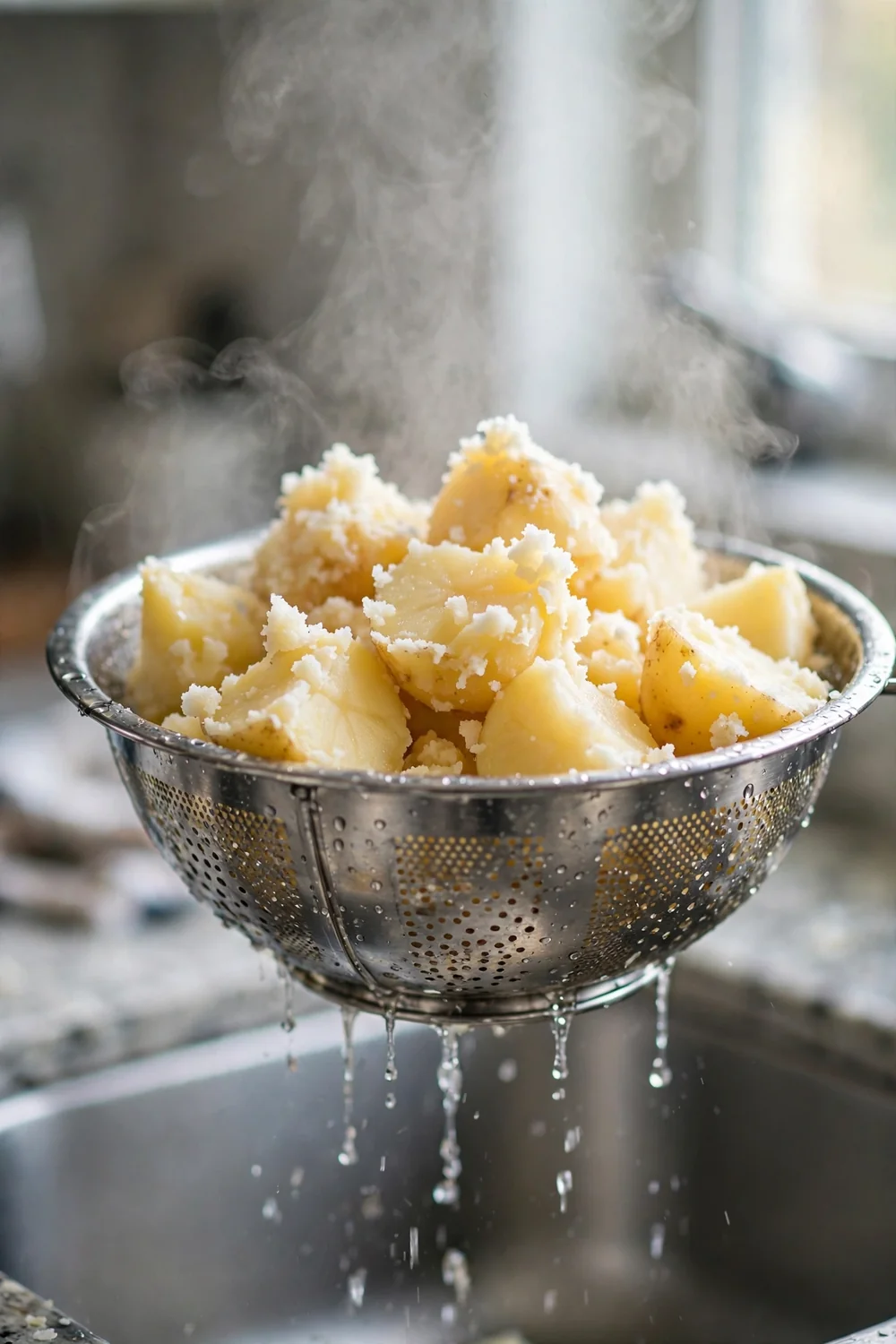
Colander rest: 2 minutes
Steam check: Steam rises freely
Shaking: Gentle, to rough edges
Best tool: Colander
Water left on the potatoes turns to steam and blocks crisping. Drain the pot fully, then let the chunks sit in the colander for two minutes. Return the drained potatoes to the hot pot and shake them gently to rough up the edges. Dry, roughed up potatoes roast crisp with less work.
Use Enough Oil
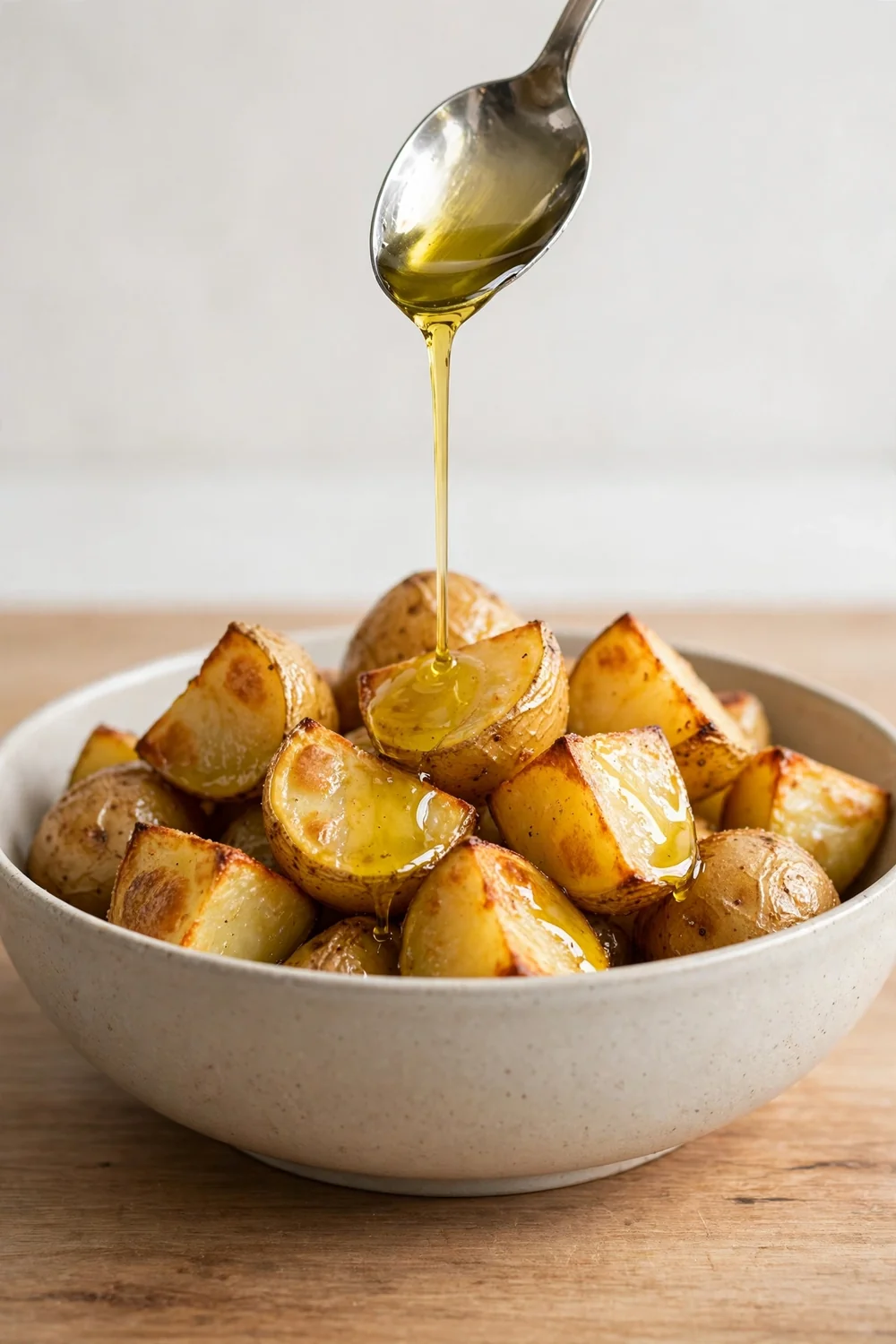
Do This:
- Use about three tablespoons of oil for a full tray.
- Toss the chunks until each one shines on every side.
- Choose an oil with a high smoke point, such as sunflower oil.
Avoid This:
- Do not leave dry patches that never brown.
- Do not use butter alone, since it burns fast.
- Do not drown the chunks, since extra oil turns them greasy.
Too little oil leaves dry patches that never brown. A thin even coat over every chunk carries heat to the whole surface. Every chunk should glisten before it meets the tray. Even coating gives even crunch, and the tray stays golden. A thin coat on every side gives an even golden crunch.
Spread in One Layer
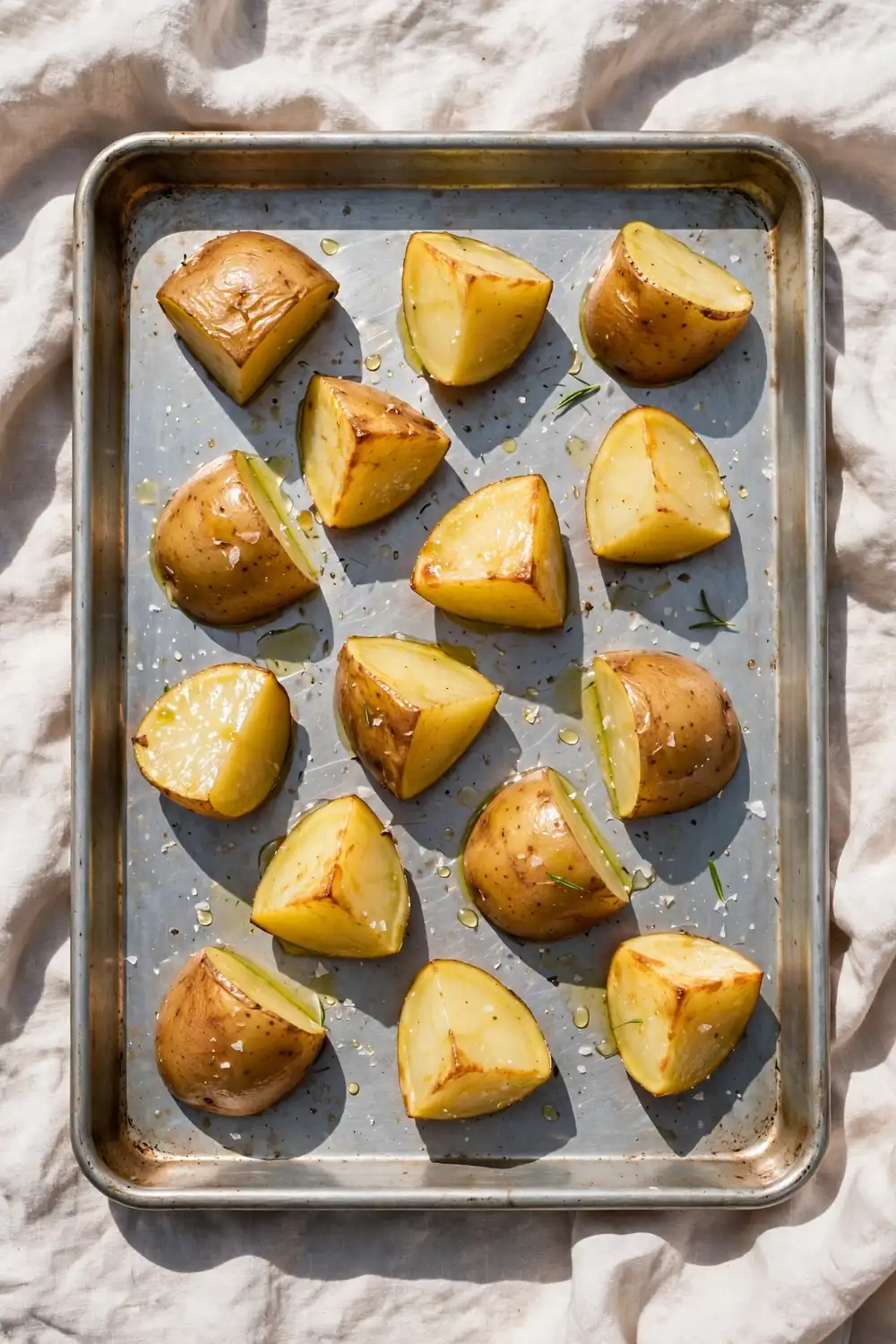
Before: Before this step, crowded pieces steam each other and stay pale. The tray fills with liquid, and no chunk gets direct heat. A full tray feels faster, but it cooks soft.
After: After the fix, each chunk sits in its own space with hot air all around. The cut sides meet the hot fat and turn golden. The whole tray crisps at the same pace.
Space on the tray lets heat reach every chunk evenly. Leave a finger width of space around each chunk, and use a second tray if the first one fills up. Place the chunks cut side down so the flat faces meet the hot fat. Do not stack or overlap them, even for a minute.
Roast at High Heat
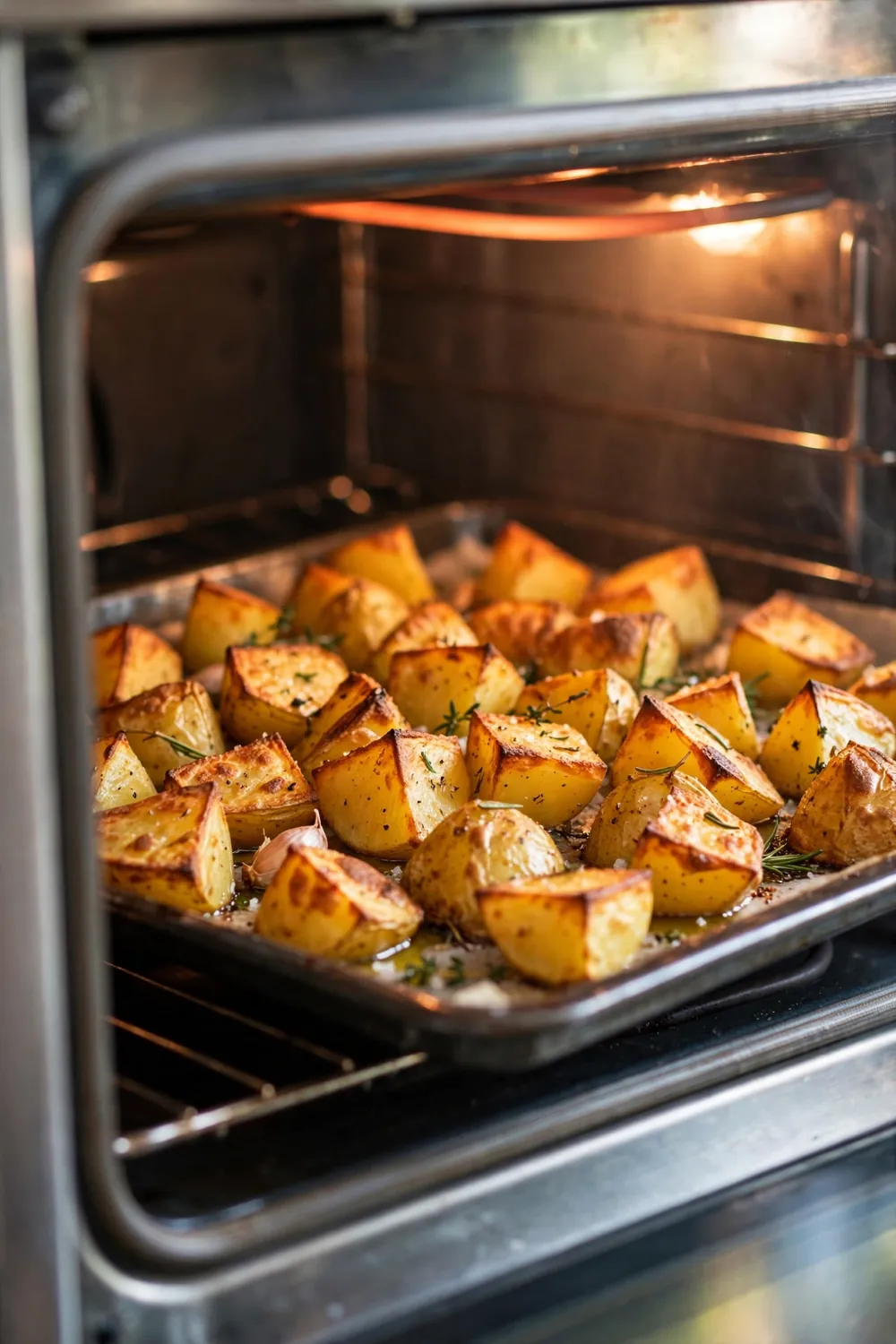
What You Need:
- Oven: A hot oven at two hundred degrees Celsius dries the surface fast.
- Timer: A timer keeps the roast on track without peeking.
- Tray: A large tray holds the chunks in one layer.
- Spatula: A thin spatula turns each chunk without breaking it.
High heat dries the surface fast and builds a deep golden crust. Keep the oven door closed so the heat stays steady, and peek only when you need to turn the tray. Steady high heat lets the edges crisp while the centers turn fluffy. A hot oven does half the work for you.
Turn Once Only
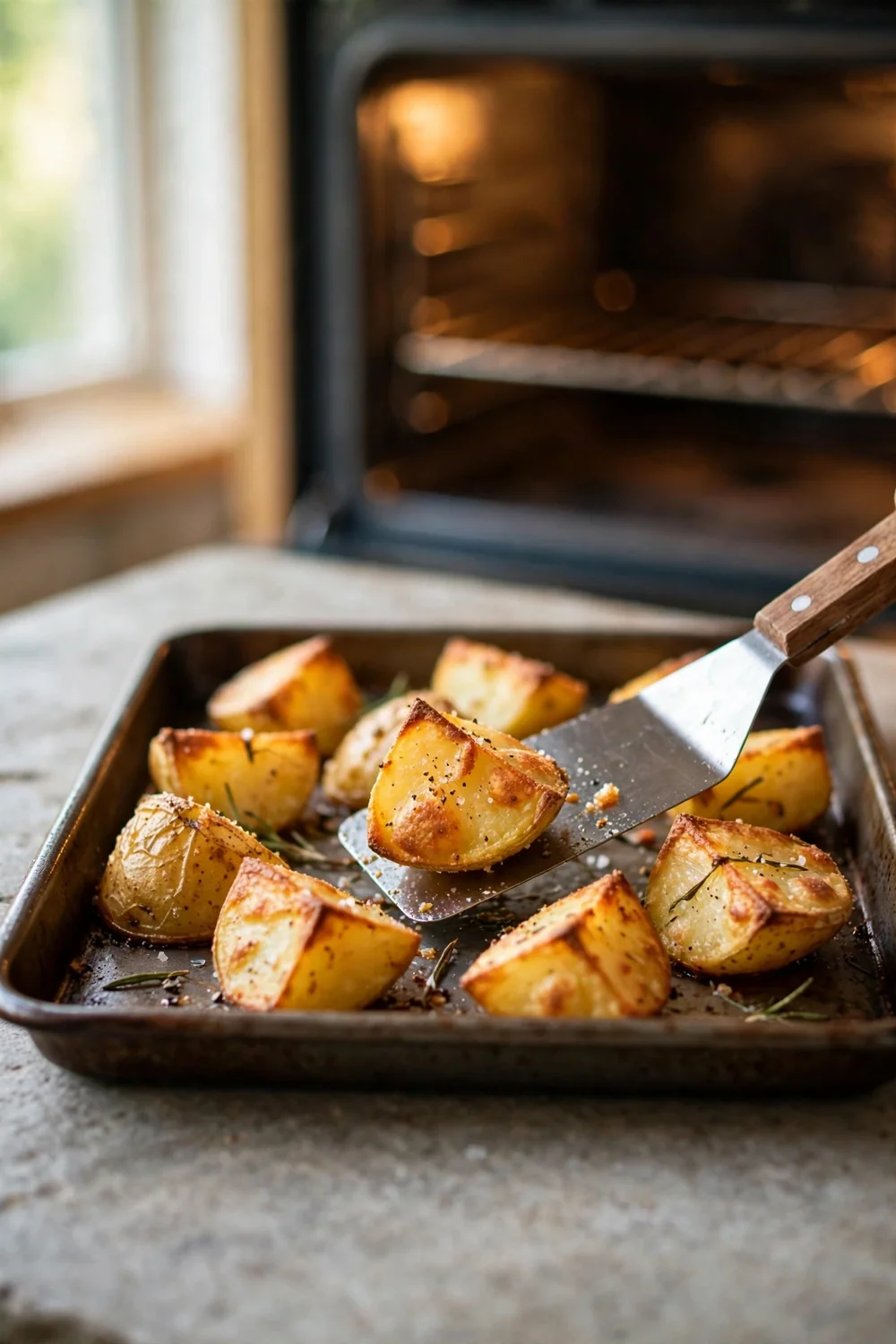
One turn keeps the crust intact and the heat steady. Flipping twice cools the tray and breaks the set surface. Wait until the bottom side is deep golden before you turn each chunk, then leave the tray alone. Patience here gives a crisp shell and a fluffy inside.
- Slide a thin spatula under each chunk in one smooth motion.
- Turn each chunk so the pale side faces the hot fat.
- Leave the tray alone until the second side matches the first in color.
- Do not peek or lift chunks early, since heat escapes fast.
Common Mistakes to Avoid
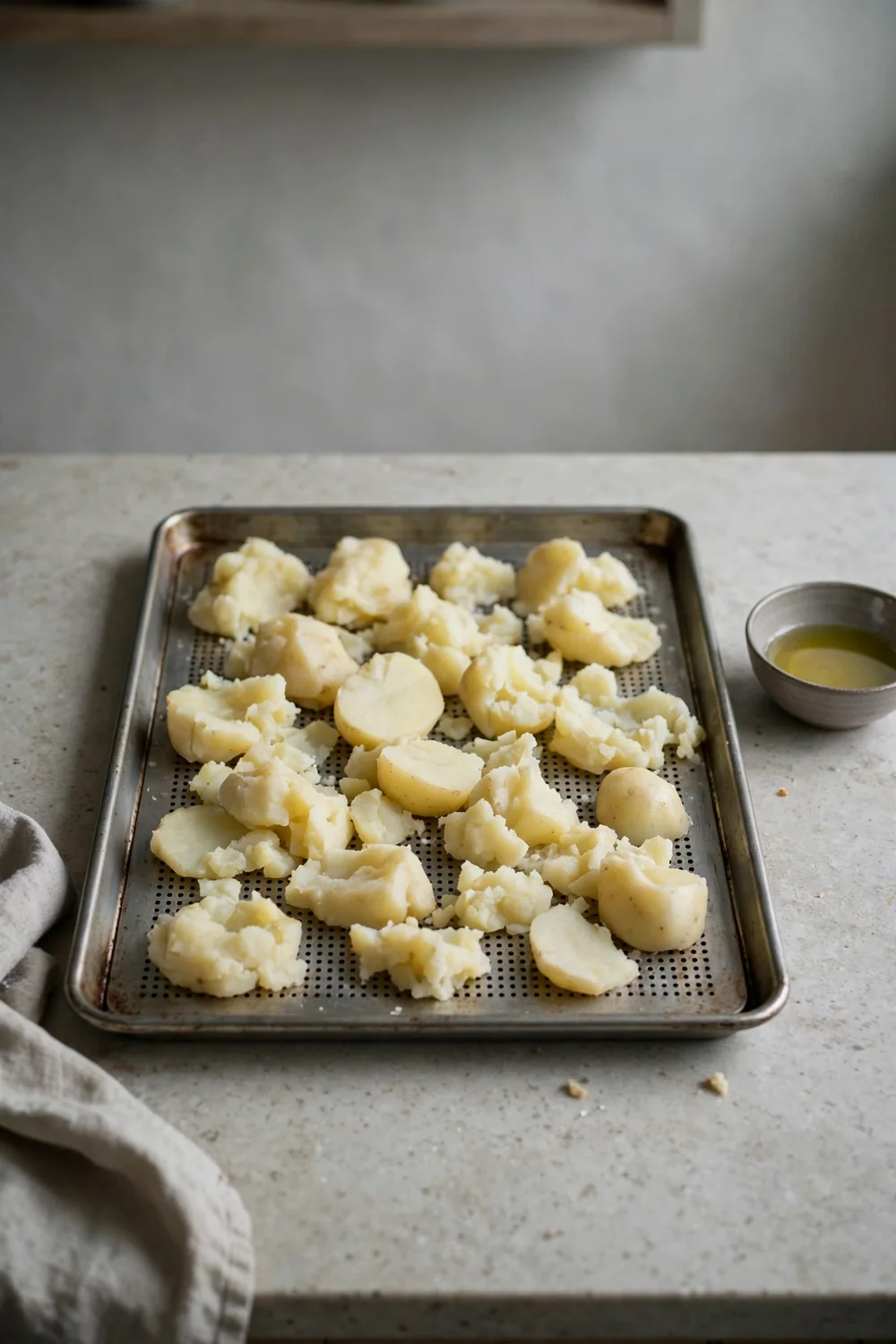
Common Mistake: Most cooks roast waxy potatoes in a crowded tray, which steams the pieces instead of crisping them. Another habit is skipping the parboil, which leaves the surface smooth. A third is opening the oven door again and again.
The Fix: Fix one habit at a time, starting with floury potatoes and a hot tray. Dry the chunks well, spread them in one layer, and keep the door shut. Dry chunks and high heat fix the rest.
Cold fat soaks in, and dry patches never brown, so those habits cost crunch too. Each mistake softens the crust, even when the potatoes are sound. Start with the biggest fix first, then add the next one. A few steady habits give a golden tray every time.
What Crispy Potatoes Look Like
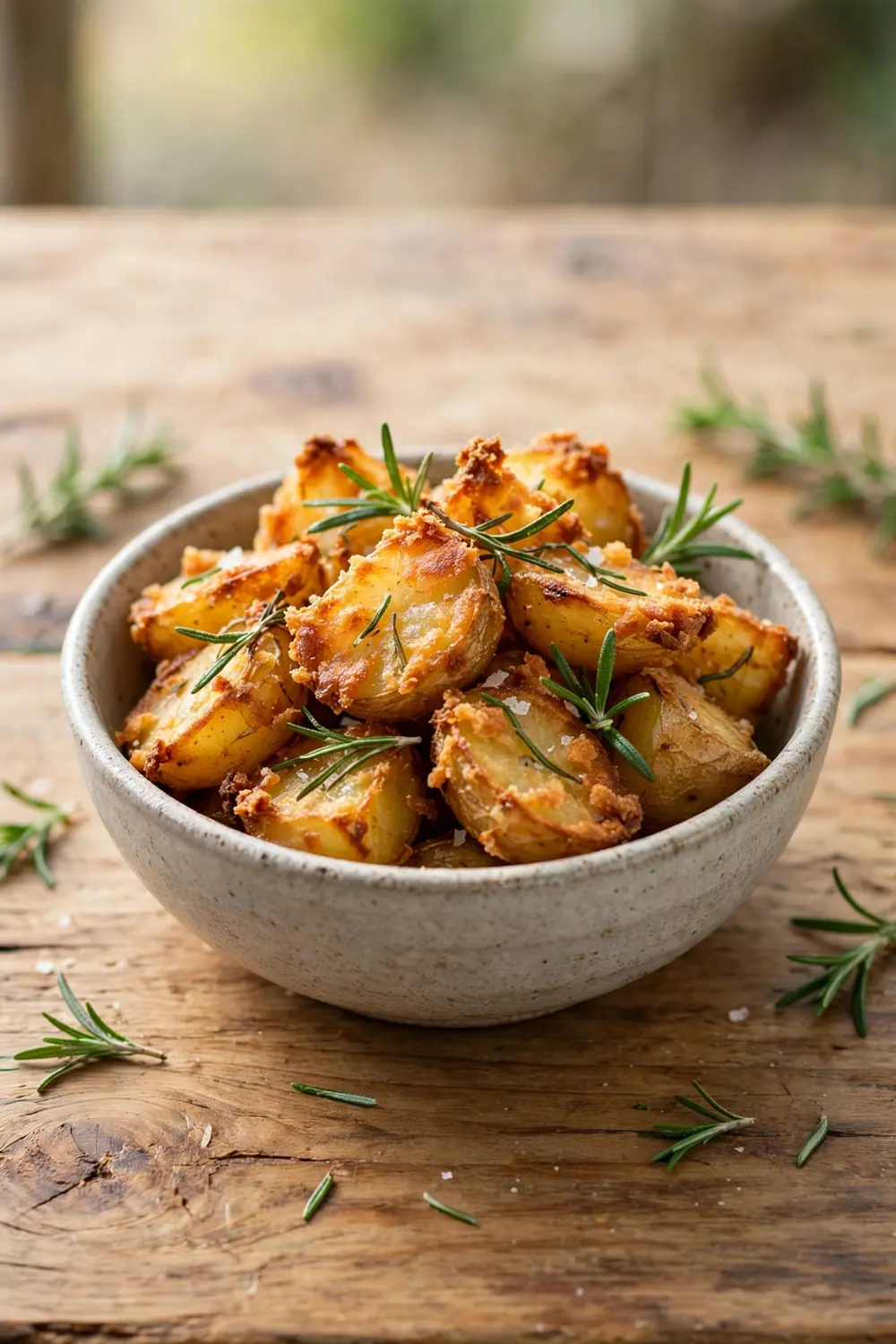
Crisp roast potatoes show deep golden edges and a dry, crackling surface. The outside crunches when pressed, and the inside stays fluffy and soft. Each chunk holds its shape when lifted, with no droop. That firm, golden crust is the sign that potato, fat, and heat worked together.
Serve the potatoes hot, straight from the tray, with salt to taste. When the shell stays crisp and the inside stays fluffy, you know the fixes worked. Golden color and a firm crunch mean the tray is ready. Crisp edges and fluffy centers mean the tray worked.
Conclusion
In short, not crispy roast potatoes come from waxy potatoes, wet surfaces, crowded trays, and cool fat. Fix those steps and each tray turns golden. Floury potatoes, dry parboiling, hot fat, and high heat build a crisp crust.
Start with the simplest fix first, then add the next one. Small changes protect the flavor while the crunch improves. Save this guide on Pinterest for your next roast.
Try the steps on your next tray, and if sticky mash is your trouble too, read our guide on gluey mashed potatoes for a fluffy fix.


2 Comments