How To Stop Cupcakes Sinking In The Center? Easy Fix Guide
Sinking cupcakes dip in the middle just when they should dome. Too much leavening, an oven that runs cool, or opening the door too early can all collapse the centers. The fixes are straightforward once you know the causes.
You will learn how much leavening a batch really needs, how to mix without knocking out air, and when to open the oven door. The fixes work for vanilla, chocolate, and filled cupcakes alike.
Once the method clicks, every cupcake will rise evenly, and the next guide, custard tart, shows how to bake a smooth custard tart without any cracks.
Why Cupcakes Sink

Cupcakes sink when the batter rises too fast and the structure cannot hold. Extra leavening blows big bubbles, the walls stretch thin, and the center collapses as the cupcakes cool. Too much leavening lifts the batter fast, then the weak structure collapses as it cools. Measure the leavener exactly to prevent most sinking.
Under baking has the same effect, since a wet center cannot support itself. Opening the oven door early lets in a rush of cool air that drops the fragile tops. A cool oven also causes sinking, since the batter rises slowly and never sets.
Leavening And Lift

Leavening is easy to overdo. A little lifts the cupcakes, but a lot makes them rise fast and fall faster. Level the baking powder with a knife and check the expiry date before mixing. Stale leavener rises unevenly and leaves the centers weak.
- Measure baking powder level, never heaped.
- Use one teaspoon of baking powder per cup of flour as a guide. Too much baking powder lifts the batter fast, then the center falls as it cools.
- Check expiry dates, since stale leavener acts unevenly.
- Do not add extra leavening for a higher rise.
Mixing Just Enough

Quick Tip: Mix the batter just until the flour disappears. Overmixing knocks out the air that creaming built, and the cupcakes rise unevenly and sink.
Cream butter and sugar well, then fold the flour in gently. The batter should look smooth but not whipped. A few small lumps are fine and will bake out. Cream the butter and sugar until pale and fluffy, which builds the air the batter needs.
Oven Heat And Timing

Common Mistake: Many bakers open the oven door to check, sometimes twice. The cool air collapses the half set centers, and the cupcakes never recover.
The Fix: Trust the timer and look through the oven window instead. Open the door only once, near the end, to test with a toothpick.
An oven thermometer helps too. If your oven runs 25 degrees cool, the cupcakes bake slowly and the centers stay wet. Calibrate the heat before blaming the recipe. Bake on the middle rack and keep the oven door closed until the timer ends. Opening the door drops the heat and can sink the whole tray.
Fixing Sunken Cupcakes

What You Need:
- Oven thermometer: Confirms the true baking temperature.
- Kitchen scale: Weighs flour exactly for a balanced batter.
- Ice cream scoop: Fills cups evenly for an even rise.
- Toothpick: Tests centers without cutting cupcakes.
- Wire rack: Cools cupcakes evenly so centers set firmly.
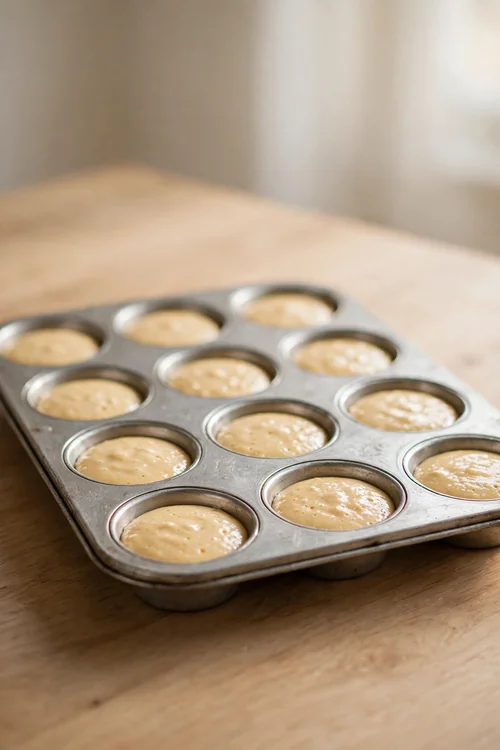
Even filling matters as much as leavening. Cups filled two thirds full rise into domes, while overfilled cups spill and collapse. Fill each cup two thirds full, using a scoop for even portions. Even filling means even baking, so no cup sinks while others rise.
Filling Sunken Centers

Before: Before, my cupcakes sank every time. I added extra baking powder for taller tops and opened the door to peek, and every batch dipped in the middle.
After: After leveling the leavening, mixing gently, and keeping the door closed, the same recipe gives domed, even cupcakes. The recipe was never the problem.
Small habits make the difference. Measure carefully, mix lightly, and trust the timer. Let the cupcakes cool in the pan for five minutes, then move them to a rack. A long stay in a hot pan makes the centers fall. Cool them on a rack so air moves all around.
Frosting Over Dips
Do This:
- Level every leavening measurement.
- Fill cups two thirds full.
- Bake without opening the door.
- Cool in the tin for 5 minutes, then on a rack.
Avoid This:
- Do not add extra leavening.
- Do not overmix the batter.
- Do not open the oven early.
- Do not overfill the cups.
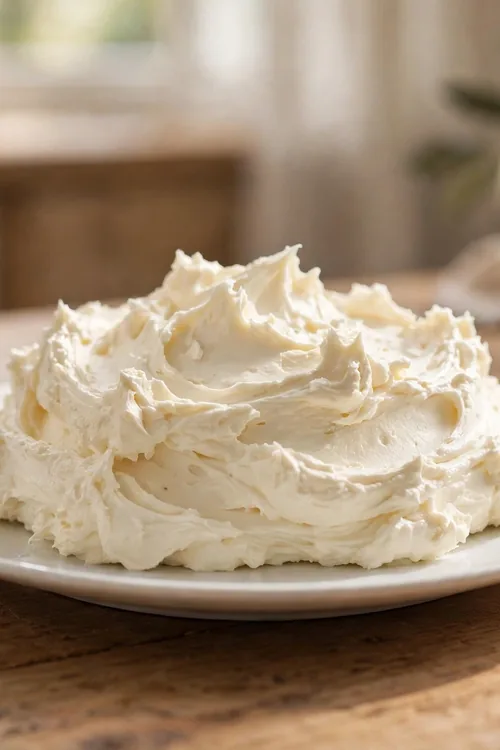
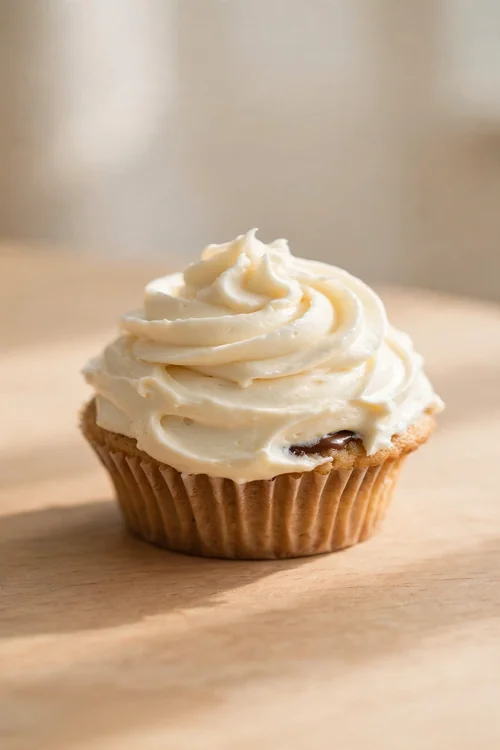
These habits give domed cupcakes every time. Once they feel routine, sunken centers become rare. Pipe the frosting in a tall swirl from the outside inward, which covers any dip. A star tip gives a neat finish with little effort. A tall swirl hides any small dip completely.
Baking Even Batches
- Time Needed: About 18 to 22 minutes of baking.
- Difficulty: Easy, mostly measuring.
- Cost: Pantry staples only.
- Best For: Vanilla, chocolate, and filled cupcakes.
Cupcakes bake best near 350 degrees Fahrenheit. One teaspoon of baking powder per cup of flour is the usual guide. A toothpick should come out with moist crumbs, not wet batter. Bake a single test batch before a party, so you can fix the temperature or timing.
Serving Perfect Cupcakes

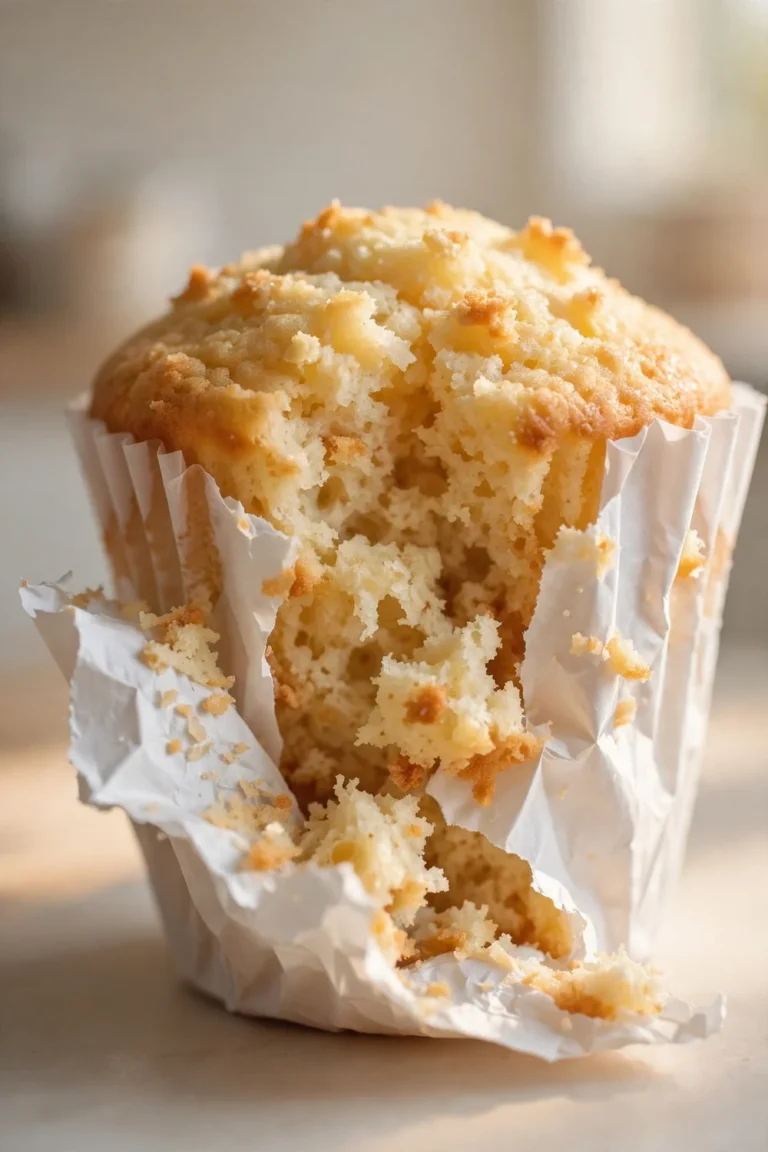
If a batch already sank, do not throw it out. Sunken cupcakes make excellent bases for filled treats, since the dip holds the filling. Fill sunken centers with jam or curd, then frost over the top. The filling turns a flaw into a pleasant surprise.
Level the tops with a knife for a flat serving surface, or flip the cupcakes upside down for a smooth base. Either way, the flavor is still good. A dusting of sugar over the frosting hides small cracks and adds shine. Serve the filled cupcakes on a bright plate for a cheerful look.
Storing Cupcakes Well

A sunken center is a perfect pocket for filling. Jam, curd, and ganache all turn the flaw into a feature. Store frosted cupcakes in a single layer in a sealed container. Stacking them crushes the frosting and flattens the swirls.
- Cut a small cone from the center if needed. Chill the filled cupcakes briefly so the filling sets.
- Spoon in jam, curd, or ganache.
- Replace the top or cover with frosting.
- Chill briefly so the filling sets.
Cupcake Baking Checklist

Quick Tip: Pipe frosting in a tall swirl to hide any dip. Start from the outside and work inward, building height over the sunken center.
With leveled leavening, gentle mixing, and a closed oven door, your cupcakes will rise domed and even every time. Check the leavener, the oven heat, and the mixing time whenever a batch sinks. One of those three is almost always the cause. Write down what fixed the batch for next time.
Conclusion
Domed cupcakes come from measured leavening and steady heat. When sinking cupcakes show up, check your baking powder, mix just until combined, and bake at the right temperature without opening the door. Fill cups two thirds full and test with a toothpick before pulling the tray. If a few still dip, fill the centers with frosting or jam and serve with pride. Keep a note of the timing that worked for your oven. With these habits, your cupcakes will rise evenly every time. For the fix that came before this one, see banana bread.