Why Is My Gingerbread Dough Too Sticky To Roll? Easy Fix Guide
If your sticky gingerbread dough clings to your hands, the board, and the rolling pin, you are not alone. Many home bakers face this same holiday mess, and the good news is that a few calm steps make the dough easy to handle.
The usual cause is warmth. Soft butter, warm molasses, and a warm kitchen all loosen the dough. Once it cools and firms up, cutting neat shapes gets much easier.
This guide walks you through each fix in order, from chilling to rolling and baking, so your next batch cuts cleanly. For a muffin rescue next, read this banana muffins guide after this one.
Why Gingerbread Gets Sticky

Gingerbread dough gets tacky when its butter and molasses warm up. The dough may feel fine when mixed, then turn sticky after a few minutes on the counter. Warm hands and a warm board make it worse, and a sunny kitchen speeds the softening even more.
Too little flour can also play a part, but adding lots of flour makes the cookies tough. Chilling beats flour every time for taming tacky dough, since cold butter firms up without drying the crumb. If the dough still clings after chilling, rest it in the fridge for another fifteen minutes before you roll.
Chill The Dough

Chilling is the first and best fix. Cold butter firms up, the molasses thickens, and the dough turns easy to roll. A firm disk holds its shape under the rolling pin, and chilled dough releases from parchment with almost no effort. Give the fridge time to work.
- Flatten the dough into a disk about one inch thick.
- Wrap it tightly in plastic wrap.
- Chill it for at least one hour, or overnight for best results.
- Work with one half at a time and keep the rest in the fridge.
Flour Hands Lightly
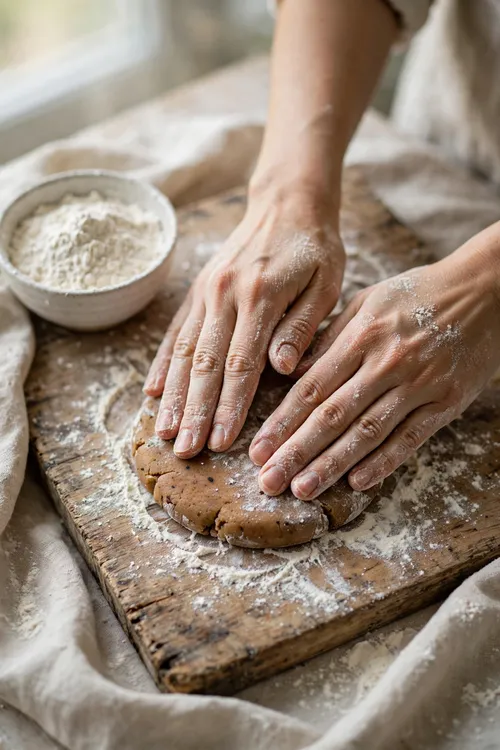
Quick Tip: Dust your hands with a little flour, not a handful. A light coating stops sticking without drying out the dough or making the cookies tough.
Rub the flour between your palms and shake off the extra. If the dough still sticks, chill it again for fifteen minutes instead of adding more flour. Cold dough needs far less flour, and a short rest in the fridge restores the firm feel you need for clean cuts. Use a light touch.
Roll Between Sheets
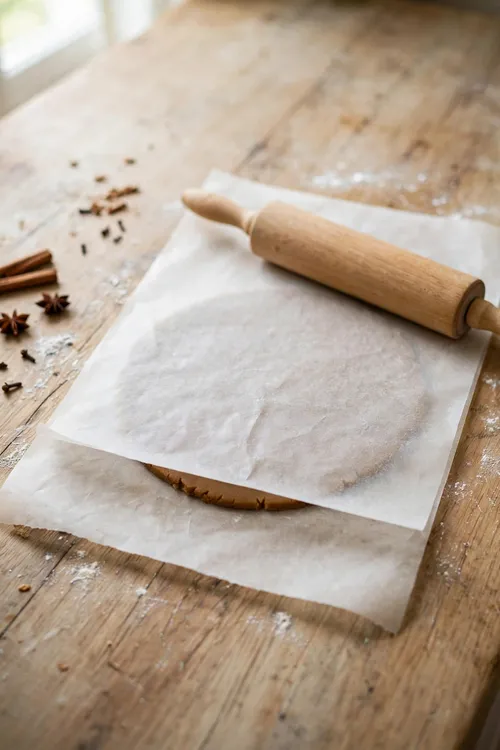
Common Mistake: Many bakers roll tacky dough on a bare board with lots of loose flour. The dough sticks, tears, and picks up so much flour that the cookies bake dry and pale.
The Fix: Roll the dough between two sheets of parchment paper. The paper stops sticking without extra flour, and you can peel the top sheet off to cut shapes.
Peel the top sheet slowly so the dough stays flat. If the paper sticks, slide the whole stack into the fridge for ten minutes, then peel again. The dough will release cleanly, and the sheet stays smooth enough for sharp cuts. Work patiently here, since a calm peel saves more time than rushing.
Cut Shapes Cleanly
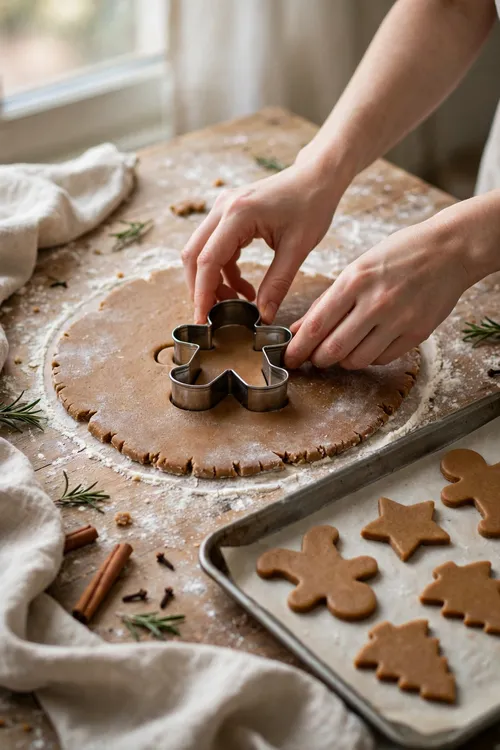
What You Need:
- Parchment paper: Stops sticking and lets you roll without extra flour.
- Rolling pin: Rolls the dough to an even thickness for even baking.
- Bench scraper: Lifts sticky dough off the board in one clean move.
- Cookie cutters: Cut sharp shapes from chilled, firm dough.
- Plastic wrap: Wraps the dough tightly so it chills without drying.
A bench scraper is the tool most bakers miss. It frees stuck dough, moves cut shapes to the tray, and cleans the board in seconds. Keep the scraper flat against the board and use short, gentle pushes so the dough lifts without tearing. A quick scrape between batches keeps the surface ready.
Fix Sticky Dough

Before: Before the fix, the dough stuck to everything and the shapes stretched out of form. The cookies baked into blurry blobs.
After: After the fix, the chilled dough cuts into sharp shapes that hold their edges. The cookies bake into neat figures with clean lines.
Cut shapes close together to waste less dough, then chill the cut shapes on the tray for ten minutes before baking. Cold shapes hold their edges in the oven, and the short rest firms the butter again after handling. Space the shapes about an inch apart so hot air can move around them evenly.
Bake Crisp Shapes

Do This:
- Roll the dough to a quarter inch thick for crisp cookies.
- Dip the cutter in flour before each cut.
- Lift cut shapes with a thin spatula or scraper.
Avoid This:
- Do not press the cutter and twist, since that warps the edges.
- Do not reroll the scraps more than once, or they will toughen.
- Do not bake shapes that have gone soft on the tray.
Even thickness matters more than speed. Cookies of the same thickness bake at the same pace, so none burn while others stay soft. Check the dough with a ruler at a few spots, and reroll any thick patch before cutting. A steady pace here gives you a tray of cookies that finish together.
Cool Without Sticking

Time Needed: About 10 to 12 minutes per tray at 350 F.
Difficulty: Easy, once the dough stays cold and firm.
Cost: Low, since the fix uses chilling and parchment.
Best For: Holiday cookies, gingerbread houses, and gift batches.
Let baked shapes cool on the tray for two minutes, then move them to a rack. They firm up as they cool, so moving them too soon can bend the shapes. Slide a thin spatula under each cookie and lift gently, then leave plenty of space on the rack so air reaches every edge.
Rescue Sticky Batches

A very tacky batch can still be saved. Knead in flour one tablespoon at a time until the dough feels soft but not clingy. Work slowly, since a small addition at a time keeps the cookies tender. Stop as soon as the dough pulls away from your hands without sticking.
If the dough sticks to the board, slide a bench scraper under it and chill the whole board in the fridge. Cold dough releases from any surface, and you lose nothing. Give it ten to fifteen minutes, then lift the dough in one piece and roll it again.
Decorate Neat Shapes

Decorate only after the cookies are fully cool. Warm cookies melt icing and smear the designs, so patience here protects all your careful cutting and baking. Wait until the cookies feel cool to the touch, then set up your icing bags and candies before you start piping.
- Let the cookies cool completely on a rack.
- Pipe icing in thin lines and let it set.
- Add small candies while the icing is still wet.
- Let the icing dry for at least one hour.
- Store the cookies in a single layer once the icing is hard.
Final Shape Check

Quick Tip: Hold one cookie up and check its edges. Neat gingerbread keeps sharp, clean edges and a firm snap. If the edges look blurry, chill the cut shapes longer on the next tray.
This quick check takes only a moment. Sharp edges mean the dough stayed cold enough, and a longer chill on the next tray fixes any blurry batch. Compare a few cookies from the same tray, and note which spots softened first so you can chill the next tray a little longer.
Conclusion
Fixing sticky gingerbread dough comes down to chilling well, rolling between parchment, and handling the dough gently. Those three habits turn a tacky mess into neat shapes that bake crisp and clean. Try them on your next batch and enjoy stress free holiday baking. Keep the dough cold and the rolling gentle every time you bake, and neat shapes will become your normal result. Chilled dough and parchment make the work easy, and holiday baking will feel calm instead of messy. For another baking rescue, read this runny tiramisu guide next.