Why Does My Banana Bread Sink In The Middle? Easy Fix Guide
If your sunken banana bread turned out sunken in the middle, you are not alone. Sinking comes from too much banana or sugar, too little structure, and opening the oven before the center sets. The fix usually comes down to a few small choices you can change next time.
This guide walks through what went wrong, the exact steps that fix it, and the habits that keep it from happening again. Spot the weak step, adjust it, and test the result with a small batch first.
Work through the sections in order, or jump to the fix that matches your batch. For another rescue, see flat snickerdoodles fixes for thick soft cookies with a crackled top.
Why Banana Bread Sinks

Three small habits cause most sinking. That single weak step often explains the whole result, and once you see it, the fix feels clear. In my experience, cooks blame the recipe when the real issue is one small habit that is easy to change.
Measure the banana, keep the batter thick, and leave the oven closed until the center is firm. Try the change on a small test batch first, then compare it side by side with your usual method. The difference will tell you whether you found the true cause or only part of it.
Measure Banana Exactly

One cup of mashed banana gives structure, while a second cup floods the batter. Follow the steps below in order, and give each one your full attention. Rushing the early steps is how the same problem comes back, so slow down where it counts.
- Measure 1 cup of mashed banana.
- Whisk dry ingredients separately.
- Fold wet into dry just until combined.
- Bake at 350 F without opening the door.
Thick Batter Wins

Quick Tip: Very ripe bananas are mostly water. Measure them, and never add an extra banana just because it is there. Write the tip on your recipe card so you remember it next time.
Thick batter traps air and lifts into a tall dome. Keep the tip in mind while you work, and check the result before you move to the next step. Good cooking is mostly good timing, and a quick pause to look, smell, and taste will catch most trouble early.
Leavening Check First

Common Mistake: Many bakers add three or four bananas for flavor, which overloads the batter and collapses the center. Checking the leavening date first rules out flat baking powder as the real cause.
The Fix: Use exactly 1 cup of mashed banana, keep the batter thick, and let the flour and eggs do their support work. Fresh leavening lifts the loaf so the center holds its dome.
Fresh leavening lifts the batter evenly from the center outward. Test baking soda in vinegar and baking powder in hot water, and replace any that fizz weakly. Measure carefully, since too much leavener makes the loaf rise fast and then collapse. A correct dose gives a steady rise and a high, even dome.
Do Not Overmix

What You Need:
- Ripe bananas: Measured at 1 cup, not guessed.
- All purpose flour: Gives the loaf structure.
- Baking soda: Fresh and measured exactly.
- Eggs: Bind and support the crumb.
- Walnuts: Kept to 1/2 cup so the loaf holds.
Set out every tool before mixing so nothing interrupts the batter. Weigh the bananas, check the leavening, and preheat the oven fully. A calm start keeps the mixing short, the batter thick, and the bake on schedule. Small habits like these turn a sinking loaf into a tall, even one.
Oven Door Stays Shut

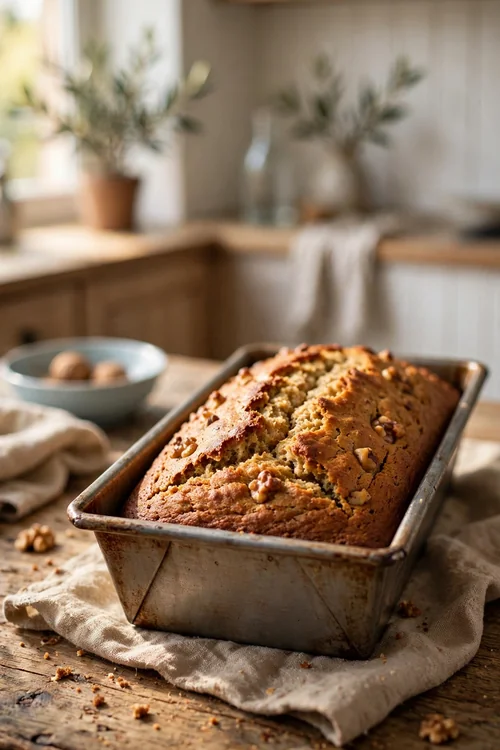
Before: The loaf rose high, then fell in the middle into a dense, gummy valley. Keeping the oven door shut holds the heat steady while the center sets.
After: With measured banana and a closed oven door, the same loaf holds a gentle dome and a tender crumb. An unopened oven lets the loaf rise evenly to a gentle dome.
Opening the door drops the temperature and collapses a loaf that is still setting. Keep the oven shut until the last ten minutes, then test with a skewer through the center. If the skewer comes out with moist crumbs, give it five more minutes. Patience in the final stretch saves the dome.
Pan Size Matters
Do This:
- Measure the banana.
- Fold gently.
- Keep the oven closed.
- Cool in the pan.
Avoid This:
- Do not add extra banana.
- Do not overmix.
- Do not open the door early.
- Do not use a too small pan.
The right pan holds the batter deep, so heat reaches the center before the top turns dark and dry. Keep this short list beside you while you cook, and check off each point as you finish it. A simple checklist beats memory when the kitchen gets busy.
Cool In Pan

Time Needed: 10 minutes of prep, about 1 hour of baking.
Difficulty: Easy, with measuring.
Cost: Bananas plus pantry staples.
Result: A domed loaf with a tender crumb.
A hot loaf keeps baking in the pan, so cool it there for a while before turning it out. Use the facts above to set your plan before you start. When you know the time, the tools, and the target result, each step feels calmer and more certain.
Add Ins Balance

Nuts, chocolate, and dried fruit add flavor, but heavy add-ins sink and drag the crumb down. Keep add-ins to about one cup for a standard loaf. Toss them in a spoon of flour so they grip the batter instead of sliding. Chopped nuts toast lightly in the oven, which deepens their flavor without extra weight.
Fold add-ins in last, with only a few gentle strokes. Overmixing after they go in knocks out the air the loaf needs to rise. A light hand keeps the crumb tender and the mix-ins spread evenly.
Slice Without Squash
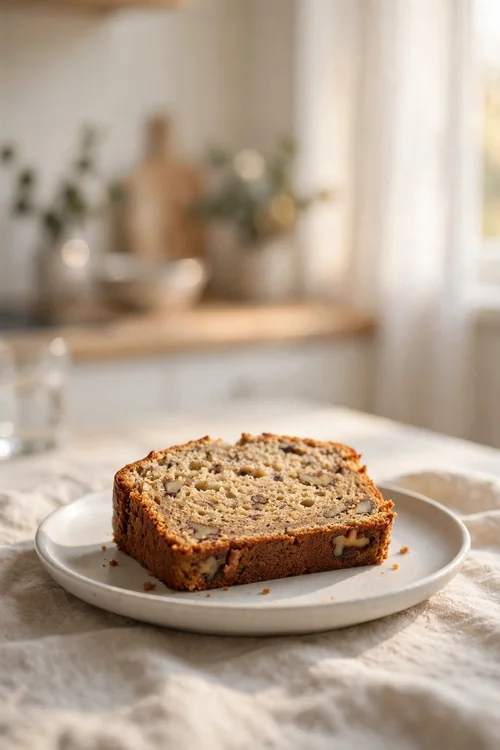
A loaf that cooled fully slices cleanly, while a warm loaf squashes flat under the knife. Use a sharp serrated knife, gentle pressure, and light, sawing strokes. Work through the steps below, and serve slices that hold their tall shape.
- Test the center with a skewer.
- Cool in the pan for 15 minutes.
- Turn out and cool fully.
- Slice with a serrated knife.
Final Dome Check

Quick Tip: Look at the loaf from the side before slicing. A gentle dome with no dip means the center baked through.
Check the dome, the crust color, and the skewer test before you call the loaf done. All three signs together beat any single clue on its own. A loaf that passes them all slices tall, stays moist, and keeps its shape to the last piece.
Conclusion
With these fixes, sunken banana bread can turn into a result you are proud to serve. Start with the biggest cause, change one thing at a time, and taste as you go so you know what actually helped. Small, steady adjustments beat a full recipe overhaul, and they teach you how your oven, your pans, and your ingredients behave. If you want one more rescue to study, read the brioche dough fixes and add them to your notes for next time. Keep this guide nearby, trust your senses, and enjoy the next batch.