Why Does My Homemade Salad Dressing Keep Separating? Easy Fix Guide
If your separating salad dressing breaks into oil and vinegar just before serving, you are not alone. Many home cooks face the same split even with fresh ingredients. The good news is that a few small changes can keep the next batch smooth and glossy.
Dressing splits when oil and water based vinegar refuse to stay mixed. Without an emulsifier, the two liquids drift apart within minutes. In my experience, a little mustard and slow whisking fix most broken batches.
This guide walks through each cause in order, from ratio and mustard to whisking and storage. Follow the steps, and your next dressing should stay blended from bowl to table. And if sticky mash is your trouble instead, see why gluey mashed potatoes happen and how to make them fluffy.
Why Dressing Splits Apart
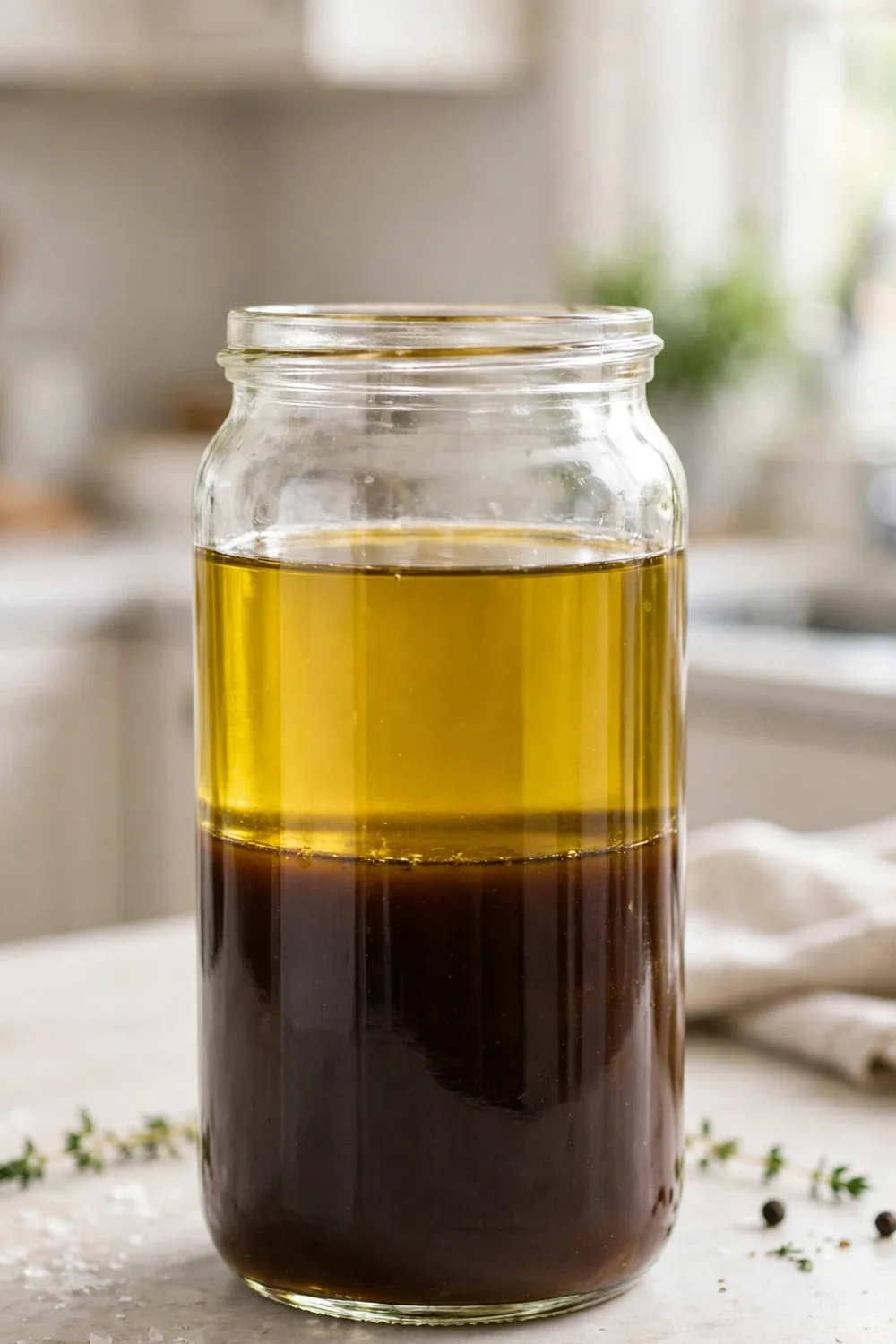
Dressing splits because oil and vinegar never truly dissolve in each other, no matter how hard you shake the jar. Vinegar is water based, so oil beads float to the top instead of blending. Shaking alone mixes them for a moment, then the two layers pull apart again.
An emulsifier holds the tiny oil drops apart so the mix stays smooth and glossy. Mustard, egg yolk, and honey all play this role in different ways. Without one, even a well shaken dressing breaks fast, so the fix starts with a binder. Each later step builds on that binder.
Use Room Temperature Ingredients
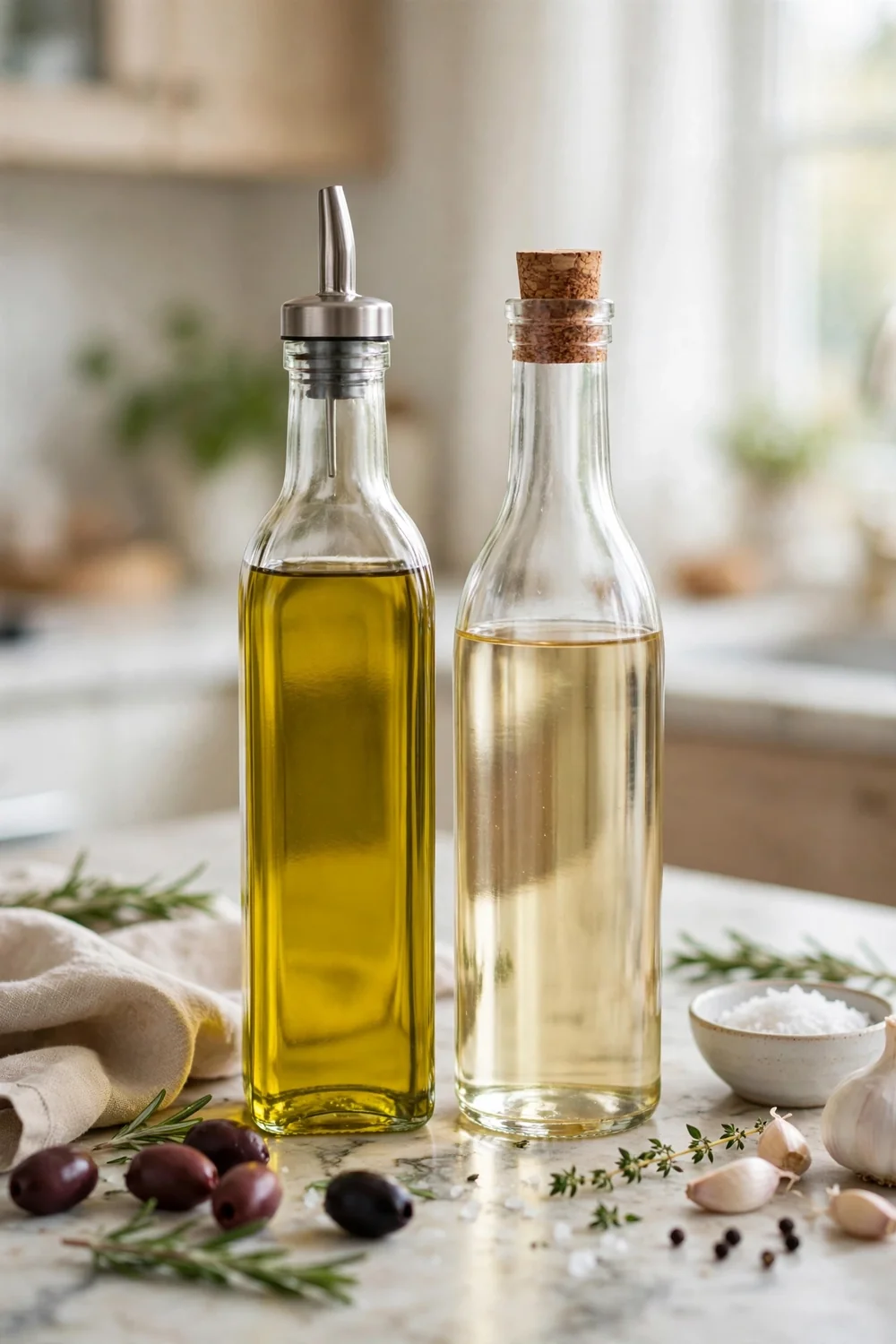
Before: Before this step, cold oil and cold vinegar resist blending. Cold fat thickens, so the whisk cannot break it into fine drops. Cold dressing also tastes dull, even when the ratio is right.
After: After the fix, room temperature liquids meet halfway and blend with less effort. The dressing turns smooth faster and stays mixed longer. In my experience, this one habit fixes many stubborn splits.
Set both bottles on the counter twenty minutes before you mix. Warm the vinegar bowl in your hands for a minute if the kitchen feels cold. Set the finished dressing out for ten minutes before serving, then shake it hard. Room temperature ingredients make every later step easier.
Oil and Vinegar Ratio
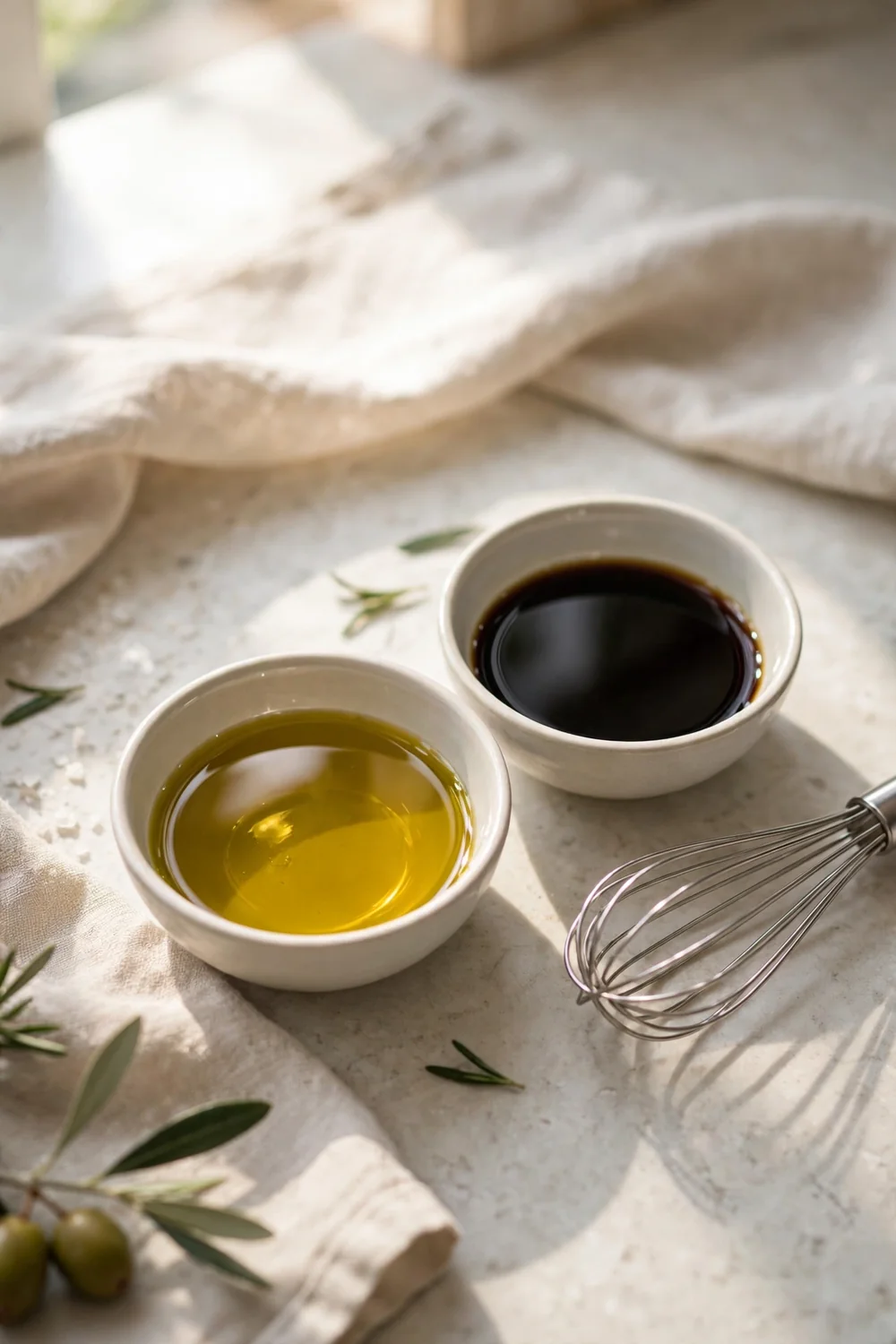
What You Need:
- Oil: Three tablespoons of oil form the base of a small batch.
- Vinegar: One tablespoon of vinegar balances the oil without sharpness.
- Measuring spoons: Spoons keep the three to one ratio exact.
- Recipe card: A card holds the ratio for the next batch.
The classic ratio is three parts oil to one part vinegar. Too much vinegar makes a sharp dressing that breaks fast. Too much oil leaves a greasy coating that will not cling to the leaves. A steady three to one base gives the emulsifier something to hold.
Add Mustard First
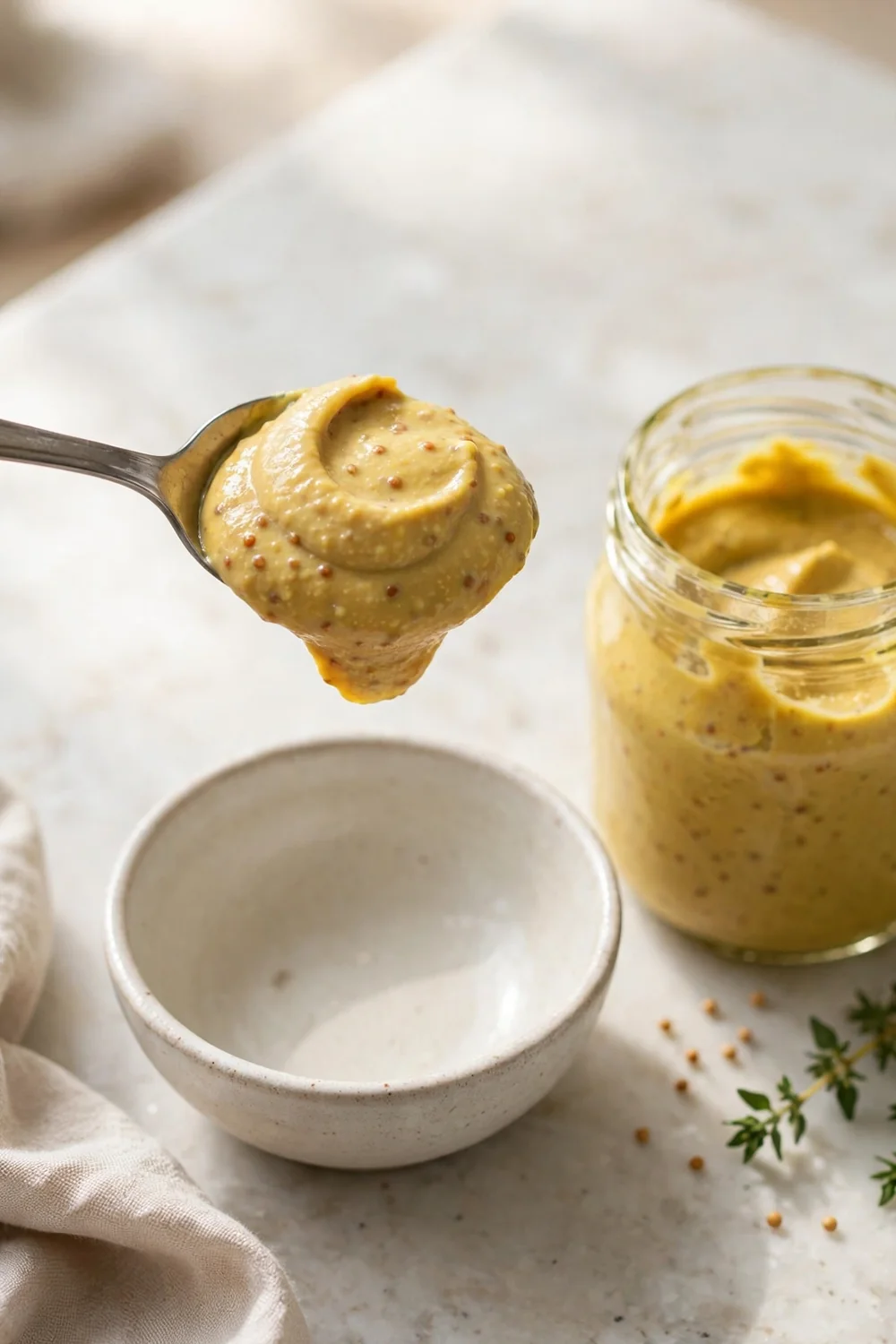
Mustard is the easiest emulsifier in most kitchens. A teaspoon of Dijon coats the oil drops and keeps them spread through the vinegar. Add it before the oil, and whisk it with the vinegar and salt first. That cloudy base is the glue that holds the whole dressing together.
- Whisk one teaspoon of Dijon with the vinegar and salt.
- Let the mustard sit with the vinegar for a minute so it loosens.
- Check that the mix looks cloudy and even before oil goes in.
- Use a full teaspoon per half cup of oil for a steady hold.
Whisk in Oil Slowly
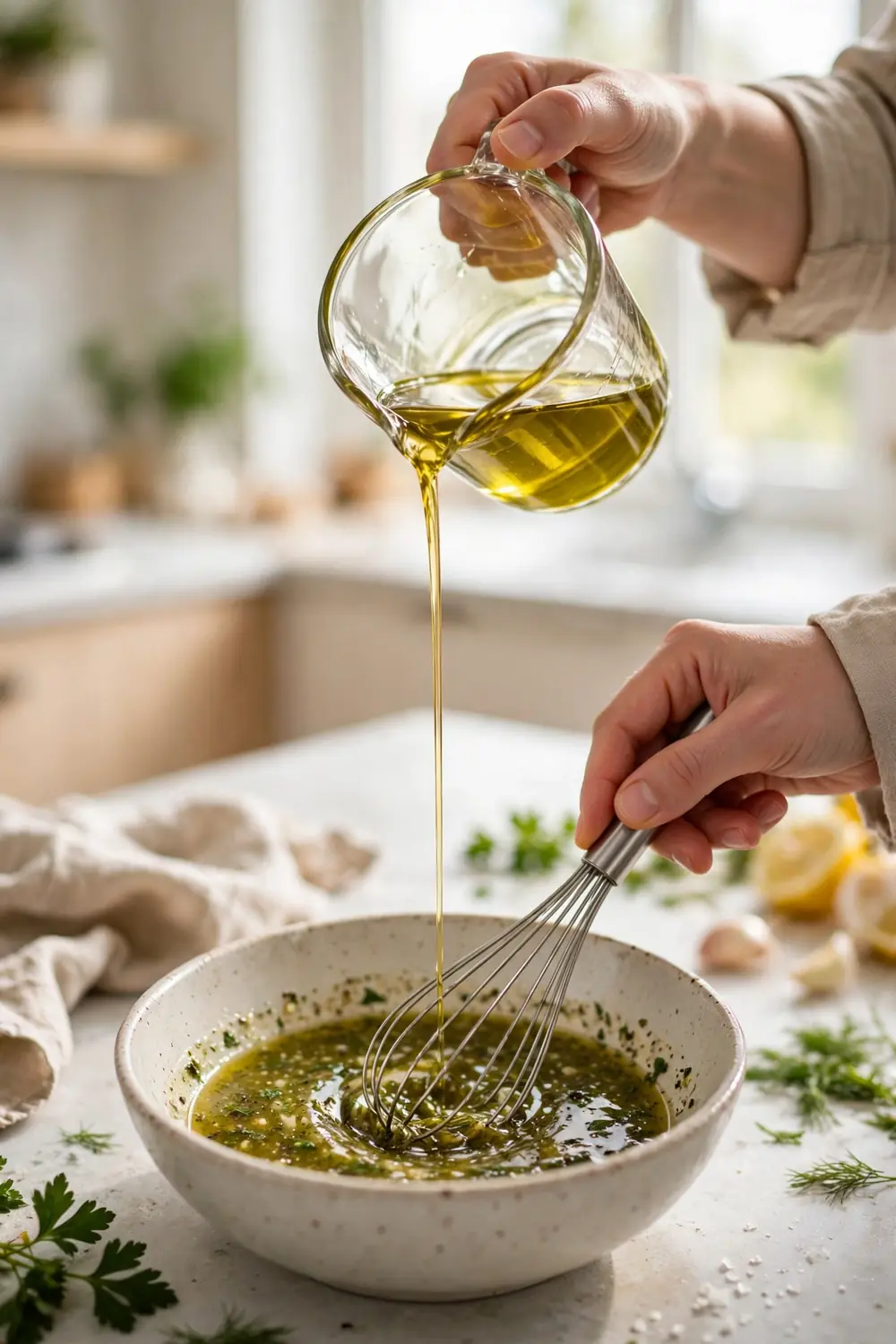
Common Mistake: Most cooks pour all the oil in at once, which floods the mix and breaks the emulsion. Fast pouring pools the oil on top instead of breaking it into tiny drops. The dressing looks mixed, then splits before serving.
The Fix: Pour the oil in a thin steady stream while you whisk without stopping. Hold the measuring cup high so the stream stays thin and steady. Each spoon of oil should vanish before you add the next.
Slow oil is the heart of a stable dressing. Keep whisking until the dressing turns thick and glossy. Patience here turns two stubborn liquids into one smooth dressing. The dressing should coat the back of a spoon before you call it done. Slow whisking keeps the emulsion steady from bowl to table.
Add a Little Honey
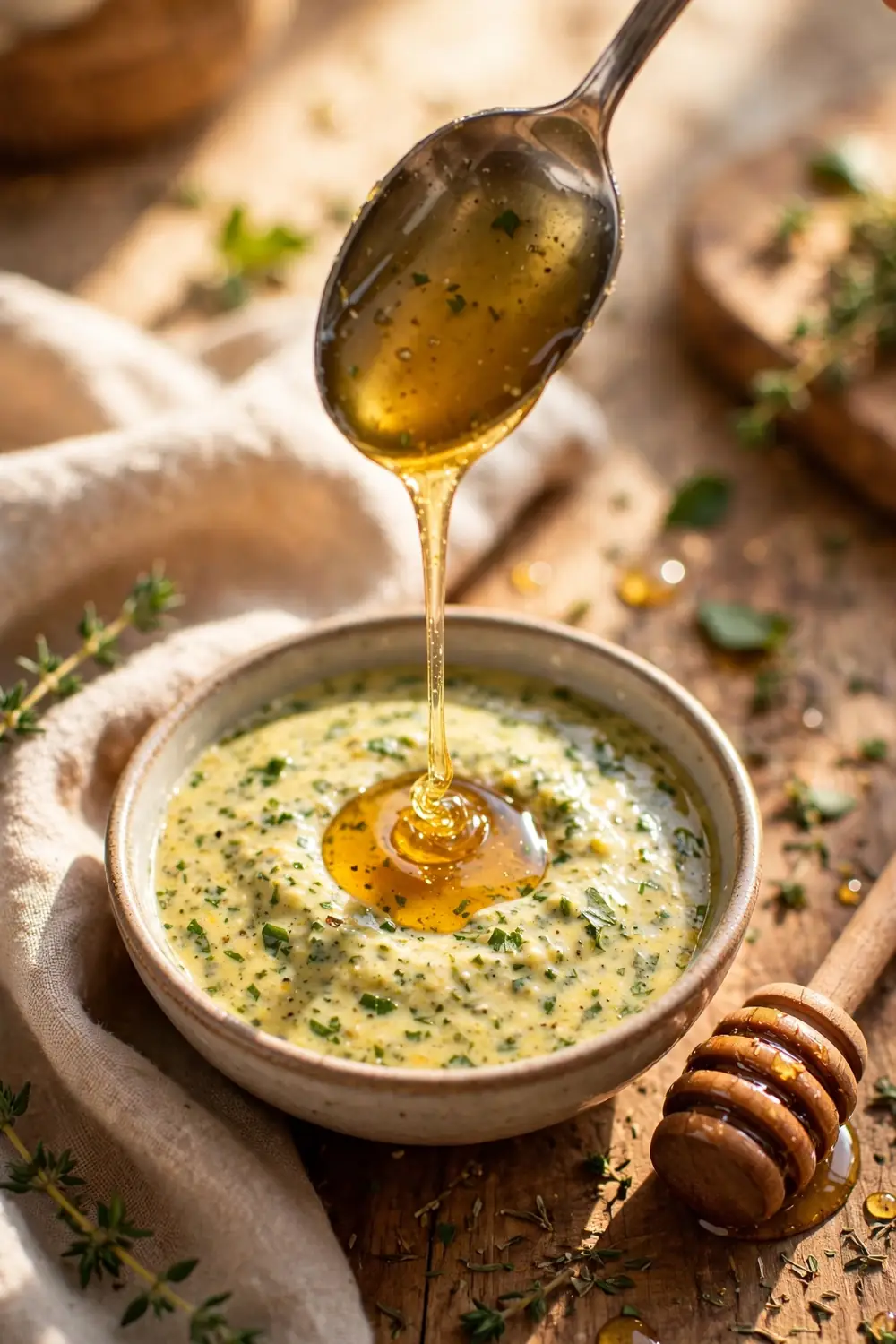
Amount: 1 teaspoon
Role: Holds oil drops apart
Flavor: Softens sharp vinegar
Swap: Maple syrup works too
Honey does more than sweeten the dressing. Its thick body helps hold oil drops apart, so the mix stays smooth. A teaspoon is enough for most batches. It also softens sharp vinegar, so the dressing tastes round instead of harsh. Whisk the honey into the vinegar and mustard before the oil goes in.
Use an Egg Yolk
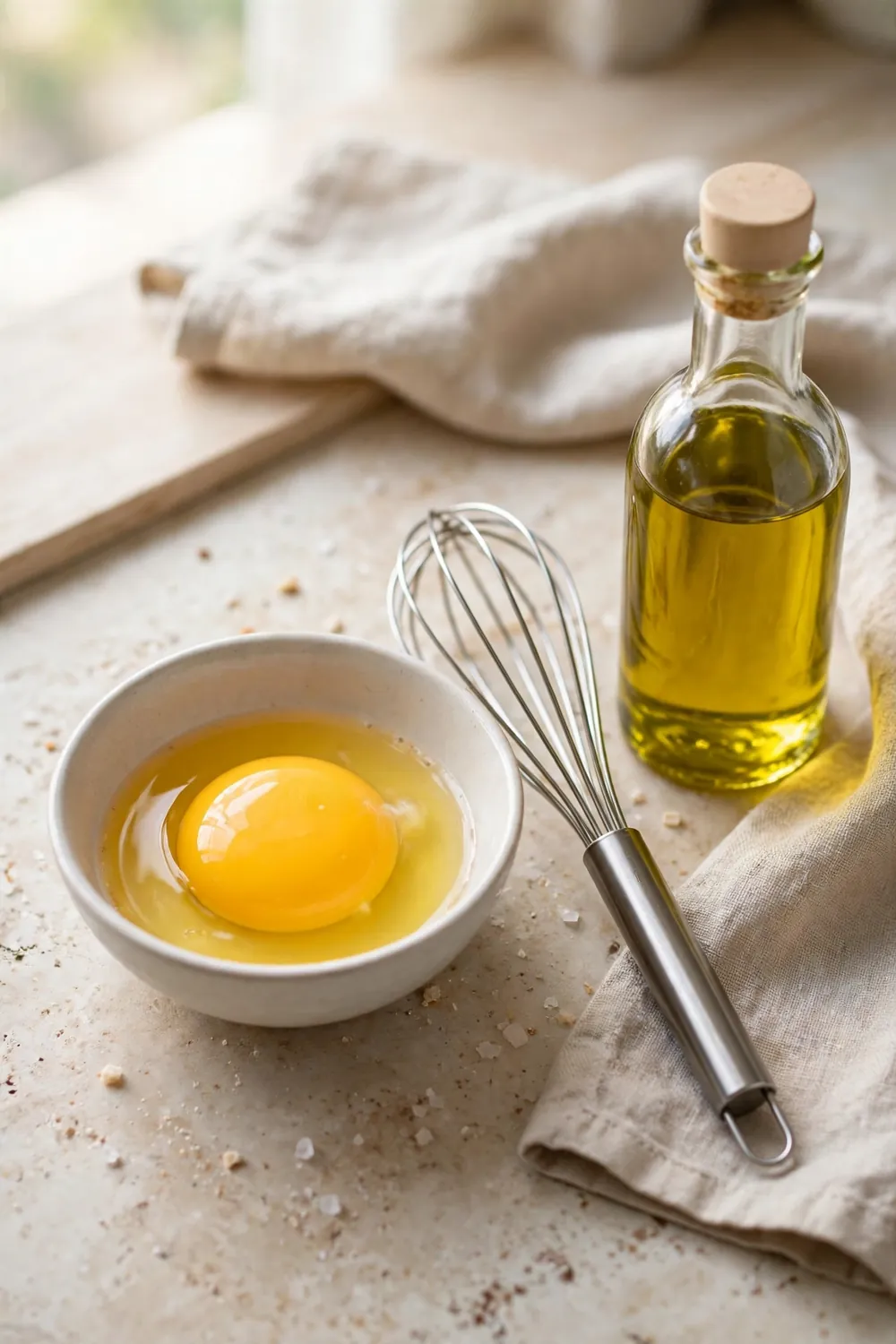
Quick Tip: Use fresh eggs, and keep the finished dressing cold until serving. Never use a cracked or old egg, and keep raw yolk dressings cold at all times. One yolk can hold a full cup of oil steady.
Egg yolk is the strongest natural emulsifier in the kitchen. Its lecithin wraps each oil drop and keeps it floating in the vinegar. Caesar dressing uses this trick, which is why it stays so creamy. Whisk the yolk with mustard and vinegar until the mix looks pale and thick.
Blend for a Smooth Mix
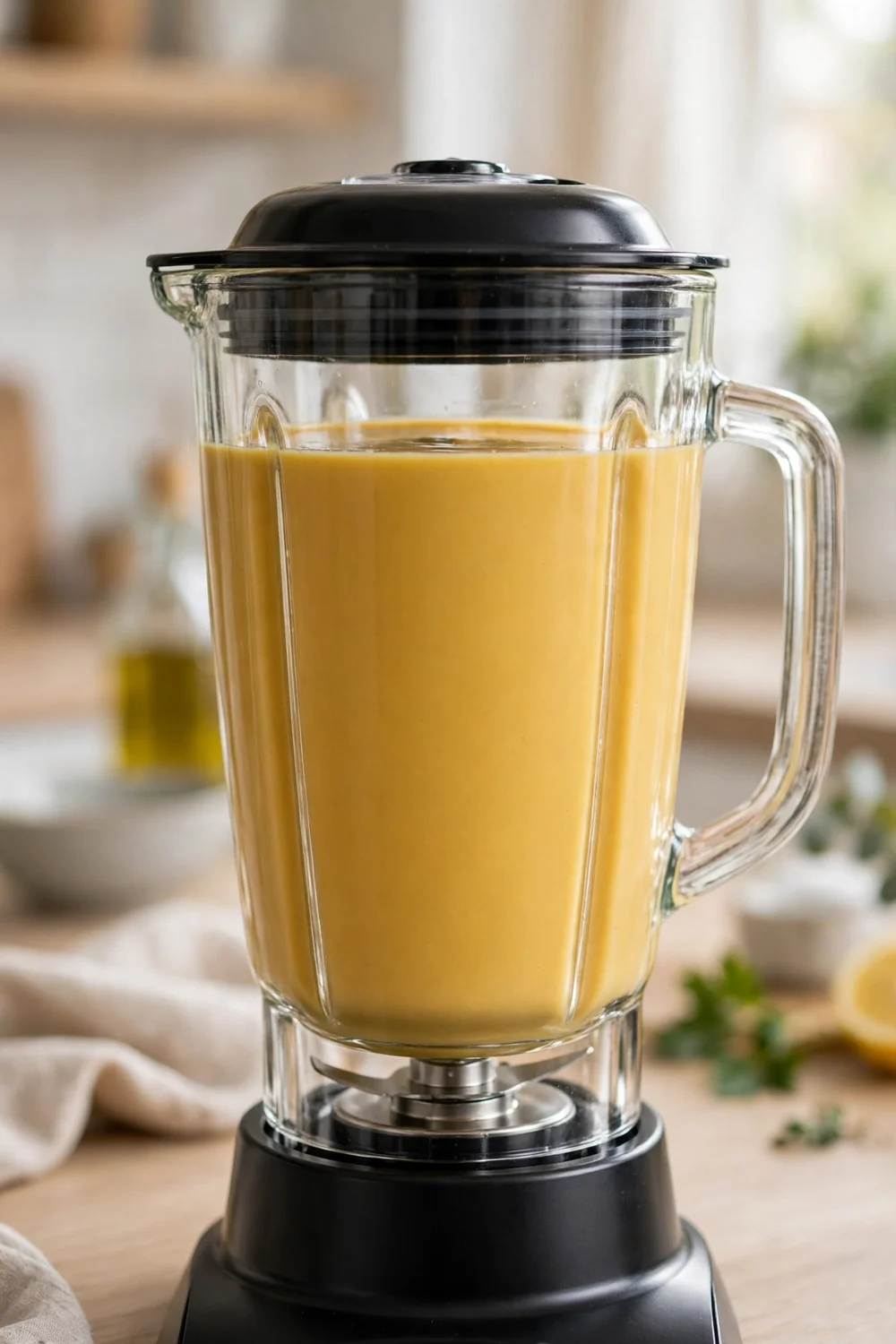
Do This:
- Blend the vinegar, mustard, and seasonings first.
- Pour the oil in through the lid while the blender runs.
- Stop as soon as the dressing turns thick and creamy.
Avoid This:
- Do not over blend, since the blades can heat the mix.
- Do not add all the oil at once, even in a blender.
- Do not leave the dressing in the blender, since it sets fast.
A blender beats a whisk for stubborn dressings. Fast blades smash oil into drops too small to see, so the mix stays blended for hours. A small food processor works too, though a blender gives the finest drops. Pour it into a jar right away.
Store It the Right Way
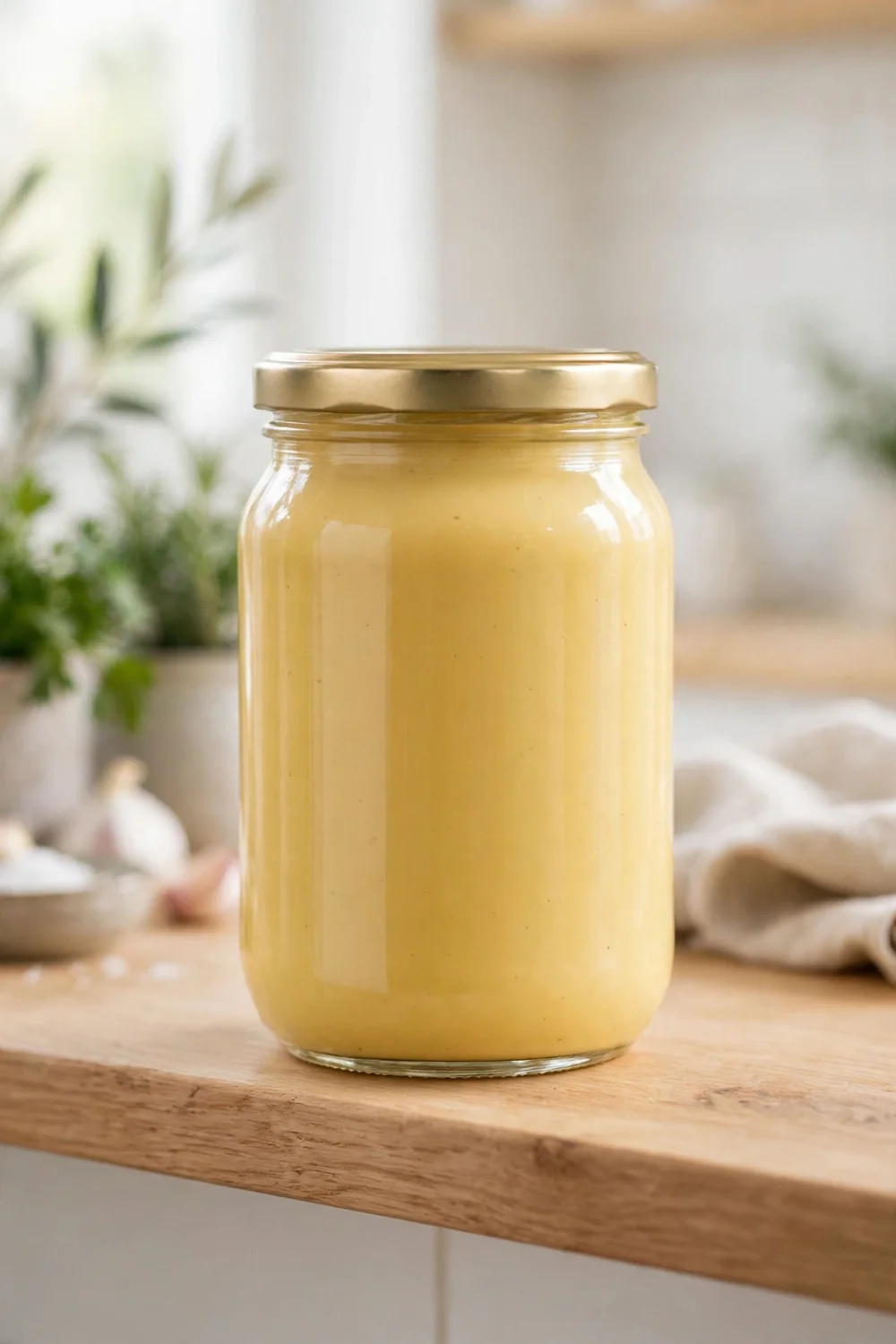
Even a good dressing splits if it sits too long. Store it in a sealed jar in the fridge, and use it within three days. Cold storage slows the split but will not stop it forever. A fresh batch takes two minutes, so remake it rather than saving one.
- Write the date on the jar so you know when the three days run out.
- Shake the jar hard just before serving, and let it warm for five minutes first.
- Give it a quick re whisk to bring back the smooth shine.
- If it still splits, whisk in a fresh spoon of mustard.
Common Mistakes to Avoid
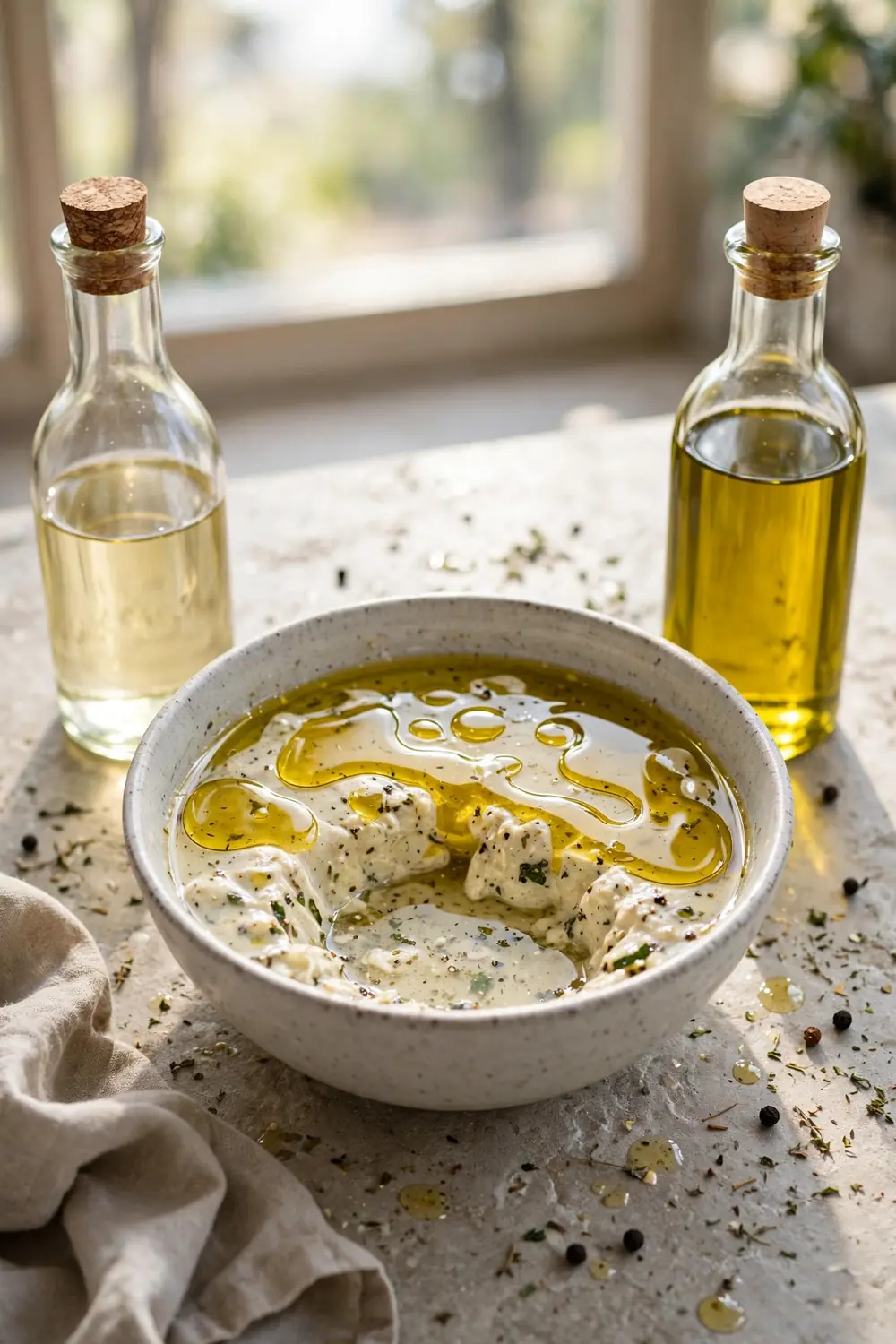
Common Mistake: One common mistake is pouring all the oil in at once, which floods the mix and breaks the emulsion. Another is skipping the mustard and hoping shaking alone will hold. A third is using cold ingredients straight from the fridge.
The Fix: Fix one habit at a time, starting with mustard and slow oil. Bring the ingredients to room temperature before you mix. Shake the jar hard just before serving, and whisk again if it splits.
A second group of mistakes comes from storing dressing for a week and serving it cold. Old dressing splits faster, and cold dressing stays grainy. Each habit breaks the emulsion before the salad ever reaches the table. Start with the biggest fix first. Steady habits keep every batch smooth.
What Smooth Dressing Looks Like
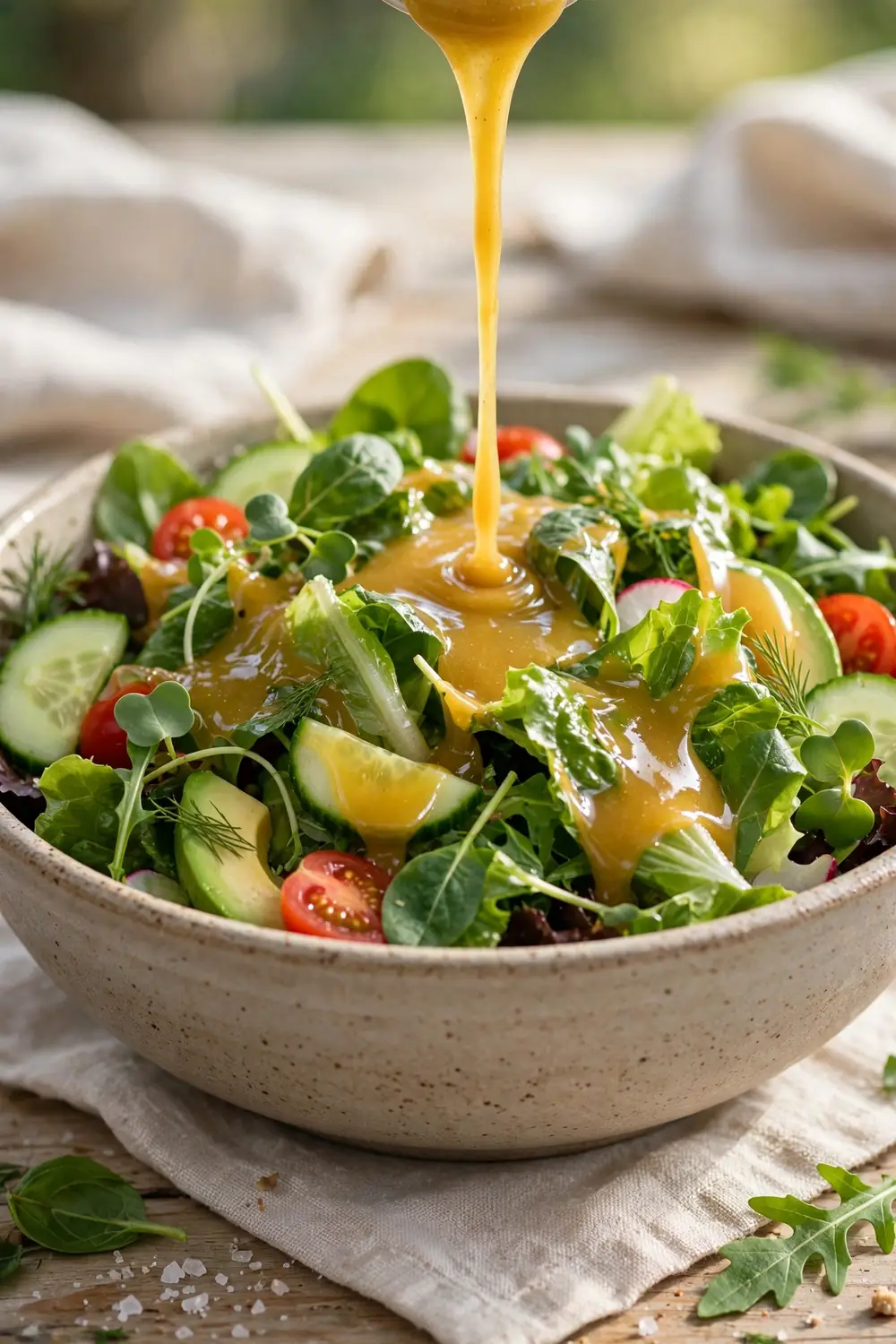
Smooth dressing looks glossy and even, with no oil floating on top. It coats each leaf in a thin shine instead of pooling at the bottom of the bowl. The color stays steady from jar to plate. The dressing should ribbon off the spoon and settle into a thin even layer.
Drizzle a spoon over a leaf to test it, since the coating should cling without dripping off. Serve the salad right after dressing, while the mix is at its smoothest. A glossy coat and even flavor mean the batch worked. That glossy coat is the sign of a steady emulsion.
Conclusion
In short, separating salad dressing comes from a missing emulsifier, fast oil, cold ingredients, and long storage. Fix those steps and each batch stays blended. Mustard, slow whisking, room temperature ingredients, and a sealed jar build a smooth dressing.
Start with the simplest fix first, then add the next one. Small changes protect the flavor while the texture improves. Save this guide on Pinterest for your next salad.
Try the steps on your next batch, and if soggy centers are your trouble too, read our guide on soggy french toast for a crisp breakfast fix.
2 Comments