24 Beef Wellington Ideas Everyone Says Are Flourishing
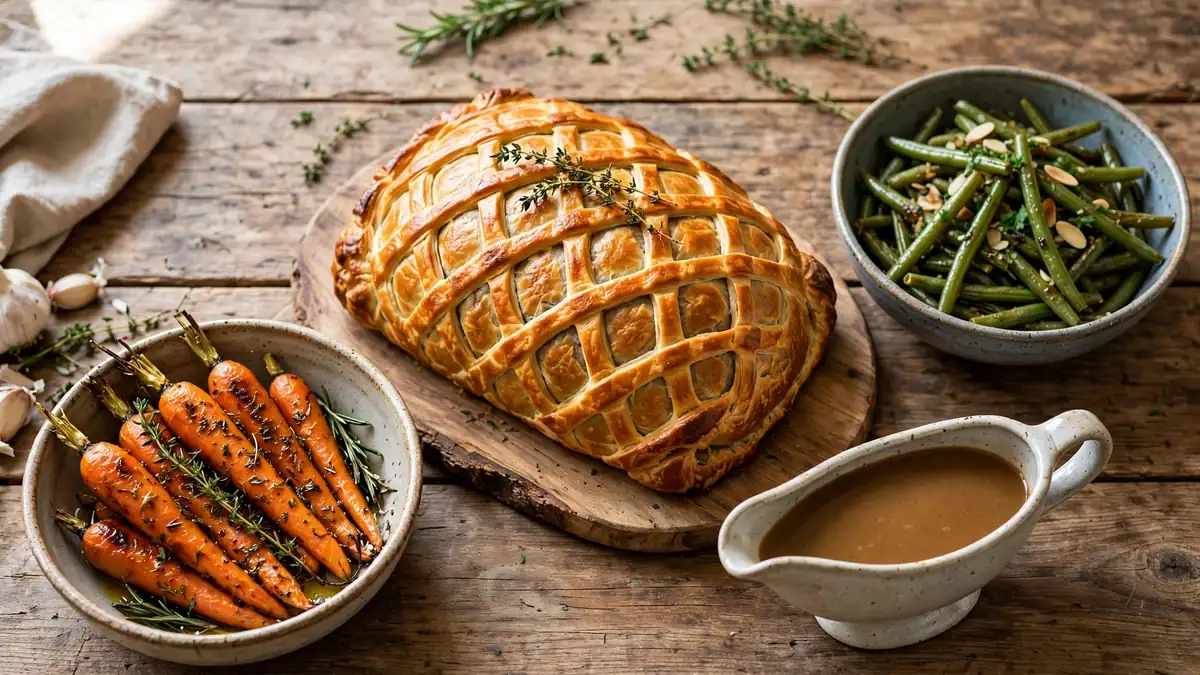
A beef wellington coming out of the oven, golden and crackling, is the kind of centerpiece that makes a whole table go quiet for a second.
This collection gathers twenty four ways to build that moment, from a classic lattice roast to tiny parcels, sauce pairings, and freezer friendly prep. Each version keeps the tender center and crisp pastry heart, then bends the details toward your budget, your skills, and your occasion.
Some versions lean rich with mushroom and prosciutto, others keep things simple for a first try, and every single one is built to slice clean and stay juicy. Pick the one that fits your table, chill it well, and trust the hot oven. And for a crisp side, my waldorf salad refreshes the table.
Classic Golden Lattice
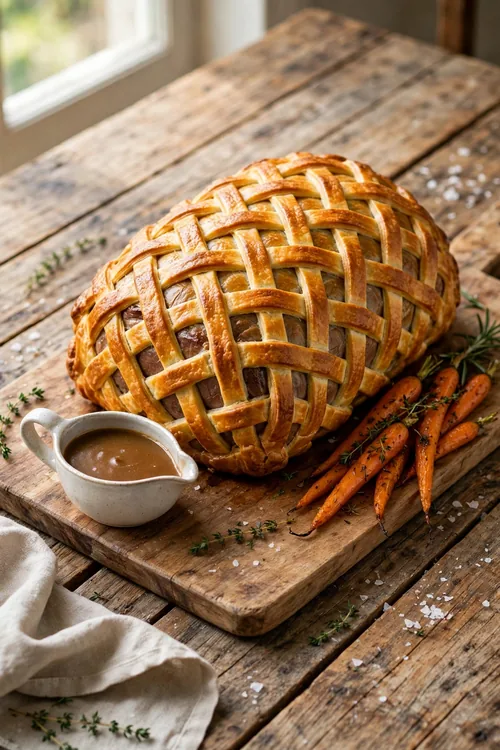
The classic version earns its place at the center of the table, with a mahogany lattice that crackles when the knife goes through. Underneath sits a rosy, tender center wrapped in mushroom duxelles, and every slice shows those clean layers like a little pastry cross section worth framing.
Score the top sheet lightly with a sharp knife, chill the wrapped log until it feels firm, and bake it hot so the pastry sets before the juices can soften it. Rest ten minutes, then slice thick with a serrated knife for the cleanest, proudest presentation.
Mini Individual Parcels

- Cut the tenderloin into thick medallions, sear each one hard, and chill them completely before any pastry comes near them.
- Spoon a layer of duxelles onto each pastry square, set the medallion on top, and fold the corners up like an envelope.
- Brush every seam with egg wash and press firmly, because mini parcels leak faster than one big roast.
- Bake on a preheated sheet until deeply golden, then rest five minutes so the juices settle back inside.
Individual parcels solve the oldest hosting problem, because everyone gets an identical, perfectly portioned piece with its own crisp shell. They also cook faster and more evenly than a whole roast, which makes them a smart pick for dinner parties where timing matters and guests arrive hungry.
Mushroom Duxelles Rich
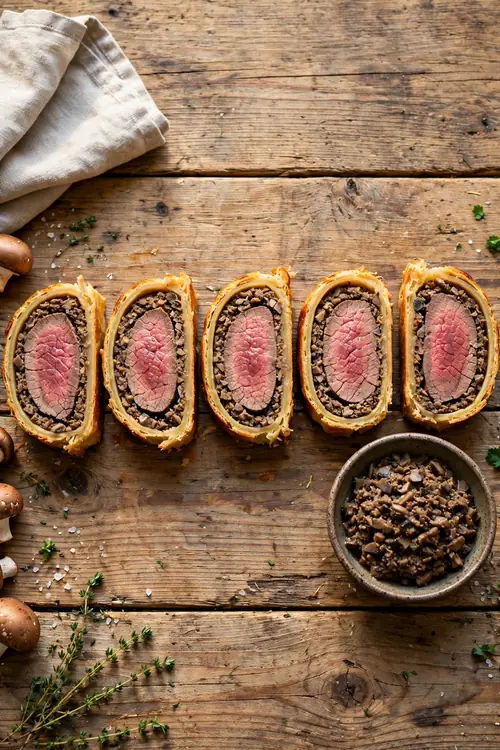
Quick Tip: Cook the mushrooms longer than feels reasonable, stirring until the pan looks almost dry and the mixture holds a spoon trail. That dry duxelles is your moisture shield between juicy meat and crisp pastry. Season it boldly, since it flavors every single bite.
A generous duxelles layer does more than add earthy flavor, because it also catches juices and perfumes the pastry from the inside. Use a mix of cremini and shiitake for depth, chop everything fine, and spread it evenly so every slice tastes balanced from crust to center.
Prosciutto Wrapped Layers
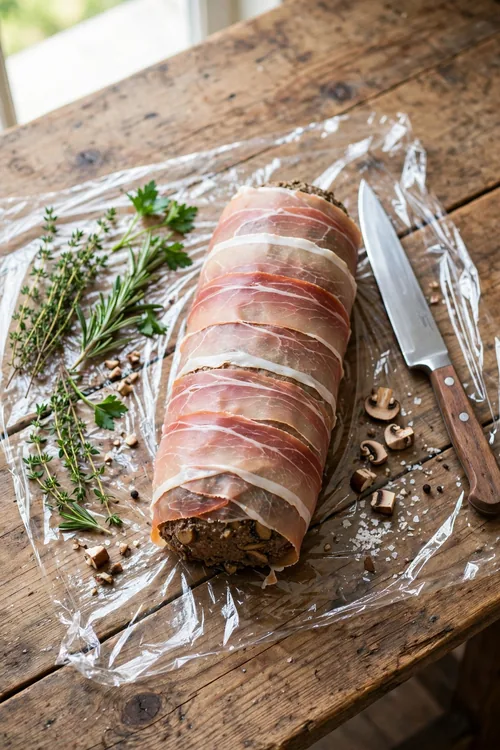
BEFORE: Before the prosciutto trick, my wrapped roasts often slipped apart in the oven, the duxelles slid off the meat, and the pastry puffed away from the filling in sad, gappy layers. Slices looked messy, juices escaped early, and the whole thing felt far harder than it should have.
AFTER: After wrapping the duxelles coated meat tightly in prosciutto, everything holds in one neat package that slices like a dream. The salty ham seasons the beef, protects the pastry from moisture, and adds a savory depth that plain wrapping never quite delivers on its own.
Lay the prosciutto slices slightly overlapping on cling film, spread the duxelles over them, then roll the meat up tight using the film as your handle. Chill the bundle before pastry day, and the assembly stays calm, tidy, and completely stress free for the cook.
Holiday Showstopper Roast
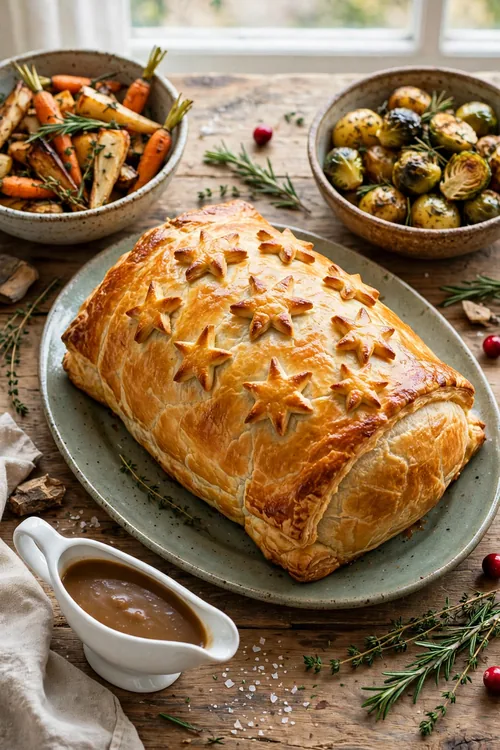
- Sear the seasoned tenderloin on every side in a ripping hot pan, then brush it all over with Dijon mustard while it cools.
- Wrap the cooled meat in the prosciutto and duxelles layer, using cling film to roll it into a tight, even log.
- Roll out the pastry, wrap the log snugly, trim the excess, and decorate the top with pastry stars or leaves.
- Chill at least thirty minutes, egg wash generously, and bake in a hot oven until the crust turns deep golden.
Cutout stars and leaves turn a great roast into a holiday centerpiece people photograph before anyone sits down. Bake an extra tray of the pastry scraps as little crackers for the sauce, and the whole table feels festive before the first slice is even carved.
Pastry Choice Compared
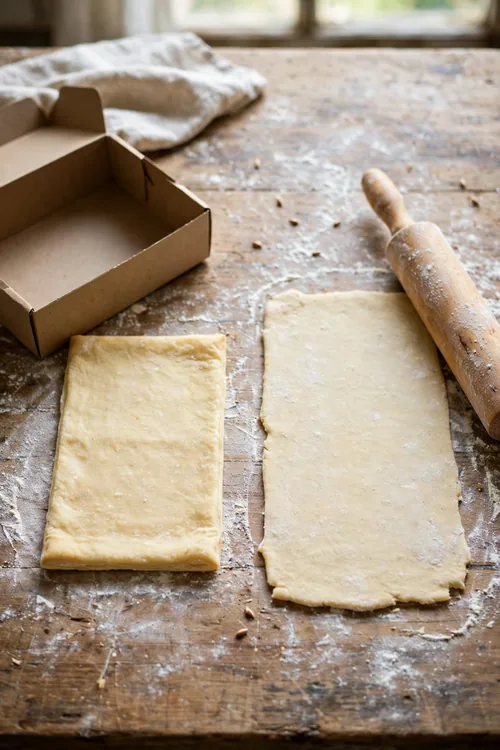
| Point | Frozen Puff Pastry | Homemade Rough Puff |
|---|---|---|
| Effort | Ready in minutes, thaw and roll | About an hour with chilling folds |
| Layers | Consistent, even puff every time | Rustic, slightly uneven but deeply buttery |
| Flavor | Clean and neutral | Rich butter flavor you control |
| Best for | Weeknights and first attempts | Weekend projects and pastry lovers |
Honestly, frozen pastry wins most weeknights at my house, and nobody has ever complained at the table. Homemade rough puff is worth it when the roast is the whole occasion, because that extra butter flavor wraps the beef in something truly special and personal indeed.
Date Night Duo
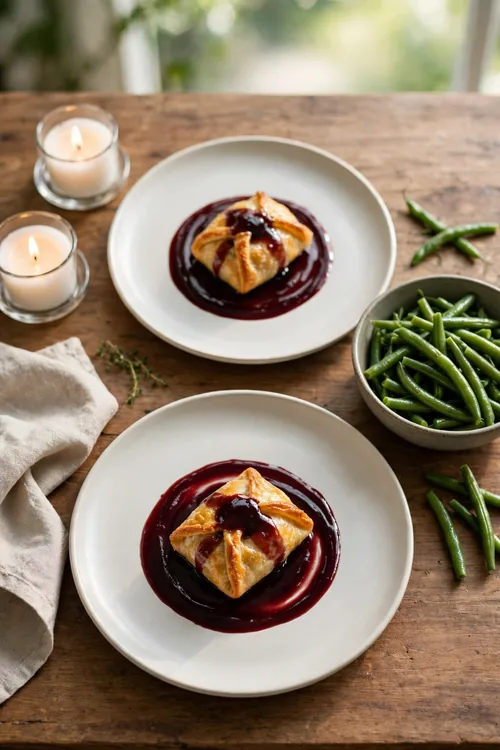
DO: Build two small parcels instead of one roast, chill them on a parchment lined tray, and brush with egg wash twice for extra shine. Sear the medallions well, season boldly, and let the parcels rest five minutes before slicing them open at the table together.
DON’T: Rush the chilling step, because warm pastry slumps and leaks before it ever sets in the oven. Do not slice with a dull knife, skip the resting time, or drown the plate in sauce, since the crisp crust deserves to stay the star of the plate.
A duo of little roasts turns an ordinary Friday into an occasion without a mountain of leftovers or a huge grocery bill. Light candles, pour the sauce into a small warm boat, and slice them open together for that perfect rosy reveal moment at home.
Beginner Friendly First Try
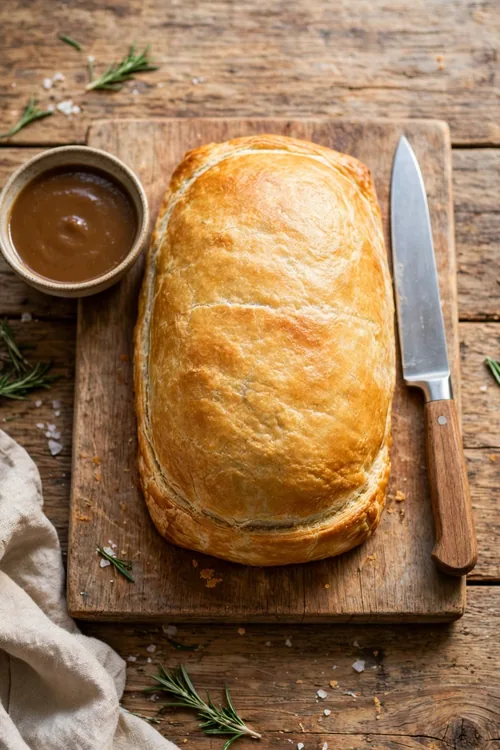
Cost: Moderate, one tenderloin center cut
Time Needed: About two hours with chilling
Difficulty: Beginner friendly with store bought pastry
Best For: First attempts and small celebrations
Starting simple is not cheating, because a plain top crust with good pastry and a well chilled log already tastes spectacular. Skip the lattice, keep the duxelles thin, and focus on the sear and the chill, and your first attempt will slice beautifully every time.
Make Ahead Magic
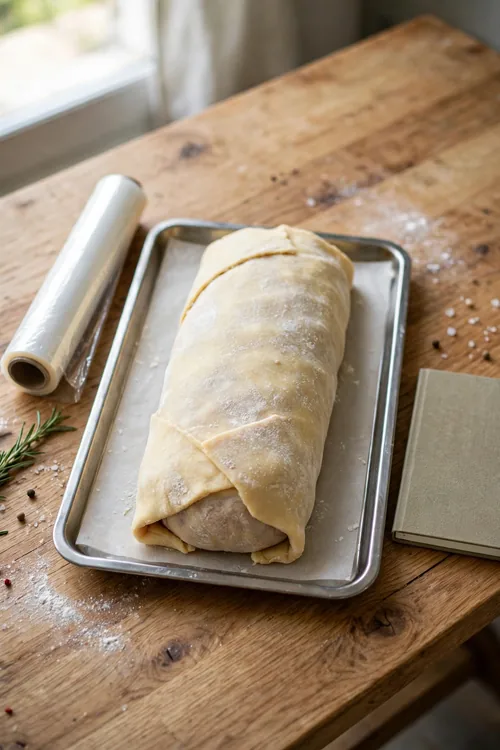
The smartest hosts build the whole roast the day before, wrap it tightly, and park it in the fridge like a delicious secret. Pastry actually slices cleaner after a long chill, the flavors settle into the meat, and party day suddenly feels calm instead of chaotic and rushed.
Keep the assembled log wrapped in cling film so the pastry never dries or picks up fridge smells overnight. Egg wash it straight from the fridge, score the top, and slide it into a fully preheated oven for the crispest possible crust on serving day.
Perfect Slicing Guide
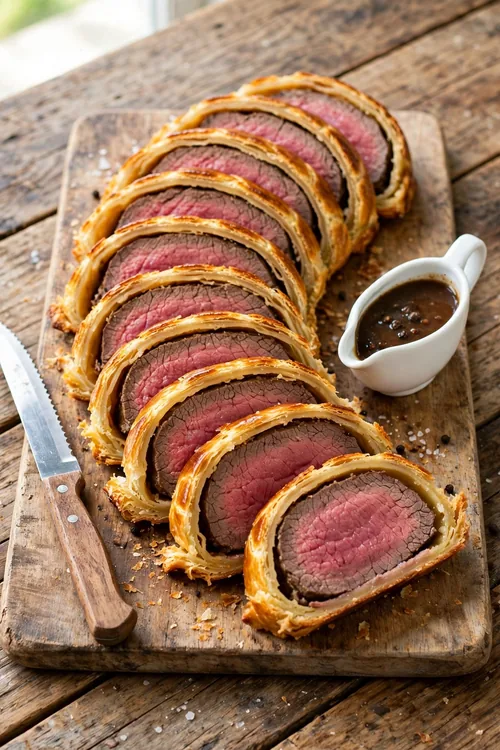
- Rest the roast a full ten minutes, because slicing early spills the juices you worked so hard to keep inside.
- Use a long serrated knife and a gentle sawing motion, letting the blade do the work instead of pressing down.
- Cut thick slices, about an inch each, so every piece holds its layers and stands up proudly on the plate.
- Wipe the blade clean between slices for tidy edges that show off the rosy center and golden crust.
Good slicing is the difference between a roast that looks bakery made and one that looks like a delicious accident. Take your time at the board, arrange the slices slightly overlapping on a warm platter, and spoon just a little sauce around, never over, the crust.
Red Wine Sauce Pairing
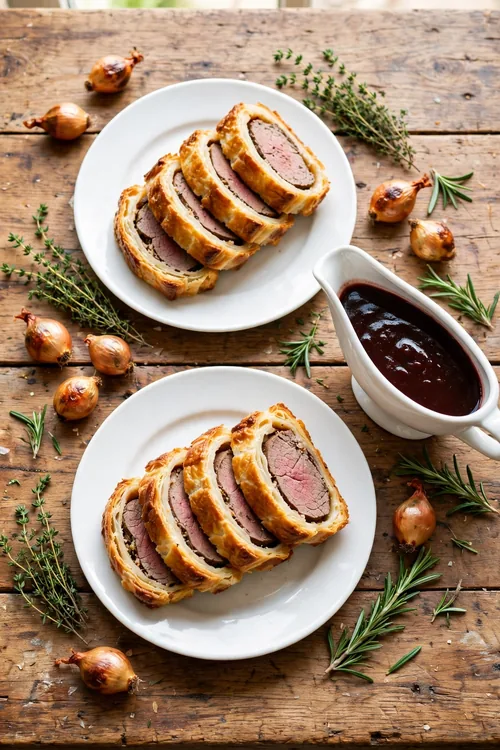
Quick Tip: Reduce the wine by half before adding stock, and the sauce tastes deep instead of sharp and raw. Whisk in cold butter at the very end, off the heat, for a glossy finish. Strain it for a restaurant smooth pour every time.
A dark red wine sauce loves the richness of the beef and cuts through the butter in the pastry with gentle acidity. Simmer shallots in the wine first, add rich stock, and serve the sauce warm in a boat so everyone pours their own perfect amount.
Crisp Bottom Secrets
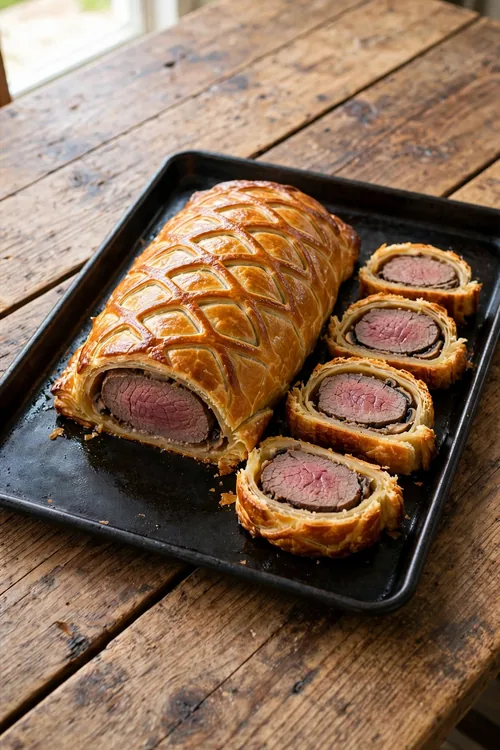
BEFORE: Before I learned the hot sheet trick, my roasts came out with pale, soft bottoms that bent instead of crackled when sliced. The top looked gorgeous, but the base soaked up juices on the tray and turned gummy, and every slice sagged a little on the plate.
AFTER: After preheating the baking sheet until it is properly hot, the base sets the second the pastry touches it, sealing in a crisp, golden bottom. Slices now stand tall, the crust crackles top and bottom, and nobody leaves that sad soggy layer behind at all.
A thin smear of duxelles under the meat and a dusting of semolina on the tray add extra insurance on juicy roasts. Combined with a ripping hot sheet, they keep the base shattering crisp from the first slice to the very last one served tonight.
Spinach And Cheese Layer
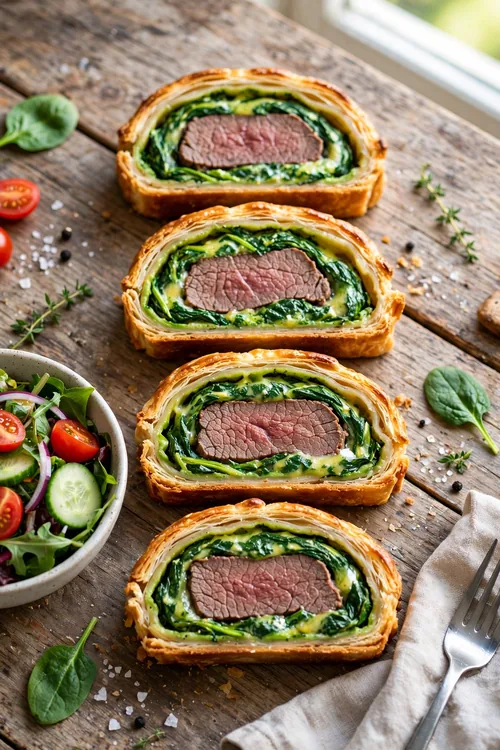
- Wilt two big handfuls of spinach in a dry pan, then squeeze it completely dry in a clean towel.
- Stir the spinach with soft goat cheese, grated parmesan, lemon zest, and a pinch of nutmeg until spreadable.
- Spread the green layer over the prosciutto wrap, keeping it thin and even from end to end.
- Roll, chill, and bake as usual, letting the spinach peek out in a bright green ring in every slice.
That green ring makes each slice look like it came from a fancy bistro, and the lemon zest keeps the rich filling tasting fresh. Goat cheese melts into the spinach just enough to bind it, so the layer stays put when you carve thick slices.
Choosing The Cut
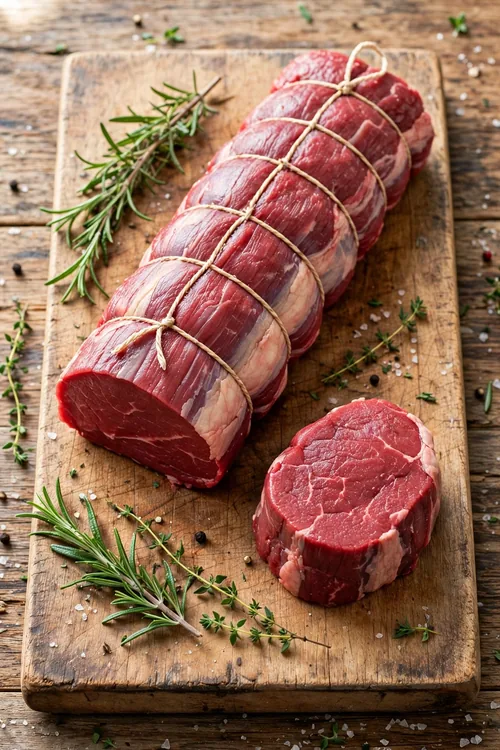
Center Cut Tenderloin: The center cut is the classic choice, even in thickness from end to end, so it cooks at one steady pace and slices into matching rounds. Ask the butcher to trim it clean, tie it at even intervals, and your roast will hold a perfect log shape.
Filet Mignon Portions: Individual filet portions cost more per pound, but they shine for mini parcels and exact doneness for every guest at the table. Each little roast cooks fast, rests quickly, and gives picky eaters their own preferred center, from rosy rare to a gentle blushing medium.
Whichever cut you choose, buy it a day ahead, pat it dry, and salt it overnight in the fridge for deeper seasoning. Dry surfaces sear better, and a well seasoned center means every layer of the finished roast tastes deliberate, not just the crust alone.
Freezer Friendly Prep
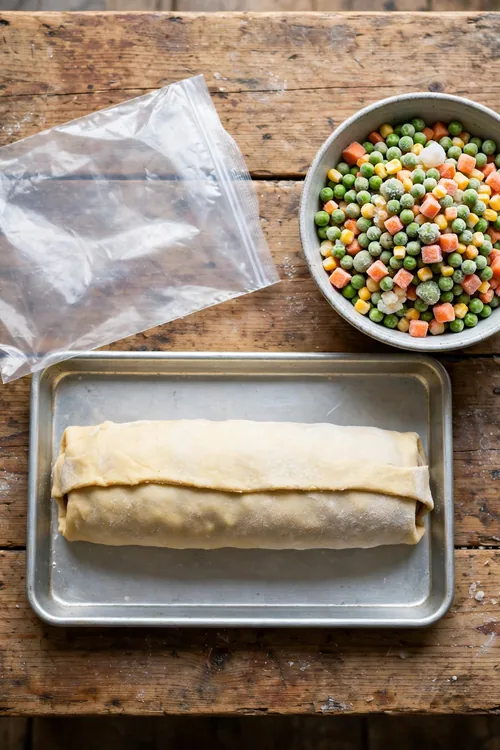
- DO: Freeze the fully assembled, unbaked log on a tray until solid, then wrap it twice for storage.
- DO: Thaw overnight in the fridge, never on the counter, so the pastry stays cold and safe.
- DO: Egg wash after thawing, right before baking, for the glossiest possible finish on the crust.
- DO: Bake from fridge cold on a preheated sheet to protect that crisp bottom layer.
- DON’T: Freeze a baked roast and expect crisp pastry later, because reheating softens the crust badly.
- DON’T: Skip the double wrap, since freezer burn ruins exposed pastry edges within days.
- DON’T: Refreeze any leftover thawed pastry or meat once the log has been baked.
- DON’T: Rush the thaw with warm water, which melts the butter layers you worked to create.
A frozen log in the freezer is like a dinner party insurance policy, ready whenever celebration strikes without warning. Build two when tenderloin is on sale, and future you will feel very clever pulling one out on the busiest holiday weekend of the entire year.
Mustard Glazed Crust
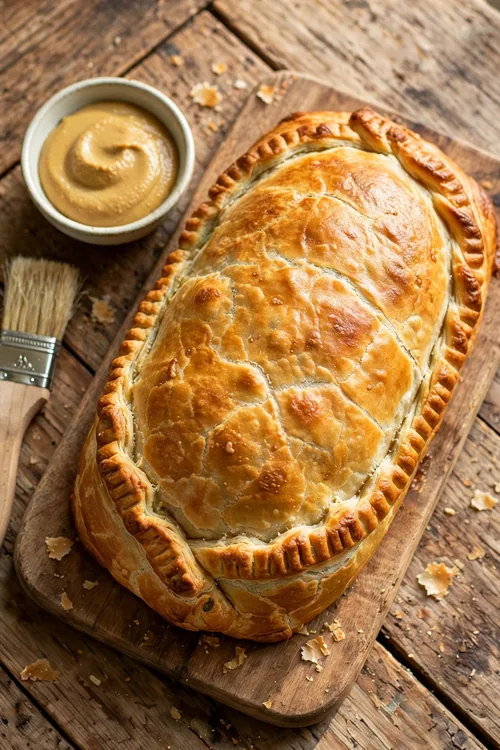
Cost: Low, one jar of Dijon
Time Needed: Five minutes of brushing
Difficulty: Easy, straight from the jar
Result: Tangy crust and deeply seasoned meat
Brushing mustard over the hot seared beef does quiet, important work, adding tang that balances the rich pastry and mushroom layers. Dijon is classic, whole grain adds gentle texture, and either one disappears into the background while making everything taste more like itself, only better.
Herb Crusted Twist
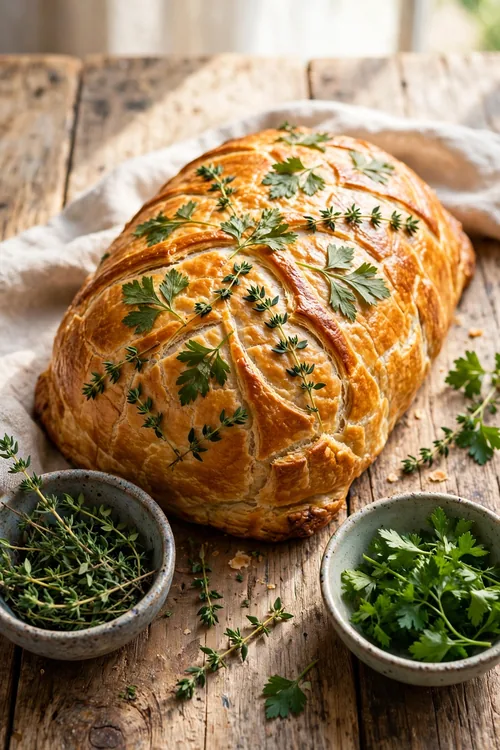
Fresh herbs pressed into the top crust turn a classic roast into something that looks straight out of a garden party. Thyme leaves, sage, and flat parsley hold their color under egg wash, and their gentle perfume reaches the table before the carving knife even comes out.
Stir chopped herbs into the duxelles as well, and the flavor runs through every layer instead of sitting only on top. Keep the stems out, chop everything fine, and the green flecks in each slice look as good as they taste next to the rosy beef.
Portobello Layered Earthy
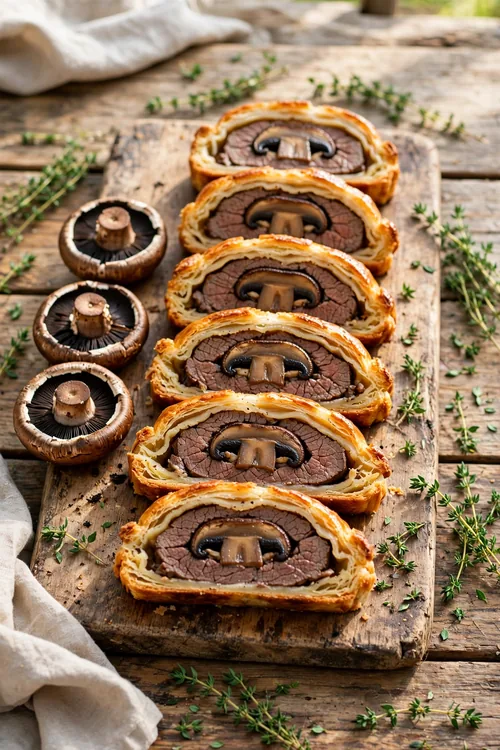
- Roast whole portobello caps with garlic and thyme until they give up their liquid and turn deeply savory.
- Lay the caps over the duxelles as a second mushroom layer for a steakhouse level of earthy flavor.
- Pat the roasted caps dry before wrapping, because their juices are the enemy of crisp pastry.
- Slice the finished roast thick so the portobello ring shows clearly in every single serving.
Double mushroom might sound like commitment, but portobello adds a meaty chew that makes slices feel extra substantial and satisfying. Guests who claim they are not mushroom people have cleaned their plates with this version, which tells you everything about how well it works at home.
Chive Crepe Liner
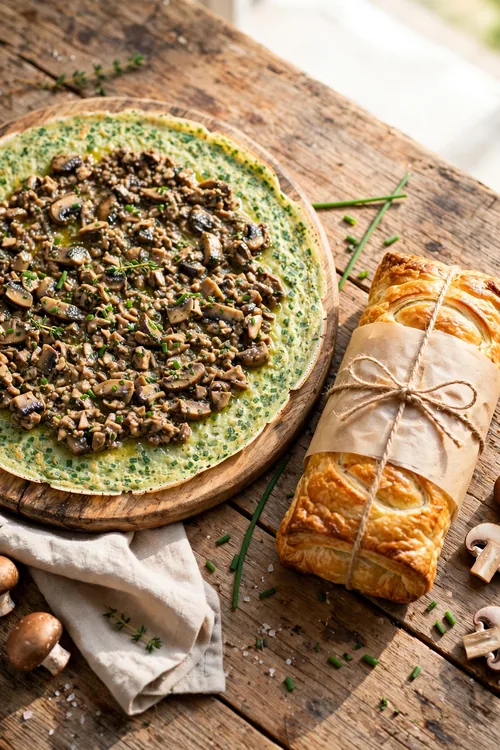
Quick Tip: Blend a handful of chives into a thin crepe batter and cook crepes that come out speckled green and delicate. They wrap the meat like a protective blanket under the pastry. Make them a day ahead and stack with parchment between each one.
Bakeries use a crepe liner for one simple reason, it drinks up the meat juices before they can reach the pastry. The chive version adds a spring onion brightness that lifts the whole roast, and nobody will guess your crisp bottom secret is a humble crepe.
Rosy Pink Center
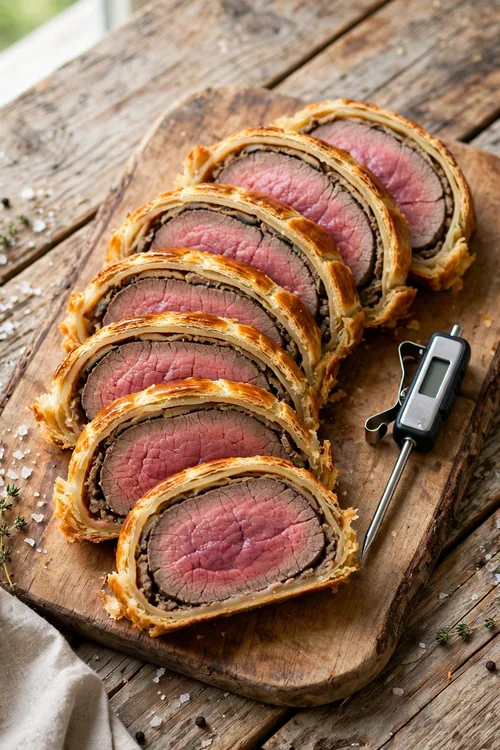
BEFORE: Before I trusted a thermometer, my centers came out grey and tired, cooked ten degrees past their best in the name of caution. The pastry looked proud, but the beef inside had lost its blush, and every slice ate drier than the beautiful crust had promised anyone.
AFTER: After pulling the roast at the right temperature and resting it properly, the center slices open blushing pink from edge to edge. The meat stays juicy, the layers stay distinct, and the table goes quiet in that good way when the first slice lands down.
An instant read thermometer costs less than the tenderloin it protects, and it removes every bit of guessing from roast day. Pull the roast a few degrees early, tent it loosely, and carryover heat will finish the center to a perfect, confident pink every time.
Golden Egg Wash Finish
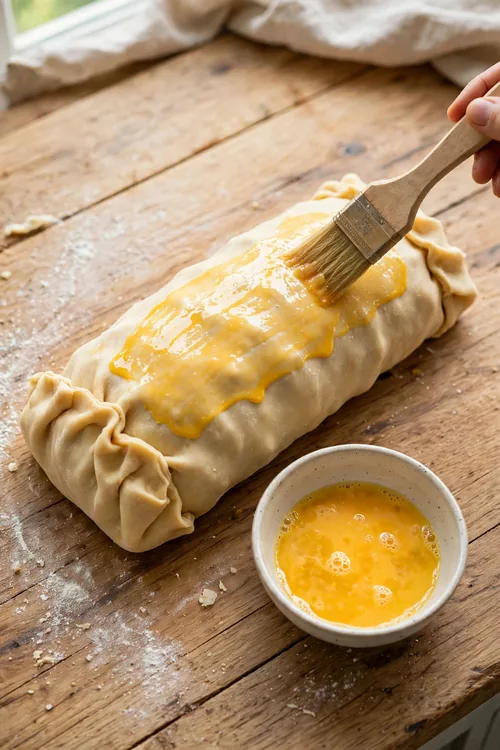
- Whisk one whole egg with a yolk and a pinch of salt until completely smooth and streak free.
- Brush a thin first coat over the chilled log, covering every seam, edge, and decorative cutout.
- Chill ten minutes so the first coat sets, then brush a second coat for a deeper shine.
- Score the top lightly after the wash, so the pattern opens cleanly as the pastry puffs.
Two thin coats beat one thick coat every time, because thick wash pools in the scoring and bakes up blotchy and dull. That double brushed finish is how bakery roasts get their deep amber glow, and it costs you nothing but ten patient minutes of waiting.
Sauce Pairing Showdown
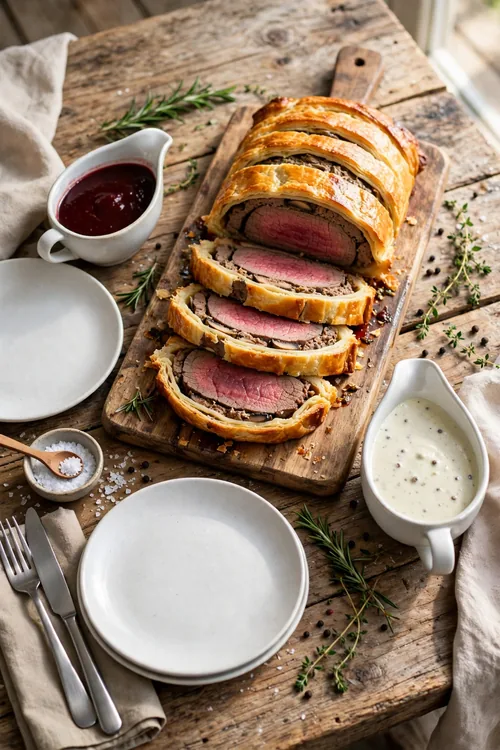
- Red Wine Jus: Dark, glossy, and gently sharp, it cuts the butter richness and loves a holiday table with roasted shallots.
- Peppercorn Cream: Pale and warming, it echoes the mustard under the crust and feels right for cozy winter dinners.
- Serving style: Jus goes in a boat for pouring, while cream sauce spoons thicker and stays where it lands.
- Best trick: Offer both in small boats and let guests pick, because the table always splits into two happy camps.
Choosing a sauce is really choosing a mood for the meal, sharp and celebratory or soft and cozy by the fire. Make the sauce while the roast rests, keep it warm but never boiling, and the whole dinner settles into place around those beautiful slices.
Leftover Revival Slices
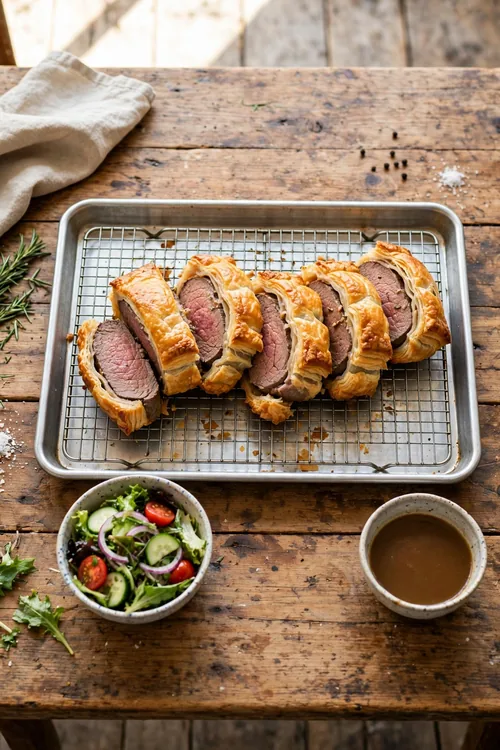
| DO | DON’T |
|---|---|
| Reheat slices in a hot oven on a rack | Microwave them into soft, steamed pastry |
| Serve leftovers with a fresh sauce boat | Pour cold leftover sauce over hot slices |
| Crisp single slices in a dry skillet | Stack slices while reheating them together |
| Turn extras into next day sandwiches | Leave slices uncovered in the fridge overnight |
Leftovers of a great roast deserve better than a sad microwave lunch, and a hot oven brings the crust back to life. Ten minutes on a rack, a fresh little salad beside it, and yesterday’s celebration becomes today’s very smug desk lunch at work today.
Party Platter Presentation
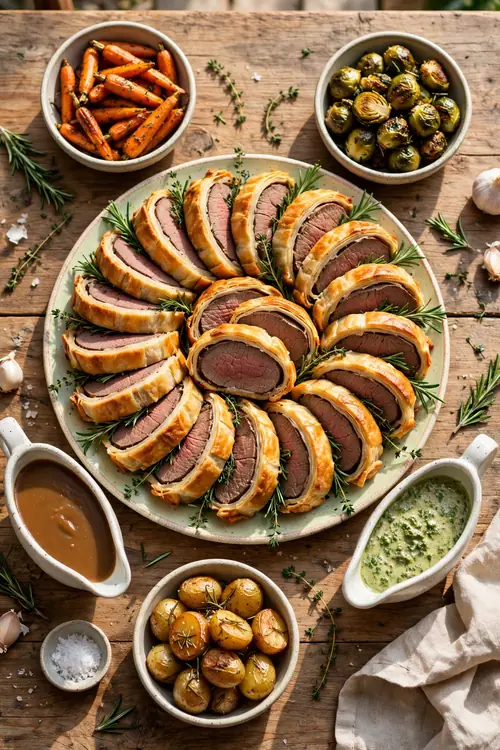
Cost: Moderate, mostly the roast itself
Time Needed: Fifteen minutes of arranging
Difficulty: Easy, slices and a warm platter
Best For: Buffets, holidays, and big family tables
A warm platter keeps slices at their best while guests help themselves, and fanning the slices shows off every rosy center at once. Set the sauce boats at both ends of the table, tuck herb sprigs between the slices, and let the roast do the decorating.
Conclusion
Twenty four roasts later, the pattern is clear: great beef wellington is mostly patience, cold pastry, and a hot oven, not fancy tricks or a culinary degree.
Save this collection for your next celebration, start with the version that feels friendly, and let the slicing moment become your favorite kitchen ritual. I have seen nervous first timers carry one to the table glowing with pride, and yours will earn the same applause.
Share it with someone who loves a showpiece dinner, and pin it now so the plan is ready when the occasion lands. For a slow wine stew, my beef bourguignon warms everyone.