22 Magnificent Beef Bourguignon Ideas No One Can Resist
A great beef bourguignon starts with patience: beef browned in batches, wine poured over sweet onions, and hours of gentle heat until the sauce turns glossy and deep.
This collection gathers twenty two versions worth saving, from the classic red wine pot Julia Child made famous to slow cooker comfort, instant pot shortcuts, and elegant dinner party bowls.
Every version keeps the soul of the dish intact: tender beef, a silky wine sauce, and vegetables that soak up every drop. Pick the one that fits your day, and let the oven do the slow, generous work while the house fills with the kind of aroma that gathers everyone early. And for a showpiece roast, my beef wellington steals dinner.
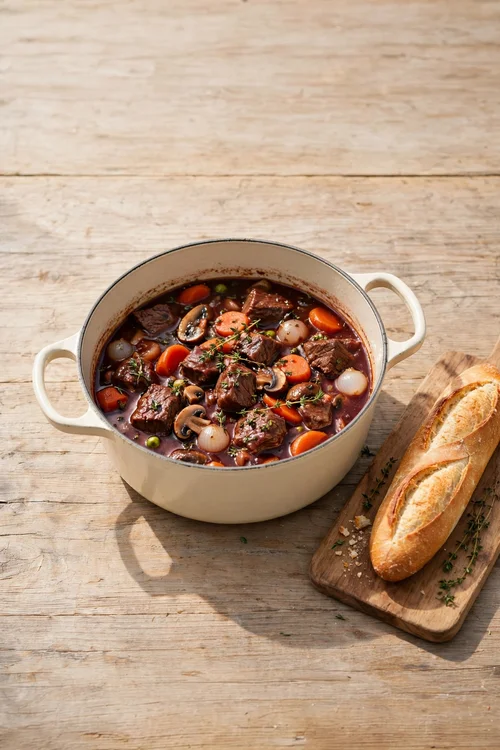
Classic Red Wine Braise
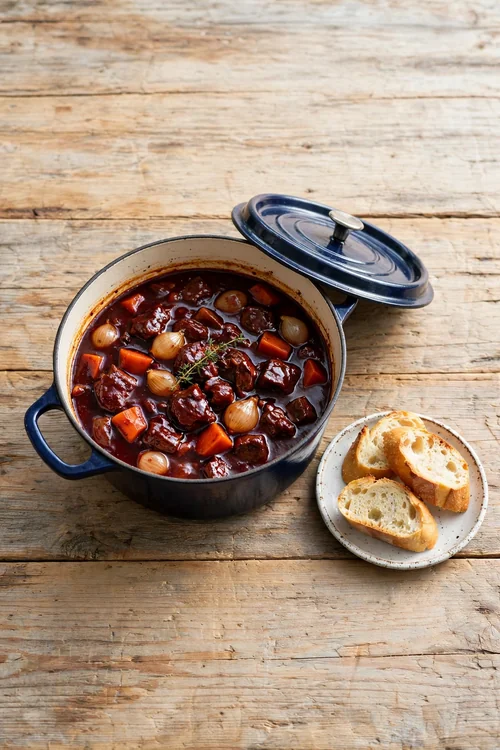
The classic pot begins with beef chuck cut into large cubes, dried well, and seared in hot oil until every side wears a deep brown crust. That crust is not decoration; it melts into the wine later and builds the sauce’s backbone, so crowded pans and pale meat are worth avoiding.
Red Burgundy wine goes in next, a full bottle, scraping up every browned bit from the bottom as it bubbles. Onions, carrots, garlic, thyme, and a bay leaf follow, and then the pot settles into a low oven where the sauce slowly turns dark, glossy, and rich beyond words.
Serve it the old way, over buttered noodles or mashed potatoes, with the pearl onions and mushrooms folded in at the end. In my experience, a night in the fridge makes it even better, so leftovers here are not a compromise; they are the cook’s quiet reward.
Slow Cooker All Day
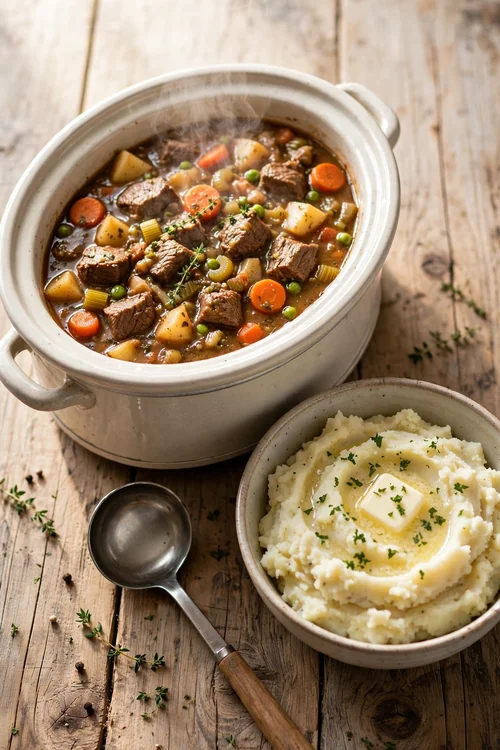
- Sear the beef on the stove first, even on slow cooker days, because the cooker alone never builds that deep brown crust.
- Layer onions and carrots under the meat so the vegetables braise in the wine instead of steaming on top.
- Use a full cup of red wine plus strong beef stock, since slow cookers add no evaporation and flavors stay muted without both.
- Cook on low for eight hours, and resist lifting the lid, which steals heat and stretches the timing.
- Stir in the mushrooms and pearl onions for the final hour so they stay plump instead of collapsing.
By dinner the house smells like a French farmhouse, and the meat surrenders to a fork with barely a nudge. This is the version I set going before school runs and errands, because it forgives a busy day and still lands on the table tasting planned, patient, and generous.
Instant Pot Shortcut
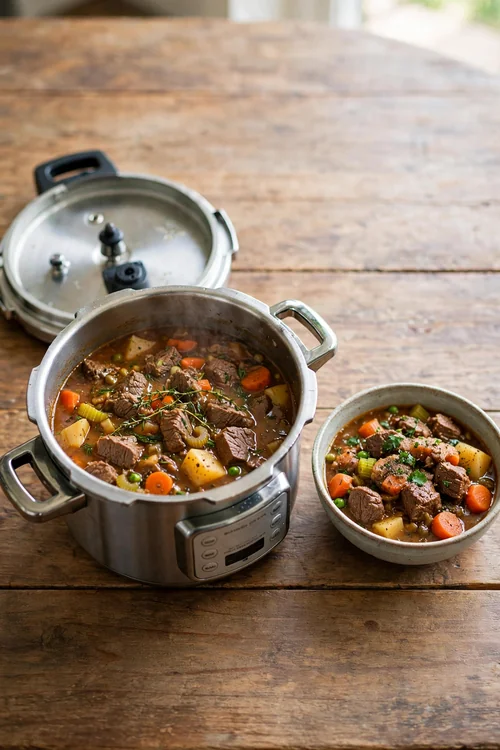
Quick Tip: Deglaze the pot thoroughly after searing, scraping every browned bit loose before pressure cooking starts. Those bits trigger burn warnings when left stuck, and they also hold the deepest flavor. A wooden spoon and two patient minutes protect both dinner and the sauce.
Forty minutes under pressure gives you beef that tastes braised all afternoon, with a sauce that only needs a short simmer to turn glossy. It is the version for cold weeknights when the craving is real but the clock is not your friend, and nobody at the table ever guesses.
Mushroom Loaded Pot
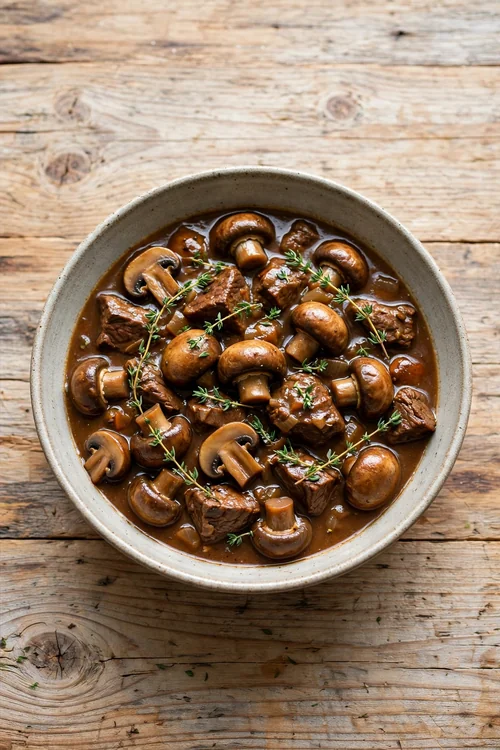
BEFORE: My pot carried mushrooms as an afterthought, a handful of pale slices stirred in at the end. They steamed in the sauce, turned rubbery, and gave back almost no flavor, so the bowl tasted like plain beef stew wearing a mushroom costume for the last five minutes.
AFTER: The mushrooms get their own pan, seared in butter until deeply golden before they ever meet the sauce. They arrive with roasted edges and real savor, and a full pound of them turns the pot earthy and rich, the kind of bowl that silences the table for a moment.
Cremini mushrooms hold up best, and a few dried porcini soaked in the wine add a quiet woodland depth underneath. Keep the pieces large, because small slices vanish during the long braise, and stir them in late so their texture survives to the final spoonful of every serving.
Pearl Onion Classic
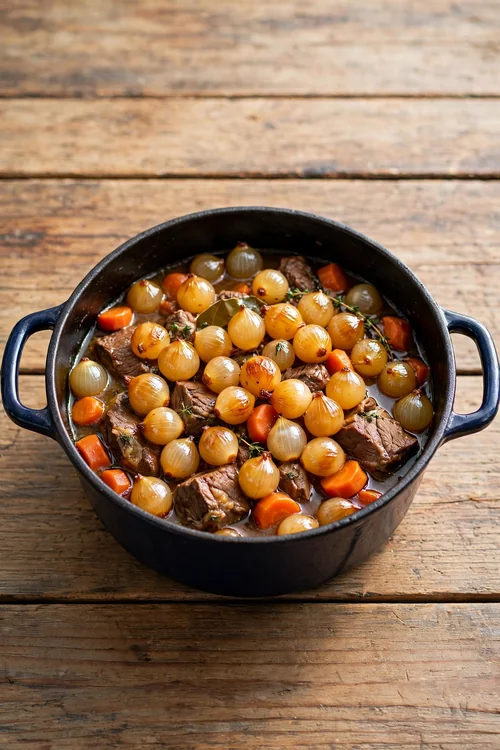
- Blanch the pearl onions in boiling water for one minute, then squeeze them from their skins once they cool slightly.
- Brown the beef in batches and set it aside, keeping every drop of the pan juices for the braise.
- Soften the onions in butter with a pinch of sugar until they turn glossy and lightly golden at the edges.
- Return the beef, pour in the wine and stock, add thyme and bay, then braise low until the meat turns tender.
- Rest the pot ten minutes, skim the surface, and serve the onions proudly on top of every bowl.
Pearl onions sweeten the whole pot in a way chopped onions never quite manage, each one a tiny jewel that bursts gently when bitten. They ask for ten extra minutes of peeling, and I have never once regretted giving it, especially when guests start fishing for them first.
Chuck Versus Short Rib
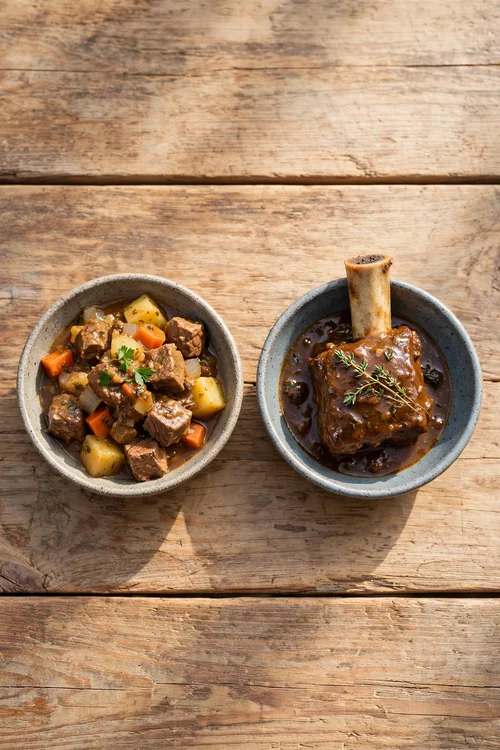
| Point | Beef Chuck | Short Rib |
|---|---|---|
| Flavor | Deep and beefy, the classic choice | Richer and fattier, almost buttery |
| Texture | Firm chunks that hold their shape | Silky strands that fall apart |
| Cost | Budget friendly for a big pot | A splurge cut for special nights |
| Best Moment | Sunday family braises | Dinner parties and slow weekends |
Both cuts love the same treatment: a hard sear, a full bottle of wine, and low heat without rushing. Chuck wins on value and clean slices for serving, while short rib wins on sheer luxury, so choose by the occasion and the table you are feeding that night.
Searing Rules That Matter
| DO | DON’T |
|---|---|
| Dry the beef well before it hits the pan | Never crowd the pan with wet meat |
| Sear in small batches until deeply browned | Do not stir the meat while it sears |
| Let the pan reheat between every batch | Do not skip scraping up the browned bits |
| Rest the meat while the onions soften | Never boil the braise hard in the oven |
These small rules decide whether the sauce tastes deep or merely brown, and they cost nothing but patience. I learned them by ruining one pale, steamed batch years ago, and the difference since then has been night and day at our table, especially on the very first bite.
Julia Child Tribute
Cost: Moderate, one bottle of wine and a chuck roast
Time Needed: About three hours, mostly hands off
Difficulty: Intermediate, built on simple techniques
Best For: Francophile cooks and slow Sundays
Julia taught home cooks that French food was technique, not magic, and this pot is her finest proof. Her version layers bacon, a flour dusting, and a second simmer for the vegetables, and following her once teaches you the rhythm every other braise quietly borrows from forever after.
Weeknight Express Version
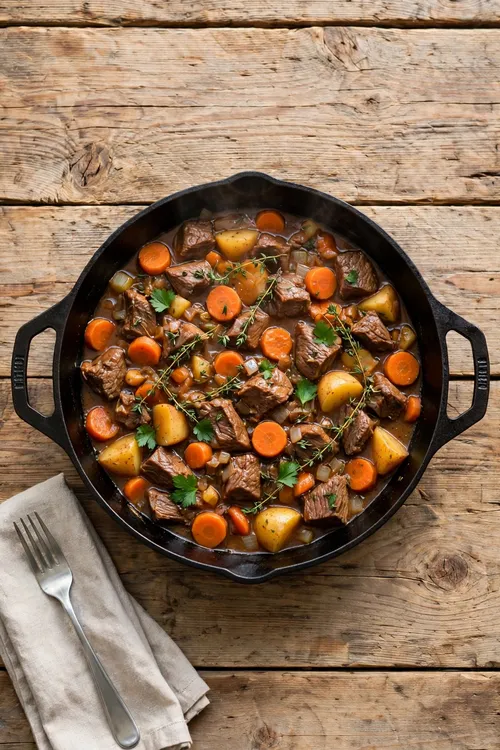
Weeknight versions start with a smaller cut: beef sliced into thin strips instead of big cubes, so the sear takes minutes and the braise shrinks to forty. The flavor stays honest because the wine, onions, and thyme still get their full say in the pot from the start.
Frozen pearl onions skip the peeling entirely, and a spoon of tomato paste plus a splash of stock deepen the quick sauce while it simmers. Baby carrots go in whole, mushrooms arrive pre sliced, and the whole pot behaves like it had all day when it truly had one hour.
Serve it over egg noodles with a green salad and call it a Tuesday triumph. Nobody needs to know the shortcut, and honestly the leftovers at lunch the next day might be the best argument for keeping this quicker version in your regular cold weather dinner rotation.
Bacon Lardon Richness
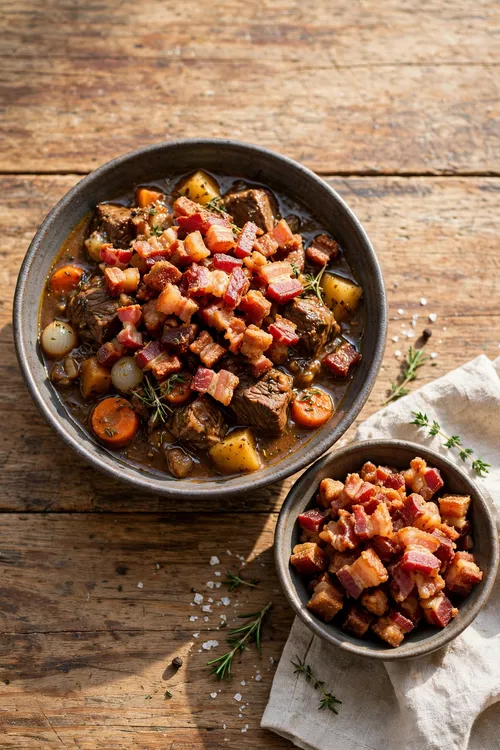
- Cut thick bacon into short lardons and render them slowly until crisp, then keep every drop of the fat.
- Sear the beef in that bacon fat, which lays a smoky foundation under the whole braise.
- Soften the onions in the same pot so they drink up the browned bits and rendered flavor.
- Save the crisp lardons for the finish, so they stay crunchy against the silky sauce.
- Balance the richness with a splash of wine vinegar or a handful of parsley at the table.
The French have always known that pork and beef make each other better, and this pot proves it in every spoonful. The smoke stays gentle, never bully loud, and the crisp finish on top gives each bowl a little ceremony that plain stew nights rarely bother to offer anyone.
Mashed Potato Pairing
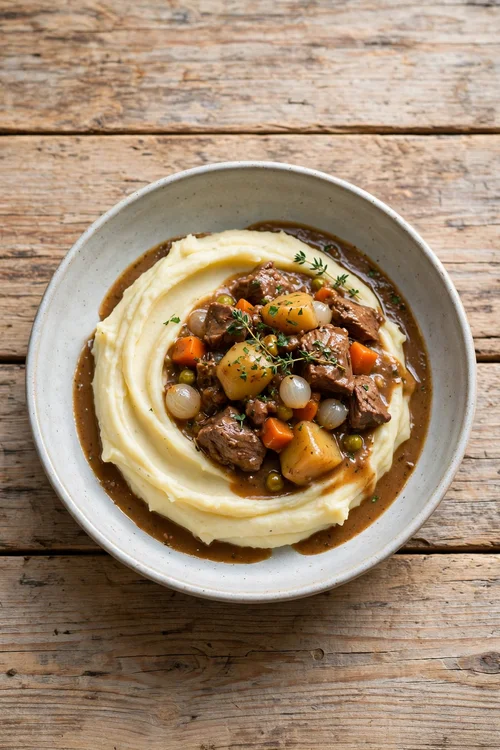
Quick Tip: Whip the potatoes with warm milk and plenty of butter, then season them boldly, because the sauce will soften their salt. A shallow swirl in the bowl catches the braise beautifully. Rest the mash five minutes so it holds its shape under the hot, generous ladle.
There is a reason this pairing never leaves French tables: the mash drinks the sauce like it was made for it, which it was. Spoon the beef into the center of the swirl, let the sauce pool at the edges, and watch the bowl come back scraped completely clean.
Carrot Sweet Balance
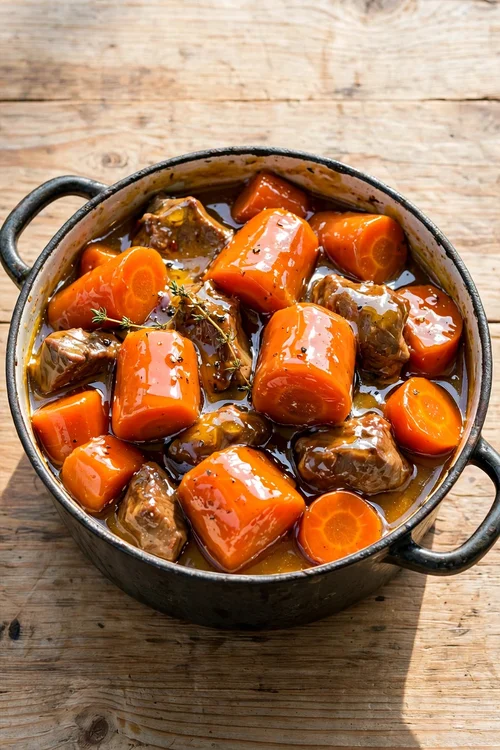
BEFORE: The carrots in my pot were an afterthought too, cut small and added early until they dissolved into sweetness. The sauce turned one note and sugary, the beef tasted flat beside it, and the vegetables I fished out had no shape or bite left to offer anyone at all.
AFTER: The carrots go in large and late, thick coins added for the final forty minutes so they stay whole and glossy. Their sweetness now balances the wine instead of burying it, and each bowl gets bright orange pieces that taste like carrots, caramel edged and tender all through.
A pinch of sugar in the searing pan helps the carrots caramelize if your bunch tastes pale or woody. Heritage carrots in purple and gold make the pot look festive without changing the method, and kids at our table reliably pick the sweet coins out before anything else.
Cast Iron Dutch Oven
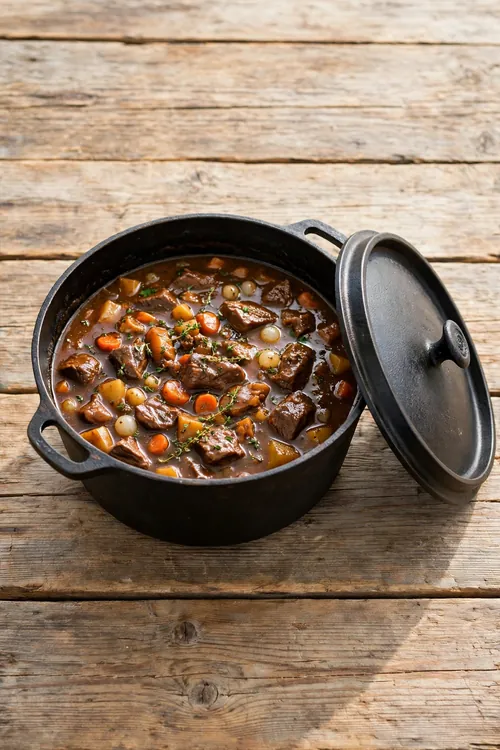
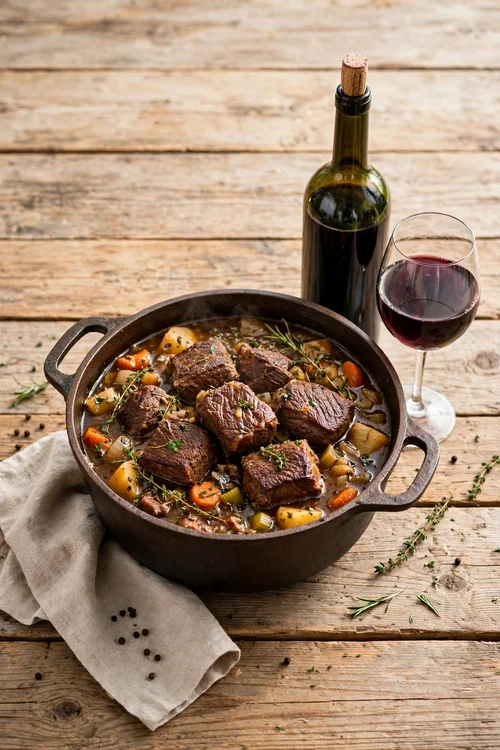
- Heat the Dutch oven until it just begins to smoke, then add oil and the dried, seasoned beef in one uncrowded layer.
- Sear every side without moving the meat early, building the dark crust the whole sauce will stand on.
- Lift the beef out, soften onions and carrots in the drippings, and stir in garlic and tomato paste.
- Pour in the wine, scrape the bottom clean, then return the beef with stock, thyme, and bay leaf.
- Cover and braise in a low oven for three hours, until the sauce shines and the beef yields to a spoon.
Cast iron holds heat like a promise, evening out the oven’s moods and keeping the braise at a bare, steady simmer. My pot has carried this stew for a decade, and the seasoning in its walls might honestly be part of the flavor by now, batch after batch.
Choosing The Wine
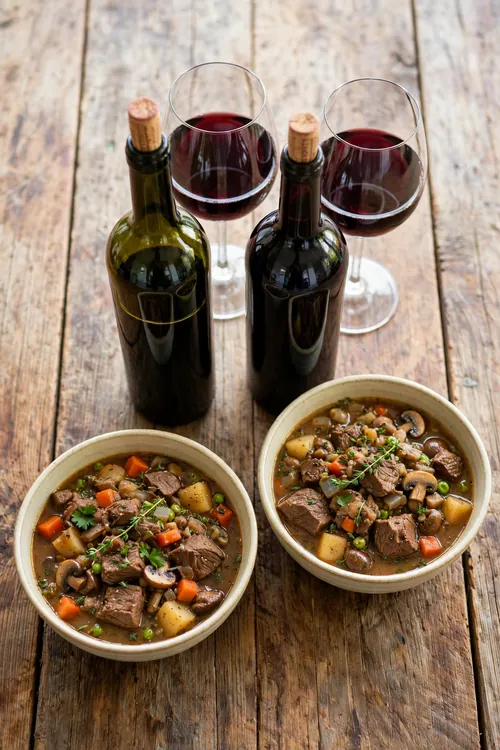
Pinot Noir: The traditional Burgundy grape gives a lighter, brighter sauce with gentle fruit and a clean finish. It suits cooks who want the beef to lead and the wine to whisper, and it keeps the pot elegant enough for guests who prefer finesse over sheer power at dinner.
Hearty Red Blend: A fuller blend with Syrah or Merlot builds a darker, rounder sauce that coats the spoon and stands up to bacon and mushrooms. It is forgiving, widely available, and usually cheaper, which makes it the practical bottle for big family pots and freezer batches alike.
The standing rule in my kitchen is simple: never cook with a bottle you would refuse to drink. One glass goes to the cook, the rest goes to the pot, and that small ritual at the stove has started more good evenings than any appetizer I have ever served.
Sunday Braise Habits
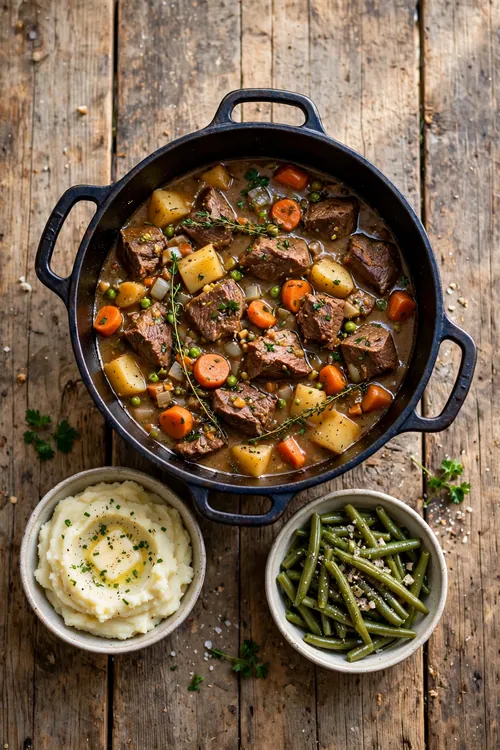
DO: Start the pot right after breakfast so the braise owns the whole slow afternoon. Sear in batches, pour the wine generously, and keep the oven low and patient. Let the finished stew rest while you set the table, mash the potatoes, and warm the bread.
DON’T: Rush the sear because the afternoon feels long, since pale beef means a pale sauce forever. Do not serve the stew straight from a hard boil, and never skip the rest, because twenty quiet minutes let the sauce settle, thicken, and cling to every tender piece properly.
Sunday braises run on rhythm, not effort, and the house rewards you with hours of the best smell in cooking. By dinner everyone has drifted through the kitchen twice, the cook has barely worked since noon, and the pot lands like a tradition nobody wants to change soon.
Dinner Party Elegance
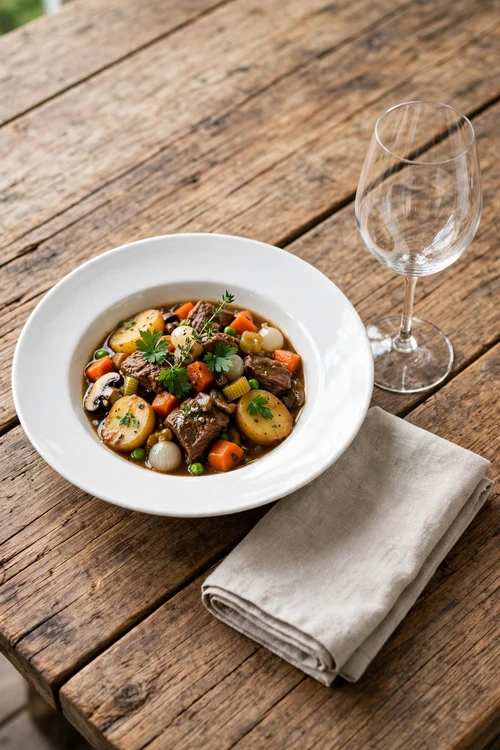
Cost: Splurge, a good bottle and trimmed chuck
Time Needed: Three hours, mostly unattended
Difficulty: Moderate, timing is the only trick
Best For: Anniversaries and small celebrations
For guests, strain the sauce and reduce it until it shines like glass, then return the beef to warm through gently. Serve small portions in wide bowls with the vegetables arranged, not dumped, and the same humble stew suddenly reads like a restaurant plate at a fraction of the fuss.
Tomato Paste Depth
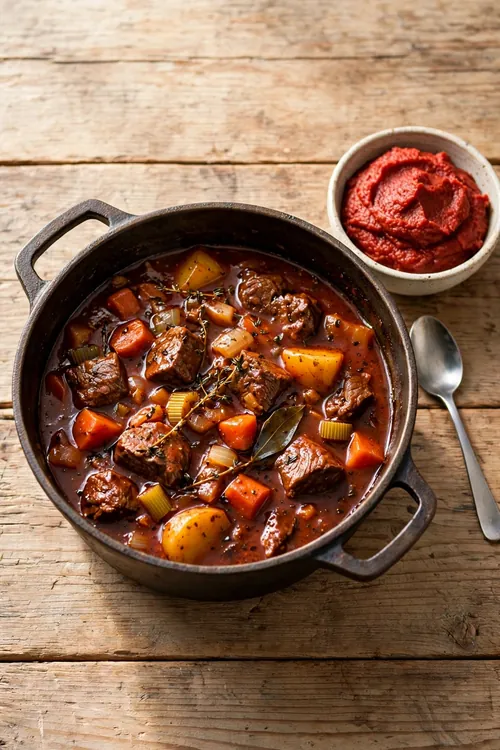
One small spoon of tomato paste, fried in the drippings until it darkens to brick red, quietly changes the whole pot. It adds body, a gentle sweetness, and that deep background note people taste without ever naming, the one that makes them ask what your secret is exactly.
The paste also helps the sauce hold its gloss, coating each chunk of beef instead of pooling thinly in the bowl. Buy the tube, not the tin, because you will use a spoon at a time and the rest keeps for weeks in the fridge door without any waste.
Purists may argue the classic recipe skips it, and they are right about the old texts. But in my kitchen the paste earns its place every single time, deepening color and savor in a way that makes the whole pot taste like it braised hours longer than it did.
Fresh Herb Finish
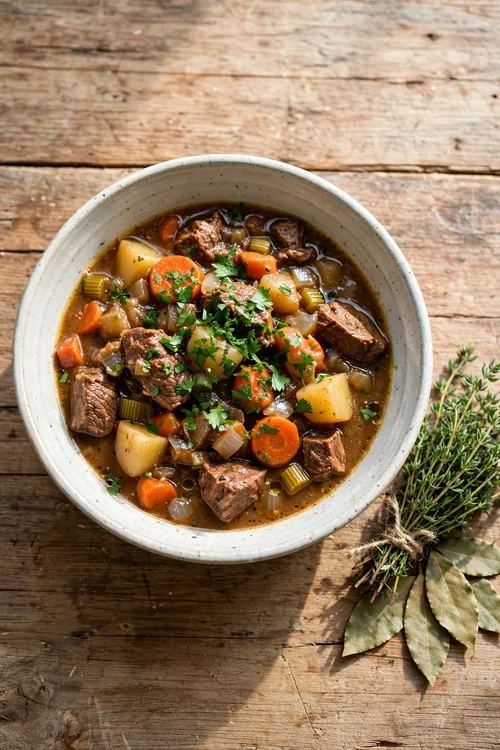
- Tie thyme sprigs, parsley stems, and a bay leaf into a bouquet so the herbs flavor the braise and leave easily.
- Stir fresh parsley through at the end for a green, peppery lift against the dark sauce.
- Keep a little chopped thyme off the heat, since its perfume fades if it simmers for hours.
- Fry whole sage leaves in butter for thirty seconds and lay them on top for a crisp garnish.
Herbs are the difference between a heavy pot and a balanced one, especially after three hours of richness. The dark sauce needs that green edge at the finish, the way a rich dessert needs salt, and a small shower of parsley wakes up every single bowl you serve.
Freezer Friendly Batch
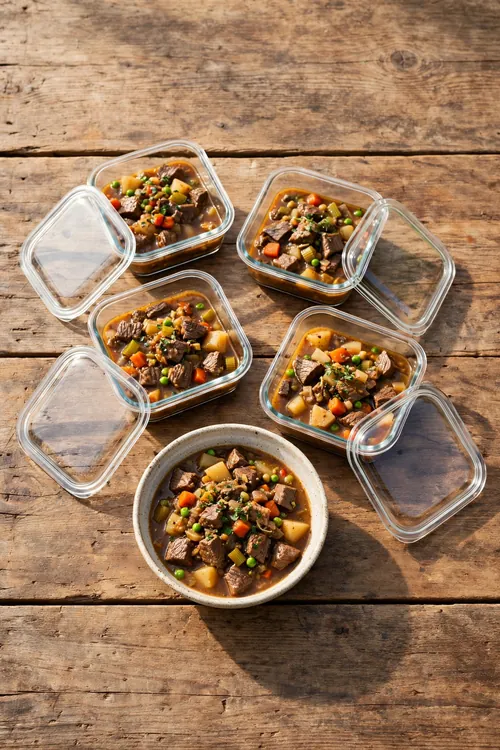
Quick Tip: Cool the stew completely before packing it into flat freezer bags or sturdy containers with headspace. It keeps three months without losing its gloss, and thawing overnight in the fridge protects the beef’s texture. Reheat gently, never at a rolling boil, for the silkiest result.
A double batch costs one afternoon and buys you several future dinners that taste like a special occasion. Freeze the sauce and beef together, keep the vegetables fresh on serving day if you like contrast, and label the bag with the date your future self will thank you for.
Tough Cut Rescue
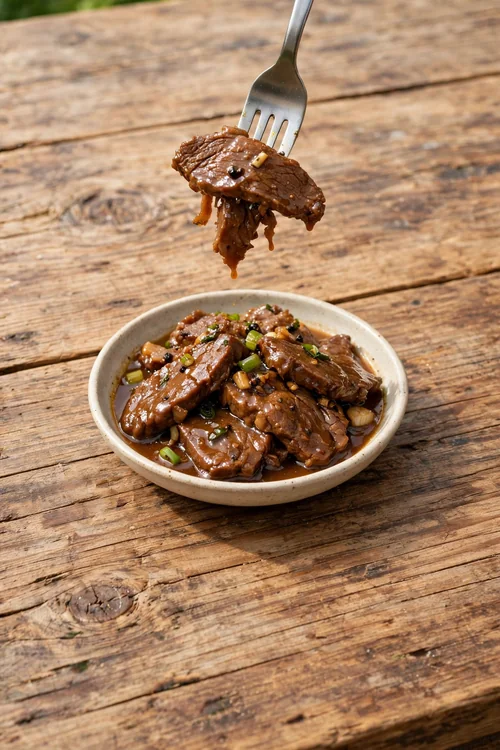
BEFORE: A cheap tough cut felt like a gamble, and one rushed attempt gave me stringy beef in a thin, sharp sauce. The meat fought the fork, the wine tasted raw at the edges, and dinner carried that apologetic feeling cooks hate serving to people they actually care about.
AFTER: The same cut gets three unhurried hours at a bare simmer, and everything changes completely. Collagen melts into silk, the sauce turns thick and glossy, and the beef falls into soft strands that drink the wine deeply, tasting expensive in a way the price tag never suggested possible.
Shin, shank, and well marbled chuck are the rescue cuts to hunt for, especially when they go on sale. Time is the real ingredient here, not money, and a patient low oven turns the humblest beef in the shop into the bowl everyone asks about first at the table.
Low Slow Oven Braise
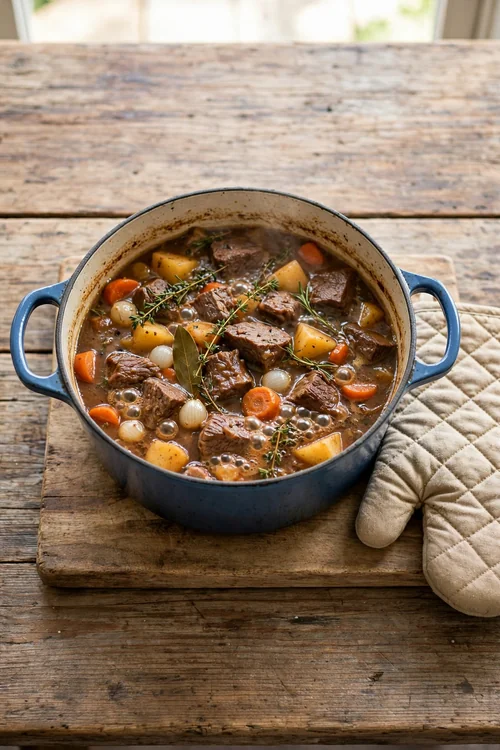
- Heat the oven low, around 300 degrees, before the pot goes in, so the braise starts at a true gentle simmer.
- Build the braise on the stove first: sear, soften, deglaze, and bring everything to a bare bubble.
- Slide the covered pot onto the middle rack and leave the door closed for the first two hours.
- Check at two hours, add a splash of stock if the sauce has dropped below the meat, and continue.
- The braise is done when a spoon slides through the beef and the sauce coats it in a shine.
Oven heat surrounds the pot evenly, unlike a burner that scorches one hot spot underneath the sauce. That is why restaurant braises taste so steady and deep, and why my stove top versions improved the week I finally moved this pot into the oven for good, permanently.
Serving Style Choices
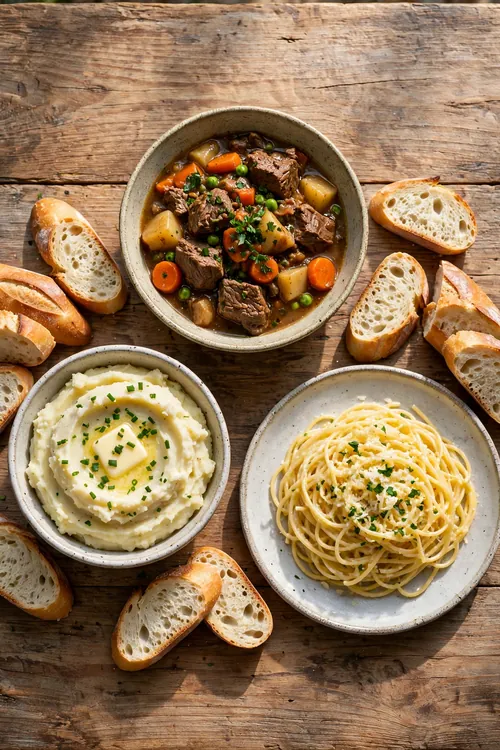
- Over Mashed Potatoes: The classic comfort serve, where the mash catches every drop of sauce and stretches the pot across more plates.
- With Crusty Bread: The bistro serve, built for swiping the bowl clean, lighter than mash and perfect for sauce lovers.
- Over Buttered Noodles: The old school serve, where wide egg noodles carry the beef and sauce in every single forkful.
- On Creamy Polenta: The soft serve, a golden pool that mingles with the wine sauce and feels quietly luxurious.
Pick the serve by the mood of the table: mash for comfort, bread for ceremony, noodles for nostalgia, polenta for a gentle twist. The stew itself never changes, yet each base makes the same pot feel like a different dinner, which keeps this classic endlessly welcome at home.
Conclusion
Twenty two pots later, the lesson stays simple: respect the sear, choose a wine you would happily drink, and give the braise its time. Do that, and beef bourguignon always rewards you with the deepest, silkiest sauce in the whole stew family, the kind people remember for weeks.
Save this list for the next cold Sunday, start with the classic pot, and share a bowl with someone who appreciates slow food and good company. I have watched quiet evenings turn into small celebrations around this stew, and your table deserves that very same warm, generous feeling, with seconds all around. For golden rice nights, my arroz con pollo always delivers.