Why Is My Cheesecake Not Setting? Easy Fix Guide
Cheesecake not setting is a stressful finish to a long bake. The center stays wobbly and the slices slump on the plate. A full bake and a long chill fix most of it.
Cheesecake sets as it cools, not in the oven. Pulling it too early, underbaking, or rushing the chill leaves a soft center that never firms up. A full bake and a long chill fix most soft centers. Use full fat dairy and mix gently to protect the set.
This guide covers mixing, baking, and chilling in order, with rescue steps if your cake is already out of the oven. If you want a cold drink while the cake chills, this vanilla latte is a creamy make-ahead option.
Why Cheesecakes Stay Soft
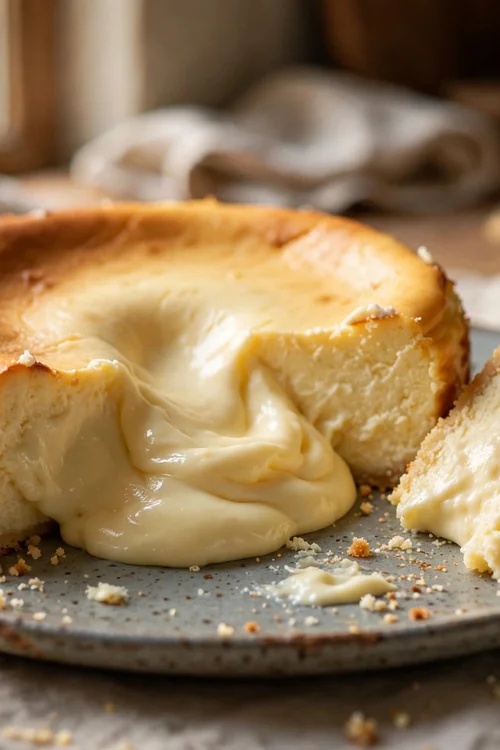
A cheesecake firms through slow cooling. Eggs set gently in the oven, then the filling tightens in the fridge over many hours. Cutting that chill short leaves a center that looks set but collapses on the plate. Low fat dairy and underbaking both leave the center soft. Full fat cream cheese and a full chill give the firmest slice.
Low fat dairy and extra liquid also weaken the set. In my experience, full fat ingredients and a full overnight chill fix most wobbly cakes. Eggs set the custard, so measure them carefully and bake until the edges firm.
Use Full Fat Dairy

Full fat cream cheese gives the firmest set. Low fat versions hold more water and less structure, so the cake stays soft. Use blocks, not tubs, for the best result. Full fat cream cheese and sour cream build a creamy texture. Low fat versions hold water and set poorly.
- Use full fat block cream cheese.
- Bring cream cheese to room temperature.
- Use real eggs, not substitutes.
- Measure sugar and cream exactly.
- Skip extra milk or cream beyond the recipe.
Measure Ingredients Right

Quick Tip: Beat cream cheese and sugar until smooth, then add eggs one at a time on low speed. Overbeating whips in air that puffs the cake up and then sinks into a soft center.
Scrape the bowl often so no lumps of cream cheese hide in the batter. Smooth batter sets evenly from edge to center. Weigh the cream cheese when you can, since a scale beats a cup for accuracy. Scrape the bowl well so nothing hides at the bottom.
Mix Batter Lightly

Common Mistake: Baking until the center looks fully firm. A firm center in the oven is an overbaked cake that will crack and turn dry. The center should still wobble when you turn the oven off.
The Fix: Bake until the outer two inches look set and the center jiggles like jelly. Turn off the oven and let the cake rest inside for one hour.
The slow cool down finishes the set without cracking. A sudden move to a cold counter shocks the cake and can split the top. Mix on low speed and stop as soon as the batter looks smooth. Extra air in the batter puffs up, then falls and cracks.
Bake In Water Bath

What You Need:
- Springform pan: A springform releases the cake without flipping.
- Heavy foil: Foil wraps the pan for a water bath.
- Large roasting pan: A water bath gives gentle, even heat.
- Rubber spatula: A spatula scrapes the bowl clean.
- Sharp thin knife: A hot knife cuts clean slices.
Wrap the springform tightly in two layers of foil before the water bath. A leak lets water into the crust and softens the whole base. Wrap the springform in foil so no water leaks in. A water bath keeps the heat gentle and the top smooth.
Check Jiggle Test

Before: A cake baked until firm, then rushed to the fridge, came out cracked and soft in the middle. Slices slumped and the crust turned soggy.
After: The same batter baked to a gentle jiggle, cooled slowly in the oven, and chilled overnight sliced cleanly with a firm, creamy center. The slices held their shape on the plate, and each serving stayed smooth instead of soft and wet.
Cooling is part of baking for cheesecake. The oven rest and the overnight chill do as much work as the bake itself. The center should wobble like jelly while the edges stay firm. Carryover heat and a long chill finish the set. Trust the jiggle, not the timer.
Chill Overnight Long

Do This:
- Use full fat block cream cheese.
- Mix on low and stop early.
- Bake to a gentle jiggle.
- Chill overnight, at least 8 hours.
Avoid This:
- Do not use low fat cream cheese.
- Do not overbeat the batter.
- Do not bake until fully firm.
- Do not slice before a full chill.
A full chill is not optional. Even a well baked cake needs hours in the fridge for the filling to firm up completely. Chill the cake overnight, at least eight hours, before slicing. A full chill firms the custard and makes clean slices possible. Do not rush this step.
Fix Wobbly Cheesecake

Time Needed: About 1 hour baking plus overnight chilling.
Difficulty: Moderate, mostly patience.
Cost: Moderate, cream cheese.
Best For: Holidays, dinners, and celebrations.
Make cheesecake a day ahead whenever you can. An overnight chill gives the best texture and removes all day of serving stress. Chill a wobbly cake longer, or serve it in glasses with fruit. A soft set still tastes wonderful with berries and cream. No one will mind.
Rescue Cracked Tops

If the cake is already out and still wobbly, return it to a low oven at 300 degrees for 15 minutes, then cool slowly and chill overnight. The extra bake firms the eggs without overcooking the edges. Cracks come from too much air or too fast a cool down. Mix gently and cool the cake slowly.
For a cake that will not firm at all, freeze it for two hours and serve it semi frozen. Cold slices hold their shape, and the texture stays creamy as they warm. Cover any cracks with sour cream topping or fresh fruit.
Slice Cleanly Every Time

Cracked tops come from overbaking and fast cooling. A water bath and a slow oven cool down keep the top smooth. Use a long, thin knife dipped in hot water and wiped clean between cuts. A warm blade glides through the chilled custard. Cut slowly for neat edges.
- Bake in a water bath for even heat.
- Turn off the oven and crack the door.
- Cool in the oven for one hour.
- Move to a rack, then to the fridge.
- Top with fruit or cream to hide any cracks.
Plan Better Cheesecakes

Quick Tip: Dip a thin knife in hot water, wipe it clean, and cut each slice with one smooth stroke. A hot knife glides through cold filling and leaves clean edges. Reheat the knife between slices.
Store leftover cheesecake covered in the fridge for up to five days, or freeze slices for up to three months. Thaw frozen slices overnight in the fridge. Set out dairy ahead so it reaches room temperature before mixing. Cold cream cheese lumps the batter and bakes unevenly.
Conclusion
Cheesecake not setting comes down to ingredients, bake, and chill. Use full fat cream cheese, mix gently, bake to a jiggle, and chill overnight. Those habits give firm, creamy slices every time. For another cake rescue, the carrot cake guide fixes a greasy carrot cake crumb.
Make the cake a day ahead whenever you can, since an overnight chill gives the best texture. Keep the foil tight around the pan for the water bath. With full fat dairy and a slow cool down, every slice will hold firm and creamy.