Why Is My Carrot Cake Greasy? Easy Fix Guide
Greasy carrot cake feels heavy and slick instead of moist and tender. Oil pools on the surface and the crumb turns soggy. The fix is usually less liquid and drier carrots.
Carrots hold a lot of water, and canned pineapple or extra oil adds more. When the batter carries too much liquid, the cake cannot absorb it all and the oil rises. Drying the carrots and measuring the oil fix most greasy cakes. Drain the pineapple well before it joins the batter.
This guide covers carrots, oil, and baking in order. If cheesecake is next, the cheesecake guide helps a wobbly filling set.
Why Carrot Cake Greases

Carrot cake turns greasy when the batter holds more fat and water than the flour can absorb. Wet carrots, undrained pineapple, and a heavy hand with oil all push the balance over the edge. Wet carrots and extra oil both leak fat as the cake bakes. Dry the shreds well and measure the oil with care.
A cool oven makes it worse by letting oil pool before the crumb sets. In my experience, drying the carrots and measuring the oil fix most greasy cakes. A balanced batter bakes moist without leaving oil behind on the plate.
Dry Carrots Well
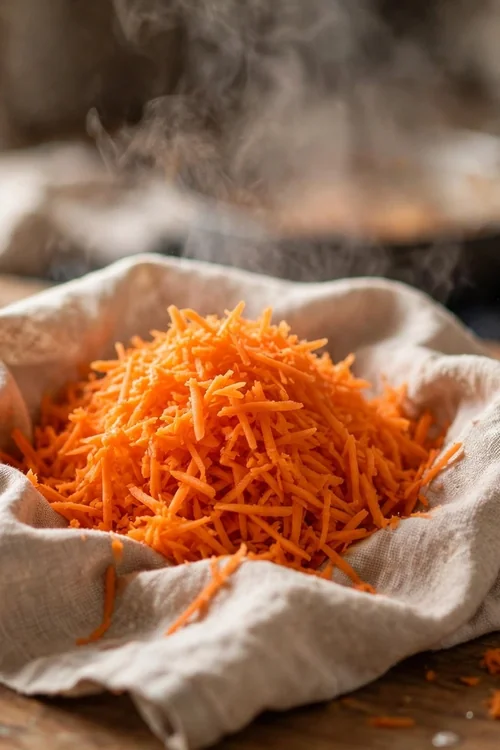
Freshly grated carrots look dry but hold plenty of water. Blot them in a clean towel before mixing. A quick squeeze removes water that would otherwise thin the batter. Squeeze grated carrots in a clean towel until no more liquid comes out. Dry shreds add no extra water.
- Grate carrots on the large holes of a box grater.
- Spread them on a clean kitchen towel.
- Blot firmly to remove surface water.
- Measure after blotting, not before.
- Keep the grated carrots cool until mixing.
Measure Oil Right

Quick Tip: Measure oil in a clear cup at eye level. A little extra oil is easy to pour by accident, and the cake has no way to hide it. If the recipe offers a range, use the smaller amount.
Swap part of the oil for unsweetened applesauce when you want a lighter cake. The applesauce adds moisture without adding fat. Measure oil in a clear cup at eye level, never by pouring freely. A little extra oil makes the whole cake greasy. Level the cup carefully.
Balance Wet Ingredients

Common Mistake: Adding undrained crushed pineapple straight from the can. The juice soaks the batter, and the cake bakes up wet and greasy instead of moist.
The Fix: Drain pineapple well in a sieve and press out the juice. Use the fruit only, and save the juice for another use. Drain it well.
The same rule applies to any wet add in. Raisins, nuts, and coconut should all be reasonably dry before they join the batter. Balance eggs, oil, and carrots so no single wet ingredient dominates. A thick batter with visible shreds bakes into a moist, even crumb.
Mix Batter Lightly

What You Need:
- Box grater: Large holes make sturdy carrot shreds.
- Clean kitchen towel: Blotting removes hidden water.
- Clear measuring cup: Eye level measuring keeps oil accurate.
- Sieve: Draining pineapple keeps the batter balanced.
- Light metal pans: Even heat sets the crumb before oil pools.
Set out the towel and sieve before you grate. Drying and draining take a minute, but they save the whole cake. Fold the flour in just until no streaks remain, then stop. Overmixing builds gluten and squeezes oil out of the batter. A light hand keeps the crumb tender.
Bake Until Set

Before: Wet carrots and undrained pineapple went into a batter with extra oil. The cake baked up slick, with oil beading on the surface and a soggy bottom.
After: Blotted carrots, drained pineapple, and measured oil baked into a moist, tender crumb. The same recipe tasted completely different.
The ingredients never changed, only the water. Less hidden liquid means the flour can absorb the oil properly. Bake until a skewer comes out with a few moist crumbs, not wet batter. A slightly underbaked center firms up as the cake cools. Check five minutes early.
Fix Oily Cakes
Do This:
- Blot grated carrots dry.
- Drain pineapple well.
- Measure oil at eye level.
- Bake until a skewer comes out clean.
Avoid This:
- Do not add extra oil for moisture.
- Do not use undrained pineapple.
- Do not underbake the layers.
- Do not frost a warm cake.
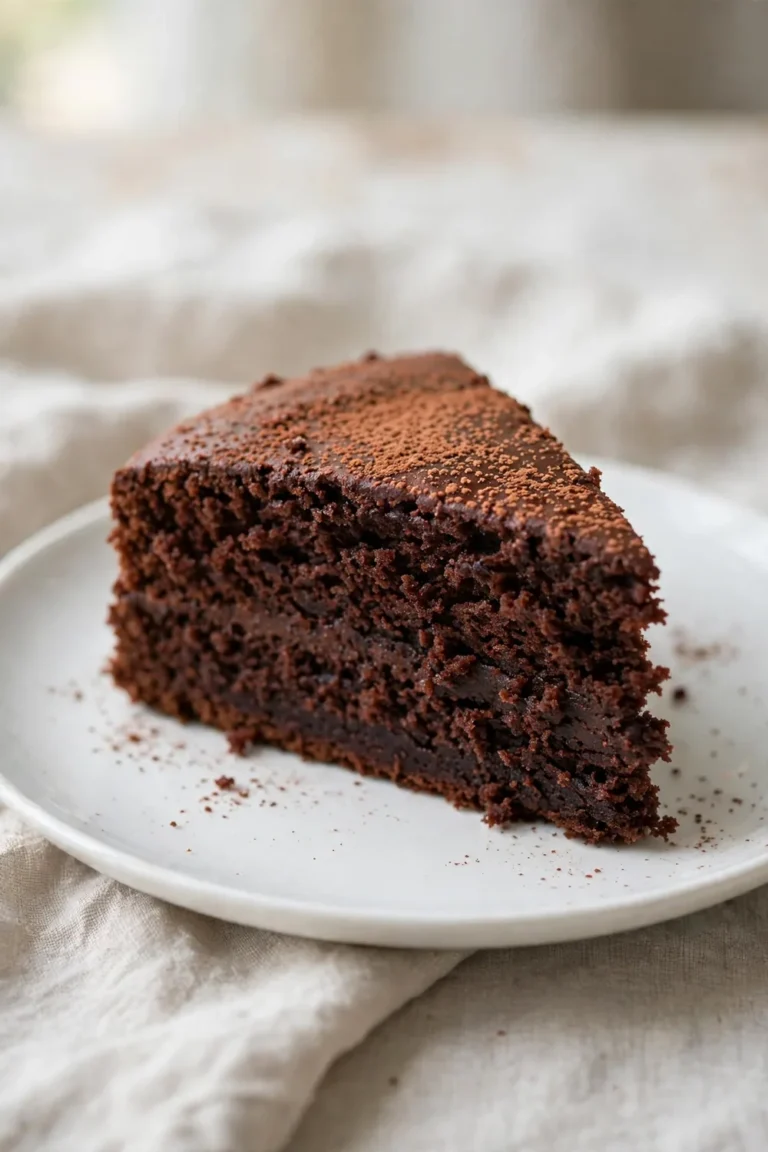
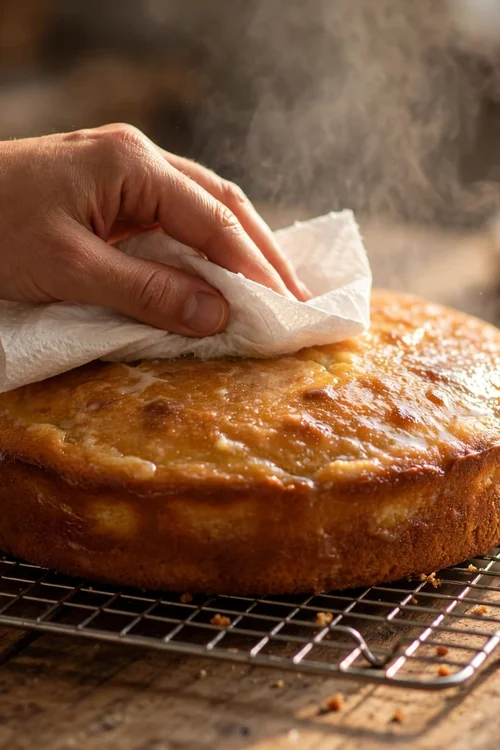
An underbaked center stays wet and pushes oil to the surface as it cools. Bake until the center tests clean, then cool fully before frosting. Blot an oily top with paper towels and let the cake cool fully. A cool cake firms up and the surface loses its shine.
Rescue Soggy Layers
Time Needed: About 30 to 35 minutes baking plus cooling.
Difficulty: Easy, with careful measuring.
Cost: Low, pantry staples.
Best For: Birthdays, Easter, and potlucks.
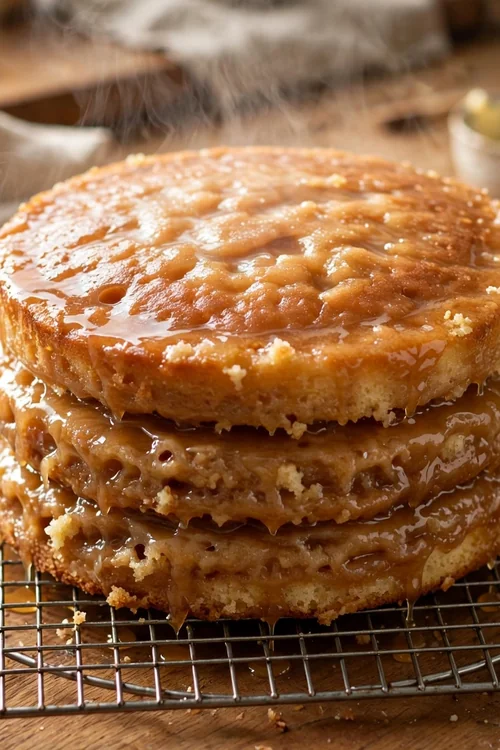
Check the cake five minutes early. A skewer with a few moist crumbs means done, while a wet streak means more time. Chill soggy layers briefly so the crumb firms up before frosting. A cold layer spreads frosting cleanly and holds its shape. Work quickly once you start.
Choose Right Frosting
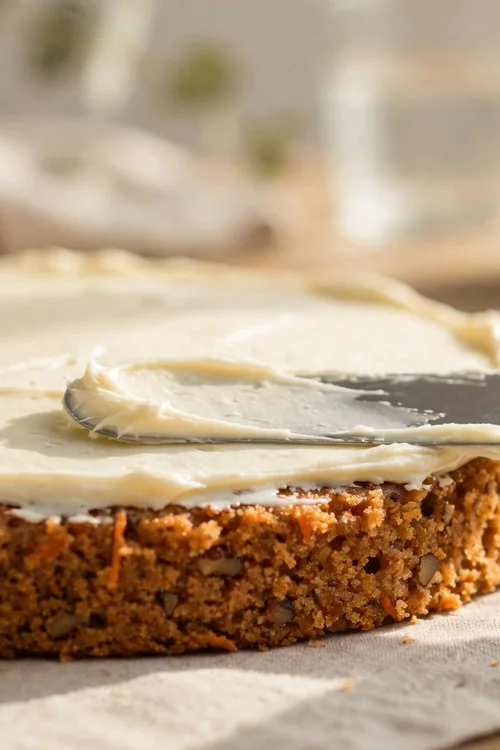
If the cake is already greasy, blot the surface gently with paper towels and let it cool uncovered. The towels lift surface oil without damaging the crumb. Chill the layers before frosting so they firm up. A tangy cream cheese frosting cuts the richness of the cake. Keep the frosting cool so it spreads smoothly without melting.
Serve greasy layers with a light cream cheese frosting and fresh fruit. The tangy frosting and fruit cut the richness and the plate feels balanced. Frost only a fully cooled cake, since warm layers melt the frosting.
Store Cake Well
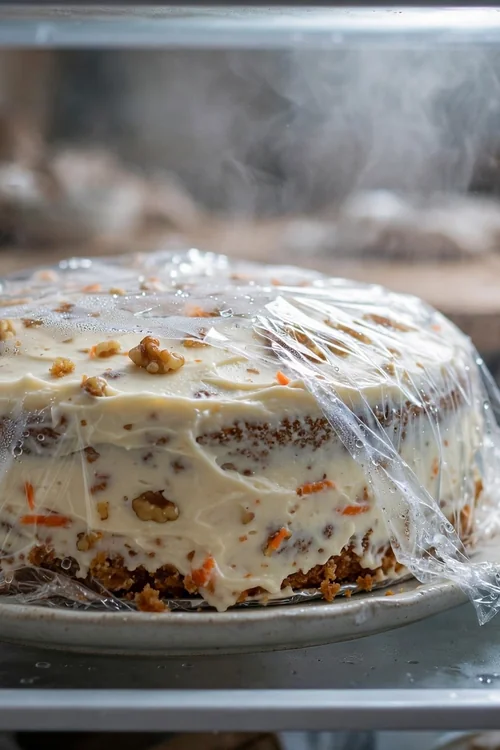
Soggy layers come from trapped steam. A cake cooled in the pan too long steams itself soft and the bottom turns wet. Store the frosted cake in the fridge in a covered container. Let slices sit ten minutes at room temperature before serving. Cold cake slices cleanly.
- Cool layers in the pan for 10 minutes only.
- Turn out onto a wire rack.
- Cool fully before wrapping or frosting.
- Trim any very wet edges.
- Chill layers for 30 minutes before frosting.
Plan Better Cakes

Quick Tip: Frost with a light cream cheese frosting and keep it thin. A heavy buttercream layer adds more fat to an already rich cake. A thin tangy layer balances the crumb.
Store the frosted cake covered in the fridge for up to four days. Bring slices to room temperature for 20 minutes before serving for the best texture. Grate the carrots ahead and dry them well before mixing. Measure every wet ingredient so the batter stays balanced from the start.
Conclusion
Greasy carrot cake comes down to water and oil. Blot the carrots, drain the pineapple, measure the oil, and bake until the center tests clean. Those habits give a moist crumb that never feels oily. For another dessert rescue, the lemon cake guide lightens a heavy lemon crumb.
Cool the layers fully on a rack before frosting, and keep the frosting thin. A tangy cream cheese layer balances the rich crumb. With drier carrots and measured oil, every cake will taste moist, never greasy. Bring slices to room temperature before serving for the best texture.