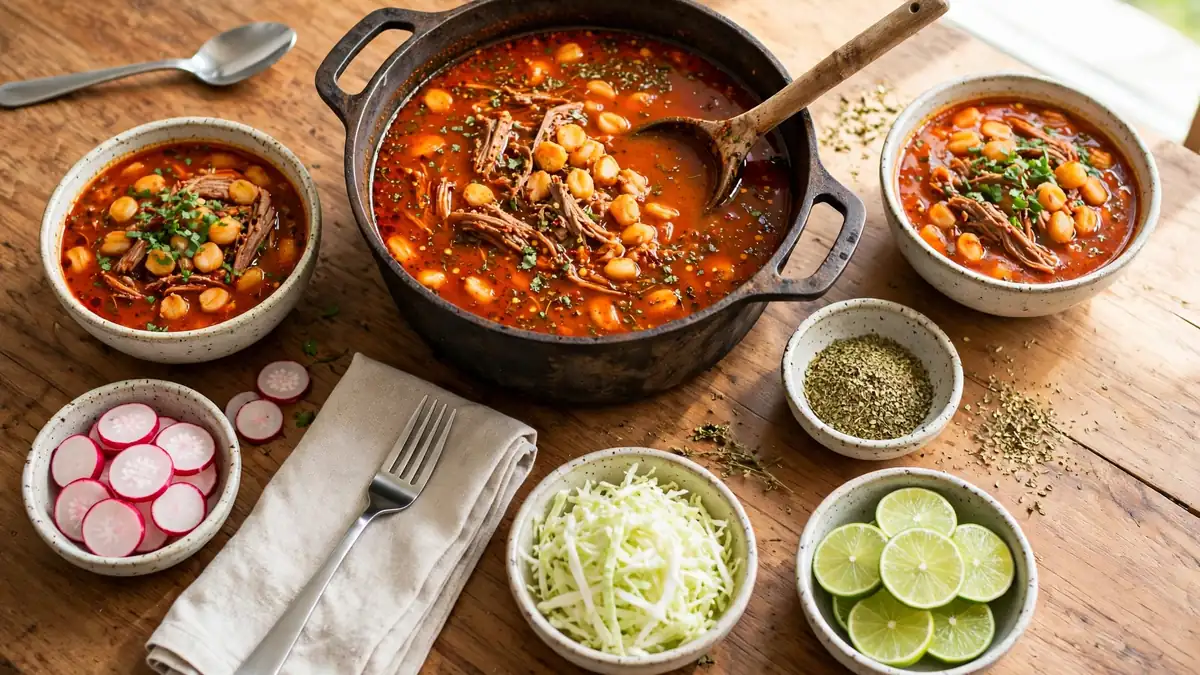
22 Chicken Pozole Ideas That Scream Fashionable Comfort
A steaming bowl of chicken pozole has a way of pulling everyone into the kitchen before it even reaches the table.
This collection gathers twenty two versions of the beloved Mexican hominy soup, from deep red chile broths to bright green tomatillo bowls, each one built for real weeknight cooking, relaxed weekend gatherings, and the kind of table where seconds are expected.
Every bowl ahead comes with practical seasoning notes, topping ideas, and make ahead guidance, so you can pick a style, shop with confidence, and serve a soup that tastes like it simmered all afternoon. Start with the classic, then wander. And on grill nights, my chicken yakitori skewers bring that same big, bold flavor to the table.
Classic Pozole Rojo
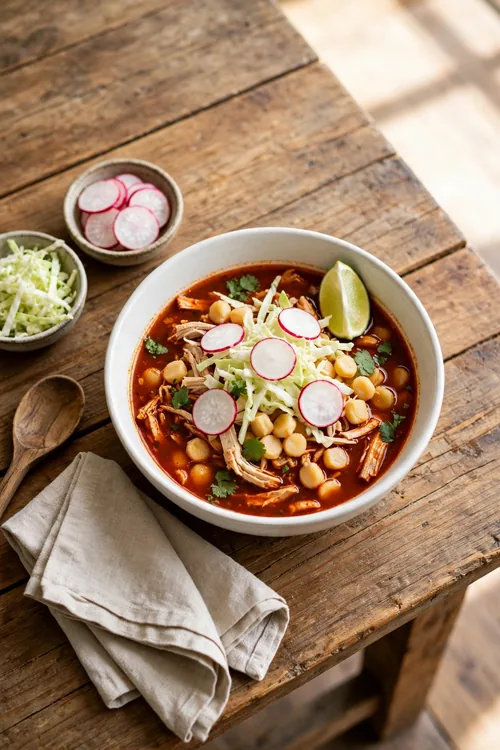
Guajillo and ancho chiles give this broth its deep brick red color and gentle warmth. Toast the dried peppers until fragrant, soak them until soft, then blend with garlic and onion. The sauce should pour like thin velvet, rich without tasting bitter or burnt at the edges.
Simmer the blended sauce in a little oil before it meets the broth, a step that deepens the chile flavor noticeably. Add hominy and shredded meat near the end so nothing overcooks. Ladle into warm bowls and finish with radish, cabbage, and a confident squeeze of lime.
Bright Pozole Verde
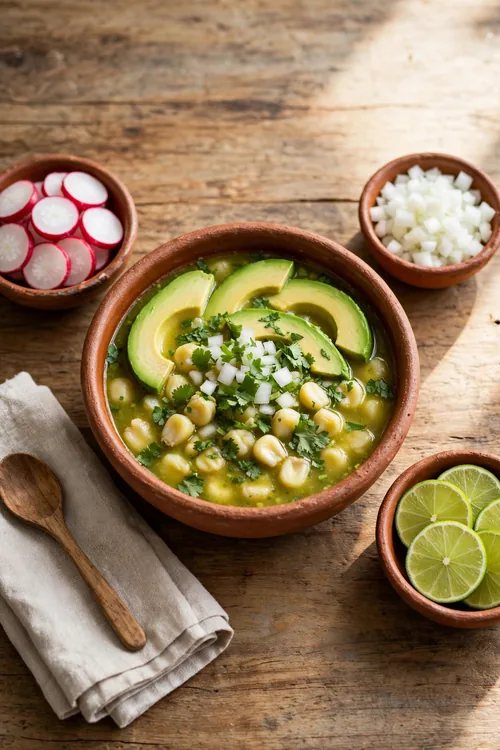
- Blend tomatillos, poblano, a jalapeño, onion, and cilantro into a bright green salsa before it ever touches the pot.
- Simmer that salsa in a little oil for five minutes to cook off the raw edge and deepen the color.
- Poach the chicken in the broth first, then shred it back in for the final fifteen minutes of cooking.
- Keep the broth slightly tart; a small pinch of salt at the end makes the tomatillo flavor pop.
Green pozole tastes best the day it is made, when the tomatillo brightness is still lively. In my experience, leftovers mellow into something softer and sweeter by day two, which some people prefer. Serve with avocado slices, crumbled cheese, and plenty of warm tortillas for scooping.
Simple Pozole Blanco
Quick Tip:
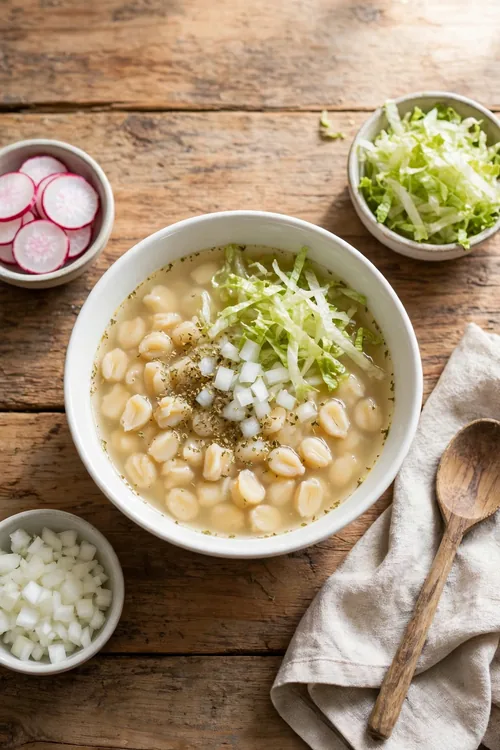
Season the poaching liquid generously from the start, because plain broth means plain soup later. Skim the foam during the first twenty minutes for a clean, clear finish. A halved onion and two bay leaves add quiet depth without changing the color.
Blanco is the gentlest style in this collection, built on clear broth, tender meat, and hominy that stays pleasantly chewy. It welcomes strong toppings, so set out dried oregano, diced onion, and chile flakes. The contrast between mild soup and bold garnishes is the whole point here.
Smoky Chipotle Pozole
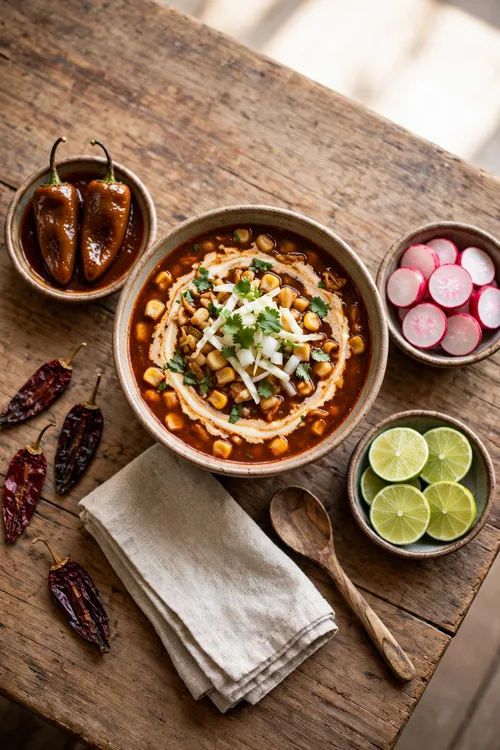
Before: Weeknight pozole at my house used to taste flat, mostly like salted chicken broth with hominy floating in it. The chiles were an afterthought, and the whole pot felt like one note from start to finish. Bowls came back half finished, and nobody asked for the recipe afterward, ever.
After: Two chipotles in adobo, blended straight into the chile sauce, changed everything about that pot. The broth turned smoky and deep, with heat that builds slowly instead of shouting at you. Now the pot empties fast, and the smoky version is the one friends request by name.
Chipotle heat varies wildly from can to can, so start with one pepper and taste before adding more. Keep a spoonful of the adobo sauce nearby for anyone who wants extra smoke at the table. A dollop of crema on top softens the edges beautifully without muting the flavor.
Slow Cooker Pozole
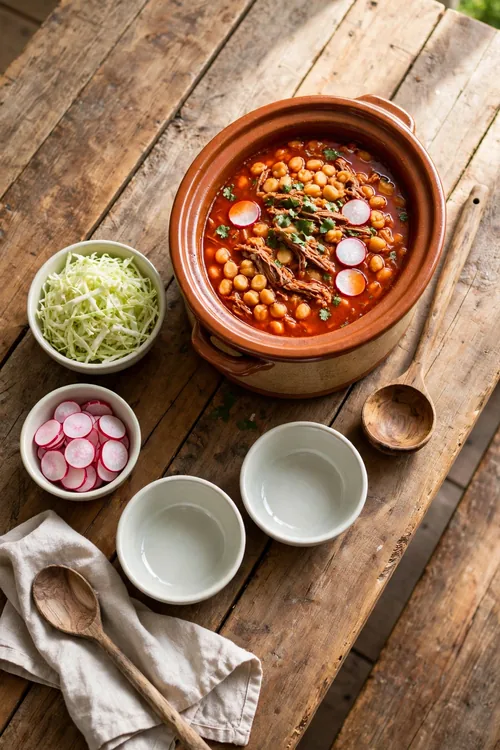
- Puree soaked guajillo chiles with garlic, onion, and a ladle of the soaking liquid until completely smooth.
- Add the sauce, broth, hominy, onion, and chicken to the slow cooker, then stir once to combine everything.
- Cook on low for six to seven hours, until the chicken shreds easily with two forks.
- Shred the meat, return it to the pot, and rest ten minutes before adjusting salt and lime.
Slow cooking gives the hominy time to drink up the chile broth, so every spoonful tastes seasoned all the way through. Set the toppings out while the cooker finishes, and dinner mostly serves itself. Leftovers reheat gently on the stove with a splash of water to loosen the broth.
Instant Pot Pozole
| Point | Pressure Cooker | Stovetop Pot |
|---|---|---|
| Total time | About 45 minutes | Two hours or more |
| Broth flavor | Bright and fresh tasting | Deep and fully melded |
| Hands-on effort | Mostly hands off | Needs occasional stirring |
| Best for | Weeknight cravings | Lazy weekend cooking |
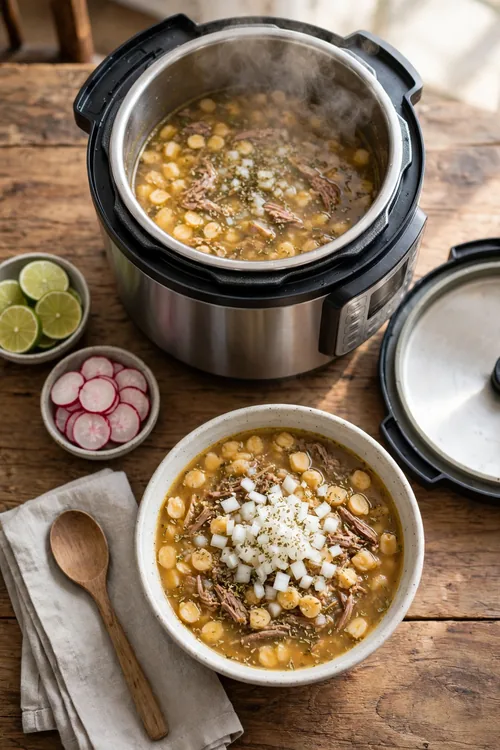
Pressure cooking is my weeknight shortcut when the craving hits at five in the evening. The broth tastes a touch fresher and less melded than the slow version, which some people genuinely prefer. A natural release of ten minutes keeps the hominy tender, never blown out or mushy.
Toppings Bar Night
| DO | DON’T |
|---|---|
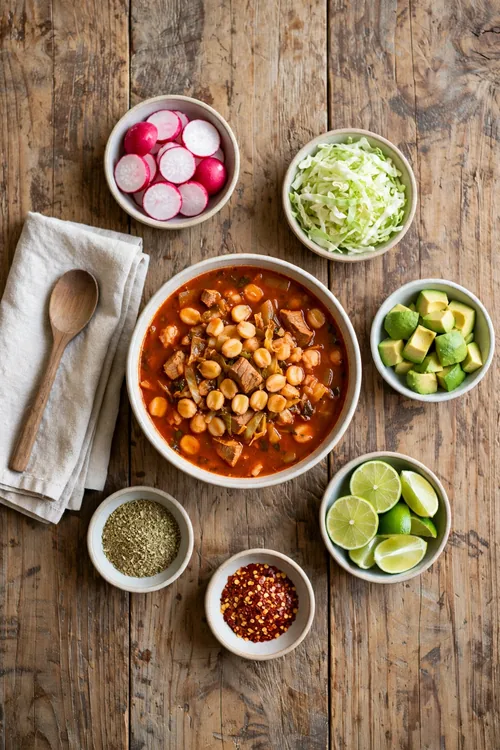
| Set out radish, cabbage, onion, and lime in small bowls | Pile every topping into the soup before serving it |
| Offer dried oregano and chile flakes at the table | Season the whole pot to one person’s heat level |
| Warm the tostadas and tortillas before guests sit down | Serve the toppings straight from the fridge, ice cold |
| Let everyone build their own bowl, their own way | Forget the lime wedges that brighten every bowl |
A toppings bar turns one pot into a table full of personal bowls, which is exactly how this soup is served at celebrations across Mexico. Guests linger longer, help themselves to seconds, and season each bowl to their own taste. It is the easiest dinner party format I know.
Hominy From Scratch
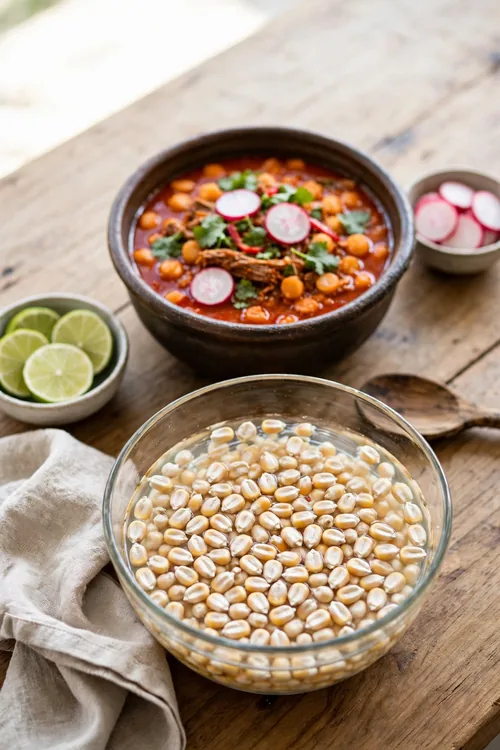
Cost: Low. Dried field corn costs very little per batch.
Time Needed: An overnight soak plus about three hours of simmering.
Difficulty: Moderate. Most of the work is waiting while kernels bloom.
Best For: Cooks who want deep corn flavor and a firmer, flowered texture.
Canned hominy is a fine shortcut, but kernels nixtamalized at home bloom into little flowers with a deeper corn perfume. The texture stays pleasantly firm even after long simmering in the broth. Weekend cooks who enjoy a project will find the process calming, and the flavor payoff is honestly hard to beat.
Roasted Poblano Pozole
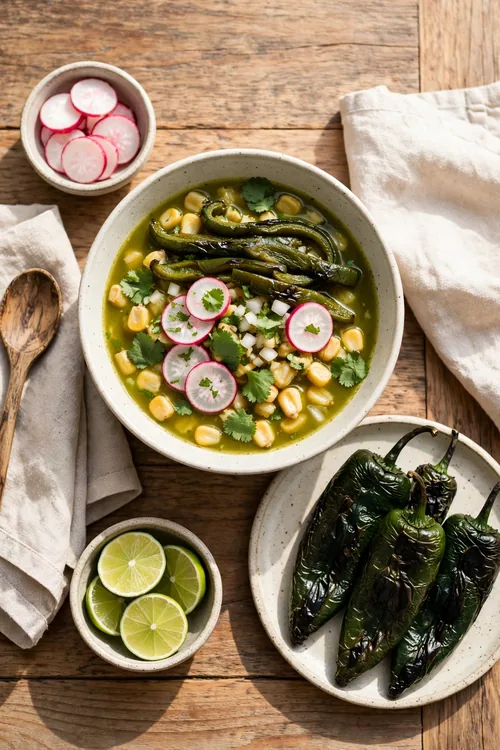
Roasting poblanos until their skins blister gives the green broth a gentle smoke that raw peppers cannot deliver. Char them over a flame or under the broiler, rest them in a covered bowl, then peel away the blackened skins. The flesh underneath turns sweet, soft, and deeply aromatic.
Blend half the roasted peppers into the broth and stir the rest in as soft strips for texture. A spoonful of crema swirled at the table cools the gentle heat nicely. Serve this version to friends who claim green pozole tastes grassy, and watch them change their minds.
Pozole With Poached Chicken
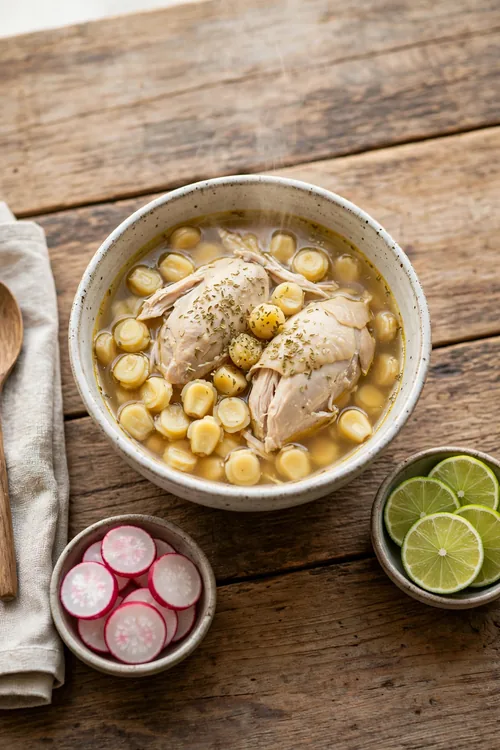
- Poach bone in chicken in salted water with onion, garlic, and bay for the cleanest broth base.
- Lift the chicken out, rest it, then shred it while the hominy simmers in the same liquid.
- Skim the surface twice during poaching so the broth stays clear and golden to the end.
- Return the shredded meat for the last ten minutes so it stays moist, never stringy or dry.
Poaching in the same pot means the broth and the meat season each other from the start. Nothing extra to wash, nothing wasted, and the flavor stays honest and clean throughout. This is the method my grandmother trusted, and the bowls always come back scraped clean at my table.
Zesty Lime Pozole
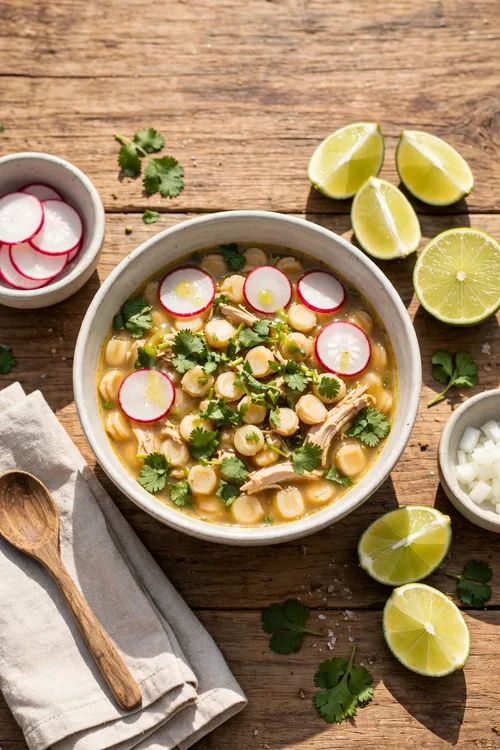
Quick Tip:
Add lime juice at the very end, off the heat, so the citrus stays bright instead of turning bitter. Zest one lime into the broth for perfume without extra sourness. Always serve extra wedges, because someone at the table will want more.
A lime forward bowl wakes up the whole table, especially next to rich toppings like avocado and crema. Balance is everything here; the broth should taste bright, never sour or sharp. Taste a spoonful after resting, then adjust salt first and lime second for the cleanest, roundest finish possible.
Pozole For Twenty
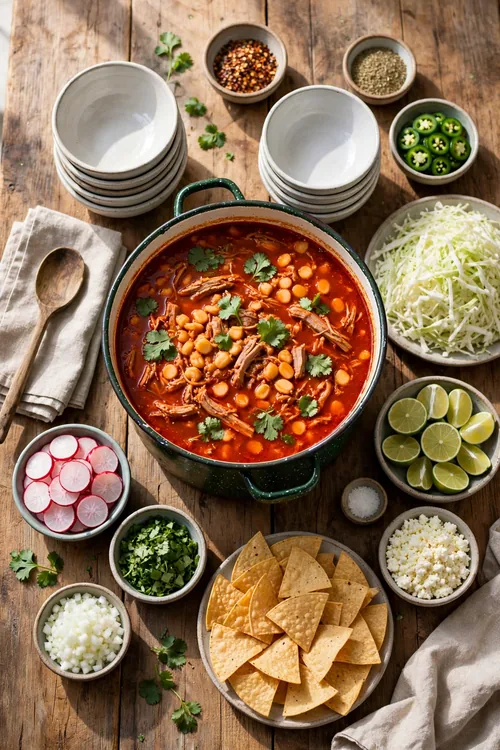
Before: Cooking soup for twenty used to mean guesswork at my house, and the seasoning always landed wrong somewhere. One holiday pot tasted bland beyond rescue, while another came out harsh and heavily over salted. Serving a crowd felt like a gamble I never seemed to win.
After: Scaling in a separate concentrated batch changed the math completely for my big pots. I simmer the chile base and hominy for the full group, then hold back one seasoned quart to correct the pot at the end. Now every ladle tastes balanced, from the first bowl to the last.
Big pots forgive many things, but they punish rushed seasoning every single time. Plan an extra thirty minutes at the end for tasting and adjusting in small, careful steps. Keep spare lime, salt, and dried oregano beside the stove, and let a trusted friend give the final spoonful a second opinion.
Freezer Friendly Batch
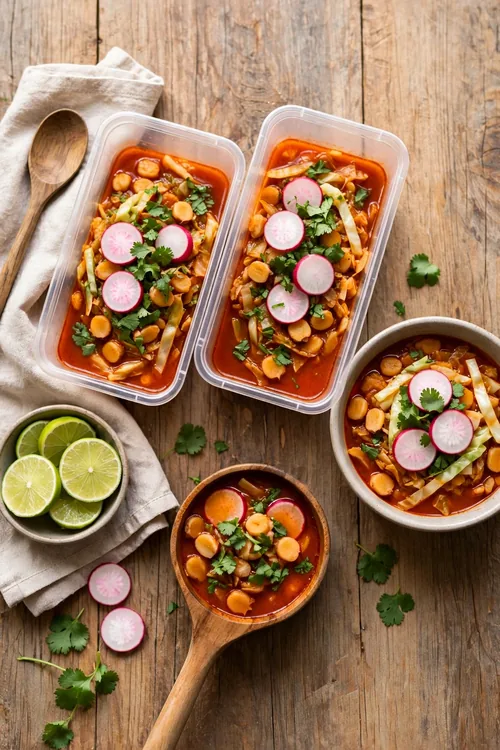
- Cook the pozole fully, but stop ten minutes before the hominy reaches your perfect tenderness.
- Cool the pot quickly in a shallow pan so the soup chills evenly and safely.
- Portion into flat freezer bags or containers, leaving a little headspace for expansion.
- Freeze toppings separately; radish and cabbage never survive the freezer at their best.
- Thaw overnight in the fridge, then simmer gently and finish with fresh lime.
A freezer stash of pozole turns a rough Tuesday into a small celebration with almost no effort at all. The hominy softens slightly on reheating, which most people never notice under fresh toppings. Label each bag with the date and chile level so future you can choose wisely.
Roasted Tomatillo Pozole
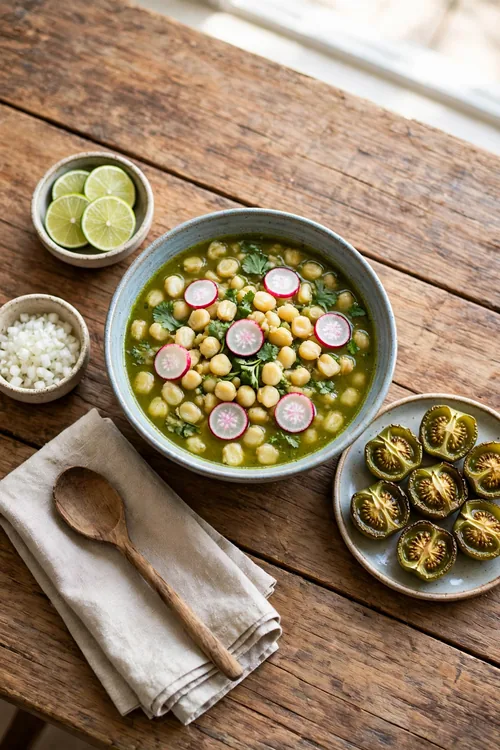
| Point | Raw Tomatillos | Roasted Tomatillos |
|---|---|---|
| Flavor | Sharp, bright, and tangy | Mellow, jammy, and deep |
| Broth color | Vivid spring green | Darker, moodier green |
| Extra effort | None, blend and go | Ten minutes under the broiler |
| Best for | Fresh summer bowls | Slow weekend pots |
Roasting tomatillos under the broiler trades sharp acidity for a mellow, jammy depth that suits slow weekend pots. The green broth turns a shade darker and tastes rounder overall. Raw tomatillos still win for brightness, so choose based on the mood of the meal you want.
Crunchy Garnish Lineup
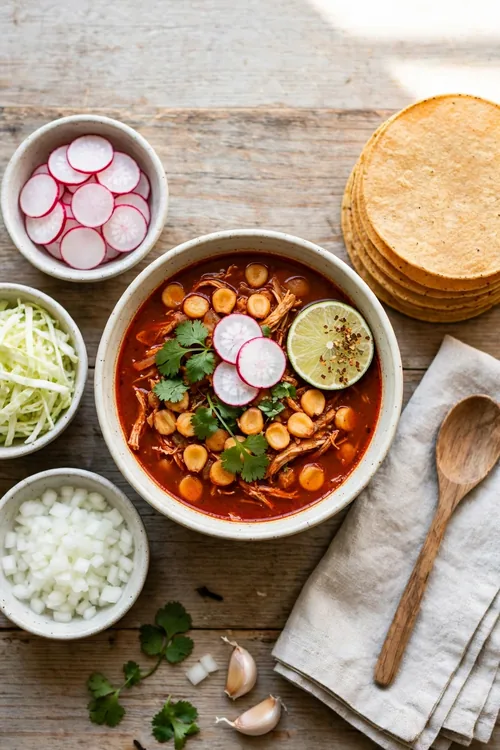
| DO | DON’T |
|---|---|
| Slice radishes paper thin so they stay crisp in hot broth | Cut thick radish chunks that sink and turn soft |
| Shred cabbage finely for a delicate crunch in every bite | Add cabbage to the pot, where it wilts and grays |
| Fry or warm the tostadas right before serving time | Set tostadas out early to go stale in the steam |
| Dice white onion small and rinse it for a milder bite | Use large raw onion pieces that overpower the broth |
Crunch is not decoration on this soup; it is half the experience of the bowl itself. Hot, rich broth against cold, crisp vegetables creates the contrast people remember long afterward. Prep garnishes while the soup simmers, keep them chilled, and bring them to the table at the very last moment.
Pozole With Three Chiles
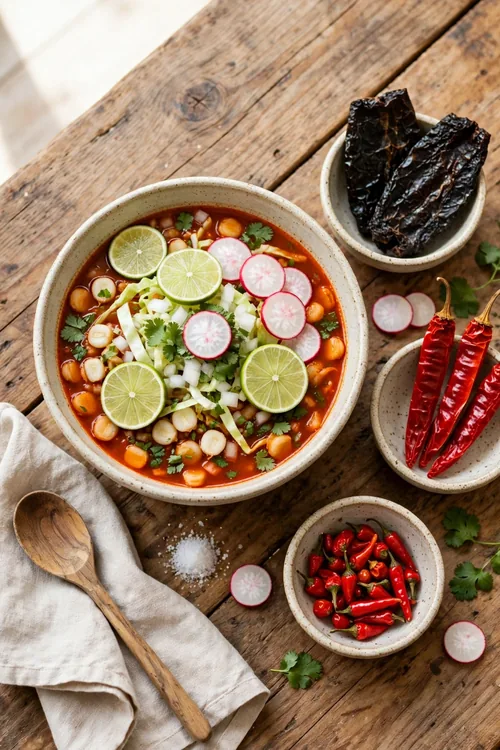
Cost: Moderate. Dried chiles are cheap, but you will buy three kinds.
Time Needed: About one hour, including soaking and blending the sauce.
Difficulty: Intermediate. Balancing three different heats takes a little attention.
Result: Layers of flavor, sweet ancho first, then guajillo warmth, then a gentle kick.
Three chiles give the broth a beginning, a middle, and a finish, much like a good story. Keep the chile de arbol count low until you know your heat comfort level well. Toasting each variety separately protects the smaller peppers from scorching while the thick anchos catch up.
Thirty Minute Pozole
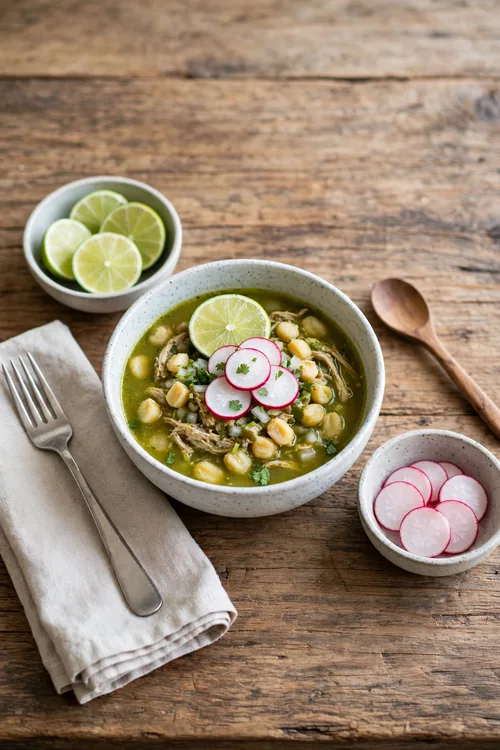
Rotisserie chicken and canned hominy are the honest shortcuts behind this fast bowl. A quick blender sauce of tomatillos, chiles, and garlic builds the base in minutes flat. Dinner lands on the table before anyone starts hovering around the stove asking when it will be ready.
Speed does not have to mean a thin, forgettable soup at your table. Warm the hominy in the broth long enough for it to taste properly seasoned, and never skip the fresh toppings. Fifteen quiet minutes of simmering while you set the table makes a bigger difference than any fancy ingredient.
Pozole Blanco With Herbs
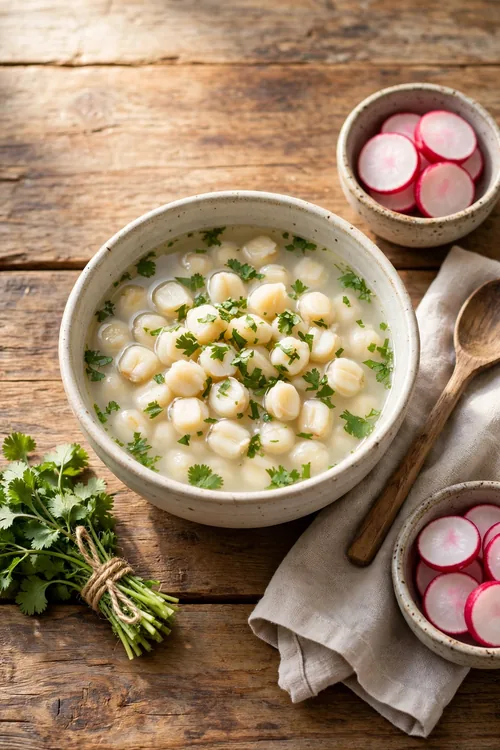
- Steep a bundle of marjoram, thyme, and bay in the broth while the hominy cooks.
- Stir in chopped fresh oregano at the very end for a green, peppery lift.
- Keep the broth unclouded by adding whole herbs in a bundle you can lift out.
- Finish with a drizzle of good olive oil, the way some coastal cooks serve it.
Herbs change blanco from plain to quietly elegant without touching its pale color at all. The broth smells like a garden after rain, clean and green at the edges. Serve this version in your prettiest bowls, with the herb bundle nowhere in sight and the flavor fully present.
Fiery Chile Pozole
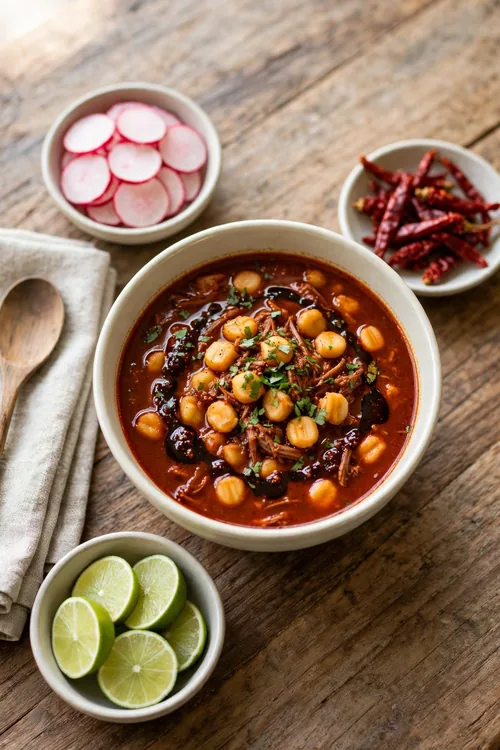
Quick Tip:
Toast chile de arbol for seconds only, because it scorches faster than any other dried pepper. Blend one pepper at a time and taste between additions to land your heat level exactly. Keep honey and crema within reach for anyone who overshoots.
Fiery does not have to mean punishing for everyone at the table. The goal is a heat that blooms slowly, warms the chest, and still lets the corn and chicken flavors come through clearly. Offer the chile oil at the table so cautious eaters stay comfortable while the brave go back for more.
Pozole For Meal Prep
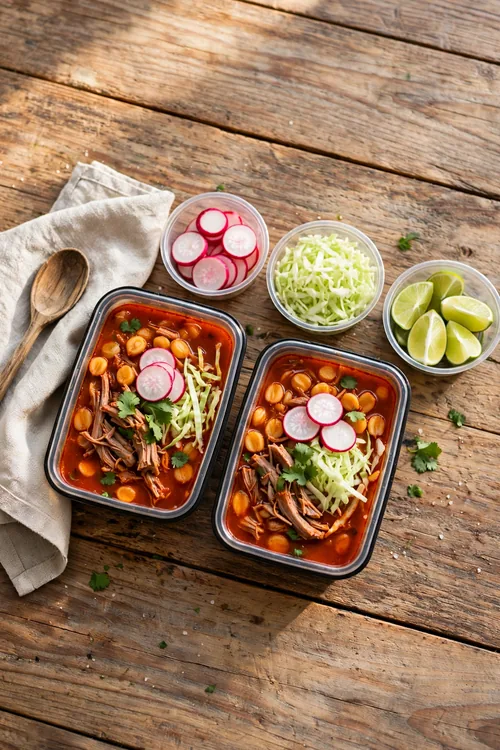
Before: My meal prep soups used to blur together by Wednesday, every container tasting exactly like the last one. The toppings went soggy, the broth turned dull, and lunch became a chore instead of a break. Half the batch usually ended up forgotten at the back of the fridge.
After: Storing the broth, hominy, and toppings in separate containers fixed the whole system at once. Each bowl gets assembled fresh, so the radish stays crisp and the broth tastes newly made. Now I actually look forward to Thursday lunch instead of negotiating with myself about it.
Meal prep pozole rewards a little planning on Sunday afternoon more than almost any other soup. Keep a small bag of garnishes in the front of the fridge where you will actually see them. A squeeze of lime at serving time wakes the whole bowl up like it was just cooked.
Pozole With Roasted Corn
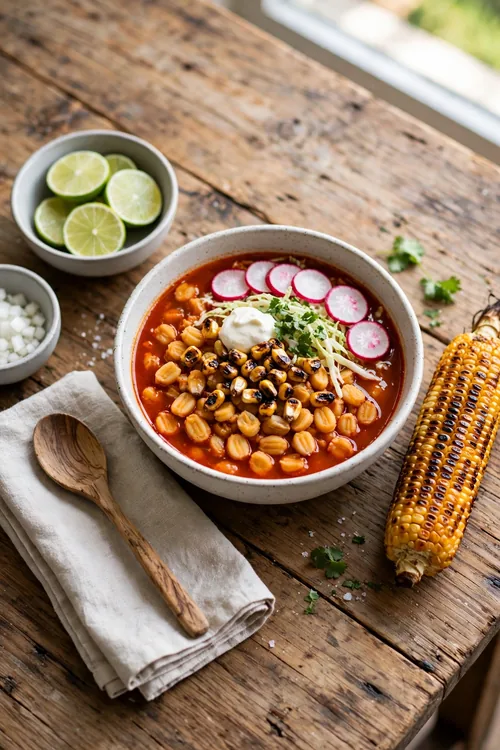
- Char corn kernels in a dry cast iron skillet until dark spots appear on most sides.
- Simmer the pozole base as usual, keeping the roasted corn out until the very end.
- Stir half the corn into the pot and save the rest for topping each bowl.
- Finish bowls with the reserved corn, a spoon of crema, and a pinch of smoked salt.
Roasted corn echoes the hominy’s sweetness while adding a toasty edge the broth does not have on its own. The double corn texture, chewy kernels below and crisp ones above, keeps every spoonful interesting. This is the version I serve when corn is piled high at the market.
Celebration Pozole Spread
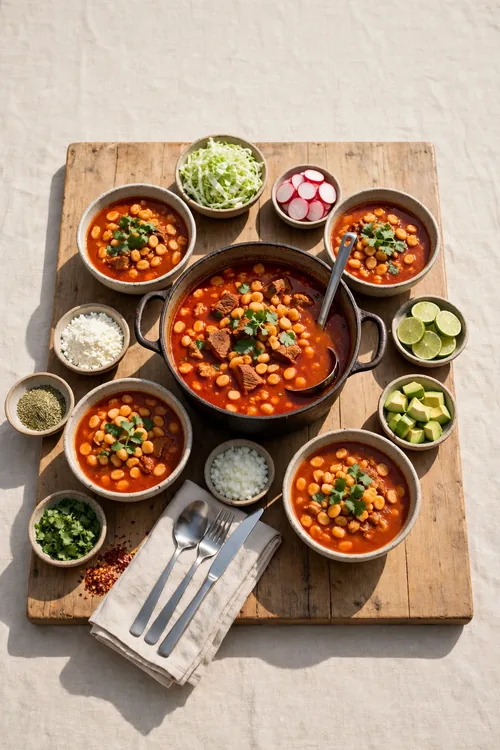
| Point | Small Gathering | Big Celebration |
|---|---|---|
| Pot size | One medium pot, four to six bowls | The largest pot you own, refilled once |
| Toppings | Radish, cabbage, lime, oregano | Everything, plus avocado, cheese, and tostadas |
| Serving style | Ladle at the stove, sit together | Toppings bar, guests serve themselves |
A celebration spread asks for one generous pot, many small bowls, and no strict rules at the table. People return for seconds, trade toppings, and linger long after the bowls are empty. That relaxed, abundant feeling is exactly what this soup was made to create for the people around it.
Conclusion
However you build your bowl, the heart of chicken pozole stays the same: tender hominy, a broth with real character, and toppings that crackle against the warmth. I have seen quiet weeknights turn into small celebrations around this pot more times than I can count.
Save these ideas, start with the style that calls to you, and let the garnishes pile high. Share the pot with someone who needs a good bowl. Your kitchen will smell wonderful, your people will gather close, and seconds will be nonnegotiable. That is a promise worth simmering for.