Why Is My Cornstarch Slurry Lumpy? Easy Fix Guide
A lumpy cornstarch slurry can ruin a smooth sauce. Dry clumps refuse to dissolve and cook into white blobs. Cold water and slow stirring prevent nearly all of it.
Cornstarch swells the moment it meets hot liquid, so dumping dry starch into a hot pot seals lumps before they can break apart. Mixing with cold water first keeps every grain separate. Mixing with cold water first keeps every grain separate. A small bowl lets you spot lumps before they reach the sauce.
This guide covers mixing, adding, and rescuing sauces in order. If teriyaki is next, the teriyaki sauce guide thickens a thin glaze with steady stirring.
Why Slurries Clump
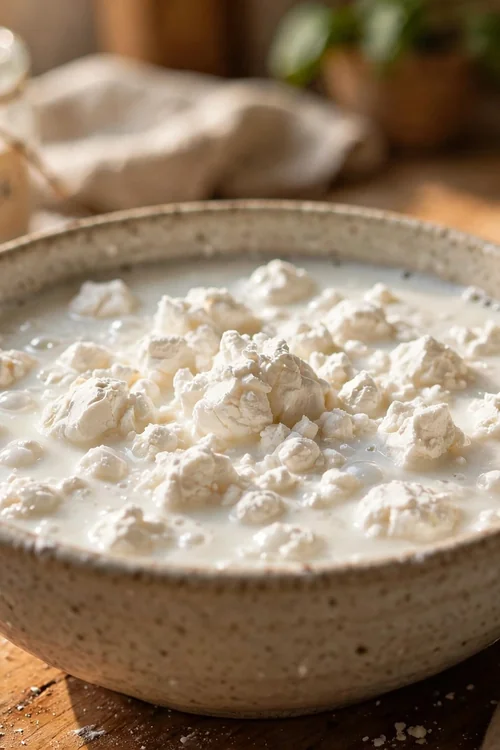
A slurry clumps when dry starch meets heat before it meets water. The outside of each lump gels instantly and traps dry powder inside. Stirring cannot break those sealed lumps apart once they form. Hot water cooks the starch on contact, so dry pockets seal into lumps. Cold water lets every granule separate before it heats.
Hot water in the mixing bowl causes the same problem. In my experience, cold water and a smooth mix before heating solve most lumpy slurries. Stir the mixture right before pouring, since starch settles fast at the bottom.
Use Cold Water
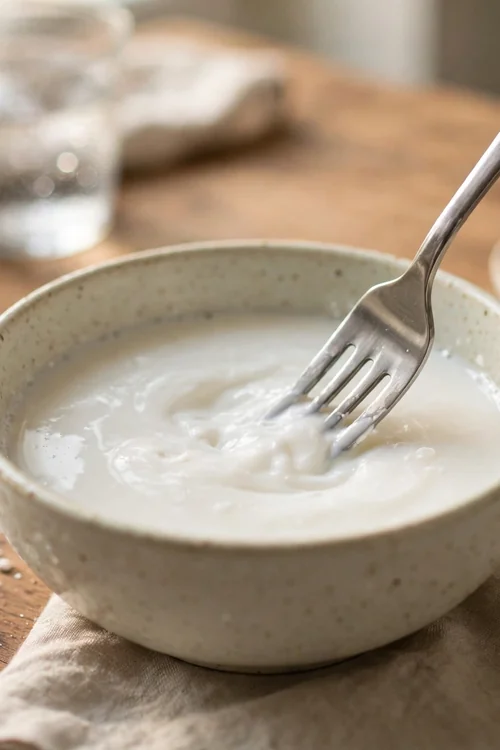
Cold water is the key. It lets the starch grains separate without swelling, so the mixture turns milky and smooth. Warm or hot water starts the swelling too early. Cold tap water works fine, so skip ice and measure carefully. A one to one ratio keeps the math simple.
- Use cold tap water or cold broth.
- Add one tablespoon of cornstarch to a small bowl.
- Pour in two tablespoons of cold water.
- Stir with a fork until no dry bits remain.
- Use the slurry right away.
Measure Ratios Right
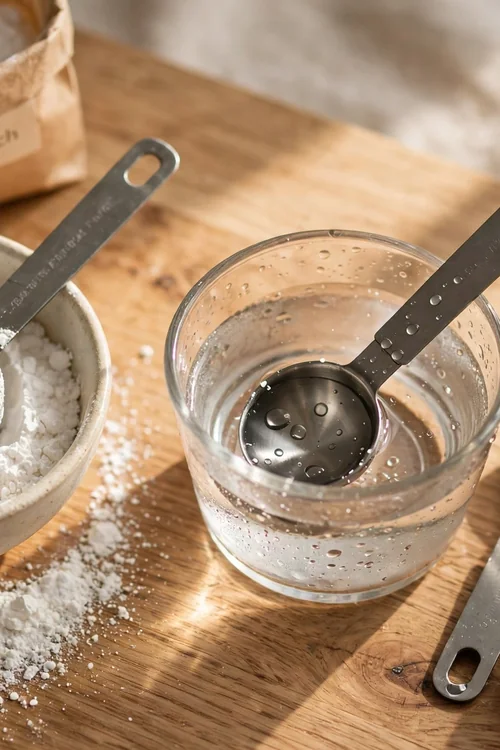
Quick Tip: Mix the slurry in a small bowl, not in the pot. A small bowl lets you see and break every lump before it reaches the sauce. A fork works better than a spoon for this job.
Stir again just before pouring. Cornstarch settles fast, and the bottom of the bowl can turn thick while the top stays watery. Measure both parts with the same spoon so the ratio stays true. Too much starch turns sauce gluey, while too little leaves it thin.
Stir Until Smooth
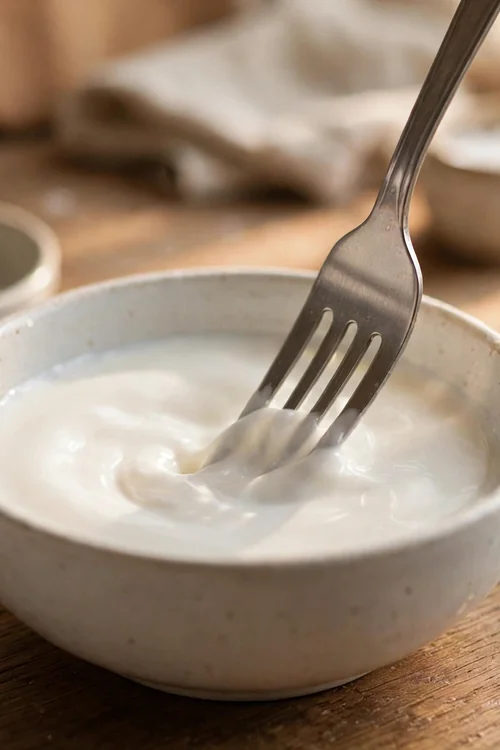
Common Mistake: Dumping the whole slurry into a boiling sauce at once. The starch sets in a blob, and the sauce turns lumpy and uneven. Some parts thicken while others stay thin.
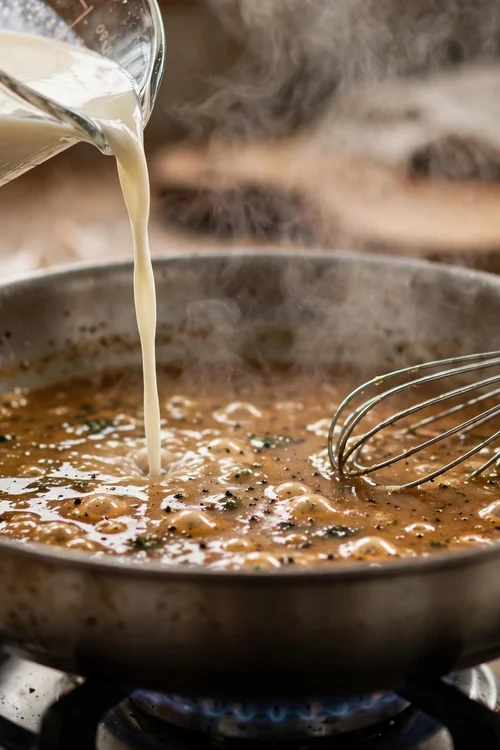
The Fix: Pour the slurry in a slow stream while stirring the sauce. Stop when the sauce coats a spoon, and give it a full minute to thicken before adding more.
Sauces thicken as they simmer, so patience matters. Adding more slurry too soon leads to a gluey, overthickened pot. Keep stirring until the liquid looks like milk with no white streaks. Pour it right away, since settled starch thickens unevenly. A quick final stir before pouring fixes most lumps.
Add Slurry Slowly
What You Need:
- Cornstarch: Fresh, dry starch mixes smoothest.
- Small bowl: A bowl lets you check for lumps.
- Fork: A fork breaks small clumps fast.
- Whisk: A whisk blends the slurry into sauce evenly.
- Fine sieve: A sieve rescues a lumpy sauce.
Keep a fork and a small bowl near the stove whenever a recipe calls for a slurry. The fix takes seconds when the tools are ready. Pour in a thin stream while stirring the sauce the whole time. A slow pour gives the starch time to spread before it thickens.
Strain Out Lumps
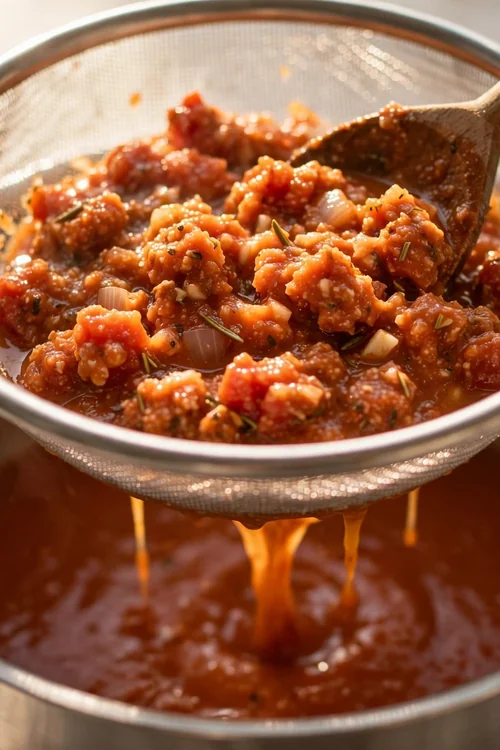
Before: Dry cornstarch went straight into a boiling stir fry sauce. White lumps floated through the pan, and the sauce stayed thin around them.
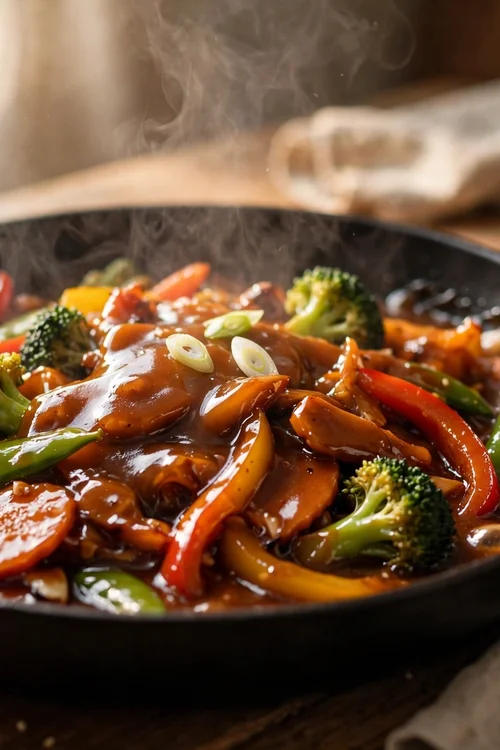
After: Cornstarch mixed with cold water went into the sauce in a slow stream. The sauce turned glossy and smooth in under a minute.
The ingredients never changed, only the order. Cold mixing first, slow pouring second, and the sauce thickens cleanly. Strain the sauce through a fine mesh sieve to catch any lumps. Whisk the strained sauce over low heat until it turns glossy. Serve once the sauce coats a spoon.
Fix Lumpy Sauces
Do This:
- Mix starch with cold water first.
- Stir until completely smooth.
- Pour in a slow stream.
- Simmer one minute, then check thickness.
Avoid This:
- Do not add dry starch to a hot pot.
- Do not use warm water for mixing.
- Do not dump the whole slurry at once.
- Do not boil the sauce hard after thickening.
Hard boiling after thickening can break the starch down and thin the sauce again. A gentle simmer holds the glossy texture. Whisk lumpy sauce hard over low heat, or blend it briefly until smooth. A quick strain at the end catches anything the whisk missed.
Rescue Overthickened Sauces
Time Needed: About 2 minutes to mix and add.
Difficulty: Very easy.
Cost: Pennies per batch.
Best For: Stir fry sauces, gravies, and soups.
Make the slurry when the sauce is almost ready. A slurry left sitting settles and needs a fresh stir before pouring. Thin an overthick sauce with broth or water a spoonful at a time. Stir well after each addition so the texture stays smooth and even.
Pick Right Starch

If the sauce is already lumpy, strain it through a fine sieve into a clean pot. The sieve catches the lumps while the smooth sauce passes through. Reheat gently and adjust seasoning. Cornstarch gives a glossy finish, while flour gives a cloudy one. Pick the starch that suits the sauce you want. Test a small batch first if you are unsure.
For a sauce with only a few lumps, whisk hard for a minute or blend briefly. Small lumps often break apart with enough agitation. Arrowroot works well for clear fruit sauces and never turns chalky.
Store Slurry Fresh

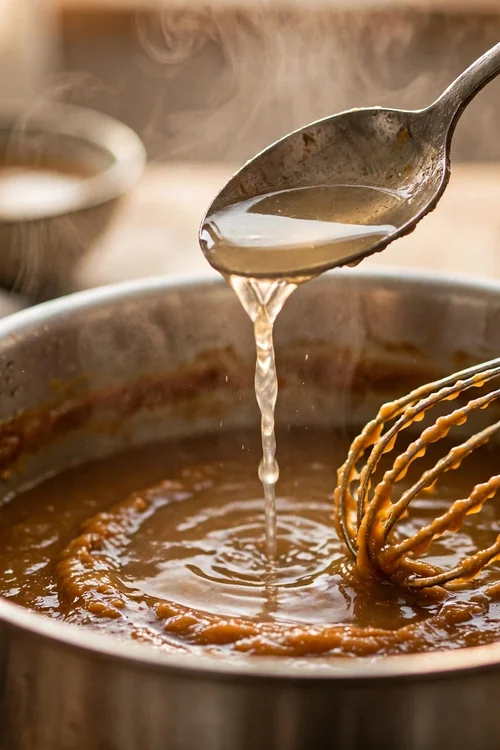
Overthickened sauce needs liquid, not more cooking. Stir in broth or water a spoonful at a time until the sauce flows again. Heat gently as you adjust. Mix slurry fresh each time, since stored slurry separates and thickens unevenly. A fresh mix takes one minute and works far better.
- Remove the pot from high heat.
- Add warm broth one spoonful at a time.
- Whisk after each addition.
- Stop when the sauce coats a spoon.
- Taste and adjust salt.
Plan Sauce Timing
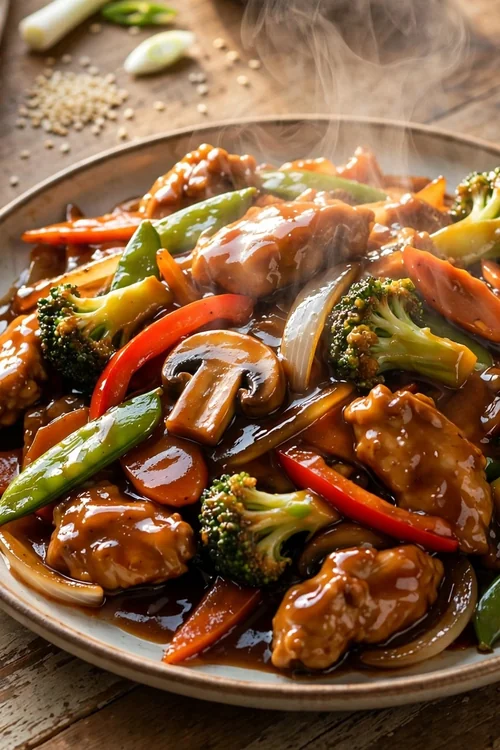
Quick Tip: Cornstarch gives a glossy, clear finish that suits Asian sauces and fruit glazes. Flour gives an opaque, matte finish that suits gravies. Pick the starch that matches the dish you are making.
Store cornstarch in a dry, sealed container. Damp starch clumps in the box and mixes poorly, so keep moisture away from it. Add the slurry at the very end, since long boiling breaks starch down and thins the sauce again. Thicken the sauce, taste it, and serve right away.
Conclusion
A lumpy cornstarch slurry comes down to order and temperature. Mix with cold water, stir until smooth, pour slowly, and simmer briefly. Those habits give glossy sauces without white blobs. For another sauce rescue, the poached eggs guide neats up poached eggs with gentle heat and timing.
Keep a fork and a small bowl near the stove whenever a sauce needs thickening. Mix the slurry fresh each time and stir it again before pouring. With cold water and a slow pour, every sauce will turn glossy and smooth. Strain out any lumps, and the pot will still come out clean.