Why Is My Oatmeal Gummy And Gluey? Easy Fix Guide
A bowl of gummy oatmeal sticks to the spoon like glue. The oats turn pasty, the texture feels heavy, and breakfast loses its comfort. The fix usually comes down to oats, liquid, or stirring.
This guide walks through each fix in order, from oats to cooking to serving. You need no special tools, just a little care and pantry staples. Most sticky bowls fluff up with one or two small changes. A gentle hand beats hard stirring every time. Small fixes make a big difference here. For overnight oats that turn watery instead, see overnight oats for a thick, creamy rescue.
Why Oatmeal Turns Gummy
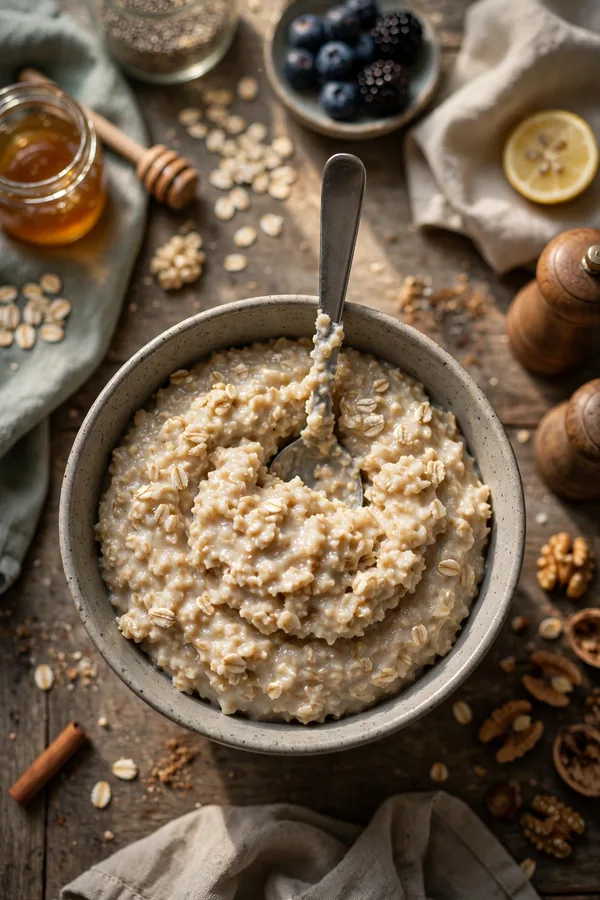
Oatmeal turns gummy for three main reasons: too much stirring, too little liquid, and overcooking. Hard stirring breaks the oats and floods the pot with starch. Too little liquid leaves a thick paste, and a long cook dries it further.
The good news is that each cause has a simple fix. Once you see which one hit your bowl, you can correct it before serving. Think of oatmeal as gentle work, not a race. A few small changes make a big difference here. Your patience shows in every fluffy spoonful.
Pick the Right Oats
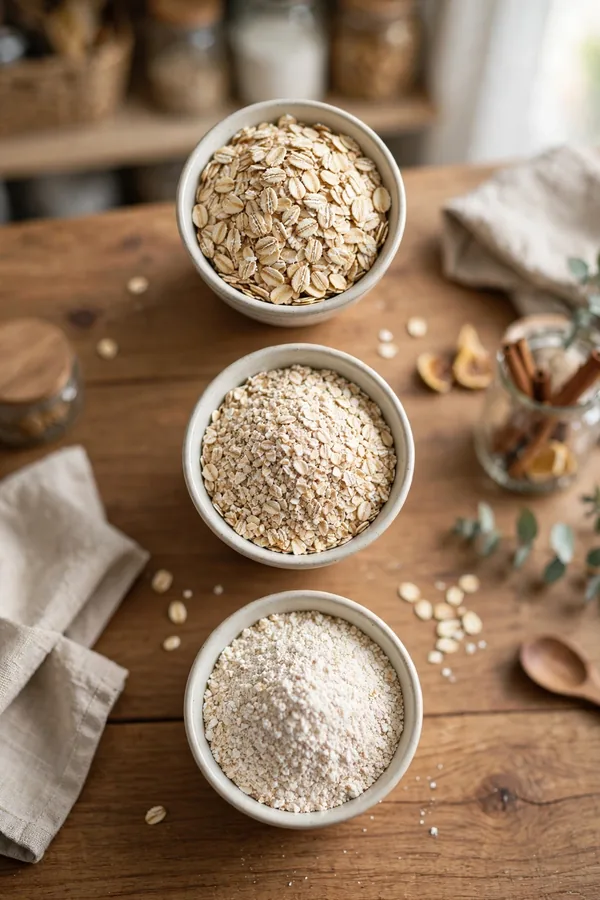
Rolled oats make the fluffiest bowl, because they hold shape while they cook. Steel cut oats stay chewy and need longer cooking. Instant oats break down fast and turn gummy with little warning. Pick rolled oats for a soft, separate bowl. Rolled oats cook faster than steel cut oats.
- Choose old fashioned rolled oats for the fluffiest bowl.
- Save steel cut oats for days with more cooking time.
- Skip instant oats when you can, since they gum up fast.
- Store oats sealed so they stay fresh and dry.
Fix the Liquid Ratio

Quick Tip: Use two parts liquid to one part oats for a creamy bowl. Too little liquid makes paste, while too much makes soup. Measure both, and the bowl lands right every time.
Start with the ratio on the packet, then adjust to taste. A splash more milk loosens the bowl without thinning it. In my experience, measuring fixes more bowls than any stirring trick. Keep a measuring cup near the stove. Measure first and the bowl stays in control. Milk at the end loosens the bowl.
Stir Less, Gently

Common Mistake: Many cooks stir oatmeal the whole time, the way they stir risotto. Constant stirring breaks the oats and turns the bowl into glue.
The Fix: Stir once at the start, then only every few minutes to stop sticking. Gentle, rare stirring keeps the oats whole and the bowl fluffy.
Let the oats cook undisturbed between stirs so they keep their shape. A calm pace keeps the texture light, not pasty. Watch the pot and stir only when it starts to catch. Gentle stirring beats hard beating every single time. Trust the gentle pace. Your bowl will thank you.
Cook on Low Heat
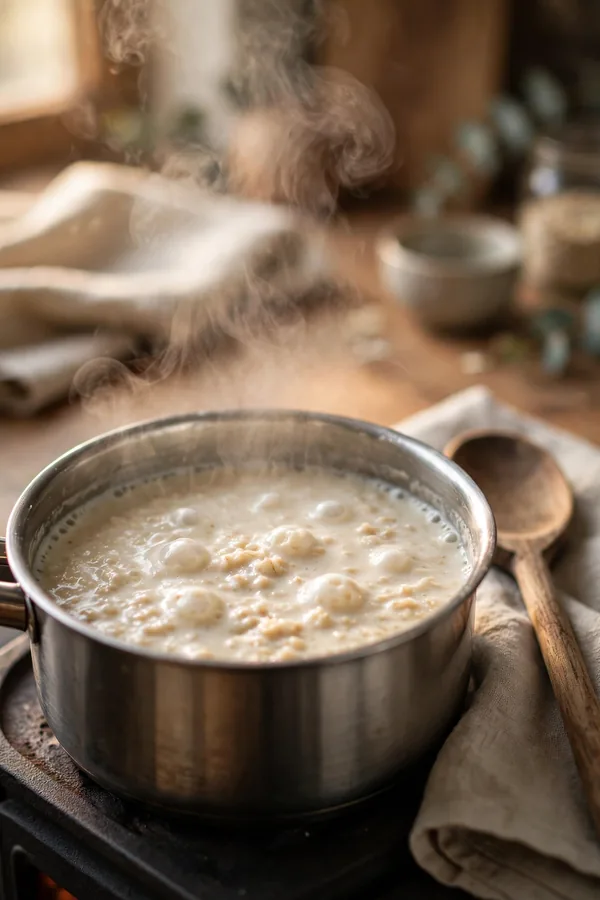
What You Need:
- Rolled oats: one cup for two servings.
- Milk or water: two cups, measured.
- Salt: a pinch, added near the end.
- Butter: one spoonful adds richness.
- Toppings: fruit, nuts, and honey to serve.
Low heat cooks oats gently without bursting them. High heat boils the pot dry and glues the oats together. Keep the flame low and the lid ajar, and the bowl stays creamy. A slow cook beats a fast boil every time. Trust the low flame. Low heat keeps the oats tender and separate.
Salt at the End
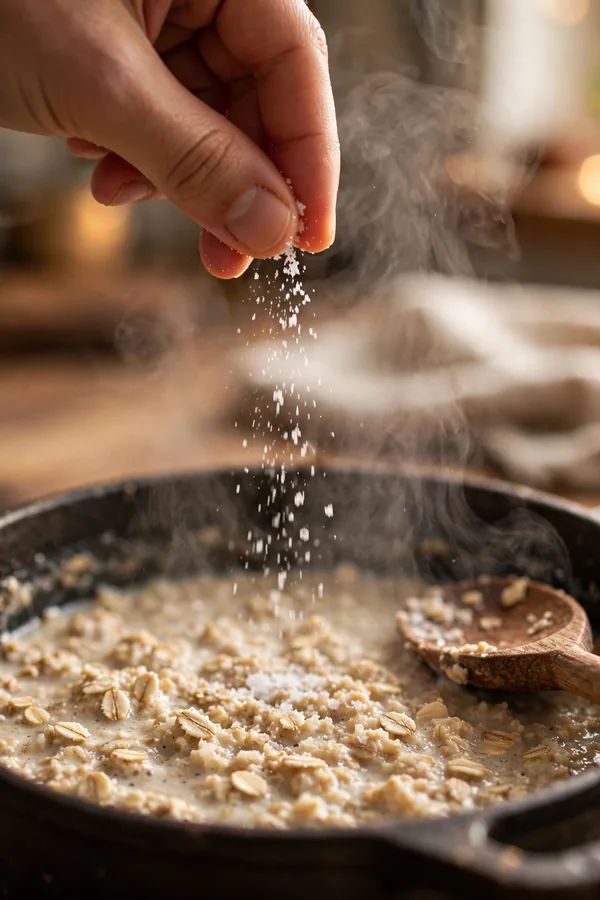
Before: The salt went in at the start, the oats seized, and the bowl turned stiff and pasty. The flavor tasted flat, and the texture felt heavy.
After: The same oats cooked without salt, then got a pinch at the end. The bowl stayed fluffy, the flavor brightened, and breakfast tasted fresh.
Salt firms oat starch if it goes in too early. Adding it at the end seasons the bowl without tightening the texture. A small timing change makes a big difference. Season late and the bowl stays fluffy. Trust the timing here. Small choices matter. Taste before serving. Let the pot sit covered for two minutes.
Top It Fresh

Do This:
- Add fruit and nuts after cooking, not during.
- Serve the oatmeal warm and freshly stirred.
- Add a splash of cold milk at the table.
- Keep toppings crisp by adding them last.
Avoid This:
- Do not stir toppings into the hot pot.
- Do not cook fruit with the oats.
- Do not let the bowl sit in the hot pot.
- Do not reheat on high heat.
Fresh toppings keep the bowl lively and light. Fruit cooked with the oats turns mushy and sweetens the whole pot. Add toppings at the table, and every bowl tastes fresh. Toppings at the end keep the texture bright. Plan to top right before serving. Enjoy the crunch. Fresh fruit on top adds color and crunch.
Oat Types Matter

Time Needed: About 15 minutes, plus resting time.
Difficulty: Beginner friendly with easy steps.
Cost: Uses oats and milk you already own.
Best For: Weekday breakfasts and meal prep.
Rolled oats cook in ten minutes and stay fluffy. Steel cut oats take thirty minutes and stay chewy. Instant oats cook in two minutes but gum up fast. Match the oat to your morning and the bowl follows. Read the packet before you start cooking. Oats thicken as they cool, so serve promptly.
Rest Before Serving

Oatmeal needs a short rest just like rice does. Pull the pot off the heat, cover it, and let it sit for five minutes. The oats settle, the cream relaxes, and the bowl turns fluffy.
Resting also lets the bowl loosen slightly instead of tightening. Stir once before serving so the texture looks even. A short pause makes the bowl look and taste better. Five quiet minutes are all it takes. Try it once and you will rest every bowl. Serve the oatmeal warm with fruit. Enjoy every fluffy spoonful.
Rescue Gummy Bowls

Already cooked a gummy bowl? Do not throw it out. A splash of milk and a gentle stir can save most bowls, and a few tricks make them worth serving. The rescue takes minutes and no special tools. Start with the simplest fix first. Use less water next time.
- Stir in warm milk one splash at a time until it loosens.
- Warm the bowl slowly on low, stirring gently.
- Add fresh fruit and nuts on top.
- Serve at once so the bowl stays fluffy.
Next Breakfast Checklist
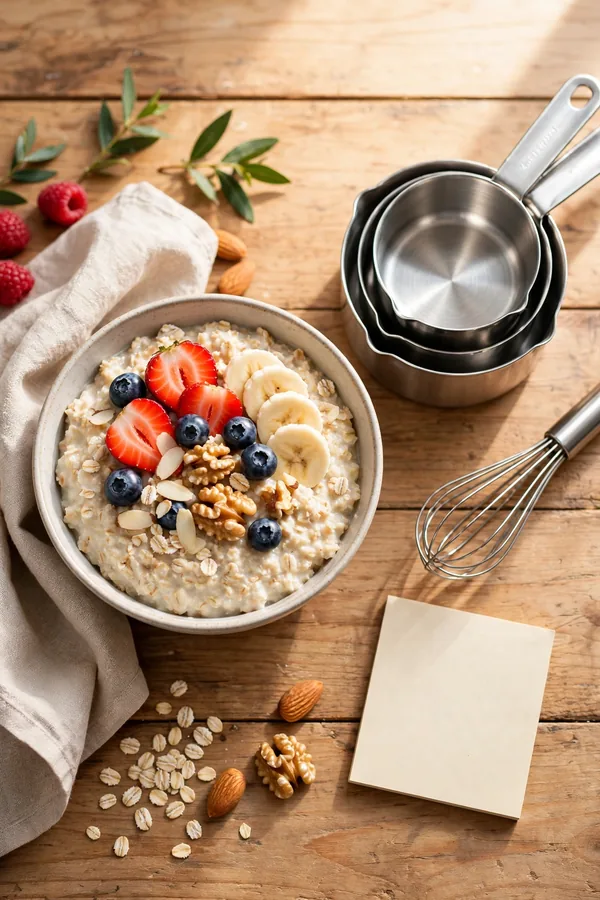
Quick Tip: Keep this checklist near the stove for your next breakfast. A glance before cooking saves a rescue later. Soon the habits feel automatic, and every bowl lands fluffy and fresh.
Great oatmeal comes from habits, not luck. Pick rolled oats, measure the liquid, stir gently, and serve promptly. Check the texture early, adjust the next bowl, and enjoy oatmeal that stays fluffy to the last spoonful. That is a bowl worth repeating. Your mornings will thank you.
Conclusion
Fluffy oatmeal comes from the right oats, a steady liquid ratio, and gentle stirring. Fix those three habits and gummy oatmeal becomes a rare mishap instead of the usual result. Start with rolled oats, measure the liquid, and stir lightly. Your next bowl should spoon fluffy, stay creamy, and taste fresh to the last bite. If another dish puzzles you, read rice pudding for creamy pudding fixes. Keep this guide handy and cook with confidence every single time at the table tomorrow. Your mornings will taste better at once. Serve it with pride and a steady hand.