Why Does My Sourdough Bread Come Out Gummy? Easy Fix Guide
If your gummy sourdough bread slices into a wet, sticky crumb instead of an open, airy one, you are not alone. Many home bakers face this same letdown, and the good news is that a few steady habits fix it.
The usual causes are simple. Underbaking, slicing too soon, or a rushed ferment can all leave the crumb damp. Once you give the loaf full heat and full cooling time, the crumb turns light.
This guide walks you through each fix in order, from ferment to baking and cooling, so your next loaf slices cleanly. For a roast rescue next, read this cooked turkey guide after this one.
Why Sourdough Turns Gummy

Sourdough turns gummy when the inside stays wet. A loaf pulled early looks done outside but still holds moisture in the crumb. Slicing while warm lets steam collapse the air pockets into a dense, sticky mass. The crumb never gets a chance to set.
A rushed ferment also plays a part, since underfermented dough holds water poorly. The fix is patience at both ends: a full ferment and a full cool. Give the dough time to build strength, and give the baked loaf time to finish setting. Patience pays off at both ends of the bake.
Bake It Fully

Bake the loaf fully, past the point where it merely looks done. A deep golden crust and a hollow sound when tapped mean the inside has baked through. Trust the thermometer more than the crust color, and add five minutes if the center reads low.
- Preheat the Dutch oven for at least 30 minutes.
- Bake covered for 20 minutes, then uncovered for 25 minutes.
- Check that the inside reaches 205 to 210 F.
- If the crust browns too fast, lower the heat by 25 degrees.
Cool Before Slicing

Quick Tip: Let the loaf cool for at least two hours before slicing. The crumb is still setting as it cools, and cutting early turns it gummy no matter how well you baked it.
Cool the loaf on a rack so air reaches the base. The crust will crackle softly as it cools, which is a good sign. Two hours feels long, but it is the cheapest fix in baking. Set a timer so you are not tempted to slice early.
Ferment With Care

Common Mistake: Many bakers rush the bulk ferment and shape too soon. Underfermented dough bakes into a tight, wet crumb with large tunnels and dense patches.
The Fix: Let the dough rise until it grows by about half and feels light and airy. Gentle folds during the rise build strength without tearing the dough.
Watch the dough, not the clock. A warm kitchen ferments faster than a cool one, and a dough that feels puffy and domed is ready. A flat, stiff dough needs more time. Mark the starting level on the bowl so you can see the rise clearly.
Use Less Water
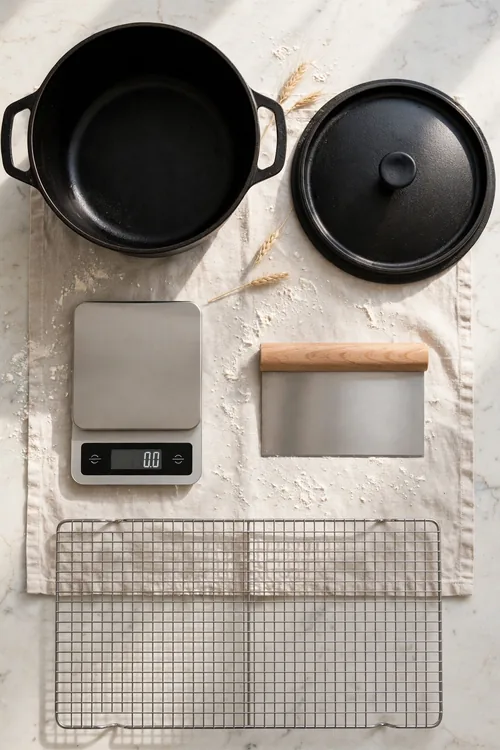
What You Need:
- Kitchen scale: Measures flour and water exactly for steady hydration.
- Dutch oven: Traps steam early and bakes a crisp crust.
- Thermometer: Confirms the loaf is fully baked inside.
- Bench scraper: Shapes the dough without tearing it.
- Cooling rack: Lets air reach the base while the crumb sets.
A thermometer removes all guessing. A loaf that reads under 200 F inside is underbaked, even if the crust looks dark. Bake until the center reads 205 F or higher. Check the center, not the edge, and leave the probe in place for a steady reading.
Shape For Structure

Before: Before the fix, the dough felt slack and wet, and the loaf spread flat in the oven. The crumb came out dense and sticky.
After: After the fix, the same dough gets less water and stronger folds. The loaf holds its shape, springs up in the oven, and slices into an open crumb.
If your flour struggles with high water, drop the hydration by five percent. A slightly firmer dough is far easier to shape, and the crumb often turns out lighter, not denser. Change only one variable at a time so you know what helped. A strong shape also scores cleanly, since the tight skin opens evenly.
Fix Gummy Loaves

Do This:
- Shape the dough snugly to build surface tension.
- Rest the shaped loaf seam side up in a floured basket.
- Chill the loaf overnight for deeper flavor and easier scoring.
Avoid This:
- Do not shape with wet hands and a wet board.
- Do not skip the rest after shaping.
- Do not bake a loaf that has overproofed and collapsed.
Good shaping traps gas inside the loaf. A tight skin holds the rise up, so the oven spring opens the crumb instead of letting it spread flat. Shape with firm, confident hands, and let the shaped loaf rest before baking. A calm rest builds a better rise. A tight skin makes every later step easier.
Pick The Right Flour

Time Needed: About 45 to 50 minutes of baking, plus 2 hours of cooling.
Difficulty: Medium, once ferment timing feels natural.
Cost: Low, since flour, water, and salt do the work.
Best For: Weekend baking and sandwich loaves.
Score the loaf just before baking with one confident slash. A clean score lets the loaf expand, while a shallow or ragged score traps gas and makes the crumb dense. Use a sharp blade, and score quickly so the dough does not deflate. A steady hand matters more than speed when scoring the loaf.
Score And Steam

A gummy loaf can still be enjoyed. Slice it thin and toast each slice until crisp, then serve with butter or soup. Toasting dries the crumb and brings out the flavor. Toast on medium heat so the slices crisp without burning. Serve the toast warm for the best flavor.
Another rescue is croutons. Cube the loaf, toss with oil and salt, and bake until crisp. The wet crumb turns into crunchy bites that top salads and soups well. Store the cooled croutons in a sealed jar for up to a week. They stay crisp for days in a sealed jar.
Store Loaves Right

Store sourdough cut side down on a board, covered with a clean towel. The towel keeps the crust crisp while the cut face stays soft. Keep the loaf away from the fridge, since cold air dries the crumb fast. Room temperature keeps it best.
- Cool the loaf fully before storing.
- Place it cut side down on a wooden board.
- Cover it loosely with a clean towel.
- Keep it at room temperature for up to two days.
- Freeze extra loaves in a sealed bag for later.
Final Crumb Check

Quick Tip: Hold one slice up and look at the crumb. A good loaf shows open, even holes with no wet or sticky patches. If the crumb still looks damp, bake the next loaf five minutes longer.
This quick check takes only a moment. An open crumb means the ferment and bake were right, and a small bake time change now fixes the next loaf. Check a slice from the center, since it shows the true crumb. A small change now saves the next loaf from the same fate.
Conclusion
Fixing gummy sourdough bread comes down to full baking, patient cooling, and a steady ferment. Those three habits turn a wet, sticky crumb into an open, airy loaf with a crisp crust. Try them on your next bake and enjoy bread worth the wait. Keep the ferment steady and the cooling patient every time you bake, and open airy loaves will become your normal result. A full bake and a full cool make all the difference, and your bread will be worth the wait. For another kitchen rescue, read this cake bottom guide next.