Why Is My Baked Potato Hard in the Center? Easy Fix Guide
Hard baked potato centers frustrate many home cooks. You bake the potato, the skin turns crisp, and the fork still meets a firm core inside. The fluffy flesh you wanted stays locked behind that firm center.
Most firm centers come from a cool oven, a short bake, or mixed sizes. Thick skins and cold starts slow the heat, so the outside looks done while the middle stays firm. In my experience, one timing change beats any new tool.
This guide walks through each cause in order, from potato choice and heat to testing and rescue fixes. Follow the steps, and your next potato should bake soft through the middle. And if your fried chicken also loses its crust, see why chicken coating falling off happens and how to fix it.
Why Potatoes Stay Hard
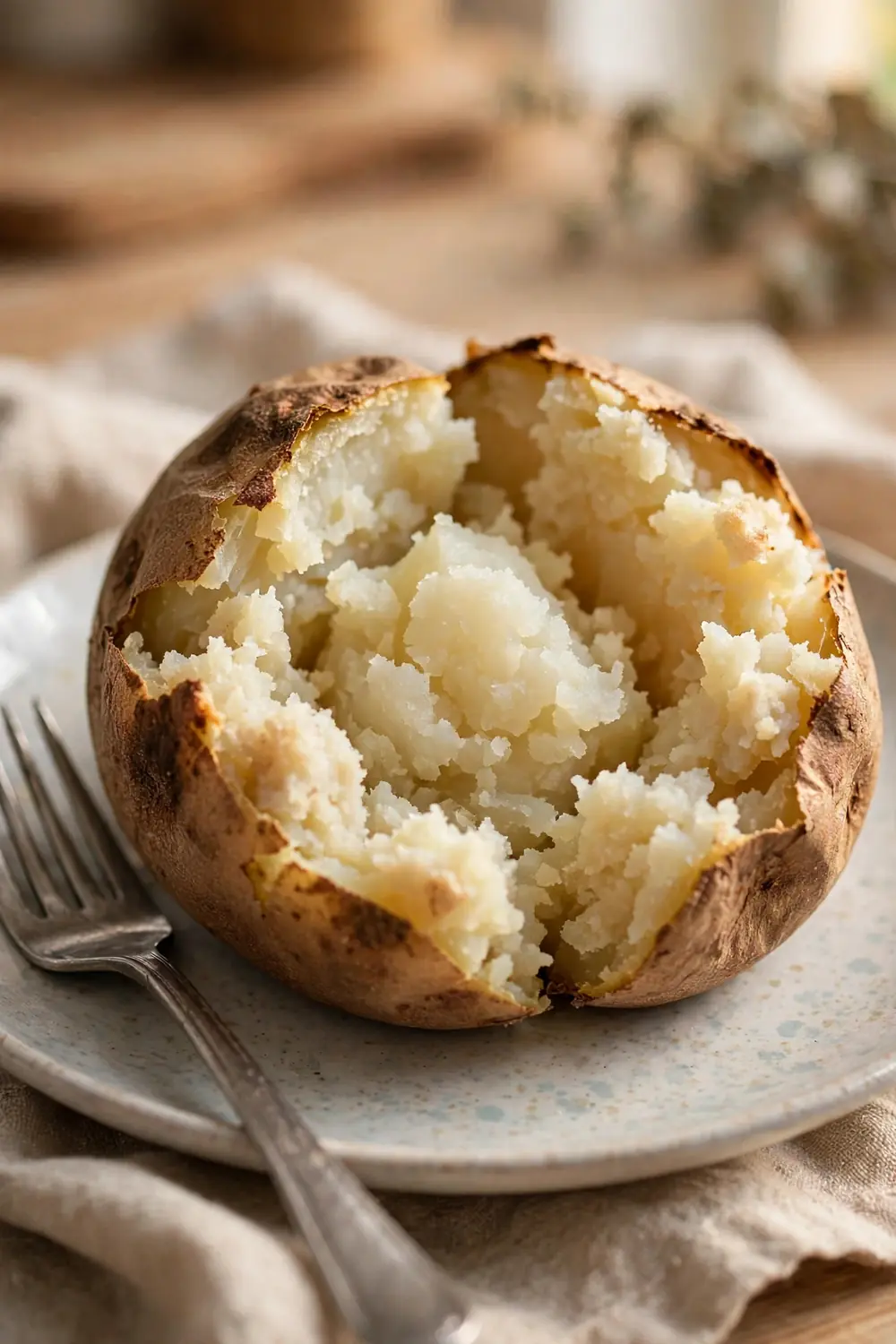
A potato stays firm when heat fails to reach the center before the skin dries out. A thick skin, a large potato, and a cool oven each slow the bake. The skin crisps, but the dense flesh inside never softens. The potato looks done, the fork meets a firm core.
A firm core does not mean the potato went bad, and the potato stays usable. Give it more time, and the center softens as the heat works inward. A longer bake builds fluff, while a short bake leaves the middle firm. Check the potato before you toss it away.
Pick the Right Potatoes
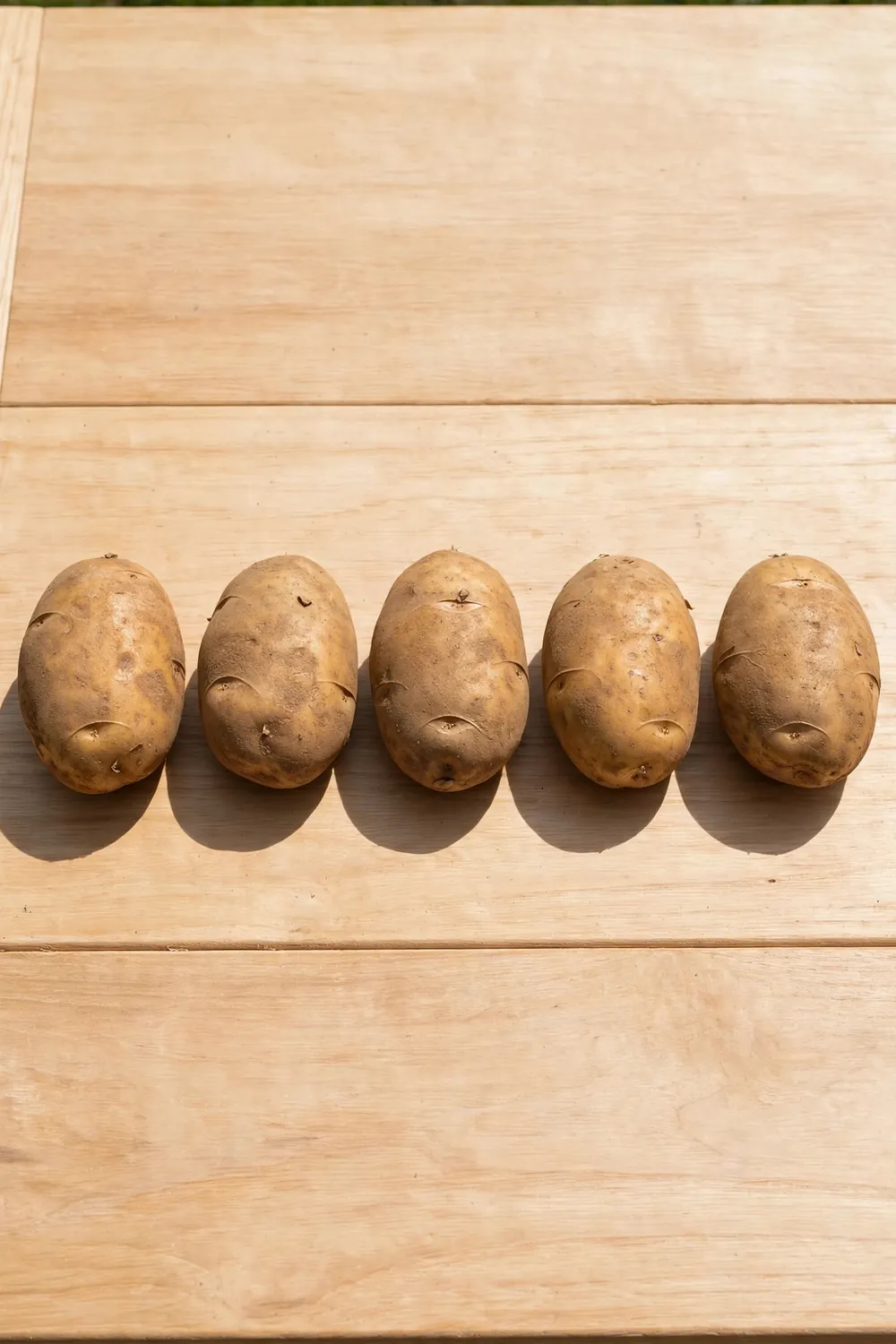
Russet potatoes bake fluffy, while waxy kinds stay dense and firm in the middle. Pick large russets of matching size, so every potato finishes at the same time. Even potatoes keep the bake even, and the texture turns light throughout.
- Choose russet potatoes with smooth skins and no green spots or soft ends.
- Match sizes closely, since a small potato finishes long before a large one.
- Wash each potato, then dry it well before it goes into the oven.
- Skip waxy potatoes for baking, since they stay dense even when fully cooked.
Use High Heat
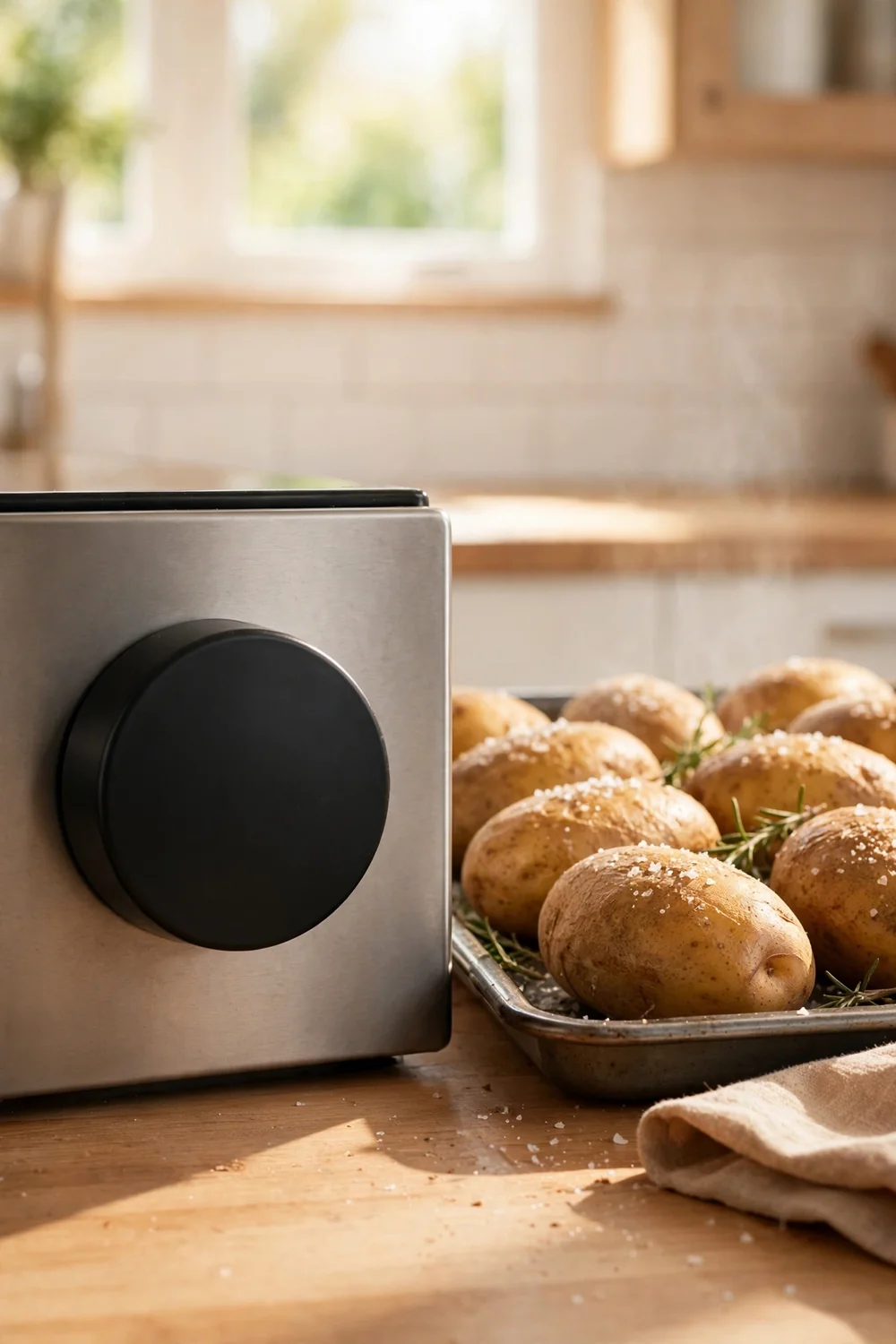
Quick Tip: Give the oven a full preheat before the potatoes go in. A cold start bakes uneven, and the center never catches up. Wait until the oven holds steady heat.
High heat pushes warmth deep, and the potato bakes through to the middle. A cool oven dries the skin, while the center stays firm. Heat the oven to 400 degrees, and let it warm fully first. Hot air keeps the flesh fluffy, and the skin turns crisp.
Pierce the Skin First
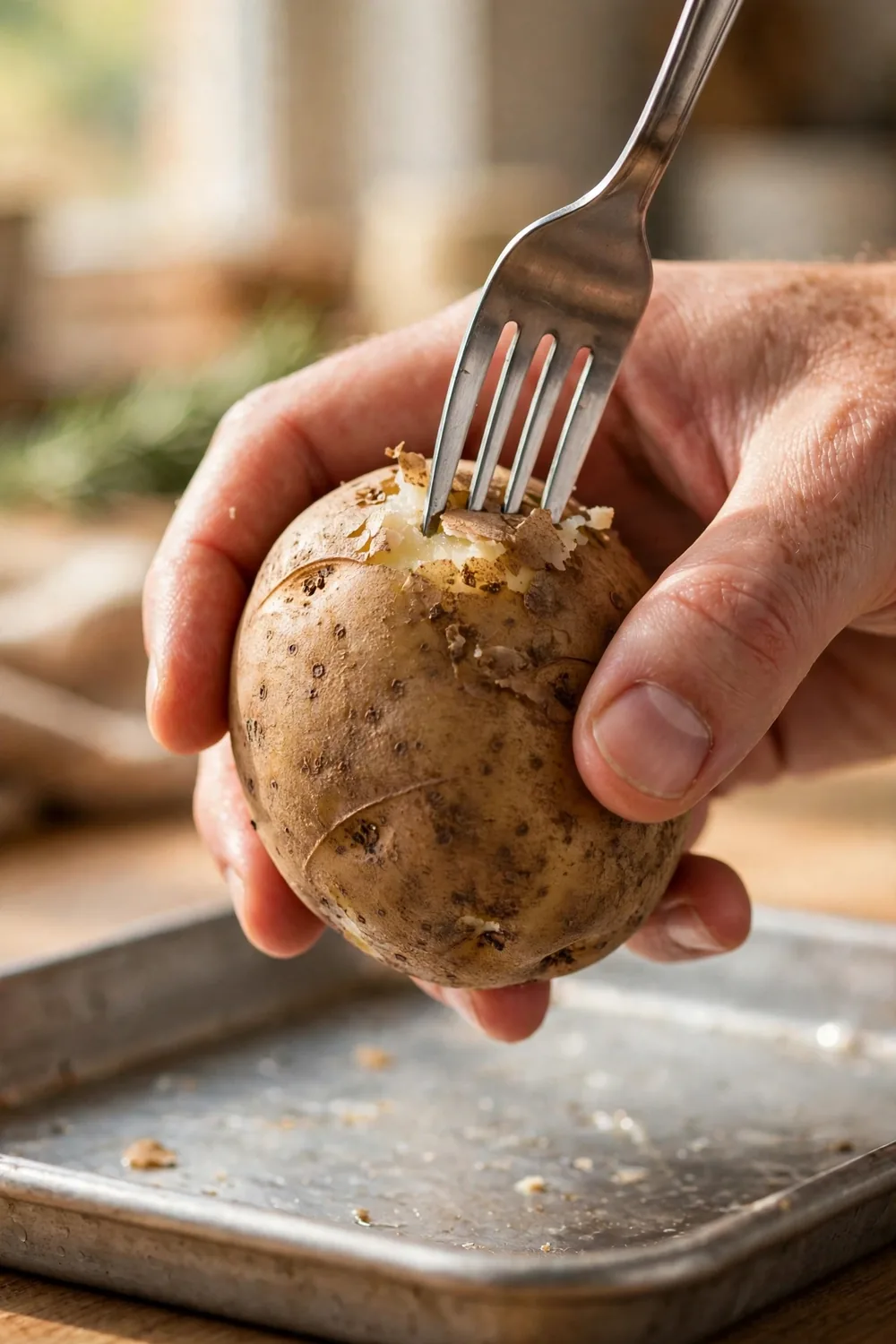
Common Mistake: Most cooks prick the skin once or skip the step entirely. Trapped steam swells the skin, and the center cooks slow and uneven. One poke vents only one small spot.
The Fix: Prick each potato six times with a fork, reaching deep with every poke. Turn the potato as you work, and cover the whole skin. Even vents release steam and keep the bake steady.
Piercing the skin lets steam escape, so the potato bakes evenly from edge to center. Vented skin keeps the flesh light, while sealed skin traps moisture and cooks slow. Use a fork with firm pressure, and prick on all sides. Even holes make the fluffiest potato.
Bake It Longer
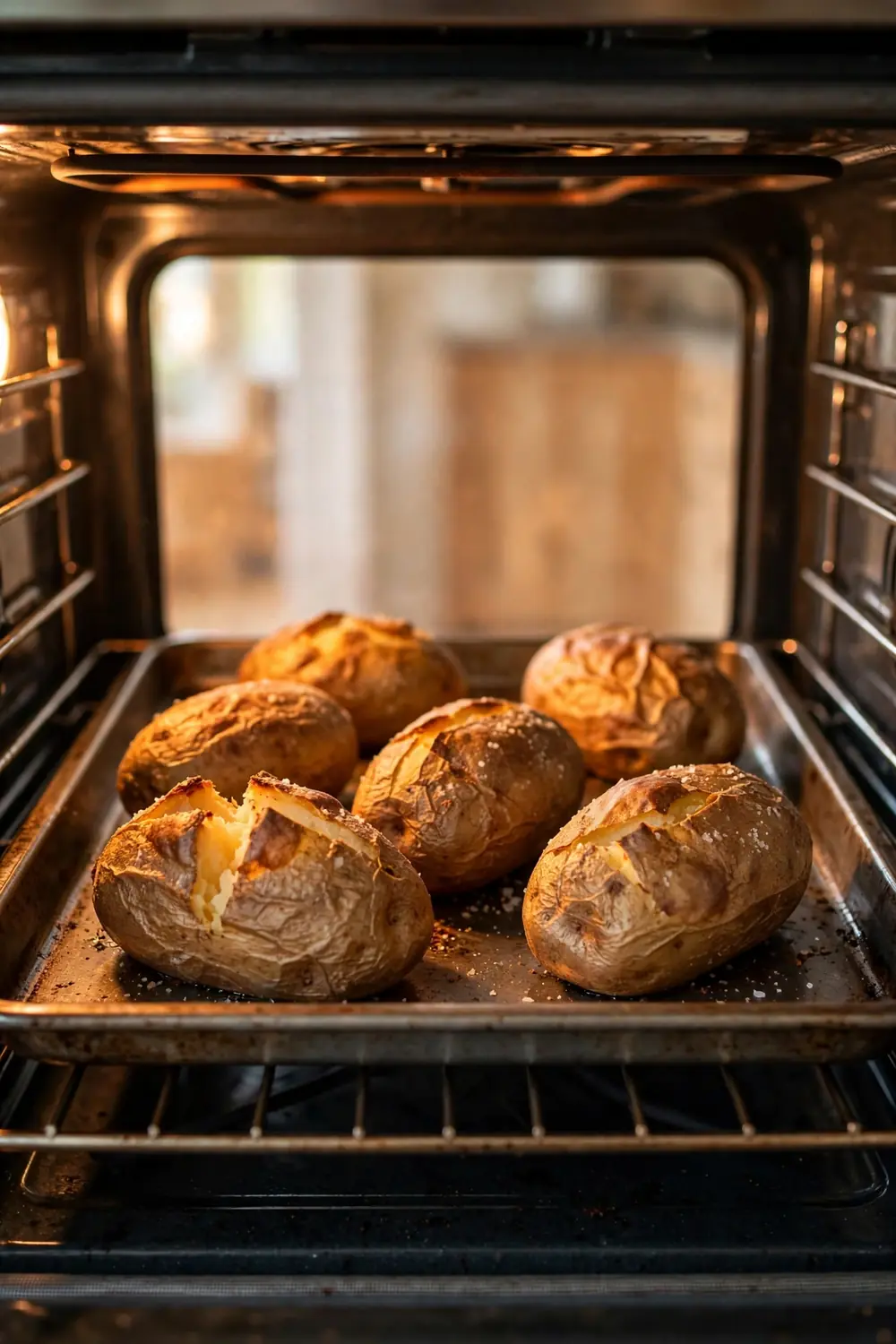
What You Need:
- Timer: A timer keeps the bake honest, so you never pull the potato early.
- Baking tray: A tray holds the potatoes steady and catches any drips.
- Oven mitt: A thick mitt lets you handle the hot tray with care.
- Fork: A fork tests the center when the timer ends.
A longer bake drives heat to the center, and the potato turns soft through the middle. A short bake leaves the core firm, even when the skin looks crisp. Keep the potato baking for a full hour, then test it. A full bake keeps the flesh fluffy and the skin crisp.
Wrap It in Foil
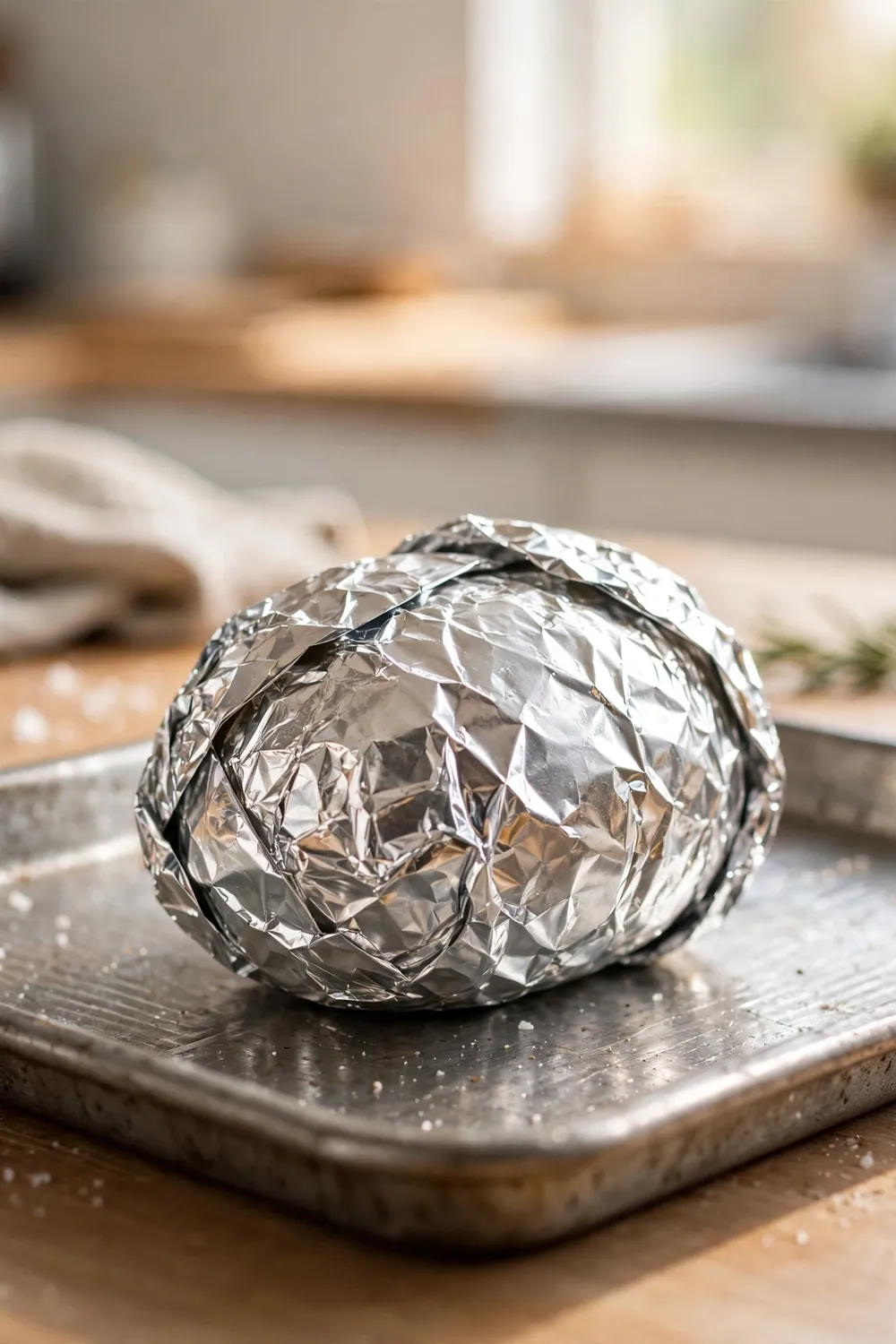
Before: An unwrapped potato dries out before the core softens. The skin turns tough, and the middle stays firm. The potato looks baked, yet the fork meets resistance.
After: Wrapped tight in foil, the potato steams gently in its own moisture. The heat reaches the center, and the flesh turns soft. The skin stays tender, and the fork slides through.
Foil traps steam, and the potato cooks through to the center. Wrap each potato tight, and seal the edges well so no steam escapes. A tight wrap holds heat, and the texture turns soft. Unwrap near the end if you want crisp skin on top.
Turn It Halfway
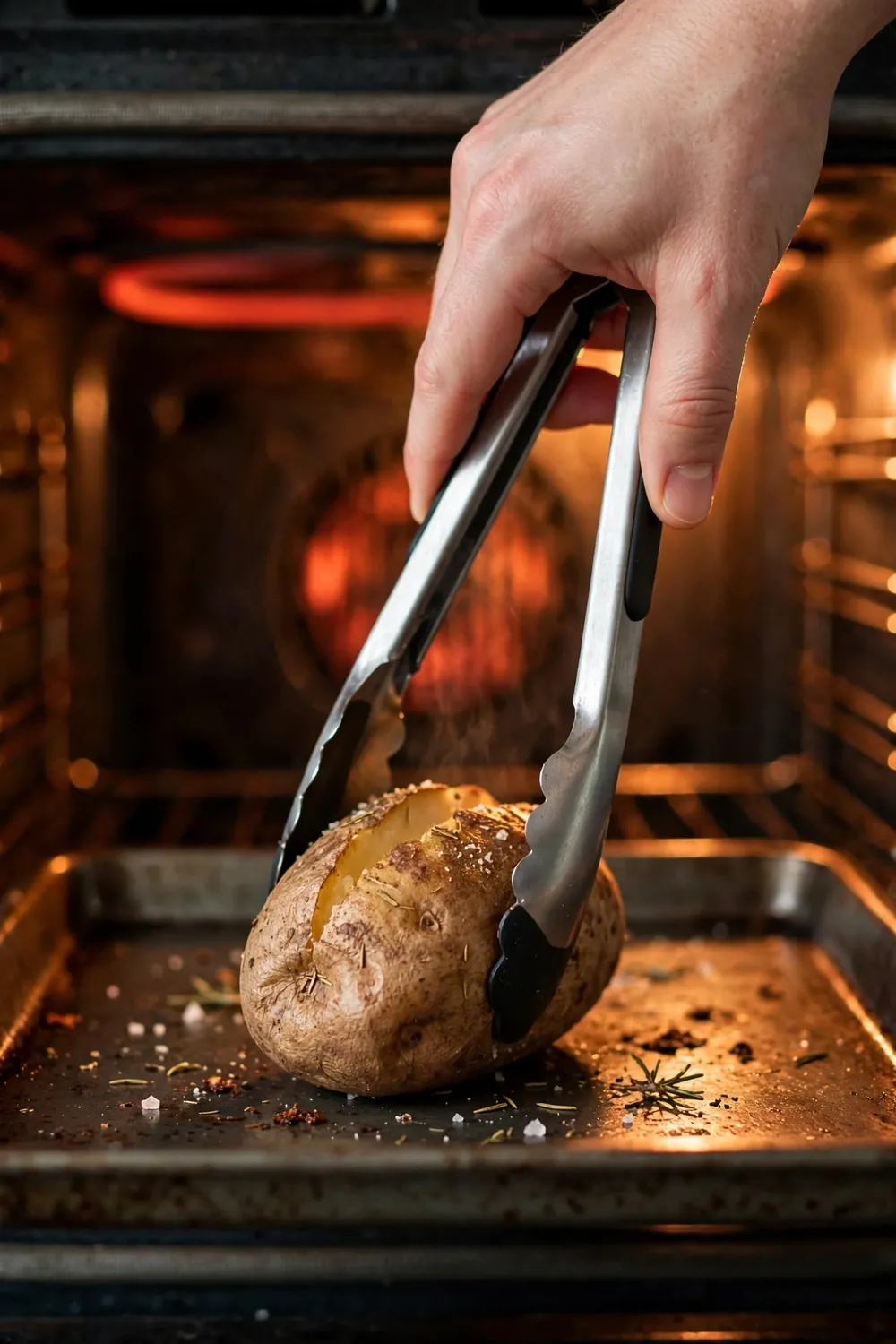
Do This:
- Flip each potato once after thirty minutes for an even bake.
- Keep the tray level when you turn the potatoes.
- Shut the oven door fast so the heat stays steady.
Avoid This:
- Do not leave one side facing the heat the whole bake.
- Do not turn the potatoes late, since one side stays firm.
- Do not poke new holes while turning, since steam escapes.
Turning the potato halfway evens the bake, and the center softens all the way through. One side facing the heat cooks fast, while the other side stays firm. A timely turn sets an even bake, and the flesh turns fluffy. Even heat makes the softest potato.
Finish in the Microwave
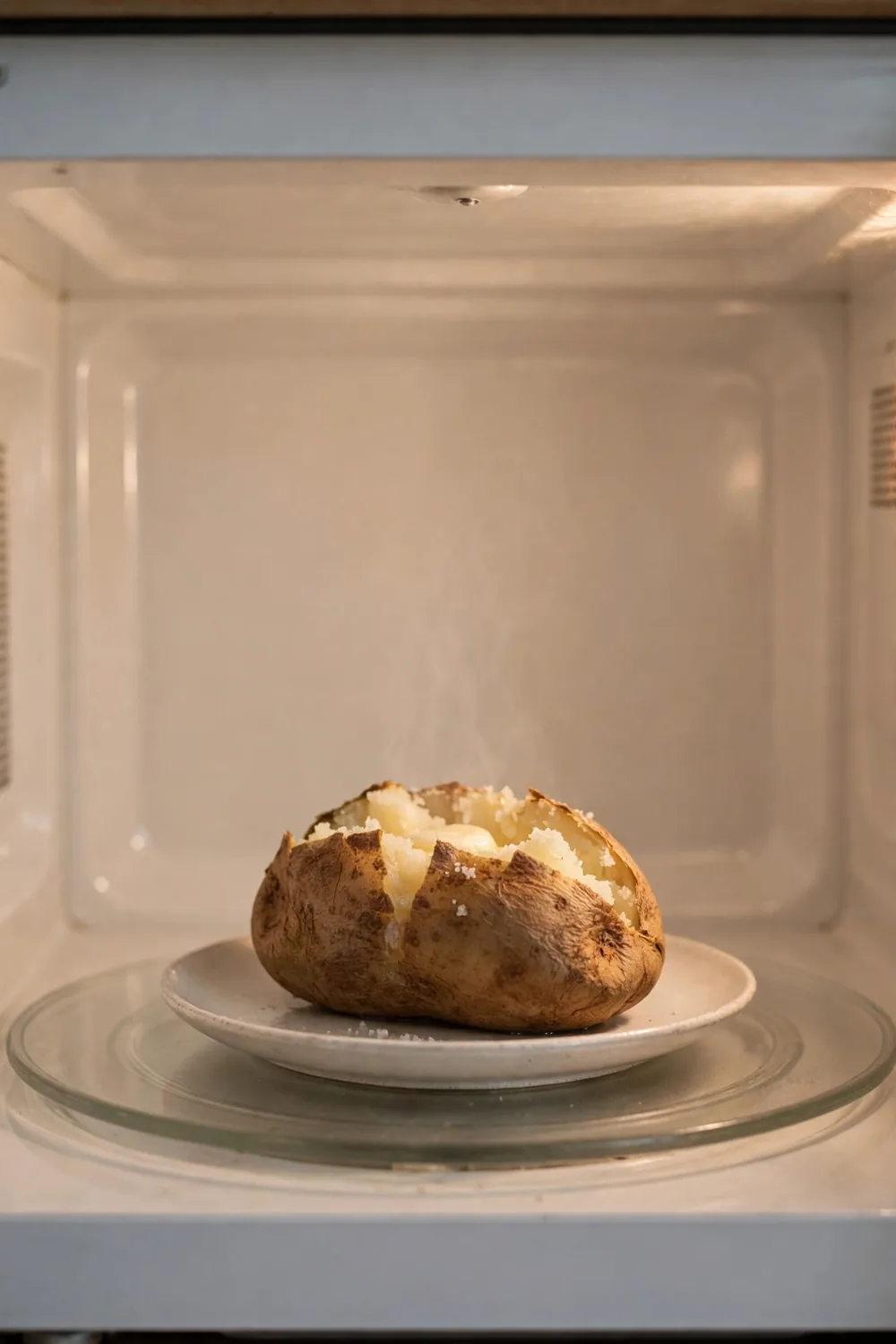
Time Needed: 2 to 4 minutes
Difficulty: Easy
Cost: None
Best For: A stubborn firm center
The microwave finishes a firm center in minutes, and the potato turns soft. Move the potato to the microwave, and heat it in short two minute bursts. A long burst dries the flesh, while short bursts melt the core. Rest the potato for one minute before you cut it.
Check the Center
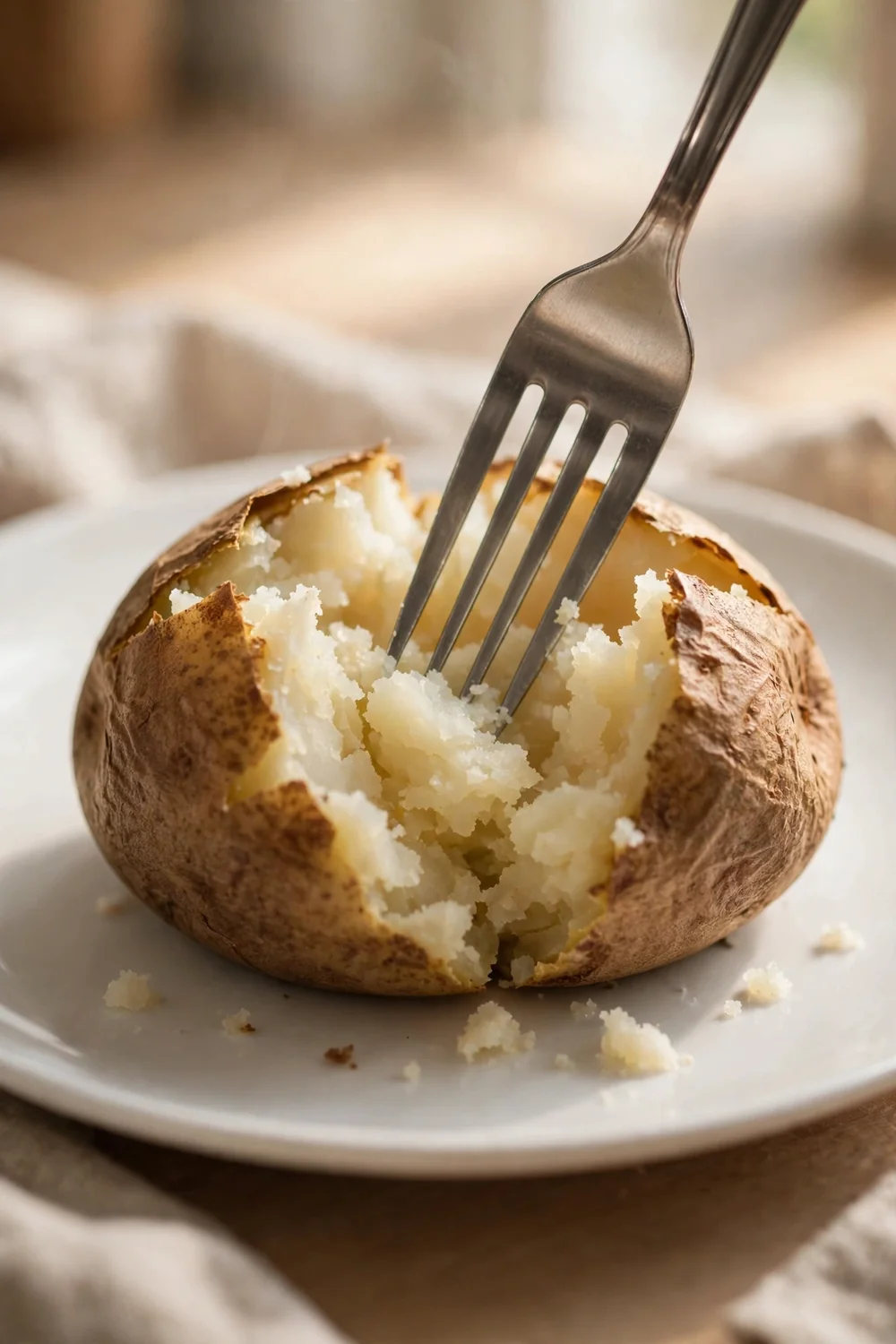
Testing the center tells you when the potato is truly done. A crisp skin can hide a firm core, and the potato stays hard inside. Slide a fork into the middle, and feel for soft flesh. A soft fork means the potato is ready to serve.
Pull the fork out slow for a true read, since a fast poke can skip the core. Test the largest potato first, because small ones finish sooner. If the center still resists, give the potato ten more minutes. True tests make the fluffiest potato at home.
Common Mistakes to Avoid
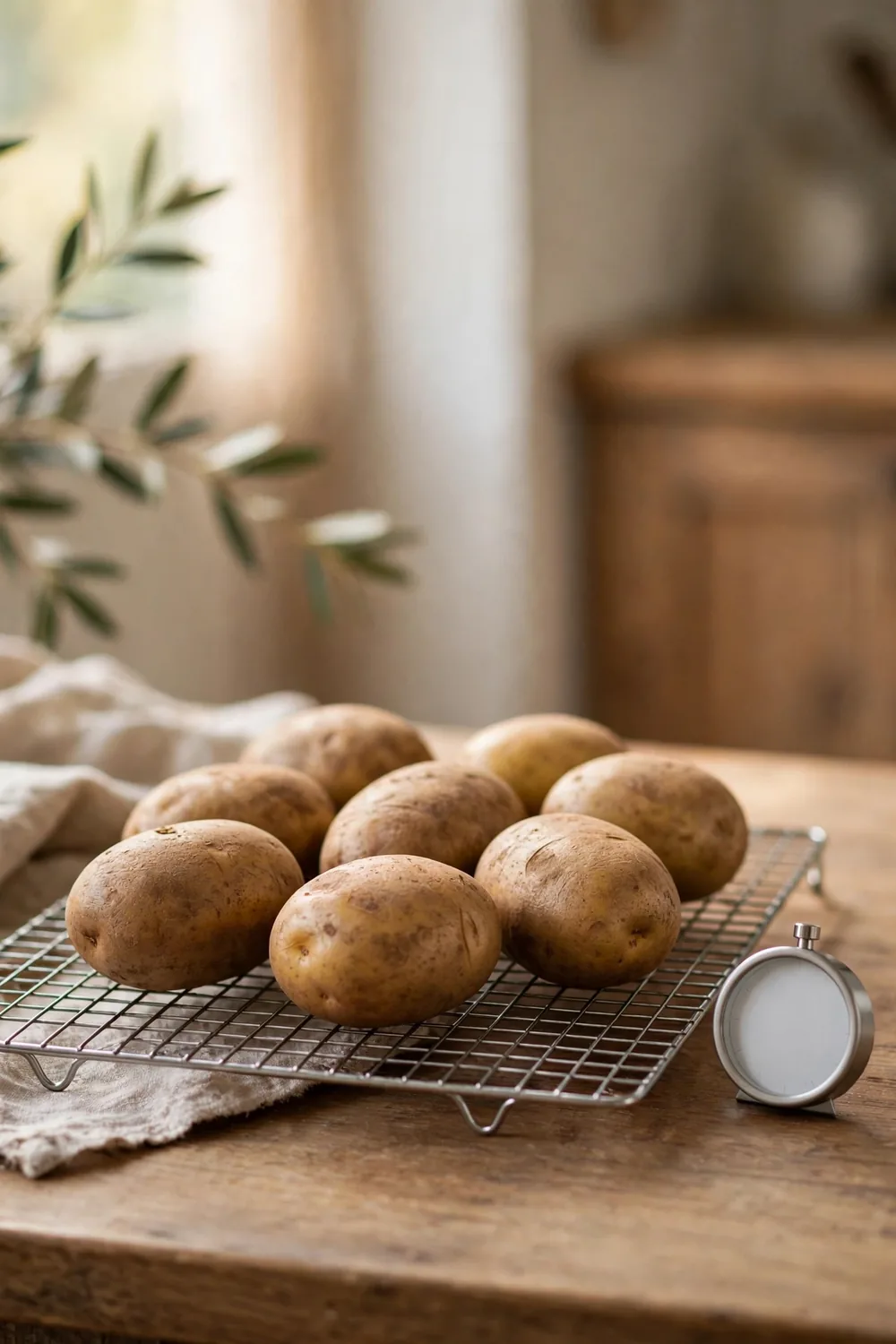
Most firm centers come from a few repeatable habits, not bad potatoes. Fix one habit at a time, starting with a full preheat and a longer bake. The list below covers the mistakes I see most often in home kitchens.
- Do not skip the preheat, since a cold oven leaves the center firm.
- Do not pull the potato early, since the core needs the full hour.
- Do not mix sizes, since small potatoes finish long before large ones.
- Do not skip piercing, since trapped steam cooks the center unevenly.
What a Done Potato Looks Like
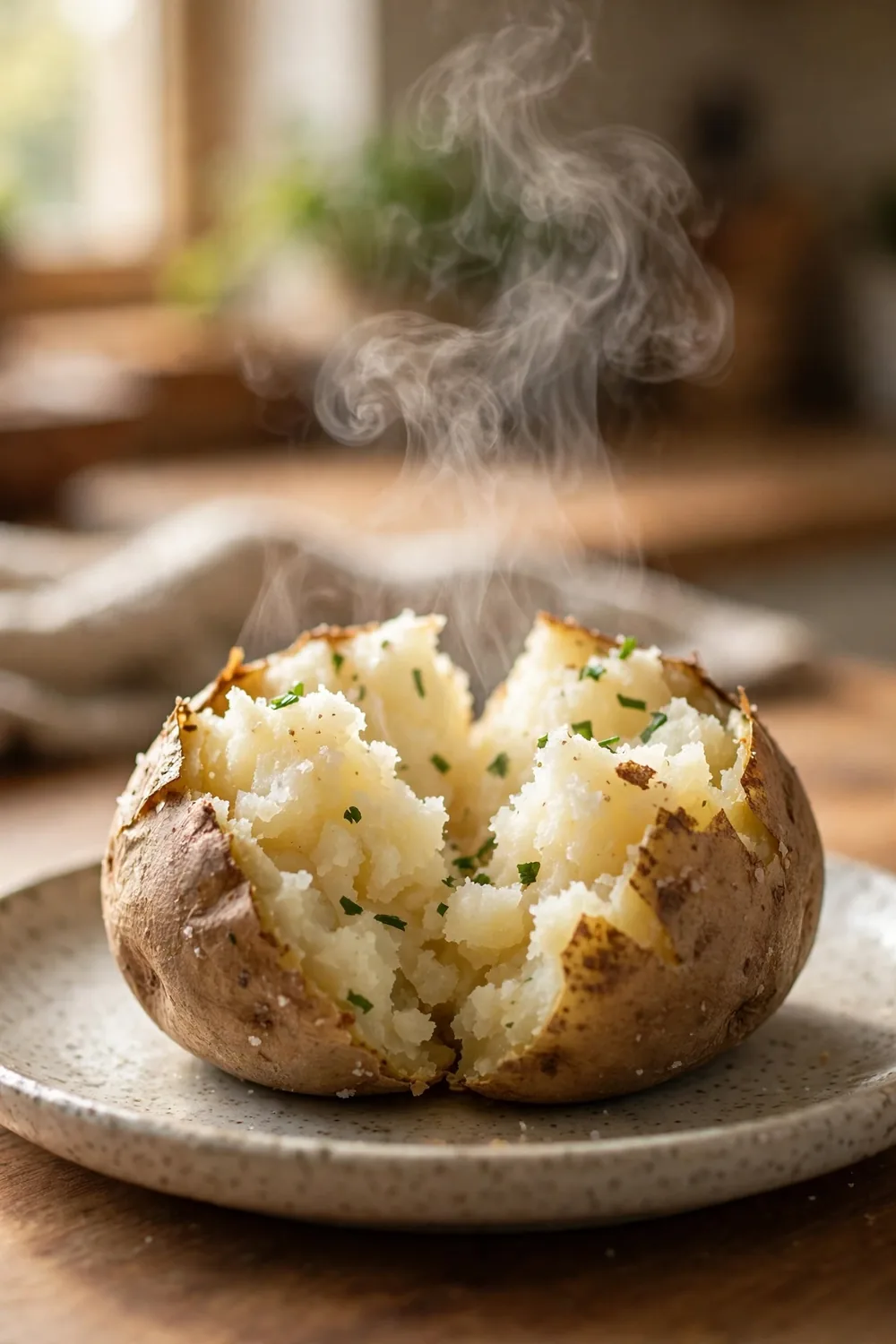
Quick Tip: Look for skin that gives a little when you squeeze it with a mitt. The potato should feel light for its size. A done potato splits open with gentle pressure.
A done potato shows crisp skin, and the flesh stays fluffy through the middle. The potato splits easy, and the fork slides through without resistance. Done potatoes look inviting on the plate, and the flavor stays rich. Look for even color and soft, fluffy flesh.
Conclusion
In short, a hard baked potato comes from cool ovens, short bakes, and mixed sizes. Fix those steps and each potato bakes soft. Even potatoes, high heat, and a longer bake build a fluffy center.
Start with the simplest fix first, then add the next one. Small changes protect the flavor while the look improves. Save this guide on Pinterest for your next potato night.
Pick even potatoes, pierce the skin, and bake them long. Your next potato can stay soft and fluffy. If your jam also stays runny, read our guide on jam not setting for thick, glossy jam at home.






2 Comments