Why Is My Teriyaki Sauce Too Thin? Easy Fix Guide
Thin teriyaki sauce slides right off the food instead of clinging in a glossy coat. The glaze looks shiny in the pan, then pools on the plate. A short simmer and a careful thickener fix it.
Teriyaki thickens when sugar concentrates and starch binds the liquid. Too much water, too little sugar, or too short a simmer leaves the sauce watery. Simmer the sauce on its own, away from meat juices, for the glossiest result. Two thin coats cling better than one thick pour.
This guide covers simmering, thickening, and glazing in order. If cookies are next, the crumbly cookies guide holds crumbly dough together for neat slices.
Why Teriyaki Stays Thin

Teriyaki stays thin when the liquid never reduces enough. Soy sauce, mirin, and sugar need time over heat to concentrate into a syrup. A quick warm up never reaches that stage. Sugar and soy need time to reduce, so a quick simmer leaves the glaze watery. Give the pan at least ten minutes over medium heat.
Extra water from marinades also thins the glaze. In my experience, simmering the sauce on its own, away from the meat juices, gives the glossiest result. A cornstarch slurry finishes the job fast when reducing alone is not enough.
Simmer Sauce Down

Simmering is the simplest thickener. Gentle heat drives off water while the sugar concentrates. The sauce should coat a spoon and leave a clear line when you draw a finger across it. Simmer gently and stir often, since high heat burns the sugars. Stop when it coats a spoon.
- Combine soy sauce, mirin, sugar, and ginger in a small pan.
- Bring to a gentle simmer, not a hard boil.
- Simmer for 5 to 8 minutes, stirring often.
- Watch the bubbles turn slow and glossy.
- Remove from heat when the sauce coats a spoon.
Thicken With Slurry

Quick Tip: For a faster thicken, stir in a small cornstarch slurry. Mix one teaspoon of cornstarch with two teaspoons of cold water, pour in slowly, and simmer for one minute. The glaze turns glossy fast.
Add the slurry a little at a time. You can always thicken more, but a gluey, overthickened glaze is hard to thin back. Whisk the slurry smooth, then pour it in a thin stream while stirring. The sauce should turn glossy within a minute of simmering.
Balance Sugar Right
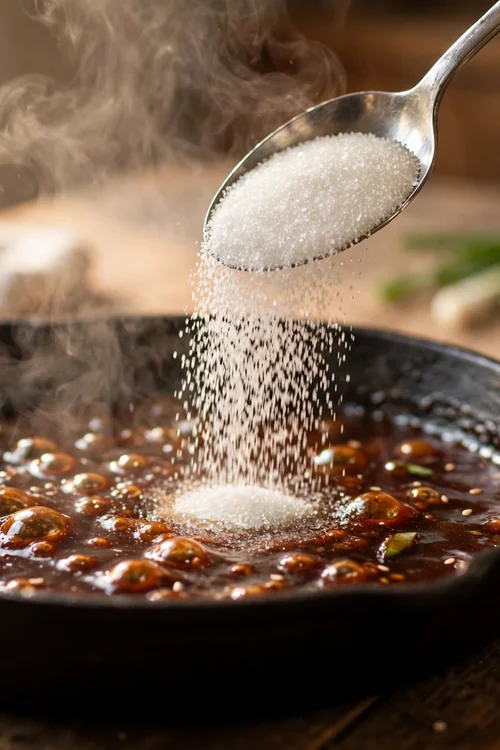
Common Mistake: Adding more soy sauce to boost flavor. Extra soy adds salt and water without sweetness, so the sauce stays thin and turns too salty.
The Fix: Balance with sugar or honey instead. Sweetness builds body as it reduces, and a little extra sugar helps the glaze cling.
Taste before adding more soy. A pinch of sugar and a longer simmer fix more problems than another splash of soy ever will. Taste as you go, since soy brands vary in saltiness. A spoonful of honey can round out sharp edges without making the glaze candy sweet.
Use Soy And Mirin

What You Need:
- Small saucepan: A small pan reduces sauce faster.
- Whisk: A whisk blends slurry without lumps.
- Soy sauce: The salty, savory base of the glaze.
- Mirin: Sweet rice wine adds shine and mild sweetness.
- Sugar or honey: Sweetener builds body as it reduces.
Use real mirin when you can. Sweetened cooking wine labeled as mirin style works, but the flavor is flatter and the glaze less glossy. Mirin adds sweetness and shine that plain sugar cannot match. If you skip it, add a pinch of sugar and a splash of water instead.
Glaze While Hot

Before: A watery sauce was poured over grilled chicken and ran off into a puddle. The meat tasted salty but not glazed, and the plate looked messy.
After: The same sauce simmered for six minutes and brushed on in two coats. It clung in a glossy layer and the chicken looked lacquered.
Two thin coats beat one thick pour. The first coat sets, and the second builds shine without sliding off. Brush the glaze on during the last minutes of cooking so it sets without burning. Two thin coats beat one thick coat every time. Let each coat bubble for a minute.
Fix Watery Batches

Do This:
- Simmer gently until the sauce coats a spoon.
- Brush on two thin coats.
- Let the first coat set for a minute.
- Serve extra sauce on the side.
Avoid This:
- Do not boil the sauce hard.
- Do not add extra soy for flavor.
- Do not pour cold sauce over hot food.
- Do not thicken with flour.
Flour makes the glaze cloudy and dull. Cornstarch keeps the shine that makes teriyaki look as good as it tastes. Simmer watery batches a few minutes longer, or whisk in a small slurry. Taste before serving and adjust the sweetness if needed. Serve the glaze warm for the best shine.
Rescue Overthick Sauce

Time Needed: About 8 to 10 minutes to thicken.
Difficulty: Very easy.
Cost: Low, pantry staples.
Best For: Chicken, salmon, tofu, and stir fry.
Make the sauce while the main dish cooks. A fresh glaze thickens best and brushes on smoothly while still warm. Thin an overthick glaze with water or mirin a spoonful at a time. Stir well after each addition so the texture stays smooth and even.
Marinate For Flavor

If the sauce is still watery after simmering, pour it into a smaller pan and reduce it further. A wide pan spreads the sauce thin and slows reduction, while a small pan concentrates it fast. Marinate for at least thirty minutes, or overnight for deeper flavor. Turn the meat once so both sides soak evenly.
For a sauce that refuses to thicken, whisk in a fresh slurry and simmer one more minute. Check the spoon test again before adding any more starch. Pat the meat dry before glazing so the sauce clings instead of sliding off.
Store Sauce Well

Overthickened sauce turns into a sticky paste that glues food together. A splash of warm water or mirin loosens it without dulling the flavor. Cool the sauce fully, then store it in a sealed jar in the fridge. It keeps for two weeks and thickens slightly as it chills.
- Remove the pan from the heat.
- Add warm water one tablespoon at a time.
- Whisk after each addition.
- Stop when the sauce flows slowly off a spoon.
- Brush onto food while still warm.
Plan Better Glazes

Quick Tip: Marinate meat in a separate portion of sauce, not the glazing batch. Marinade picks up raw juices and must be boiled before use. A fresh batch stays clean, glossy, and safe for brushing.
Store leftover sauce in a sealed jar in the fridge for up to two weeks. Warm it gently and whisk before using, since it thickens as it cools. Make the glaze ahead and reheat it gently before brushing. A quick simmer wakes up the flavor and restores the shine.
Conclusion
Thin teriyaki sauce needs reduction, balance, and patience. Simmer until it coats a spoon, add a little slurry only if needed, and brush on two thin coats. Those habits give a glossy glaze that clings. For another kitchen rescue, the cornstarch slurry guide smooths out a lumpy thickener for glossy sauces.
Brush the glaze on in two thin coats, and let the first coat set before the second. A small pan and a gentle simmer concentrate the flavor. With those habits, the sauce will cling in a glossy layer to every bite.