Why Does My Potato Curry Turn Mushy? Easy Fix Guide
Mushy potato curry is frustrating when you wanted tender cubes and got a starchy porridge instead. The potatoes cooked too long, the wrong variety broke down, or rough stirring mashed them. All three causes have simple fixes.
You will learn which potatoes hold their shape, how parboiling firms the edges, and when to add the cubes so they finish just tender. The fixes work for tomato, coconut, and yogurt based curries alike.
Once the timing clicks, every pot will have intact cubes, and the next guide on raw gravy shows how to fully cook out the raw flour taste in gravy with steady heat.
Why Potatoes Fall Apart

Potatoes fall apart when their starch swells and the cell walls break down. Floury varieties like russets do this fast, while waxy ones hold together much longer. Floury potatoes break down fast, while waxy ones hold their shape through a long simmer.
Long simmering and vigorous stirring finish the job. The cubes crumble into the sauce, which turns thick and starchy. The fixes below protect the cubes at every step. Cut the cubes large and even, about one inch across, so they cook at the same pace. Small pieces fall apart long before the sauce is ready.
Choosing Firm Potatoes

Waxy potatoes are the curry cook’s best friend. They stay firm through a long simmer and keep their shape on the plate. Waxy potatoes like red or new potatoes keep their edges firm in a simmering sauce. Peel them if you like.
- Choose waxy varieties like Yukon Gold, red potatoes, or new potatoes. Choose waxy potatoes, since floury ones fall apart.
- Avoid floury russets for long simmered curries.
- Cut cubes evenly, about one inch, so they cook at the same rate.
- Keep the skin on small new potatoes for extra hold.
Parboiling For Firm Edges

Quick Tip: Parboil the cubes for 5 minutes, then drain and let them steam dry. The quick boil firms the outside, so the cubes resist breaking in the curry.
Parboiling also shortens the time the potatoes spend in the sauce. They finish in 10 to 12 minutes of simmering instead of 25, which means far less chance of breaking down. Drain the parboiled cubes well and let the steam rise off them before adding.
Adding Potatoes At The End

Common Mistake: Many cooks add potatoes with the onions and let them simmer for the whole cooking time. By the time the sauce is ready, the potatoes have dissolved into it.
The Fix: Cook the sauce first, then add parboiled potatoes for the last 10 to 12 minutes. The sauce gets its full cooking time, and the potatoes stay intact.
Check the cubes at the ten minute mark with a knife. They should yield easily but still hold their shape. Pull the pot as soon as they reach that point. Stir with a wooden spoon and move the cubes gently from the edges inward. Hard stirring breaks the softest cubes first.
Fixing Mushy Curry

What You Need:
- Waxy potatoes: Hold their shape through simmering.
- Large pot: Gives cubes room without crowding.
- Slotted spoon: Lifts cubes gently for testing.
- Wooden spoon: Stirs softly without breaking the cubes.
- Lid: Keeps a gentle simmer without boiling hard.
A wooden spoon and a gentle hand matter more than fancy tools. Stir by folding the sauce around the cubes, never by mashing through them. Taste the sauce before the potatoes go in, so the seasoning is already right. Late seasoning means extra stirring, which breaks more cubes.
Thickening Without Mashing

Before: Before, my potato curry always ended as a thick porridge. The potatoes vanished, and the sauce turned starchy and dull.
After: After switching to waxy potatoes, parboiling, and adding them late, the same curry has tender cubes in a rich, smooth sauce. The sauce thickens as it simmers, and the cubes stay whole instead of breaking apart.
The change is in the timing, not the spices. Late potatoes and gentle stirring keep the cubes whole. Serve the curry in a wide bowl, which cools it faster and stops the potatoes cooking further. A narrow pot keeps simmering long after the heat goes off.
Spice Balance In Curry

Do This:
- Use waxy potatoes cut evenly.
- Parboil for 5 minutes and drain.
- Add potatoes for the last 10 to 12 minutes.
- Stir gently by folding.
Avoid This:
- Do not use floury russets for long simmers.
- Do not boil the curry hard.
- Do not stir vigorously.
- Do not leave potatoes in the pot for an hour.
These habits protect the cubes at every stage. Once they feel routine, mushy curry becomes rare. Add fresh herbs at the very end, so their color stays bright. A squeeze of lemon at the table lifts the whole dish without extra stirring. Serve the curry with warm bread for scooping at the table.
Serving With Rice

- Time Needed: About 10 to 12 minutes of potato simmering.
- Difficulty: Easy, mostly timing.
- Cost: No extra cost.
- Best For: Tomato, coconut, and yogurt curries.
Waxy potatoes hold their shape far longer than floury ones. Parboiling for 5 minutes firms the edges. Potatoes finish in 10 to 12 minutes of gentle simmering after parboiling. Leftover curry thickens in the fridge, so loosen it with a splash of water when reheating.
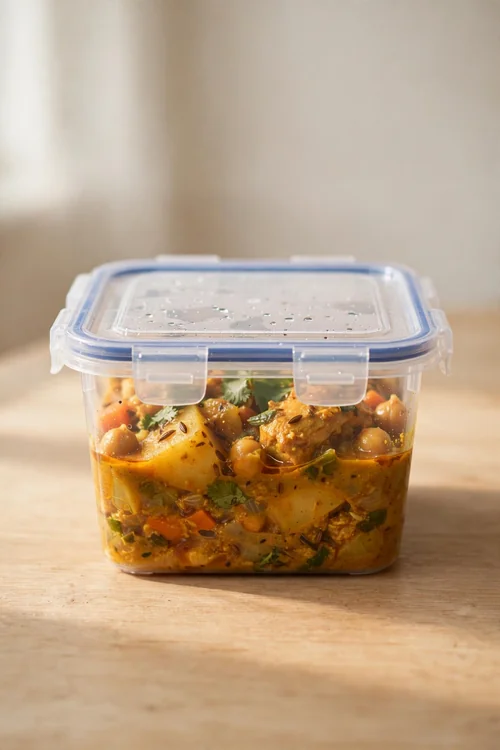
Storing Curry Well
If the curry already went mushy, stop stirring and serve it as is. A thick, soft curry still tastes good, and you can call it a rustic mash. A spoonful of yogurt on the side cools the spices and adds creaminess. Warm bread for scooping keeps the meal simple and satisfying.
For the next pot, add a few fresh parboiled cubes at the end for texture. The new cubes give the dish the bite it was missing. If the curry still looks thin, simmer it uncovered for five minutes before serving.
Reheating Without Breaking

A mushy curry often needs no thickener, since the broken potatoes already thickened it. If the sauce is thin, simmer gently instead of mashing. Reheat in a wide pan over low heat and avoid the microwave, which heats unevenly. Gentle heat keeps the cubes whole.
- Lift out the intact cubes with a slotted spoon. Warm the curry slowly and stir only once or twice.
- Simmer the sauce alone until it thickens.
- Return the cubes gently and warm through.
- Serve at once so the cubes stay whole.
Curry Potato Checklist

Quick Tip: Serve with fluffy rice and a squeeze of lemon. The rice soaks up the sauce, and the lemon brightens the whole plate.
With firm potatoes, late timing, and gentle stirring, your curry will stay hearty and well textured every time. Store leftovers in a shallow container so they cool quickly and evenly. A quick cool keeps the potatoes firm instead of softening further. Cool the pot fast for the firmest leftovers.
Conclusion
Firm potatoes make the whole dish better. The next time mushy potato curry threatens dinner, switch to waxy potatoes, parboil them briefly, and add them late so they hold their shape. Keep the simmer gentle and avoid stirring hard, since rough handling breaks the cubes. A short rest before serving lets the sauce thicken around intact potatoes. With these habits, your curry will stay hearty and well textured. Serve it with fluffy rice and a squeeze of lemon. For the fix that came before this one, see this scrambled eggs guide for soft curds and gentle heat.