Why Are My Hash Browns Soggy? Easy Fix Guide
Soggy hash browns are a breakfast letdown. The shreds steam into a soft, pale pile instead of crisping into a golden cake. Water and crowding are the main culprits.
Potato shreds hold a surprising amount of water, and a wet pile in a cool pan steams instead of frying. A hot pan, dry shreds, and a thin layer give the crunch you want. Dry shreds, a hot pan, and a thin layer are the keys. Leave the potatoes alone while the crust forms.
This guide covers drying, heating, and cooking in order. If eggs are next, the broken omelette guide keeps omelettes whole.
Why Hash Browns Sog

Hash browns crisp when surface water fries away fast and starch browns. If the shreds stay wet, the pan temperature drops and the potatoes steam. Steamed shreds turn soft and limp instead of golden. Wet shreds steam instead of frying, so the pan never gets hot enough to crisp them. Squeezing out water is the single biggest fix.
Crowding makes it worse by trapping steam between shreds. In my experience, drying the potatoes and giving them space fix most soggy batches. A thin layer and a hot pan let steam escape fast, so the shreds brown instead of going limp.
Pick Starchy Potatoes

Starchy potatoes like russets crisp best. Their dry, fluffy flesh browns well and holds together. Waxy potatoes stay wet and soft, so save them for salads. Russets work best because their starch helps the shreds bind and brown. Waxy potatoes stay wet and fall apart in the pan.
- Choose firm russet potatoes without green spots.
- Peel and shred just before cooking.
- Use the large holes of a box grater.
- Keep shreds in cold water if you must wait.
- Drain well before drying.
Dry Shreds Well

Quick Tip: Squeeze shreds dry in a clean kitchen towel, twisting hard until no more water drips. Then spread them on a dry towel for five minutes. Dry shreds are the single biggest step toward crisp potatoes.
For extra crispness, rinse the shreds first to wash off surface starch, then dry thoroughly. Less surface starch means less sticking and a cleaner crust. Press the shreds in a clean towel until no more water comes out. Dry shreds hit the hot pan and start crisping right away.
Heat Pan Properly
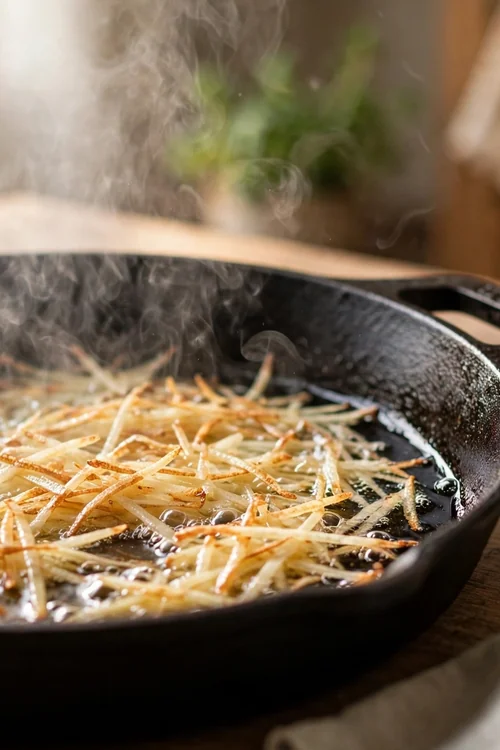
Common Mistake: Dropping wet shreds into a lukewarm pan with too little oil. The pan cools, the potatoes release more water, and the batch steams into a soft mound.
The Fix: Heat oil over medium high until it shimmers, then add a thin layer of dry shreds. A hot pan seals the bottom fast and builds a crisp crust.
Press the shreds gently into an even layer, then leave them alone. Constant stirring breaks the crust before it forms. Let the oil shimmer before the potatoes go in, and listen for a strong sizzle. A cold pan steams the shreds and they never crisp.
Spread Thin Layer

What You Need:
- Russet potatoes: Starchy flesh crisps best.
- Box grater: Large holes make sturdy shreds.
- Clean kitchen towel: Squeezing removes the most water.
- Heavy skillet: Cast iron holds heat steadily.
- Thin spatula: A wide spatula flips the cake cleanly.
Cast iron is ideal because it stays hot when the shreds hit the pan. A thin pan cools fast and steams the potatoes instead. Spread the shreds no thicker than half an inch so steam escapes easily. A crowded pan steams instead of frying, so cook in batches.
Leave Them Alone
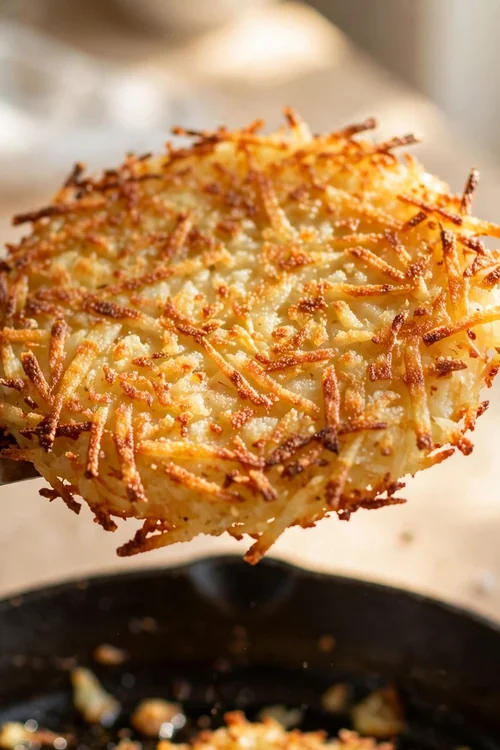
Before: Wet shreds piled into a cool nonstick pan turned pale and limp. Stirring broke the shreds apart, and the batch never browned.
After: Dry shreds spread thin in a hot cast iron pan crisped into a golden cake. One flip gave a crunchy top and bottom.
Heat, dryness, and patience do all the work. Once the crust forms, the potatoes hold together and flip in one piece. Flip only once, when the bottom turns deep golden and the edges look crisp. Patience builds the crust that makes the whole plate work.
Fix Limp Batches

Do This:
- Squeeze shreds very dry.
- Heat oil until it shimmers.
- Spread shreds in a thin layer.
- Cook undisturbed until golden.
Avoid This:
- Do not pile shreds high in the pan.
- Do not stir while the crust forms.
- Do not season with salt too early.
- Do not cover the pan while frying.
A lid traps steam and softens the crust. Cook uncovered so moisture escapes and the potatoes stay crisp. Spread limp shreds on a hot sheet pan and bake until the edges crisp. A short blast of dry oven heat rescues what the skillet could not.
Rescue Greasy Potatoes

Time Needed: About 15 to 20 minutes per batch.
Difficulty: Easy, with patience.
Cost: Low, potatoes and oil.
Best For: Weekend breakfasts and brunch.
Cook in batches for a crowd. One thin batch crisps far better than one crowded pan, and finished batches stay warm in a low oven. Blot greasy shreds on paper towels before serving, and drain the pan well. A hot oven finish can crisp the edges without adding more oil.
Season At End
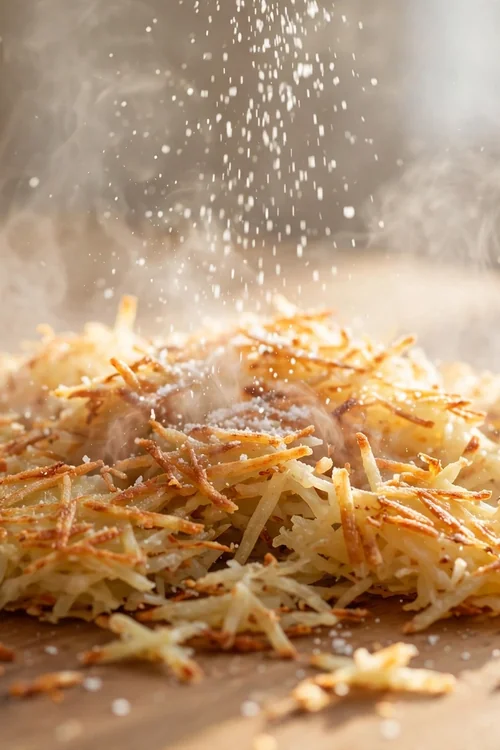
If a batch is already limp, spread it on a hot oiled sheet pan and bake at 425 degrees for 10 minutes. The oven heat crisps the shreds without extra stirring. Flip once halfway through for even browning. Salt at the end so the shreds do not release water while they fry. Salt draws out moisture and keeps the pan steamy.
For a single serving, return the shreds to a hot pan in a thin layer and press gently. Five undisturbed minutes usually rebuilds a crisp crust. Season the finished plate and serve right away, since crisp shreds soften fast.
Serve Crispy Potatoes

Greasy hash browns come from a cool pan and too much oil. The shreds soak up oil instead of frying in it. Drain on a rack, not on paper towels, so the bottom stays crisp. Serve on a plate the moment they leave the pan, since crisp shreds soften fast.
- Use just enough oil to coat the pan.
- Heat the oil until it shimmers before adding shreds.
- Drain finished potatoes on a wire rack.
- Season after draining so salt sticks.
- Serve right away for the best crunch.
Plan Better Breakfasts
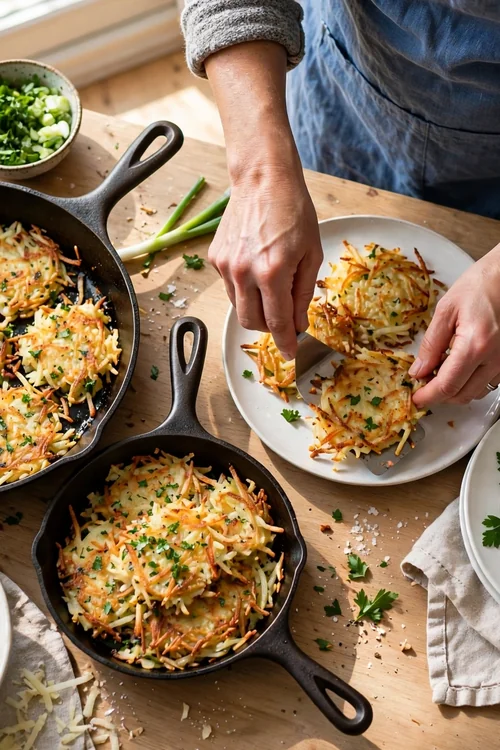
Quick Tip: Salt after crisping, not before. Salt draws water out of raw shreds and makes them wet. Seasoned at the end, the salt stays on the crust where you taste it.
Serve with eggs, toast, or a simple sauce. Crisp potatoes cool fast, so plate them last and serve right away. Shred the potatoes ahead and dry them well before the pan heats. A hot pan, a thin layer, and patience give a crisp breakfast every time.
Conclusion
Soggy hash browns need dry shreds, a hot pan, and patience. Squeeze the water out, spread the potatoes thin, and leave them alone until golden. Those habits give a crisp cake every time. For another breakfast rescue, the dry brisket guide keeps brisket slices juicy.
Cook in batches for a crowd, and hold finished potatoes in a low oven. One thin batch crisps far better than a crowded pan. With dry shreds and a hot skillet, every plate will carry a golden, crunchy cake. Serve them right away for the best crunch.