Why Is My Soup Too Salty? Easy Fix Guide
Tasting dinner only to find too salty soup in the bowl is a letdown no cook wants. The spoonful bites harsh instead of rich, and the whole pot feels wasted. A salty pot has clear causes, and each one has a simple fix.
Most pots turn salty for a handful of reasons. Too much salt at once, too little tasting, or long simmering can each push the flavor too far. Small slips add up fast, and the wrong stock makes it worse.
This guide walks through each cause with a fix you can use right away. You do not need special tools or fancy ingredients. If your cream sauce also splits, see our guide on fixing curdled cream sauce for a silky, smooth pour.
Why Soup Tastes Salty

You taste the soup, hoping for rich and balanced flavor, but salt takes over every spoonful. The ingredients are fine, yet one seasoning slip lets salt rule the pot. The trouble rarely sits in the recipe, and it starts with how salt first goes in.
Too much salt at once, too little tasting, and long simmering each push a pot toward harsh flavor. When any of those three is off, salt builds up while broth cooks down. Each cause has a plain fix, so the next pot can taste rich again.
Salt in Small Pinches

Salt decides the result more than any other choice, and a heavy hand can never be undone. Small pinches with a taste after each one keep the pot balanced and calm. Trust your tongue more than the measuring spoon, and taste after every small pinch.
- Add salt in small pinches, never by the spoonful.
- Taste the pot after every pinch.
- Wait a minute for the salt to dissolve.
- Never salt twice without tasting first.
Taste as You Go

Quick Tip: Taste the pot every fifteen minutes while it simmers. Broth reduces as it cooks, so salt grows stronger even when you add none. A quick spoonful now catches trouble before it sets in.
Soup seasoned only at the end turns salty fast, because the broth reduces and the salt stays put. The first taste comes too late, and salt already rules the pot. Add salt only when the flavor asks for it, and the pot stays rich, balanced, and easy to serve.
Dilute With Broth

Common Mistake: Many cooks add plain water to fix a salty pot, thinking it will thin the salt out. The water washes out flavor along with salt, and the pot turns flat and bland. The fix needs broth, not water, to keep the soup rich.
The Fix: Pour in one cup of warm unsalted broth, then taste the pot again. The salt spreads thinner while the flavor stays full. Repeat with a half cup more if the pot still tastes harsh.
Plain water dilutes salt but also flavor, so the pot tastes weak and watery. Unsalted broth spreads the salt while keeping the soup rich and full. Add broth in small pours, taste after each one, and stop as soon as the flavor turns smooth and balanced.
Add a Raw Potato

What You Need:
- One large potato: Peel it and halve it before it goes into the pot.
- A slotted spoon: Use it to lift the potato out when the time is up.
- A timer: Twenty minutes is enough for the potato to do its work.
- A tasting spoon: Taste the pot after the potato comes out.
Drop two peeled potato halves into the simmering pot and leave them for twenty minutes. The potato pulls salt from the broth as it cooks, then you lift it out and toss it. The pot tastes milder, and the fix costs almost nothing at all.
Balance With Acid

Before: A salty pot tastes harsh on the tongue, and salt drowns out the vegetables. The broth may be rich, yet every spoonful feels sharp and one sided.
After: A squeeze of lemon wakes up the other flavors, and salt feels milder at once. The pot tastes bright, then balanced and fresh. The finish feels clean, not sharp.
A squeeze of lemon at the end wakes up the other flavors and makes salt feel milder. The soup tastes bright for a moment, then turns balanced and fresh. Acid fixes the pot gently, and one small squeeze is all that it takes. Taste after each squeeze so the acid stays in balance.
Add Starchy Ingredients

Do This:
- Stir in one cup of cooked rice, noodles, or beans.
- Let the pot simmer for ten minutes so the starch can soak up broth.
- Taste the pot before serving, and add more starch if it still tastes harsh.
Avoid This:
- Do not add dry rice or pasta straight to the pot, since it will soak up too much broth.
- Do not add sugar to mask the salt.
- Do not boil the pot hard after the fix.
Starch soaks up salty broth, so the pot tastes milder and heartier at once. Rice, noodles, and beans all work, and each one keeps the soup filling and rich. A starchy addition takes a little patience, yet the pot tastes far better for the wait.
Fix Salty Soup Fast

Time Needed: 10 to 20 minutes
Difficulty: Easy
Cost: Low
Best For: A pot that tastes salty but still has good flavor
A salty pot is not ruined, and the flavor is still good inside it. Dilute it gently, add starch, and finish with a squeeze of lemon and fresh herbs. A little care saves dinner, and the pot is still worth serving warm to everyone tonight.
Store Soup Right
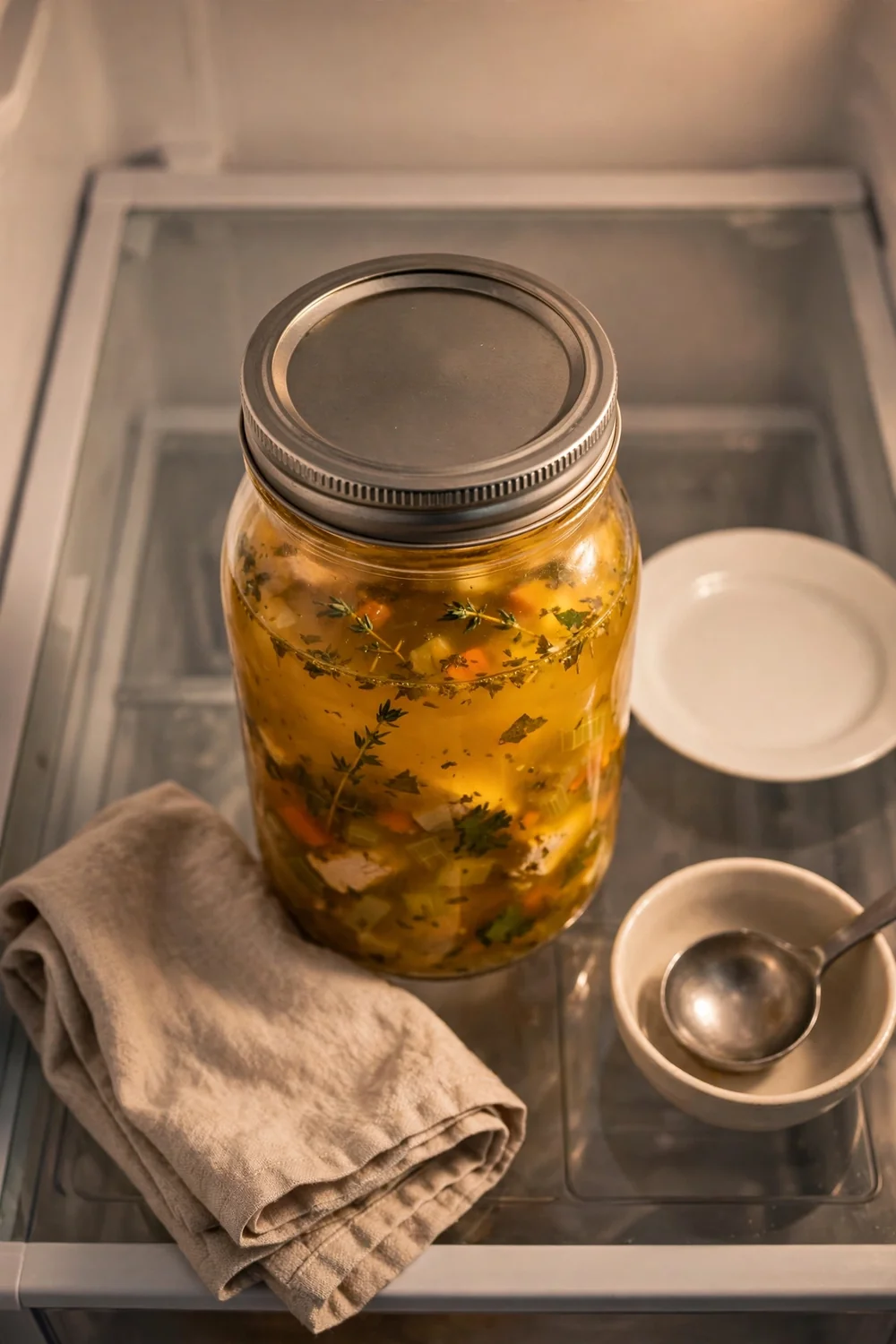
Storing soup uncovered in the fridge dries the surface and dulls the flavor, even when the pot was perfect. Cold air pulls moisture from the top, and the taste turns flat and sharp. A tight seal keeps the pot rich for days after you serve it.
Cool the pot before you seal it, then store leftovers in a clean container with a firm lid. Keep the soup in the fridge for up to four days, or freeze it for up to three months. Label the container, so the next bowl reheats rich and ready.
Common Mistakes to Avoid

Most salty pots come from the same few mistakes, and all of them are easy to fix. Change one habit at a time to see which fix made the difference. Start first with the salt, then the tasting, then the broth, always in that order.
- Do not salt the pot all at once.
- Do not skip tasting while it simmers.
- Do not add water instead of broth.
- Do not use salty stock and then salt again.
What Perfect Soup Looks Like

Quick Tip: Good soup looks rich and golden, with a clear broth that coats the spoon. The flavor feels balanced, never harsh or flat. Trust these signs more than the color of the broth alone.
Good soup tells you it worked before you taste it. The broth looks rich and golden, the flavor feels balanced, and each serving sits neat in the bowl. That finish is what every fix on this list is working toward for your table. Trust the spoon, the aroma, and the first taste together.
Conclusion
Too salty soup is not a sign of bad luck in the kitchen. It comes from small, fixable causes, and now you know each one. Salt slowly, taste often, and the next pot can surprise you.
Pick one fix from this guide and try it on your next pot. Save this post on Pinterest so the fixes are there when you need them, and share it with anyone whose soup turns salty.
I have seen how making this one change can completely shift the result. Make your next pot with these fixes and enjoy a balanced, flavorful bowl.






One Comment