Why Are My Dumplings Tough And Chewy? Easy Fix Guide
If your tough chewy dumplings fight back when you bite, you are not alone. Overworked dough, thick wrappers, and hard steaming all make them rubbery. The good news is that a gentle hand fixes all three.
This guide covers dough, wrappers, filling, and steaming. You will learn why the dumplings turn tough and how to keep them tender. Every fix uses basic tools and pantry staples. The fix works fast every time.
Once your dumplings turn tender, the next fried snack may need the same care, so always keep the soggy pakoras guide handy for crisp, light, golden fried fritters.
Why Dumplings Turn Tough
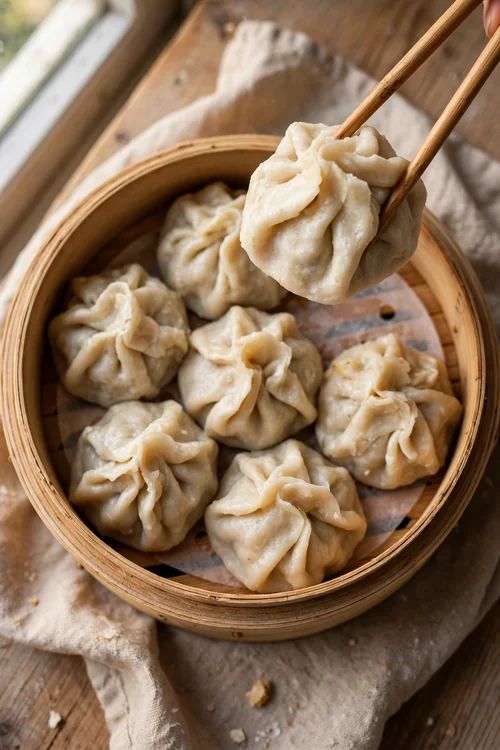
Most tough dumplings come from overworked dough. Kneading too long builds gluten, and thick wrappers turn rubbery in the steamer. Once the dough tightens, no filling can save the texture.
Hard steaming makes it worse, since violent bubbles toughen the wrappers. In my experience, the fix is gentle handling: a soft dough, thin wrappers, and calm steam. Tender dumplings come from a light touch at every step. Rest the dough for thirty minutes before rolling, and keep it covered so the surface never dries out or cracks at the edges while you work on the filling and pleating.
Knead Dough Less

Less kneading gives a softer dough. Dumpling dough needs just enough work to come together, not the long kneading bread needs. Follow these steps for a tender dough. Knead only until the dough comes together smoothly, then stop and let it rest under a damp cloth on the counter.
- Mix flour and hot water until a shaggy dough forms.
- Knead gently for 3 minutes until smooth.
- Cover and rest the dough for 30 minutes.
- Roll and shape without re-kneading.
Roll Wrappers Thin
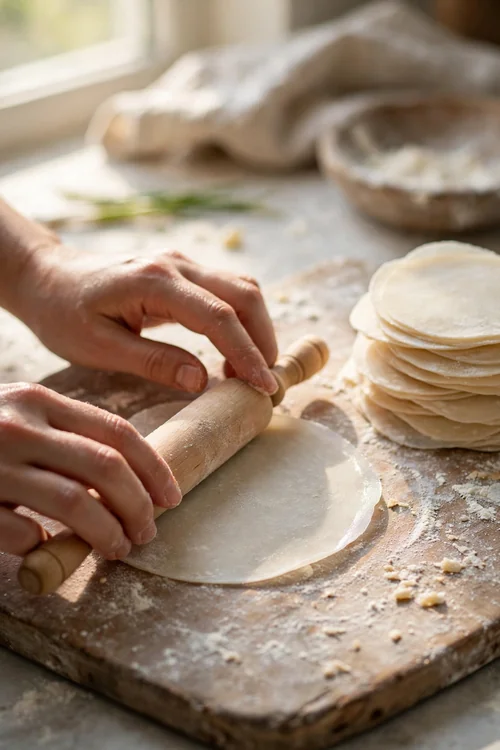
Quick Tip: Roll the edges thinner than the center. Thin edges seal neatly, while a slightly thicker center holds the filling without tearing.
Wrapper thickness decides the bite. Thick wrappers turn chewy, while thin ones cook fast and stay delicate. Roll each wrapper to about two inches wide, with edges you can almost see through. Work quickly so the dough does not dry out. Thin wrappers cook faster and stay tender in the steamer basket.
Fix Chewy Dumplings
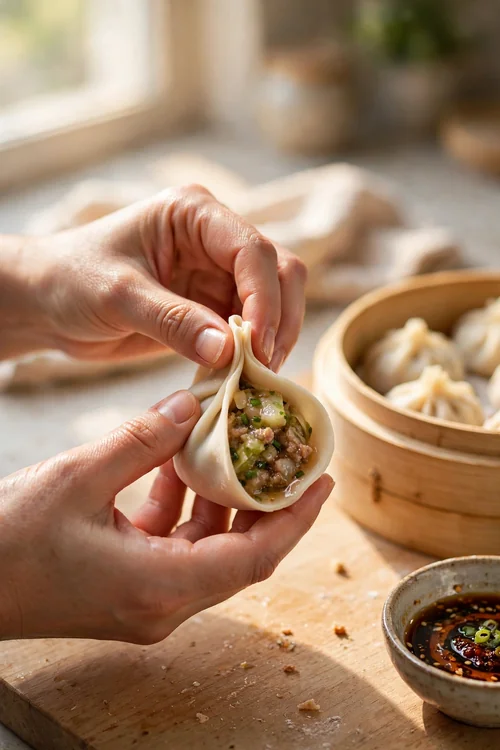
Common Mistake: Many cooks overfill the dumplings. Too much filling bursts the wrapper, and the dough must be rolled thicker to hold it.
The Fix: Use less filling and thinner wrappers. One teaspoon of filling is enough for a standard wrapper.
Balance is the key. A small amount of filling lets the wrapper stay thin and seal cleanly. If the dough already feels tough, let it rest for 20 minutes before rolling. Resting relaxes the gluten and makes the dough easier to roll thin. A loose filling cooks more evenly than a tightly packed one.
Pick the Right Filling

What You Need:
- Fatty pork or chicken: lean meat dries out and turns tough.
- Napa cabbage: salted and squeezed dry, adds moisture without wetness.
- Fresh ginger: adds aroma and brightness.
- Soy sauce and sesame oil: season the filling deeply.
- Scallions: add fresh bite and color.
Filling matters as much as dough. A dry filling makes the dumpling taste tough, while a juicy filling keeps it tender. Salt the cabbage first, squeeze it dry, and mix it with the meat just before shaping. The filling should look moist but never wet. A juicy filling keeps every bite tender and moist.
Before Tough After Tender

Before: The dumplings feel thick and rubbery. The wrappers are pale and chewy, and each bite takes effort.
After: The dumplings feel delicate and tender. The wrappers are thin and glossy, and the filling shines through.
The change comes from soft dough, thin wrappers, and gentle steam, not from a new filling. Knead less, roll thinner, and steam calmly. Those habits turn tough dumplings into ones that melt in the mouth. Do not lift the lid while dumplings steam, since escaping steam drops the temperature fast and toughens the wrappers.
Do and Don’t Basics

Do This:
- Knead the dough only 3 minutes.
- Rest the dough for 30 minutes.
- Roll wrappers thin with thin edges.
- Steam on gentle, steady heat.
Avoid This:
- Do not overwork the dough.
- Do not roll thick wrappers.
- Do not overfill the dumplings.
- Do not steam on a hard rolling boil.
These habits keep dumplings tender from dough to table. Soft dough, thin wrappers, and calm steam are the whole secret. Once the routine is set, delicate dumplings become the normal result. Check one dumpling before serving the batch, and add a minute if the center still looks doughy and pale in the middle.
Quick Dumpling Facts

Time Needed: 60 minutes plus 30 minutes resting.
Difficulty: Medium, with rewarding results.
Best For: Family dinners and weekend projects.
Pro Tip: Line the steamer with cabbage leaves.
Cabbage leaves stop the dumplings sticking without adding flavor. Place one leaf under each dumpling, and they will lift off cleanly. Parchment squares work too, but cabbage leaves add a fresh look to the basket. Serve dumplings the moment they leave the steamer, with dipping sauce on the side for everyone at the table.
Steam With Care

Calm steam cooks dumplings gently and evenly. A hard boil shakes the wrappers and toughens them, while a steady simmer lets them cook through without stress. Keep the water at a gentle boil, not a violent one.
Space the dumplings so they do not touch, and keep the lid on for the full cook. Opening the lid drops the temperature and extends the time, which toughens the wrappers. Steam for 10 minutes, then rest one minute before opening. Steam in batches so the dumplings never crowd or stick together in a hot basket while steaming over boiling water.
Rescue a Chewy Batch

A chewy batch can still be saved with a pan fry finish. Crisp bottoms and a short steam give the dumplings a new texture that hides the chew. Reheat leftover dumplings with a quick steam, never a microwave, so the wrappers stay soft and tender every time.
- Heat a little oil in a nonstick pan.
- Place the dumplings in one layer and fry 2 minutes.
- Add a splash of water and cover at once.
- Steam 3 minutes until the water evaporates.
- Serve hot with dipping sauce.
Serve Them Steaming

Quick Tip: Serve dumplings in the steamer basket. The basket keeps them warm and looks beautiful, and the dumplings stay tender longer.
Serving in the basket protects the texture. A cold plate cools the dumplings fast and firms the wrappers. Keep the basket covered until serving, and set out the dipping sauce at the last minute. The same dumplings will taste far better served hot and steaming. A little practice makes each batch better than the last.
Conclusion
Fixing tough chewy dumplings comes down to soft dough, thin wrappers, and gentle steam. Those three habits give delicate, tender dumplings. Once they are routine, tender dumplings take no extra effort.
Take the fixes one at a time, and your next batch will show a clear improvement. Write down what worked, so the fix gets faster every time you cook.
Handle the dough lightly, and let resting do the work. For another snack where oil and heat rule, see the chicken wings guide, then serve your dumplings while they still steam.