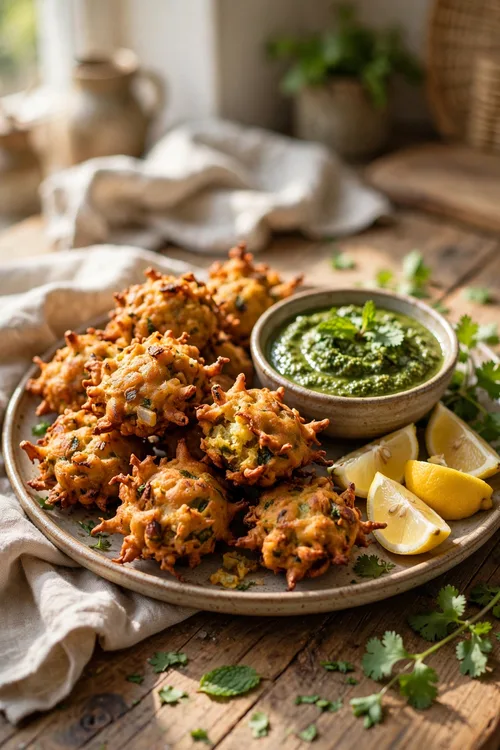
Why Are My Pakoras Soggy And Oily? Easy Fix Guide
If your soggy oily pakoras turn limp and greasy, you are not alone. Cool oil, thin batter, and crowded frying all soak the fritters in fat. The good news is that hot oil and a thick batter fix it fast. You can rescue the next batch with a few small changes.
This guide covers batter, oil heat, frying, and draining. You will learn why the pakoras turn soggy and how to keep them crisp. Every fix uses basic tools and pantry staples. The method is simple, and the results show at once.
Once your pakoras stay crisp, the next flatbread may need the same care, so keep this hard paratha guide handy for soft, flaky parathas.
Why Pakoras Turn Soggy

Most soggy pakoras come from oil that is too cool. Fritters dropped into cool oil absorb fat instead of crisping, and they never recover. Thin batter makes it worse, since it cannot form a protective crust. Even fresh vegetables turn greasy when the oil stays below the right heat.
Crowding the pan drops the oil temperature further. In my experience, the fix is hot oil, thick batter, and small batches. A crisp crust forms in seconds when the oil is right, and it keeps the inside light. Small batches also keep the temperature steady from first fritter to last.
Heat Oil Just Right
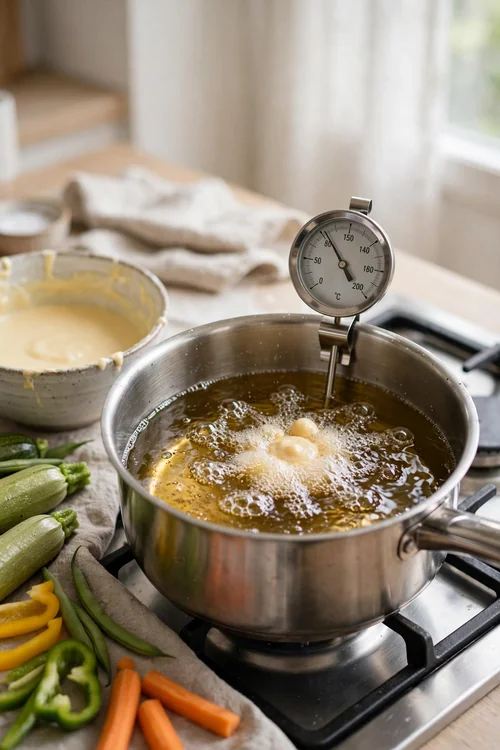
Oil heat is the single most important fix. The oil must be hot enough to crisp the batter on contact, but not so hot that the outside burns. A thermometer removes the guesswork and keeps every batch consistent. Follow these steps for steady heat.
- Heat the oil to 350 degrees and check with a thermometer.
- Test with a drop of batter, it should sizzle and rise at once.
- Fry in small batches so the oil stays hot.
- Let the oil recover between batches.
- Keep a slotted spoon ready to lift the fritters out fast.
Keep Batter Thick

Quick Tip: The batter should coat thickly and drip slowly off the spoon. If it runs like water, add more chickpea flour a spoon at a time. A thick batter clings to the vegetables and seals in the heat.
Thick batter is the crust that keeps oil out. A thin batter slides off the vegetables and soaks up fat, while a thick batter seals fast and crisps. Mix the batter with enough water to bind, and let it rest for 10 minutes. The flour will hydrate and the batter will thicken on its own.
Fix Greasy Pakoras

Common Mistake: Many cooks drain pakoras on paper towels in a pile. The pile traps steam, and the bottom fritters go soggy. The steam softens the crust within minutes.
The Fix: Drain on a wire rack in one layer. Air flows under the pakoras, and the crust stays crisp. The rack keeps every side dry at once.
Draining is the step that saves the crunch. A rack beats paper towels every time, since towels trap moisture against the crust. If the pakoras already feel greasy, return them to hot oil for one minute to re-crisp, then drain on the rack. The second fry drives out extra fat fast.
Choose Crisp Vegetables

What You Need:
- Chickpea flour: gives a nutty, crisp crust.
- Onions: the classic base, sliced thin for fast cooking.
- Spinach or potatoes: add color and body.
- Ajwain and chili: give the classic pakora aroma.
- A thermometer: keeps the oil at the right heat.
- Green chilies: add heat to the batter.
Vegetable choice affects the crunch. Thin slices cook fast and crisp well, while thick chunks stay raw inside and soften the crust. Slice onions thin, dry the vegetables well, and mix just before frying. Wet vegetables thin the batter and cool the oil, so pat everything dry first.
Before Soggy After Crisp
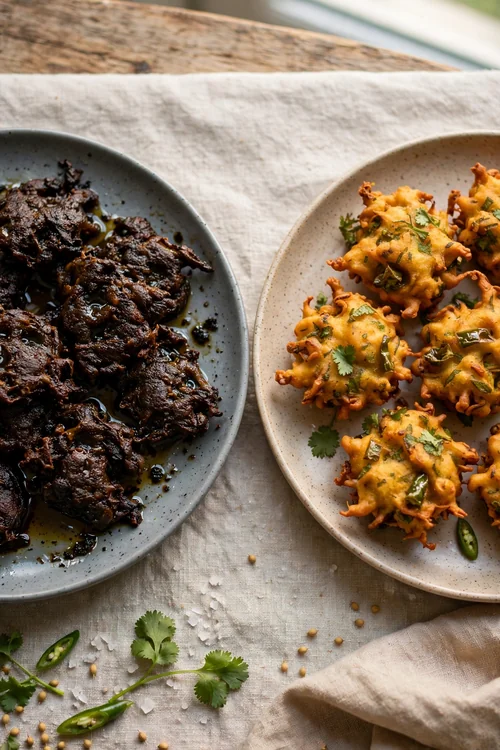
Before: The pakoras look dark and limp. Oil pools on the plate, and each bite feels heavy and greasy. The crust stays soft, and the plate turns greasy fast.
After: The pakoras are golden and crisp. The crust crackles, and each bite feels light. The plate stays clean, and the fritters stay crisp.
The change comes from hot oil, thick batter, and rack draining, not from a new recipe. Heat the oil fully, keep the batter thick, and drain on a rack. Those habits turn greasy fritters into crisp ones. The same batter and vegetables give a lighter result once the method is right.
Do and Don’t Basics

Do This:
- Heat oil to 350 degrees.
- Keep the batter thick.
- Fry in small batches.
- Drain on a wire rack.
Avoid This:
- Do not fry in cool oil.
- Do not crowd the pan.
- Do not pile pakoras on paper towels.
- Do not add watery vegetables to the batter.
These habits keep pakoras crisp from fryer to table. Hot oil, thick batter, and air flow are the whole secret. Once the routine is set, crisp pakoras become the normal result. Follow the lists every time, and the fritters will stay golden and crunchy to the last bite.
Quick Pakora Facts
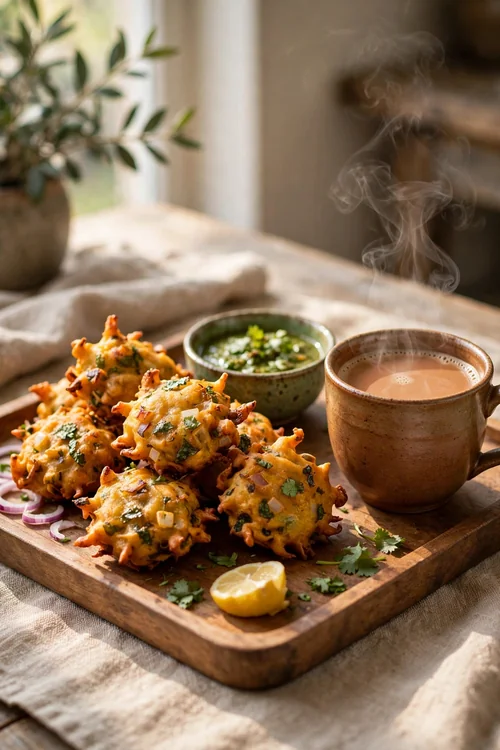
Time Needed: 25 minutes including batter rest.
Difficulty: Easy, with attention to oil heat.
Best For: Rainy days, chai time, and snacks.
Pro Tip: Add a pinch of rice flour for extra crunch.
Rice flour crisps faster than chickpea flour and adds a light crackle. A tablespoon in the batter is enough. Too much will make the crust hard, so keep the amount small. The pakoras will stay crisp longer on the plate, which makes rice flour worth keeping in the pantry.
Drain Without Steaming
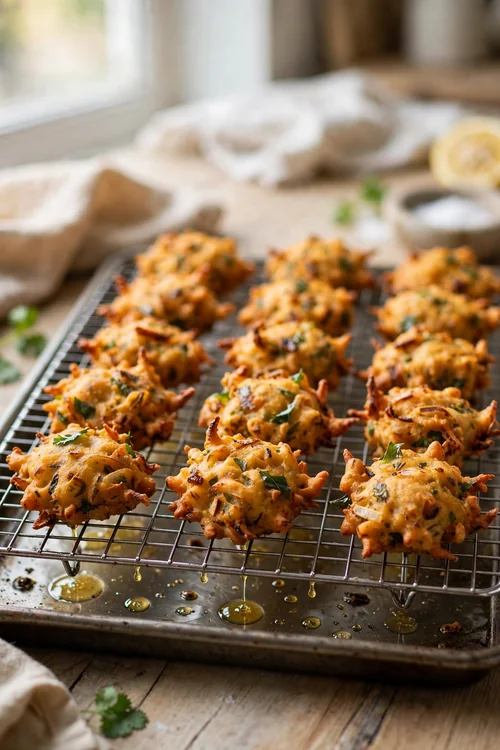
Draining on a rack is the final step that protects the crust. Hot pakoras keep steaming after they leave the oil, and a pile traps that steam. A single layer on a rack lets the steam escape. The crust firms as the steam leaves, and the crunch lasts longer.
Keep the rack near the stove so the pakoras go straight from oil to air. Do not cover them, and do not stack them until serving. If the pakoras must wait, hold them in a warm oven on the rack, uncovered. A low oven keeps them crisp without drying them out.
Rescue an Oily Batch

An oily batch can still be saved with a fast re-fry. Hot oil drives out absorbed fat and re-crisps the crust, as long as you work quickly. The rescue takes only a minute, and it works on pakoras that went soft in the pan or on the plate.
- Heat the oil back to 350 degrees.
- Re-fry the pakoras for one minute only.
- Lift them out and drain on a wire rack.
- Sprinkle with salt and chaat masala.
- Serve at once while crisp.
Serve Them Crisp
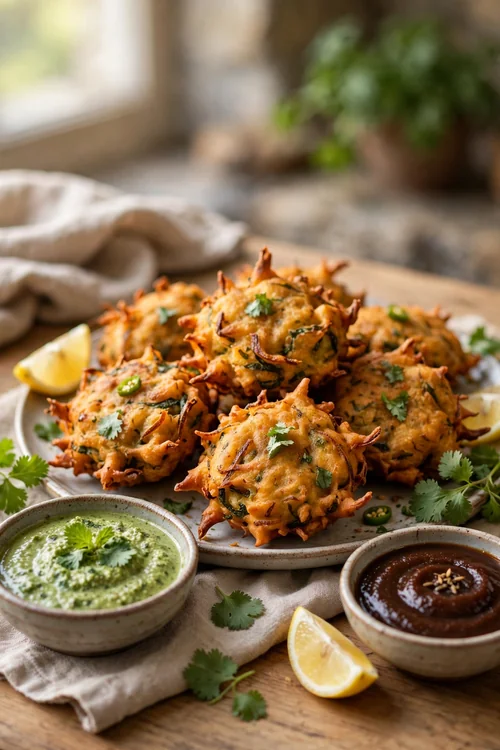
Quick Tip: Serve pakoras on a warm, dry platter. A cold plate chills the crust fast, and a wet plate softens it. Warm the platter in the oven for a few minutes first.
Serving fast protects the crunch. Plate the pakoras the moment they leave the rack, and set out the chutneys at the last second. If guests are not ready, hold the pakoras in a warm oven on the rack. The same fritters will taste far better served crisp than left standing.
Conclusion
Fixing soggy oily pakoras comes down to hot oil, thick batter, and rack draining. Those three habits give golden, crisp fritters. Once they are routine, crisp pakoras take no extra effort.
Work through these fixes one at a time, and your next batch will show the difference. Keep notes on what worked, so the fix gets easier every time you cook.
Fry in small batches, and let the oil recover between rounds. For another dish where softness is the goal, see this chewy dumplings guide, then serve your pakoras while they still crackle.