Why Is My Rice Undercooked On Top And Mushy At Bottom? Easy Fix Guide
Undercooked mushy rice is one of the most frustrating kitchen failures, because one pot can be both crunchy and soggy at once. The usual causes are too much water, lifting the lid, and uneven heat. All three are easy to fix once you know what to look for.
You will learn the right water ratios, how to finish hard grains without making soup, and how to dry a wet batch fast. A rescue plan for fried rice is included too.
Once these fixes click, rice becomes the reliable part of dinner, and the next guide on pasta sauce shows how to thicken a thin sauce so it clings.
Why Rice Turns Mushy

Rice turns mushy when extra starch escapes into the cooking water and glues the grains together. Too much water, vigorous boiling, and stirring all release more starch. The result is a sticky, porridge like mass that no amount of fluffing can save. Rinsing the grains first washes away much of the loose starch.
Hard centers usually mean the heat was too low, the lid was lifted, or the pot was too crowded. Steam escaped before the grains could finish, and the centers stayed chalky. The fixes below handle each problem separately, starting with the simplest ones first.
Water Ratios That Work
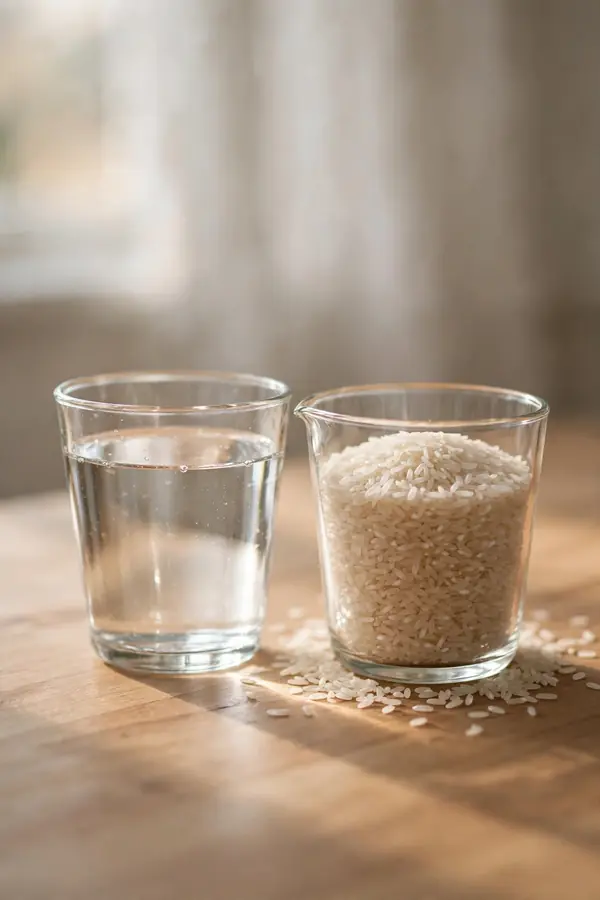
Ratios matter more than timers, and they vary by variety. Measure both rice and water every time, and adjust for the variety you cook. Long grain white rice needs less water than short grain or brown rice. Follow these steps to set the right ratio for your pot.
- Rinse long grain white rice until the water runs mostly clear.
- Use 1 part rice to 1.25 parts water for long grain white rice.
- Use 1 part rice to 1.5 parts water for short grain and brown rice.
- Bring to a boil, cover, then drop to the lowest simmer and do not lift the lid.
Fixing Undercooked Grains
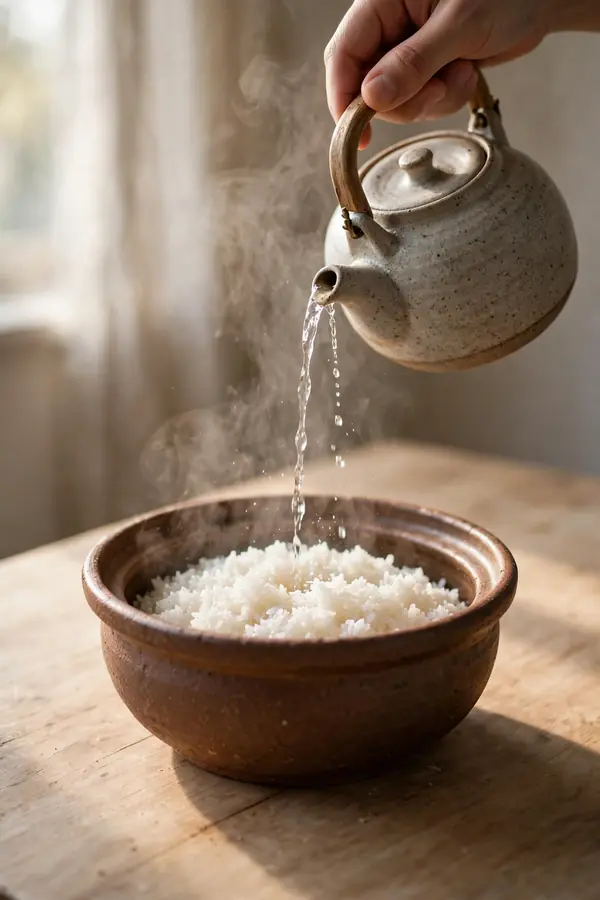
Quick Tip: If the grains are hard in the center but the water is gone, sprinkle two tablespoons of hot water over the top, cover tightly, and steam on the lowest heat for 5 minutes. The gentle steam finishes the centers without adding a puddle.
Do not stir while the rice finishes. Stirring breaks grains and releases starch, which turns the pot gummy. Leave the lid on, trust the steam, and check once at the five minute mark. The steam needs a sealed pot to finish the centers evenly. Patience here saves the whole pot.
Drying Wet Rice Fast
Common Mistake: Many cooks add a flood of water when they see hard grains. The rice absorbs some, but the rest turns the pot into porridge, and the texture is ruined in both directions.
The Fix: Add water one tablespoon at a time, cover, and steam gently. Small additions finish the centers without drowning the grains that are already soft.
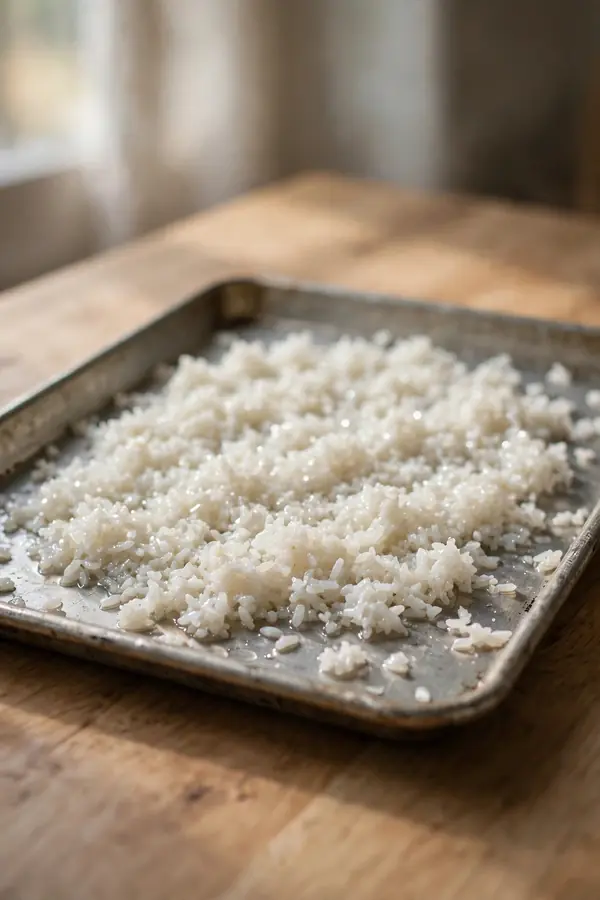
If the pot is already wet, spread the rice on a sheet pan and bake at 300 degrees for 8 to 10 minutes. The dry heat pulls off surface moisture and leaves the grains separate and fluffy. Spread the rice thin, and the grains will dry evenly. The pot will still serve well.
Salvaging Gummy Batches

What You Need:
- Heavy pot with a tight lid: Keeps steam in so grains cook evenly from top to bottom.
- Fine mesh strainer: For rinsing rice and draining any extra water fast.
- Sheet pan: For spreading wet rice in a thin layer to dry in the oven.
- Clean kitchen towel: Placed under the lid to catch condensation during resting.
- Fork: For fluffing gently without mashing the grains.
A heavy pot matters more than a fancy rice cooker. Even heat and a tight seal solve most rice problems before they start. If your lid wobbles, lay a towel under it to trap the steam. A towel under the lid also catches drips that would wet the grains. The seal matters most.
Best Pots And Lids

Before: Before, my rice was a gamble: sometimes crunchy, sometimes gluey, and always served with an apology. I stirred it, lifted the lid, and guessed at the water every time.
After: After measuring the water, rinsing the grains, and leaving the lid alone, the same pot comes out fluffy and separate. The rice is now the easy part of the meal.
Small habits make the difference, and they cost nothing extra. Rice rewards patience and punishes fidgeting, so set a timer, walk away, and let the steam work. Measure the water, rinse the grains, and leave the lid alone. Keep the routine steady, and fluffy rice follows every time. The timer keeps you honest.
Rinsing Before Cooking

Do This:
- Rinse until the water runs mostly clear.
- Measure rice and water every time.
- Rest the pot covered for 10 minutes after cooking.
- Fluff gently with a fork, not a spoon.
Avoid This:
- Do not lift the lid during cooking.
- Do not stir the pot while it simmers.
- Do not use high heat after the first boil.
- Do not add cold water to a cooking pot.
Follow these rules and your rice will stay fluffy across varieties. The same habits work for jasmine, basmati, and brown rice with small ratio changes. Rinse the grains, measure the water, rest the pot, and fluff gently with a fork. Stick with these steps, and fluffy rice follows.
Resting For Fluffy Grains

- Time Needed: About 18 minutes cooking plus 10 minutes resting.
- Difficulty: Easy, once the ratios are set.
- Tools Required: Heavy pot, tight lid, strainer, fork.
- Best For: White, jasmine, basmati, and brown rice.
White rice needs about 18 minutes of covered simmering, while brown rice needs 40 to 45 minutes. Resting matters as much as cooking, since the last steam finishes the centers. A towel under the lid keeps drips off the grains, and the rice stays fluffy. Set a timer, and do not lift the lid early.
Reheating Without Clumping

Leftover rice dries out in the fridge, then clumps when reheated, but a little water fixes it. Sprinkle a tablespoon of water over the rice, cover loosely, and microwave for one minute. Fluff with a fork and serve. The grains will separate, and the rice will taste fresh again. Loose cover keeps the steam in.
For larger batches, use a skillet over medium heat with a splash of water and a lid. The steam loosens the grains without turning them mushy. A drizzle of oil at the end keeps them separate, and the rice stays fluffy through the meal.
Fried Rice Rescue Plan

Day old rice makes the best fried rice, because the dry grains fry instead of steaming. If your batch went mushy, this rescue turns failure into dinner. Chill the rice, fry it in a single layer, and toss it. Follow these steps to turn a failed batch into fried rice.
- Spread the rice on a sheet pan and chill for 30 minutes to firm it up.
- Heat a wide skillet with oil over high heat.
- Fry the rice in a single layer without stirring for 2 minutes.
- Add soy sauce, egg, and vegetables, toss quickly, and serve.
Perfect Rice Every Time

Quick Tip: Keep a note of the ratio that worked for your pot and your stove. Rice varies by brand and by pot, so a small written record beats guessing every time.
With the right ratio, a tight lid, and a proper rest, rice stops being a gamble. Cook it once with care, and it will come out fluffy every single time. Measure the water, rinse the grains, keep the lid closed, and rest the pot. Stay consistent, and fluffy rice becomes routine.
Conclusion
Rice failures are almost always fixable with steam, patience, and the right ratio. The next time undercooked mushy rice shows up on your stove, you will know whether to add a spoonful of water, spread the pot on a tray, or turn it into fried rice. Measure the water, rinse the grains, keep the lid closed, and rest the pot before fluffing. Those four habits prevent most failures before they start. If a batch still goes wrong, the rescue steps above will save dinner. For the fix that came before this one, see our garlicky soup guide for a calmer broth.