Why Does White Stuff Come Out of My Salmon When Cooking? Easy Fix Guide
If white stuff on salmon shows up on your fillet while it cooks, you are not alone. Many home cooks see the same white ooze and worry the fish is spoiled. The good news is that it is harmless and easy to reduce with a few small changes.
The white stuff is albumin, a protein that leaks out as the salmon heats. Fast heat and overcooking squeeze more of it out of the flesh. In my experience, gentle heat and a dry fillet keep most of it inside.
This guide walks through each cause in order, from fish choice and drying to heat and resting. Follow the steps, and your next fillet should cook clean and stay moist.
White Stuff Explained
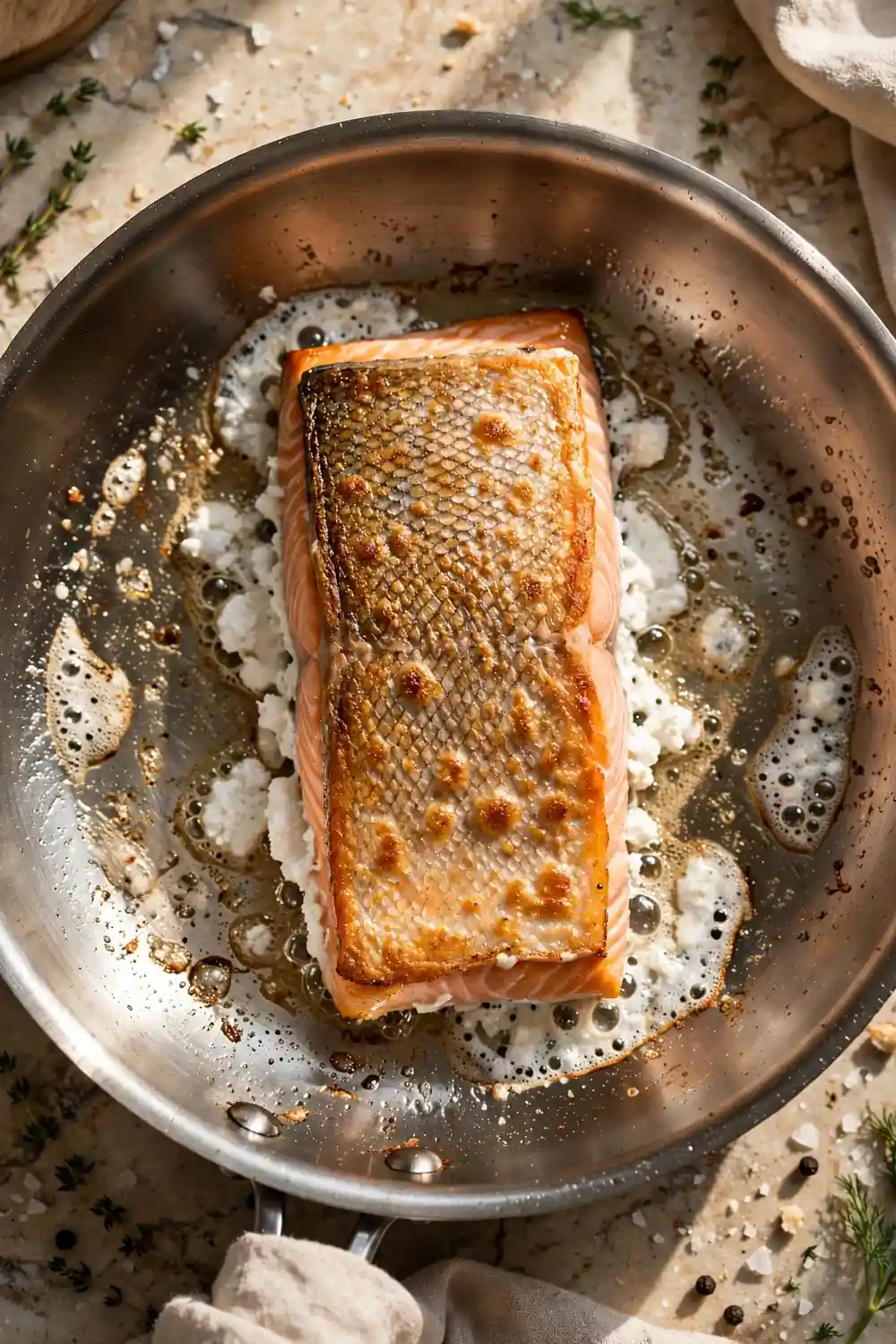
Albumin is a harmless protein inside salmon muscle. As the fillet heats, the muscle fibers tighten and push it out through the surface. It turns white as it cooks, forming the ooze along the sides and top. The same protein appears in egg whites, and it is safe to eat.
More heat means more albumin, which is why overcooked salmon shows heavy white patches. Gentle cooking keeps the fibers calm and the protein inside. Once you know the cause, you can pick the fix, so the next fillet cooks clean on the plate rather than looking messy.
Choose Fresh Salmon
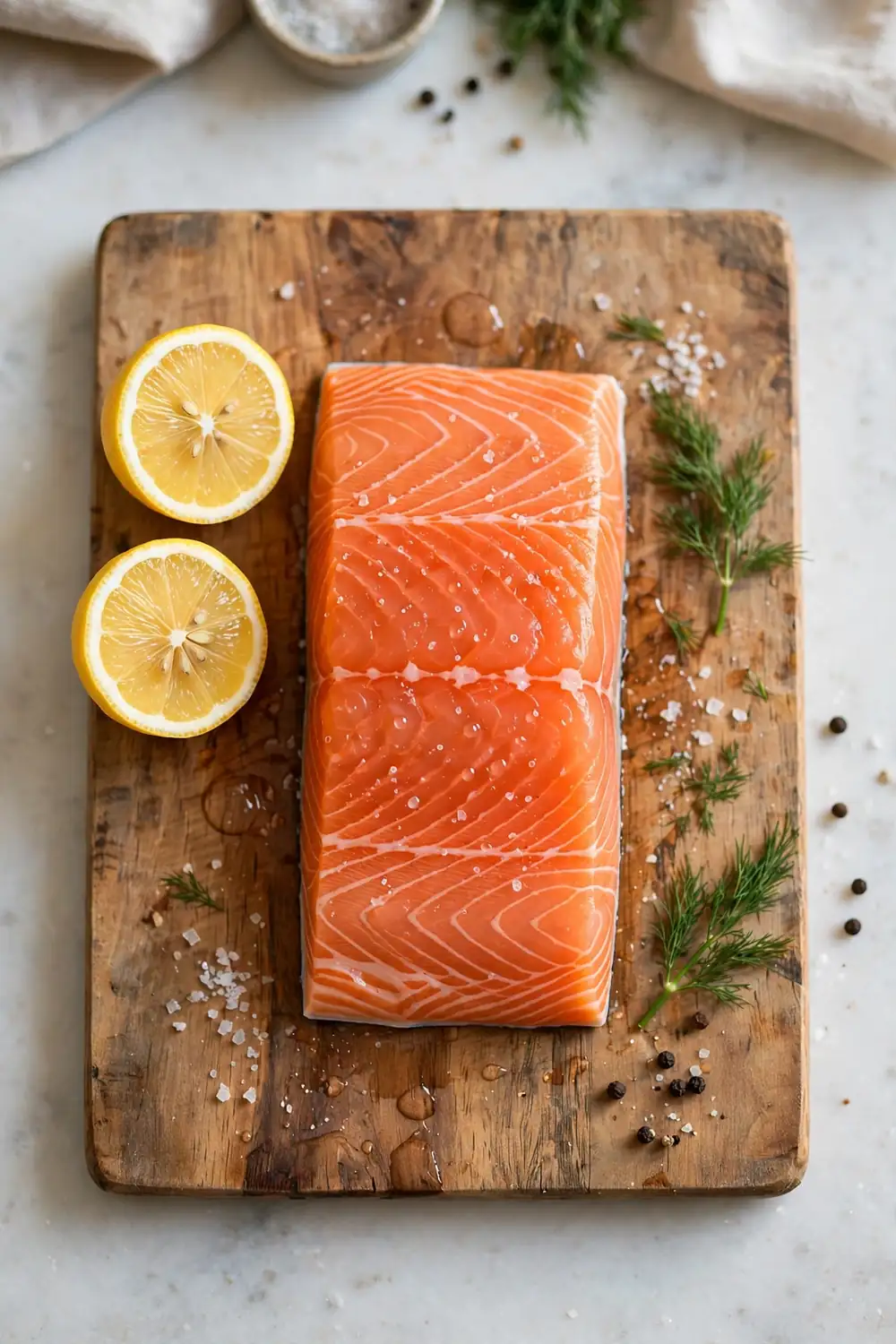
Fresh salmon shows less albumin than older fish, so start with the freshest fillet you can find. Fish that has sat too long loses moisture, and the loose protein leaks out faster in the pan. Buy from a counter you trust, and cook the fillets the same day when you can.
- Look for bright color and firm flesh that springs back when pressed.
- Skip fillets with a strong fishy smell, dull color, or a soft mushy feel.
- Keep the fish cold in the fridge until cooking time, and pat it dry before it hits the pan.
- Cook fresh fillets the same day for the cleanest result.
Preheat the Pan
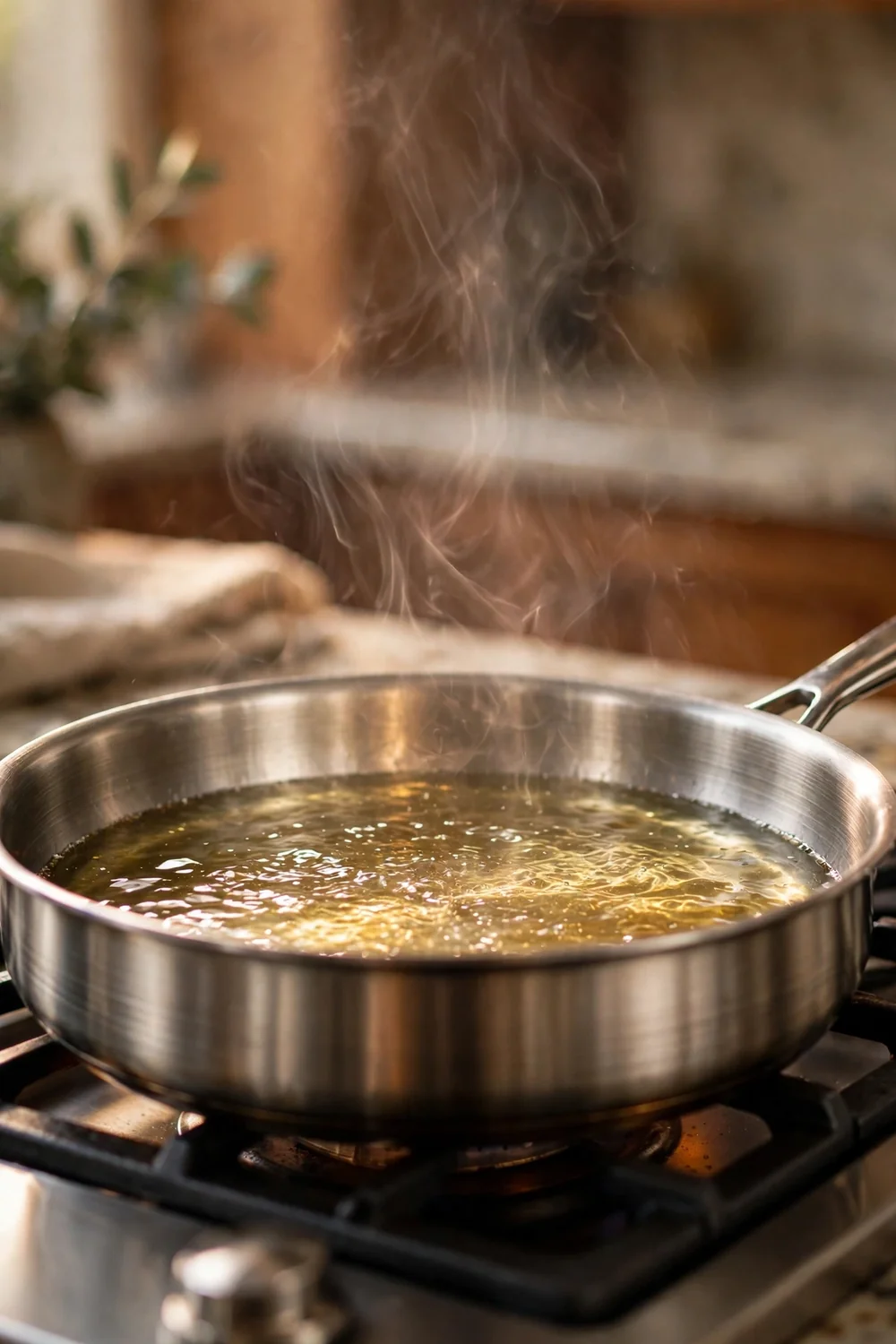
Quick Tip: Give the pan two to three minutes to heat before the fillet goes in. A heavy skillet holds heat better than a thin pan, so the sear stays even. Test with a drop of water, since it should sizzle at once.
A hot pan sears the surface at once and seals the outside fast. Heat oil in a heavy skillet over medium heat until it shimmers. A cool pan lets the fish sit and steam, which squeezes out more albumin. Start heating the pan before you unwrap the fish, so the timing lines up.
Pat Salmon Dry
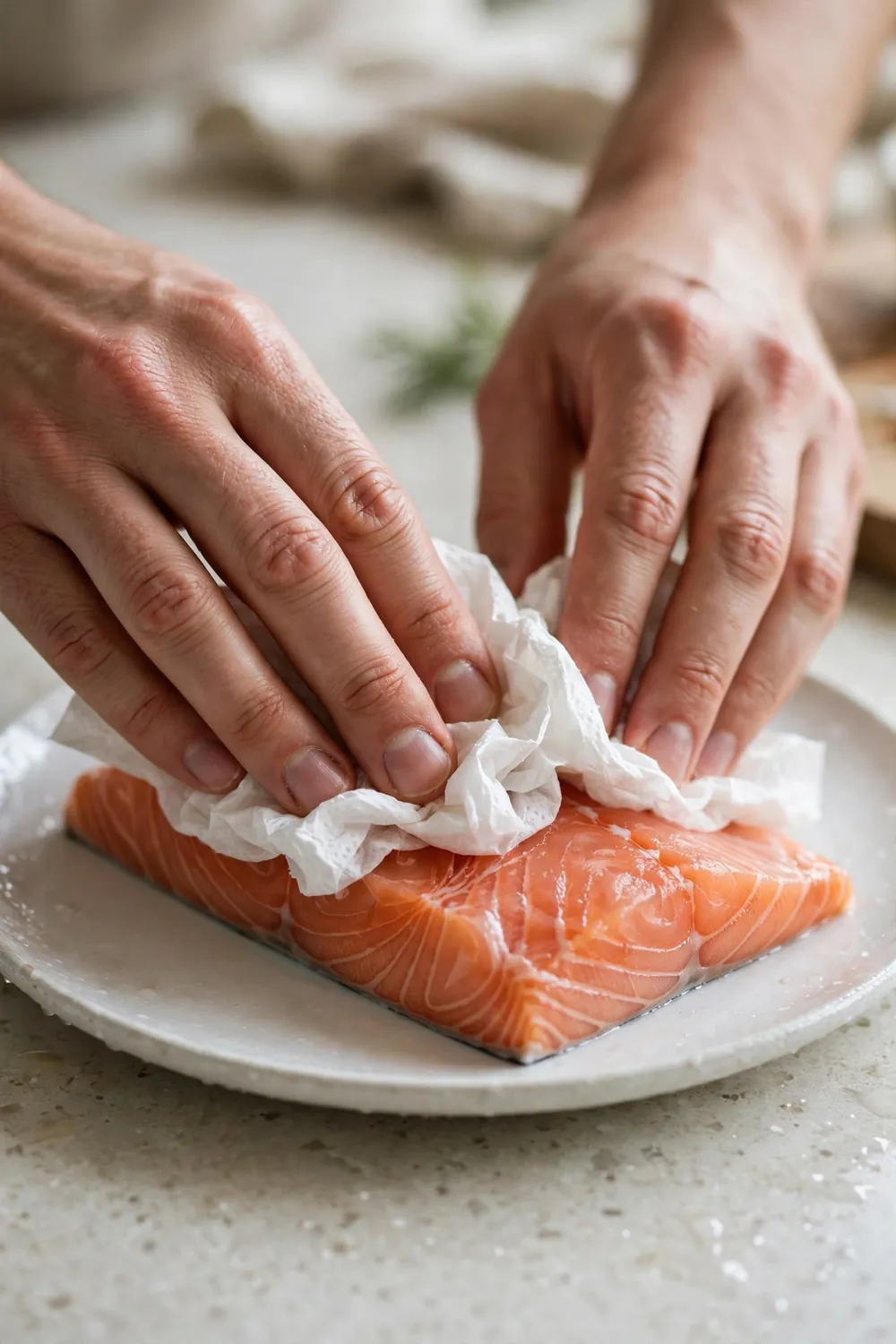
Common Mistake: Most cooks drop a wet fillet straight into the pan. The surface water turns to steam, and the steam pushes out more albumin. Rubbing hard with a towel tears the delicate flesh, which makes things worse.
The Fix: Press both sides gently with paper towels until the surface feels dry. Dry the skin side twice for the crispiest result. Pat the fillet just before cooking, not hours ahead.
A dry surface means less steam and less white ooze in the pan. Dry skin crisps better and lets the heat reach the fish evenly. Keep a stack of paper towels beside the stove, and give each fillet a final press right before it goes in.
Season Lightly
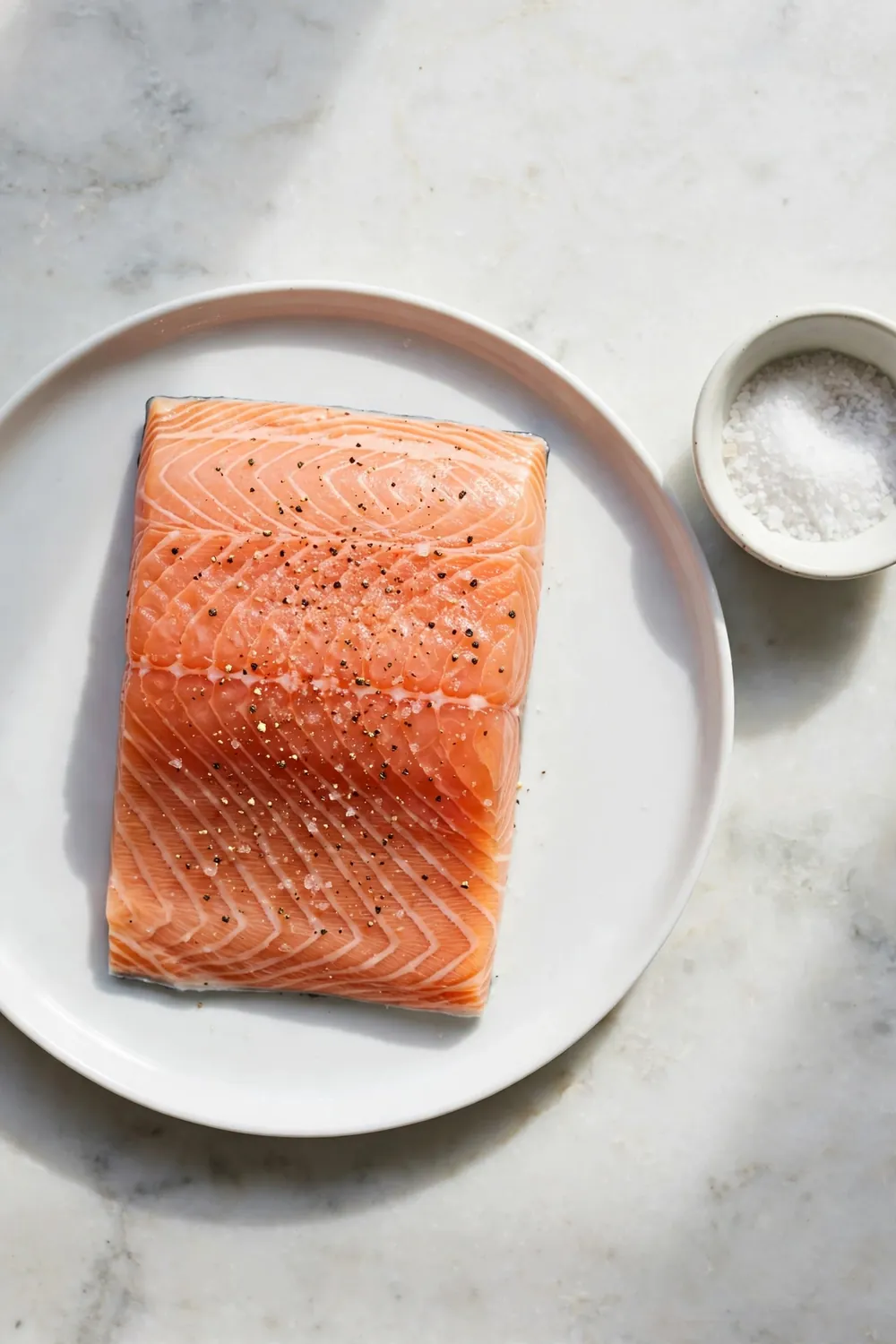
What You Need:
- Salt: A small pinch seasons the fillet without pulling out moisture.
- Black pepper: A light grind adds warmth and keeps the flavor clean.
- Paper towels: Use these to dry the fillet before seasoning.
- Small bowl: Mix the salt and pepper here for even sprinkling.
Heavy salt draws moisture from the fish before it even hits the pan. Season the fillet lightly just before cooking, so the salt has no time to pull water out. A light hand keeps the juices inside where they belong. Taste a small piece after cooking, and adjust the salt at the table instead.
Cook Skin Side Down
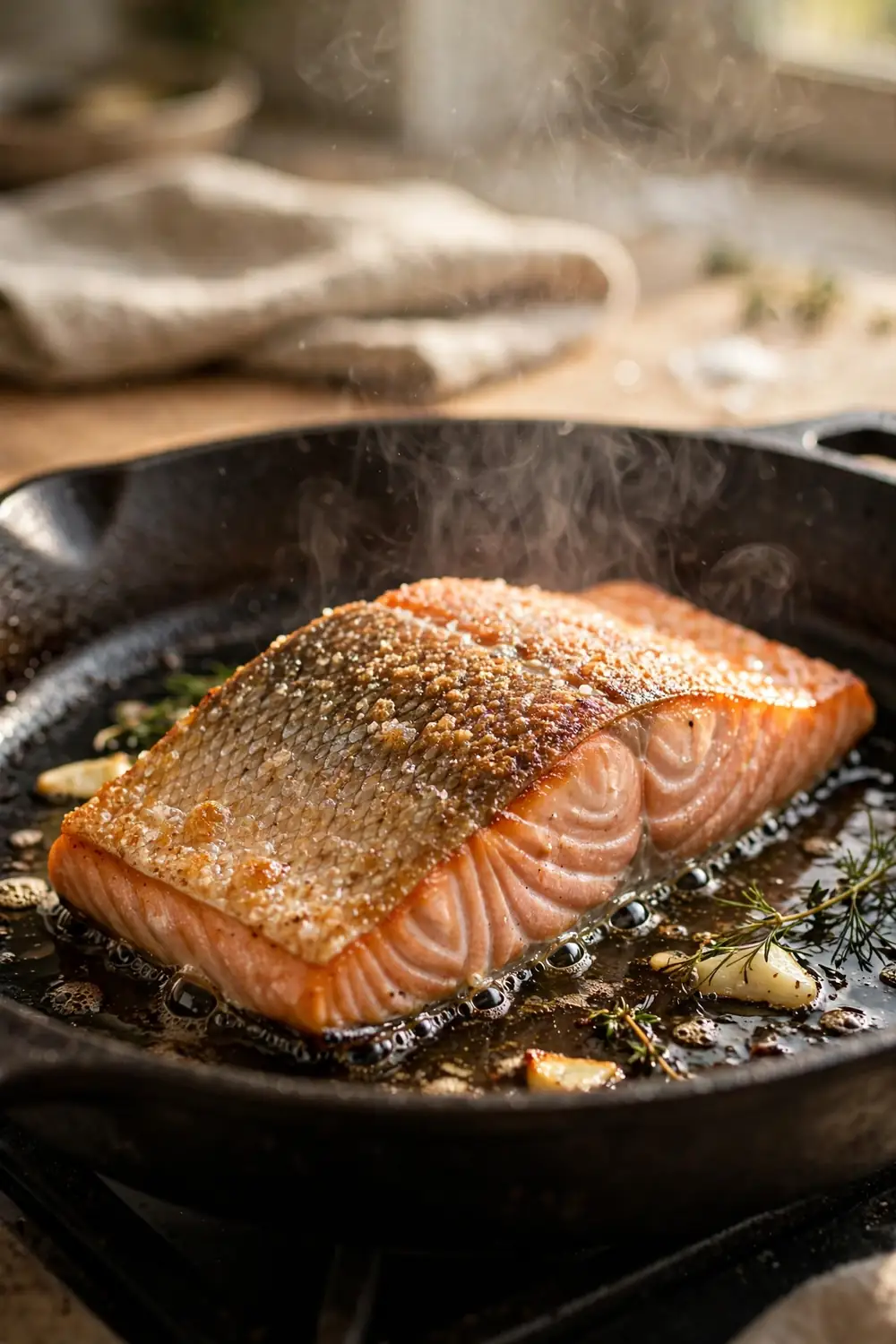
| Flesh Side Down | Skin Side Down |
|---|---|
| Takes the full heat at once | Skin shields the flesh from direct heat |
| Fibers tighten fast and push albumin out | Cooks slowly and evenly through |
| Skin stays soft and the top dries early | Skin turns golden and crisp while the top stays moist |
Leave the fillet alone while the skin crisps, and let the heat rise through the fish. Watch the color climb up the side of the fillet as it cooks. Most of the cooking happens before you ever turn the fish, so patience here pays off.
Use Medium Heat
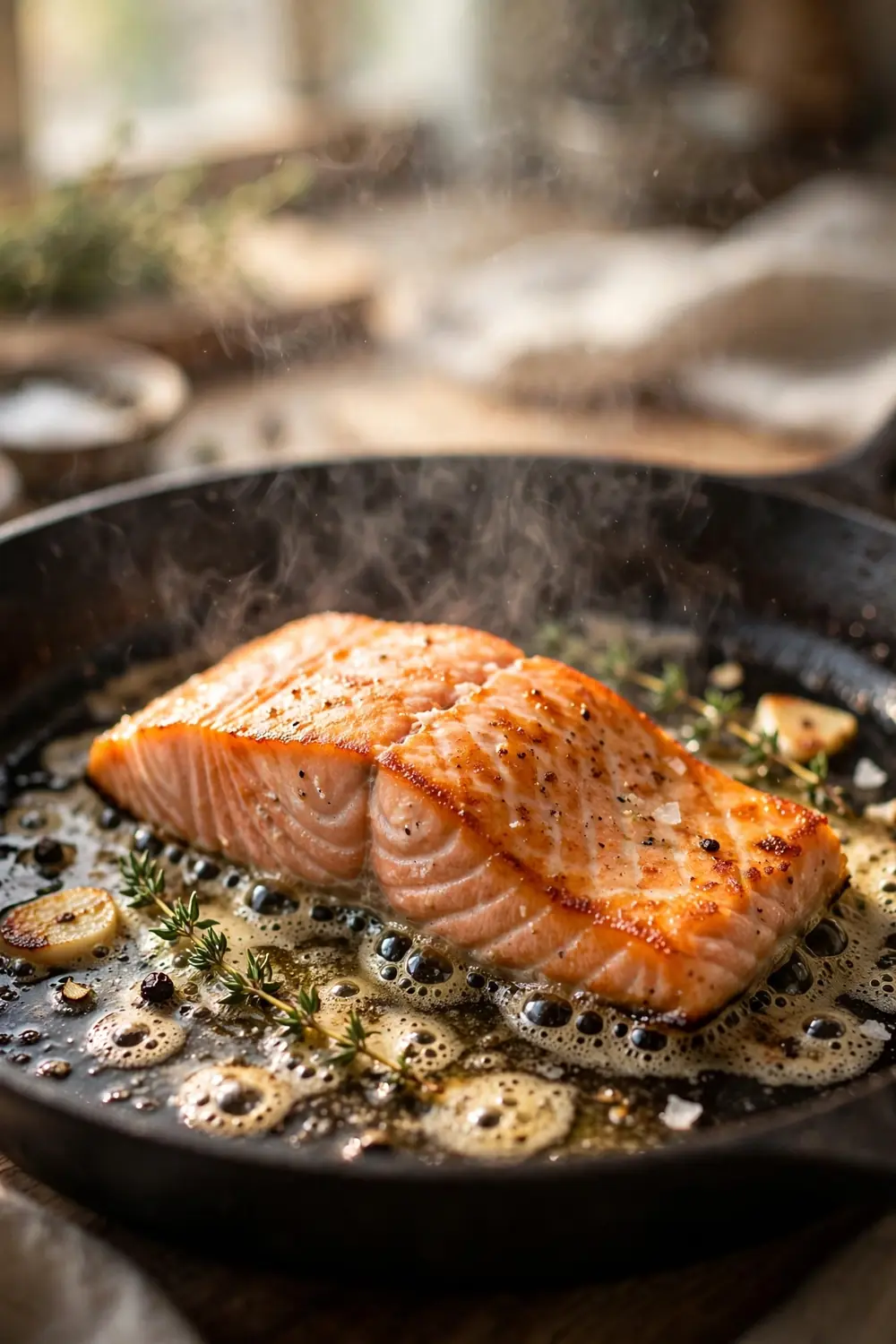
Do This:
- Set the burner to medium and let each side take its time.
- Listen for a soft steady hiss, not a loud roar.
- Pull the pan off the heat for a moment if it starts to smoke.
Avoid This:
- Do not cook on high heat the whole time.
- Do not let the oil smoke before the fillet goes in.
- Do not rush the fillet by turning the burner up.
Medium heat cooks the salmon gently without squeezing out the protein. High heat tightens the muscle fibers fast and forces albumin out of the flesh. Steady heat protects the texture inside the fillet, and the edges turn golden slowly. A calm pan keeps the salmon moist and the surface clean.
Flip Only Once

Time on skin side: 4 to 5 minutes
Time on top side: 1 to 2 minutes
Flips needed: 1
Best tool: Wide flexible spatula
Flipping early breaks the crust and lets juices escape. Wait until the skin is crisp and the fillet releases easily from the pan. Flip once, gently, and finish the top side briefly. One careful flip keeps the juices inside and the fillet intact for a clean plate.
Use a Thermometer
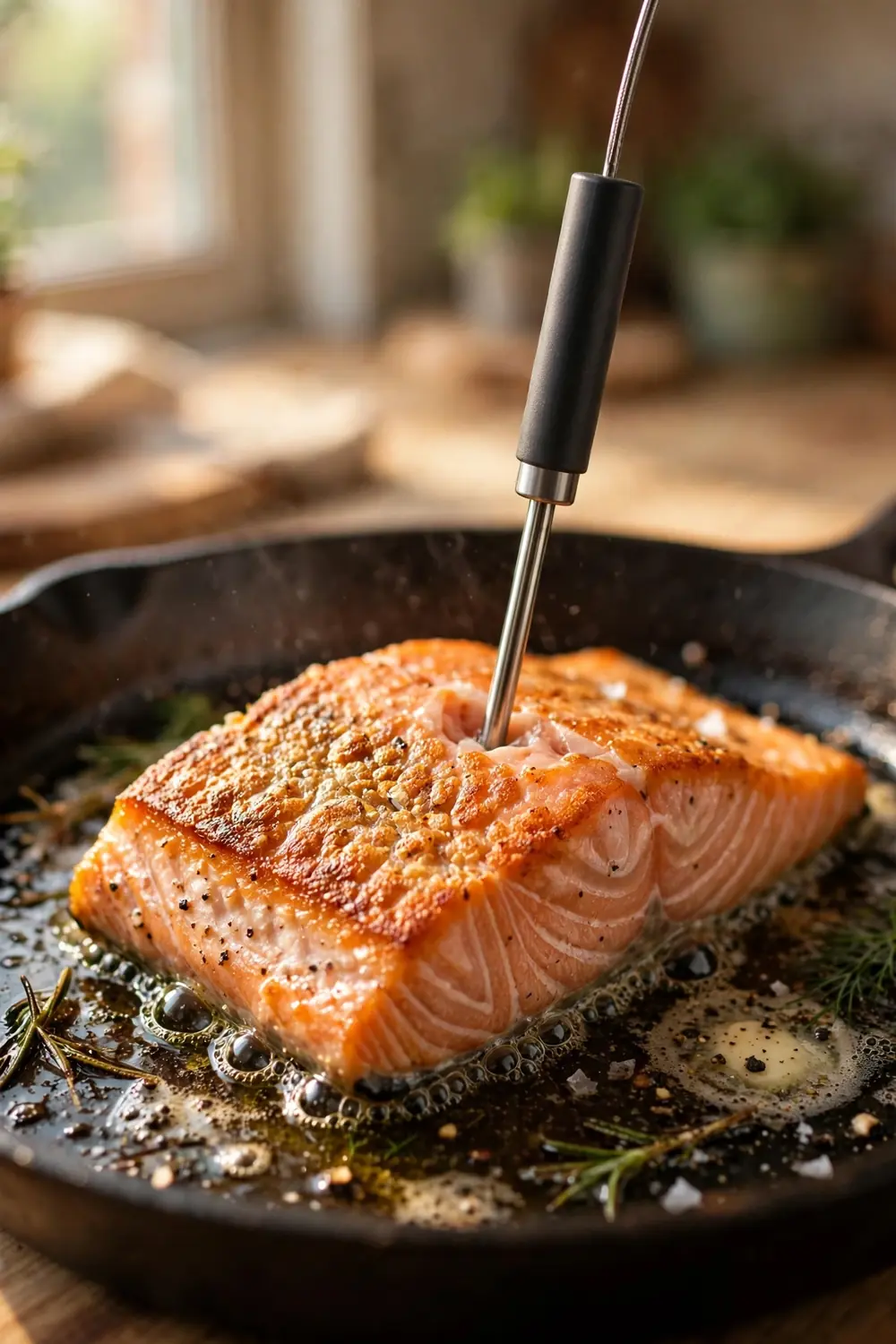
A thermometer takes the guesswork out of salmon. Push the probe into the thickest part of the fillet, away from the skin. Pull the salmon when the reading hits one hundred twenty five degrees Fahrenheit, since it keeps cooking while it rests on the board.
Guessing by color fails, since salmon can look done while the center is still raw, or look soft when it is ready. A thermometer costs little and saves many dinners. Wipe the probe clean after each use, and store it near the stove. Trust the number, not the clock.
Common Mistakes to Avoid
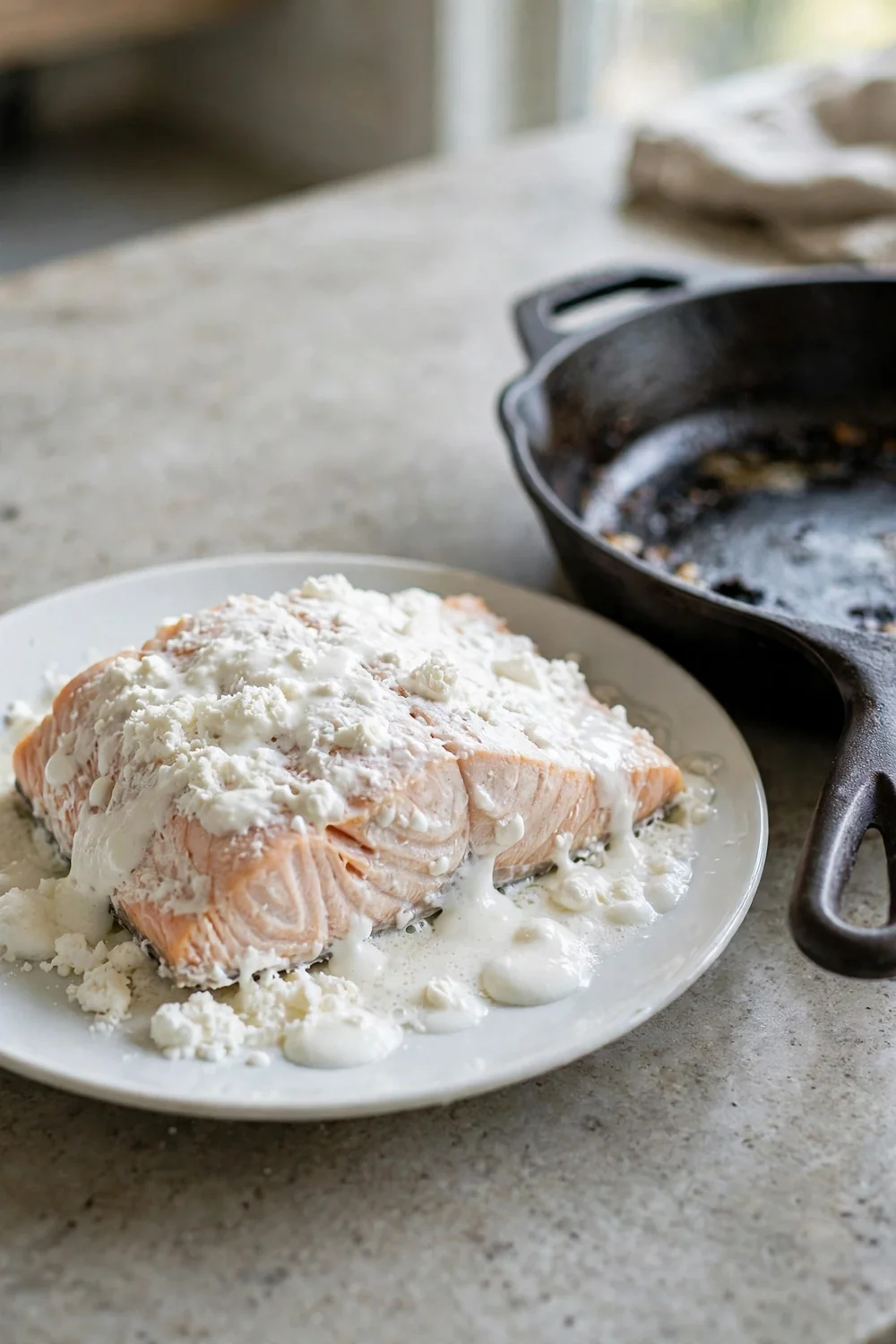
Most white ooze comes from a few repeatable everyday habits, not bad fish, so small fixes go a long way. Fix one habit at a time, starting with a dry fillet and medium heat. The list below covers the mistakes I see most often in home kitchens, and each one is easy to avoid.
- Do not cook cold salmon straight from the fridge, since it cooks unevenly and leaks more albumin.
- Do not use high heat the whole time, since fast heat squeezes protein out of the flesh.
- Do not skip the pat dry step, since a wet surface steams and pushes out more ooze.
- Do not flip twice or cook past the right temperature, since both break the crust and dry the fish.
Clean Cooked Salmon

Quick Tip: Let the fillet rest for two minutes before serving, since the center finishes gently. A squeeze of lemon at the table brightens the flavor. Serve it warm with lemon and herbs.
Clean cooked salmon shows a golden crisp skin and a moist center with little or no white ooze. The flesh flakes gently when pressed, and the cut surface glistens with juice. Each slice holds its shape without falling apart. When the skin stays crisp and the center stays moist, you know the fixes worked.
Conclusion
In short, white stuff on salmon comes from high heat, overcooking, wet fillets, and cold fish, and each cause has a simple fix. Fix those steps and each fillet cooks clean. Dry skin, medium heat, a thermometer, and a short rest build a moist fillet every time.
Start with the simplest fix first, then add the next one. Small changes protect the flavor while the look improves. Save this guide on Pinterest for your next dinner.
Try the steps on your next fillet, and if dry chops are your trouble too, read our guide on dry pork chops for a juicy fix.